Bayer Launching CoLaborator Space in Sacramento

Biotech Startup Lab to Serve as Incubator

By Joanne Lui, Associate Editor

Bayer Crop Sciences Biologics Group in West Sacramento is Bayer’s global headquarters for microbial base crop protection products. The company recently announced that a new biotech startup lab space known as the Crop Science CoLaborator is available in 3,000 square feet within the West Sacramento facility. Jon Margolis, head of research technologies for Bayer Biologics, recently spoke to California Ag Today about the project

Jon Margolis

“This is a part of the original building as we built it out,” Margolis said. “We set aside about 3,000 square feet in the back to be dedicated to this incubator space, and now we’ve just finished the construction.”

The lab space is scheduled to become available in December.

“It’s part of kind of a larger strategy for Bayer,” Margolis said. “So we have actually now three of these so-called CoLaborator spaces. So there’s one in Mission Bay associated with UCSS in San Francisco. There’s another one in Berlin, and then this is the latest. But this is the first one for Bayer that’s dedicated to agriculture and food research.”

We asked Margolis what the meaning is behind the CoLaborator.

“It’s really based around the idea that for start-up companies, there’s a clear benefit of being associated and nearby to Bayer, not so much for the facilities as much as the opportunities to be able to talk to and interact with us,” Margolis explained. “From our side, it’s a great thing because it gives us kind of a reason or an opportunity to be talking to start-ups in this space who might be interested in renting this.”

Bayer is already starting to solicit for tenants for the space.

“It’ll be a combination of office and then fully modern, what we call, wet lab or biochemistry and cell biology kind of labs, which would be able to host up to three different companies,” Margolis said. “So typically, these early stage start-up companies are comprised one to three people, and what they’re really trying to do is get the initial proof of concept to really show that their idea, their technology works, to then be able to go out to investors and get the next round of funding. So this is kind of in that sweet spot because there’s not a lot of that space in the local area.”
2021-05-12T11:05:15-07:00September 26th, 2017|

LGMA Partners with Stop Foodborne Illness Group

Leafy Green Marketing Agreement Aids Decline in Citations

By Jessica Theisman, Associate Editor

Scott Horsfall, CEO of LGMA

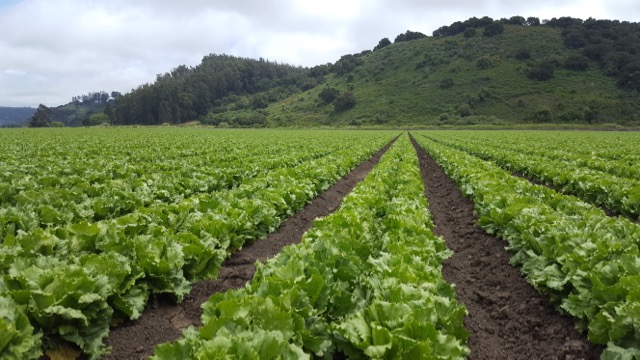
After a severe E. coli outbreak in 2006, California farmers created the California Leafy Green Products Handler Marketing Agreement (LGMA) in 2007 to help prevent foodborne illness. Scott Horsfall, LGMA CEO, addressed the critical role LGMA currently plays in California agriculture, “If you are going to be in the leafy greens business, in particular, you are going to have to invest in what it takes to put a food safety program in place.”

“LGMA has partnered with a group called Stop Foodborne Illness, a national nonprofit, public health organization dedicated both to the prevention of illness and death from foodborne pathogens and to its victims. These two groups collaborated to create a video that is used in all training workshops. The video not only tells them why food safety is important, it shows them.”

Citations for foodborne pathogens in recent years have declined. Most of the citations are noted as minor infractions or minor deviations.

“They are not threatening public health; sometimes they indicate an oversight in having some documentation on hand, or something along those lines,” Horsfall said.

“Yet, there are still a handful of major deviations that are more significant and are treated differently,” Horsfall said. “Auditors are required to go back out, but if [the situation] is flagrant, they will go back out within a week to make sure that all corrective actions that were submitted are actually put in place.”


Links:

California Leafy Green Products Handler Marketing Agreement (LGMA)

Stop Foodborne Illness


2021-05-12T11:01:58-07:00September 19th, 2017|

Water Reductions Would Devastate Valley

Big Study Shows Loss to Central Valley Economy with Loss of Water

By Patrick Cavanaugh. Farm News Director

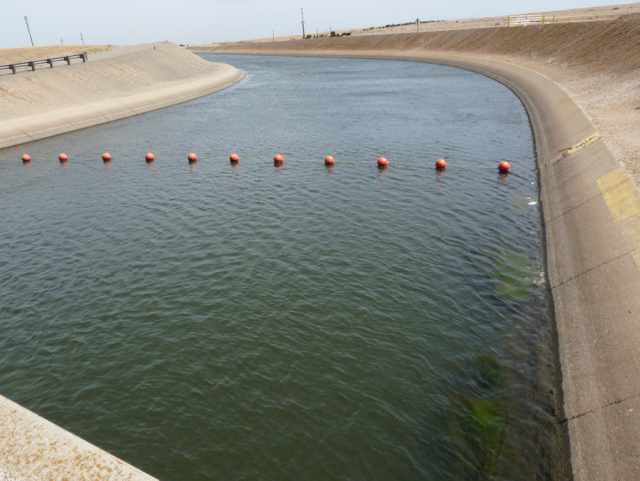
A new study entitled, “The Implications of Agricultural Water for the Central Valley,” by Dr. Michael Shires of Pepperdine University, shows the economic implications of water in the Central Valley, and the potential outcome of continued water reductions in agriculture.

Agriculture is a major part of California’s economy, and this study illustrates both the outcome of increased water allocation and the potential growth that would come with it, or what could happen to the economy if this decline continues. This continued loss of water would result in a huge increase in the unemployment rate. Fresno would require 6.2 billion in solar farm investment annually to replace agricultural jobs that would be lost.

Johnny Amaral is the Deputy General Manager of External Affairs of the Westlands Water District. We spoke with him about Dr. Shire’s study, and what it means for the Central Valley. Shires is an economics professor at Pepperdine.

“He’s been involved for years, and has done economic reports and studies for other organizations and other groups with a particular interest in how public policy affects the economy and certain industries,” Amaral said. “And a couple of years ago, we started working with Dr. Shires in this debate over public policy as it relates to water.”

A lot of false information circulates about water use and agriculture. Most of this misinformation leads to a general negative opinion about agriculture, especially when it comes to water use.

“We’re constantly dealing with misinformation, deliberate misinformation about water policy, about agriculture,” Amaral said.

“You hear all the buzz words all the time about ag uses 80% of the water, which is not true. We’re constantly dealing with misinformation, so we thought it would make sense to have a document put together, a study done to show just what agriculture means to the Central Valley and to the state,” Amaral said.

2021-05-12T11:05:15-07:00September 18th, 2017|

Farmers Appreciate Leafy Green Marketing Agreement

Leafy Green Marketing Agreement Raises Bar

By Jessica Theisman, Associate Editor

The Leafy Green Marketing Agreement took huge steps in the advancement of food safety.

Scott Horsfall, CEO of the California of the Leafy Green Marketing Agreement, said, “In 2007, there had never been government inspectors on the farm on a routine basis related to food safety.”

Many other regulators such as the Department of Public Health would often check in on businesses. However, there had never been a routine food safety oversight program on the farm.

Farmers joined this agreement voluntarily. “All of these companies that have joined, and been in the program since 2007, they do so voluntarily, and they pay the freight,” Horsfall said. This raises the bar for food safety and provides value to the industry.

Farmers, who were wary at first, came back to Horsfall saying, “They sleep better at night knowing that they’ve got this program in place, that the auditors are going to be there.”

The California Leafy Green Marketing Agreement continues to improve. Every year, the numbers are studied to see what areas have a continuing problem.

“We have used that to decide what to create in a training program. We hope that we’re helping the industry to better comply with these standards as we go along too, by offering the training,” Horsfall said.

For more information, visit the California Leafy Green Marketing Agreement web page.


2017-09-14T16:03:16-07:00September 14th, 2017|

Fresno State’s WET Center Home to BlueTechValley Entrepreneurs

BlueTechValley Series – Part 3

By Patrick Cavanaugh, Farm News Director

We’re continuing our series on California Ag Today regarding the BlueTechValley Initiative, which was established on the Fresno State campus in 2011, and part of an innovation cluster that provides access to commercialization services that will accelerate innovation and growth of water and energy-oriented companies in 39 counties from central to northern California.

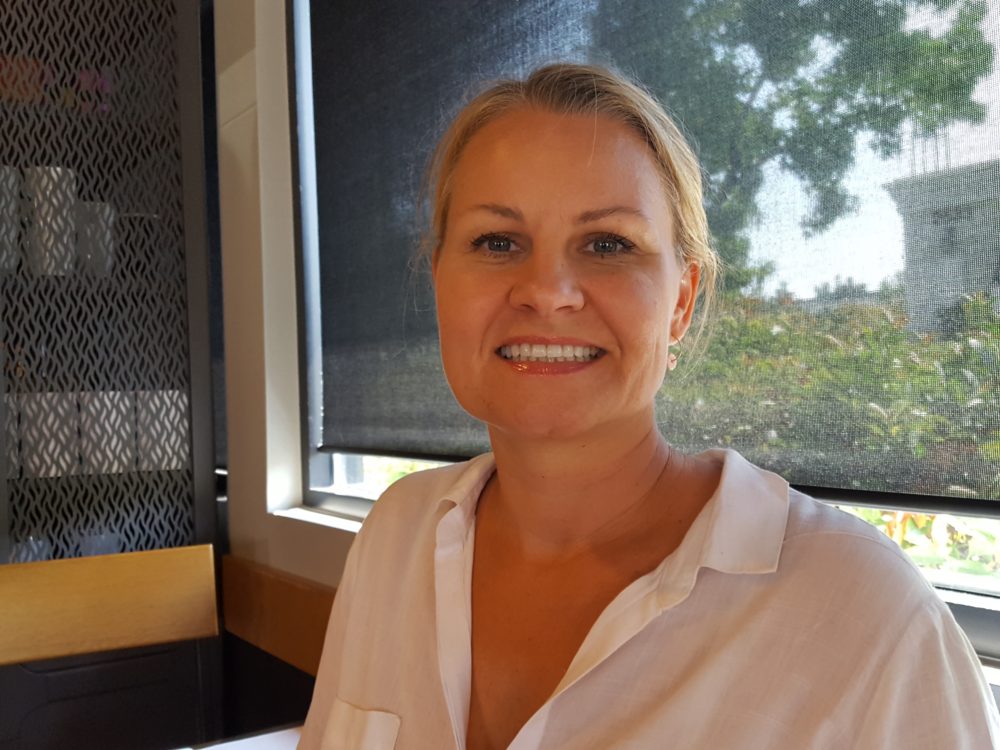
We spoke to Helle Petersen, the manager of the Water, Energy and Technology Center – also known as the WET Center – at Fresno State, where BlueTechValley is centered.

“The WET Center is a physical building located on the Fresno State campus, and it has six offices for entrepreneurs that want to grow their water, energy or agricultural business and be around companies that share those same visions and the same business,” Peterson said. “The WET Center also has a testing lab to test different kind of water technologies.

“The WET Center is very unique. I haven’t really seen anything at any university that’s the same. It was built in 2007 as a partnership between Fresno State and what used to be the Central Valley Business Incubator, but now it has rolled in under the International Center for Water Technology, and it’s part of their program,” Peterson said.

Petersen said it is a very busy place. “As I mentioned, we have six offices, but we also have about 30 other company startups … [and] also more mature companies that are members of the center, and they really want to be part of the community, if you will, because there’s something synergetic about working with companies or maybe talking about some of the same problems you have when you work in the same industry.”

Peterson said the WET Center is expanding for those entrepreneurs that may be coming out of town.

“Actually what we’re doing is across the street … there’s another smaller building that we are actually incorporating into the WET Center, and we’re going to build an additional six offices there, plus a plug-and-play space,” she explained. “ Let’s say you have a tech company out of the Bay Area and you’ve kind of outgrown that space, because you’ve realized you need to be in the central San Joaquin Valley if you have anything to do with agriculture. So you can come down here for a few days a week or a month, and you have a workspace. You also will have a conference room that you can all use.”

This is part of an ongoing series on the BlueTechValley Innovation Cluster, which includes entrepreneurs at several California State Universities and the Sierra Small Business Development Center. It’s all about finding efficiencies in water and energy.


2021-05-12T11:05:15-07:00September 13th, 2017|

Blue Tech Valley Innovation Cluster – Part 1

Blue Tech Valley Funded by California Energy Commission

By Patrick Cavanaugh, Farm News Director

The Blue Tech Valley Central Valley regional innovation cluster represents an expansion and interconnection of multiple incubators in entrepreneurship programs, with services located at each of the seven designated Blue Tech Valley cluster hubs, collectively serving 39 counties and covering two-thirds of California’s geographic area. Funding for the new cluster is provided by a $5 million grant from the California Energy Commission.

The designated hubs for the Blue Tech Valley innovation cluster features Fresno State as the central portion. Other hubs include: CSU Bakersfield, Chico State, Humboldt State University, Cal State University, Monterrey Bay, Sacramento State, and a Sierra small business development center.

California Ag Today recently spoke with Erik Stokes of the California Energy Commission Research and Development Division. Blue Tech Valley was part of a major $60 million initiative the Energy Commission launched about a year ago to really try to create a state-wide ecosystem to support clean energy entrepreneurship across the state.

“As part of this initiative, we created four regional innovation clusters to manage a network of incubator-type services that can encourage clean tech entrepreneurs in the region and really try to help make what can be a very tough road towards commercialization a little bit easier,” Stokes said.

“Blue Tech Valley and their partners were selected to be the Central Valley cluster. A big reason for that was their strength and expertise in the food and agricultural sector,” he explained.

One of the focus areas of the incubator is to find areas in farming to save costs and minimize greenhouse gases.

“We really want to focus on those technologies that can help both reduce water use, as well as energy use,” Stokes said.

2021-05-12T11:05:15-07:00August 30th, 2017|

PowWow Energy Gets Major Funding

The Central Valley Angel Group Invests in PowWow Energy, Inc.

News Release

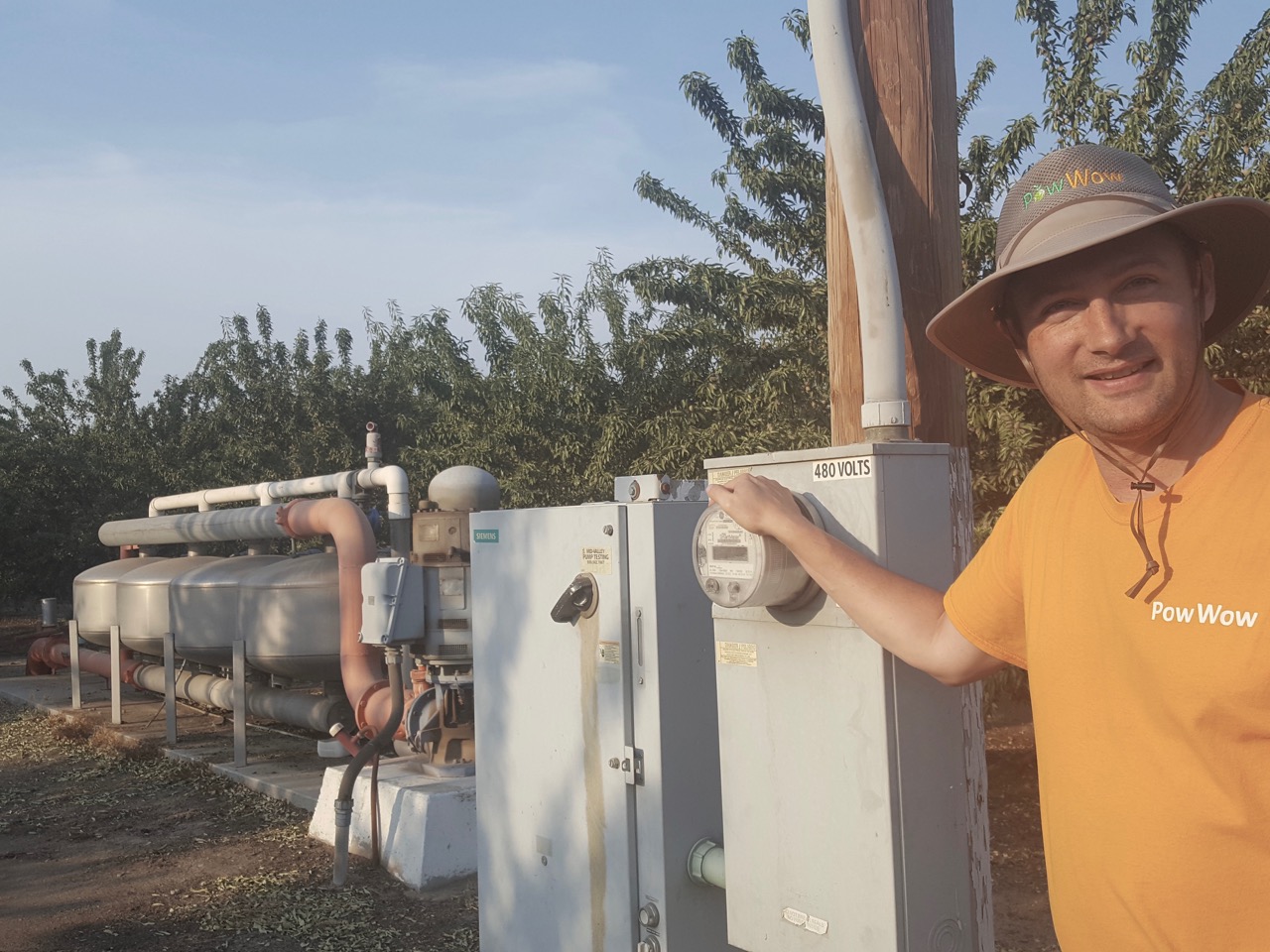
PowWow is applying data science to solve practical problems in agriculture. It provides a simple water compliance solution using a clever algorithm that turns energy data into useful text alerts and water records for growers.

The team of agronomists and computer scientists are extending the data-mining platform with 100 Terabits of aerial images and weather forecasts to identify where farms can recover revenue losses and improve their bottom-line.

Fund Chairman A. Emory Wishon said, “We are thrilled to invest in a company that is passionate about working with farming communities to save water and energy while preserving quality crops.”

PowWow CEO Olivier Jerphagnon added, “Central Valley Angel Group’s investment expands PowWow’s presence in the San Joaquin Valley. We started to work at the Water and Energy Technology incubator in Fresno three years ago, and we’ve taken the time to work closely with growers to understand their needs”.

The local commitment of Central Valley farmers and investors, when combined with the experience of Silicon Valley technology entrepreneurs and investors, strengthens the unique dual culture of PowWow Energy, which is critical to its continued growth and success.

Formed in September 2015, Central Valley Angel Group is a $1 million+ fund whose members are accredited investors. The Central Valley Angel Group invests in high-growth, early-stage companies that are located within the region. In addition to making a return on its investments, the goal is to educate local Angel investors and create ongoing investment capital to help the Central Valley’s start-up economy thereby retaining businesses and supporting job growth.

To learn more about the Central Valley Angel Group or to apply for funding visit www.centralvalleyangels.com

Contact: A. Emory Wishon III, Chair, Central Valley Angel Group, 559-439-4000

2021-05-12T11:05:16-07:00August 29th, 2017|

Maintaining Food Safety – LGMA Part 3

Understanding the Farming Operation

By Jessica Theisman, Associate Editor

California Ag Today met recently with Jon Kimble, and among other topics, he reported on food safety in the state of California. Kimble is the operations business development manager at Safe Food Alliance.

Jon Kimble, Safe Food Allicance

Safety is a big concern for those who work in the agricultural community. Kimble spoke on how it is important that farmers assess those on their property.

“If you see somebody getting out, and getting into your fields, certainly you want to talk to them and make sure they are not going to impact the safety of your products, because that is your financial future.”

Operations such as U-Pick, people out in the fields, or people part of an activity raise concern. Risks may be managed in terms of providing hand washing, communication, putting up signs, and making sure they understand that they can impact the safety of others when they’re out in the field.

“It really comes down to just practical due diligence, activities, recommendations that come right out of the good agriculture practices that has been developed over the past few decades,” Kimble said.

Kimble also spoke to California Ag Today about the Leafy Green Marketing Agreement (LGMA). This puts standards and measures in place to protect the safety of the crops.

“That is a great example of voluntary activity rising up from within the industry to control risks and control hazards,” he said.

The industry has established the best practices, which have led to a world class food safety program through the LGMA.

“The first compliance dates are coming up in January, and I think a lot of growers do not realize how soon their compliance dates are hitting,” Kimble said.

2021-05-12T11:05:16-07:00August 23rd, 2017|

Expert Talks Protecting Our Food Supply And Industry

Maintaining Food Safety – Part 2

By Patrick Cavanaugh, Farm News Director

Continuing our series on food safety in the state of California, we spoke with Jon Kimble, Operations Business Development Manager at Safe Food Alliance, and he explained the need for worker awareness when it comes to protecting our food supply.

“Too often, we see these recalls on foods where people are getting ill. Many times, it gets tracked back to an employee. Somebody’s got a virus, somebody’s got a bacteria, they’re sick,” Kimble said. “They come in contact with the food while they’re ill, and that translates back to getting out in the food supply and making people sick.”

“That’s what we’re trying to minimize. In a practical sense, in cases where we’ve observed people getting sick from things, we track that back, see what the source is, and try and share that information with everybody so that they can minimize that from happening in the future,” Kimble explained.

There are economic implications to consider as well.

“It is really paramount to prevent not only economic damage to your own farm and your own business, but also an entire industry,” Kimble said. “We see [that] one bad apple affects the whole industry.”

“We’ve even seen situations, such as a few years ago ,where there were some contaminated peppers, but they suspected tomatoes initially. It impacted an entire year’s harvest of tomatoes,” Kimble said. “We want to minimize the damage to the industry, and how people protect their businesses legally, by doing the right thing.”

Buyers are also setting a higher standard of quality, in light of the new rule.

“The regulation does set a minimum requirement, but buyers, customers, purchasers are setting a higher standard,” Kimble said.

“We’re seeing that trickle down effect as a result of the Food Safety Modernization Act (FSMA), that even folks who aren’t necessarily required to do certain things in their operation are being asked by their customers to do above and beyond what the regulation requires, and even in advance of their compliance dates for the regulation.”

“We’ve seen it both on the processing side and on the growing side, that customers are starting to raise their expectations for growers,” he said.

This is Part 2 of a 3 Part Series.

2017-09-02T23:13:09-07:00August 23rd, 2017|

Chlorpyrifos Under More Scrutiny in California

California Regulators Pursuing Health Protections for Chlorpyrifos

News Release

The California Environmental Protection Agency (CalEPA) announced recently that both the California Department of Pesticide Regulations and the Office of Environmental Health Hazard Assessment are pursuing health protections on one of the most widely used agricultural pesticides in the nation, chlorpyrifos.

The Department of Pesticide Regulation (DPR) released an updated draft risk assessment for public comment. This action marks the start of a public and scientific review of the document, which could lead to increased restrictions on chlorpyrifos statewide. DPR is currently developing interim restrictions on use of the pesticide and recommendations will be made to county agricultural commissioners next month.

In addition, the Office of Environmental Health Hazard Assessment (OEHHA) is referring chlorpyrifos for potential listing as a developmental toxicant under Proposition 65. OEHHA recently posted an announcement that the state’s Developmental and Reproductive Toxicant Identification Committee will consider the listing of chlorpyrifos at its next public meeting.

 “While chlorpyrifos has been protecting crops for more than 50 years, new information in the scientific community leads us to believe the level of risk it poses is greater than previously known,” said CalEPA Secretary Matthew Rodriquez. “We need to better understand the science to ensure our actions protect public health. The actions we are taking today reflect our commitment to the health and safety of all Californians, and the environment.”

Department of Pesticide Regulation

DPR scientists believe chlorpyrifos may pose a public health risk as a toxic air contaminant based on its assessment of the latest studies in the scientific community. However, this new finding, indicated in the updated draft risk assessment has not been peer reviewed and must go through a public comment period and be independently evaluated by other scientists.

On September 15, DPR will hold a public workshop on the updated draft risk assessment at the Pesticide Registration and Evaluation Committee meeting in Sacramento.

After the 45-day written public comment period, which began August 18, DPR’s updated draft risk assessment will go before an independent panel of nine scientists known as the Scientific Review Panel (SRP). The thorough review process, which may ultimately lead to more restrictions on use, may conclude in December 2018.

Next month, DPR will provide county agricultural commissioners with specific interim recommendations, including:

  • Increasing distances between sites where the chemical is applied and sensitive locations, such as homes and schools. These would be specific to each type of application method.
  • New restrictions on methods used to apply chlorpyrifos.

Office of Environmental Health Hazard Assessment

OEHHA will soon open a written public comment period on scientific materials that describe the evidence for the developmental toxicity of chlorpyrifos.  OEHHA will provide the materials and the written public comments to the Developmental and Reproductive Toxicant Identification Committee. The committee is an independent panel of 10 scientific experts that determines whether chemicals are added to the Proposition 65 list as causing birth defects and other reproductive harm. The committee will also consider public comments presented at its November 29 meeting.

If the committee adds chlorpyrifos to the Proposition 65 list as a developmental toxicant, businesses that knowingly cause exposures above minimum levels must provide a Proposition 65 warning.

DPR’s updated draft risk assessment and other documents relating to chlorpyrifos are available at:http://www.cdpr.ca.gov/docs/whs/active_ingredient/chlorpyrifos.htm

OEHHA’s notice of the November 29 meeting of the Developmental and Reproductive Toxicant Identification Committee concerning chlorpyrifos is available at: www.oehha.ca.gov.

2021-05-12T11:05:16-07:00August 21st, 2017|
Go to Top