American Society of Agronomy Meets

Plant Soil Conference Discusses Nitrogen Management

By Patrick Cavanaugh Farm News Director

Dan Munk is a UC California Cooperative Extension Fresno County Farm Advisor who specializes in irrigation, crop nutritional management and cotton production systems. He recently spoke about the California chapter of the American Society of Agronomy holding its annual plant and soil conference recently in Fresno. Attendance was great, and agronomic issues regarding water, irrigation and nutritional management were covered.

“[The] California chapter of the American Society of Agronomy convenes a annual meeting known as the plant and soil conference, which was held recently in Fresno for a day and a half. We had the CDFA Secretary Karen Ross address the group as well as some nutrient management experts from across the state and outside of the state,” Munk said. “And we discussed agronomic issues related to water irrigation, nutrient management in agriculture. And there was a pest management session as well.”

There were more than 220 top state agronomists, with many Certified Crop Advisors as well as some growers and industry affiliates attending that meeting.

Nutritional management plans for efficiency, especially for nitrogen, are being closely looked at and discussed.

“I think the nutrient management plans that we’re doing is something that we need to continue to get better information. We have an understanding now of where some of the limitations are now for efficiencies,” Munk explained. “I mean, we can’t always be 100 percent efficient in these things and when we are, that’s when you get into the situation where you have some yield losses. So there’s, there’s always going to be some nitrate movement out of the root system in agricultural systems. That’s just the nature of the beast.”
2021-05-12T11:05:13-07:00February 20th, 2018|

Offering Grapes in School Lunch Promotes Better Eating

Less Waste When Grapes Were Served

By Jeff Cardinale, California Table Grape Commission

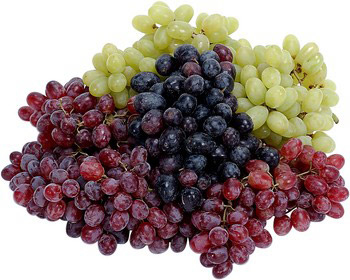
Offering fresh grapes as part of the school lunch menu helped improve the school lunch eating behaviors of children in a pilot study conducted through Texas A&M University.

The study looked at the effects on plate waste when fresh grapes were offered compared to when they were not offered. The results show that when the school meals included grapes, consumption of healthier menu items increased, suggesting that grapes can serve as a “gateway” fruit to healthier eating.

The study was conducted in two elementary schools and two middle schools from one school district in Texas. Grapes were made available on “grape days” as an offered fruit choice. Non-grape days were defined as days when grapes were not offered.

Study results included:

  • When offered as a fruit choice, grapes were minimally wasted.
  • On grape days, lost dollars attributed to vegetable plate waste was significantly less than on non-grape days.
  • Intakes of effective calories, fat, sodium, protein, and fiber per serving of entrees, vegetables and fruits on grape days were higher than on non-grape days.
  • On grape days, the children consumed more of the school lunch, which is an overall goal of school lunch.

“Our study shows that offering grapes in school lunches is a smart strategy that goes beyond grapes’ status as a favorite fruit to grapes having a beneficial impact on the degree to which students make healthy choices, and on their consumption of the school lunch overall,” said Dr. Peter S. Murano, co-author of the study.

It is hoped that schools across the country take note of the benefits of serving California table grapes in an effort to help encourage good eating habits for the students.

2021-05-12T11:05:14-07:00February 14th, 2018|

ReTain Increases Yields

ReTain Now For Aerial Use in Almonds, To Extend Bloom Time

By Patrick Cavanaugh, Farm News Director

ReTain plant growth regulator from Valent is now registered for aerial use in almonds.

“ReTain was registered for use on almonds this past growing season, and this past winter, California Department of Pesticide Regulation registered it for aerial use, so now it can be applied by air as well as a ground applications,” said Pat Clay, a field development manager with Valent USA.

“It really helps with making a timely application across large acreage.  ReTain works best when applied at 30 to 60 percent bloom and being able to go by air allows for more ground to be covered as well as target those applications to that specific bloom time,” he explained.

ReTain extends the viable bloomed time in almonds.

“ReTain reduces ethylene production on the almond flower,” Clay said. “Ethylene is responsible for senescence (aging) of the floral organs, particularly the stigmatic surface. So by applying ReTain, it’s extending the viability of the flower by about a day-and-a-half to two days.”

“With aerial applications, we’ve seen the yield increase greater than 300 pounds per acre on Nonpareil almonds,” Clay said.

Other crops have been using ReTain with great results.

“It has been used in apples for harvest management and cherries for very similar use to what we’re using it for in almonds. It has also been used widely in walnuts for pistillate flower abortion,” Clay explained.

2021-05-12T11:05:14-07:00February 13th, 2018|

Rootstocks Offer Production Attributes

Tomato Rootstocks Grafting

By Jessica Theisman, Associate Editor

California Ag Today recently spoke with Brenna Aegerter, a UC Cooperative Extension farm advisor in San Joaquin County, about grafting rootstocks to tomato plants.

“Rootstocks are cut below the cotyledons, while the scions are cut above the cotyledons at an angle,” she said.

These two plants are then clipped together and go into a high humidity healing chamber for about one week.

Aegerter explained that, “In the beginning, there is no light. They gradually increase the light because they do not want to stress the plants, and so if those two angles match … then everything grows back together.”

Each tomato plant can differ depending on the rootstock that it has been grafted to. Different rootstocks have varying levels of resistance to disease and pests. Rootstock resistance does have an effect on crop yield. If all of the fruiting varieties had the nematode resistance gene, they could potentially improve their yields.

There is great success rate on grafting these tomato plants.

“We have had pretty good success, 90 percent and up,” Aegerter said.

The remaining 10 percent is because the angles were not matched up quite right and there is not enough contact between the two tissues.

“Rootstocks are for the most part, hybrids between our cultivated tomato and wild tomato species,” Aegerter explained.

Wild tomatoes are used often to bring in new genetic material due to their diversity and natural resistance. Depending on the type of tomato that is being used, the resistance can differ.

The fruiting varieties are resistant, but are resistant to a shorter list of diseases.

“These root systems are are bigger, the crown is bigger, and sometimes they aren’t even purely resistant to the disease, but just by virtue of the fact that they grow faster, they can outgrow it,” Aegerter said.

2021-05-12T11:05:14-07:00February 2nd, 2018|

Grain Crop Variety Trials Important

Grain Crop Variety Trials Ongoing in California

By Brianne Boyett, Associate Editor

Grain crop variety trials are taking place around the state in hopes of measuring productivity among a diverse range of environments. California Ag Today spoke with Mark Lundy, UC Cooperative Extension Specialist for grain cropping systems at UC Davis, about the topic.

“We’ve been doing statewide variety trials as an institution for decades, almost a century. The goal is to be consistent, as California is such a diverse environment and because there are different conditions from year to year,” Lundy said.

“We are conducting trials that we measure yield and crop quality, disease reactions, agronomic traits on small grains—which are predominantly wheat in California, but we also do trials on barley,” Lundy explained.

The goal is for producers to be able to utilize this data and apply it in their own management systems.

“We want to take that data and put it into a format that growers can use to make decisions about what to plant. Also, we want to make it so the breeders can use it to make decisions on what to advance in, what lines to make available for growers,” Lundy said.

These trials are widespread and take place in a variety of locations.

“We have trials as far north as Tule Lake in the intermountain region, as far south as the Imperial Valley. Trials are conducted on a combination of grower fields and also at research and extension centers where we can have better control over the variables. We want to get a little better understanding of not just the location and its inherent characteristics, but the management in terms of how much water or nitrogen it may need,” Lundy explained

For More information on Mark Lundy:

http://www.caes.ucdavis.edu/about/directory/fsd/mark-lundy


2021-05-12T11:05:14-07:00January 31st, 2018|

Bean Seed Moisture Content Important

Bean Seed Germination Issues

By Patrick Cavanaugh, Farm News Director

Statewide, there has been a problem with bean seed germination. In other words, when growers plant the seed, it does not germinate well. This is seed that is being grown to be planted as bean seed for a crop to be consumed.

Rachel Long—a UC Cooperative Extension Farm Advisor based in Woodland serving Yolo, Sacramento and Solano counties—is studying the problem.

“We had a big meeting last year with the California Dried Bean Advisory Board to discuss this, and one of the thoughts that came up is that maybe because of the drought that we’re letting the seed dry down a little bit too much, and then when it’s harvested, it’s getting internal injury by the combine and therefore that internal injury is causing these seeds to not germinate real well,” Long said.

“So I started a project to try to figure out, whether or not there’s some relationship between seed moisture at harvest and the quality of the seed,” Long said. “We are seeing some differences in particular if you do a harvest, certainly in the morning where you have a little bit higher moisture content, that you end up with better seed germination.”

“So even though they are planting seed for a seed crop, the seed is not treated any different than if it were being planted for consumption, and they are harvested in the same way,” Long explained.

“But what we think is that if you’re harvesting beans or seed stock, then you have to be much more careful and really watch the moisture content, so growers would want to harvest them in the morning rather than the afternoon, when there is more moisture content,” she said.

2021-05-12T11:05:14-07:00January 30th, 2018|

“Measure To Improve” Gathers Data

“Measure to Improve” on Measuring Sustainability

By Jessica Theisman, Associate Editor

Sustainability is important in today’s agricultural fields. California Ag Today recently spoke with Nikki Rodoni of Measure to Improve in Salinas about the topic. Measure to Improve aims to help growers credibly promote their sustainability efforts.

“It takes about a year before I really earn the trust from the growers because we are collecting data that is very intimate to their operation, such as production data, waste data, fuel data and energy data,” Rodoni said.

There are plenty of benefits in becoming more sustainable, such as, “a company morale improvement when employees know that they are working for a company that takes this seriously and really doing the right thing,” she explained.

It is always good when people are proud of where they work, and sustainability can really help improve business strategy.

“We have to start with a good business case that translates into environmental benefits. It does not mean being warm and fuzzy just for the sake of trying to build a brand image,” Rodoni said.

Measure to Improve does strives to do things that make good business sense. They aim to help collect data to support decisions to help farmers improve.

“For instance, when you are thinking about a capital investment, finding out water can be conserved is really high regarding sustainability. It is all about data tracking and practices and telling your story,” Rodoni said.

For more informtion:

https://www.measuretoimprovellc.com/

2018-01-23T16:34:34-08:00January 23rd, 2018|

Survey Coming To Gauge Nitrogen Fertilizer Use

Understanding How Growers Are Using Nitrogen Fertilizers

By Brianne Boyett, Associate Editor

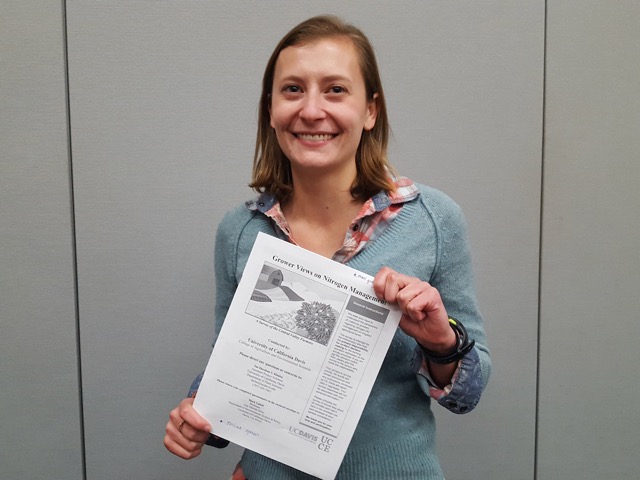
Nitrogen fertilizer applications are an important topic for growers. They’re expensive, and farmers only want to give crops what they need. UC Davis researchers want to know more about how growers are using nitrogen, and they’re sending out a survey to growers throughout the state at the end of January.

Jessica Rudnick is a third year Ph.D. student in the Graduate Group of Ecology at the UC Davis Center for Environmental Policy and Behavior, and she is overseeing the survey.

“UC Davis is sending out a survey to about 8,000 growers in the Sacramento and San Joaquin Valley [areas]. We’re asking about perspectives and attitudes on nitrogen management. This is really to understand what the education and outreach resources that are available around nitrogen, how people are understanding the new policies that are coming down the pipeline and how we can optimize both the extension and outreach around nitrogen,” Rudnick said.

“They’re looking for ways to optimize infield use of nitrogen, which is increased efficient production and protection and stewardship of the land and water resources,” Rudnick explained.

Of course, all this stems from new nitrogen regulations and the nitrogen budgets that growers are forced to put together. UC Davis wants to find out how growers feel about all this.

“ I frequently hear from growers that nitrogen regulations are a lot of paperwork. They’re taxing for their valuable time. I know that there’s file cabinets full of paperwork for various pesticides, nitrogen and farm employee information. The list goes on, and from a regulatory burden perspective, it’s another piece of paper that everyone hates filling out.

“However, we are trying to tighten up our systems so that we’re spending resources in the most efficient way, and that we’re producing food efficiently, saving money where we can, cutting costs and not overly applying fertilizer,” Rudnick said.

These surveys will be arriving in the growers’ mailboxes later this month. Please take the time to fill it out and send it back. It’s all self-stamped for growers so that these researchers can find out just how growers are using these regulations.

2021-05-12T11:05:14-07:00January 22nd, 2018|

Protecting California Ag Production

U.S. Farmers and Ranchers Focus on Ag Production in California

By Patrick Cavanaugh, Farm News Director

Brad Greenway, Chairman of the U.S. Farmers and Ranchers Alliance, and Allison Garriga, Vice President of Strategy & Operations, recently spoke to us about some of the conflict going on in California between those who support modern agriculture in California ag and those who don’t.

“It’s hard to find anywhere on the planet that’s more important than California relative to not only food production, but of course the folks that are advocating against modern agriculture, against the technologies that we use on a farm today … a lot of it’s a lack of understanding. And there is that core food movement that’s in the Los Angeles and San Francisco area,” Greenway said.

“There’s some very, very strong voices out there that are opposed to the production that’s happening in the San Joaquin Valley, and we just have to find a way to continue to talk to those folks,” Greenway said.

The U.S. Farmers and Ranchers Alliance is promoting films in hopes of counteracting these anti-agricultural movements.”

“We’re promoting a film right now—it’s called Food Evolution–which explores the controversy surrounding GMOs. And it helps viewers understand the true story of science used in agriculture,” Greenway said.

The film is narrated by Dr. Neil deGrasse Tyson, the American astrophysicist and science communicator. Tyson closes the film by saying: “The good thing about science is that it is true, whether you believe it or not.”

“We need to do more and more, getting that out to more and more consumers across the country and especially the West Coast. Part of it is that we have to also find a way to put money behind some of those issues in social media,” Garriga said. “When we do see something that maybe has a viral capability that may take off on Facebook or Twitter, we’ve got to be ready to put a little money behind it. That’s what we have to do.”

“That’s what the people are doing against us. That’s what we have to do to counter some of this activity,” Garriga explained.

For more information on the Alliance:  http://www.fooddialogues.com

Watch the Food Evolution trailer here.

2018-01-19T16:43:55-08:00January 19th, 2018|

Higher Caution Will Be Required when Spraying Near Schools

New Regs on Pesticide Spraying Near Schools Begin Jan. 1

By Brianne Boyett, Associate Editor

Starting Jan. 1, new regulations will prohibit pesticide spraying near schools and licensed child day-care facilities within a quarter mile Monday through Friday between the hours of 6:00 AM and 6:00 PM.

In addition, most dust and powder pesticide applications, such as sulfur, will also be prohibited during this time.

California Ag Today spoke with Milton O’Haire, Ag Commissioner for Stanislaus County, about these new regulations.

“With these new regulations and even with our permit conditions, growers have been restricted as far as spraying around schools,” O’Haire said. “It’s making it harder for growers to actually practice agriculture because their windows for applying crop protection has shrunk even more.”

Milton O’Haire

“Previously, a grower could actually start spraying at 5:00 p.m. if school’s out already, or if the school was on a half-day, an operator could start spraying in the afternoon. These new regulation will prohibit that,” O’Haire said.

“The new regulations are slightly different than what we’ve had in place for a number of years. Since 2010, we’ve had permit conditions on all of our restricted materials permits, which are more acute or toxic materials where there was already a one-quarter mile restriction around schools. And during that time, we really haven’t had any violations or any incidents, so the growers have been following that very well,” O’Haire explained.

The new regulations target all crop protection materials, both restricted or not.

Growers will have to be more diligent about their pesticide applications and continue to monitor the spray operation to prevent drift.

“They have to be on top of the pests so they catch them very quickly, because if you have a pest infestation where before you might have been able to go out and start spraying the next day, you may not be able to do that,” O’Haire said.

“If you’re near a K-12 school, and it’s Monday for instance, now you’re going to have to wait for a window to open or come in at nighttime to actually spray,” he explained. “It is going to affect those growers that have crops near schools, and we have more than 200 growers that are going to be affected in our county.”

Previous drafts of these new regulations required parents to be notified anytime a grower would be spraying pesticides near K-12 schools or licensed daycare centers.

“There was a modification of that. What has changed in the draft regulations: now the grower must notify the school annually with a list of what would be applied during the year,” O’Haire said.

If a material is to be used that was not on the list, then the school must be notified 48 hours before application. The material must be added to the list at the school as well as notifying the Ag Commissioner.

2021-05-12T11:01:57-07:00December 27th, 2017|
Go to Top