Dried Plums or Prunes? Name Debate Continues.

Important Research Continues on Dried Plums

By Jessica Theisman, Associate Editor

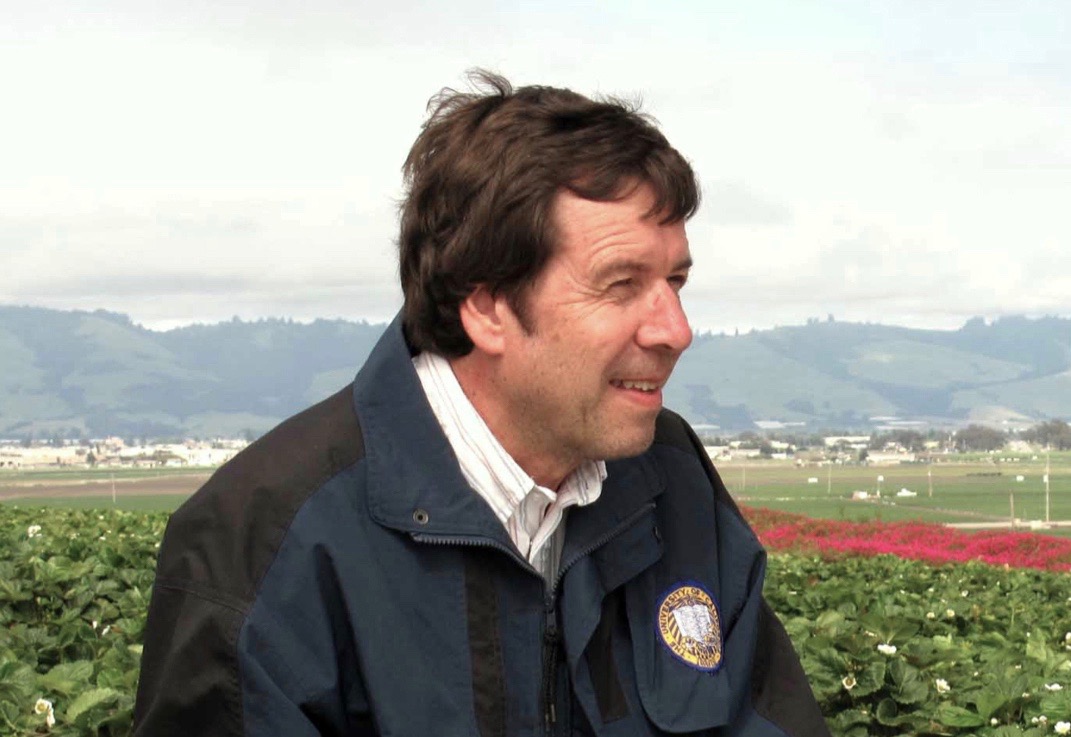
Gary Obenauf oversees the production research programs for the California Dried Plum Board. California Ag Today spoke with him recently about the work that he does with the fruit, also known as prunes.

Gary Obenauf, Production Research Manager

Obenauf helps with post-harvest issues in storage and handling. He also helps the industry with technical issues such as maximum residue limits, also known as MRLs.

“We ship to 135 different countries around the world,” said Obenauf. “We are the largest producer in the world of dried plums—most of the rest of the world still calls him prunes instead of dried plums.”

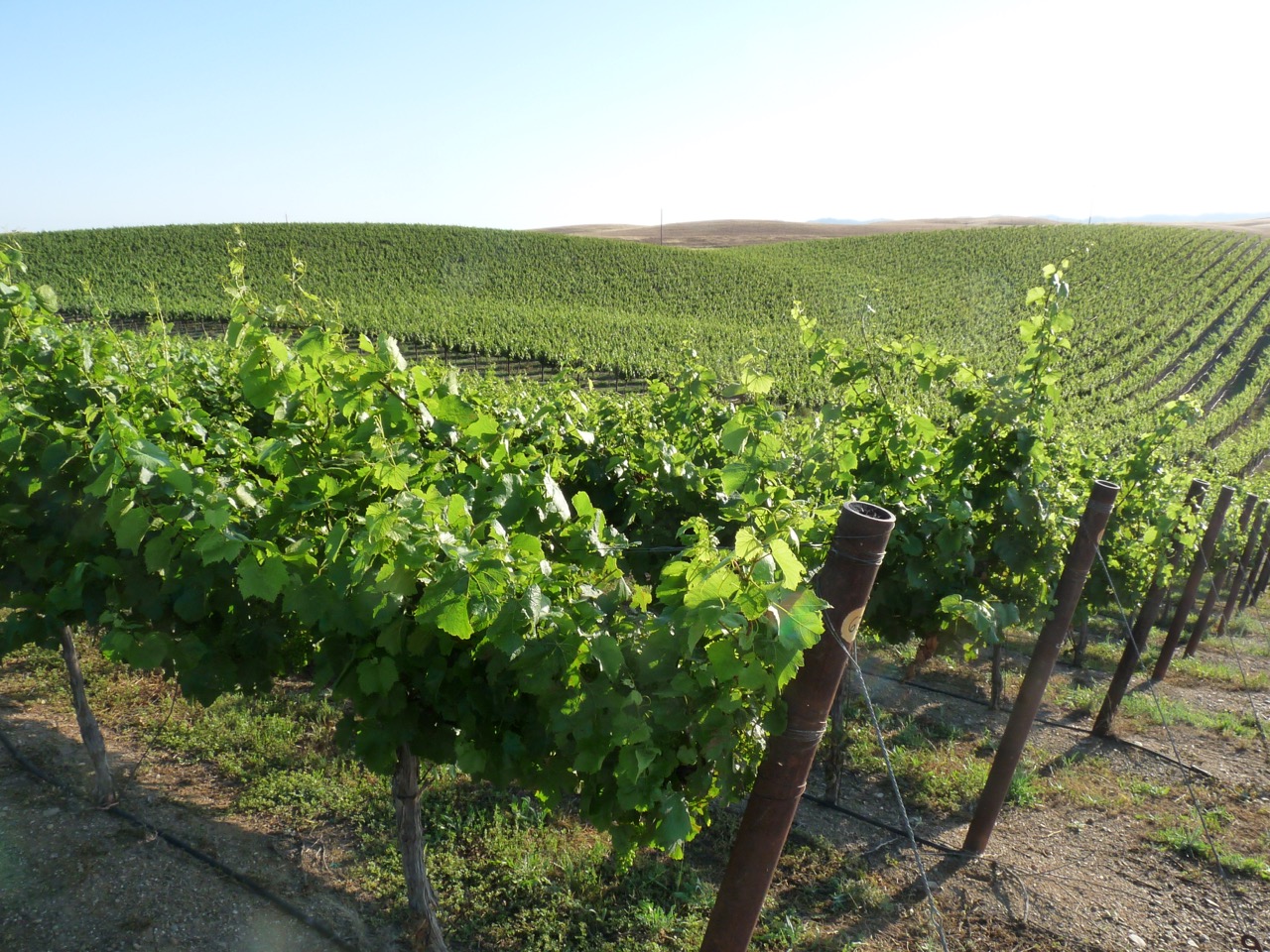
Obenauf said prunes are now being called dried plums due to a marketing issue about 10 to 15 years ago.

“We noticed that the younger millennials preferred dried plums over prunes, and we made the name change, but we are probably going change it back to prunes,” he said.

Obenauf said that insects, diseases, production cost, and pruning costs are some of the big challenges in the industry. “Essentially, 95 percent of our production is one variety; we need multiple varieties,” Obenauf said.

“We have an active breeding program, but we have not yet come up with good alternatives to the French prune,” he said. “The improved French prune is a good variety, and it is hard to find replacements, and that’s the problem we are having.”
2021-05-12T11:05:10-07:00August 6th, 2018|

UC and Israel Sign Agricultural Research Agreement

California and Israel Face Similar Challenges

By Pam Kan-Rice, UC ANR News

From left, Ermias Kebreab, Eli Feinerman, and Mark Bell sign the agreement for Israel and California scientists to collaborate more on water-related research and education.

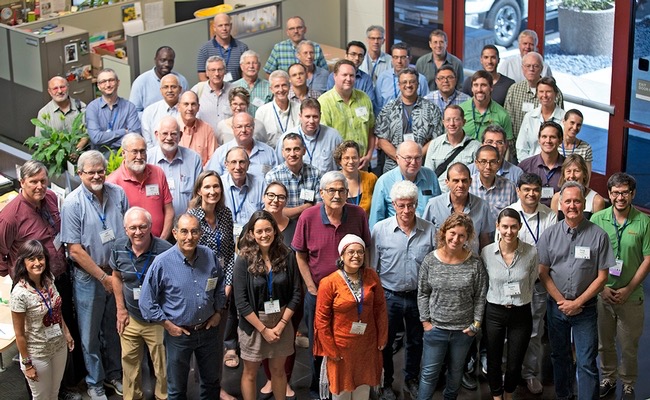
Pledging to work together to solve water scarcity issues, Israel’s Agricultural Research Organization signed a memorandum of understanding with the University of California Division of Agriculture and Natural Resources and UC Davis recently. The signing ceremony kicked off the 2018 Future of Water for Irrigation in California and Israel Workshop at the UC ANR building in Davis.

“Israel and California agriculture face similar challenges, including drought and climate change,” said Doug Parker, director of UC ANR’s California Institute for Water Resources. “In the memorandum of understanding, Israel’s Agricultural Research Organization, UC Davis and UC ANR pledge to work together more on research involving water, irrigation, technology and related topics that are important to both water-deficit countries.”

The agreement will enhance collaboration on research and extension for natural resources management in agriculture, with an emphasis on soil, irrigation and water resources, horticulture, food security and food safety.

“It’s a huge pleasure for us to sign an MOU with the world leaders in agricultural research like UC Davis and UC ANR,” said Eli Feinerman, director of Agricultural Research Organization of Israel. “When good people, smart people collaborate, the sky is the limit.”

Feinerman, Mark Bell (UC ANR vice provost) and Ermias Kebreab (UC Davis professor and associate vice provost of academic programs and global affairs) represented their respective institutions for the signing. Karen Ross (California Department of Food and Agriculture secretary) and Shlomi Kofman (Israel’s consul general to the Pacific Northwest) joined in celebrating the partnership.

“The important thing is to keep working together and develop additional frameworks that can bring the people of California and Israel together as researchers,” Kofman said. “But also to work together to make the world a better place.”

Ross said, “It’s so important for us to find ways and create forums to work together because water is the issue in this century and will continue to be.”

She explained that earlier this year, the World Bank and United Nations reported that 40 percent of the world population is living with water scarcity. 

“Over 700,000 people are at risk of relocation due to water scarcity,” Ross said. “We’re already seeing the refugee issues that are starting to happen because of drought, food insecurity and the lack of water.”

Ross touted the progress stemming from CDFA’s Healthy Soils Program to promote healthy soils on California’s farmlands and ranchlands and SWEEP, the State Water Efficiency and Enhancement Program, which has provided California farmers $62.7 million in grants for irrigation systems that reduce greenhouse gases and save water on agricultural operations.

“We need the answers of best practices that come from academia, through demonstration projects so that our farmers know what will really work,” Ross said.

As Parker opened the water workshop, sponsored by the U.S./Israel Binational Agricultural Research and Development (BARD) Program, Israel Agricultural Research Organization and UC ANR, he told the scientists, “The goal of this workshop is really to be creating new partnerships, meeting new people, networking and finding ways to work together in California with Israel, in Israel, with other parts of the world as well.”

Drawing on current events, Bell told the attendees, “If you look at the World Cup, it’s about effort, it’s about teamwork, it’s about diversity of skills, and I think that’s what this event does. It brings together those things.”

2021-05-12T11:05:10-07:00July 24th, 2018|

USDA Confirms Additional Cases of Virulent Newcastle Disease in Backyard Birds in California 

California Backyard Chickens Succumb to Newcastle Disease

News Release Edited By Patrick Cavanaugh

The United States Department of Agriculture’s (USDA) Animal and Plant Health Inspection Service confirmed five additional cases of virulent Newcastle disease in backyard exhibition chickens in California—two in Los Angeles County, one in Riverside County and two in San Bernardino County.

A complete list of confirmed cases is available on the USDA’s website at www.aphis.usda.gov/animalhealth/vnd.

Virulent Newcastle disease has not been found in commercial poultry in the United States since 2003.

No human cases of Newcastle disease have ever occurred from eating poultry products. Properly cooked poultry products are safe to eat.  In very rare instances, people working directly with sick birds can become infected.  Symptoms are usually very mild and limited to conjunctivitis. Infection is easily prevented by using the standard personal protective equipment.

Samples from the flocks were tested at the California Animal Health & Food Safety Laboratory System (CAHFS).  The APHIS National Veterinary Services Laboratories in Ames, Iowa, confirms all findings. APHIS is working closely with the California Department of Food and Agriculture to respond to these findings and to conduct an epidemiological investigation. Federal and State partners are also conducting additional surveillance and testing in the area.

In addition to practicing good biosecurity, all bird owners should report sick birds or unusual bird deaths to State/Federal officials, either through their state veterinarian or USDA’s toll-free number at 1-866-536-7593. Additional information on biosecurity for backyard flocks can be found at Biosecurity for Birds.

2021-05-12T11:17:09-07:00July 23rd, 2018|

Caltec Shares Innovative Pest Control Practices

A New Approach to Managing Vine Mealybug

By Hannah Young, Contributing Editor

Some innovative pest and disease control products, such as heat application to kill insects, are making their way to the market, according to Caltec.

California Ag Today spoke with Rudy Monnich, president of Caltec Ag, about some of the new ways California farmers are fighting pests.

caltec

Rudy Monnich with Caltec

“We have a product which is the diatomaceous earth that controls vine mealybugs and ants and mites in orchards and vineyards,” Monnich said, adding, “There is nothing more damaging than vine mealybug. In fact, Monterey County is forming a committee to be zero tolerant just for that insect pressure.”

The product is silica dioxide and will scarify the body of insects, dehydrate them, and in result kill them off in three or four days, Monnich explained.

However, the product is not a chemical, but a mineral, which significantly diminishes resistance issues.

“You don’t have the resistant issues build up,” Monnich said. “It’s also controlling thrip and whitefly in tomatoes.”

Caltec introduced the product this past spring.

Heat application can also be used by growers to combat insect problems.

“We are working with the Agrothermal people who have a machine that 300-degree to 400-degree temperatures will annihilate soft-bodied insects in tomatoes and powdery mildew in grapes,” Monnich said.

The application of heat kills the spores before signs of damage appear on the plant, Monnich explained.

This method of pest control is increasing the quality of wine, Monnich concluded.

2021-05-12T11:05:10-07:00July 20th, 2018|

Boost Biomes Working on Disease Resistance

Researching the New Frontier

By Jessica Theisman, Associate Editor

California Ag Today recently spoke with Robert McBride of Boost Biomes. McBride explained his vision for the company.

“It’s the new frontier; It has not been researched that much,” he said.

He told us that the company is working on getting the correct microbes into the soil to enhance plants’ productivity.

“I would say the key thing that we think about in terms of getting the right microbes into the soil is that microbes are kind of like a plant’s second genome,” McBride said.

Genomes have the ability to impact the plant’s phenotype, along with the way the plants grow in different temperatures and soil salinity levels.

“They can change the flavor of the fruits and it is all controlled by the microbes in the rhizosphere,” McBride explained.

Boost Biomes is interested in controlling pest resistance. The microbiome shifts to a state that is protective.

“What we would like to do is take soils that are not protective and encourage that shift to happen more quickly,” McBride said.

Boost Biomes takes advantage of the natural microbes in the soil and rhizosphere that protect the plants.

“We are trying to identify the right network to put into the soil to get into the rhizosphere to make the plants resistant against diseases,” McBride explained.

2021-05-12T11:05:10-07:00July 18th, 2018|

Caltec Ag Keeps the Industry Up to Date

Caltec Ag is Busy with Research to Help Farmers

By Mikenzi Meyers, Associate Editor

Rudy Monnich

It’s no secret that technology is more advanced than it’s ever been, and the agriculture industry is no exception. Rudy Monnich, president of Caltec Ag, is helping to ensure that growers are provided with new and innovative technology to improve their crops.

Caltec Ag is a consulting and contract researching group based out of Modesto. They have been in business for about 64 years, and throughout their farming and research, they know firsthand that advanced technologies are key to progressive farming. Not only do they distribute products throughout the United States, but Monnich explained that this year, they are doing over 300 test blocks, mostly on crop protection materials that are all new and innovative.

Research between Caltec Ag and a company they work with led to the discovery of a new organic bacteria that Monnich described as “just phenomenal.”

He also highlighted the effectiveness and efficiency of drones that the company was able to observe in Japan. Not only was the drone able to spray specific locations of a field versus the entire thing, but it was more effective when it came to getting photographs and the data behind it.

“That’s what’s really important to the growers,” Monnich said.

2021-05-12T11:05:10-07:00July 17th, 2018|

Re-Nuble: Eliminating Food Waste By Converting it to Fertilizers

Wasted Food Can be Processed for Agriculture

By Jessica Theisman, Associate Editor

California Ag Today recently met with Tinia Pina, CEO of Re-Nuble. She told us about the company and what they stand for.

“We focus on sourcing food waste from wholesale food distributors,” she said.

Re-Nuble works on diverting food to food banks instead of landfills.

Re-Nuble primarily sources in urban areas due to compliance and regularity drivers to divert the food from landfills. New York City has a 2020 goal of achieving zero waste.

“The waste that can not be diverted to food banks is processed in a more cheaply manner,” Pina said.

This waste is turned into a product that is sold directly to farms as well as through resellers as an organic liquid fertilizer and pelletized fertilizer.

“It is just raw green food waste. There is that much volume at the wholesale produce distribution level,” Pina explained.

Food that ends up as ‘waste’ is usually because it does not meet food safety compliance.

“It could be from temperatures varying, the food fell on the floor,  broken pallets, and anything that would subject it to the risk of contamination; that is at the point that we collect it,” Pina said.

Re-Nuble is essentially networking, collecting, and turning food around as another renewable resource.

“We work with a hauler  to source it from our one wholesale food distributor and we take it on a daily basis and we basically, within 24 hours, turn it into either a liquid fertilizer that is sold as a fertilizer for controlled environment agriculture or as a pelletized fertilizer, which is great for soil environments,” Pina explained.

The fertilizer is either resold through some of Re-Nuble’s distribution partners or directly to the farms. Re-Nuble is currently in New York; however, they are working on extending out to California.

2021-05-12T11:05:10-07:00July 12th, 2018|

Monsanto Seeds Transitioning to Bayer Crop Science

Bayer Seeds Going to BASF

By Patrick Cavanaugh, Editor

Sebastian Langbehn is the commercial lead for the Vegetable Division within Monsanto. California Ag Today spoke to him recently, and he is busy.

“We are right now in the process of integrating into Bayer Crop Science, and we’re pleased about the outcome of the whole regulatory process, where Bayer has purchased Monsanto,” Langbehn said. “We finally got the approval slightly more than a month ago, and there will be a clean cut.”

Langbehn said that the vegetable seed division from Bayer will be divested and will be acquired by BASF, and now the company is in the process for integrating the Monsanto vegetable division within Bayer.

“We see this as an amazing tool that will enable us to tap in with an integrated solution to farms so that we don’t restrict ourselves only to provide solutions through genetics, but through the entire portfolio that we will have within Bayer, as the company’s new vegetable division,” Langbehn said.

2021-05-12T11:05:10-07:00July 1st, 2018|

Researchers Take a Look into the Future of Strawberries

Survey Coming to Growers to Gauge Interests

By Hannah Young, Associate Editor

A strawberries survey connected to a project that looks at the future of strawberry genetics will soon be sent to strawberry growers.

Daniel Tregeagle, a postdoctoral scholar of agricultural economics at UC Davis, is working on the survey.

“This project is being run over the state of California, through a number of different institutions, different universities, including the state of Florida,” Tregeagle said. “Strawberry growers all over the country are trying to find out what we should be breeding in the next generation of strawberry cultivars.”Strawberries

The project is part of a Specialty Crop Research Initiative, which is considering what growers are looking for in the next generation of strawberries, Tregeagle said.

“Do they want better yields? Do they want more attractive features that the consumers are going to like? Do they need disease resistance?” Tregeagle asked.

However, growers can’t have everything, because when a cultivar is strong in one area, they tend to be less strong in other areas.

“So what we’re doing in the survey is asking growers what are the main diseases that they’re facing, how are they managing those diseases currently and what would they do differently if they had a better, more resistant strawberry cultivar that could resist those particular diseases,” Tregeagle explained.

Researchers are also interested in looking at fumigation and how they might change in the presence of a more resistance cultivar, Tregeagle added.

2021-05-12T11:05:11-07:00July 1st, 2018|

Frank Zalom Named Editor-in-Chief of Journal of Economic Entomology

UC Davis Professor to Head Distinguished Publication

News Release Edited By Patrick Cavanaugh

Integrated pest management specialist Frank Zalom, distinguished professor of entomology, UC Davis Department of Entomology and Nematology, and a past president of the Entomological Society of America (ESA) is the newly selected editor-in-chief of the Journal of Economic Entomology, the largest and most cited of ESA’s family of scientific journals.

Frank Zalom

The ESA Governing Board today announced that Zalom will succeed John Trumble, distinguished professor of entomology at UC Riverside. Trumble, editor-in-chief for 20 years, informed ESA in late 2017 of his intent to leave the role in 2018. In January, the journal’s editorial board launched a widespread search for his successor.

A 43-member of ESA and the 2014 president, Zalom will serve a five-year term as editor-in-chief. The journal publishes research on the economic significance of insects. It includes sections on apiculture and social insects, insecticides, biological control, household and structural insects, crop protection, forest entomology, and other topics.

“Dr. Frank Zalom’s career can be viewed as a model of applied entomology derived from an understanding of basic biology, and he is an ideal choice to be the new editor-in-chief of the Journal of Economic Entomology (JEE),” said ESA President Michael Parrella in an ESA news release.

“His unparalleled and broad expertise will serve to continue the journal’s growth as the publication of choice for applied entomological research and to build upon the legacy of Dr. John Trumble,” said Parrella, who is also dean of the College of Agricultural and Life Sciences at Idaho State University and former professor and chair of the UC Davis Department of Entomology and Nematology. 

Zalom’s 40-year career intersects entomological research, teaching, and application. He served 16 years as director of the University of California Statewide Integrated Pest Management Program (UC IPM) and is the only entomologist in the UC system to receive a simultaneous appointment in teaching, research, and extension. He focuses his research on IPM of agricultural crops.

Editorial board chair Xuguo Zhou, associate professor of entomology at the University of Kentucky, said he and his colleagues are delighted to welcome Zalom as the next editor-in-chief. “We could not have asked for a better candidate in terms of vision, dedication, reputation, experience, and integrity,” Zhou said. “And we also express our deep gratitude to Dr. John Trumble, whose tireless work ethic and unerring leadership have driven JEE to such great success for so long.”

“I couldn’t be more pleased to be selected the next editor-in-chief of the Journal of Economic Entomology,” Zalom said. “I have spent the last 40 years of my career trying to solve economically important problems caused by arthropods using an IPM approach, and this journal, as well as ESA’s other journals, have always served as a primary foundation and outlet for research conducted in my lab. As I approach the end of my career, I hope to be able to dedicate my efforts to enhancing our Society’s influence on science and its application to addressing some of the most important entomological challenges that affect communities worldwide. JEE is uniquely positioned to do exactly that.”

Zalom joined the UC system in 1980, serving in roles ranging from extension IPM coordinator to professor to vice chair of the department to advisor of the UC Davis International Agricultural Development Graduate Group. He has authored more than 335 journal articles and book chapters. including “Food, Crop Pests, and the Environment” published by APS Press. 

His career includes serving as major professor for 12 Ph.D students and seven master’s degree students.

Zalom is a fellow of the California Academy of Sciences, the American Association for the Advancement of Science, the Royal Entomological Society, and ESA.  Among his numerous honors: a Fulbright Senior Research Scholarship (1992-93), the ESA Achievement Award in Extension (1992), the ESA Recognition Award (2002), the James H. Meyer Award from UC Davis for teaching, research and service (2004), the Entomological Foundation IPM Team Award (2008), the Entomological Foundation Excellence in IPM Award (2010), Outstanding Mentor Award from the UC Davis Consortium for Women and Research (2013) and the C. W. Woodworth Award (2011), the highest award given by the Pacific Branch of ESA (PBESA).

More recently, Zalom received a lifetime achievement award, presented at the 9th International IPM Symposium, held March 19-22 in Baltimore. Last month he played a key role in a U.S. Congressional briefing held in the Rayburn House Office Building to raise awareness for and increase understanding of areawide integrated pest management (AIPM) and the benefits of a comprehensive pest management policy, particularly as it relates to invasive species.

Zalom, who received his doctorate in entomology from UC Davis in 1978, holds two degrees in zoology and ecology from Arizona State University (bachelor of science, 1973, and master’s degree, 1974).

Founded in 1889 and headquartered in Annapolis, Md., ESA is the world’s largest organization serving the professional and scientific needs of entomologists and people in related disciplines.

2021-05-12T11:05:11-07:00June 25th, 2018|
Go to Top