Farmers Launch New Health Advertising Campaign for Grapes

Ad Series Highlights Links Between Grapes and Healthy Heart, Brain, and Colon

News Release Edited By Patrick Cavanaugh

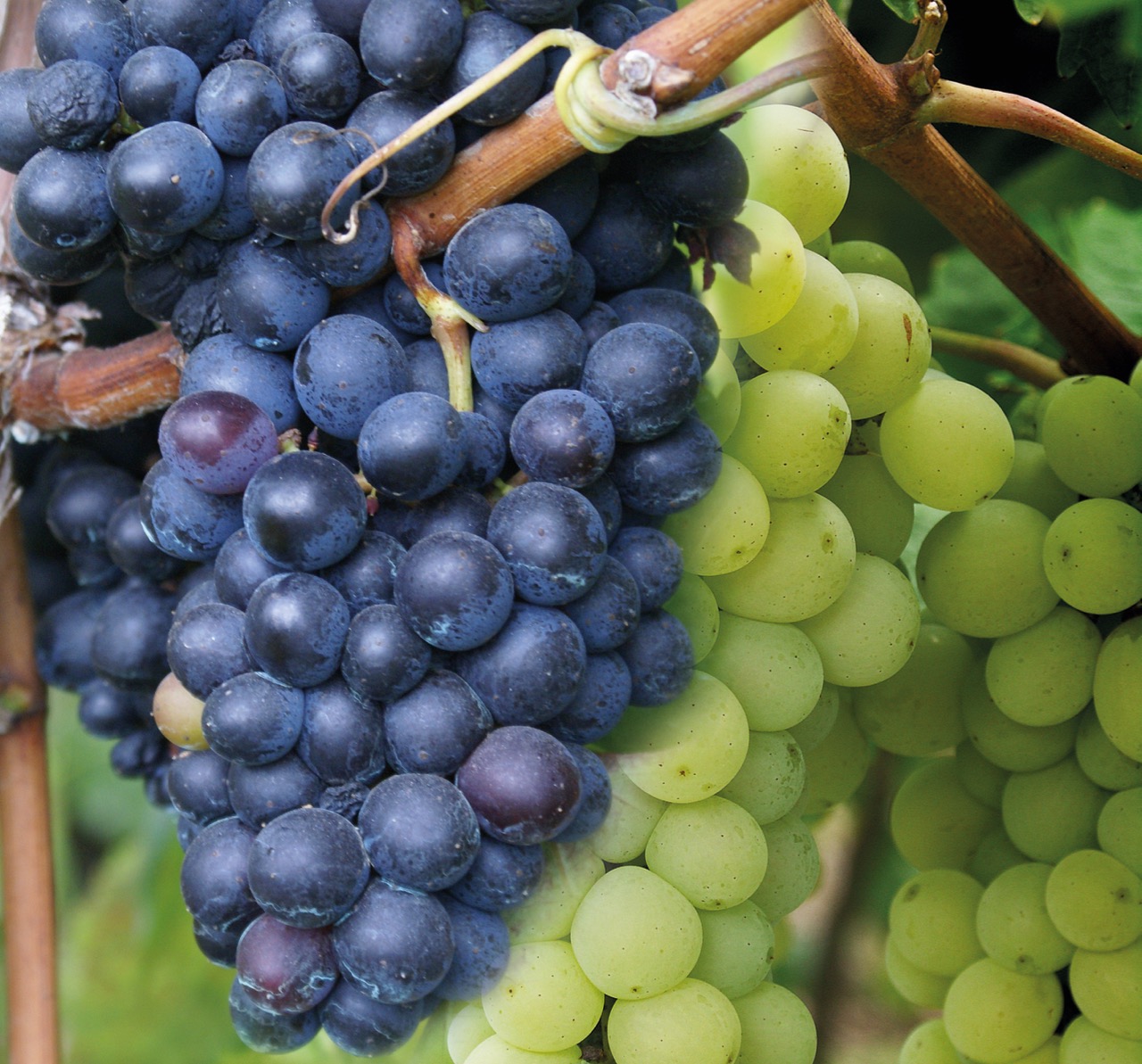
A new ad campaign from the farmers of fresh California grapes highlights how consuming normal amounts of grapes each day may contribute to long-term health by helping to maintain a healthy heart, brain, and colon.

Reaching consumers online and through print and broadcast, the campaign revolves around a series of ads focusing on the power of the whole fruit: grapes contain more than 1,600 documented natural plant compounds, including antioxidants and other polyphenols.

Each ad highlights key research from scientific study in the area of heart, brain, and colon health. Scientists believe it is the combination of natural plant compounds and daily consumption that provides benefit.

Kathleen Nave, California Table Grape Commission president

Kathleen Nave, California Table Grape Commission president

“Consumers have always loved grapes for their great taste, convenience, share-ability, and beauty. Through this campaign, consumers will learn that the health benefits grapes provide go beyond the basics of eating a favorite fruit as part of a healthy diet,” said Kathleen Nave, California Table Grape Commission president. “It is already established that grapes are a heart-healthy food, and now research in the areas of brain and colon health is emerging that suggests that grapes may have an even broader role to play in long-term health.”

Nave noted that research into these three areas of health, and numerous others, will continue.

The campaign will run in magazines and newspapers in both print and online, on health-related websites, on television and radio, and on social media.

2018-10-01T15:35:35-07:00October 1st, 2018|

Karen Klonsky Dies, Thursday, Sept. 27

Klonsky Credited for CA Agricultural Cost and Return Studies


By Patrick Cavanaugh, Editor and Laurie Greene, Founding Editor

Editor’s Note: We extend our deepest condolences to Karen’s family. Below is our interview with Karen upon her retirement in 2015.


This is an exclusive interview with Karen Klonsky, UC Davis Cooperative Extension specialist emeritus, in the UC Davis Department of Agricultural and Resource Economics. Her expertise has been farm management and production, sustainable agriculture and organic agriculture.

CalAgToday: Congratulations on your recent retirement!UCANR 100 years logo

Klonsky: Thanks, Patrick. I retired on July 1, 2015, after 34 years. I started at UC Davis in ’81, straight from graduate school.

CalAgToday: What has been your primary research interest?

Klonsky: My primary research areas are c and organic agriculture. I have approached these subjects from several dimensions, including the economic feasibility of alternative farming practices, the size and growth of organic production in California, and factors influencing the adoption of alternative farming systems.

Karen Klonsky UC Cooperative Extension specialist

Karen Klonsky UC Cooperative Extension specialist

CalAgToday:  Wow, what a great career! I understand your interest in alternative farming systems began with your dissertation work comparing alfalfa systems with integrated pest management.

Klonsky: I studied agricultural economics in graduate school and started working with a professor in my department who had a joint appointment in agricultural economics and entomology. And I just became very interested in that research area.

I worked with entomologists and researchers on a computer model of plants and alfalfa weevils, and their interaction, plus a management component. I studied the plant and bug components, then did the management part and imposed it on top and asked, ‘If you did this, how many bugs would die?’ The plant model showed how much the alfalfa would grow, and at what point you could cut the alfalfa and achieve the desired yield. I never actually did any fieldwork.”

CalAgToday:  Since 1983, you not only directed ongoing Cost and Return Studies, but the development of an entire archived library of Cost and Return Studies for the UC Davis Department of Agricultural and Resource Economics. You recently completed studies on pistachios and walnuts, right?

Klonsky: Yes, both “Sample Costs to Establish and Produce English Walnuts In the Sacramento Valley, Micro sprinkler irrigated” and “Sample Costs to Establish and Produce Pistachios In the San Joaquin Valley-South, Low-Volume Irrigation.”

Our library contains studies about field, tree and vine crops and animal commodities. But since I retired, Dan Sumner, director, University of California Agricultural Issues Center and Frank H. Buck, Jr. Distinguished Professor for the Department of Agricultural and Resource Economics has taken that over and I continue to be peripherally involved.

CalAgToday:  These cost studies have been recognized worldwide.ARE Cost and Return Studies

Klonsky: Yes, and it has been very gratifying work. We decided to put them online routinely, and we have had a million downloads per year. Around 2005, Pete Livingston, my staff research associate, got the idea of scanning in the older studies. All of the newer studies were in electronic file format, so posting was easy. However, most of the older studies were paper copies, so we got a grant to scan and add them to our new online archive.

CalAgToday:  What was the most interesting thing about doing those cost studies?

Klonsky: I loved doing those studies. I really learned a lot because all cost studies are done directly with farmers we met through county farm advisors. I really got to know what farmers were thinking about and what their options were.

CalAgToday:  So those were real costs, not university costs?

Klonsky: Those were not university costs. The farmers tell us what equipment they will use, and then we calculate the cost of using their equipment—the fuel used to operate the equipment and the repair costs—with an agriculture-engineering program.

CalAgToday:  Do you have a math background?

Klonsky: Yes, I got my bachelor’s at the University of Michigan in mathematics. It was very helpful.

CalAgToday:  And you also earned your Ph.D. at the University of Michigan?

Klonsky: Yes.

CalAgToday:  So did you grow up in Michigan?

Klonsky: No, I grew up in New York.

CalAgToday:  And you had an interest in going to Michigan State University?

Klonsky:  I had an interest in agriculture because I had an uncle who farmed corn and vegetables in upstate New York. We would go up there and I thought it was the most wonderful thing in the world.

CalAgToday:  What were some of the highlights of your career?

Klonsky: For many, many years, I was involved in the long-term on-campus sustainable agriculture research on land that is now on Russell Ranch, but it started as Sustainable Ag Farming Systems. We looked at four different farming systems, organic, low input, high-input, and we did a lot of analyses with cover crops and rotations. It was great to work on that project.

CalAgToday: And you worked with USDA on the trends of organic farms?

Klonsky: Then I worked quite a bit with Department of Food and Agriculture on using the registration data for their organic farmers to compile statistics about how many farmers they had, what they grew, and the number of acres they planted with each crop. They had this database, which started in 1992 I believe, but they weren’t using it. Now the most recent registration analysis is available for 2012.

CalAgToday:  Just to try to get more data on the organic movement and organic growth?

Klonsky: Yes, because there was no data at all about it. Now NASS (National Agriculture Statistics Service) conducts a nationwide Organic Census, in addition to the regular Census of Agriculture.

CalAgToday:  I understand you served as an editor of the Journal of American Society of Farm Managers and Rural Appraisers (ASFMRA). What did that entail?ASFMRA

Klonsky: Yes. I did that for many years. ASFMRA is a national organization. The Journal of the ASFMRA comes out annually. As editor, I corresponded with the authors, assigned reviewers, and ultimately, accepted or rejected submissions, like any journal.

CalAgToday:  Did you travel a lot with your work and presentations?

Klonsky: You know, not so much, I went to Spain one time and France once for work. But I did travel around domestically to symposiums and conferences to speak on the economics of growing a lot of different crops, including many presentations at the EcoFarm Conference.

CalAgToday:  You worked and collaborated with some really interesting people.

Klonsky: Most of my important collaborations were conducting trials with people in other disciplines. For instance, at Russell Ranch, I was the only economist involved in the collaboration with plant pathologists and pomologists who ran trials to discover fumigation alternatives in the preplanting of trees.

Then I worked with people at UC Santa Cruz on alternatives for strawberry fumigation. Most of my work has been interdisciplinary.

CalAgToday:  California farming is a tremendously diverse industry. We produce 60% of the fruits and vegetables, and nearly 100 percent of the nut crops that people across the country consume. Any comments on that and on how, valiant and resilient farmers are to get through year after year, particularly lately with the drought and the lack of water deliveries?

Klonsky: When I first started, there was a land price bubble, and there were a lot of bankruptcies because people had these land payments they just couldn’t pay.

It was kind of like the mortgage crisis that housing saw in 2008, agriculture saw in the early 80s.

CalAgToday:  So as you have been editor for the Journal of the American Society of Farm Managers and Rural Appraisers, you see land values going up and that keeps agriculture strong—the high land values, right?

Klonsky: Well, but it keeps it expensive. So now there is more and more leasing of land. As farmers retire from permanent crops, they have an orchard, but they don’t really want to sell it, so they lease it.

CalAgToday:  There you go. Keep it somehow in the family.

Klonsky: Yes, they try to keep ownership in the family. Or what we see also are these development leases where a young farmer can’t afford to buy the land, so they lease the land, but they pay for the trees to be planted.

CalAgToday:  So you are still coming to your office at UC Davis?

Klonsky: I am officially retired, but we have what we call a ‘partial recall’ where you can do things if you have funding. I have a project along with Rachel Goodhue, Professor, UC Davis Department of Agricultural and Resource Economics, with the California Department of Food and Agriculture, funded through the California Department of Pesticide Regulation. The Department of Pesticide Regulations is required by law to do an economic analysis of all proposed new regulations. So that is what I am working on.

CalAgToday:  Give me a couple of examples. VOC regulations?

Klonsky: Yeah, we do VOC.

CalAgToday:  Are you looking at sustainable groundwater legislation?

Klonsky: No, just pesticide regulation. It is funded by the Mill tax on pesticides.

CalAgToday:  Did you work with a lot of graduate students at UC Davis?UC Davis Graduate Studies

Klonsky: Oh yeah, I worked with a lot of graduate students coming through. One of them was on different ways of pesticide management on eucalyptus trees. I said I went to Spain. On that trip, I spoke about growing eucalyptus for firewood.

CalAgToday:  That was an economic study, wasn’t it?

Klonsky: Yes it was. They grow it not for firewood, but for paper. But that never really caught on here.

CalAgToday:  Are you bullish on agriculture? Do you think Ag is going to continue thriving in California?

Klonsky: Oh, sure. Oh, sure. But I think that the water situation is definitely real, and I think agriculture already has definitely made tremendous strides in irrigation systems, especially the subsurface irrigation in vegetables, in particular processing tomatoes, which I worked on.

CalAgToday:  That was a huge improvement in growing tomatoes. And people didn’t think it was going to work, but it turned out to be fantastic.

Klonsky: Yeah, a really win-win on that one. And orchards are getting more efficient. If you look at the water per pound of crop produced, you see major improvements with water efficiency.

CalAgToday:  Absolutely. Of course, most plants transpire most of the water they take up through the roots, up through the leaves and the stomata cells. By the way, do you have any interesting stories regarding your career?

Klonsky: It’s not the highlight, but the weirdest thing of my career is I got an email from somebody in Ministry of Agriculture and Fisheries from the United Arab Emirates. They wanted me to give a live presentation about Cooperative Extension in California and how it’s organized.

So I had to go to this office building in downtown Sacramento at 10:00 at night because of the time difference. I went into a conference room that had a special kind of projector so I could see them and they could see me. And on the monitor I see all these men walked in—they were all men—and half of them were in Western dress and half of them were wearing a Sheik-like headdress, with a band that sits on top and holds it on.

That was crazy, just being downtown after everybody is gone and the whole building was dark and quiet, except the one room that I was in.

CalAgToday:  How long was the presentation?

Klonsky: Gosh, maybe an hour.

CalAgToday:  You needed to do some research for that presentation?

Klonsky: Yeah, I had to do some research, I had to think about Cooperative Extension in a different way—the big picture. 

CalAgToday:  Keep up the good work, and I hope you are enjoying retirement.

Klonsky: Yeah, I come in two days a week, so it is nice to see everybody. I still get a lot of emails, which I need to answer.

2018-10-02T20:13:53-07:00September 29th, 2018|

2017 Tulare County Crop Report Tops $7 Billion

Tulare Crop Report Shows 10 Percent Growth in Single Year

By Patrick Cavanaugh, Editor

Big numbers announced today from Tulare County Ag Commissioner Marilyn Wright on the 2017 crop year.

“Our value is 10.5 percent up from last year, at 7,039,929,000. So, that’s 669 million more than the previous year,” Wright said.

Marilyn Kinoshita, Tulare County Ag Commissioner

Marilyn Wright, Tulare County Ag Commissioner

And, of course, more water in the system probably helped, as it did in Fresno County, which announced $7.028 billion in its 2017 Crop Report, released earlier this month.

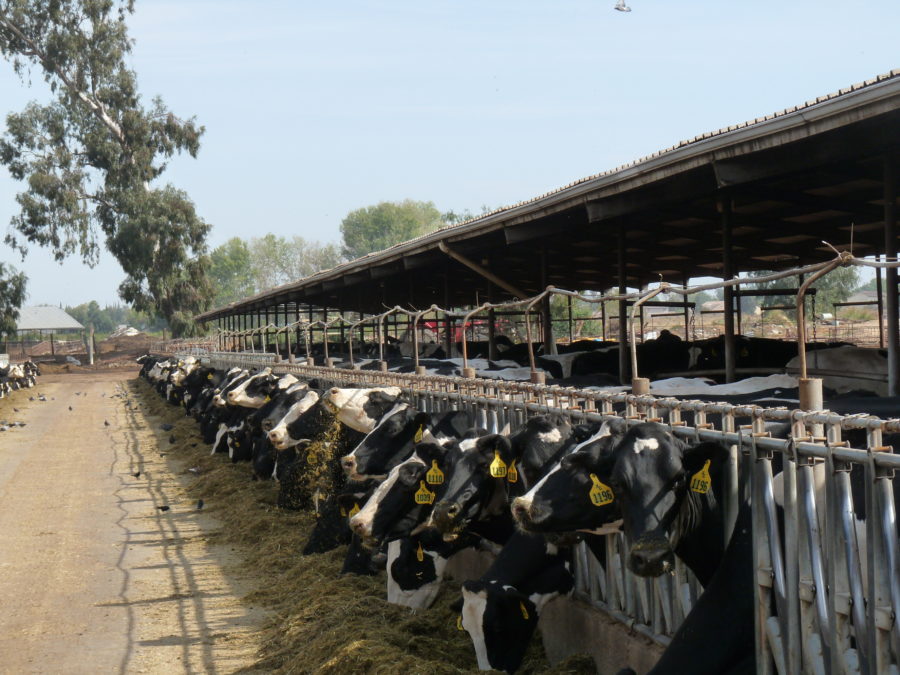
The dairy industry, which is prominent in Tulare County, came in number one again, representing 25 percent of the total value.

“Milk prices were stronger in early 2017, but they went down later in the year. And they continue to go down, but still it was a big part of the Tulare County ag receipts in 2017,” Wright said.

Following dairy were grape products—including juice grapes, raisins, and table grapes. Table grapes had a stellar year.

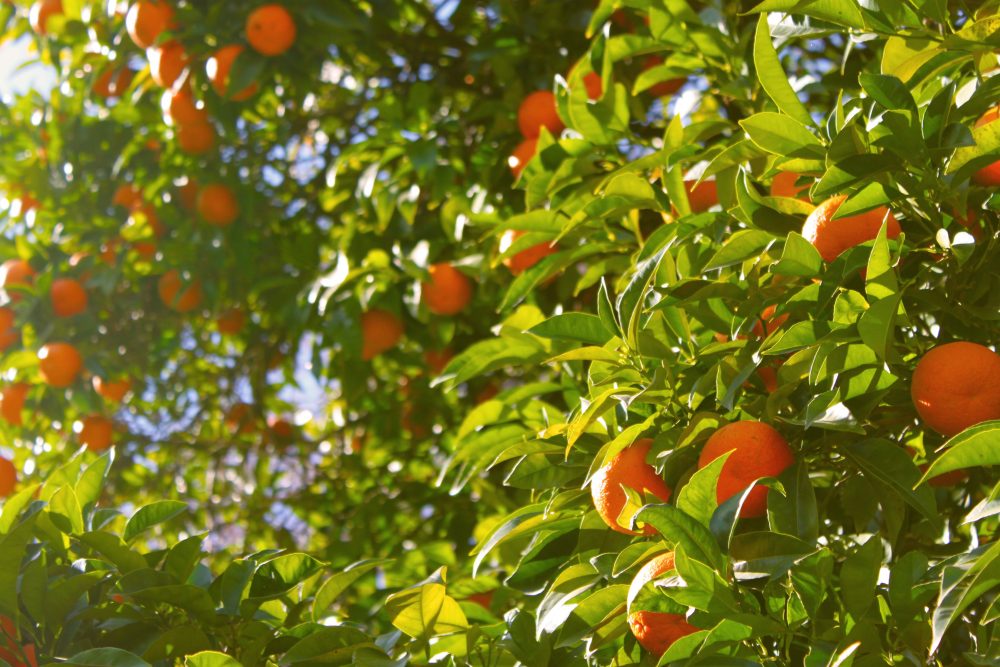
Navel and Valencia oranges were next. Cattle and calves ranked fourth, down from category number three in 2016, because cattle prices were off last year.

Tangerines, also known as mandarins, were number five, followed by almonds, cling peaches, and freestone peaches.

Lemons, were ninth on the crop list.

We only have just over 10,000 acres of lemons in the County, Wright said.

Wright said the value of this year’s crop report, $7.39 billion, is the third highest value Tulare County has ever reported.

2018-09-18T16:39:21-07:00September 18th, 2018|

Central Valley Innovation & Entrepreneurship Forum, Nov. 1, 2018

Big Event Expands Innovation In Water and Energy Savings

By Patrick Cavanaugh, Editor

Following the success of last year’s Innovation and Entrepreneurship event, the Forum will take place on Thursday, November 1, 2018, at the Clovis Veterans Memorial District.

The Forum combines the Central Valley Venture Forum and Central Valley Stock Exchange – two events that in the past have shaped the entrepreneurial landscape in the valley and became the most significant event for innovation and entrepreneurship in the Central Valley.

Laura Ramos is the Communications and Marketing Manager for the Water, Energy, and Technology (WET) Center at CSU Fresno. She noted that Forum has three distinct sections.

“First, we want anybody that’s interested in entrepreneurship and investment to come and learn about entrepreneurship and what technologies and services are available to them and just to learn about investment opportunities for them,” Ramos said.

Secondly, there is the popular Showcase for Ag Tech Entrepreneurs with a goal of saving water and energy on the farm. “Applications are due Sept. 15th. And from those that apply, we’re going to select the top five. And representatives from these five companies are going to get to pitch at the forum,” Ramos said. “And while they pitch, we have a panel of investors and judges that will select the winner. The winner will receive an award either from the investor and the judge’s award, or a potential investment from an angel group.”

Thirdly, is what’s known as the Central Valley Stock Exchange. It’s very similar to a trade show where your company can exhibit. However, the exhibitors are vying for Bulldog dollars from the audience. Ramos said $1 million of bulldog monopoly money is given to each person that attends. “The entrepreneur’s job is to try to get the most investment from the attendees. And at the end of the night, the company with the most bulldog investment dollars gets to win the audience award.

For more information on the Central Valley Innovation & Entrepreneurship Forum go to cvieforum.com.

2021-05-12T11:05:09-07:00September 7th, 2018|

Food Bloggers, Dietitians Learn More About Produce Safety in Salinas

“Facts Not Fear” Educates Participants on Vegetable Production

News Release Edited By Patrick Cavanaugh

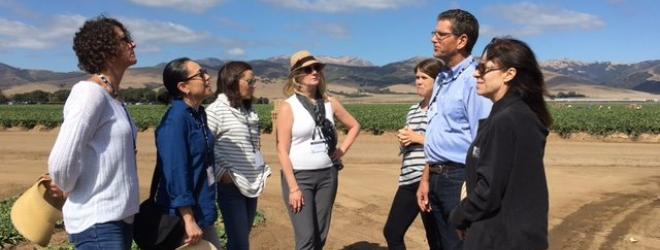
The Alliance for Food and Farming, in conjunction with Markon Cooperative, hosted its second “Facts Not Fear” Produce Safety Media tour last week in the Salinas Valley.

“Our goal is for … [registered dieticians], health and nutrition writers and bloggers to see firsthand the care and commitment farmers have for producing safe and wholesome foods.  We believe we met that goal.  But, what we learn from our tour guests continues to be just as valuable,” said Teresa Thorne, Executive Director of the Alliance for Food and Farming, based in Watsonville.

In addition to farm and facility tours, the AFF and Markon facilitated a round table meeting where tour guests were joined by farmers and farming companies, scientists, regulators and chefs for a free-flowing discussion that encompassed food safety, farming practices, food waste, pesticide use, food safety regulations, new technologies, health and nutrition, and consumer outreach.

The RDs, bloggers, and writers attending the tour reported they enjoyed the chance to tour the farms one day and then discuss what they saw with these experts.  They also appreciated the opportunity to share their information needs and concerns directly during the round table discussion.

And, what were some of our key takeaways from guests?  Consumers want transparent and honest communication regarding food safety and food production practices.  The RDs, bloggers, and writers share The Alliance for Food and Farming’s concerns about produce safety misinformation and appreciate and need access to scientists and experts that can assist them when addressing consumer questions and correcting misconceptions.

“And, they were very impressed with the technological advancements they saw in the harvesting and processing of produce,” said Thorne.

“While the importance of seeing the fields and harvest and touring processing facilities cannot be underscored enough, meeting and connecting with the people growing our food, directly sharing concerns with farmers and scientists in a group and one-on-one setting and the expansion of their produce industry network is of equal importance for our guests,” Thorne explained.

“Our sincere thanks to everyone who allowed us to visit their farms, watch the harvest, view their processing facilities as well as joined us for the round table discussion,” Thorne said.  “And, our thanks and appreciation to our tour partner, Markon Cooperative, for making this tour possible as well as our tour sponsors Cal-Giant Berry Farms, the California Strawberry Commission and the Produce Marketing Association.”

Thorne also praised the 2017 and 2018 tour alumni.

“We will keep the conversation going and look forward to learning more from the attendees as we all work toward our shared goal of increasing daily consumption of organic and conventional fruits and veggies,” she said.

The host, The Markon Cooperative, supplies the food service industry fresh fruits and vegetables.

2018-09-06T16:01:40-07:00September 6th, 2018|

Idea to Reduce Glyphosate Use with Grapes

Use Glyphosate When Absolutely Needed

By Mikenzi Meyers, Associate Editor

There is an effort underway to minimize glyphosate use before bud break in grapes. It doesn’t need to be used all the time. A lot of annual weeds can be controlled with several herbicides. Keep the glyphosate for hard to control perennials.

John Roncoroni, a UC Cooperative Extension Weed Science Farm Advisor in Napa County, has made strides toward meeting this challenge. Many times, growers will do two applications of herbicides during the year … but what I’m trying to do is push it back to post-leaf fall after the season to clean up and come back with a pre-emergent material right before bud break then maybe skip that last glyphosate treatment after bud break.

Roncoroni explained that the idea is for grower not to use glyphosate on weeds during the growing season.

Reserve Glyphosate for tough weeds such as field bindweed.

Roncoroni mentioned that he works with school districts and municipalities, and there are many of them want to ban the use of glyphosate.

“It’s not so much the glyphosate molecule; it’s that we have all used so much of it over the years,” he said. “Rely on preemergent materials early in the season and reserve glyphosate as a clean up at the end of the season.”

“My philosophy when I talk to people is to not ban it but to save it for needed use. Maybe we pretend that there are no herbicide alternatives available. We have annual grasses that are easy to kill, then use an alternative herbicide for that. But when you have weeds where you need that systemic benefit of glyphosate, then use it. It is a good molecule, and it has an important fit in weed control, but it does need to be used all the time,” Roncoroni said.

And of course, reading and following the herbicide label will maintain its safety.

2021-05-12T11:01:53-07:00August 23rd, 2018|

Study Forecasts Cost of Regulations on California Citrus Industry

Citrus Research Board Explains Cost Impacts on Growers

News Release From California Citrus Mutual

New regulations are expected to cost California citrus growers an average of $701 per acre per year, or $203 million annually statewide, according to a new study commissioned by the Citrus Research Board (CRB).

“Compliance with environmental regulations not associated with groundwater sustainability is estimated to increase costs by $17.7 million, or $67 per acre of citrus,” predicts Bruce A. Babcock, Ph.D., a professor in the School of Public Policy at UC Riverside who authored the study. “New labor requirements will increase costs by $112 million, or $357 per acre, once they are all phased in.”

“Babcock has presented a well-researched economic report that shows how new regulations will increasingly impact California’s citrus industry,” said CRB President Gary Schulz.

The report, Impact of Regulations on Production Costs and Competitiveness of the California Citrus Industry, also predicts that controlling the Asian citrus psyllid (ACP) “will increase costs by $65 million, or $248 per acre per year, if controls are extended to all citrus-growing regions.” Compliance training costs are estimated to increase costs by another $29 per acre, or $7.5 million for the state citrus industry.

“As I read and reread Dr. Babcock’s report, two things kept jumping off the page: one, ‘Cost increases borne by California’s citrus but not by … other citrus growing regions decrease the future competitiveness of California’s citrus industry’; and two, ‘… future compliance with these regulations is estimated to increase costs by $203 million, or $701 per acre per year,'” said California Citrus Mutual President Joel Nelsen. “When the cost of citrus at store level gets too expensive, consumers look for lower priced fruit. This UCR report paints a clear path for policy makers if their goal is to drive the citrus industry out of California and onto off-shore production areas.”

The 20-page report includes a breakdown of increases in labor costs, including California’s minimum hourly wage increases, which are scheduled to rise in annual increments to $15 over the next four years. The report also covers the projected cost increases of recent state legislation dealing with paid sick leave, payment rates for rest and recovery periods, overtime and workers compensation.

The section on insecticide treatment addresses grower cost of spraying for ACP, even though the severity of the problem currently differs greatly in various areas of the state. If ACP establishes itself in all citrus regions in the state, which the report says is “almost inevitable,” control efforts would amount to $39.5 million per year, according to Babcock. This would be in addition to the state-mandated tarping of fruit that is transported to packinghouses, at a cost of approximately $9 million per year.

According to the report, The Food Safety Modernization Act, which was passed in 2011 and is still being implemented, will not require major changes for growers who are already GFSI-certified (Global Food Safety Initiative compliant).

The impact of the Sustainable Groundwater Management Act (SGMA) is hard to predict, according to Babcock. “It will not be possible to calculate the impact of SGMA until each basin’s groundwater sustainability plans have been finalized,” he states. “Without new surface water supplies, it seems inevitable that some farmland that currently relies on groundwater will need to be fallowed to balance withdrawals with recharge rates.”

Babcock, a Fellow of the Agricultural and Applied Economics Association, has won numerous awards for his applied policy research. He received a Ph.D. in Agricultural and Resource Economics from UC Berkeley, and Master’s and Bachelor’s degrees from UC Davis.

The CRB administers the California Citrus Research Program, the grower-funded and grower-directed program established in 1968 under the California Marketing Act, as the mechanism enabling the state’s citrus producers to sponsor and support needed research. The full report on the Impact of Regulations on Production Costs and Competitiveness of the California Citrus Industry, as well as more information about the Citrus Research Board, may be read at www.citrusresearch.org.

2021-05-12T11:05:09-07:00August 22nd, 2018|

2017 Fresno County Crop Report Totals $7 Billion

Fresno County’s Ag Value Increases Significantly in 2017 Crop and Livestock Report


The Fresno County Department of Agriculture’s 2017 Crop and Livestock Report (Crop Report) was presented to the Fresno County Board of Supervisors Tuesday. Overall, the 2017 agricultural production value in Fresno County totaled $7.028 billion, showing a 13.58 percent increase from 2016’s $6.18 billion.

“Once again, Fresno County farmers and ranchers have produced an agricultural bounty for the world,” stated Fresno County Agricultural Commissioner Les Wright. “While much of this food and fiber goes towards feeding and supplying our nation, the Fresno County Department of Agriculture also issued 18,604 phytosanitary certificates for 133 commodities destined for 97 countries around the globe in 2017.”

“This Crop Report is comprised of nearly 400 commodities, of which 73 crops exceed $1 million in value,” Commissioner Wright continued. “Crop values may vary year-to-year based on production, markets and weather conditions, but our farmers and ranchers, their employees and all those who support their efforts work tirelessly year-around to bring in the harvest.”

With the great diversity of crops in Fresno County and the many variables in agriculture, it’s a given that some crops will be up in value while others are down. Increases were seen in a majority of the Crop Report segments, including field crops, seed crops, fruit and nut crops, livestock and poultry, livestock and poultry products, apiary products and pollination services, and industrial crops. Decreases were seen in vegetables and nursery. Surface water supplies were significantly better in 2017, although many Westside federal water contractors received much of that good news too late to benefit them with additional annual plantings.

Fresno County’s Top 10 Crops in 2017 (Source: 2017 Fresno County Agricultural Crop and Livestock Report)

Too often, the Crop Report gets summarized down to just a single overall number, but it yields a significant amount of information, such as the ability to examine changes and trends in crop acreage and yields. Amounts in the report reflect the gross income values only (income before expenses) and not the net return to producers.

“The San Joaquin Valley is the food capital of the World, and Fresno County is the region’s heart,” said Fresno County Farm Bureau (FCFB) CEO Ryan Jacobsen. “Daily, millions of food servings unceremoniously originate within our backyard, the result of generations of families and agricultural infrastructure that has been built to furnish an unbelievably productive, wholesome and affordable food supply.”

“The annual Crop Reports are more than numbers,” Jacobsen continued. “They provide the industry, the public and policymakers, regardless of the overall number, the opportunity to salute local agriculture and give thanks for the food and fiber, jobs and economic benefits, agriculture provides Fresno County.”

One popular component of the report is the review of the county’s “Top 10 Crops” that offers a quick glimpse of the diversity of products grown here. In 2017, these crops accounted for three-fourths of the report’s value. Almonds continue to lead the way as Fresno County’s only billion-dollar crop in 2017, representing 17.4 percent of the total gross value of the Crop Report. Added to this year’s list was mandarins at number six. Dropping out of the “Top 10 Crops” was garlic.

This year’s Crop Report was a salute to the Fresno-Kings Cattlemen’s Association. The organization is one of 38 affiliates of the California Cattlemen’s Association, a non-profit trade association that represents ranchers and beef producers in legislative and regulatory affairs.

2021-05-12T11:17:09-07:00August 21st, 2018|

Monsanto: Jury Got it Wrong on Glyphosate

A Statement from Monsanto Following San Francisco Verdict

No Evidence that Glyphosate Causes Cancer

By Scott Partridge, Monsanto Vice President

Like everyone else following the Dewayne Johnson v. Monsanto Co. trial, my colleagues and I have deep sympathy for Mr. Johnson’s plight. Our hearts go out to the Johnson family, and we understand their desire for answers. Glyphosate is not the answer. Glyphosate does not cause cancer. The jury got it wrong. We will appeal the jury’s opinion and continue to vigorously defend glyphosate, which is an essential tool for farmers and others. We are confident science will prevail upon appeal.

The jury’s opinion does not change the science. Glyphosate has a more than 40-year history of safe use. Over those four decades, researchers have conducted more than 800 scientific studies and reviews that prove glyphosate does not cause cancer.

The National Institutes of Health (NIH) and the Joint FAO/WHO Meeting on Pesticide Residues (JMPR) both recently reaffirmed glyphosate does not cause cancer. The U.S. Environmental Protection Agency (EPA) and other regulatory authorities in Europe, Canada, Japan, Australia, Korea, and elsewhere routinely review all approved pesticide products and have consistently reaffirmed that glyphosate does not cause cancer.

Rather than arguing the science, the plaintiff’s lawyers repeatedly crossed the line, distorted the facts and used baseless and egregious emotional appeals to inflame the jury. We are deeply troubled by the conduct of the plaintiff’s lawyers in this case. The judge admonished this conduct on several occasions and instructed the jury to ignore these statements. However, we are concerned that this conduct unduly influenced the jury’s deliberations, and we will be raising this issue in our appeal.

The plaintiff’s lawyers know they cannot win on the science. This lawsuit is based solely on the opinion of one organization called IARC. IARC is not a regulatory authority and did no independent studies. IARC is the same organization that determined beer, meat, cell phones, and coffee cause cancer. Investigative reports by Reuters and the Times of London have uncovered that IARC members reviewing glyphosate concealed important scientific data, edited out the conclusions of key studies, and were closely aligned with U.S. trial lawyers.

After IARC’s opinion was announced in 2015, U.S. trial lawyers started running advertising campaigns to recruit people for their lawsuits against Monsanto. There were no lawsuits blaming glyphosate for cancer until after IARC’s opinion. A federal judge overseeing some of these lawsuits recently stated that plaintiffs’ evidence is “shaky” and any lawyer faces a “daunting challenge” in bringing a case to trial based on IARC’s opinion.

Our next step is to file post-trial motions with the Court. Following the Court’s ruling on the motions, we will file our appeal with the California Court of Appeals if needed. We are fully confident that science will prevail in the end. Glyphosate-based herbicides are too important to farmers and others for these baseless lawsuits to go unchallenged.

2021-05-12T11:05:09-07:00August 14th, 2018|

Agriculture Struggles Unnecessarily, According to Steve Forbes

Forbes Chairman Has Suggestions to Help

By Jessica Theisman, Associate Editor

Water and labor are major agricultural issues in California. California Ag Today recently spoke with Steve Forbes, chairman and editor in chief of Forbes Media, about the topics.

“I think that the more people are realizing the enormous opportunities of technology in agriculture. They think that it is going to get better and better in the future,” Forbes said.Everything from reservoirs to desalination plants should be modeled after Israel. They have been building desalination plants because Israel is in a desert where they have been getting rainfall.

Steve Forbes

“This is a very sophisticated use of water in agriculture where they are a real global power,” Forbes said.

Today, Israel uses 10 percent less water as a whole, not per capita, than they did 70 years ago despite the economy being 60 times larger.

Forbes thinks labor is also an issue.

“We are hurting ourselves, our food production, not just in agriculture but construction as well,” he said.

Forbes said we should recycle the programs that we once had, programs where returning people come in for specific time periods for specific jobs. This would help prevent the illegal immigrant problem because workers know they can come back.

On another note, he discussed the current trade war that the U.S. is in with China.

“If you hear 10 percent tariff on aluminum, that’s a 10 percent sales tax; put it that way and people’s eyes go up and they get it right away,” Forbes said.

Putting sales taxes on American consumers, agriculture, farmers, and businesses is not the best way to resolve very real trade abuses.

“Everyone knows from the disaster and the depression of the 1930s what trade wars can lead to,” Forbes said.

Forbes also explained that GMOs greatly benefit producers and should not be attacked as harmful to consumers.

“GMOs have been studied fairly well, and they are making food more plentiful. It makes food a safer in terms that you don’t have to use as many pesticides,” he said. “GMOs make a better use of water, and there is a lot less loss to diseases and insects. We are using human ingenuity to make the human condition better.”

2021-05-12T11:05:10-07:00August 13th, 2018|
Go to Top