Delta Smelt Are Poor Swimmers, Unlikely to Reach Pumps

How Many Smelt Are Actually At the Pumps?

By Kristi Diener, Fourth Generation San Joaquin Valley Farmer

Delta smelt are poor swimmers. When they have to swim against voluminous outflows, they struggle. They also lack endurance for distance and swimming against currents. This was the result of the taxpayer-funded swim performance test conducted more than 20 years ago. Why is this important?

Delta smelt live in the freshwater/saltwater mixing zone made up of outflow from the fresh waters of the Sacramento and San Joaquin Rivers, and the inflow of saltwater pushed towards that freshwater from the ocean tides. Smelt leave this mixing zone in search of freshwater to spawn, in the late winter to early spring. It is the same time of year when the outflows from the Sacramento and San Joaquin Rivers are at their peak. Recently, water surging out from the rivers was equal to 104,900 basketballs per second!

If the smelt are able to swim against these powerful outflows, they don’t go too far, and generally spawn pretty close to the nearest region of freshwater they can find in the delta. However, most smelt being surveyed during spawning are not in the delta at all, rather, in the much smaller waterways to the north where there is a fraction of the freshwater outflow. Twenty-one years ago, UC Davis acknowledged outflows from the Sacramento and San Joaquin rivers are actually too high for the endangered smelt!

Delta smelt by metric ruler Photo: USFWS

Delta smelt by metric ruler
Photo: USFWS

Let’s jump to the “pumps.” They are about 60 miles away from where smelt live in the mixing zone of the Suisun and San Pablo Bays. The pumps capture water at the south end of the delta, where it later flows into storage at San Luis Reservoir. Eventually, it is conveyed south to 2/3 of the state.

Water that is not captured by pumping surges out from the Sacramento and San Joaquin Rivers into that mixing zone. These pumps are routinely throttled back because, according to the Smelt Biological Opinion, smelt are in danger of getting sucked-in and killed. The result of not pumping is huge losses of water for human use and huge increases of outflow from these two rivers into the ocean.

So how many smelt, who lack endurance for long swims according to the swim performance test, are actually surveyed near the pumps and at risk of being liquidated? Every month, a trawl survey is conducted to count smelt and find out where they’re hanging out. I pulled up the fish distribution maps for every monthly trawl over a 10-year period. The closest a smelt has been surveyed near the pumps is about 30 miles away from them, seven years ago.

Still, in spite of their own swim performance tests, the opinion is that smelt swim about a 60 mile, squiggly endurance course, destined for the pumps. Remember, they spawn in freshwater, but actually, live back in the mixing zone where they must return. Nonetheless, this opinion is the very hypothesis that ratchets back pumping at full capacity and prevents the securing of water for humans. There are many other facets of the opinion that are questionable as well. Incidentally, just two smelt have been surveyed anywhere in the last 10 months.

Here’s the good news. President Trump signed an executive memo in October, requiring the Biological Opinions to be reviewed and updated. The science is well over a decade old. Please notice it is called an “opinion”, not a fact. Trump set a timeline and a deadline to get it done too. The assessment phase had to be completed by January 31, and it was. The deadline for the new Opinions to be issued is 135 days after the assessment, which I calculate to be around June 15th. I’m counting.

In the next couple of months, we’ll likely be hearing a whole bunch of malarkey coming from the folks favoring water for the sea in the name of fish, instead of for humans and the earth. There will be an uproar when the Biological Opinions are revised to actually help endangered fish, instead of being used as a vehicle to implement an agenda of man-made water shortages, more regulations, increased fees, and new taxes. You will hear misinformation, but you will know the truth.

Delta Smelt Performance Test can be found here.
2021-05-12T11:05:03-07:00May 29th, 2019|

Don’t Be Fooled, High Heat Will Return

Farm Employees Must Be Protected During High Temps

By Patrick Cavanaugh, Editor

The cool and rainy weather will eventually turn to higher temperature days, and when high heat returns to the Central Valley, it’s essential that farm employees are getting enough water, rest, and shade. Manuel Cunha, the President of the Nisei Farmers League in Fresno told California Ag Today that during hot days, we’ve got to protect employees.

“Training is the first important step to prevent heat illness,” Cunha said. “All employees and supervisors must know about heat illness prevention.”

Water is the next important step in preventing heat stress.

“Employers or supervisors must provide enough fresh water so that each employee can drink at least one quart per hour—or four 8 ounces glasses per hour—and encourage them to do so,” Cunha said.

Manuel Cunha, President of the Nisei Farmers League, Fresno

Shade is the next critical step to prevent heat illness.

“Employees should have access to shade, and they should be encouraged to take a cool-down rest in the shade for at least 5 minutes,” Cunha explained. “And employees should not wait until they feel sick to cool down.”

Finally, all ag employers must develop and implement written procedures for complying with the Cal/OSHA Heat Illness Prevention Standard.

 Temperature Triggers

Shade shall be present when the temperature exceeds 80 degrees Fahrenheit. The employer must maintain one or more areas with shade at all times while employees are present that are either open to the air or provided with ventilation or cooling.

The amount of shade present shall be at least enough to accommodate the number of employees on recovery or rest periods so that they can sit in a healthy posture fully in the shade without having to be in physical contact with each other.

The amount of shade present during meal periods shall be at least enough to accommodate the number of employees on the meal period who remain onsite.

The high-heat hazard temperature is 95 degrees or higher. This is when the employees must take a ten-minute preventative cool-down rest period every two hours. Often, farm operations will cease for the day and restart in the morning.

“Farmers, supervisors, packinghouses, farm labor contractors, all of these folks should have their Heat Action Plan ready, and all employers should be aware of it,” Cunha said. “They have to be ready to go, and that crew bosses, managers, foremen are making sure that the workers are getting shade and drinking plenty of water.”

If farm operations need to change their time schedules to accommodate the high temperatures, they need to implement that, as well as making sure that the workers take their proper breaks, and they have a meal.

“Lunchtime is very important for the workers to be nourished and strong,” Cunha said.

When employees are acclimating to the higher temperatures, a buddy system is essential.

“You want to make sure somebody isn’t sweating a lot or beginning to feel nauseated. As workers, they need to be looking out for each other as well. You cannot always depend on the crew boss seeing a problem,” Cunha explained.

Emergency Contacts

In some places, cell phones don’t work, so workers may have to have a two-way radio. Make sure there is a way to call 911 during an emergency. Make sure you have maps posted to where the employees are working, and all the workers know where they’re at.

“If something goes down, they need to call 911, the worker or crew boss needs to say where they’re at—the address, the location, the cross streets,” Cunha stressed.

“The location should be posted on a clipboard to make sure that you have the information there for those employees,” Cunha continued. “That’s very important, to know the procedures.”

“We want all employees to go home safe to their families every night. So farming operations must have heat illness prevention plans in place,” Cunha said.

Farm operations should be sure that a supervisor is in place in all fieldwork and that supervisor must have first aid and CPR training. And if the supervisor leaves the crew for any reason, they must make sure someone is in charge.

First aid and CPR are vital with our farm crews working in the fields or even in the construction industry. Farm labor contractors must be sure that field supervisors are licensed for first aid and CPR.

2019-05-28T17:20:06-07:00May 28th, 2019|

CDFA To Hold Good Ag Neighbors Workshops

Workshop Designed for Produce Growers and Livestock Areas to Promote Food Safety

News Release

In order to facilitate dialogue between different sectors of California agriculture about cooperation to prevent future foodborne illness outbreaks, the California Department of Food and Agriculture (CDFA) is partnering with the University of California and the U.S. Food and Drug Administration (FDA) to bring the livestock and produce communities together for a series of workshops.

The workshops, titled Good Ag Neighbors, are designed for fruit and vegetable growers, livestock owners, and others interested in learning about how produce safety and livestock management practices can work jointly to promote food safety.

The workshops will be held in two California locations, with the first scheduled for June 11 from 9 a.m. to 4 p.m. at the Desert Research and Extension Center in Holtville. The second workshop is scheduled for June 13 from 9 a.m. to 4 p.m. at the Robert J Cabral Ag Center in Stockton.

“Agriculture is complex,” said CDFA Secretary Karen Ross. “This is particularly true in California, where diverse agricultural operations often exist side-by-side, with each of them required to comply with a myriad of regulations designed to protect the public, the environment, and the food supply.”

Karen Ross, CDFA Secretary

Karen Ross, CDFA Secretary

Diversity is extremely important to the fabric of California agriculture. Also important is open communication channels between diverse partners. This has become more apparent with the CDFA’s newly created Produce Safety Program, which is working on behalf of the U.S. FDA to enforce produce safety regulations under the Food Safety Modernization Act.

The workshops will address lessons learned from recent investigations of produce-related foodborne illness outbreaks, examine key research findings, and consider future research needs.

The workshops are being conducted by the UC Davis Western Institute for Food Safety and Security and will include presentations by researchers and industry representatives. The day-long agenda will focus in the morning on reviewing regulations, laws, and practices already in place to protect food and environmental safety, while the afternoon will be spent in various breakout groups examining how these practices can be leveraged.

Participants should come prepared to share their experiences as well as their produce safety questions.

The workshops are offered free of charge. For more information and to register, please visit http://www.wifss.ucdavis.edu/good-ag-neighbors/.

2021-05-12T11:01:47-07:00May 24th, 2019|

Consumer Protection Is Top Priority for LGMA

New LGMA Irrigation Requirements Mean Heightened Food Safety Measures

By Mikenzi Meyers, Associate Editor

As consumer protection continues to be a number one priority for producers, main pathogen routes are of the utmost importance for guaranteeing safety. The California Leafy Green Marketing Agency (LGMA) is a program that works to continually keep the lettuce industry safe and maintain confidence in food safety programs—but as pathogens begin to evolve, it takes a team effort to combat future threats.

Mike Villaneva, LGMA technical director, told California Ag Today, “It’s been a tough 18 months, and it’s the challenge with these outbreaks … we never really have a good answer about what happened and how it happened.”

In the leafy greens industry, water becomes a focal point in pathogen prevention. “We’ve got 12 years of testing water, and we’re pretty confident of water in the deep wells along the Central Coast, but down south is a different ballgame—that’s open surface water,” Villaneva said.

On April 19th, the LGMA board met and voted to strengthen mandatory food safety practices required on farms. One facet included prohibiting overhead irrigation 21 days prior to harvest unless the water is sanitized.

“They’re looking at some other potential testing and data that could lower that down to 14, but right now they’re sticking with the 21 overhead,” Villaneva said.

The California Leafy Green Marketing Agency continues to show their commitment to ensuring a safe, stable food supply through foodborne illness prevention. More information about the program can be found on their website at www.lgma.ca.gov.

2021-05-12T11:01:48-07:00May 23rd, 2019|

Western Growers Statement on California DPR Ban on Chlorpyrifos

Tom Nassif: CA Farmers Face the Most Stringent Regulations in the World

By Cory Lunde, Western Growers

In response to the recent announcement that the California Department of Pesticide Residue (DPR) is acting to ban the use of the insecticide chlorpyrifos, Western Growers President and CEO Tom Nassif issued the following statement:

“California farmers are universally committed to the safety of their food, the health of their workers and communities, and the sustainability of their land. At every turn, they strive to achieve efficiencies in their use of resources like water, fertilizer, and pesticides and seek to minimize both the human and environmental impacts of these inputs.

immigration reform

Tom Nassif

“California farmers also face the most stringent regulatory environment in the world, one that often limits their access to many of the tools still available to farmers elsewhere in the U.S. and in foreign countries, including certain types of pesticides. Indeed, over the last 20 years, California regulatory actions have removed several of the most important crop protection tools farmers rely on to fight pests and diseases.

“With … [the] announcement that DPR will initiate the cancellation of chlorpyrifos, one of the most widely studied and globally approved insecticides, California farmers now stand to lose yet another arrow in their quiver—without effective and ready replacement tools—making their quest to grow the safest, healthiest and most abundant food supply in the world even more difficult.

“California farmers are resilient, but the long-term viability of our farms in California depends on proper support from the Administration and renewed cooperation of the state’s regulatory agencies, especially in light of the many other unique and expensive regulations that place California farmers at a growing competitive disadvantage.”

2021-05-12T11:05:03-07:00May 22nd, 2019|

UC DroneCamp Coming June 18-20

UC Offers Drone Workshop for Mapping, Research, and Land Management

By Pam Kan-Rice, UC Ag & Natural Resources

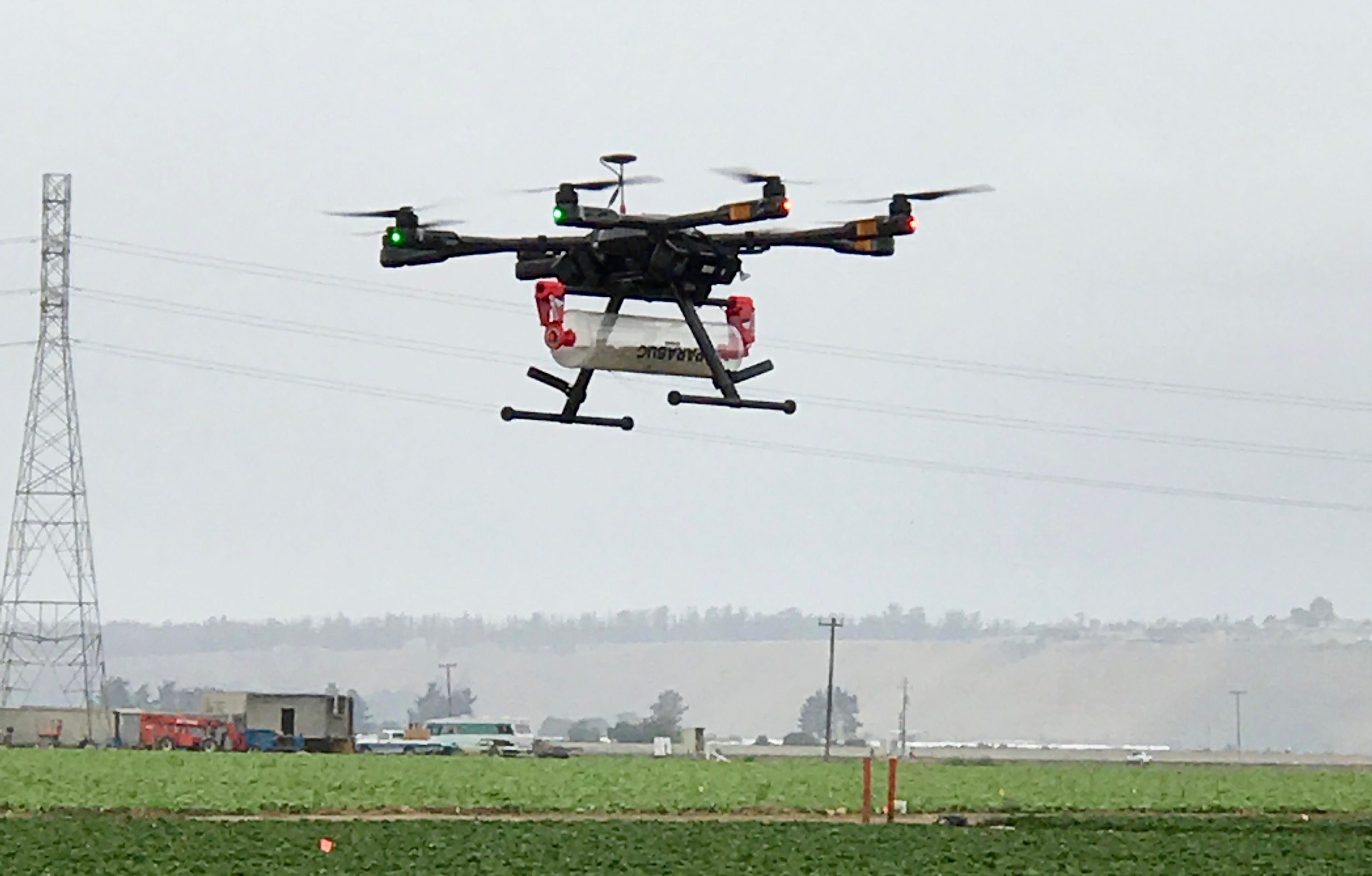
People who are interested in using drones for real-world mapping are invited to attend a three-day intensive drone workshop in the Monterey Bay area. The third annual DroneCamp will be offered from June 18 to 20 by UC Agriculture and Natural Resources’ Informatics and GIS Program. No experience with drone technology is needed to participate.

Drone mapping involves taking high-resolution photos with drones and stitching them together with software to make extremely accurate, orthorectified maps. More difficult than videography, it is widely used in agriculture, construction, archeology, surveying, facilities management, and other fields. DroneCamp will cover all the topics someone needs to make maps with drones, including:

  • Technology—the different types of drone and sensor hardware, costs and applications
  • Drone science—principles of photogrammetry and remote sensing
  • Safety and regulations—learn to fly safely and legally, including tips on getting your FAA Part 107 Remote Pilot Certificate
  • Mission planning—flight planning tools and principles for specific mission objectives
  • Flight operations—hands-on practice with both manual and programmed flights
  • Data processing—processing drone data into orthomosaics and 3D digital surface models; assessing quality control
  • Data analysis—techniques for analyzing drone data in GIS and remote sensing software
  • Visualization—create 3D models of your data
  • Latest trends—hear about new and upcoming developments in drone technology, data processing, and regulations

On the first day, DroneCamp instructors will discuss drone platforms, sensor technologies, and regulations. On the following two days, participants will receive hands-on instruction on flying safely, using automated flight software, emergency procedures, managing data, and turning images into maps using Pix4D mapper and ArcGIS Pro.

Registration is $900 for the general public and $500 for University of California students and employees. Registration includes instruction, materials, flight practice and lunches. Scholarships are available.

This year, DroneCamp is being held in conjunction with the Monterey Bay DART (Drones Automation & Robotics Technology), which is holding an industry symposium on Friday, June 21. DroneCamp participants get a $50 discount to attend the symposium.

For more information and to register for DroneCamp, please complete the registration form at http://igis.ucanr.edu/dronecamp. Registration fees are due by June 1, 2019.

2021-05-12T11:05:03-07:00May 21st, 2019|

NASS Predicts Another Record-Breaking Almond Crop

2019 Crop Predicted to be 2.50 Billion Pounds

News Release

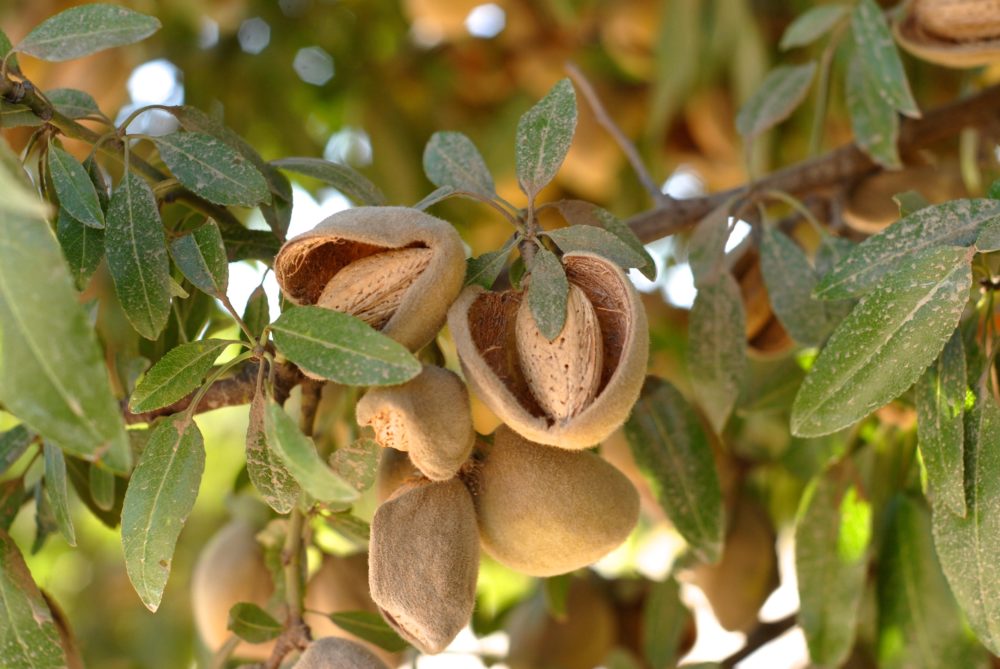
For the second year in a row, the U.S. Department of Agriculture (USDA) National Agricultural Statistics Service (NASS) is predicting a record California almond crop for the upcoming production year. According to the NASS 2019 California Almond Subjective Forecast issued recently, California almond orchards are expected to produce 2.50 billion pounds of nuts this year, up 8.69% from last year’s 2.30 billion-pound crop.  (1)

This forecast comes just weeks after NASS released the 2018 California Almond Acreage Report, which estimated total almond acres for 2018 were up 2% from 2017 at 1.39 million acres. Bearing acres—orchards mature enough to produce a crop—were reported at 1.09 million acres, up 6% from the previous year. Looking ahead, NASS reported preliminary bearing acreage for 2019 at 1.17 million acres, up 7.3% from 2018.  (2)

Richard Waycott, Almond Board President, and CEO

The first of two reports for the upcoming crop, the Subjective Forecast is based on opinions obtained from randomly selected almond growers located throughout the state via a phone survey conducted in April and May. NASS asked growers to indicate their total almond yield per acre from last year and expected yield for the current year based on field observations. The sample of growers interviewed is grouped by size of operation, and different individuals are interviewed each year, allowing all growers to be represented. NASS then combines the yield estimates obtained from each grower and extrapolates the information to arrive at the numbers reported in the Subjective Forecast.

While the Subjective Forecast provides early estimates of the upcoming crop after it is set, NASS’s 2019 California Almond Objective Report will provide a more precise estimate as it uses a more statistically rigorous methodology to determine yield. The report’s data is based on actual almond counts and measurements gathered from over 850 orchards throughout the state and includes the weight, size, and grade of the average almond sample broken down by both growing district and variety.

The California Almond Objective Report will be released on July 3 at 11:50 a.m. PDT. NASS conducts the Objective Report—the Subjective Forecast and the Acreage Report—in order to provide the California almond industry with the data needed to make informed business decisions.

1 USDA-NASS. 2019 California Almond Subjective Forecast. May 2019.

2 USDA-NASS. 2018 California Almond Acreage Report. April 2019. 

2019-05-20T15:08:50-07:00May 20th, 2019|

CCM Statement on Chlorpyrifos Ban

Flawed Data Forcing Cancellation

News Release From California Citrus Mutual

Recently, the California Environmental Protection Agency (CalEPA) and the California Department of Pesticide Regulation (DPR) announced that they are going to begin the cancellation process of chlorpyrifos. The statement cites scientific findings that chlorpyrifos poses serious public health and environmental risks to vulnerable communities.SaveOurCitrus Logo

“The decision to ban chlorpyrifos is not surprising given the significant pressure from anti-pesticide groups, active legislative proposals, regulatory proceedings, and ongoing court battles,” said CCM President Casey Creamer. “However, this decision relies heavily on an evaluation that was significantly flawed and based upon unrealistic modeling scenarios that are not verifiable by actual results in DPR’s own air monitoring network.”

“California Citrus Mutual and our member growers stand by science that is sound, that properly evaluates risks and puts forward appropriate safeguards to protect ourselves, our employees, and our surrounding communities. We are committed to safe and effective use of chlorpyrifos and other crop protection tools.”

“The process for which this chemical was evaluated was purposely exaggerated to achieve the desired outcome and jeopardizes the scientific credibility of the Department of Pesticide Regulation. This decision sets a terrible precedent for future evaluations and creates a chilling effect on companies planning on making significant investments to bring new products to the market in California.”

“The citrus industry is fighting feverishly to protect itself from the deadly citrus disease, Huanglongbing,” Creamer continued. “In order to do so, we must have the necessary tools in the toolbox for an effective Integrated Pest Management program.”

“The once mighty citrus-producing state of Florida has lost 70% of its production due to this disease, which is expanding exponentially in residential citrus trees in Southern California at this very moment. While our commercial growers will remain vigilant, it is vital that our policymakers recognize the seriousness of the threat and ensure sound scientific procedures are followed.”

“California Citrus Mutual will continue to be actively engaged in the regulatory processes around the cancellation decision and will continue to explore all potential remedies to allow the safe and effective use of chlorpyrifos.”

2021-05-12T11:05:03-07:00May 14th, 2019|

Food Safety Is Paramount In California Agriculture

Researchers Hone in on Bacteria Genome to Isolate Pathogens

By Laurie Greene, Founding Editor

Food safety is paramount in the specialty crop farm industry; but when a bacterium causes a food safety problem, there is important work to determine the exact fingerprint of that bacteria.

Matthew Stasiewicz, assistant professor of applied food microbiology in the area of food safety at the University of Illinois at Urbana-Champaign, Department of Food Science & Human Nutrition, said it’s important to determine the genome of these bacteria that are causing problems.

“The biggest thing that has happened in the field of food safety is that the U.S. government has committed to using whole genome sequencing as a primary public health surveillance tool. So, if you have a foodborne disease and go to a doctor, and they isolate that organism, it will go into a nationwide database—now international database—that can link that organism’s genome sequence to whatever else shows up in the database. So, at the same time, if pathogens are isolated from foods potentially as part of an outbreak, those sequences can be [entered into the database] and [experts can] gather information from food sources as well as clinical patients. And that’s just a major tool.”

Stasiewicz said the genome is important because we need to know the true source of that bacteria. “The pathogens that can make you sick can be distributed in the environment.

So just because you potentially got sick from eating food and maybe you got an E.coli O157:H7 infection in your hometown, even if someone else two towns away got the same infection with E.coli O157:H7, we don’t know if that’s related, even if you potentially ate the same food,” Stasiewicz said. “That could come from the soil in your town, your local grower, a local grower somewhere else, or from a common source, common grower, or common packer, and gotten you both sick. This genome sequence information allows us to make those links much more clearly.”

Stasiewicz said this is an important pioneering effort to reduce food safety illnesses. “Importantly, from the food standpoint,” Stasiewicz said, “we want that information so we can find that and eliminate it. No food processor wants to make anyone sick. No grower wants to make anyone sick. So, we need to identify those concerns.”

2021-05-12T11:05:04-07:00May 6th, 2019|

FFA Student Anna Kelly Experimenting with Garlic Eggs

Anna Kelly Feeds Her Chickens Garlic to Flavor Their Eggs with Garlic

By Patrick Cavanaugh, Editor

It’s a very interesting concept, garlic eggs. Flavoring freshly-laid eggs with garlic. How to do it is very simple, according to Anna Kelly with the West Sacramento FFA at River City High School, who is working with a Blue Ameraucana chicken. She had the idea of replicating what your grandparents may have done. They just fed their laying hens some garlic.

Blue Ameraucana Chicken

They wanted to try to change their chickens’ diets cause their chickens were not eating much

And low and behold, the eggs started tasting as if they were seasoned with garlic.

Kelly got the idea of feeding her chicken garlic as a research project.

“I took one garlic clove, and I fed it to my chicken, whose name is Monster, and she loved it,” said Kelly. “And every time when I gave her daily garlic, she would meet me up at her bedding, and it was so cute.”

She found that her chicken wanted the garlic, and sure enough, the eggs had a garlic taste. She asked her culinary arts teacher, Cheryle Sutton to see if she could cook one of her chicken’s garlic eggs. The teacher said okay.

“I cut it up, and I asked several of my teachers to try it,” Kelly said. “And it was amazing; the teachers said it tasted like an actual garlic egg. No salt and pepper, no other additional seasonings.”

“What I’m hoping is to grow my project more. I am incubating more chickens, and I’m going to put them on the same diet. I want to test different varieties of chickens to see which one’s eggs taste more like garlic eggs,” Kelly explained.

Eventually, she may grow the project into a wholesale operation supplying grocery stores with garlic-tasting eggs.

To hear a podcast with Anna Kelly on her garlic eggs experiment, click here.

2021-05-12T11:17:08-07:00May 3rd, 2019|
Go to Top