Happy Fourth to All

Our Third President on This Fourth of July

On this Fourth of July, it’s fitting to focus on Thomas Jefferson, the nation’s Agrarian President and signer of the Declaration of Independence 239 years ago.

Yes, our third President was Thomas Jefferson an agronomist, an educated man of the land. So, unique in his time, he believed in proper land stewardship for posterity.

Jefferson understood that humanity affected the environment, so he practiced crop rotation with an extensive seven-year plan, using wheat, turnips, corn, potatoes, peas, rye and clover, buckwheat, and livestock grazing.

He tested to determine the exact number of cattle required to fertilize a given area of land and compared grain yields on manure vs. unfertilized fields.

“Agriculture … is our wisest pursuit, because it will

in the end contribute most to real wealth, good

morals & happiness.”


Jefferson developed scientific plowing of “least resistance,” which lifted and turned the sod to a depth of about six inches, enabling farmers to contour-ridge erodible fields, plow out shallow ditches, and ridge poorly drained flat lands.

He terraced his vegetable garden, orchard, and vineyard sites, and planted native ground cover to stop erosion.

He conserved timber by not cutting trees for any purpose as long as cut wood was available.

As U.S. envoy to France, he sent seeds of various grasses, fruits and vegetables, acorns, olive plants to agricultural societies, farmers, and botanists back home.

He brought Italian rice to South Carolina, pecan trees to the eastern United States and was first to introduce Brussels sprouts, eggplant, cauliflower, and broccoli.

He encouraged agricultural societies, agricultural education and university-level research.

Jefferson kept extensive farm journals for nearly six decades on the 170 varieties of fruits and 330 different kinds of vegetables he cultivated, and on his experiments with viticulture and beer brewing.

Another July 4th notation

Presidents John Adams (who lived to 90 years old) and Thomas Jefferson (who lived to 82) both died on the same day July 4 1826, 50 years to the day of the signing of the signing of the Declaration of Independence.


Quote from © 2015 Thomas Jefferson Foundation
2016-05-31T19:28:12-07:00July 4th, 2015|

Average Almond Crop for Van Groningen

Van Groningen: Almond Crop Looks Average; Misleading Math on Watermelon Water Use

By Patrick Cavanaugh, Assistant Editor, California Ag Today

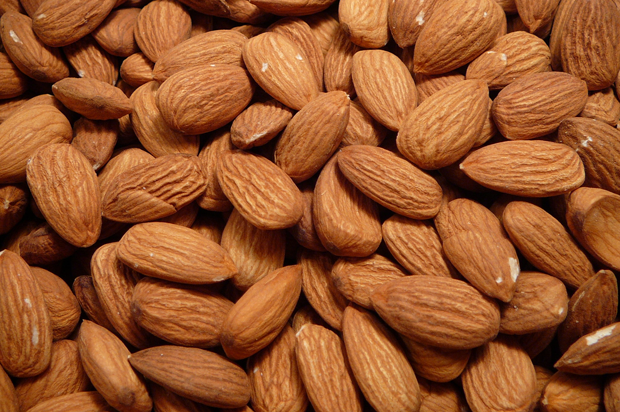
Van Groningen & Sons, Inc. farming has been operating in California since 1922. Field Manager Bryan Van Groningen updated California Ag Today, “The almond crop looks pretty average, ‘nothing that looks well over norm. It just depends on which field site you enter in; some of the younger blocks look a little better than the older blocks. So, right now the crop looks pretty old, but it is all across the board.”

Bryan Van Groningen

Bryan Van Groningen

Yosemite-Fresh-WatermelonBased in Manteca, Von Groningen & Sons has a diversified operation growing melons, sweet corn, pumpkins, squash, almonds and walnuts, and livestock feed. Noting recent negative press on almond water usage, Bryan said, “Almonds obviously have gotten a lot of bad press lately, as has ag in general. In looking at some of the water usage figures, I tend not to agree with them. I think a lot of the water usage figures are outdated and incorrect.” He explained, “For example, we grow watermelons, and one of the articles that I read reported that 160 gallons of water was needed to produce a single watermelon. On our farm, it is closer to 35-40 gallons.”

As the state continues to deal with water restrictions, Van Groningen says a lot of fingers are unfairly pointing at the agriculture industry. “I think there is a lot of misinformation being spread around and used to throw agriculture under the bus,” he stated, “making us look like we are the bad guys, when we are actually producing the nutritious food that consumers in our state and the nation eat and enjoy. The agricultural industry has made so many advances in water efficiency that we should actually be labelled as ‘water conservationists’, and not ‘water wasters’.”

Van Groningen says he sees firsthand, every day, exactly how much water is used per crop, because he actively manages the farm’s water. “I sat down and ran the numbers 3, 4, 5 times — just to make sure that I did the math correctly. So, some of this usage is being misrepresented and therefore does not shed a good light on what ag is actually doing.”

2016-05-31T19:28:12-07:00July 3rd, 2015|

LA Declares Citrus Matters TODAY

LA Citizens And Commercial Citrus Growers Highlight Deadly Citrus Disease And Why Citrus Matters

LOS ANGELES (July 2, 2015) – California’s citrus industry is threatened by the Asian citrus psyllid (ACP), a tiny pest that can transmit the world’s deadliest citrus disease, Huanglongbing (HLB). Currently, all of Los Angeles County is under quarantine[1] for the psyllid, which continues to spread across the state. Along with Bayer CropScience and California Citrus Mutual, City Councilmember Gil Cedillo announced TODAY, July 2 that, “Citrus Matters” to Los Angeles. During the event, commercial citrus growers from the region were recognized for their contributions to the state of California and acknowledged the devastating disease that could destroy the state’s citrus industry. The announcement also serves to highlight the role Los Angeles residents must play in protecting California’s $2.4 billion commercial citrus industry through the #CitrusMatters initiative.Citrus Matters to Los Angeles

Citrus Matters Logo

To date, the psyllid has reached 15 counties throughout Southern California[2]; however, HLB has been recorded in only one tree in California[3] – a lemon/pummelo tree found on residential property in the Hacienda Heights neighborhood of Los Angeles in 2012. For every Californian who cares about citrus, that tree, which has since been removed and destroyed, serves as a warning that all citrus trees are at risk of being affected, from the trees that decorate their neighborhood to the commercial groves nearby.

The #CitrusMatters initiative from Bayer CropScience and California Citrus Mutual encourages all residents of California and Los Angeles – where there are more citrus trees on residential property than in commercial groves – to take action to help prevent the spread of the ACP. It is essential that homeowners with citrus trees on their property understand how to protect their trees and know what to do if they suspect trees are infected. If left untreated, the insects can move quickly from one tree to the next, eventually spreading to the commercial groves that cover much of Southern and Central California.There are a number of ways the Los Angeles community can get involved with the campaign to help prevent the spread of ACP and protect California citrus, including:

  1. Spreading the word and increasing awareness about the disease, the ACP and why they love citrus, using the hashtag #CitrusMatters. Through each use of the hashtag (now through September 30), Bayer CropScience will contribute $1, up to $25,000, to advance existing and future research to find a solution to HLB in California.
  2. Visiting CaliforniaCitrusThreat.org to access HLB and ACP resources specific to Los Angeles County.
  3. Monitoring their trees, contacting the California Department of Food and Agriculture (CDFA) Exotic Pest Hotline at 1-800-491-1899 if they think they’ve spotted an infestation and having their trees checked.
  4. Becoming familiar with solutions[4] available that can protect against ACP in their trees

CA Citrus Mutual

The citrus industry has a storied history in Los Angeles. Southern California’s first orange grove[5] was planted at San Gabriel Mission in 1804, and the state’s very first commercial citrus operation[6] was established in what is now downtown Los Angeles.

“Almost all of us native Los Angelenos have some kind of memory of grabbing a lemon off of the trees in our yards growing up or stepping outside during the spring and taking in the fresh scent of orange blossoms,” said Cedillo when he presented the announcement. “The city of Los Angeles recognizes the contribution citrus adds to California’s economy and our residents’ lives.”

“The Los Angeles area has played a vital role in the industry’s history,” said Joel Nelsen, president of California Citrus Mutual. “We’re excited to see residents celebrate citrus and rally around our mission to protect it from the spread of HLB.”bayer-cropscience-logo

The #CitrusMatters initiative is part of the ongoing effort by Bayer CropScience to provide citrus growers across the nation with solutions to help combat ACP and HLB. To learn more about the #CitrusMatters initiative and how homeowners, commercial citrus growers and citrus lovers alike can help save citrus, visit CitrusMatters.us.

For more information on Bayer CropScience’s citrus portfolio, please visit: https://www.bayercropscience.us/crops/citrus!

###

[1]http://www.aphis.usda.gov/plant_health/plant_pest_info/citrus_greening/downloads/pdf_files/nationalquarantinemap.pdf

[2] http://www.californiacitrusthreat.org/pdf/ACP-Quar%20Expansion_2-17-2015_CA-AZ.pdf

[3] http://californiacitrusthreat.org/news/huanglongbing-citrus-greening-disease-found-in-california.php[4] http://www.bayeradvanced.com/find-a-product/insects-pests/fruit-citrus-vegetable-insect-control

[5] http://ucanr.edu/blogs/blogcore/postdetail.cfm?postnum=924

[6] http://californiacountry.org/features/article.aspx?arID=695

###

Bayer CropScience Twitter Page: http://twitter.com/bayer4cropsus
Bayer CropScience Blog: 
https://www.bayercropscience.us/news 

Bayer CropScience is committed to bringing new technology and solutions for agriculture and non-agricultural uses. For questions concerning the availability and use of products, contact a local Bayer CropScience representative, or visit Bayer CropScience online at www.bayercropscience.us.

Visit the Bayer Connect – Social Hub for all Bayer CropScience social media, recent news, blog posts, videos and more.

###

About Bayer CropScience

Bayer is a global enterprise with core competencies in the fields of health care, agriculture and high-tech materials. Bayer CropScience, the subgroup of Bayer AG responsible for the agricultural business, has annual sales of EUR 9,494 million (2014) and is one of the world’s leading innovative crop science companies in the areas of seeds, crop protection and non-agricultural pest control. The company offers an outstanding range of products including high value seeds, innovative crop protection solutions based on chemical and biological modes of action as well as an extensive service backup for modern, sustainable agriculture. In the area of non-agricultural applications, Bayer CropScience has a broad portfolio of products and services to control pests from home and garden to forestry applications. The company has a global workforce of 23,100 and is represented in more than 120 countries. This and further news is available at: www.press.bayercropscience.com.

About California Citrus Mutual

California Citrus Mutual (CCM) is a citrus producer’s trade association whose 2,200 grower members comprise 60 percent of California’s 275,000 acre, $2.4 billion citrus industry. The Exeter, California-based organization was founded in 1977 by those who felt the need to unite their fellow growers into a cohesive, powerful force. Throughout the years, CCM has brought to fruition many of the goals of the founding fathers and has developed into a dominant force from within as well as outside the industry.  Having attained the privilege to be called the “voice of the citrus grower,” CCM remains the vessel which successfully navigates the often rocky waters of the business interest of its membership. For more information on CCM, visit www.cacitrusmutual.com.

2016-05-31T19:28:12-07:00July 2nd, 2015|

MRLs and Crop Protection Materials are Improving but Complicated

MRLs and Crop Protection Materials are Improving but Complicated!

By Laurie Greene, Editor and Patrick Cavanaugh, Associate Editor

Rachel Kubiak, Environmental & Regulatory Affairs director with the Western Plant Health Association, based in Sacramento, commented that crop protection materials are improving. They target specific pests and they are set to maximum residue levels (MRL’s) when sold domestically or internationally. Yet, they are quite complicated.

“The materials are getting better,” Kubiak said, “but I would say that there is a large component that I don’t believe the activist community understands,” noted Kubiak.

Richard Cornett, director of communications for WPHA, blogged, “What most people are unaware of is that there is a highly integrated and multi-layered process of safety procedures to assure that pesticides are accessed for their safe use around humans and in the environment.”

U.S. EPA (a) scientifically reviews all pesticides for safety before registration, (b) involves EPA scientists at the Office of Pesticide Programs, the Department of Fish and Wildlife, as well as other departments, (c) guarantees that any pesticide used in the U.S. has been accessed and is safe and (d) applies tolerances only to produce grown in or imported into the United States.

In California, the Department of Pesticide Regulation (DPR) enforces EPA tolerances by sampling produce for pesticide residues from throughout the channels of trade, both domestic and imported, including wholesale and retail outlets, distribution centers, and farmers markets.

“There are complications in making those products available to our growers,” Kubiak said, “because so much of what we produce in California is exported to other countries, and this MRL issue complicates things.”

Foreign countries follow an international standard called CODEX Alimentarus which contains a list of pesticide MRLs. EPA tolerances and International Codex MRLs are not harmonized; residue on an imported commodity can trigger a no-tolerance-established assessment and removal by California DPR while being a legal residue in other countries.

“I think this is a large area in which we could do better. Educating those who don’t live in our world on the difficulties in bringing new products to market isn’t as simplistic as they like to make it seem,” said Kubiak.

2016-05-31T19:28:12-07:00July 2nd, 2015|

WADE: LET THE WATER FLOW!

Let The Water Flow:

Mike Wade Urges Water Board To Let Reclamation Pay Back Borrowed Water

By Laurie Greene, California Ag Today Editor

Mike Wade, executive director of the California Farm Water Coalition, discussed with California Ag Today, his article for the Coalition’s Blog, entitled, “State Water Resources Control Board Could Cost California’s Agricultural Economy $4.5 Billion.”

“A number of San Joaquin Valley farmers have been working the last couple of years to set aside emergency water supplies through conservation and water purchases on the open market,” began Wade. “That water is set aside in the San Luis Reservoir and currently being borrowed, if you will, by the Bureau of Reclamation to help meet their obligations and ultimately the temperature management plan for winter run Chinook salmon.”

Wade said the Bureau’s water obligations also include provisions for summer agriculture south of the Delta, as well as refuge management for numerous listed terrestrial species like the Giant Garter Snake.

Wade estimates the loaned water is worth hundreds of millions of dollars. Lending farmers include those who own land on the Westside of the San Joaquin Valley, Sacramento Valley rice farmers who fallowed land this year to make supplies available for transfers and Friant-area farmers seeking to augment a zero water allocation for the second year in a row.

“We believe the Bureau has an obligation to pay that water back this fall, and we’re urging the State Water Resources Control Board to let that payback happen.” In his article, Wade reported that Reclamation would pay back the water from supplies stored in Lake Shasta as soon as temperature goals for winter run Chinook salmon were met.

Regarding accountability, Wade said, “I believe the Bureau intends to pay it back, but we want the public to understand what’s happening. We want transparency so we can follow this obligation and make sure this fall, when water becomes available, the Bureau follows through to pay it back. People don’t forget.”

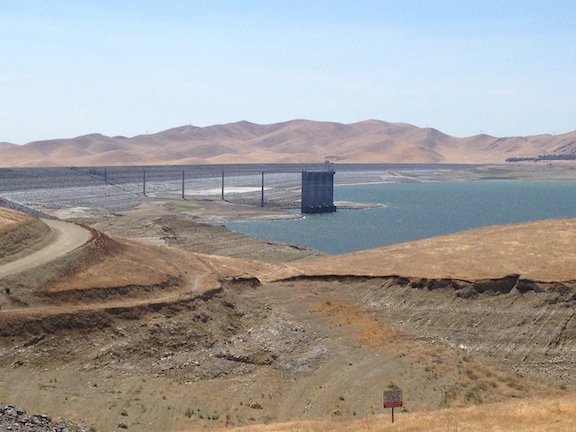
Built and operated jointly by the Bureau of Reclamation and the State of California, the San Luis Reservoir is at 44% capacity today, according to the California Department of Water Resources’ California Data Exchange Center, but the supply is already divided and allocated. Wade explained, “The water that is currently in San Luis Reservoir under the Bureau of Reclamation’s control is almost exclusively owned by growers who have conserved it or purchased it on the open market. The remainder belongs to the State Water Project and its users. So, there is little or no federally-owned water in San Luis at this time.”

Wade said, “There are a number of factors that contribute to the 4.5 – 4.9 billion dollar projected cost for San Joaquin Valley farmers. First is the actual value of the water that farmers have already set aside. Second is the monetary obligations farmers have contracted to pay Sacramento Valley rice growers for transferred water. The third component is the actual value of potential crop and orchard losses if that water isn’t paid back and farmers lose out on their ability to keep their farms going.”

Wade urged the State Water Resources Control Board, “to facilitate this complex and unprecedented collaboration” and allow Reclamation to release compensatory water as soon as possible.

Let the water flow!


Sources: Interview with Mike Wade, California Farm Water Coalition; “State Water Resources Control Board Could Cost California’s Agricultural Economy $4.5 Billion,” by Mike Wade, California Farm Water Coalition; Bureau of Reclamation; California Department of Water Resources

Featured Image: San Luis Reservoir-Empty, California Farm Water Coalition

2016-05-31T19:28:12-07:00June 26th, 2015|

Apple Growers Stuggle

As Temps Heat Up, Apple Growers Struggle

By Courtney Steward, Associate Editor

As temperatures of early summer grow hotter, farmers of permanent crops, such as apple growers, are starting to struggle due to the lack of adequate water  to keep crop production where it needs to be. Alex Ott,  executive director of the California Apple Commission, based in Fresno, shared part of struggle.

“It’s always a challenge, especially when you are in your 4th year of drought,” Ott began. “Our biggest concerns, obviously, are about excessive heat and lack of water for the trees that are in the ground. But we’re also concerned that, first, we have a crop; and second, that the crop sizes well.”

Yet, despite the drought challenges, Ott noted the crop looks good. “The crops have good quality and look like we’re definitely going to be up—compared to last year—which is good. Last year, the crop was very light. It was a tough year for growers.”

“I think that the trees came back with some good vigor and were able to set a nice crop this year,” he said. “The conditions this spring were perfect for bloom, So, we are excited to see a good size crop,”


2016-05-31T19:28:13-07:00June 24th, 2015|

IR-4 Update

IR-4 To Focus on New Strategic Plan

By Courtney Steward, Associate Editor

At a recent meeting, California Ag Today met up with Dan Kunkel, associate director of the IR-4 Project for The Food and International Program at Rutgers University in New Jersey.

IR-4 Project LogoSince 1963, the IR-4 Project has been a major resource for supplying pest management tools for specialty crop growers by developing research data to support EPA tolerances and labeled crop protection product uses. The main goal of the IR-4 program, according to Kunkel, is to help specialty crop growers in California, but with a new emphasis on crop exportation.

Commenting on this new strategic plan for the IR-4 program, Kunkel said, “We are going to be doing a lot of the same things, like residue work, efficacy testing and our biopesticide and ornamental programs. But we are taking a larger focus on international harmonization of the pesticide residue limits for our grower exporters so they can feel more confident that their commodities won’t have issues in foreign trade.

“Of course we submit crop protection registration to the EPA for our growers. But when the commodities go abroad, we also submit the data to CODEX, an international database with maximum residue limits (MRLs), a type of tolerance standard, for pesticides,” said Kunkel.

“We also share data with some of the U.S. commodity groups to submit to the Asian and European markets so our growers’ exports can meet these residue limits as well,” he said.

2016-05-31T19:28:13-07:00June 23rd, 2015|

BioConsortia Invents the Future

BioConsortia Plans New Ag Bio Products

By Patrick Cavanaugh, Associate Editor

Marcus Meadows-Smith is with BioConsortia, a research and development biodiscovery company in Davis, Calif. He and his company have big plans to invent the future for Ag.

“The company was founded about 20 years ago in New Zealand and was funded by a U.S. private equity,” said Meadows-Smith. “We decided to globalize the technology, and I became the founding global CEO of the company as it was established in the U.S. about 1 year ago.”

The company in New Zealand is called BioDiscovery. For many years, it was a contract research company that was very successful in the microbial space, working with companies like Monsanto and Syngenta. Then Biodiscovery made a R&D breakthrough. “We have totally restructured the company so that the global headquarters and global R&D are now run out of the United States,” noted Meadows-Smith, “and the New Zealand company has become the subsidiary that handles complementary R&D functions.”

Meadows-Smith mentioned that UC Davis and surrounding areas such as West Sacramento are teaming with bioscience researchers. “It’s turning into a bit of a hub for microbial expertise with several of the big players. Obviously you’ve got UC Davis, which is always credited as being the number one U.S. agricultural university. I’ve heard that it is now the world’s best agricultural university, so it’s a great place to be.”BioConsortia Logo

“We’ve got an excellent team of scientists in Davis, and the historic team in New Zealand has a lot of experience. They’ve been working together now for about five years, so the R&D down there is really humming at a great pace,” said Meadows-Smith.

“We’ve been able to rapidly bring together a group of scientists in the U.S.,” said Meadows-Smith, “that have jelled. We have set up a series of experiments, and we’re putting discoveries together. It’s a very exciting time to be doing pure research in the lab.”

“The other very exciting progression for us is we have just planted our second year of field trials, having completed our first year of field trials in 2014–just after the company was established,” he said.

The company is biological- and microbial-based. “We are looking at teams of microbes to improve plant traits and increase plant yield . We are developing products for fertilizer-use efficiency, abiotic stress tolerance, and biotic stress,” said Meadows-Smith.

“Pests and disease control are important, as well as metabolite expression,” he continued. “We’ve identified teams of microbes that instruct or enable the plant to deposit more sugar. As you can imagine, this provides the double productivity benefit of increasing both yield per acre and sugar content per plant.”

“While getting the plant to have increased sugar deposited in its leaf structure is a good thing; but that is actually not our main focus,” Meadows-Smith said. “We look at all the crops we want to target and ask what are the biggest needs today?”

“Fertilizer, for example, is a significant cost for the grower, so fertilizer-use efficiency products, we believe, would experience a large demand,”  Meadows-Smith stated. “There are also concerns about fertilizer leaching into groundwater, so the more efficient you can make plant take up the fertilizer, the better,” he added. “And of course, living in California, we are acutely aware of the importance of drought, so we are working on that as well. We are hoping for a yield increase per acre for the grower in everything we do.”

“We are moving products down the pipeline as we speak,” he commented, “and, obviously, we want a large body of data to demonstrate to growers how to best use our products. We are looking for two years of good field trial results and then we’ll go through the registration process. So we are expecting to get our first product on the market by 2017.

“We are developing products that contain beneficial bacteria, beneficial fungi, and good plant colonizers,”  Meadows-Smith declared. “Some will colonize the root system, and some the outside of the plant. Still others, endophytes, that will actually grow through the plant tissue. Just as we humans have microbes in our guts to aid digestion, plants actually have beneficial microbes, bacteria and fungi growing within the plant tissue,” Meadows-Smith explained.

Meadows-Smith said BioConsortia’s revolutionary platform will take biologicals to the next level “by assembling teams of microbes that perform complementary functions; so while some microbes will enhance the root system, others will aid the root in nutrient uptake,” he said. “This will bring consistency and superior performance to the marketplace. It’s a very exciting time for the industry as a whole,” he said.

“We are looking to transform food production in a way that is sustainable, bringing benefits to the grower and feeding the world with nutritious, affordable food. That’s what we are in this industry for. These are very exciting times!” Meadows-Smith said.

Featured photo: Marcus Meadows-Smith, with Bio Consortia Scientists.

2016-05-31T19:28:13-07:00June 20th, 2015|

ASIAN CITRUS PSYLLID QUARANTINE EXPANSION IN KERN COUNTY

The California Asian Citrus Psyllid Quarantine includes, as of TODAY, two portions of Kern County following the detections of two ACP within the City of Bakersfield, one in the Westchester area and the other in the Panorama Drive area. The quarantine zone measures 63-square miles in the Westchester area and 65-square miles in the Panorama Drive area.  A link to the quarantine maps may be found here: www.cdfa.ca.gov/plant/go/acp-qmaps

The quarantine prohibits the movement of citrus and curry tree nursery stock out of the quarantine area and requires that all citrus fruit be cleaned of leaves and stems prior to moving out of the quarantine area.  An exception may be made for nursery stock and budwood grown in USDA-approved structures which are designed to keep ACP and other insects out.  Residents with backyard citrus trees in the quarantine area are asked not to transport citrus fruit or leaves, potted citrus trees, or curry leaves from the quarantine area.

County-wide Asian Citrus Psyllid Quarantines are now in place in Imperial, Los Angeles, Orange, Riverside, San Bernardino, San Diego, Santa Barbara, Tulare and Ventura Counties, with portions of Fresno, Kern, Madera, San Benito, San Joaquin, San Luis Obispo, and Santa Clara counties are also under quarantine.

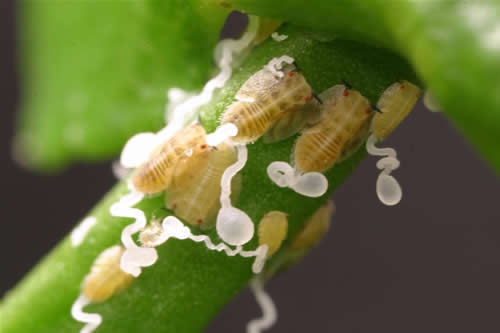
The ACP is an invasive species of grave concern because it can carry the disease huanglongbing (HLB), also known as citrus greening.  All citrus and closely related species, such as curry trees, are susceptible hosts for both the insect and disease.  There is not cure once a tree becomes infected, the diseased tree will decline in health and produce bitter, misshaped fruit until it dies.  HLB has been detected just once in California – in 2012 on a single residential property in Hacienda Heights, Los Angeles County.  This plant disease does not affect human health.

Residents in the area who think they may have seen ACP or symptoms of HLB on their trees are urged to call CDFA’s Pest Hotline at 1-800-491-1899.

For more information on the ACP and HLB, please visit: www.cdfa.ca.gov/go/acp.

Featured Photo: Asian Citrus Psyllid, UC ANR

2016-05-31T19:28:14-07:00June 17th, 2015|

Building Trust Between California Farmers and Consumers

William Clark, Harvard Professor, on Building Trust Between California Farmers and Consumers

By Courtney Steward, Assistant Editor

Social and conventional media are sharing widespread and varied opinions about California farmers and farming across the Central Valley and beyond, using soundbites in place of fact-based dialogue.

William Clark, Harvard Professor

William Clark, Harvey Brooks Professor of International Science, Public Policy and Human Development, John F. Kennedy School of Government, Harvard University

At a recent workshop called “Food for a Healthy World: Monitoring Progress Towards Food Security,” sponsored by the UC Davis World Food Center and the UC Agricultural Issues Center, William Clark, Harvey Brooks Professor of International Science, Public Policy and Human Development, John F. Kennedy School of Government, Harvard University, at first appeared to dodge giving his opinion. “It would be dumb beyond belief for me to have opinions about farmers in California,” explained Clark, “except I enjoy what they produce.”

The goal for the group of campus and visiting experts who attended the workshop was to reach agreement on the major factors that must be considered to sustainably feed the world’s population. “The reason I’m here,” he said, “is because I work on sustainable development issues broadly, and much of what is going on here in California in the farming sector as well as in the energy sector are some of the most fascinating and useful experiments anywhere—in grappling with these issues. And I come out fairly frequently to UC Davis because I find it a wonderful point of contact with the farming community here. I’ve borrowed some UC Davis students, and I learn a lot when I visit.”

Clark explained, “I think California is a state that obviously thinks hard about how it can be a productive, vibrant economy, while taking care of the environment and of the people,” evidenced by great creativity and ingenuity among California farmers and researchers. “My colleague, Tom Tomich, director of the Agricultural Sustainability Institute at UC Davis recently co-authored one of the first peer-reviewed articles* to emanate from the California Nitrogen Assessment (CNA), an ongoing project at UC Davis.”

Assessment research indicates that while there are many pathways through which nitrogen can enter the environment, inorganic fertilizer use is responsible for the largest fraction of new nitrogen introduced in California annually. Currently, over 600,000 tons of nitrogen fertilizer are sold in the state each year.

Tomich maintains that better nitrogen use information is indispensable for the collaborative development of effective solutions to increase nitrogen use efficiency and save farmers money. The article describes both how nitrogen flows in crop production, but also how farmers can limit the flows that create problems in the environment.  Also included are recommendations on how data could be better compiled to improve understanding of statewide trends in fertilizer use.

Clark claimed, “That’s the best nitrogen study that’s been done anywhere in the world in terms of showing how farmers are working and could be working to capture the benefits of fertilizer without offsite damages to the environment.”

Regarding these offsite flows, Clark emphasized, “I’ve almost never met a farmer who does not care deeply about the land, or the fisher about the health of the fishery or of the sea. And I think sometimes the debates that between the conservation and farm communities go completely nuts on this,” Clark explained. “I mean, you start with somebody who is making their living—has chosen a life—on the land. That’s where you start.”

“That said, all of us end up sometimes doing stuff that has some consequences we didn’t intend,” stated Clark. “I look to the science community to help all of us, including farmers, see some of the downsides of some of the practices that we do that are invisible. So, perhaps science discovers this chemical we thought was safe turns out not to be safe. Or the way we are turning over our crops has impacts on biodiversity that we didn’t know about.”

“But again,” Clark continued, “it’s the responsibility of my community, the science community, to bring those invisible but measurable discoveries into light in a conversation with farmers to reach a joint understanding of why one might want to use less of these applications and how one could use less of them while still turning out an attractive crop.”

Clark said it’s been his experience that most growers listen and try new approaches.

Clark concluded that trust between farmers, consumers, retailers, and health advocates is an all-time low. “I think  food is one of the most complicated personal issues there is. If I were trying to build trust in an arena, there’s none harder, except maybe nuclear energy, than food issues. I think we all know that we have had less dialog and more soundbite exchange, and I don’t think any side is blameless.”

“My pitch here,” Clark summarized, “is simply I don’t see how we can move forward without starting meaningful dialogues that aren’t soundbites.” Clarke wants to inspire people to ask themselves, “What am I worried about?” instead of throwing blurbs into the middle of a on-air radio conversation. He elaborated, “Whether I’m a consumer advocate, a farmer, or a retailer, ‘What am I worried about? What do I think you guys are doing that I wish you weren’t doing?’ We aren’t brain dead; we should be able to work together, as long as we can talk instead of yell.”


*Rosenstock T, Liptzin D, Six J, Tomich T. 2013. Nitrogen fertilizer use in California: Assessing the data, trends and a way forward. Cal Ag 67(1):68-79. DOI: 10.3733/ca.E.v067n01p68.

2016-05-31T19:28:14-07:00June 11th, 2015|
Go to Top