California Safe Soil Honored

California Safe Soil Honored By Forbes Reinventing America

By Patrick Cavanaugh, Associate Editor, California Ag Today

At the recent invitation-only Forbes Ag Tech Summit “Reinventing America: The AgTech Summit” in Salinas, California Safe Soil (CSS) was awarded the Thrive Accelerator Sustainability Award. The Thrive Accelerator program is a highly selective mentorship and investment program for technology-enabled startups in precision agriculture.

Mark Bauer, California Safe Soil

Mark Bauer, California Safe Soil

Mark Bauer, director of business development for CSS said, “Forbes just started this process over a year ago when they interviewed over 100 companies throughout the world. About three months ago they notified us we were among the top ten finalists, and today we found out we won the Sustainability Award! So we are extremely pleased and quite honored to receive that award, ” said Bauer.

California Safe Soil, based in West Sacramento, is a fresh food recycler that increases a farm’s productivity at a low cost, while helping to improve the environment. The company converts food that supermarkets cannot sell or donate into its Harvest to Harvest (H2H) fertilizer which promotes sustainable agriculture by returning nutrients to the soil and increasing plant vigor and crop yield.

“We think it is really important to find sustainable solutions in agriculture today,” Bauer explained. “We have partnered with Save Mart Supermarkets because Save Mart recognized the value of our process. We take all of the organic food waste that Save Mart can’t sell or donate, interrupt that trip to the landfill, and we put it through a three-hour enzymatic-digestion process that takes all the available food energy and forms it into small particles that growers apply to the roots of their crops through their existing drip lines.”

Bauer noted, “We are seeing terrific response in a number of crops, especially with strawberries, raspberries and processing tomatoes. We are growing thousands of acres of almond trees right now and seeing great results. We’ve been working in the areas of leafy greens as well growing broccoli, cabbage and lettuce crops,” he said.

California Safe Soil (CSS)

California Safe Soil (CSS)

“The H2H material moves with the irrigation water through the drip or micro-sprinklers and supercharges the soil microbes,” Bauer explained. “After it goes through our process, the H2H material is composed amino acids, fatty acids and simple sugars–not what plants eat, but what soil biology needs. H2H is the food for the microbiology of the soil; it makes the micronutrients and macronutrients in the soil more available to the plant,” he said.

CSS’s unique full-cycle process assists supermarket customers in recycling their organics, improving store hygiene, and reducing costs. In addition, H2H is a safe, low-cost, high-volume and high-quality liquid fertilizer that helps agricultural customers save money, increase crop yield, and reduce nitrate runoff. These benefits deliver improved quality in air, water, and soil environments, while employing safe, efficient, and effective solutions.

2016-05-31T19:28:09-07:00July 27th, 2015|

URGENT HLB Quarantine UPDATE

HLB Quarantine Update

A Huanglongbing (HLB) quarantine is now in effect in part of Los Angeles County following the detection of HLB in four citrus trees.

On July 10, a kumquat tree on a residential property was confirmed to be infected with the incurable HLB disease. After extensive surveying and testing in the area, three more diseased trees were found nearby. The four diseased trees were on four separate properties close to one another. The tree varieties include kumquat, lime, mandarin and calamondin.

California Department of Food and Agriculture (CDFA) has already removed two of the diseased trees and is currently working with the homeowners at the other two properties to remove those trees as soon as possible. See the CDFA press release below for more details on the resulting quarantine.

QUARANTINE FOR HUANGLONGBING DECLARED IN SAN GABRIEL, LOS ANGELES COUNTY

SaveOurCitrusSACRAMENTO, July 22, 2015 – An 87-square mile quarantine in the San Gabriel area of Los Angeles County has been added to the existing huanglongbing (HLB) quarantine in the Hacienda Heights-area following the detection of the citrus disease huanglongbing, or citrus greening.

Additional information, including a map of the quarantine zone, is available at the CDFA Save Our Citrus website The quarantine boundaries are: on the north, E. Orange Grove Boulevard; on the east, N. Lemon Avenue; on the west, Griffin Avenue; and on the south W. La Habra Boulevard.

This area is part of a much larger quarantine already in place for the Asian citrus psyllid (ACP), the pest that spreads bacteria causing huanglongbing (HLB). The new quarantine will prohibit the movement of all nursery stock out of the area, while maintaining existing provisions allowing the movement of only commercially cleaned and packed citrus fruit. Any fruit that is not commercially cleaned and packed, including residential citrus, must not be removed from the property on which it is grown, although it may be processed and/or consumed on the premises.

“The success of any quarantine depends on cooperation from those affected,” said CDFA Secretary Karen Ross. “The stakes couldn’t be higher for California citrus. We urge residents in the San Gabriel-area to do all they can to comply.”

CDFA, the USDA and the Los Angeles County Agricultural Commissioner’s continue their work to investigate the source of the disease, to survey and test for it throughout the Los Angeles Basin, and to continue with ground treatment of citrus trees within 800 meters of the find sites – which began earlier this week. In the long term, the strategy is to control the spread of ACPs while researchers work to find a cure for the disease.

Huanglongbing has been confirmed four times in San Gabriel, in a kumquat tree on a residential property, in a lime tree on an adjacent residential property, and in calamondin and mandarin trees on residential properties in close proximity to the original find. The disease is bacterial and attacks the vascular system of plants. It does not pose a threat to humans or animals. The Asian citrus psyllid can spread the bacteria as the pest feeds on citrus trees and other related plants. Once a tree is infected, there is no cure; it typically declines and dies within a few years.

Huanglongbing is known to be present in Mexico and in parts of the southern U.S. Florida first detected the disease in 2005, and the University of Florida estimates that the disease causes an average loss of 7,513 jobs per year, and has cost growers $2.994 billion in lost revenue since then. Huanglongbing has also been detected in Georgia, Louisiana, South Carolina and Texas as well as Puerto Rico and the U.S. Virgin Islands.

A total of 15 states or territories are under full or partial quarantine due to the presence of the ACP: Alabama, American Samoa, Arizona, California, Florida, Georgia, Guam, Hawaii, Louisiana, Mississippi, Northern Mariana Islands, Puerto Rico, South Carolina, Texas, and the U.S. Virgin Islands.

The Asian citrus psyllid was first detected in California in 2008 and quarantines for the pest are now in place in 17 California counties. If Californians believe they have seen evidence of huanglongbing in local citrus trees, they are asked to please call CDFA’s toll-free pest hotline at 1-800-491-1899 FREE. For more information on the Asian citrus psyllid and huanglongbing, please visit: http://www.cdfa.ca.gov/phpps/acp/.

2016-05-31T19:28:09-07:00July 23rd, 2015|

Location! Location! Location!

UC ANR Research and Extension Centers Strategically Located

By Charmayne Hefly, Assistant Editor, California Ag Today

Bill Frost is the director of the University of California, Division of Agriculture and Natural Resources’ Research and Extension Center System that has nine different research and extension centers located throughout the state.

UC ANR Research and Extension Center System

UC ANR Research and Extension Center System

Describing the strategy in their geographic placement, Frost said, “We have located them in different growing zones, climates and environments. We have chosen everything from the desert region in El Centro, to cropland here in Kearney, to livestock grazing in both our Hopland and Sierra Foothill Research and Extension Centers, all the way up to Intermountain in Tulelake, where we research potatoes, garlic and crops that can be grown in that fairly short growing season.”

The goal, according to Frost, is to solve local issues from a local or regional perspective. “Each one of our centers has different environments, crops and pest issues to address,” he explained. “These diverse locations are critically important to us because we can do localized, applied research and get useful information out to people, whether they are homeowners in their gardens or growers managing a thousand acres of a crop.”

Frost noted the UCANR Research and Extension Center System has been actively seeking new personnel to better meet the needs of growers. “Just in the last four years,” he said, “we’ve hired almost one hundred new cooperative extension advisors and specialists around the state—many of whom are housed here at the Kearney Research and Extension Center. They are also housed on UC campuses and in our county Cooperative Extension offices.”

Frost commented, “We continue to be relevant. We continue to do cutting-edge applied research. Our programs provide information to everyone; from our youth development program in 4-H and our nutrition education, to master gardener programs that help homeowners with pest problems and water management.”

“And of course, we serve the agricultural community. We have a lot of good research going on and we’re generating lot of good information in commodity production, pest management and water management,” Frost said.

The nine UC ANR Research and Extension Stations are:

Featured Photo: UC ANR

2016-05-31T19:28:10-07:00July 20th, 2015|

False Data Abounds

California Drought Information Game:

False Data Out-Markets Ag

By Laurie Greene, Editor and Producer


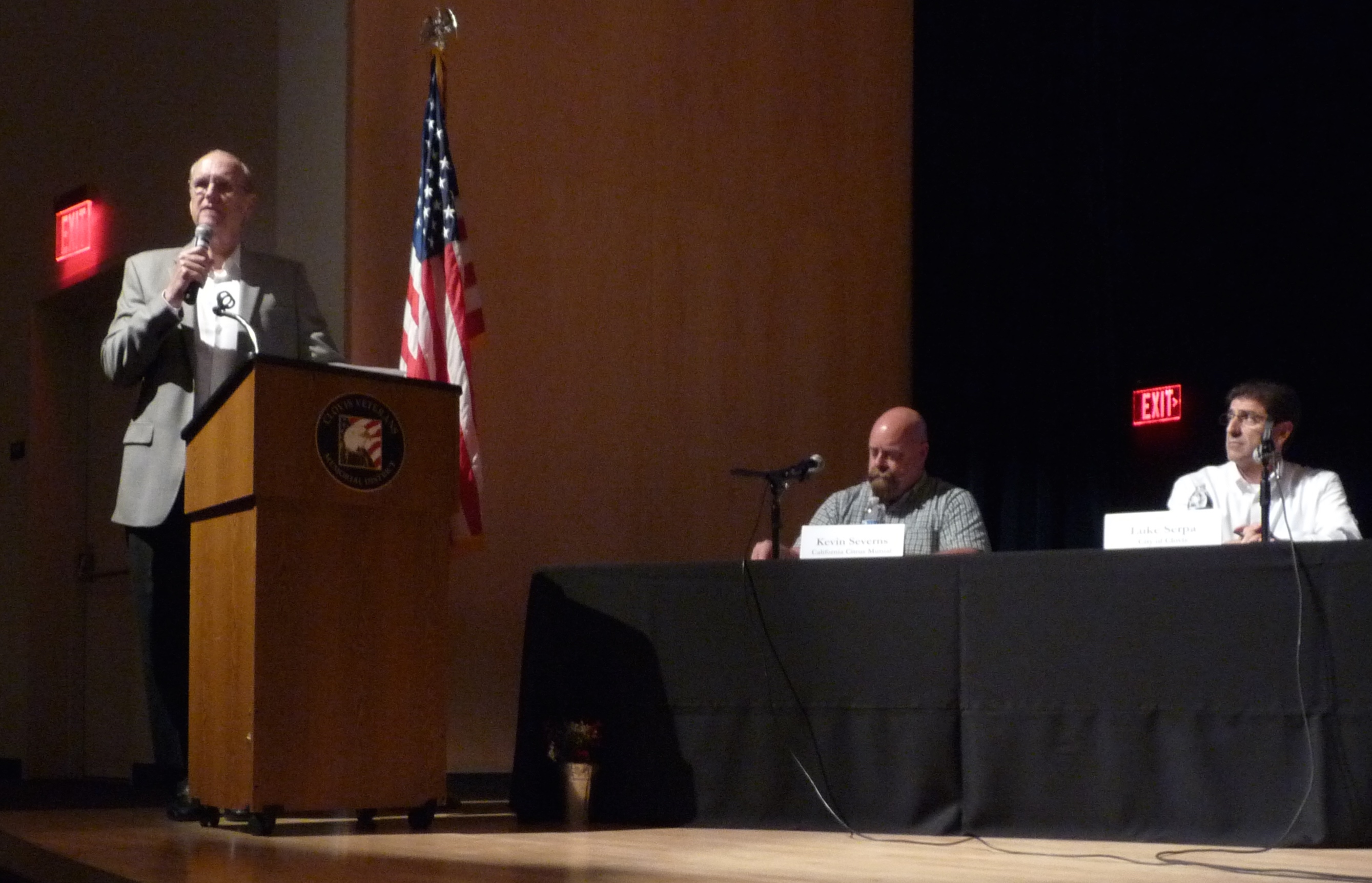
At “The Truth About the Drought” forum, organized by Assemblymember Jim Patterson recently in Clovis, CA, moderator John Broeske, executive director of Families Protecting The Valley, said he thinks Ag is doing really badly on the information game.

“I think that we are getting out-marketed in messaging in the state of California,” said Broeske. “I think a lot of the people in the Central Valley know things that the people in Southern California and in the Bay Area, don’t know.”

Broeske continued, “I don’t blame those people for not knowing because they’re being told over and over again about the ‘80% number’ for Ag water use; and the ‘2%’ Ag contributes to the economy’. These are not real numbers, but people hear them repeatedly, so it’s not hard to understand they believe it.”

“I think the environmentalists want people to believe the 80% figure,” Broeske stated, “because it’s a lot easier to demand water from us if it appears we are using it all. But we’re not, and it’s hard for us to get the message out that these numbers aren’t true.”

Broeske did not know the best way to get the message out, but said he tries to correct people when they get it wrong. He suggested correcting online articles in the comment section to empower more people with the right numbers as ammunition for when they get into conversations. “You’ve got to fight back; if you let people use these false numbers over and over again, nothing is ever going to change.”

As false data out-markets ag in messaging, Broeske said water usage accountability is unequivalent. “Farmers are getting blasted for raising almonds and using too many gallons per almond,” said Broeske. “But, there’s no article about how many gallons it takes to raise a smelt. How many acre-feet for salmon? How many is too many? I think those questions have to be asked.”

“California is spending four million dollars of water per salmon!” Broeske declared. “Should there be some accountability there? How much water are we going to spend on one salmon? At least we get almonds at the end of the farming process. That’s what accountability means; we’ve got to create some rules about how much water is too much to save one fish.”

“I think the only way the public can demand accountability from the government and the scientists is to win elections,” he conjectured. “We are not winning the marketing war on these water usage numbers, so voters keep electing the same people who tell them the wrong numbers, and there’s nothing we can do if they keep getting elected. It’s a tough battle.”

“We are outnumbered,” Broeske said, “and I don’t know how we can overcome their marketing. They’re not even buying marketing, like billboards or advertising—just newspaper articles and news stories they are quoted in—so their marketing costs them nothing.”

“For us to win the market,” Broeske concluded, “we have to buy billboards and ads, and have enough money to do so.”

2016-09-13T14:11:41-07:00July 16th, 2015|

Viticulturist Mark Greenspan Confirmed as ASEV President

Announced TODAY, Mark Greenspan, president of Advanced Viticulture Inc., has been confirmed to serve as the American Society for Enology and Viticulture (ASEV) 2015-2016 president. Greenspan succeeds Lise Asimont of Francis Ford Coppola Presents to lead ASEV’s 12-member board.

mark greenspan

Mark Greenspan, president of American Society for Enology and Viticulture

“Throughout my career, ASEV has been the go-to source for reliable, thoughtful research and science that has been critical to my success and that of my vineyard clients. It’s a real honor to serve as the Society’s new president and to hopefully carry on the impressive work of Lise and the other dedicated ASEV past presidents,” said the new ASEV president. 

Greenspan, a Sonoma County resident, provides premiere vineyard consultation in water management, nutrient management, precision viticulture and vineyard design, establishment and management. He has operated Advanced Viticulture for over 10 years. Previously, he was the viticulture research manager at E&J Gallo, responsible for viticulture experiments in the north coast vineyards and collaborative projects throughout the state of California. He is a monthly contributor to Wine Business Monthly and periodic contributor to other trade publications. He presents at local, national and international events, and is a certified crop advisor (CCA) and certified professional agronomist (CPAg). Mark has served on review panels for the American Vineyard Foundation and Viticulture Consortium – West and Viticulture Consortium – East. He is a member of Sonoma and Napa Viticulture Technical Groups, Sonoma County Farm Bureau and Napa Valley Grape Growers Association. He’s a former director of the UC Davis Trellis Alliance and sponsor of the Sonoma County Winegrape Commission.

As an active 25-year ASEV member, Mark has held several ASEV positions and served as a reviewer for the American Journal of Enology and Viticulture (AJEV). He has served on the best paper review committee, annual meeting technical abstract review committee, annual meeting program committee, and as sessions chair. He received the ASEV Best Viticulture Student Paper Award in 1991. 

ASEV has also confirmed two new directors: Patty Skinkis, associate professor at the Department of Horticulture at Oregon State University, and Hans Walter-Peterson, viticulture extension specialist at Cornell Cooperative Extension. In addition, the Society has announced its 2015-2016 executive team members: Nichola Hall of Scott Laboratories, confirmed as first vice president; James Harbertson of Washington State University, elected as second vice president; and Tom Collins of Washington State University will serve as secretary-treasurer. Additional Board members continuing current terms are: AJEV Science Editor Linda Bisson and Technical Program Director M. Andrew Walker, both of the University of California, Davis; and Directors Lise Asimont of Francis Ford Coppola Presents, Kristen Barnshisel of J. Lohr Vineyards & Wines, and Kay Bogart and Anita Oberholster, both from the University of California, Davis.

Formed in 1950 as a professional society dedicated to the interests of enologists, viticulturists and others in the fields of wine and grape research and production, the ASEV’s membership of more than 2,000 includes professionals from wineries, vineyards, and academic institutions and organizations around the world.  In addition to publishing the AJEV, the Society also hosts its National Conference (slated for Monterey in June of 2016) and co-presents the Unified Wine & Grape Symposium in January with the California Association for Winegrape Growers. For more information, visit www.asev.org.

2016-05-31T19:28:10-07:00July 16th, 2015|

HLB Found in LA

Huanglongbing Detected on LA County Pre-Symptomatic Kumquat Tree


By Patrick Cavanaugh, Farm Director; Laurie Greene, Editor, California Ag Today


#CitrusMatters

#CitrusMatters (provided by Bayer CropScience, in partnership with California Citrus Mutual)

“It’s disappointing, but fortunately it was found in a residential area,” commented Joel Nelsen, president of California Citrus Mutual (CCM), on the second discovery of Huanglongbing  [wong-long-bing] (HLB), or citrus greening, in California. CCM refers to HLB as “a death sentence for California citrus” as once the plant is infected with this bacterial disease, there is no known cure.

Joel Nelsen

Joel Nelsen, president, California Citrus Mutual

“HLB was detected in plant material taken from a kumquat tree in a residential neighborhood in the San Gabriel area of Los Angeles County,” Nelson stated. “The 20-year-old tree was in the front yard of a residence and had not yet shown any symptoms.”

The San Gabriel neighborhood is located about 15 miles from Hacienda Heights, where the first HLB case in the state was detected in 2012 in a residential citrus tree. The  An aggressive trapping program for the Asian citrus psyllid (ACP), a pest known to spread the HLB bacteria as it feeds on citrus trees and other plants, has been ongoing ever since this first finding, including in the San Gabriel area.

“It’s fortunate that the homeowner is quite cooperative,” said Nelsen, “and other neighborhood homeowners are allowing officials to run PCR tests (polymerase chain reaction) on samples of their trees to determine if the disease is present.” PCR analysis is a sensitive research technique for detecting and identifying small numbers of bacteria in plants via DNA amplification.

Nelsen declared, “This find is exactly what the Citrus Pest and Disease Prevention Program is designed to do. PCR testing of a random sampling of leaves and stems in the area, as our program prescribes, enabled us to hit a positive” before symptoms appeared.

“We do not know how long the tree had been diseased,” said Nelsen, “but we do know that we have been trapping ACPs there for a long time and had not found any HLB before. You do not want to

Citrus Pest & Disease Prevention Program

find anything,” Nelsen said, “but when you do, you want to find it before it becomes an epidemic.”

In a statement on Friday, California Department of Food and Agriculture (CDFA) Secretary Karen Ross said, “Citrus is a cherished part of our landscape and our shared history, as well as a major agricultural crop.” CDFA has been planning and preparing for HLB detections since before the first ACP was detected in the state in 2008. Quarantines are now in place in 17 California counties.

Los Angeles County Agricultural Commissioner Kurt Floren will mobilize his team over this week to check on citrus trees in plant nurseries that fall within the 800-meter radius around the infected tree area. A spray protocol is already in place for all citrus trees within the 800-meter radius.

“More traps are going out so we can try to delineate the scope of the problem. Hopefully it will be nothing more than this one tree, like the solitary diseased tree we found in Hacienda Heights,” Nelsen said.

Resources

To support the citrus industry in its fight against HLB, go to California Citrus Mutual Action Center.


For questions about the ACP or HLB, visit or call CDFA’s toll-free pest hotline at 1-800-491-1899.


View the Distribution Map  of ACP, HLB and parasites in California published by the UNIVERSITY OF CALIFORNIA Division of Agriculture and Natural Resources.

USDA's free "Save Our Citrus" iTunes app

USDA’s free “Save Our Citrus” iTunes app


Visit the Citrus Pest & Disease Prevention Program.


Verify plant symptoms at USDA’s SaveOurCitrus website.


For information and ACP solutions, go to #citrusmatters, provided by Bayer CropScience, in partnership with California Citrus Mutual


2016-05-31T19:28:11-07:00July 13th, 2015|

BREAKING NEWS ON HUANGLONGBING CITRUS DISEASE

HUANGLONGBING CITRUS DISEASE DETECTED IN SAN GABRIEL AREA OF LOS ANGELES COUNTY
CDFA
Release #15-031

Sacramento, July 10, 2015 – The California Department of Food and Agriculture (CDFA) and the United States Department of Agriculture (USDA) have confirmed detection of huanglongbing (HLB) citrus disease, or citrus greening. The disease was detected in plant material taken from a kumquat tree in a residential neighborhood in the San Gabriel area of Los Angeles County.

This is the second time HLB has been detected in California. The first detection occurred in 2012 in a residential citrus tree in Hacienda Heights, about 15 miles from San Gabriel.

HLB is a bacterial disease that attacks the vascular system of plants. It does not pose a threat to humans or animals. The Asian citrus psyllid (ACP) can spread the bacteria as the pest feeds on citrus trees and other plants. Once a tree is infected, there is no cure; it typically declines and dies within a few years.Residential Citrus Trees

“Citrus is a cherished part of our landscape and our shared history, as well as a major agricultural crop,” said CDFA Secretary Karen Ross. “CDFA is moving quickly to protect the state’s citrus. We have been planning and preparing for HLB detections with our growers and our colleagues at the federal and local levels since before the ACP was first detected here in 2008.”

A CDFA crew has removed and disposed of the infected tree and is preparing to conduct treatment of citrus trees for ACP infestation within 800 meters of the find site. By taking these steps, a critical reservoir of disease and its vectors will be removed, which is essential.

An intensive survey  of local citrus trees and psyllids is underway to determine if HLB exists anywhere else in the area. Planning has begun for a quarantine of the area to limit the spread of the disease by restricting the movement of citrus trees, citrus plant parts, green waste, and all citrus fruit except what is commercially cleaned and packed. As part of the

SAVE OUR CITRUS app is a free USDA iPhone to report and identify the four leading citrus diseases: citrus greening, citrus canker, citrus black spot and sweet orange scab. Report your symptoms, upload a photo and  citrus experts will respond.

SAVE OUR CITRUS app is a free USDA iPhone to report and identify the four leading citrus diseases: citrus greening, citrus canker, citrus black spot and sweet orange scab. Report your symptoms, upload a photo and citrus experts will respond.

quarantine, citrus and closely related plants at nurseries in the area will be placed on hold.

Residents of quarantine areas are urged not to remove or share citrus fruit, trees, clippings/grafts or related plant material. Citrus fruit may be harvested and consumed on-site.

CDFA, in partnership with the USDA, local agricultural commissioners and the citrus industry, continues to pursue a strategy of controlling the spread of ACPs while researchers work to find a cure for the disease.

HLB is known to be present in Mexico and in parts of the southern U.S. Florida first detected the pest in 1998, and the disease in 2005, and the two have now been detected in all 30 citrus-producing counties in that state. The University of Florida estimates that the disease causes an average loss of 7,513 jobs per year, and has cost growers $2.994 billion in lost revenue since HLB was first detected in that state in 2006.

HLB has also been detected in Georgia, Louisiana, South Carolina and Texas, as well as Puerto Rico and the U.S. Virgin Islands. A total of 15 states or territories are under full or partial quarantine due to the detected presence of the Asian citrus psyllid: Alabama, American Samoa, Arizona, California, Florida, Georgia, Guam, Hawaii, Louisiana, Mississippi, Northern Mariana Islands, Puerto Rico, South Carolina, Texas, and the U.S. Virgin Islands.

The ACP was first detected in California in 2008, and quarantines are now in place in 17 California counties. If Californians have questions about the ACP or HLB, they may call CDFA’s toll-free pest hotline at 1-800-491-1899 or visit:  http://www.cdfa.ca.gov/phpps/acp/.

2016-05-31T19:28:11-07:00July 10th, 2015|

CROPS ACTUALLY BORROW WATER VIA TRANSPIRATION

Almonds and All Other Crops Borrow Water Via Transpiration

By Patrick Cavanaugh, Associate Editor

Editor’s note: We interviewed Allan Fulton, UC Cooperative Extension Irrigation and Water Resources Farm Advisor, Tehama County, on an important, yet overlooked, process of a plant’s water use in agriculture. We zeroed in on a major process all plants have called transpiration in which crops borrow water.

Allan Fulton

Allan Fulton, UC Cooperative Extension Irrigation and Water Resources Advisor,
Tehama County

California Ag Today (CAT): We hear in the media that our crops are using too much water. And while all plants need water to grow food, we also know that a big percentage of the water taken up by all plants actually transpires out of the plant, back into the atmosphere, to form clouds and precipitation, right?

Fulton: Yes, the water just returns to the hydrologic cycle.  Most of the crops we are distributing, whether within the US or globally, are actually very low in water content.

CAT: When we think about transpiration, the plants are actually borrowing the water. Isn’t that true?

Fulton: We get a lot of questions from the general public about why we irrigate our crops so much.

The truth is, plant transpiration is a necessary biological process. The water cools the tree so it stays healthy. The water exits the leaves through special cells called stomata. While they are open, stomata allow water to transpire and carbon dioxide to enter the plant for photosynthesis, making sugars and carbohydrates, which, in turn, are used to make the fruits and the nuts that we eat.

So if we don’t have an adequately watered plant that is allowed to transpire, the plant won’t get enough carbon dioxide. The plant will grow defective fruits, and nuts—smaller, shriveled, cracked, all the things that the typical consumer does not want to buy.

CAT: Now, when we are talking about transpiration, can we say  most of the water taken up by the plant ends up being transpired back to the environment for reuse? So the water transpired by the plant is definitely not being wasted?

Fulton: Definitely. Since we converted to pressurized systems, micro-sprinklers and mini-sprinklers, we have a lot more control over how much water we apply at any one time. We no longer measure water output in depths of acre-feet, or even 4-6 inches at a time anymore. Much like rainfall, we measure it in tenths of an inch, or 1 or 2 inches at most.

As a result, we use less water, so it doesn’t penetrate the soil very deeply, maybe only 1 or 2 feet each irrigation. We are very efficient with the water; but, we have to irrigate very frequently because we apply it in small doses, and we run our irrigation systems a lot. So,   we are definitely using systems that stretch the water supply, not waste it.

CAT: But again, the vast majority of the water that the tree takes up is transpired, right?

Fulton: Yes. Most of the time, at least 90% of the water we apply is taken up through the tree and transpired for photosynthesis to occur.

CAT: Does transpiration increase on a hot day?

Fulton: Yes, plus the plant looses a bit from surface evaporation  from the wet soil, but we try to control that with smaller wetting patterns and drip-confined wetting patterns.

When you think about it, the heat of the day occurs in the afternoon, and many systems don’t run because of energy costs.  There are incentives not to pump in the middle of the afternoon; but for those who do, try to confine the wetted area to limit evaporation. The hot hours of a day comprise about 4 hours of a 24-hour cycle, so a lot of irrigation occurs at night-time or in the early morning hours to lesson evaporative loss.

CAT: Growers are doing everything they can to conserve water. If the trees and vines are all transpiring most of the applied water, what is the problem with using water to grow food?

Fulton: I think the concept throughout the United States has always been to secure our food supply. That security has many benefits—economically and politically. In the end, we are trying to provide the general public with great quality, safe food, at the best price possible.

CAT: And nutritious food. We are growing the food people need more of.

2016-05-31T19:28:11-07:00July 10th, 2015|

Almond Growers Conserve Water

Almond Growers Conserve Water…Period!

By Laurie Greene, Editor, California Ag Today

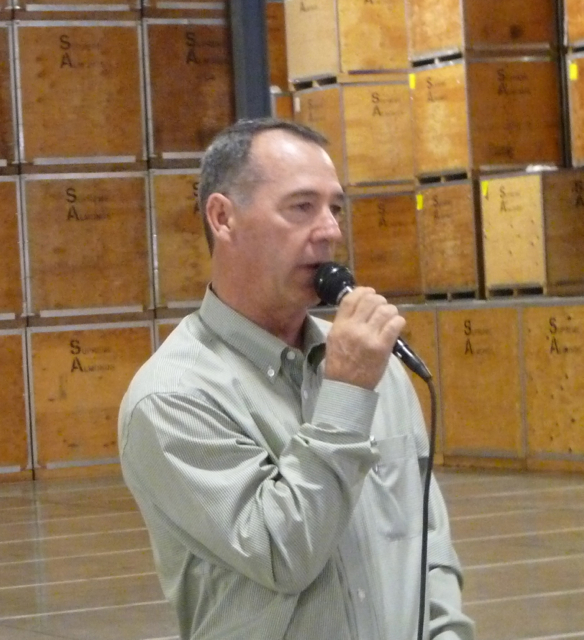
At a recent drought forum, California Ag Today spoke with Mike Mason, an almond grower and partner with Supreme Almonds near Wasco, as well as  chairman of the Almond Board of California. Noting breakthroughs in the almond industry, Mason said, “Facts bear out that we use 33 percent less water today than we did 20 years ago for every pound of almonds grown. There’s no reason  not to expect a similar result over the next 20 years given the ongoing research and funding we do through the Almond Board. We will continue to become more and more efficient, not just with water use, but with fertilizer and everything else we do in farming as well,” said Mason.

“Keep in mind that almonds, like all flowering plants, transpire 95 percent of the water they take up,” said Mason. “Water moves through the vascular system of the plant and exits the stomata of the leaves. When the stomata open, pure water exits and carbon dioxide enters the leaves. The carbon is used in photosynthesis to make carbohydrates that enable the almond almond tree to produce almonds. It’s all part of the universal water cycle that enables life to exist on the earth!”

Though current public opinion on water use seems to focus on almonds primarily, Mason remains confident that the facts will speak for themselves. It is simply a matter of getting the information out there. Mason elaborated, “We’ve got to go back to education because there are so many ways of comparison, and it is pretty hard to refute some of the things people are saying out there. But I think, over time, as we get the facts out there, public perception will be different.”

Because almonds are proving to be profitable at the moment, other countries are starting to take notice and planting more almond orchards of their own. Currently, California accounts for about 80 percent of the world’s supply of almonds. Mason believes, in spite of increased international competition, California will remain a world leader. “I wouldn’t call it a threat;” he said, “it is more like an opportunity than anything else. I think California will continue to be the world’s supplier, but there are other areas around the world where almonds can be grown, and that’s perfectly fine,” said Mason.

American consumption of almonds has increased roughly 220% since 2005. As a result, almonds have become the most-consumed nut in America, after  surpassing that of peanuts. This explosive increase in demand has been the driving force for almond production expansion.

Now, almonds cover about one million acres in California. On maintaining this level of success, Mason commented, “Markets go up, and markets go down. There are all kinds of different factors that cause these fluctuations, from oversupply to environmental issues. We think we have a bright future with a healthy product. Time will tell,” he said.

2016-05-31T19:28:11-07:00July 7th, 2015|

New Partners Offer MRL Database

Agrian and Bryant Christie Inc. Partner Up for MRL Database


By Patrick Cavanaugh, Assistant Editor, California Ag Today

They’re called “Maximum Residue Levels”(MRLs) and nearly all crop protection products have them; however, keeping track of MRLs for export is difficult. To this end, two companies have joined together to provide an MRL Database, globalmrl.com, to help the Ag industry comply with MRL regulations. Bryant Christie Inc. of Seattle, helps open, maintain and expand international markets by eliminating trade barriers for Ag exports. Agrian, Inc., a Fresno-based service-oriented company, provides subscription-based online information on most crop protection and nutrient products.

Nishan Majarian

Nishan Majarian, chief executive officer and cofounder of Agrian Inc.

Nishan Majarian, ceo and cofounder of Agrian, reported, “Several years ago we had a large ag retail customer who became concerned about MRLs and global export. We developed recomendation writing tools that ensure the safe application of crop protection materials, and MRL’s are an extension of that. We did not have an MRL database, so we called around and found out that Bryant Christie had the premier global MRL database.”

So Majarian reached out to James Christie, president and managing director of Bryant Christie, “And we began the process of partnering for a hybrid system that uses both his data and our data to ensure the safe application of a material, and give insight into the export requirements of that crop.”

James Christie

James Christie, president of Bryant Christie, Inc.

James Christie added, “At Bryant Christie, we work on preventing trade violations, such as chemical and food additive violations, and on ameliorating consequences when they occur. So for us, this collaboration makes so much sense. If we can avoid violations, we can help the ag industry considerably.”

And those consequences can cost ag exporters significant amounts of money, “The consequences range from a single cargo load lost to a violation,” said Christie, “to bad public relations, to having an entire commodity prohibited from entering a foreign country.”

They developed an MRL database, a one-stop resource, Christie explained, “in 1992, with our first client for the hop industry. It is just the best way to keep and manage the information. As database technology advances, it’s made even more sense to have it in that format.”

Majarian said the successful partnership with Bryant Christie is a matter of being at the right place, at the right time. “We think domestic and global compliance are growing in irreversible trends,” Majarian elaborated, “and as more field-level users move to digital record-keeping, these tools and the database will only grow in importance over time. We are excited to be on the cutting edge of online technical solutions. Sometimes I call it the ‘bleeding edge’ because it is a little painful to be innovators.”

Resource Links:

Bryant Christie, Inc.

Agrian, Inc.

Global MRL Database

2016-05-31T19:28:12-07:00July 7th, 2015|
Go to Top