Temperance Flat Dam Will Solve Sinking Soil

David Rogers: Temperance Flat Dam Will Solve Sinking Soil

By Charmayne Hefley, Associate Editor


Speaking at last week’s California Water Commission meeting in Clovis about the need for water storage, Madera County supervisor David Rogers voiced the solution to land subsidence caused by groundwater depletion:  the Temperance Flat Dam.

“We’re losing our groundwater so rapidly, the soil is sinking beneath us in a geological process called subsidence,” Rogers said. “Water is flowing out to the ocean from the San Joaquin River system, when in reality, that water needs to be delegated and allocated to farms so they don’t have to pump groundwater.”

“We’re losing the river and it’s a moot issue. We need surface water delivery; that has to happen. We cannot continue this way or we will lose the river, the communities, and the farms. There’s no question that Temperance Flat is the answer to this problem.”

Central Valley land subsidence is not new. In the mid-1900s, subsidence of the soil was occurring much like it is today. “Between 1937 and 1955,” Rogers explained, “the ground sank 28 feet in Mendota, Fresno and Madera Counties and similar regions.”

The federal Central Valley Project (CVP), which stretches 400 miles from north to south, was organized and built back then to solve the extreme and recurring water shortages, land subsidence and flooding. Operated by the U.S. Bureau of Reclamation, and considered one of the world’s largest water storage and transport systems, the CVP now consists of 20 dams and reservoirs, 11 power plants, and 500 miles of major canals, as well as conduits, tunnels, and related facilities.

“The very purpose of the CVP,” Rogers emphasized, “was to stop the ground from sinking beneath our feet. We are currently in the same situation, and the much-needed extra storage is going to be created by the Temperance Flat Dam. It is the solution. It is what this Valley needs. We need it now. We don’t need it tomorrow; we need it—yesterday!”


Categories

U.S. Bureau of Reclamation

2016-05-31T19:27:06-07:00October 22nd, 2015|

Record Walnut Crop

New Record Walnut Crop:  575,000 Tons

By Patrick Cavanaugh, Deputy Editor


In a recent interview with Dennis Balint, executive director and ceo of the California Walnut Board, Balint discussed the Board’s promotion efforts on what has become another record walnut crop, grown on approximately 300,000 acres in the state.

California Ag Today (CAT): Despite the drought, the valiant walnut growers of California have produced yet another record crop of 575,000 tons, up one percent from 2014’s crop, and crop quality is reported to be excellent. How does that relate to overall supply?

Balint: This increase represents 5,000 additional bearing acres. Last year, the world availability was up about 140,000 tons higher than the previous year. We knew that we could absorb incremental production of 20,000 or 30,000 tons a year; however, 140,000 tons was a bit of a surprise. Couple that with the fact that China’s economy isn’t today what it was a couple of years ago. That has hurt us a bit.Walnut trees

So at any rate, that means we are going to have a record total of availability this year, and I think we are going to see prices moderate. Now, the really good news is the industry had some foresight in approving a huge budget to market the product, so we’ll be having a serious marketing campaign in the 2015-2016-crop year.

CAT: Walnut consuming promotions?

Balint: The board will continue promoting walnuts with print and television campaigns, as well as public relations efforts through Edelman Public Relations. That will continue on two fronts; one is consumer appeal, like recipes, and just raising overall awareness regarding the versatility of walnuts; but second and most importantly, Edelman is in charged with promoting health. Health continues to be a very important card in promoting our product to consumers and health professionals as well.

CAT: It is always good that people think of health when they think of walnuts!

Balint: Yeah they do. It is amazing how that number has changed over the years.

CAT: Is eating more, better?

Balint: You know we have a daily range. When we do studies, researchers will always look at the composition of the product and, depending on what they are expecting, they will adjust accordingly. So we have studies that are based on 1 ounce, 1.5 ounces, and 2 ounces daily. So it really depends on the end points they choose to look at.

We try to never talk about compounds because we like to talk about the whole walnut, but occasionally researchers who are deconstructionists suspect a particular compound. Then we have to analyze it down to the nitty-gritty so somebody can put it in a pill. When that happens on occasion, researchers say, “Well, we really need to feed 2 ounces.” And in some cases, 2 ounces in the short-term works very well. In the long-term, being practical, 1 to 1.5 ounces is good.

CAT: Please go back to the advertising budget. Is it mainly domestic?

Balint: It is all domestic. The export program will remain intact—no changes there. We will still have good programs in a number of countries overseas, but all of the increased production is going into the domestic market.

CAT: Do we need to increase per capita consumption to handle the oversupply issue?

Balint: That is a good question. What we need is the following: We estimate, and we don’t have hard numbers, not much more than one in five households is purchasing and using walnuts on a regular basis. So that leaves a lot of room for growth. Our campaign has been designed to appeal to light and non-users, and not just the core consumer who is already loving walnuts and buying them on a regular basis, to expand our user base.  We are doing so by presenting walnuts as an ingredient in salads, vegetable side dishes, entrees, and of course as a snack. As a matter-of-fact, we are waiting on copy testing results in the next week or two.

CAT: Good. And walnuts make everything better and that’s what it is all about, isn’t it?

Balint: Absolutely. Walnuts are a little added touch that makes food not only more interesting because of the color, texture, and taste, but also because it is healthful. All of our ads are going to have the heart check logo. I want to reemphasize health research will still capture a lot of media on its own. That will continue, ‘no reduction there.

CAT: Are the ads in food or fitness magazines primarily?

Balint: Food magazines, primarily. We have four executions of print ads and two television commercials. We are waiting for the test results for the ads. The copy testing we have done also includes what the experts call rapid eye movement. By observing people’s eyes, we’ll know when consumers like or don’t like a word or a phrase, or think something is plausible or implausible. We will also know where their glance goes, how long it stays there and where it goes next.

This will help us structure the commercial to eliminate some of those “down spots” and focus on things that capture their attention. We will be reaching 95% of adults between the ages of 25 and 54 with this campaign on average 26 times per person over a period of about five months.

CAT: Wow, you are running it on some big television programs?

We’ll be going after different segments. For example, we have scheduled morning television segments like “Live with Kelly & Michael,” “Rachael” with Rachael Rae, and pillar events. A pillar event might be a broadcast on E! Network such as “From the Red Carpet at the Academy Awards” or an event in the sporting world. But that is not a focus. We will also include standard shows like “The Big Bang Theory” and so on.

Television will be in ten key markets, and I don’t have the list in front of me. But we will also continue our aggressive social media program. We have a couple of new ideas that I think will capture people’s interest.California Walnut Commission logo

CAT: Tell us about the campaign with the wrapped truck that looks like a walnut.

Balint: We converted a food truck to look like a walnut by wrapping it with walnut texture and contoured the boxy truck into a rounded walnut shape. So when it is parked in downtown Manhattan or Washington D.C., the truck with those affixed contours makes quite a spectacle.

CAT: So what were you doing with that truck? Did you hand out information?

Balint: We made information available, facilitated games, hosted walnut cracking, and most importantly, served an ice cream sandwich made out of yogurt, walnuts and chocolate graham crackers. We had samples of walnuts as well.

CAT: What is your health research strategy? Are you working with key researchers to compare eating walnuts with not eating any nuts?

Balint: Our health research strategy depends on the target. Remember, walnuts are the only good food source of Omega-3; most nuts have no Omega-3. We like to test the whole walnut in a lot of our studies. Sometimes we will find an indication that one compound is more important than another; but we recently finished a study with 27 scientists for our annual meeting. They look at what we have done, what we are doing, and what we should do next. So it is not just guesswork, it is a carefully thought-out program that focuses on areas of greatest interest to scientists.

One thing I will tell you is one day before the meeting began, we had six key scientists come in for what we call a “brainstorming session.” We asked them to tell us how to make our program better: the way we run our health research program, the way we run the conference and so on. The unanimous opinion of the six in attendance was not to change a thing. They said basically the program is a model for what should happen in health research, because we don’t go into research with a preconceived notion. We don’t go in and say, “Researcher, please raise your hand and provide us with a positive result on this disease.” We follow the science.

CAT: What are your biggest markets abroad?

Balint: China of course is huge. But other very strong markets include Germany, Japan, Korea, Spain and Turkey. China slipped this past year, of course, and we are all scratching our heads because we hear a lot about China. But their economy is a little soft. They had a crackdown on the gray market, which hurt business a little bit because some of the product that goes into China finds its way there through either Hong Kong or Vietnam. So China’s utilization this year was down. It is too early to tell whether they will return or continue at the same pace they experienced in 2014-15. We just don’t know yet.

CAT: Are you promoting the health message in these foreign countries?

Balint: Yes, and it is a really interesting situation. In countries that have a tradition of walnut-use like China, only about 40% of our messaging is health-related because they have known it is healthy for a thousand years. Whereas, in Japan, when a big story breaks accompanied by some television coverage, our sales will spike like you can’t even believe. So, it differs by market.

Here in the U.S., it is very high, as in Germany and Spain. Turkey is building and India as well, but slowly. We have some issues there; India is a market in which they too grow lots of walnuts, but we are slowly but surely making some headway.

The Korean market opened in 1994, but it was 2001 before we had any meaningful number of shipments. You have to be patient with some of these markets to be able to dismantle some of the trade barriers.

CAT: Are there any markets in South America?

Balint: Years ago, in the 90’s, there was an effort in Brazil and Argentina. Now, Chile grows walnuts, Argentina grows some, Brazil still grows a few. The Mercosur* pact down there (a special trading pack between South American countries) is a problem because the Mercosur countries trade duty-free. So we are at a disadvantage. We’re contra-seasonal. Last, but not least, we have a tariff burden. So we tried it for a couple of years, but decided there were better places to invest.

CAT: Well, it’s interesting. We don’t see South America being a big market for almonds or pistachios yet either.

Balint: It’s true; they grow Brazil nuts and, as I said, walnuts. Chile, as a matter-of-fact, is increasing their plantings. As their plantings increase, their initial sales will remain within the South American continent. When they get into the summer, especially late summer, they will sell what they have left into markets like Korea, and if they can, France and Germany. They basically go into our markets and try to sell in advance of our crop.

CAT: How are California growers doing? They are going through another year of drought, and I’m sure you are worried….

Balint: Everyone is, and we are all waiting for the other shoe to drop. Here we are with another record crop, and we know the reason for that. It’s because five or six years ago, somebody planted more walnuts, and they are coming online now. It appears as though we are trying to grow more walnuts in the middle of the drought, though the fact of the matter is those trees went in the ground long before water scarcity became as bad as it currently is.

CAT: Exactly, Fresno County just released their numbers last month and broke a record 7 billion dollars. Kern County and Tulare County broke records as well. In terms of ag value, we are not taking such a hit, mainly due to high nut prices.

Balint: Even before I was in the commodity business, I used to work for a company in Massachusetts called William Underwood Company. They had B&M (Burnham & Morrill Company) Baked Beans, Underwood Deviled Ham and other meat spreads. That is where I learned about commodities.

We had an economist on staff to predict the prices of navy beans, fatback**, sugar, ham hocks, and chicken. I learned it was much easier for the chicken guy year to year; he would just have more chickens to count! The bean people could have more beans. What about the walnut people? If the trees weren’t in the ground, they were not going to get more walnuts.

________________________________

*Mercosur or Mercosul (Spanish: Mercado Común del Sur, Portuguese: Mercado Comum do Sul, Guarani: Ñemby Ñemuha, Southern Common Market) is a sub-regional bloc. Its full members are Argentina, Bolivia, Brazil, Paraguay, Uruguay and Venezuela. Its associate countries are Chile, Peru, Colombia and Ecuador.

Source: Wikipedia, the free encyclopedia


**Fatbackthe fat, usually salted, from the upper part of a side of pork

Source:  Dictionary.com


2016-05-31T19:27:06-07:00October 21st, 2015|

Water Commission Meeting Delivers Passion and Controversy

Water Commission Meeting Delivers Passion and Controversy

By Charmayne Hefley, Associate Editor

[embedvideo id=”FVZ-wJkqjgI” website=”youtube”]


The California drought has become a hot topic, and even more so is the subject of how to solve the drought. Some advocates believe the solution is in long-term water storage, and as a result, the California Water Commission (Commission) has been drawing up a proposal to enact this potential solution.

On Wednesday, Oct. 14 in Clovis, the Commission held a public meeting to discuss their Water Storage Investment Program.

Joe Del Bosque, a commissioner on the California Water Commission, as well as a Westside farmer struggling with the zero water allocations, summarized the meeting, “It was very lively, especially at the beginning. A lot of folks are hurting—and rightly so. They have a lot of uncertainties about next year or the year after, or for who knows how many years.

We don’t know when some of these storage projects will be completed and ready to start helping us. A lot of folks have a lot on the line here in the San Joaquin Valley, and I appreciate hearing from them and listening to their concerns.”

Assemblyman Jim Patterson, in his opening remarks, said the governor, the commission and the California State Water Resources Control Board (Water Board) must realize what is driving the need for water storage. “We really need to look at the capacity to store water,” Patterson said. “If we have two river watersheds—both producing similar amounts of water, but one drops into a reservoir that’s half the size of the other, the water will overflow. And we know El Nino is coming, 95 percent.”

Many individuals spoke passionately about the plan during the comment period. Kings County Supervisor and walnut farmer, Doug Verboon, said, “We need storage. We’ve been complaining about it for years, and this is one chance in our lifetime to get more storage built. We need to get over our differences and get together and make this happen. We want to make sure the Water Commission fully understands the importance of adding more storage today.”

Another county supervisor, David Rogers, from Madera County, reminded the Commission that the need for water storage goes beyond reserving water for dry years.

“We’re losing our groundwater so rapidly that the soil is sinking beneath us and we have subsidence occurring,” Rogers said. “And all the while water is flowing out to the ocean from the San Joaquin river system when that water needs to be delegated and allocated to the farms that need it so they’re not pumping groundwater.

In reality we’re losing the river as a result of subsidence. The river, itself, is subsiding so it’s a moot issue whether or not we need surface water delivery. That has to happen. We cannot continue this way or we will lose the river, the communities and the farms. So there’s no question that Temperance Flat is the answer to that problem.”

During the meeting attendees learned that the Water Storage Improvement Plan includes a timeline that doesn’t allow for funds to be awarded to applicants wishing to build storage until 2017.

Greg Musson, president of GAR Tootelian, Inc., called the timeline unacceptable, adding the delay in the plan would lead to the loss of hundreds of thousands of jobs. “I don’t see how anyone can accept this as being standard for the way that America works,” he said. “Shame on you! Really, shame on you! You have to do better here. America needs you to do better; I need you to do better; the people in this room need you to do better than this. This is outrageous.”

Manuel Cunha, president of the Nisei Farmers League, spoke about the Joint Powers of Authority (JPA) that is being formed to apply for funding to build water storage. “We’re going to have to submit it as a large project,” Cunha said, “big storage—definitely Temperance Flat—plus all of these different irrigation districts, cities and tribes have projects that we’re going put together and submit in this large package. That’s the only way we’re going to get this money. Only then cab we start to deal with all the public benefits, environmental issues, and securing those dollars for this Valley.”

The California Water Commission consists of nine members appointed by the Governor and confirmed by the State Senate. Seven members are chosen for their general expertise related to the control, storage, and beneficial use of water and two are chosen for their knowledge of the environment. The Commission provides a public forum for discussing water issues, advises the Department of Water Resources (DWR), and takes appropriate statutory actions to further the development of policies that support integrated and sustainable water resource management and a healthy environment. Statutory duties include advising the Director of DWR, approving rules and regulations, and monitoring and reporting on the construction and operation of the State Water Project.

2016-05-31T19:27:06-07:00October 20th, 2015|

Milk Marketing Order in CA Worries Other Dairy States

By Kyle Buchoff, Assistant Editor

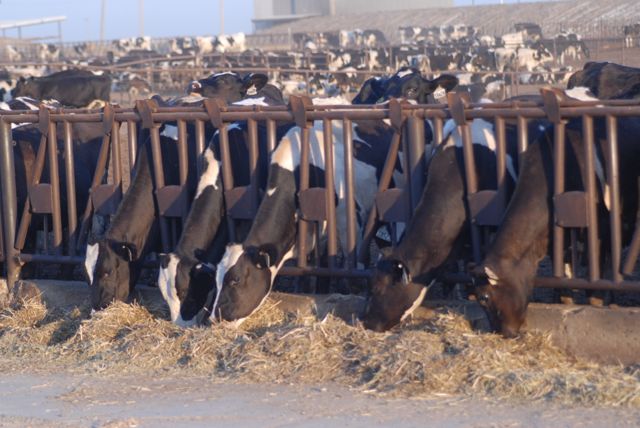
Tom Van Nortwick, owner and publisher of Agribusiness Publications in Fresno for the last 35 years, has been attending the USDA dairy hearing in Clovis to adopt a Federal Milk Marketing Order in California. Van Nortwick warned that should California go with the Federal Milk Marketing Order, the move could hurt prices for all milk producers across the nation.

“Dairymen in other parts of the country have expressed concern that if California dairymen were paid more for their milk, they may go ahead and produce more milk,” Van Nortwick said. “California is a milk-making machine with comparatively fewer dairies. More milk on the market has been proven to create volatility and huge price fluctuations up or down, depending on demand. So California producers’ getting paid more and producing more milk would reduce the price of all milk throughout the country.”

“We found that 2-3% too much milk in the market at any one time can create up to a 40% reduction in price paid to producers,” Van Nortwick explained. “And of course, California is not the only overproducing state; Wisconsin, Minnesota and other midwestern states are also overproducing at this time.”

Van Nortwick also pointed out, “Domestic demand is strong, but exports have shrunk by about 50%, which is about 8% of last year’s market. So when you add an 8% oversupply of milk volume to the market as we broach the time for holiday season orders, and there are strong indications that inventories of milk, butter, powder, and cheese are rising across the country, prices paid to producers will fall.

“Nobody needs prices to go any lower,” stated Van Nortwick. “Our counterparts in New Zealand, Australia, and the European Union are suffering mightily, even more than we are, with record-setting low prices because they think they can just produce more than they can sell. If you produce more than you can sell, you are going to take a hit, and unfortunately it is the producers who end up taking that hit.”

2016-05-31T19:27:06-07:00October 19th, 2015|

Joe Marchini, Mr. Radicchio

Joe in truckJoe Marchini Brings Radicchio to California

By Patrick Cavanaugh, Deputy Editor

Joe Marchini, of J. Marchini Farms, was born in 1938 to Italian parents who farmed and packed tomatoes in Le Grand, Calif. Marchini has lived and worked in that locale for his whole life, exemplifying a high level of spirit and accomplishment.

His father, Florindo Marchini, brought his family over from Tuscany in 1920.” They settled in Le Grand because Florindo’s brother was already living there when Florindo first arrived. Before long, Florindo met a long time grower by the name of Carlo Giampaoli who invited Marchini to grow tomatoes and bell peppers with him. So Giampaoli took Florindo Marchini under his wing, and his brother as well, and established their farm, Giampaoli-Marchini Company. Together, they packaged tomatoes under the Live Oak brand because they actually packed the produce by hand in the shade of a live oak tree that still thrives there today!

Florindo’s son, Joe Marchini, was around seven when he began working at the packing shed stamping produce boxes. “I would sit on a box,” he said, “and as they came down the line, I used a little stamp pad to size tomatoes 6/6, 7/7, 7/8, 5/6, 4/4, 3/4. I only worked about 3-4 hours a day, and that was it. The older I got, the more I became involved in different things, from stamping, to packing, to wrapping tomatoes in cellophane paper and putting them in a box.”

The tomatoes were packed green and transported back east by train in ice cars. “They weren’t pink ones; no, they were dead green! They knew when to pick them, when the gel formed inside of the tomatoes,” Marchini said. “They could tell by the color and the shine of the tomatoes, and that’s what the pickers were supposed to pick. They were going to break soon. It took about a week, running day and night, to get to New York on steamer trains.”

“The early farming venture was comprised of 150 acres, which was a lot of acreage with horses,” said Marchini. “In the fall, we would travel to Gustine and cut tulles and bamboo for our tomato stakes.”

“My two brothers, Richard and Leonard Marchini, went to school with me. None of us could speak any English; we only spoke Italian,” Marchini said. So they all learned English in a small schoolhouse with two classrooms and one teacher.

“My dad grew tomatoes on that land for two years and then planted 40 acres of almond trees. The almonds were harvested green and then dried down by air.” Of course this was before mechanical shakers were used to harvest, so it was done with mallets and tarps. “It was very tough work,” noted Marchini, “and the price of almonds was less than 60 cents a pound.” Marchini credits Blue Diamond Growers, a cooperative he joined, with marketing the almonds so prices could increase.Radicchio


Mr. Radicchio

Not satisfied with growing only tomatoes and almonds, Joe Marchini was always looking for something new to grow. In 1962 on a trip to Italy, Joe noticed fields of radicchio, a leafy Italian chicory and relative of endive, in the Venice area and found the crop was selling well in Italian grocery stores. He said, “I liked the crop and thought it would grow well in California, so I smuggled in little packages of seeds.”

Unfortunately, the seeds he brought back did not grow well. “Radicchio production wasn’t perfected and the source I had in Italy did not tell me what season the seeds were for.” Marchini’s radicchio would grow and form green leaves but not make a head. So Marchini went back to Italy, 40 miles southeast of Venice, to talk to growers, but no one would talk. “I certainly could not tell the guys that I was going back to the U.S. to grow the crop,” he said.

Marchini finally found a couple of growers to ship a 100-pound sack of seeds to San Francisco for him. “I picked up the bag, planted the seed and the same thing happened—it didn’t grow.” He called the Italian growers and asked how many different radicchio varieties they were growing. They told him eight varieties. “I asked them why they sent me only one variety, why they did not tell me when to plant the seed, and if they wanted me to buy more seed, they had better tell me what varieties to grow,” he said.

“Since I spoke Italian, the growers started to open up. Eventually, I brought them to the U.S., and we partnered up to grow radicchio. I even sent them to Mexico because they thought they could produce an earlier crop than in California,” Marchini said. After reaching mediocre success for about four years in Mexico, they moved back to California to work with Marchini, now without a partnership.

The company now productively farms in Mexico with the right seed. “We farm in Mexico for the winter crop in February, March and April. But before we started growing in Mexico, in the late 1970s, we started in Salinas and then in the San Joaquin Valley. The Italian growers knew what to plant and we got all the varieties in the right mode that would do well. The Italians wanted to be partners again and I declined it because I had kids coming up, but I told them that I would buy all the seeds from them, and they were making good money. So they ended up disclosing the secret in the whole deal of growing radicchio. So without them, and me speaking Italian, we would have never gotten started. We are still friends today and I’m still buying seed from them,” Marchini said.

Over the years, Marchini has worked with his son Jeff to plant the right seed at the right time. They learned which varieties could handle different climates, such as going into the heat, and coming out of the heat, and they emerged with 6 or 7 dependable varieties.

“So we plant six varieties in the fall, one week after the other. We can have radicchio in the San Joaquin Valley from November until March, and we harvest seven days a week.

His processors want radicchio 12 months out of the year, so Marchini’s company manages harvesting to fill the sales pipeline 12 months a year. “And we never run out of it,” he said.

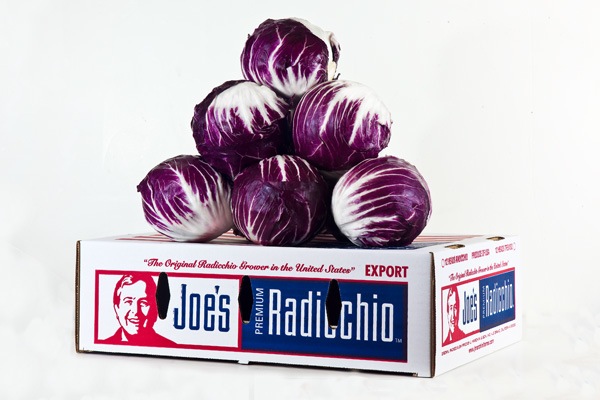
Joe's Premium LogoToday, Marchini uses about 12 different labels, including his own image on the ‘Joe’s Premium Radicchio’ box, for the domestic market and select export markets. “We let global importers pick their own labels. J. Marchini ships all over the world now, including Italy, and has a large percentage of the market in Japan, Korea and Taiwan. “They love the color of radicchio in a blend,” he said.

J. Marchini deals with nearly every processor in California including Taylor Farms, Apio, Fresh Express, Dole, Earth Bound, and Ready Pac, year-round, with production from Kern to Merced counties and Mexico.

Managing all this production with Joe and his son Jeff (the third generation), are grandchildren Marc and Nic and Francesca (fourth generation), with the fifth generation coming along with Gabriella, Maximus and little Giuseppe, named after his great-grandfather Joe (Giuseppe). Marc and Francesca work in the sales and post-harvest side of the business. Nic works in the farming operation side of the business. Jeff oversees the company as a whole.

Overseeing production, and especially the harvest of the radicchio throughout the growing regions, including Mexico, is Alejandro Calderon, Joe Marchini’s right hand since day one. Jenny MacAfee, a key person in the sales department, has been on board for the last 20 years.

Today Marchini farms three main radicchio varieties: Castelfranco (white head with red polka dot specks), Treviso (elongated red with white ribs), and Palo Rosa (red head type with white veins). “We do a three-pack deal in the wintertime with all three varieties together, but we also grow many other varieties,” said Marchini.

J. Marchini Farms’ production operation, based in Watsonville, a great climate for radicchio in the summer months, includes 2,000 acres spread between the Central Valley, the Coastal areas and Mexico.

The Central Valley fall and winter nighttime temperatures are cool, and radicchio production, five lines down the row on 80-inch beds, is about 20,000 pounds per acre, with most of it on drip or sprinkler.

The operation also grows almonds, walnuts, fresh figs and other crops, “but radicchio has been a good ride,” said Marchini. “We have had ups and downs with the crop, but overall it has provided a good cash flow,” he said.


For the last three years, Joe Marchini has been dealing with Squamous Cell Carcinoma (the second most common form of skin cancer) and has undergone multiple surgeries and treatments. His love for his family and his incredible passion for farming keep him going.

_______________

J. Marchini Farms

2016-05-31T19:27:06-07:00October 16th, 2015|

Winegrape Grower Earns SIP Certification

Dana Merrill, Winegrape Grower Earns SIP Certification

By Patrick Cavanaugh, Deputy Editor


Dana Merrill is a seventh-generation farmer of an eighth-generation Californian farming family and president of Mesa Vineyard Management, a premium vineyard management service on the Central Coast. A graduate from Cal Poly with an Agriculture Business degree, He is a member of the Merrill Family Estates, an estate that produces premium winegrapes for its Pomar Junction Winery, and he’s extremely involved with the Paso Robles Wine Community.

Recently, his winegrape growing operation earned the Sustainability In Practice (SIP) certification.

“We worked very hard to attain this certification,” Merrill said. “Most of the changes were positive moves. It’s not meant to be a penalizing certification, but there are specific restrictions. For example, we don’t use any Class I restricted materials. If the US Environmental Protection Agency has commented about a substance, ‘Hey, that is Class I. It may be legal, but as an herbicide, it has a tendency to leach into the groundwater,’ then the SIP system won’t allow it. There are times when I’ve said, ‘Boy, I wish I could use a certain material,’ but there are some I simply cannot use in order to qualify for the certification.”SIP Certified

Merrill continues, “The SIP also takes into account how you treat your labor. For example, more ‘points’ are awarded if you offer a benefit program, continuing education support, a retirement program, or health insurance. These days, everybody has to offer health insurance, but points are awarded for that, even though some of us have offered it for over 20 years. Points are also earned for best-practice management whether it is fertility management, soil probes, or having water meters on all your wells and using the information to manage how you irrigate. The idea is to encourage folks to do more and raise the bar.”

“Being SIP-certified helps with marketing too,” noted Merrill. “If you get the SIP seal on a bottle of wine, a consumer can go be assured of the excellent quality of that product.”

“It is marketing in the sense that we are always selling ourselves to the consumer,” Merrill explained. “You know, the consumer may ask, ‘Why should I buy a bottle of SIP wine? Why should I buy California wine?’ I think that branding or labeling conveys a message to customers about what is important to them. Some consumers are very environment-oriented; others are looking primarily for quality. Your label conveys that message. There are customers to whom it is less important, but I see its significance growing. I would say 50% of the people who visit our tasting room find that label on an SIP-certified bottle of wine quite meaningful,” Merrill said.

_______________________

Links

Mesa Vineyard Management

Sustainability In Practice (SIP)

US Environmental Protection Agency

2016-05-31T19:27:07-07:00October 14th, 2015|

More on Federal Milk Marketing Order

Continued Coverage on Federal Milk Hearing in Clovis

More on Federal Milk Marketing Order: Let the Market Sort it Out

By Patrick Cavanaugh, Deputy Editor


Bill Verboort is the General Manager for AgriTech Analytics (ATA), a national company based in Visalia Calif. Owned by the Holstein Association USA, AgriTech is part of the U.S. Dairy Herd Improvement Association System, and provides data to dairy producers for management, genetic improvement and pedigree purposes. Verboort has been attending the USDA Federal Milk Marketing Order (FMMO) hearing in Clovis, Calif., which is gathering testimony from milk industry people who want, or do not want to abandon the California Milk Marketing Order and adopt the FMMO.

“I think it is a very historic day, because I think California is one of the only major markets outside the FMMO,” said Verboort. “When the Federal system came in the 1930s, there were good reasons for us to be on a state order due to geographic isolation, etc. Today, I don’t see us as geographically isolated as we once were. So why not be part of the FMMO?”

Verboort noted that the FMMO should put California producers on par with the rest of the country when it comes to milk and cheese prices. “That is the intended and anticipated effect,” he said.

Of course there are many against adopting the FMMO. “Some are saying if the California producer is going to get more money for his milk, he is going to produce more,” said Verboort. “If you look at the industry over decades, when the price of milk has gone up, producers have produced more. You’ve got to make hay when the sun shines, so to speak. And when prices are down, the cash flows are down, so a producer needs to get more cash. What is the solution to that? Produce more milk!”

“So the California producers are going to produce more milk whether the FMMO system is in place or not; at least that’s the way I see it,” Verboort explained. “But if our producers in California are at a disadvantage to producers in other parts of the country, we need to make an equitable situation here.”

“And the market will shake it out. It is as simple as that,” he said. “We can produce milk products more efficiently in California and I think that is good for the U.S. and for the consumer. If the producer can produce it here more efficiently by getting on the right strategy with the FMMO rather than the California milk order, then we are on the right track.”

“California producers have been on the short end of the stick for a long time,” Verboort said. “Even though last year was a very good year for most producers throughout the country, and for California producers as well, they still sold their milk for several dollars per hundred weight less than the rest of the country,” Verboort said.

As for the hearing taking place in Clovis, Verboort said it seems that the momentum is going in a good direction. “But we will find out; that is what these hearings are about,” he added.


AgriTech Analytics (ATA) is a certified Dairy Records Processing Center.   

Part of the U.S. DHIA System, AgriTech Analytics provides data to dairy producers for management, genetic improvement and pedigree purposes.  

By utilizing the reports and herd analysis made available by AgriTech Analytics, Herd owners are able to maximize profitability and better position themselves in today’s competitive dairy industry.

________________________________________

Links:

AgriTech Analytics

U.S. Dairy Herd Improvement Association System


2016-05-31T19:27:07-07:00October 14th, 2015|

Table Grape Ads Feature Growers

California Table Grape Ads Feature Growers

By Charmayne Hefley, Associate Editor

Kathleen Nave, California Table Grape Commission president

Kathleen Nave, California Table Grape Commission president

In an effort to shed a more positive light on agriculture and the growers who cultivate the food we eat, some advertising campaigns are focusing on bringing growers to the forefront. Kathleen Nave, president of the California Table Grape Commission, said this is exactly what the Commission’s campaign has been doing, and it has been receiving positive feedback. “The heart of the global campaign the Commission is fielding,” Nave said, “is very much about California table grapes and the heritage that growers bring to the table—the years of understanding the art and the science that go into growing table grapes.”

The California Table Grape Commission has generated commercials that focus on the family aspect of California’s grape growers and can be seen on Food Network television. “The heart of the campaign of table grape ads,” said Nave, “is basically branding California and the growers of California table grapes. We’ve portrayed our brand this way, in this particular campaign, for about eight years, and it really resonates. A National Consumer research study of the four advertising commercials we are currently fielding on the Food Network revealed very high marks.”

Nave explained the commercials help to create trust between consumers and growers by showing consumers the faces behind their food. “The two commercials that feature growers’ families interacting with one another, one set in a vineyard and another at home, resonated the highest with consumers,” Nave said. “Consumers have a huge amount of trust for growers. There is a hunger among consumers—not only in the U.S., but in other parts of the world as well—to understand who is growing the food they bring home to their own families. So showing consumers a California table grape ad that features the grower, the grower’s family, and their vineyard, really resonates. So the campaign is working well. I think it’s a campaign that we will be continuing.”

_____________________________

Links:

California Table Grape Commission

Grapes from California “Family Dinner” tv commercial

Grapes from California “Generations” tv commercial

2016-05-31T19:27:07-07:00October 13th, 2015|

#CitrusMatters Spreads Info

#CitrusMatters Helps Spread Word on Serious Citrus Greening Disease

By Kyle Buchoff, Assistant Editor

Steve Olson, senior product manager for Bayer CropScience has a big passion for citrus, an important U.S. crop currently at risk to Huanglongbing (HLB), also known as citrus greening, a bacterial citrus plant disease. The vector of the deadly disease is a tiny insect known as the Asian citrus psyllid. Bayer CropScience launched the #CitrusMatters initiative this year to fully convey the significance of HLB to the California public.#CitrusMatters

Olson said the initiative focused on California’s urban settings because more than 60 percent of homeowners in California grow citrus trees in their yards. “We felt we could have some influence on broadening public awareness of this very significant disease.”

“So we introduced the #CitrusMatters initiative with California Citrus Mutual to help spread through social media the importance of citrus and how people enjoy citrus,” said Olson. “We were trying to make that emotional connection, and I think to a degree we have had some success. We held a #CitrusMatters Day in San Diego on May 8 and in Los Angeles on July 2, and tried to engage mass media. I think it is a very important undertaking to really bring awareness to homeowners who have citrus in their backyards.”

For more information go to: citrusmatters.bayercropscience.us.

2016-05-31T19:27:07-07:00October 13th, 2015|

California Table Grape Commission

Kathleen Nave on the Table Grape Commission

By Charmayne Hefley, Associate Editor

Before the California Table Grape Commission was established in 1968, only 1.7 pounds of grapes were consumed per person annually, according to Kathleen Nave, president of the organization. She said the Table Grape Commission began at the request of growers working with California’s legislature to better promote grapes. Today’s annual consumption rate is 8 pounds of grapes per capita.

“I had talked to some of the founding fathers back in the late 50s, early 60s,” Nave said. “They told me there were so many changes happening in the world and in the retail environment at that time, they were afraid of losing the land their families had immigrated to from around the world. So they wanted to come together and pool a little bit of money from every box of grapes they sold to be overseen by the state of California and a board of table grape grower directors to increase demand for their product“To this day, the Table Grape Commission is still governed by growers who are nominated by their peers in each district in which grapes are grown in the state,” Nave said, “and it is all overseen by the California Department of Food and Agriculture.”

While the Table Grape Commission continues to promote table grapes and to create a domestic demand for them, Nave said the Commission is reaching beyond this basic consumer base, to foreign consumers. “Everything we do is designed to create demand,” Nave said, “to get that retailer to put more California grapes on the shelves, to promote and advertise them more often, to encourage that importer to bring grapes in, and to get consumers to go into their grocery stores and ask, ‘Where are the California grapes?’”

2016-05-31T19:27:07-07:00October 12th, 2015|
Go to Top