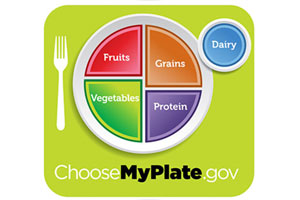
New Dietary Guidelines for Healthy Eating

HHS and USDA Release New Dietary Guidelines to Encourage Healthy Eating Patterns to Prevent Chronic Diseases


Secretary of Health and Human Services Sylvia M. Burwell and Secretary of Agriculture Tom Vilsack TODAY released updated nutritional guidelines that encourage Americans to adopt a series of science-based recommendations to improve how they eat to reduce obesity and prevent chronic diseases like Type 2 diabetes, hypertension, and heart disease. The 2015-2020 Dietary Guidelines for Americans is the nation’s trusted resource for evidence-based nutrition recommendations and serves to provide the general public, as well as policy makers and health professionals with the information they need to help the public make informed choices about their diets at home, school, work and in their communities.

The newly released 8th edition of the Dietary Guidelines reflects advancements in scientific understanding about healthy eating choices and health outcomes over a lifetime. This edition recognizes the importance of focusing not on individual nutrients or foods in isolation, but on the variety of what people eat and drink—healthy eating patterns as a whole—to bring about lasting improvements in individual and population health.

“The Dietary Guidelines for Americans is one of many important tools that help to support a healthier next generation of Americans,” said Secretary Vilsack. “The latest edition of the Dietary Guidelines provides individuals with the flexibility to make healthy food choices that are right for them and their families and take advantage of the diversity of products available, thanks to America’s farmers and ranchers.”

The specific recommendations fit into five overarching guidelines in the new edition:

1. Follow a healthy eating pattern across the lifespan. Eating patterns are the combination of foods and drinks that a person eats over time.

2. Focus on variety, nutrient-dense foods, and amount

3. Limit calories from added sugars and saturated fats, and reduce sodium intake

4. Shift to healthier food and beverage choices

5. Support healthy eating patterns for all

Healthy eating patterns include a variety of nutritious foods like vegetables, fruits, grains, low-fat and fat-free dairy, lean meats and other protein foods and oils, while limiting saturated fats, trans fats, added sugars and sodium. A healthy eating pattern is adaptable to a person’s taste preferences, traditions, culture and budget.

Importantly, the guidelines suggest Americans should consume:

1. A variety of vegetables, including dark green, red and orange, legumes (beans and peas), starchy and other vegetables

2. Fruits, especially whole fruits

3. Grains, at least half of which are whole grains

4. Fat-free or low-fat dairy, including milk, yogurt, cheese, and/or fortified soy beverages

5. A variety of protein foods, including seafood, lean meats and poultry, eggs, legumes (beans and peas), soy products, and nuts and seeds

6. Oils, including those from plants: canola, corn, olive, peanut, safflower, soybean, and sunflower. Oils also are naturally present in nuts, seeds, seafood, olives, and avocados.

Further, Americans should be encouraged to consume:

1. Less than 10 percent of calories per day from added sugars. ChooseMyPlate.gov provides more information about added sugars, which are sugars and syrups that are added to foods or beverages when they are processed or prepared. This does not include naturally occurring sugars such as those consumed as part of milk and fruits.

2. Less than 10 percent of calories per day from saturated fats. The Nutrition Facts label can be used to check for saturated fats. Foods that are high in saturated fat include butter, whole milk, meats that are not labeled as lean, and tropical oils such as coconut and palm oil.

3. Less than 2,300 milligrams (mg) per day of sodium for people over the age of 14 years and less for those younger. The Nutrition Facts label is a helpful tool to check for sodium, especially in processed foods like pizza, pasta dishes, sauces, and soups.

Based on a review of current scientific evidence on nutrition, the 2015 edition includes updated guidance on topics such as added sugars, sodium, and cholesterol and new information on caffeine. For example, the 2015-2020 Dietary Guidelines is the first edition to:

1. Recommend a quantitative limit to consume less than 10 percent of calories from added sugars.

2. Reaffirm guidance about the core building blocks of a healthy lifestyle that have remained consistent over the past several editions

3. Suggest there is still work to be done to encourage more Americans to follow the recommendations outlined in the Dietary Guidelines.

The 2015-2020 Dietary Guidelines continues the nation’s dependence on California agriculture, which includes more than 400 commodities. According to the California Department of Food and Agriculture (CDFA) in 2014, the state produced nearly half of US-grown fruits, nuts and vegetables. Across the nation, US consumers regularly purchase several crops produced solely in California.

California’s top-ten valued commodities (USDA/NASS Crop Year Report 2014):

* Milk — $9.4 billion

* Almonds — $5.9 billion

* Grapes — $5.2 billion

* Cattle, Calves — $3.7 billion

* Strawberries — $2.5 billion

* Lettuce — $2 billion

* Walnuts — $1.8 billion

* Tomatoes — $1.6 billion

* Pistachios — $1.6 billion

* Hay — $1.3 billion

The 2015-2020 Dietary Guidelines for Americans is available at dietaryguidelines.gov.USDA has also released updates for consumers on ChooseMyPlate.gov, and new resources will soon be available on Health.gov from HHS that will help health professionals support their clients and patients in making healthy choices.

The Dietary Guidelines is required under the 1990 National Nutrition Monitoring and Related Research Act, which states that every 5 years, the U.S. Departments of Health and Human Services (HHS) and of Agriculture (USDA) must jointly publish a report containing nutritional and dietary information and guidelines for the general public. The statute requires that the Dietary Guidelines be based on the preponderance of current scientific and medical knowledge.
2021-05-12T11:17:15-07:00January 7th, 2016|

Farmers Generous to Food Banks

Farmers Generous to Food Banks

By Laurie Greene, Editor

California farmers are stepping up to supply fresh fruits, vegetables and meat products to the state’s network of food banks as part of the Farm to Family program. Jim Bates, chief financial officer of Fowler Packing in Fresno County, said “It’s a program we’ve been supporting for 20 years, starting with donations of peaches, plums and nectarines.”

“Unfortunately, 20 to 50 percent of the product we grow doesn’t make it to the marketplace,” Bates explained, “sometimes because of a very small cosmetic blemish. Bates says farmers like him really want to take advantage of these unmarketable crops and help the working poor in the Valley. “We don’t want to dump this product; we definitely want to donate it. So, we have developed contacts with the food banks and found ways to transport our products in cardboard bins, plastic bins—whatever they can take—and get it to them.”

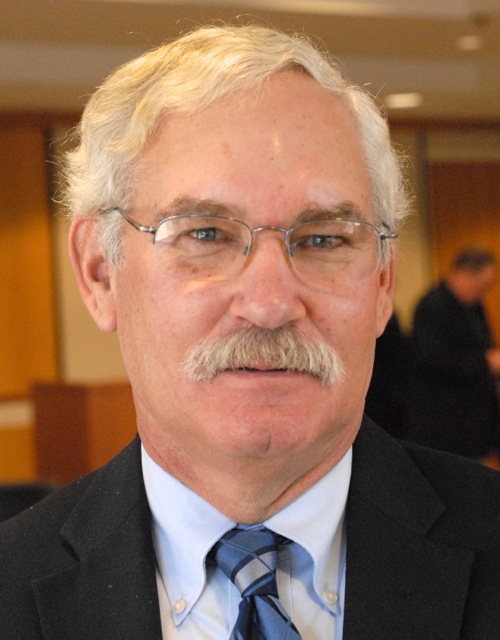
Jim Bates, chief financial officer, Fowler Packing

Bates noted that Fowler Packing, which farms and ships tree fruit, including mandarins, and table grapes, is doing well, and the company would like to pay it back. “We have made big investments over the years; we’ve retooled our packing house, our mandarin and table grape operations are doing well, and we’ve had good times. We want to give back to the local community that has been so good in supporting us year in and year out.”

Andy Souza, president and CEO of the Community Food Bank in Fresno, noted the dramatically increased produce and meat donations from farming companies, “from almost 19 million pounds a year to almost 40 million pounds in the last three years. And yet, in our service area, we are only meeting about two-thirds of the need. We serve all five counties from the southern end of Kern County, including Tulare, Kings, and Fresno Counties, all the way to Madera County, and the need just continues to grow. We have seen the drought; we have seen the effect of changing commodities; and the impact on farm labor is a very natural part of an economy.”

Souza said Community Food Bank’s connection with those in need is critically important. “It is not just doubling the amount of pounds,” he elaborated, “it is the fact that for so many of the families we serve, we are the only source of fresh produce for them. And the result of not getting fresh produce is what we have seen in each of our five counties: childhood obesity rates over 40 percent.”

“It is rewarding for us to be the vehicle that actually touches the lives that these farming families are supporting. Without their support and donations, it would be an empty warehouse. We, in turn, provide the connection to our families in need. Our staff knows, on a very personal basis, the opportunity to hand fresh food, fresh produce, to families knowing it will be on their tables that evening,” Souza noted.

Souza said quite candidly, he has learned over the last five years, all he has to do is ask the farming industry for help. “The farming community, the ranching community—agriculture in general—is very giving if we ask. We have also learned you don’t ask the packing shed in August. By the time August rolls around, first, they are just incredibly busy; and secondly, they made those decisions in February. So we are learning and looking to the industry for great support and great help. We have been able to make an incredible partnership with the agricultural community here in the Valley.”

Souza said cash donations from companies and from the general public also help immensely because “the ability we have to stretch financial donations is incredible. For every dollar that is donated, we can provide seven meals for a family. If folks would love to come alongside us, we can be reached at communityfoodbank.net. There is a “Donate Now” button there, and we would love the opportunity for folks to partner with us. Right now we have just over 8,000 partners each year and we would love to see that number grow to 10-, 12- or even 15,000.”

_____________________

Links

California Association of Food Banks (CAFB)

Community Food Bank

Farm to Family

Fowler Packing

2021-05-12T11:17:15-07:00January 6th, 2016|

USDA Official Talks TPP in CA

USDA Official Talks TPP in California

By Brian German, Associate Editor


United States Department of Agriculture (USDA) Under Secretary for Farm and Foreign Agricultural Services Michael Scuse held a roundtable at the California Farm Bureau Office in Sacramento with California ag leaders in December to discuss the proposed Trans-Pacific Partnership (TPP) trade agreement. “The reason we came out here now is the Trans-Pacific Partnership is finalized and the text has been released. We wanted to meet with the representatives of the different commodity groups to get their take on the agreement,” said Scuse. “It was a very good, interesting meeting,” he noted.

While not all industries are behind the TPP, Scuse said, “Agriculture, as a whole, is very supportive of the TPP. There were a couple of concerns about sanitary and phytosanitary issues and about how other countries may address those going forward.  California ag leaders asked us to put together a fact sheet on these phytosanitary issues, labor, and other topics, so they have some talking points to converse with their constituents as well as their representatives in Congress.”

To make this trade agreement law, Scuse explained, “We are hoping Congress will take this up as soon as they possibly can. Every day we delay getting approval on TPP from Congress puts our producers at a disadvantage. The sooner we get this approved, the better it will be for all our farmers and ranchers across the United States,” he noted.

For California, the leading agricultural state, shipping more than $23 billion worth of food and agricultural products in 2014, time is expensive.

______________________________

Links:

USDA Farm and Foreign Agricultural Services helps to keep America’s farmers and ranchers in business as they face the uncertainties of weather and markets. They deliver commodity, credit, conservation, disaster, and emergency assistance programs that help improve the stability and strength of the agricultural economy.

Trans-Pacific Partnership (TPP) trade agreement, “Economy, Water, Trade and Labor were Big Topics at 32nd Agribusiness Conference.”

California Farm Bureau Federation

2021-05-12T11:05:59-07:00January 4th, 2016|

Drought Lessons from Israel, Part 2

Drought Lessons from Israel, Part 2

Drought-Stricken Israel has Plenty of Water

By Patrick Cavanaugh, Deputy Editor

Israel is a drought-stricken country, yet they have plenty of water for farming and for their cities. What can California learn from these drought lessons from Israel?

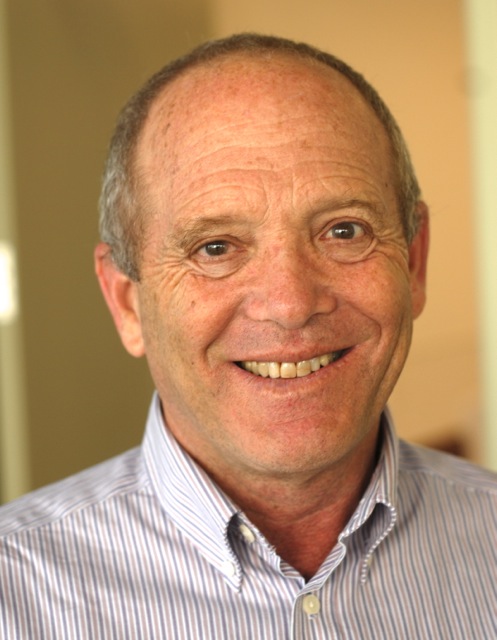
Uri Shani, a Hebrew University of Jerusalem, Faculty of Agricultural, Food and Environmental Quality Sciences, professor and former director of the Israel Water Authority during the high-stress drought six years ago, said Israel reached its current water-secure status using recycled water from cities and commissioning seven desalination plants along the Mediterranean Sea. Shani said, “Clean, desal water is used by everybody, even the farmers; however, they mostly use the recycled water from the cities. The advantage of desalinated water over recycled water is improved quality because it comes from natural water that is cleaner and less salty.”

“Of course the desal water that goes to the cities is then recycled,” explained Shani, “which goes to the farmers. We’ve solved the water quality problem in irrigation by generating more desal water, as it is not expensive anymore.”

Shani summarized, “In the competition between the cities and the farmers, the farmers will lose by definition because you must supply drinking water. So, when water is limited, the farmers will lose; there is no question about it. Now, the possibility of getting more water will always favor the farmer,” he said.

_______________________

Links

Israel Water Authority

Hebrew University of Jerusalem, Faculty of Agricultural, Food and Environmental Quality Sciences


2021-05-12T11:05:59-07:00December 31st, 2015|

CA Grown Campaign Builds Awareness

CA Grown Campaign Builds Awareness of the State’s Agricultural Bounty

By Kyle Buchoff, Assistant Editor


Denise Junqueiro, California Olive Committee director of programs and services and serves and CA Grown Campaign vice-chair, reported California Grown is really about building awareness of California-grown products. One of five Mediterranean climates in the world, California is a rare place where specialty crops that thrive in short, wet winters separated by a sunny and dry spring, summer, and fall, can be grown.

“We know people are curious,” said Junqueiro. “We know people want to know where their food comes from. We have an abundance of crops in our state, and we believe we grow these better than everyone else in the world. So we are trying to increase awareness—not only about our products—but about the farmers who grow them, because our farmers really care. Our efforts are about shining a light on all the bountiful fruits, vegetables and nuts we grow in California,” she noted.

_____________

California Grown, according to their website, gives farmers the platform to share their farm stories and to help consumers understand where their food comes from. Farmers present their food safety measures, choices in crop varieties, sustainable and creative packaging solutions to make serving dinner faster and more convenient, strong ties to the land and to their neighbors, pride in homegrown products and in their work; and support for the economy.

California Grown  is supported by the state and federal governments, hundreds of growers, and all Californians. The group also collaborates with about 20 member partners in California agriculture to remind everyone to seek out and purchase agricultural products grown and produced in California.

ca_grown_campaign_logo_____________________________

Links

CA Grown Campaign

California Olive Committee

2021-05-12T11:06:00-07:00December 30th, 2015|

Henry Gonzales, Ventura County Ag Commissioner

Ventura County Ag Commissioner Henry Gonzales Started as Fieldworker

By Patrick Cavanaugh, Deputy Editor

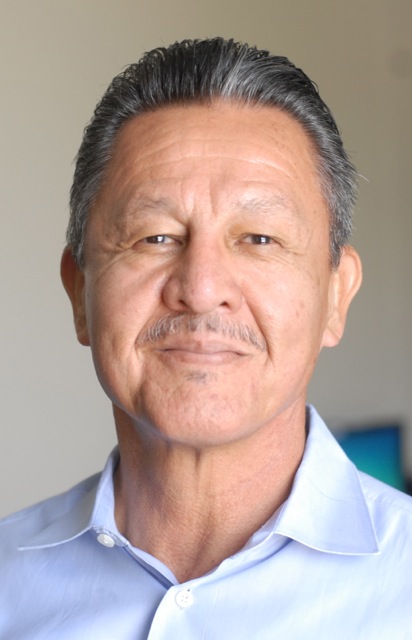
California Ag Today interviewed Henry Gonzales, Ventura County Ag Commissioner, who has served in that post for 7 years. His unique story begins with his birth in Fresno and his work in the California fields at an early age.

Gonzales: My parents were migrant farmworkers, and back in the day, there was no day care for us, so they took us to the fields with them. I like to think I my career started in agriculture when I was old enough to pick up a plum and put it in their basket. We worked a lot in the Fresno area, but also in the San Jose area and Imperial County, following the crops as most migrant farmers do.

CalAgToday: You started working as a child, and what happened next? Did you and your family continue as a farmworkers?

Gonzales: We continued farm working for many years. We used to live in farm labor camps, whenever they were available. Sometimes we stayed with relatives or anywhere we could find. There were times when the only places we could find were the trees in the orchard, so sometimes we stayed there.

CalAgToday: So, when you were 13, you went off on your own?

Gonzales: Yes, when I was 13, I did what I thought I should do—work under my own social security card. I started working in the fields around Salinas. I was actually in the same lettuce harvesting crew with my grandfather who was 69 at the time.

CalAgToday: Well, Henry, walk me through it. How many years did you work with your grandfather?

Gonzales: I worked every summer and weekends since I was 13 through high school in the fields around Salinas.

This painting was done by Henry Gonzales's mother depicting his early work in the fields

This painting was done by Henry Gonzales’s mother depicting his early work in the fields.


CalAgToday: Tell me about high school.

Gonzales: I felt very strongly about completing high school because I know my parents did not. But you may find it interesting that when I was working in the fields around Salinas, I was a card-carrying member of the United Farm Workers (UFW).

CalAgToday: So the UFW recruited you early, or were you a supporter?

Gonzales: Well, it was a closed-shop situation; if you worked in that company, you were a member. So I believe I am the only ag commissioner who was once a card-carrying member of the UFW.

CalAgToday: And why is that significant to you, Henry?

Gonzales: As you know, in agriculture, farmworkers are, almost literally, the backbone of the industry. They are the ones doing all the heavy lifting. So, having that background really provides me with a broader perspective because I can understand farming from the ground level up. Coupled with my Bachelor of Science degree in agricultural science, my field work experience has given me a well-rounded background for agriculture.

I started working for the Monterey County Ag Commissioner’s office over 30 years ago. All Ag Commissioners start at the bottom of the organization, so I began as an agricultural inspector-biologist and worked my way up to deputy, chief deputy, and then seven years ago, I became Ag Commissioner here in Ventura County.

CalAgToday: So suddenly a job became available in Ventura County?

Gonzales: That was kind of interesting. I was in Monterey County with a great job, a great boss, and I could do pretty much what I wanted. But I got a call from Ventura County inviting me to apply for their ag commissioner position. I checked with my wife, and she said ‘Sure, why not? Try it!’ I did, and as they say, the rest is history.

I applied and got the position. I was reappointed here three years ago, and I am hoping to do at least one more term after my current term is over. I think all my years working for the Monterey County Ag Commissioner’s office, my degree in Ag Science, and my master’s in public administration, coupled with my childhood years working in the field really gives me a broad background in agriculture, especially as it exists in Ventura County and in the state of California.

CalAgToday: How did you have time to get a masters degree in public administration?

Gonzales: Well, while I was working for Monterey County, I spent a lot of sleepless nights and weekends in order to earn that degree from Golden Gate University’s satellite office in Monterey.

CalAgToday: When you look back, you have come so far from your beginnings as a farmworker, and you have seen so much. How do you put all of that together?

Gonzales: My experience has provided me with the broadest perspective, so when I deal with a challenging issue, I can see it from all vantage points, and that is very helpful to me in doing my job.


2021-05-12T11:06:00-07:00December 30th, 2015|

Are EDF and Farmers on Same Page?

Are EDF and California Farmers on Same Page?

By Patrick Cavanaugh, Deputy Editor

The Environmental Defense Fund (EDF) wants clean air and water, abundant fish and water life, a stable climate. California farmers want clean air and water, abundant wildlife, a stable climate with enough rain and snow for everyone, plus a good harvest so they can provide the nutritious food everyone needs to thrive. Are EDF and California farmers on the same page?

Meet Sara Kroopf, agriculture project manager with the Environmental Defense Fund’s San Francisco office. Kroopf’s expertise in agriculture economics, sustainable agriculture systems and corporate social responsibility, combined with her emphasis on building relationships with agricultural producers places her not only on the same page with California farmers, but on the same side of science.

Kroopf became interested in agriculture at an early age. “My best friend was the Dairy Princess,” she explained, “who has a thousand-head dairy facility in upstate New York. I think she is really the inspiration for my education and why I want to work in food and ag.”

Kroopf is amazed by California agriculture because it is very different. “The diversity,” she stated, “over 400 specially crops—is incredible! “I went to grad school at UC Davis because I had heard of the wonderful things that were out here, and I’ve stayed because I know there is a lot of innovation in California agriculture. It is the place to be.”

“I also spent some time working with a biopesticide company and learned about Asian Citrus Psyllid. So being in Kern County, learning about realities on the ground and the fight against the invasive Asian Citrus Psyllid, I think that was a good experience for me.”

Commenting on California farmers, Kroopf said, “I think we are doing a great job in California, and people don’t see that enough. I find myself in my urban community, now that I live in Oakland, California, trying to communicate about the realities of drought, the harsh realities that some farmers are seeing, but also the success and resilience of those communities. It is critical to have that dialogue at these times.”

Kroopf knows that farming should continue uninterrupted, “not only here, but in other places as well. Otherwise, we are not going to have a successful 2050 and feed the population. I mean, America has done a great job, historically; we have been feeding the world. But now it will become more challenging. I think we are up for the opportunity and like I said, California is leading the way.”

Kroopf commented about the flexibility of the California farmer to learn new things, such as a new way to apply fertilizer or conserve water, and the adaptability to take them on. “Having access to information is key. Historically, farmers didn’t necessarily know how much nitrogen to apply. And farmers always want to reduce the input application costs as much as possible. I know growers are not being fast and loose with their nitrogen, but there is always an opportunity to improve, and I see that in my own life. I think that is in all professions; farmers are not the only ones.”

Kroopf is quite bullish on California agriculture, even with the drought years. “Absolutely, I do hope farming continues here. The climate is right, and I want to be here, so I hope the drought doesn’t last too long.”

When asked about California farmers, Kroopf replied, “They are the smartest business people that I know. Someone once said, and I don’t know whom to quote, ‘farming is not rocket science, it is harder than rocket science.’ I honestly believe that. So of course, they are extremely intelligent. They deal with more variables in their work than pretty much anyone else.”

_____________________

LINKS:

Environmental Defense Fund (EDF)

2021-05-12T11:06:00-07:00December 29th, 2015|

UPDATE! Expanded ACP Quarantine

UPDATE! Expanded ACP Quarantine in Stanislaus and Merced Counties

Two ACPs Found in City of Turlock

Stanislaus County has been placed under quarantine for the Asian citrus psyllid (ACP) following the detection of two ACPs within the City of Turlock.  The expanded ACP quarantine also includes a portion of northern Merced County along its border with Stanislaus County.  The quarantine zone measures 101 square miles, bordered on the north by East Service Road; on the south by August Avenue; on the west by Blaker Road; and on the east by North Hickman Road.  The quarantine map for Stanislaus and Merced is available online at: www.cdfa.ca.gov/go/acp-maps.

The quarantine prohibits the movement of citrus and curry leaf tree nursery stock, including all plant parts except fruit, out of the quarantine area and requires that all citrus fruit be cleaned of leaves and stems prior to moving out of the quarantine area.  An exception may be made for nursery stock and budwood grown in USDA-approved structures which are designed to keep ACP and other insects out.  Residents with backyard citrus trees in the quarantine area are asked not to transport or send citrus fruit or leaves, potted citrus trees, or curry leaves from the quarantine area.

ACP county-wide quarantines are now in place in Imperial, Los Angeles, Orange, Riverside, San Bernardino, San Diego, Santa Barbara, Tulare and Ventura Counties, with portions of Alameda, Fresno, Kern, Madera, Merced, San Benito, San Francisco, San Joaquin, San Luis Obispo, San Mateo, Santa Clara, and Stanislaus counties also under quarantine.

The ACP is an invasive species of grave concern because it can carry the disease huanglongbing (HLB), also known as citrus greening.  All citrus and closely related species, such as curry leaf trees, are susceptible hosts for both the insect and disease.  There is no cure once the tree becomes infected; the diseased tree will decline in health and produce bitter, misshaped fruit until it dies.  In California, HLB has only been detected in 2012 and 2015 on residential properties in Los Angeles County.  This plant disease does not affect human health.

Residents in the area who think they may have seen ACP or symptoms of HLB on their trees are urged to call CDFA’s Pest Hotline at 1-800-491-1899 or your local agricultural commissioner’s office (Stanislaus County (209) 525-4730; Merced County (209) 385-7431).  For more information on the ACP and HLB, please visit: www.cdfa.ca.gov/go/acp.

2021-05-12T11:06:00-07:00December 28th, 2015|

Ruthann Anderson, CAPCA’s New CEO

Ruthann Anderson, CAPCA’s New CEO, Talks Leadership

By Brian German, Associate Editor

On January 1, Ruthann Anderson will become the new President and CEO for the California Association of Pest Control Advisers (CAPCA), based in Sacramento.

Anderson told CaliforniaAgToday.com, “I’ve been with CAPCA for several years, and I have grown up here in the Valley. I’m a big proponent of agriculture and what we do, and the whole idea of how our PCAs fit into the bigger picture of agriculture.”

PCAs assist growers in pest, disease and weed control—all threats to ag production. PCAs recommend control products that will either prevent issues or control them outright. Anderson explained, “We like to call them our plant doctors. And really they are so vital, not only on advising our growers, but also in making sure we protect California’s agriculture, we maintain the yields that we need, and we continue to move forward as the global leader in producing and feeding the world,” noted Anderson.

Anderson said she is excited about what 2016 will bring to CAPCA members, “We are excited to launch new projects, including the Leadership Institute for our PCAs to really showcase their professionalism as well as their ability to be leaders here in agriculture.”

Anderson noted the CAPCA Leadership Program is a legacy plan started by former long-term CEO, Terry Stark. “Terry drafted the program, and we are just building on it and making it even better,” said Anderson.

CAPCA represents about 3500 members throughout California.

______________________________

Link:

California Association of Pest Control Advisers (CAPCA)

2021-05-12T11:06:00-07:00December 28th, 2015|

Ross Supports Desalination

CDFA’s Karen Ross Supports Desalination Plants

By Brian German, Associate Editor


Following the opening of the Carlsbad Desalination Plant near San Diego, the largest seawater desalination plant in the Western Hemisphere, CalAgToday asked CDFA Secretary Karen Ross if she views desalination as a possible solution to the drought-induced water reductions in California.

“Desalination is an important part of the solution,” answered Ross. “Israel has really advanced this technology and there is much for us to learn about its use from Israel.”

Israel has had great success in battling drought by building many desalination plants along the Mediterranean Sea. The plants provide fresh desal water to the cities, which is used, cleaned and recycled for use on the country’s farms.

Ross continued, “I am especially optimistic about the use of practical smaller-scale desal projects to reuse our brackish water—the more inland saline water. Our researchers can use this technology to help us solve the ‘brine waste’ problem; it will absolutely be part of our new water picture. There is no single solution to our water picture, and I think we need to look to Israel to learn from their experiences as well.”

“’There is, no doubt, a cost to this new technology, but by figuring out the technology and foçusing on smaller scale projects, we should be able to scale this up to a point that will make it cost-effective,” said Ross. “Let’s face it, the value of the water it brings back for reuse is potentially going to change the price we all pay for it. But we really need to focus on improving this technology and getting those costs down as much as we possibly can.”

“The Carlsbad plant is a billion dollar investment, which is overwhelming and intimidating,” said Ross. “But when we amortize the cost and calculate what it means per household, this investment represents a very important source of supplemental water that also gives us some flexibility and resiliency for the next drought, and the one after that. Our circumstances are different than ten or twenty years ago, so the costs pencil out in a different way.”

________________________________

The Claude “Bud” Lewis Carlsbad Desalination Plant is a 50 million gallon per day (56,000 acre-feet per year (AFY)) seawater desalination plant located adjacent to the Encina Power Station in Carlsbad, California. Desalination has evolved into a desirable water supply alternative by tapping the largest reservoir in the world – the Pacific Ocean. The technology, available for decades, is at work in many arid areas of the world including the Middle East, the Mediterranean and the Caribbean. A 30-year Water Purchase Agreement is in place between the San Diego County Water Authority and Poseidon Water for the entire output of the plant. The plant has been delivering water to the businesses and residents of San Diego County since December 2015.

________________________________

Poseidon Water, the developer and owner of the Claude “Bud” Lewis Carlsbad Desalination Plant, is a privately held company that develops and invests in water projects throughout North America. Poseidon offers customized solutions to meet the water needs of municipal governments, businesses and industrial clients.

________________________________

The Huntington Beach Desalination Project is also a 50-million gallon per day facility currently in late-stage development, also by Poseidon Water. Located adjacent to the AES Huntington Beach Power Station, the plant is scheduled to be operational by 2018.

2021-05-12T11:06:00-07:00December 23rd, 2015|
Go to Top