Tom Nassif: Ag Immigration Reform is Critical

All Fruits and Vegetables Harvested by Foreign Hands

By Cory Lunde, Western Growers Assoc. Director of Strategic Initiatives and Communications

Recently, Western Growers President and CEO Tom Nassif detailed the critical labor shortages facing American agriculture and laid out the case for agricultural immigration reform before the House Judiciary Subcommittee on Immigration and Citizenship.

In his testimony, Nassif stated that experienced workers are aging out of the agricultural workforce, with few Americans lining up to take their place, despite wages well above state and federal minimums. Farmers in all sectors of U.S. agriculture, especially in the labor-intensive fruit and vegetable industries, are experiencing chronic labor shortages, which have been exacerbated by recent interior immigration enforcement and tighter border security policies.

As a result of the uncertain agricultural labor market, Nassif explained, many American farmers are either shifting toward more mechanized crops or moving their operations to other countries.

“The simple fact is this,” Nassif said, “fruits and vegetables that are eaten in the United States will be harvested by foreign hands.”

He continued: “The simple question for you, as members of Congress, is do you want those foreign hands harvesting your fruits and vegetables to be on farms here in the United States or do you want to see production continue to shift to farms in foreign countries?”

After touching on the existing, flawed H-2A agricultural guest worker program, rife with burdensome regulatory red tape, Nassif outlined a two-pronged proposal for agricultural immigration reform that jointly provides a pathway to legalization for existing farmworkers and their immediate families and creates a more flexible, efficient and market-based agricultural worker visa program to ensure a sufficient future flow of labor.

Nassif concluded that while “immigration can be among the most divisive and difficult to resolve in Washington,” this issue is decidedly non-partisan, as agricultural immigration reform is really about securing the future of American agriculture and, by extension, long-term U.S. food security.

Western Growers appreciates the efforts of Chairwoman Zoe Lofgren and Ranking Member Ken Buck to elevate the dialogue around this vital issue, and we look forward to working across the aisle to advance bipartisan legislation that provides our country and farmers with a legal, stable and reliable source of agricultural labor.
2019-04-16T15:40:09-07:00April 16th, 2019|

College Scholarships Available from Westlands Water District

Westlands Water District Announces 2019 Scholarship Application with May 1oth Deadline

Westlands Water District is pleased to announce it is accepting applications for the District’s annual scholarship program. This is the thirteenth consecutive year the District will provide scholarships to recognize and reward exceptional academic achievement and leadership by graduating seniors.

Scholarships are awarded to students from the following west side high schools: Coalinga, Firebaugh, Lemoore, Mendota, Riverdale, and Tranquility.

“These scholarships represent a small gesture of thanks and support to the communities on the west side of the San Joaquin Valley that contribute to making our region productive and vibrant,” said Tom Birmingham, Westlands’ general manager. “We hope the recipients of these scholarships will continue to contribute to their communities and make them even better for future generations.”

Each scholarship recipient will receive $1,000 to be used for college expenses. Applicants are judged on their academic performance, school activities, and community leadership.

Past scholarship recipients have enrolled into California State University, Fresno; University of California, Berkeley; California Polytechnic State University; University of California, Los Angeles; West Hills Community College; and more.

Applications and all supporting documents are due by May 10 and may be submitted by mail to P.O. Box 6056, Fresno, CA 93703 or in person to 3130 N. Fresno Street, Fresno, between 8 a.m. to 5 p.m., Monday through Friday. For an application and list of instructions, please contact the public affairs office at (559) 241-6233 or visit https://wwd.ca.gov/wp-content/uploads/2019/02/scholarship-application.pdf.

2019-04-11T17:00:35-07:00April 11th, 2019|

Heat Illness Prevention Event April 12 In Easton

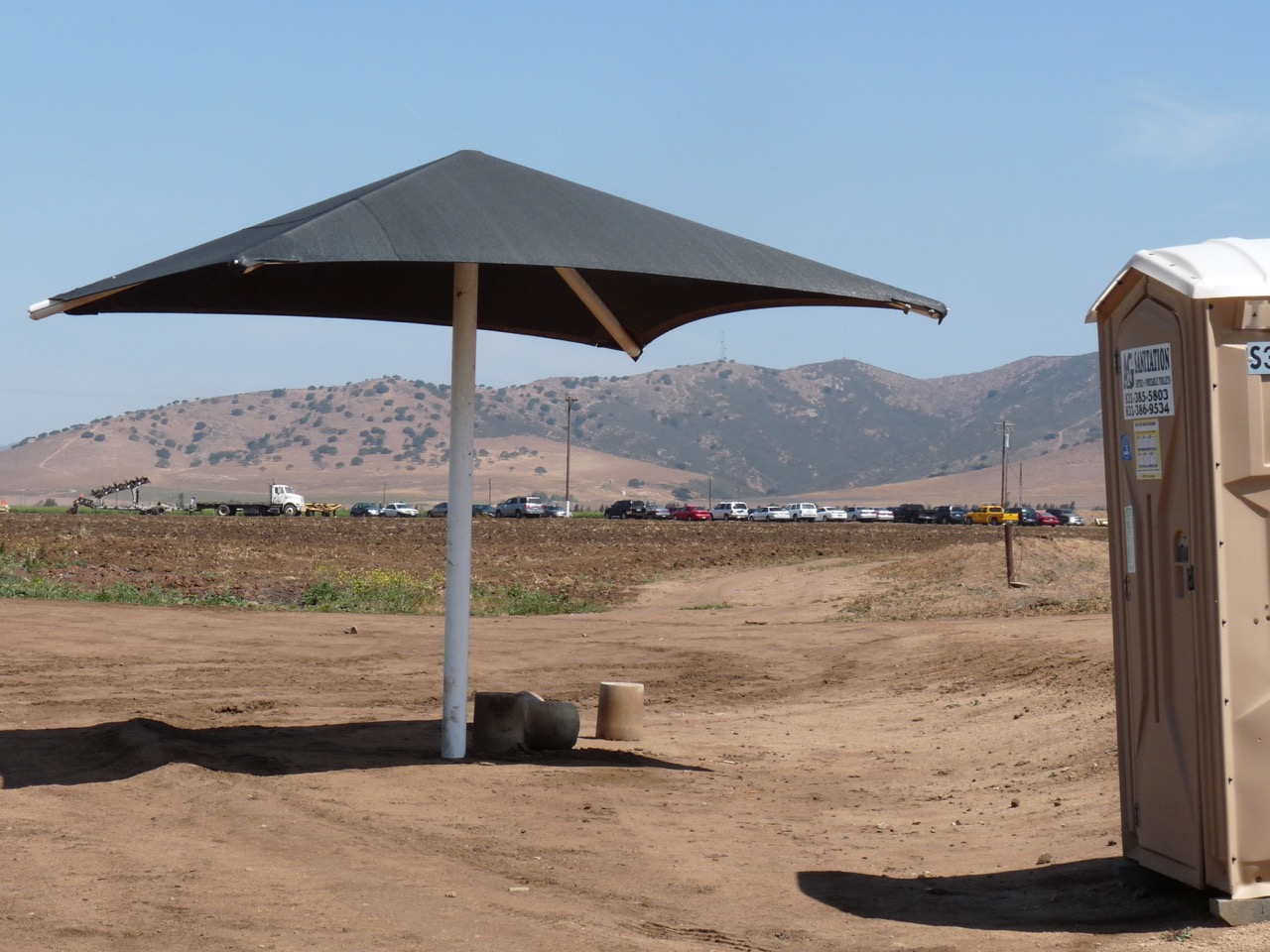
Water, Rest and Shade for Heat Illness Prevention

News Release Edited By Patrick Cavanaugh

On April 12, a coalition of agricultural organizations will hold two Heat Illness Prevention Sessions in Easton.

Manuel Cunha, Jr., President of Nisei Farmers League, said, “We appreciate the staff and the efforts of the Department of Industrial Relations, Cal/OSHA Consultation with their presentation of the safety message: WATER, REST, SHADE.”

Cunha continued, “the efforts by all our agricultural partners, as well as Cal/OSHA is to educate employers and supervisors about the dangers of working in the heat. We have held many educational sessions, sent out publications, had media events and continue to have ongoing outreach efforts throughout the state. Education is the key to reducing the number of heat illnesses that we see in our fields.”

Attend one of the sessions on April 12 for the latest documents outlining high heat procedures, including additional steps to be taken to ensure our employees’ safety.

Date: Friday, April 12, 2019

Time: Session One in Spanish 10:00 a.m. to noon. Session Two in English 1:30 p.m. to 3:30 p.m.

Place: C.P.D.E.S. Portuguese Hall, 172 W Jefferson Avenue, Easton.

There is no cost for attending these training sessions.

We want to thank our agricultural partners listed below: Nisei Farmers League, Fresno County Farm Bureau, Allied Grape Growers, California Fresh Fruit Association,  African America Farmers of Calif., American Pistachio Growers, California Apple Commission, California Blueberry Commission California Olive Growers Council and Sun-Maid Growers of California.

2019-04-10T16:38:37-07:00April 10th, 2019|

Winning on Reducing Food Waste Month

In U.S., One-Third of all Available Food Goes Uneaten Through Loss or Waste. 

News Release Edited By Patrick Cavanaugh

Recently, the U.S. Environmental Protection Agency (EPA), the U.S. Department of Agriculture (USDA), and the Food and Drug Administration (FDA) kick off Winning on Reducing Food Waste Month by calling for greater collaboration with public, private, and nonprofit partners as well as state and local officials to educate and engage consumers and stakeholders throughout the supply chain on the need to reduce food loss and waste.

In the U.S., more than one-third of all available food goes uneaten through loss or waste. Food is the single largest type of waste in our daily trash. In recent years, great strides have been made to highlight and mitigate food loss and waste, but the work has just begun. When food is tossed aside, so too are opportunities for economic growth, healthier communities, and environmental prosperity—but that can change through partnership, leadership, and action. Further elevating the importance of this issue, the recent announcement follows a Presidential Message from President Trump acknowledging the month of April as Winning on Reducing Food Waste Month and encouraging public action and participation from all sectors.

“Reducing food waste and redirecting excess food to people, animals, or energy production provide immediate benefits to public health and the environment. I am proud to join President Trump and my federal partners in recognizing April as Winning on Reducing Food Waste Month,” EPA Administrator Andrew Wheeler said. “We are working closely with our federal partners and stakeholders across the nation to reduce the amount of food going to landfills and maximize the value of our food resources.”

“USDA alone cannot end food waste, it will require partners from across the supply chain working together on innovative solutions and consumer education. We need to feed our hungry world, and by reducing food waste, we can more wisely use the resources we have. I am pleased President Trump identified this issue as one of importance, and I look forward to USDA’s continued work with our agency partners at EPA and FDA to change behavior in the long term on food waste,” U.S. Secretary of Agriculture Sonny Perdue said.

“With 1 in 6 people getting a foodborne illness every year in the U.S. and up to 40 percent of food left uneaten, it’s understandable why food safety and food waste are major societal concerns,” FDA Deputy Commissioner Frank Yiannas said. “The FDA is working to strengthen its collaboration and coordination with the EPA and USDA to strategically align our federal efforts between the two issues to better educate Americans on how to reduce food waste and how it can be done safely.”

As part of the month’s observances, on April 9, EPA will host a live-streamed event with USDA and FDA. Additional joint agency actions will be announced at the event regarding the Winning on Reducing Food Waste Initiative. At the event, a panel of food waste stakeholders will share how state and local communities can join the federal government in reducing food waste and loss.

USDA, EPA, and FDA invite public and private partners to participate in Winning on Reducing Food Waste Month through the following:

  • Join the conversation: Share your efforts with the #NoWastedFood hashtag in your social media posts throughout the month.
  • Educate your community: Learn about USDA, EPA, and FDA programs and resources to reduce food loss and waste.
  • Be a U.S. Food Loss and Waste 2030 Champion: Join other corporate and business leaders who have made a public commitment to reducing food loss and waste in their U.S. operations by 50 percent by the year 2030.

The Winning on Reducing Food Waste Initiative is a collaborative effort among USDA, EPA, and FDA to reduce food loss and waste through combined and agency-specific action. Individually and collectively, these agencies contribute to the initiative, encourage long-term reductions, and work toward the goal of reducing food loss and waste in the United States. These actions include research, community investments, education and outreach, voluntary programs, public-private partnerships, tool development, technical assistance, event participation, and policy discussion.

2019-04-08T16:37:18-07:00April 8th, 2019|

New Series of Nitrogen Management Advice Available

UC ANR Publishes Nitrogen Management Advice for Fruit, Nuts, and Other Crops

By Pam Kan-Rice UC Agriculture & Natural Resources

California growers can download a new series of publications summarizing efficient nitrogen management practices from UC Agriculture and Natural Resources. The publications are designed to assist growers in complying with state regulations for tracking and reporting nitrogen fertilizer applied to crops, in an effort to prevent nitrogen from leaching into groundwater.

The science-based publications are associated with a series of trainings for growers and Certified Crop Advisers to develop efficient nitrogen management practices, an effort coordinated by UC ANR’s California Institute for Water Resources.

“Our role is to provide farmers, agricultural consultants and policymakers the best science possible for making decisions on managing and protecting California groundwater,” said Doug Parker, director of the water institute.

The free publications—created from training materials, lessons learned from the training sessions and from additional UC research—can be downloaded at http://ucanr.edu/nmgmtpublications.

The following publications are now available for download:

·         Principles of Nitrogen Cycling and Management

·         Irrigation and Nitrogen Management

·         Nitrogen Management for Nut Crops

·         Nitrogen Management for Deciduous Fruit and Grapes

·         Nitrogen Management for Citrus and Avocado

·         Nitrogen Management for Cool-Season Vegetables

·         Nitrogen Management for Strawberry Production

·         Nitrogen Management for Processing Tomato

·         Nitrogen Management for Corn on California Dairies

The publications were authored by Parker of California Institute for Water Resources; Patrick Brown, professor in the UC Davis Department of Plant Sciences; Allan Fulton, UC Cooperative Extension advisor, Tehama County; Tim Hartz, UC Cooperative Extension specialist emeritus, UC Davis Department of Plant Sciences; Dan Munk, UC Cooperative Extension advisor, Fresno County; Daniel Geisseler, UC Cooperative Extension specialist, UC Davis Department of Land, Air & Water Resources; Michael Cahn, UC Cooperative Extension advisor, Monterey, Santa Cruz and San Benito counties; Richard Smith, UC Cooperative Extension advisor, Monterey, Santa Cruz and San Benito counties; Marsha Campbell, UC Cooperative Extension advisor emeritus, Stanislaus County; Sat Darshan Khalsa, UC Davis project scientist; and Saiful Muhammad, UC Davis graduate student.

Developed in 2014, the training program has been offered at 11 different locations around the state, most recently in Fresno. More than 1,000 Certified Crop Advisers have taken the training.

“Based on course evaluations, the percentage of participants with good-to-complete understanding of nitrogen management increased after the training,” Parker said. “In addition, the participants found the presenters very knowledgeable and informative. Most importantly, the majority of participants felt they were better prepared to address nitrogen mitigation regulatory requirements after the training.”

The nitrogen management training curriculum was developed by a group of UC ANR faculty, specialists and advisors. The first day focuses on the nitrogen cycle in crop production systems, nitrogen sources, irrigation and nitrogen management, and nitrogen budgeting. The second morning covers annual and permanent crops and nitrogen planning practices.

For more information on the nitrogen management training materials, visit http://ciwr.ucanr.edu/NitrogenManagement.

The Nitrogen Management Training and Certification Program is a joint effort between the California Department of Food and Agriculture, UC Agriculture and Natural Resources, California Association of Pest Control Advisers’ Certified Crop Adviser Program and the Regional Water Boards.

University of California Agriculture and Natural Resources researchers and educators draw on local expertise to conduct agricultural, environmental, economic, youth development and nutrition research that helps California thrive. Learn more at ucanr.edu.

2021-05-12T11:05:04-07:00March 28th, 2019|

More Facts About the “Dirty Dozen” List

New So-called “Dirty Dozen” List is Baseless

News Release

To everyone that has read about the “Dirty Dozen” list and is now confused and conflicted about buying the more affordable and accessible fruits and veggies, this blog is for you.  Keep in mind that the “Dirty Dozen” list is designed to make you worry and be fearful.  After all, fear is a very powerful motivator, and the list authors attempt to increase safety fears to motivate and influence consumers’ produce buying decisions.

So here are some facts about the “Dirty Dozen” list that underscore you can consume either conventional or organic produce with confidence.  Both are safe, and the right choice is to eat more every day.

  • Arbitrary Methodology: According to Dr. Carl Winter, toxicologist, University of California, Davis.: “This year’s EWG list is produced using the same arbitrary methodology the EWG has used in the past.  Most importantly, the EWG focuses upon the presence (or absence) of pesticide residues in its methodology and public statements rather than on the actual amounts of pesticides detected, which are extremely low.  To accurately assess consumer risks from pesticides, one needs to consider three major factors – 1) the amount of residue on the foods, 2) the amount of food consumed, and 3) the toxicity of the pesticides.  The methodology used by EWG ignores all three.”
  • Meet Organic Standard: Did you know that the vast majority of conventionally grown produce tested by United States Department of Agriculture could qualify to be labeled “organic,” specific to their residue levels? It’s true. The USDA allows organic produce to have residues that are “less than 5% of EPA tolerances” and the majority of residues found on conventionally grown produce are below this level.  This nicely illustrates how low residues are, if present at all.
  • You Can Eat A Lot of Kale:  If you are concerned about residues on kale, you would have to eat a lot more each day to see any health effects.  In fact, a man would have to eat 26,061 servings in a day.. Click here to continue reading and to like and share this blog post. 
2021-05-12T11:05:05-07:00March 26th, 2019|

Solano County 4-H Members Go fo the Gold

4-H’ers Present Demonstrations, Educational Displays, Illustrated Talks, and Other Ideas

By Kathy Keatley Garvey, UCANR Communication Specialist

Seventeen Solano County 4-H members won gold awards at Solano County 4-H Presentation Day, and the Heritage 4-H Club of Vacaville won the plaque for the greatest member participation. In front (from left) are gold winner Darren Stephens, Sherwood Forest 4-H, Vallejo; William Parks, president of the Heritage 4-H Club (the club received the participation award for the greatest number of members presenting); and gold winners Daniel Taliaferro, Beau Westad, Grace Kimble and Irma Brown, all Suisun Valley 4-H. In back (from left) are gold winners Julietta Wynholds, Sherwood Forest 4-H; Zoe Sloan, Elmira 4-H; Braddison Beathem and Madisyn McCrary, both Tremont 4-H, Dixon; Miriam Laffitte, Vaca Valley 4-H; Celeste Harrison and Hannah Stephens, both Sherwood Forest 4-H; Jessica Carpenter, Pleasants Valley 4-H, Vacaville; and Alexis Taliaferro, Suisun Valley 4-H. Not pictured are gold winners Kailey Mauldin and Alissa Mauldin, both Elmira 4-H, and James George, Suisun Valley 4-H. (Photo by Kathy Keatley Garvey)

Solano County 4-H’ers Go for the Gold

They presented everything from “How to Take a Perfect Picture” to “The Secret Life of Bees” to “Anything is Pawsible: How I Trained My Doberman pinscher.”

When it was all over, 17 4-H’ers, including seven from the Suisun Valley 4-H Club, won gold medal showmanship awards at the annual Solano County 4-H Presentation Day, held recently at the Sierra Vista K-8 School in Vacaville.

The presentations included demonstrations, educational displays, illustrated talks, an interpretative reading, and a cultural arts offering.

Beau Westad of the Suisun Valley 4-H Club explains his project, “Reeling in Channel Catfish” at the Solano County 4-H Presentation Day. He won a gold award and is now eligible to compete in an area presentation.

The 4-H’ers followed a four-pronged process involving research, organization, graphics, and sharing of knowledge, said Valerie Williams, Solano County 4-H program representative. Adult evaluators, all involved with the Solano County 4-H Youth Development Program, asked the youths questions and scored them on their knowledge and presentation.

Twenty-six 4-H’ers, representing eight of the county’s 11 clubs, participated.

In the junior educational display talk category, ages 9 to 10, the gold winners, all from the Suisun Valley 4-H Club, were Grace Kemble, “How to Take a Perfect Picture”; Daniel Taliaferro, “Perfect Pizza Pans”; and Beau Westad, “Reeling in Channel Catfish.”

In the intermediate educational display talk category, ages 11 to 13, evaluators selected six  gold winners: James George of the Suisun Valley 4-H, “Event Planning”; Celeste Harrison of the Sherwood Forest 4-H Club, Vallejo, “Anything Is Pawsible: How I Trained My Doberman Pinscher”; Irma Brown, Suisun Valley 4-H, “Elements of a Movie”; Madisyn McCrary of Tremont 4-H Club, Dixon, “How to Shoe a Horse”; Alissa Mauldin, Elmira 4-H, for “This Little Piggy Has…” and Darren Stephens, Sherwood Forest 4-H, “Can Chickens Get Maggots?”

In the senior educational display talk category, ages 14 to 19, three took home the gold: Hanna Stephens, Sherwood Forest 4-H, “Living Life as a Guide Dog Puppy”; Jessica Carpenter, Pleasants Valley 4-H Club, Vacaville, “How to Trim Goats and Sheep Hooves” and Alexis Taliaferro, Suisun Valley 4-H, “College Tours: A Glimpse Into the Future.”

Grace Kemble of the Suisun Valley 4-H Club explains how to “take a perfect picture.” She handcrafted her display and won a gold award for her work and presentation at the Solano County 4-H Presentation Day.

In the intermediate illustrated talk category, ages 11 to 13, gold awards went to Julietta Wynholds, Sherwood Forest 4-H, for “The Basics of Animation”; and Braddison Beathem, Tremont 4-H, “Let’s Talk Tack: How to Tack a Horse in English Tack.”

Senior demonstration, ages 14 to 18: Zoe Sloan of Elmira 4-H, for “Bomb Voyage.”

Senior/Interpretative Reading, ages 14 to 19: Kailey Mauldin, Elmira 4-H, “The Secret Life of Bees” by author Sue Monk Kidd.

Intermediate Culture Arts, ages 11 to 13: Miriam Lafitte, Vaca Valley 4-H Club, Vacaville, “Total Improv.”

The winners are now eligible to compete in an Area 4-H Presentation Day, a qualifying event for the California State 4-H Field Day. Area Presentation Days will take place in Antioch, Jackson, and California Polytechnic Institute (Cal Poly), all on March 23. Other Area Presentation Days will be held in Siskiyou County on April 6, in Mariposa County on April 14; in Walnut on May 4; and in Tehama County on May 11.

Solano County 4-H Ambassador Natalie Greene of the Sherwood Forest 4-H Club served as the emcee.

The newly formed and soon-to-be-chartered Heritage 4-H Club of Vacaville won the participation award for having the greatest percentage of participants. The club is affiliated with the Heritage Christian Academy, Vacaville.

Celeste Harrison of the Sherwood Forest 4-H Club, talks about how she trained her Doberman pinscher during the Solano County 4-H Presentation Day. Evaluators (back to camera) are Helen Ritchey and Dan Turner.

Six 4-H’ers participated in the primary educational display talks category, ages 5 to 8. The primary group is not evaluated. Receiving participation certificates in that category were four Heritage Club members: Dale Harder, “The Perfect Picnic,” Sunny Harder, “Camping”; Christopher Parks, “Model Trains”; and William Parks, “Dog Man: My Favorite Book and How to Draw the Characters.” Certificates also went to Nevaeh Tiernan-Lang of Elmira 4-H, “How to Build a Christmas Tree” and Alia Wynholds of Sherwood Forest 4-H,“On the Trail.”

Receiving participant certificates in the junior educational display talk category, ages 9 to 10, were Addelyn Widmer of Suisun Valley 4-H, “Goldilocks and the Three Bears of Photography”; and Jonny Tiernan-Lang, Elmira 4-H, for “AKC Toy Breeds.”

In the intermediate educational display talk, ages 11 to 13, Heath Moritz of the Westwind 4-H Club, Fairfield-Suisun, received a participation certificate for “Watch Me Now.”

During the Presentation Day, attendees also had the opportunity to participate in hands-on activities, including designing and launching a paper rocket through the STEM activity; making slime at the Slime Station; and learning how to sew a blanket, “Cuddle Me Close,” for hospital patients.

Solano County has 11 4-H clubs, with a total membership of 400

Vacaville: Vaca Valley, Pleasants Valley, Elmira and Heritage
Fairfield-Suisun: Suisun Valley and Westwind
Dixon: Maine Prairie, Tremont, and Dixon Ridge
Rio Vista: Rio Vista 4-H
Vallejo: Sherwood Forest

The Solano County 4-H Youth Development Program, part of the UC Cooperative Extension Program, follows the motto, “Making the Best Better.” 4-H, which stands for head, heart, health, and hands, is open to youths ages 5 to 19.  In age-appropriate projects, they learn skills through hands-on learning in projects ranging from arts and crafts, computers and leadership to dog care, poultry, rabbits and woodworking. They develop skills they would otherwise not attain at home or in public or private schools. For more information, contact Valerie Williams at vawilliams@ucanr.edu.

2021-05-12T11:05:05-07:00March 13th, 2019|

Water Rights Holders Must Measure Stream Diversions

UC Cooperative Extension Offering Water Measurement and Reporting Courses April 4

News Release

California water rights holders are required by state law to measure and report the water they divert from surface streams. For people who wish to take the water measurements themselves, the University of California Cooperative Extension is offering training to receive certification April 4 in Redding and Woodland.

At the workshop, participants will:

  • Clarify reporting requirements for ranches.
  • Understand which meters are appropriate for different situations.
  • Learn how to determine measurement equipment accuracy.
  • Develop an understanding of measurement weirs.
  • Learn how to calculate and report volume from flow data.

UC Cooperative Extension is offering a limited number of trainings in 2019. The next training will be held at Shasta College Farm and Yolo County Fairgrounds:

  • Yolo County Fairgrounds in Woodland – Register at http://cecapitolcorridor.ucanr.edu or by emailing Morgan Doran at mpdoran@ucanr.edu or calling the UCCE office in Yolo County at (530) 666-8143. Training will begin at 2 p.m. and should conclude by 5 p.m.

Background on the water diversion law

Senate Bill 88 requires that all water right holders who have previously diverted or intend to divert more than 10 acre-feet per year (riparian and pre-1914 claims), or who are authorized to divert more than 10 acre-feet per year under a permit, license or registration, to measure and report the water they divert. 

Detailed information on the regulatory requirements for measurement and reporting are available on the State Water Resources Control Board Reporting and Measurement Regulation webpage: https://www.waterboards.ca.gov/waterrights. For diversion or storage greater than or equal to 100-acre feet annually, the law requires approval of installation and certification of measurement methods by an engineer, contractor, or other approved professional.

To make it easier for farmers and ranchers to comply with the law, the California Cattlemen’s Association worked with Assemblyman Frank Bigelow on a bill that would allow people to get certified to take the measurements themselves. Assembly Bill 589 became law on Jan. 1, 2018.

Until Jan. 1, 2023, this bill allows anyone who diverts water and has completed an instructional course on measurement devices and methods administered by UC Cooperative Extension, including passage of a proficiency test, to be considered qualified to install and maintain devices or implement methods of measurement. The bill requires UC Cooperative Extension and the water board to jointly develop the curriculum for the course and the proficiency test.

2019-03-09T23:17:00-08:00March 9th, 2019|

Funding for Friant-Kern Canal Repairs May Come

Senator Melissa Hurtado Introduces Bipartisan Bill to Fix Friant-Kern Canal

News Release

State Senator Melissa Hurtado (D-Sanger), representing the 14th Senate District in California, along with principal co-authors Senator Andreas Borgeas (R-Fresno), Assemblymember Devon Mathis (R-Visalia), Assemblymember Dr. Joaquin Arambula (D-Fresno), and Assemblymember Rudy Salas (D-Bakersfield), announced last week the introduction of Senate Bill 559.  The bipartisan-supported legislation will secure California’s water supply by investing $400 million in general funds towards the Friant-Kern Canal, one of the Central Valley’s most critical water delivery facilities.

Currently, the Friant-Kern Canal’s conveyance capacity has degraded due to several factors, including severe land subsidence caused by regional groundwater overdraft. A portion of the canal, roughly 20 miles long, has subsided twelve feet below its original design elevation, including three feet of subsidence from 2014 to 2017. As a result, the canal has suffered the loss of 60 percent of its carrying capacity—constricting the delivery of water to some of California’s most vulnerable communities.

“From 2012 to 2016, California experienced one of the most severe drought conditions. As a result, many of our farmers, families and entire communities within the Central Valley continue to experience limited access to one of their most fundamental rights—clean water,” Hurtado said.

“The Valley’s socioeconomic health depends on the conveyance of clean and safe water. Not only does this canal support nearly 1.2 million acres of family farms in California, but it provides one in every five jobs directly related to agriculture,” Hurtado continued. “For this reason, I am proud to stand with my colleagues to introduce SB 559. This legislation prioritizes our most disadvantage communities by restoring water supply in the Central Valley.”

“The Friant-Kern Canal has lost 60 percent of its carrying capacity in some locations. This problem threatens about 350,000 acres of highly productive farmland below the damaged portion of the canal, and also limit opportunities to maximize groundwater recharge projects that will be very important to helping the Valley comply with the Sustainable Groundwater Management Act,” said Jason Phillips, CEO of the Friant Water Authority. “On behalf of the farmers, businesses, and communities who rely on the Friant-Kern Canal, we very much appreciate Senator Hurtado’s leadership on this legislation.”

“Today, we are fighting for the future of the Central Valley, and I am pleased to join my colleagues in this bipartisan effort and support funding for the Friant-Kern Canal,” Borgeas said. “Valley farmers and our communities depend on this infrastructure to ensure a reliable supply of water. By restoring the canal to its fully operational state, we ensure the delivery of clean and reliable water supply to our communities and farmers. This investment in our water infrastructure is long overdue and critical for our valley.”

“California faces a stark reality when it comes to water,” Arambula said.  “Scarce water supplies, aging infrastructure and a growing population are some of the stressors on our state’s water system.  That is why we need real-time solutions to our long-term water challenges. Restoring the Friant-Kern Water Canal will help us protect our existing water supply while we work on reaching sustainable solutions that will get water out to our communities.”

“SB 559 is crucial to keep the Friant-Kern Canal, the largest artery for water on the east side of the Valley, afloat. This measure is extremely important to keep this economic engine which powers our economy and provides tremendous benefit locally, statewide and even nationally. Failing to fix the Friant-Kern Canal is not an option, simply because having water is never an option. I am proud to coauthor this measure with Senator Hurtado and look forward to bringing this funding to the Valley,” Mathis said.

“Water is the lifeblood of the Valley and the backbone of California’s economy.  Senate Bill 559 is a step towards bringing the Friant-Kern Canal to its full capacity and addressing the State’s critical water needs.  This measure will invest in our future by building water infrastructure projects and helping our local water districts fulfill their sustainable groundwater management plans,” Salas said.

“On behalf of the City of Porterville, I am very appreciative of our leaders’ efforts and support by introducing SB 559,” said Porterville Mayor Martha Flores.

“The Friant-Kern Canal is the lifeblood to the southeastern San Joaquin Valley, and the canal being fully-efficient with the ability to carry surface water to its designed capacity is essential, especially in consideration of the Sustainable Groundwater Management Act,” Flores continued. “The Friant-Kern Canal plays a valuable strategic role in the sustainability of Porterville as the city seeks to enhance its surface water recharge program and reduce its groundwater footprint.”

2019-03-04T17:05:32-08:00March 4th, 2019|

CARB Seeking Participants for Agricultural Tractor and Mobile Equipment Survey

CARB Wants Inventory of Ag Equipment 

News Release

The California Air Resources Board (CARB) is seeking participants for an update to their Agricultural Tractor and Mobile Equipment Survey.  For those that remember, CARB conducted a similar survey in 2008, and partnered with Cal Poly in their review of the submitted surveys.

This survey effort is looking to inventory various mobile agricultural equipment, including tractors, combines, balers, agricultural use ATVs and forklifts, and many more.  This survey is extended out to producers in the field, custom operators, and first processing facilities, and covers equipment using any type of fuel or electricity and any horsepower.  Responses to the survey are completely confidential and are anonymized upon receipt.

The survey that was previously conducted in 2008 was utilized to help fund incentive programs for agricultural equipment turnover programs utilized throughout the state.  CARB’s goal upon completion of this upcoming survey round is to utilize the data in the exact same manor, to utilize results to determine the best usage of incentive monies in the agricultural sector.

The survey is being made available through the internet.  Please follow the link attached below to complete the survey.  If you have any questions, please feel free to contact offroadinventory@arb.ca.gov.  Paper copies will be available if you would like; feel free to contact Chris McGlothlin with the Western Agricultural Processors Association at chris@ccgga.org or by phone at (559) 455-9272.

Survey can be found online here.


2021-05-12T11:05:05-07:00February 27th, 2019|
Go to Top