Special Education Students Cultivate Farm Skills at South Coast REC

Partnership with Esperanza Education Center provides blueprint for other adult transition programs

By UCANR

For students at Esperanza Education Center, an adult transition program serving students with disabilities in south Orange County, there was something deeply satisfying about handpicking 2,000 pounds of avocados.

“There’s a tangible, visual element where you’re like, ‘Wow, I did that – I did it, I can see it, I can feel it in my bones and my muscles,’” said Ray Bueche, principal of the school in Mission Viejo, within the Saddleback Valley Unified School District. “There’s a real sense of accomplishment that you’re seeing in some of these students.”

Ranging in age from 18 to 22, the students are in an adult education program that helps advance their independent living skills and prepare them for meaningful work and careers. They are able to experience the thrill of the harvest – and a variety of other farming activities – through the school’s innovative partnership with UC South Coast Research and Extension Center, a UC Agriculture and Natural Resources facility that supports researchers and delivers outreach and education programs.

Given UC ANR’s emphasis on workforce development, Jason Suppes, a community education specialist at South Coast REC, contacted Bueche in 2019 about a potential collaboration. While Esperanza has many partnerships with retail stores and nonprofits that give students invaluable work experiences, none of them offer the farm environment that South Coast REC could provide.

“Part of developing [our students] is getting a wide range of opportunities in a variety of vocational areas,” Bueche explained. “Agriculture is one that’s very hard for us to find.”

Program ‘wildly successful’ from beginning

Unlike other job sites that bring the students in less frequently, South Coast REC committed to hosting the young people every week for three hours (COVID-19 measures permitting), with Suppes and colleague Tammy Majcherek leading them in planting, weeding, maintenance, harvesting and more.

“We can provide opportunities for students to learn skills that could help them potentially find employment in a garden center, in a nursery, at landscapers,” Suppes said. “The program was wildly successful out of the gate.”

Mike Seyler, an Esperanza teacher who accompanies the students to South Coast REC, has seen firsthand the positive impacts of the partnership. He said one student – who at first balked at the idea of being outside, getting dirty and performing physical labor – eventually grew to like the work and took great pride in pulling carrots from the ground and sharing them with his family.

“To physically actually ‘see’ the work you did – they don’t always get to do that,” Seyler said. “It was cool to see someone, who didn’t necessarily like being outdoors, really enjoy it now.”

The change of pace – and place – was especially beneficial for one young woman at Esperanza. Bueche said the nature of the work and the setting helped the student grow socially, as she relished the teamwork and camaraderie needed to accomplish their goals on the farm.

“We really saw a different person come out through her experiences there – she felt more self-confident; she was more personable with people; she was talking more,” said Bueche, who added that she has leveraged the skills she gained into a paid work-based learning experience with a local retailer.

Students bring produce to school, community

All students benefit from Esperanza’s partnership with South Coast REC, as surplus produce from the center’s fields is donated to make healthy school lunches. In addition, students use REC-grown fruits and vegetables at their monthly pop-up restaurant, where they hone skills in preparing and serving a three-course meal.

Their peers, who harvested the produce, derive immense satisfaction from seeing the fruits of their labor go directly to the school.

“They’re able to enjoy eating the stuff that they’re working for,” Seyler said. “And then they see everyone else enjoying it, and I think that really translates well for these guys.”

The students also played a prominent role in an avocado sale last summer, for which they picked 2,000 pounds of produce, bagged the fruit in 10-pound bags and then distributed preorders to the public from a stand at South Coast REC. Proceeds from the event were used to purchase farm tools, shirts and other gear.

“It was an incredible success – everyone loved the avocados,” Bueche said. “The students loved it; the parents came out; community members supported it.”

Those successes illustrate the power of a strong partnership; the South Coast REC team, in fact, received the school’s “Community Partner of the Year” Award for 2020-21, for persevering through the pandemic to deliver the beneficial programs for students.

Over the last two years, Suppes and Bueche – through a lot of creativity and some trial and error – have sketched a roadmap for growing productive relationships between similar organizations and adult transition programs. And after presenting those results to colleagues, other local school districts and nonprofits such as Goodwill and My Day Counts have contacted South Coast REC to provide similar experiences for community members.


2022-02-08T08:40:05-08:00February 8th, 2022|

Solano County Residents Majoring in Ag Could Share $15,000 in College Scholarships

Friends of Dixon May Fair to Award $15,000 in Ag Scholarships; Deadline March 1

By Kathy Keatley Garvey, UC Davis Department of Entomology and Nematology

The Friends of the Dixon May Fair this year will award eight college scholarships, totaling $15,000, to Solano County residents enrolled in a California college or university  and majoring in an agricultural-related field.  Applications must be postmarked by 5 p.m. March 1.

Scholarship chair Carrie Hamel of Dixon announced the awards are the $3000 Ester Armstrong Award and the $2500 JoAn Giannoni Award,  both in the four-year college category; and the $1500 Jack Hopkins Scholarship Award to a student attending a two-year college.  In addition, three $2000 scholarships  will be given in the four-year college category; and two 1000 scholarships  in the two-year college category.

The all-volunteer organization, headed by president Donnie Huffman of Vacaville, is the service-oriented and fundraising arm of the fair.  Since 2003, the Friends have awarded more than $200,000.  The organization raises funds from the sale of beverages at the four-day fair and donates the proceeds for exhibitor awards, building and grounds improvements, as well as college scholarships. Last year, however, the coronavirus pandemic mandates canceled the Dixon May Fair.

Applicants are scored on personal, civic and academic experience; academic standing; personal commitment and established goals; leadership potential; civic accomplishments; chosen field in the areas of agriculture, said Hamel.  Most applicants have experience in 4-H, FFA or Grange, criteria desired not mandated.

Agricultural-related fields, Hamel said, include such majors as agricultural and resource economics, agricultural business, agronomy and range science, agricultural science, agricultural systems management, animal science, avian sciences, bio-resource and agricultural engineering, plant protection science, dairy science, entomology, earth sciences, environmental horticultural science, environmental design, environmental management and protection, landscape architecture, food science, environmental toxicology, forestry and natural resources, fruit science, soils and biogeochemistry, agricultural education and communication, home economics, environmental resource sciences, agribusiness, pomology, animal science, vegetable crops, nematology, earth and soil sciences, plant pathology, food science and nutrition, wildlife and fisheries biology, horticulture and crop science, pest management, natural resources management, child, family and consumer science, viticulture and enology, atmospheric science, and  hydrologic science.

Last year’s top recipient was Kyle Esquer of Dixon, a student at California Polytechnic State University (Cal Poly), winner of the $3000 Ester Armstrong Scholarship Award. Linzie Goodsell of Dixon, a student at California State University, Chico, won the $2500 JoAn Giannoni Scholarship Award.  At the community college level, Vacaville resident Jared Tanaka, enrolled at Modesto Junior College, won the $1500 Jack Hopkins Scholarship. Other recipients of Friends of the Fair scholarships last year were Maya Prunty of Vacaville, a student at the University of California, Davis, $2000; and Haylee Hoffmann of Dixon, a student at Modesto Junior College, $1000.

The annual deadline to apply for the scholarships is 5 p.m., March 1. More information on the scholarship application rules is available on the Friends of the Fair Facebook site at https://www.facebook.com/FriendsoftheDixonMayFair. Applications must be on Friends of the Fair forms and include a personal essay and letters of support. They are to be mailed to the Friends of the Fair, P.O. Box 242, Dixon, Calif.

The scholarship committee, chaired by Hamel, also includes Tootie Huffman, Kathy Keatley Garvey and Linda Molina of Vacaville, and Marty Scrivens of Dixon.  Huffman serves as treasurer of the all-volunteer Friends of the Fair, and Scrivens as secretary.


2022-02-07T10:25:51-08:00February 7th, 2022|

Almond Board Announces Strong 2022 Almond Leadership Program

The 13th class of outstanding professionals begins a year-long immersion to help them become the next great California almond industry leaders.

By Almond Board of California

The Almond Board of California is proud to announce the Almond Leadership Program class of 2022, a group of 17 exceptional professionals expected to help lead the industry into the future.

This next generation of leaders comes from diverse backgrounds across the full range of the industry, from almond growers and processors to sales representatives, consultants, operations managers, pest control advisors and more. They were chosen from a highly qualified pool of nearly 50 applicants.

The Almond Leadership Program began in 2009 and has graduated more than 200 people, with dozens now serving on ABC workgroups, committees and even the Board of Directors. This 13th class will become immersed in every aspect of the industry, guided by volunteer mentors – many of them graduates of the program – who will help the new class further develop the skills, knowledge and perspective to improve their industry and their communities.

“This program helps mold great people into even greater leaders who continue to guide our industry forward,” said Jenny Nicolau, ABC’s senior manager of Industry Relations and Communications. “The industry is now seeing the enormous benefits from more than a decade of this program, and the 2022 class looks brighter than ever. I am certain that these talented, passionate people will continue to be great assets and advocates for our industry for years to come.”

Leadership class members – while still working at their jobs – will complete specialized trainings on all aspects of the industry, much of it tied to ABC activities in global marketing, production and nutrition research, food safety and more. They’ll also sharpen their communication skills and build lasting relationships with each other, ABC staff and other industry leaders.

“Nothing compares to hands-on experience and I look forward to tangibly learning more about aspects of the almond industry outside of my current reach and knowledge,” said Bethany Couchman, a manager at Eagle’s Rest Ranches in Merced County and a 2022 participant. “I’m grateful that the Almond Board is providing us the opportunity to gain specialized insight and training so we can give back to our communities as better equipped leaders.”

The leadership program will also offer a thorough look at the ways social, economic and environmental issues, and the regulatory climate, impact the industry. In addition, participants will take on a yearlong, self-directed project – possibly diving into a topic that interests them, or introducing an innovative technology or practice to their operation, or exploring a new idea to advance the industry. All will focus on improving the California almond community, and some past projects have led to important breakthroughs for the industry.

Leadership class members kicked off their training with a two-day orientation last week at the ABC offices in Modesto. It included a state of the industry discussion with ABC President and CEO Richard Waycott and one-on-one talks with their mentors.

“The program offers clear insight into the almond industry as a whole and gives first-hand examples of what it means to lead an industry and to give back,” said Chris Gallo, who has been both a participant and mentor. He is now the U.S. Western Region Sales and Marketing Vice President for Yara North America and is mentoring again in 2022. “It’s clear that this program continues to evolve to build leaders who will take the almond industry into the future. It’s truly a family that grows with every class.”

Once again, class members will raise money for California Future Farmers of America (FFA), pledging to raise more than $25,000 in scholarships for high school students interested in pursuing agriculture in college. Through the years, the leadership program has raised more than $200,000 for FFA.

The 2022 Almond Leadership class members are Jaspaul Bains, Bains Ag LLC; John Bodden III, Bayer Crop Science; Kate Capurso, Blue Diamond Growers; Bethany Couchman, Eagle’s Rest Ranches; Michael Coe, Blue Diamond Growers; Brady Colburn, Agri Technovation, Inc.; Ian Darling, Monte Vista Farming Co.; Jarred Greene, Nickel Family Farms dba San Juan Ranching Co.;  Thomas Fantozzi, Synagro Technologies; Matt Morelli, Scientific Methods Inc.; Joe Palomino, Axiom Ag; Ken Peelman, Monte Vista Farming Co.; Carson Pettit, RPAC, LLC; Rodney Ratzlaff, Loveland Products Inc./Nutrien Ag Solutions; Arjun Samran, Bapu Farming Co.; Kaisa Spycher, Spycher Farms, Inc.; Blake Wilbur, Koppert Biological Systems.

Bayer Crop Science is the sponsor of the 2022 class.

2022-02-04T13:55:22-08:00February 4th, 2022|

California Beef Council Announces New Executive Committee

By California Beef Council

The California Beef Council welcomed a new executive committee for 2022, with Cindy Tews of Fresno serving as chair for the coming year. Tews comes into the role on the heels of Tom Barcellos, who provided leadership and guidance as chair during 2021.

The announcement came at the close of the CBC’s annual meeting held December 7-8 at Pismo Beach. Tews takes the reins as the CBC begins its 68th year as the country’s oldest State Beef Council. Outgoing Chair Tom Barcellos of Porterville, will continue in an ex-officio role.

Tews is the co-owner of Fresno Livestock Commission, LLC, which has long had a role in the community. It is the only livestock market in Fresno County and serves as a gathering place where information is passed about beef quality assurance and the latest in production practices. The on-site café also provides a space for visitors to talk about what is going on in the community.

“As a CBC Board member, I get to see firsthand how invaluable that one Checkoff dollar is that is deducted for each head that we sell. I’m finding that dollar grows into so much more,” Tews said.

Looking ahead, the CBC plans to invest more than $1.2 million in 2022 to promote beef, provide consumer information, engage with foodservice and retail stakeholders, educate health and nutrition influencers, and provide educational and informational resources to beef producers.

The CBC Executive Committee includes:

  • Cindy Tews, chair (range)
  • Steven Maxey, vice chair (packer/processor)
  • Mike Williams (range)
  • Frank Gambonini (dairy)
  • Jarred Mello (dairy)
  • Mike Sulpizio (feeder)
  • Craig Finster (feeder)
  • Tom Barcellos, ex officio (dairy)

The CBC also welcomed the following new members and alternates to the council:

  • Lizette Cisneros, feeder alternate, Hanford
  • Frank Nunes, dairy member, Tulare
  • William Vanbeek, dairy member, Tipton
  • Frank Mendonsa, dairy alternate, Tulare

The CBC board is comprised of 42 members and alternates, each appointed by the California Secretary of Agriculture. Both the Executive Committee and the full council represent all segments of beef production within California, including range cattle, dairy cattle, feeders, packers/processers and the general public. A full list of the council is available here.

2022-02-02T10:53:41-08:00February 2nd, 2022|

COVID-19 Sick Pay

By Manuel Cunha, Jr., Nisei Farmers League.

On January 25, 2022, the Governor’s office announced that Governor Newsom and legislative leaders, Senate President pro Tempore Toni G. Atkins and Assembly Speaker Anthony Rendon reached a framework on extending supplemental paid sick leave through September 30, 2022. Many of our legislative representatives are not informed as to what is in the framework.

The Los Angeles Times reported that the framework includes up to 40 hours of paid leave for those that are sick or caring for an ill loved one and an additional 40 hours if proof of a positive test is provided. Up to 3 days of sick leave can be used to attend a vaccination appointment for themselves or a family member and to recover from any symptoms. In total, this would be 80 hours of COVID sick pay that is retroactive from January 1, 2022.

We understand that the Omicron variant has spread quickly among our communities. It has caused hospitals to approach capacity, placing our heroic health care workers under further stress. We must be doing everything we can to slow the spread of COVID to prevent further deaths.

If businesses are going to use this to help slow the spread of COVID then meaningful tax credits need to be provided to assist business in paying the supplemental paid sick leave. Businesses will pay at minimum $1,200 per employee who is eligible and needs to use the full 80 hours of COVID sick leave. From the prior supplemental COVID sick leave, we have seen that if available, employees will exercise their right to use it.

For example, a small farmer who has about 250 acres of tree fruit employs about 45 seasonal workers. They provide PPE to their workers, including providing extra to take home and did not question anyone when they claimed 80 hours of COVID sick pay under the Families First Coronavirus Response Act in 2020 and again in 2021. They were able to absorb the COVID sick pay costs because the federal government provided a payroll tax credit that allowed them to get a credit for the full amount of COVID sick pay that was provided to their workers. The business credits proposed in the Governor’s office announcement would do nothing to offset the cost of the proposed COVID sick pay. This small grower would be solely responsible for paying $54,000 in sick pay wages. That amount does not even include the payroll taxes.

If the Governor and legislature are going to use businesses to help slow the spread of COVID and get people vaccinated, then use some of that $31 billion surplus to assist business, such as the small farmer, in providing COVID sick pay. With the supply chain and logistic issues, many farmers took a loss last year. Adding COVID sick pay without a credit is a financial burden that is unsustainable.

2022-02-01T08:38:54-08:00February 1st, 2022|

California Farmland Trust Protects 253 Acres of Almonds in East Merced County

By California Farmland Trust

California Farmland Trust is proud to announce the recent permanent protection of 253 acres of almonds in Merced County, owned by The Myers Irrevocable Flying M Ranch Trust.

Established in the 1950s, Flying M Ranch began farming and ranching in the area of Merced, plentiful with rich agricultural soils and riparian areas. As generations of the Myers family have taken over the operation, they have remained focused on their farming roots and ways to be leaders in facing agriculture’s most persistent challenges, including the preservation of vital natural resources.

This 253-acre property placed in an agricultural conservation easement (ACE) with CFT is one of the many conservation easements protecting the working landscapes of Flying M Ranch. Approximately 5,900 acres of grazing land on their farm has been preserved through other conservation organizations, and the Myers are actively pursuing another ACE with CFT.

“The idea of putting a conservation easement on the property was to keep the ranch in a perpetual state, and we like the idea of keeping it continuous,” said Wes Myers, Flying M Ranch Trust co-trustee. “CFT understands farming and ranching, which is why we chose to work with them on this project.”

Funding for this conservation project was provided through the Agricultural Land Mitigation Program (ALMP), which is administered by Department of Conservation (DOC) on behalf of the California High-Speed Rail Authority.

“The growth pressure from the City of Merced and even surrounding communities like Planada, in combination with the Myers desire to be stewards of the land, are all contributing factors that make this farm a quality project for permanent protection,” said Chelsea Slaton, conservation director at CFT. “Given the resources and geographical features of this farm, protecting this property will help sustain long-term production of agricultural commodities for years to come, and we commend the Myers for their stewardship.”

CFT’s portfolio of protected farmland is most prevalent in Merced County and Flying M Ranch adds to these efforts. CFT has now protected 11,669 acres of farmland on 36 farms in Merced County.

2022-01-31T08:48:38-08:00January 31st, 2022|

Supermarket Dietitian Program Features California Grapes

By the California Table Grape Commission

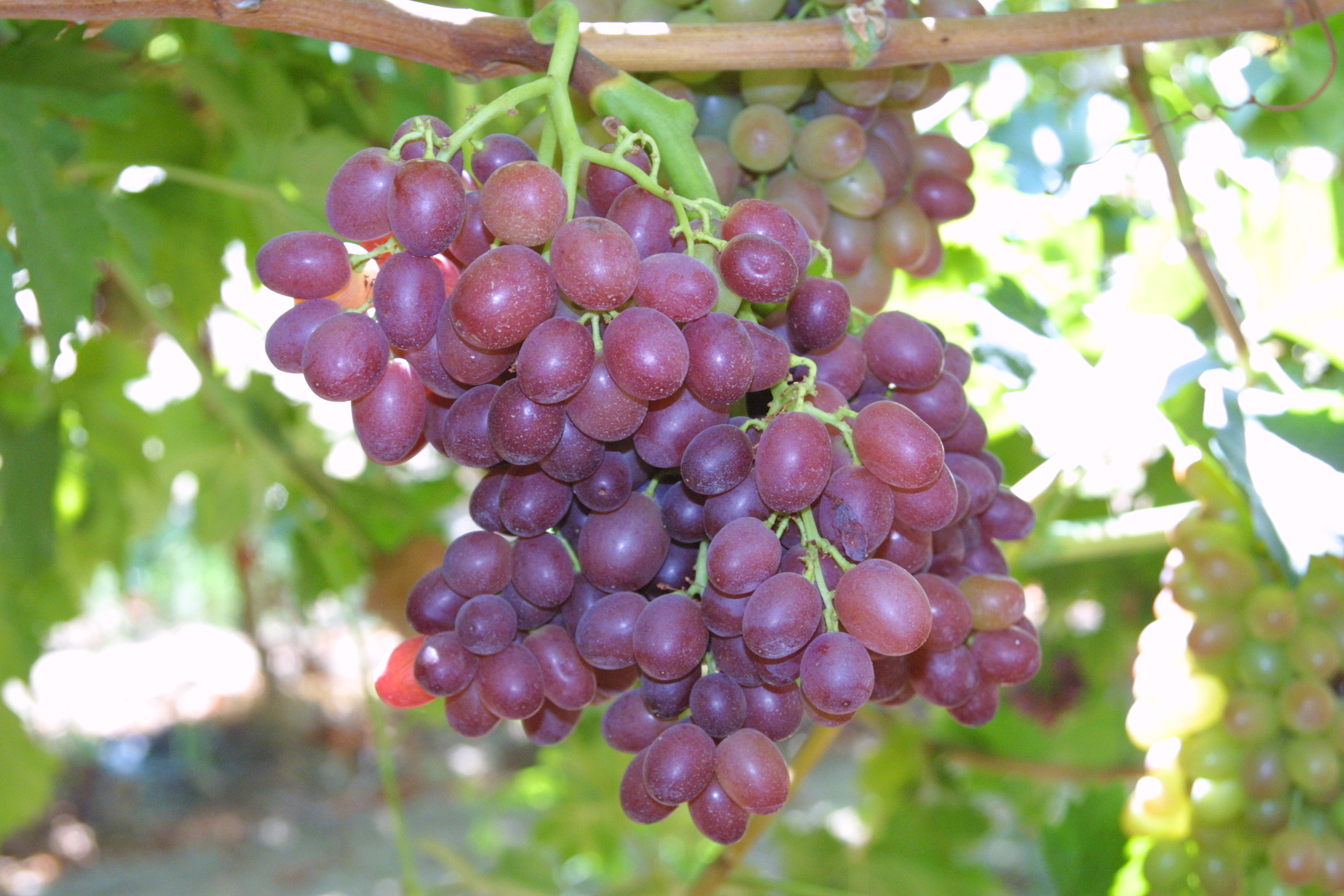
For the last three months of 2021, retail dietitians shared tempting ideas for incorporating California grapes into meals with their clients in four states.

Nine registered dietitians and licensed food nutritionists from a large grocery chain highlighted California grapes from October through December in 168 stores in Maryland, Washington D.C., Virginia, and Delaware. Dietitians held in-person and online classes designed to inspire their customer clientele with creative ways to use California grapes, including building a better charcuterie board. Among other things, the team of dietitians used blog posts and podcasts, social media, and an “Ask the Expert” column in Savory magazine to tempt consumers with grape usage and recipe ideas.

“The outreach the dietitians conducted was broad and deep,” said Karen Hearn, vice president of domestic marketing for the California Table Grape Commission.

“It was also beautifully done, full of enticing ideas and mouthwatering photos. The work was tied to retail promotions and we know it helped motivate consumers to purchase. The program will serve as a model for future work.”

Hearn noted that the timing of the promotion was important because over 45 percent of the California grape crop shipped October through December.

2022-01-28T14:28:12-08:00January 28th, 2022|

USDA Announces Plenary Speakers for 2022 Agricultural Outlook Forum

Glenda Humiston to speak on market opportunities for climate smart agriculture

By Pamela Kan-Rice, UCANR

The U.S. Department of Agriculture announced plenary speakers for the 2022 Agricultural Outlook Forum, themed “New Paths to Sustainability and Productivity Growth” to be held virtually Feb. 24–25, 2022.

The opening plenary session will feature a fireside chat between Secretary of Agriculture Tom Vilsack and Elizabeth Economy, senior advisor to the Secretary of Commerce. Secretary Vilsack and Economy will discuss U.S.-China agricultural trade relations and prospects for the Chinese agriculture market.

The Secretary’s discussion will be followed by a panel titled “Growing Market Opportunities for Climate Smart, Sustainable Agriculture Systems,” which will bring together sector leaders to discuss how climate smart, sustainable production practices can generate both environmental and economic returns, while still meeting the needs of consumers.

Speakers at the plenary panel include:

  • David Allen, VP of Sustainability at PepsiCo Foods;
  • Glenda Humiston, Vice President, Agriculture & Natural Resources at University of California;
  • Mike McCloskey, Co-Founder and CEO of Select Milk Producers;
  • Elena Rice, Chief Scientific Officer of Genus, PLC; and
  • Emily Skor, CEO, Growth Energy

“The Outlook Forum is USDA’s largest event of the year. Being asked by Secretary Vilsack to serve on the opening plenary panel is a significant honor,” said Humiston.

Also, during the Thursday morning session, USDA Chief Economist Seth Meyer will unveil the Department’s 2022 outlook for U.S. commodity markets and trade and discuss the U.S. farm income situation.

Along with the plenary session, Forum attendees can choose from 30 sessions with more than 90 speakers. The concurrent track sessions and topics supporting this year’s theme are: climate mitigation and adaptation, supply chain resilience, commodity outlooks, frontiers in agricultural production and technology and U.S. trade and global markets.

Visit the Agricultural Outlook Forum website to register and read the program at a glance. Follow the conversation at #AgOutlook on USDA’s TwitterInstagram, and Facebook.

Registration to the 2022 Outlook Forum is free but required. Register at https://www.labroots.com/ms/virtual-event/usda-aof-2022.

USDA touches the lives of all Americans each day in so many positive ways. In the Biden-Harris Administration, USDA is transforming America’s food system with a greater focus on more resilient local and regional food production, fairer markets for all producers, ensuring access to safe, healthy, and nutritious food in all communities, building new markets and streams of income for farmers and producers using climate smart food and forestry practices, making historic investments in infrastructure and clean energy capabilities in rural America, and committing to equity across the Department by removing systemic barriers and building a workforce more representative of America. To learn more, visit www.usda.gov.

2022-01-27T10:59:05-08:00January 27th, 2022|

New Book Shows Grapes a Top Food for Immunity and Brain Health

By California Table Grape Commission

Grapes are a top food for immunity and brain health, according to a new book soon to be released by dietitian and author Patricia Bannan.

The book is titled “From Burnout to Balance: 60+ Healing Recipes & Simple Strategies to Boost Mood, Immunity, Focus & Sleep.” The book lists top foods in several categories, among them brain and immune health, with grapes on the list for both.

In addition to the recipes, Bannan includes grapes in her “Nearly No-Cook Meal Ideas” section of the book.

“Grapes are my go-to ingredient for color, hydration, and nutrition. As a snack or recipe ingredient, grapes are an easy, healthy choice for wellness. Studies show that grapes are linked to benefits in multiple areas of health, including support for brain and immune health,” said Patricia Bannan, MS, RDN, author of “From Burnout to Balance.” “Three of my favorite recipes with grapes in ‘From Burnout to Balance’ are my Simple Salmon Burgers with Grape Salsa, Lemony Farro and Lentil Bowls with Shrimp and Grapes, and my Kale, Sweet Potato & Grape Salad with Walnuts. Not only are these recipes delicious, they are packed with nutrients to support both brain and immune health.”

Bannan will promote her new book throughout the upcoming California table grape season.

2022-01-20T08:13:24-08:00January 20th, 2022|

Harris Farms, Inc. Announces New Chief Executive Officer

Mr. John C. Harris, Chairman of Harris Farms, Inc. Appoints Darren Filkins as CEO

By Suzanne Devereaux, Harris Farms

Harris Farms, Inc., a diversified farming and hospitality company founded in 1937, based near Coalinga, CA, announced that Darren Filkins has been appointed Chief Executive Officer. He will report directly to John C. Harris, the Chairman of Harris Farms, Inc. and the Harris Farms, Inc. Board of Directors. As CEO, Filkins, a graduate of California Polytechnic State University, San Luis Obispo, will oversee all of Harris’ operations, including the company’s farming, hospitality, and thoroughbred horse division.

“I am very pleased and excited that Darren is joining our team as CEO,” said John C. Harris, “Darren is a proven and enthusiastic leader who will inspire our wonderful employees and enable Harris Farms to capitalize on its many strategic opportunities.” As Chairman, Harris will be focused on oversight and strategic planning.

“I am deeply honored to be joining Harris Farms. Mr. Harris and his management team have created a very special company that prides itself on quality, respect for people, and the thoughtful stewardship of natural resources. Harris Farms will always provide the highest quality products, exemplary customer service, and a steadfast commitment to our employees and community. Each of our existing business divisions has compelling opportunities to capitalize upon and I look forward to pursuing exciting new ventures that will further accelerate our growth and utilize our diverse resources,” said Filkins.

Harris Farms, Inc. was founded in 1937 by John Harris’ parents, Jack and Teresa Harris, on the westside of the San Joaquin Valley. Over the decades, the company has dramatically expanded its agricultural operations which now encompasses several thousand acres spanning over three farming locations. The company has also grown to include the Inn at Harris Ranch, three dine-in restaurants, Express BBQ, FastTrack convenience store, and airport. The Harris Ranch Inn and Restaurant is a landmark that enables Harris’ agricultural businesses to interface with the traveling public, as well as a devoted local clientele. Opened in 1977, Harris Ranch Restaurant serves about 500,000 people per year and has won numerous culinary awards. Harris Farm’s thoroughbred horse division has been a leading training and breeding farm for decades and raised amongst others, Horses of the Year, California Chrome and Tiznow.

2022-01-13T15:59:16-08:00January 13th, 2022|
Go to Top