Regulations

Grower-PCA Communication is Critical

Grower-PCA Communication is Critical

By Laurie Greene, Editor

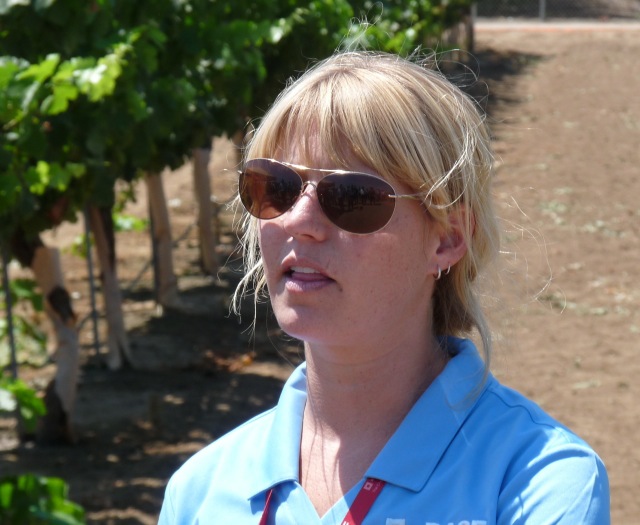
Emily Symmes, UC Cooperative Extension Integrated Pest Management Advisor, Butte County, is amazed at the professionalism of growers and Pest Control Advisors (PCAs). “I deal directly with growers and land managers, as well as crop advisors and pest control consultants” said Symmes, “and everyone has so much to do out there, so grower-PCA communication is critical. Sometimes it is amazing how they get it all done. I feel lucky, as I get to focus on the pest management and other production activities throughout the season,” she noted.

Symmes maintains there has to be a lot of communication back and forth between the growers and PCAs and herself. “And within each question there is a deeper conversation,” she elaborated, “but it can get lost in the shuffle of running from one thing to the next. Everything is very time sensitive in agriculture; we don’t have control over weather and things that tend to drive pest population cycles.”

“So within each of those key pest management questions, there is a subset of questions:

  • How do we know that it is time?
  • Are we doing the right thing at the right time?
  • Are we using the right materials?
  • Are we considering the big picture?’”

“The other big key ingredient is follow-up—evaluating:

  • How did we do?
  • Did the treatment work?
  • Did it cause any potentially negative impacts that we weren’t aware of?
  • Did we have to come back and do something additional (after-the-fact)?
  • More questions about the treatment, time, and material.”

    PCA Responsibilities (CA DPR)

    PCA Responsibilities (CA DPR)

And on any California Department of Pesticide Regulation (DPR) recommendation, there is a question before the last signature line, ‘Have you thought of any other alternatives before you make this application?’ IPM practitioners sometimes misunderstand this to mean, ‘Well they don’t want us to treat.’ But it is really an acknowledgement that we know how important all of our management tactics are,” Symmes noted.

“Cultural practices are important, pesticides are important, but knowledge is really the key ingredient. Growers and PCAs are knowledgeable, have explored the alternatives and know what is going on in this particular orchard block they are signing this legal document for. Honestly, I think we do a great job.”

“I think California has done a fantastic job with this,” said Symmes,”but is there room for improvement? I think there always is.”
2021-05-12T11:05:59-07:00January 7th, 2016|

Farmers are Asset Managers

Farmers are Asset Managers

By Brian German, Associate Editor

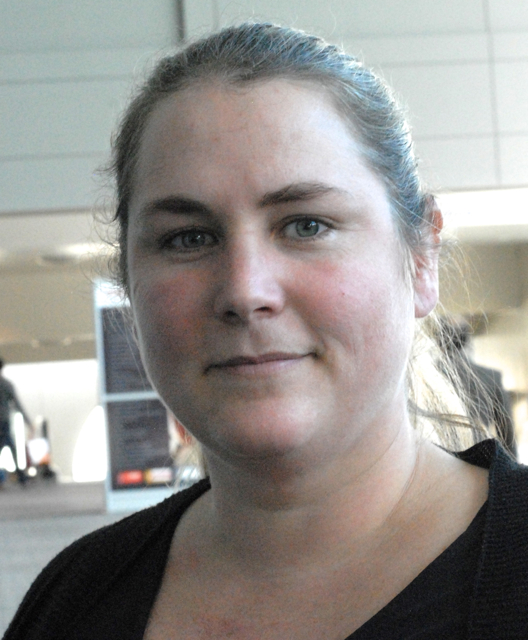
Richard Casias, principal scientist and managing member at RCC Group, LLC, an environmental management consulting company based in Davis, expressed his deep respect for the Valley’s local farmers’ positive outlook, “What I really appreciate about these individuals is farmers are true asset managers. Their goal is to work efficiently, effectively and bring a good investment off the land they are managing.”

RCC Group’s primary customer base of almond, walnut and pistachio growers approach Casias by introducing their asset, emphasizing ongoing preservation of that asset, and making certain that the inputs are positive, and losses are minimized, like any company. With over 30 years of experience in earth science and environmental management, Casias attributes his expertise to this ongoing learning process.

Casias has traveled nationwide, including Hawaii, Nevada, Utah, New Mexico and Texas, promoting environmental management systems and conducting environmental and water resource investigations. “I’ve been advocating for an environmental management system for farming operations. Australia and other countries have been doing it, and it is completely applicable here in Central Valley farming operations.”

Casias continued, “So many of the farming practices that are being done are not getting farmers the positive feedback and validation as good land and water stewards. That is part of my motivation—to make sure growers recognize and take credit for all the extra work that they do to make their farming operations successful.”

When it comes to increasing water regulations on farming, Casias commented, “I try to remind growers that public scrutiny is not solely focused on agriculture as the villain; there are a number of people [and industries] using these natural resources.”

2016-05-31T19:26:59-07:00January 7th, 2016|

Henry Gonzales, Ventura County Ag Commissioner

Ventura County Ag Commissioner Henry Gonzales Started as Fieldworker

By Patrick Cavanaugh, Deputy Editor

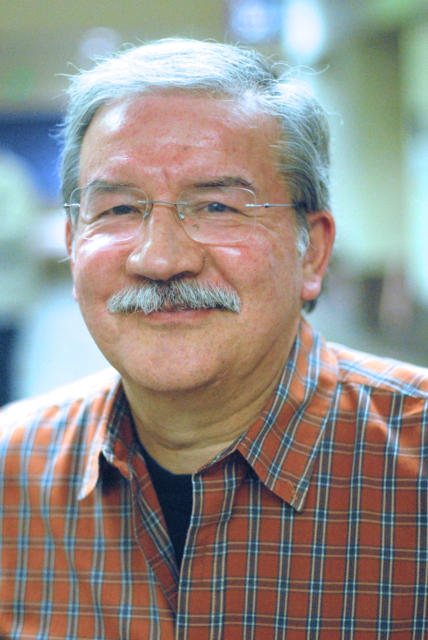
California Ag Today interviewed Henry Gonzales, Ventura County Ag Commissioner, who has served in that post for 7 years. His unique story begins with his birth in Fresno and his work in the California fields at an early age.

Gonzales: My parents were migrant farmworkers, and back in the day, there was no day care for us, so they took us to the fields with them. I like to think I my career started in agriculture when I was old enough to pick up a plum and put it in their basket. We worked a lot in the Fresno area, but also in the San Jose area and Imperial County, following the crops as most migrant farmers do.

CalAgToday: You started working as a child, and what happened next? Did you and your family continue as a farmworkers?

Gonzales: We continued farm working for many years. We used to live in farm labor camps, whenever they were available. Sometimes we stayed with relatives or anywhere we could find. There were times when the only places we could find were the trees in the orchard, so sometimes we stayed there.

CalAgToday: So, when you were 13, you went off on your own?

Gonzales: Yes, when I was 13, I did what I thought I should do—work under my own social security card. I started working in the fields around Salinas. I was actually in the same lettuce harvesting crew with my grandfather who was 69 at the time.

CalAgToday: Well, Henry, walk me through it. How many years did you work with your grandfather?

Gonzales: I worked every summer and weekends since I was 13 through high school in the fields around Salinas.

This painting was done by Henry Gonzales's mother depicting his early work in the fields

This painting was done by Henry Gonzales’s mother depicting his early work in the fields.


CalAgToday: Tell me about high school.

Gonzales: I felt very strongly about completing high school because I know my parents did not. But you may find it interesting that when I was working in the fields around Salinas, I was a card-carrying member of the United Farm Workers (UFW).

CalAgToday: So the UFW recruited you early, or were you a supporter?

Gonzales: Well, it was a closed-shop situation; if you worked in that company, you were a member. So I believe I am the only ag commissioner who was once a card-carrying member of the UFW.

CalAgToday: And why is that significant to you, Henry?

Gonzales: As you know, in agriculture, farmworkers are, almost literally, the backbone of the industry. They are the ones doing all the heavy lifting. So, having that background really provides me with a broader perspective because I can understand farming from the ground level up. Coupled with my Bachelor of Science degree in agricultural science, my field work experience has given me a well-rounded background for agriculture.

I started working for the Monterey County Ag Commissioner’s office over 30 years ago. All Ag Commissioners start at the bottom of the organization, so I began as an agricultural inspector-biologist and worked my way up to deputy, chief deputy, and then seven years ago, I became Ag Commissioner here in Ventura County.

CalAgToday: So suddenly a job became available in Ventura County?

Gonzales: That was kind of interesting. I was in Monterey County with a great job, a great boss, and I could do pretty much what I wanted. But I got a call from Ventura County inviting me to apply for their ag commissioner position. I checked with my wife, and she said ‘Sure, why not? Try it!’ I did, and as they say, the rest is history.

I applied and got the position. I was reappointed here three years ago, and I am hoping to do at least one more term after my current term is over. I think all my years working for the Monterey County Ag Commissioner’s office, my degree in Ag Science, and my master’s in public administration, coupled with my childhood years working in the field really gives me a broad background in agriculture, especially as it exists in Ventura County and in the state of California.

CalAgToday: How did you have time to get a masters degree in public administration?

Gonzales: Well, while I was working for Monterey County, I spent a lot of sleepless nights and weekends in order to earn that degree from Golden Gate University’s satellite office in Monterey.

CalAgToday: When you look back, you have come so far from your beginnings as a farmworker, and you have seen so much. How do you put all of that together?

Gonzales: My experience has provided me with the broadest perspective, so when I deal with a challenging issue, I can see it from all vantage points, and that is very helpful to me in doing my job.


2021-05-12T11:06:00-07:00December 30th, 2015|

UPDATE! Expanded ACP Quarantine

UPDATE! Expanded ACP Quarantine in Stanislaus and Merced Counties

Two ACPs Found in City of Turlock

Stanislaus County has been placed under quarantine for the Asian citrus psyllid (ACP) following the detection of two ACPs within the City of Turlock.  The expanded ACP quarantine also includes a portion of northern Merced County along its border with Stanislaus County.  The quarantine zone measures 101 square miles, bordered on the north by East Service Road; on the south by August Avenue; on the west by Blaker Road; and on the east by North Hickman Road.  The quarantine map for Stanislaus and Merced is available online at: www.cdfa.ca.gov/go/acp-maps.

The quarantine prohibits the movement of citrus and curry leaf tree nursery stock, including all plant parts except fruit, out of the quarantine area and requires that all citrus fruit be cleaned of leaves and stems prior to moving out of the quarantine area.  An exception may be made for nursery stock and budwood grown in USDA-approved structures which are designed to keep ACP and other insects out.  Residents with backyard citrus trees in the quarantine area are asked not to transport or send citrus fruit or leaves, potted citrus trees, or curry leaves from the quarantine area.

ACP county-wide quarantines are now in place in Imperial, Los Angeles, Orange, Riverside, San Bernardino, San Diego, Santa Barbara, Tulare and Ventura Counties, with portions of Alameda, Fresno, Kern, Madera, Merced, San Benito, San Francisco, San Joaquin, San Luis Obispo, San Mateo, Santa Clara, and Stanislaus counties also under quarantine.

The ACP is an invasive species of grave concern because it can carry the disease huanglongbing (HLB), also known as citrus greening.  All citrus and closely related species, such as curry leaf trees, are susceptible hosts for both the insect and disease.  There is no cure once the tree becomes infected; the diseased tree will decline in health and produce bitter, misshaped fruit until it dies.  In California, HLB has only been detected in 2012 and 2015 on residential properties in Los Angeles County.  This plant disease does not affect human health.

Residents in the area who think they may have seen ACP or symptoms of HLB on their trees are urged to call CDFA’s Pest Hotline at 1-800-491-1899 or your local agricultural commissioner’s office (Stanislaus County (209) 525-4730; Merced County (209) 385-7431).  For more information on the ACP and HLB, please visit: www.cdfa.ca.gov/go/acp.

2021-05-12T11:06:00-07:00December 28th, 2015|

Ruthann Anderson, CAPCA’s New CEO

Ruthann Anderson, CAPCA’s New CEO, Talks Leadership

By Brian German, Associate Editor

On January 1, Ruthann Anderson will become the new President and CEO for the California Association of Pest Control Advisers (CAPCA), based in Sacramento.

Anderson told CaliforniaAgToday.com, “I’ve been with CAPCA for several years, and I have grown up here in the Valley. I’m a big proponent of agriculture and what we do, and the whole idea of how our PCAs fit into the bigger picture of agriculture.”

PCAs assist growers in pest, disease and weed control—all threats to ag production. PCAs recommend control products that will either prevent issues or control them outright. Anderson explained, “We like to call them our plant doctors. And really they are so vital, not only on advising our growers, but also in making sure we protect California’s agriculture, we maintain the yields that we need, and we continue to move forward as the global leader in producing and feeding the world,” noted Anderson.

Anderson said she is excited about what 2016 will bring to CAPCA members, “We are excited to launch new projects, including the Leadership Institute for our PCAs to really showcase their professionalism as well as their ability to be leaders here in agriculture.”

Anderson noted the CAPCA Leadership Program is a legacy plan started by former long-term CEO, Terry Stark. “Terry drafted the program, and we are just building on it and making it even better,” said Anderson.

CAPCA represents about 3500 members throughout California.

______________________________

Link:

California Association of Pest Control Advisers (CAPCA)

2021-05-12T11:06:00-07:00December 28th, 2015|

CENSUS OF AGRICULTURE UNDER SCRUTINY

HOUSE PANEL EXAMINES USE OF CENSUS OF AGRICULTURE

The United States House of Representatives Agriculture Committee’s Subcommittee on Biotechnology, Horticulture and Research held a hearing on December 9, 2015, to discuss the U.S. Department of Agriculture’s (USDA) use of the Census of Agriculture authority to acquire farmer’s personal financial information. The Census of Agriculture is conducted every five years and is widely considered to be an important tool in developing strong agricultural policy. The Census is used by economists; state, local, and federal policy-makers; financial analysts; and farmers themselves.

However, in January 2015, the Agriculture Committee received correspondence from farmers and ranchers concerned that the USDA’s National Agricultural Statistics Service (NASS) improperly used the Census of Agriculture authority to conduct a mandatory survey entitled Tenure, Ownership, and Transition of Agricultural Land (TOTAL). The TOTAL survey is a combination of what was previously the Agricultural Economics and Land Ownership Survey (AELOS), which was traditionally conducted as a follow-on Census of Agriculture survey, and the Agricultural Resource Management Survey (ARMS III), which has been prior to this year conducted by the Economic Research Service as a voluntary, academic survey. Members of the committee primarily expressed concerns regarding the compulsory aspect of the expanded TOTAL survey, which inquired about all aspects of an operator’s personal financial portfolio as well as all aspects of farm related income and expenses.

“The most recent version of the TOTAL survey is extremely time-consuming, burdensome and over-broad in nature, and I’m concerned with the potentially negative effects this mandatory survey will have on farmers’ willingness to participate in the Census of Agriculture,” said subcommittee chair Rep. Rodney Davis, R-Ill., Chairman of the Subcommittee on Biotechnology, Horticulture, and Research.It cannot be overstated how important the information in the Ag Census is for developing strong agricultural policy, rural development, farmland assessment, and the practices of many other sectors that serve farmers and ranchers. It guides our decision-making process, helps us determine what, if any, changes must be made to better serve and provide for farmers and ranchers, and gives us the ability to run farm programs and implement the Farm Bill,” said Davis.

“Data and information gained from the Census of Agriculture is important to every sector of the agriculture industry,” said Agriculture Committee Chairman K. Michael Conaway, “especially for lawmakers as we write and oversee the Farm Bill. However, the most recent version of the mandatory TOTAL survey is unnecessarily complex, intrusive and requires valuable time that farmers would otherwise spend operating their businesses. I hope today’s hearing shed light on the importance of quickly resolving this matter.”

Source: United States House of Representatives Agriculture Committee’s Subcommittee on Biotechnology, Horticulture and Research

2016-05-31T19:27:01-07:00December 15th, 2015|

Almond Conference Announces AIM Strategy

Annual Almond Conference Announces AIM Strategy and Improved Leadership

By Patrick Cavanaugh, Deputy Editor

Leadership was the recurring theme for the 3,000+ attendees over the three-day 43rd Annual Almond Conference, hosted by the Almond Board of California last week in Sacramento. “We are focused on the fact that the almond industry is accepting its responsibility to provide leadership for California agriculture and to use our treasure and talent to work on solutions for a lot of the problems that are very daunting,” said Richard Waycott, president and CEO of the Almond Board. “We have talked a lot about what is expected by consumers and by consumer product goods companies, which is our customer base,” Waycott noted.

At the conference, the Almond Board launched Accelerated Innovation Management (AIM), a major strategic effort designed to further increase the almond industry’s efficiency and sustainability, that features four major initiatives described by Waycott:

Water Management and Efficiency – A focus on accelerating almond farmer transition to more efficient irrigation scheduling and management practices to maximize the most crop per drop of water.  This initiative, which builds on the 33 percent reduction in water used per pound of almonds achieved by the industry over the last 20 years, includes working with farmers to fine tune irrigation techniques and adopting more advanced water management technologies.

Sustainable Water Resources – First, an exploration of how to best leverage a unique strength of the California Almond industry—its acreage—to accelerate natural flood-year groundwater recharge of aquifers. Collectively, California’s aquifers are the state’s largest water storage system; water recharged through this program would benefit all Californians, not just farmers. Second, an investigation of opportunities to recycle water from multiple sources, such as municipal wastewater, as a way of increasing overall water availability for farmers and all Californians.

Air Quality – Investigation of various methods the almond industry can help meet the Central Valley’s exacting air quality standards. This initiative will scrutinize all components of almond farming that impact air quality and evaluate opportunities to decrease emissions. This initiative will identify alternatives, such as decreased fossil fuel use, that will result in cleaner air for all those who live in California’s Central Valley—farmers, their families, and surrounding communities.

22nd Century Agronomics  A recognition that we need to better understand and then adopt the technologies that will lead California farming into the 22nd century. The Almond Board of California will lead a comprehensive exploration of almond farming techniques, bringing an exploratory mindset to consider all options as to what innovations and technical “leap frogs” will be needed to sustainably farm in the future. Each component of almond farming will be considered, from land preparation and varietal development, to equipment and processing.

Link: Almond Board of California

2016-05-31T19:27:01-07:00December 14th, 2015|

More Rain, More Fungi, More Use for Multiuse Fungicides

With More Rain, More Fungi, More Use for Multiuse Fungicides

By Patrick Cavanaugh, Deputy Editor

With spring rains, many vegetables, tree fruits, grapes and nuts succumb to fungi pressure. However, during the past few years, only trivial amounts of spring rain have moistened California’s soil and lulled farmers to abandon their vigilant watch for fungi proliferation. But now, the strong likelihood of El niño-driven wet weather this spring could catch growers off-guard.

“We have an El niño coming that has already been tagged, ‘Too big to fail,’ which will bring a lot of rain. So it’s really important for folks to think about switching gears this year on their pest management mindset. With more rain, comes more fungi disease. We always see really high pressure disease years with rain,” said Kate Walker a technical services representative with BASF Corporation on the Central Coast, who advises use of a multiuse fungicide product already on hand.

Anthracnose in Strawberries, UC Statewide IPM Project

Anthracnose in Strawberries (Source: UC Statewide IPM Project

Strawberries, in particular, are vulverable to fungi. “We have heard from our strawberry growers,” said Walker, “that these fungal diseases are always present in California, but they vary significantly in their severity year-to-year depending on the weather,” noted Walker.

“One major disease that accompanies higher moisture, Anthracnose, often called leaf, shoot, or twig blight,” Walker explained, “results from infection caused by the fungus Colletotrichum. I’ve heard some growers have not experienced Anthracnose issues in 10 years,” said Walker. “As it emerges and becomes more problematic in strawberries, farmers really need to know which types of fungicides to use to manage this and other diseases.”

“It is very important for farmers and PCAs to walk through and scout their fields for disease,” Walker said, “and when they identify one, to become very aggressive with their fungicide management program. So, as representatives for BASF, we are lucky to have multiuse fungicide products available to control these diseases, such as Merivon Fungicide.”

Walker noted Merivon has two modes of action, “so it is very broad-spectrum. Typically we position Merivon in California for use on powdery mildew and Botrytis, but what we seldom talk to growers about is its utility for Anthracnose. We see a lot more  Anthracnose in Florida and on the East Coast due to the increased rains; whereas, it usually doesn’t come through every year in California. So it is good to for farmers and PCSs to know that the product with which they are familiar for use in Botrytis, is also very effective with other issues, like Anthracnose.”

Walker offered, “Another very common disease that flourishes with increased rain, Rhizopus, occurs post-harvest, after the berries are picked up from the field. Again, Merivon has utility for Rhizopus as well, so growers don’t have to change or reinvent their program to manage these diseases.”

Walker said, “Rhizopus is an airborne bread mold. It is very common in the air and in the soil, so anytime a fruit or a nut is exposed to the spores blowing in the wind, it is vulnerable to infection with this disease.”

2016-05-31T19:27:02-07:00December 4th, 2015|

New Biodico BioFuel Facility In Fresno County

Biodico Biofuel Facility, World’s First, to Operate Entirely on Renewable Heat and Power

Biodico Inc., a sustainable biofuel and bioenergy company, announced the opening of its Biodico Westside Facility, the world’s first biofuel production facility to operate entirely on on-site power-generated renewable heat. Biodico’s ribbon-cutting ceremony from 11:30 a.m. to 1 p.m. tomorrow, Friday, December 4, 2015, at the at Red Rock Ranch in Five Points, Fresno County, California, is open to the public and will feature the “Sustainable Rhythm” of the Mendota High School Marching Band’s drumline.

Biodico is transforming biofuel production with sustainable solutions to convert diverse feedstocks into environmentally sound renewable sources of fuel and energy. The Westside Facility will produce up to 20 million gallons of biodiesel annually, utilize multi-feedstock functionality, incorporate advanced sensors for real-time and remote monitoring, leading to complete system automation, and provide 45 new jobs to the San Joaquin Valley.

“Our new facility in the Valley will produce economically and environmentally viable biobased* fuel and energy for local farmers and truckers, and create new jobs in the community,” said Biodico president and founder, Russ Teall, an internationally-acknowledged leader in biofuels with more than 20 years of experience in all aspects of the industry including legal and regulatory affairs. “This facility demonstrates Biodico’s commitment to an integrated value chain model that includes accelerated and inexpensive construction and deployment, enhanced throughput with reduced operating costs, and increased monetization of renewable fuel and energy,” said Teall.

Teall successfully evolved patented and proprietary biorefinery* technology in conjunction with the U.S. Navy and the California Energy Commission. The most recent generation of equipment, the MPU (Modular Production Unit) brings automation and remote real-time sensing to biorefineries as part of an integrated self-sustaining system, utilizing anaerobic digestion, gasification, solar, and advanced agricultural and algaculture* [a form of aquaculture involving the farming of species of algae, Wikipedia].

Teall is currently the California Biodiesel Alliance president, California Air Resources Board Panel on the Low Carbon Fuel Standard member, and CIA Afghan Energy Project panelist; and formerly National Biodiesel Board (NBB) vice chair and the NBB Legislative Committee chair. He has provided biorefinery consulting services to private companies, governments and trade associations throughout the world, including the US, Argentina, Australia, Bolivia, Canada, China, Dominican Republic, Ghana, Haiti, Hong Kong and the PRC, India, Israel, Malaysia, Mexico, the Philippines, Singapore, South Africa and Thailand.

_____________

Again, Biodico will host a ribbon-cutting ceremony at the facility on Friday, December 4, 2015, featuring the “Sustainable Rhythm” of the Mendota High School Marching Band’s drumline.  Details follow:

What: Ribbon-cutting ceremony to celebrate the world’s first fully sustainable biofuel facility.

When/Where:  Friday, December 4, 2015, 11:30 a.m. to 1 p.m. at Red Rock Ranch in Five Points, Fresno County, Calif.

Why:  Fossil fuels are finite and the world needs economical alternatives that reduce toxic air emissions and greenhouse gases.

About Biodico: Biodico is a privately held company headquartered in Ventura, Calif. that (1) builds, owns and operates sustainable biofuel and bioenergy facilities, (2) conducts research, development, and validation studies with the U.S. Navy, and (3) collaborates with strategic joint venture partners to commercialize new technology and initiatives.

The company and its management have been pioneers in the industry for the past 23 years, with an emphasis on using advanced, patented and proprietary technologies for the sustainable multi-feedstock modular production of next generation biofuels and bioenergy.

_____________

Lexicon

[Source: Wikipedia]

*algaculture – a form of aquaculture involving the farming of species of algae, Wikipedia].

*biobased = intentionally made from substances derived from living or once-living organisms

Biobased products, designated by the Secretary of Agriculture, are commercial or industrial products that are composed in whole, or in significant part, of biological products or renewable domestic agricultural materials or forestry materials.

*biorefinery is a facility that integrates biomass conversion processes and equipment to produce fuels, power, heat, and value-added chemicals from biomass. The biorefinery concept is analogous to today’s petroleum refinery, which produce multiple fuels and products from petroleum.

The International Energy Agency Bioenergy Task 42 on Biorefineries has defined biorefining as the sustainable processing of biomass into a spectrum of bio-based products (food, feed, chemicals, materials) and bioenergy (biofuels, power and/or heat).

_____________

What is biomass electricity?

[Source: California Energy Commission]

Biomass electricity is drawn from combusting or decomposing organic matter. There are about 132 waste-to-energy plants in California, with a total capacity of almost 1,000 megawatts. These plants power our homes and businesses with electricity from waste matter that would have been released into the atmosphere, added fuel to forest fires, and burdened our landfills.

2016-05-31T19:27:02-07:00December 3rd, 2015|

IFPRI Tackles More Food with Less Water

IFPRI Tackles More Food with Less Water

By Patrick Cavanaugh, Deputy Editor

Feeding a growing population is significantly dependent on irrigation—not only expansion but making existing irrigation more effective. The expansion of irrigation and water supplies has been limited by growth in demand from other sectors, like urban and industrial usage, but also livestock and aquaculture, noted Mark Rosegrant, director, International Food Policy Research Institute (IFPRI) Environmental and Production Technology Division.

“Obviously, the water sector is facing several challenges, not just in California, but around the world, including declining water quality, falling groundwater tables, and growing environmental demands for water that further restrict availability for irrigation and agriculture,” he said. “With climate change, we also will see changes in the volume and pattern of rainfall in crucial production areas that also will have negative effects in the developing world.”

“So the potential for significantly increased water scarcity in terms of water quantity and quality could put much more stress on the potential for meeting future food demand and food security,” Rosegrant said. “Thus reforming water management policies and investments to improve water use efficiency is critical to food production. Increased flexibility and adaptability of water systems to stress will need to be developed and strengthened,” Rosegrant explained. “We also need to look outside the water sector, purely defined, to things like agriculture and productivity growth through investment in the talks here.”

Rosegrant said though it is seems like there is a big water meeting around the world at least once every week, the contributions of IFPRI’s water research meeting held in Bonn, Germany last week, “Bonn 2011 Conference: The Water, Energy, and Food Security Nexus–Solutions for the Green Economy,” offered advantages and differences. “First, as you can see, we are not only looking at problems, but also looking at very highly interdisciplinary solutions, whether they be in engineering, hydrology, economic policy, or macro-policy. IFPRI also brings together academics, policy makers, development banks, politicians and NGO’s as well,” said Rosegrant.

“Finally I think it is very much an international meeting, we share global experiences for many regions of the world, but also with a strong focus on California, which not only faces extreme water difficulties, but also has probably the best ability in the world to deal with those kind of water crises. So many lessons can be learned from the California experience for the rest of the world,” he concluded.

2016-05-31T19:27:03-07:00November 23rd, 2015|
Go to Top