Fighting to Protect Family Farms from Water Diversion

In Face of Water Diversion Threat, Ag Industry Experts are Speaking Out

By Laurie Greene, Editor


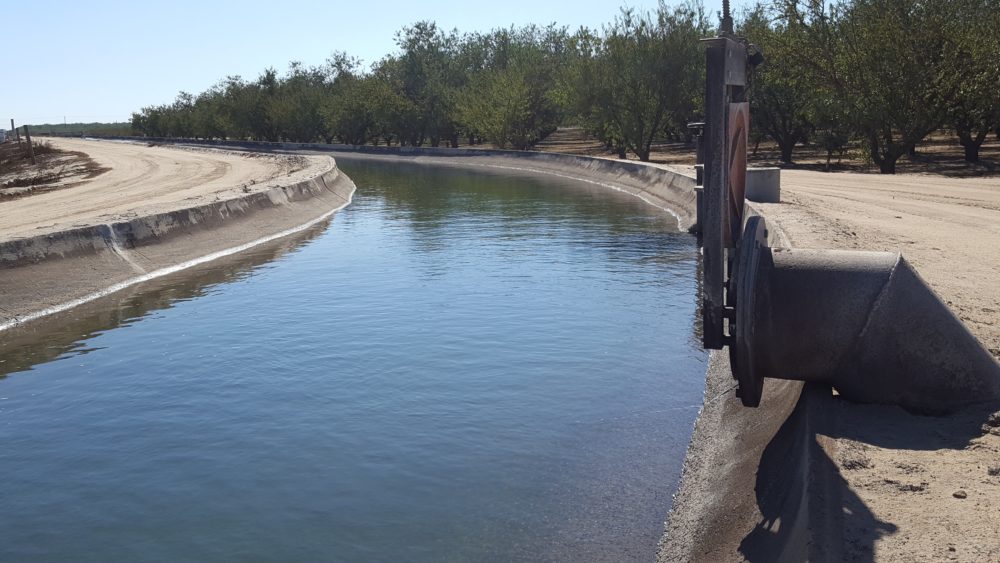
California Ag Today has been reporting on the California State Water Resources Control Board’s (SWRCB) proposed plan to divert 40 percent of the surface water from the Tuolumne River and two additional tributaries of the San Joaquin River between February 1st and June 30th every year. The SWRCB plan is designed to increase flows in the Delta in an effort to help the declining smelt and salmon populations. Yet, these water diversions would severely impact not only the farm industry, but communities in the Modesto and Turlock Irrigation Districts as well.

Michael Boccadoro, president of West Coast Advisors

Michael Boccadoro, president of West Coast Advisors

Ag officials say this is yet another threat to family farms in an attempt to protect the smelt and salmon. Farmers would lose a major portion of their surface water and be forced to pump more groundwater.

“Farming is not just a job; it’s a way of life for many of these families. And that livelihood, that way of life, is being threatened,” said Michael Boccadoro, president of West Coast Advisors, an independent, nonpartisan public affairs and advocacy firm that specializes in complex and often controversial public issues in Sacramento.

Boccadoro said the farm industry in the region is not sitting still while all of this is happening. There is a website, worthyourfight.org, that addresses this new assault on agriculture.

worthyourfight-logo Water Diversion

WorthYourFight.org

“It is worth fighting for,”said Boccadoro. “I was born and raised in agriculture, and I still think it’s a wonderful lifestyle. We need to protect it at all costs. This is starting to border on the ridiculous in terms of just one issue after another. . .  This is not a “Mother Nature” issue; this is government putting these obstacles and these problems in front of agriculture, and that’s troubling.”

“We produce much of the fruits and vegetables and nearly all the nut crops for the entire nation. So, of course, we would expect to see significant amounts of water being used by farming in California,” Boccadoro said.

“It’s just reality, and for whatever reason, I think people have been misled and don’t understand this is just part of growing food. Like I have said, if you are concerned about it, all you’ve got to do is quit eating. It’s that simple.”


Links:

California State Water Resources Control Board’s (SWRCB)

West Coast Advisors

worthyourfight.org

2016-11-22T22:11:51-08:00November 22nd, 2016|

A Brief History on the Pest Control Adviser and Certified Crop Adviser Programs

Longtime Crop Adviser Helped Increase Job Market for CCA Industry

By Brian German, Associate Broadcaster


The Certified Crop Adviser Program (CCA) was introduced in 1992 as a means to address the increased concerns regarding agriculture’s contributions to a variety of environmental issues.  By 1994, the CCA program was fully established with the support of the California Department of Food and Agriculture, along with the American Society of Agronomy and the California agricultural industry. The program was designed to raise the awareness and professional standards of individuals who make recommendations on agricultural fertilizers, pesticides and related products. 

Allan Romander has a long history with the CCA program, having joined the CCA Board in 2004. “I am currently with the Certified Crop Adviser Program in California, and Arizona I might add. I am a consultant with the organization. I just concluded my term as ICCA Chair and past Chair,” Romander said.

Allan Romander, member, California Certified Crop Adviser Board

Allan Romander, member, California Certified Crop Adviser Board

A Pest Control Adviser (PCA) since 1979, Romander joined the California CCA Board in 2004 and was instrumental in helping to develop a marketing program that nearly doubled the number of CCAs in California in a little less than six years. 

California is one of just a few states that require people who advise farmers on pest control management to be licensed as a Pest Control Adviser.  Amidst rising public concerns regarding pesticide use on California farms, the PCA program was launched in 1973 to ensure that those who make pesticide recommendations are both qualified and knowledgeable. “But that only certified them in the area of pest management,” Romander said. “It never said anything about their competency in the area of crop management or soil or water management.”

certified crop adviser logo“There has long been a gap between growers and consultants. Consultants historically have just held a Pest Control Adviser’s license,” Romander said. Over time, farmers began to ask their PCAs for guidance on multiple subjects outside of pest control, such as fertilizers and irrigation. 

“That’s where the Certified Crop Adviser Program comes in and picks up where the PCA program leaves off.  It covers those categories and certifies to a grower that [the adviser] has competency in those other areas,” Romander said.

Currently, there are close to 4,000 EPA-licensed Pest Control Advisers in California.  Romander noted, “Eighty-five percent of the Certified Crop Advisers in California are also Pest Control Advisers. So it’s a well-established program and well-respected throughout not only the United States, but North America and the rest of the world.”

2021-05-12T11:02:56-07:00November 14th, 2016|

US Citrus Industry Working Together on ACP, HLB Funding

Critical ACP, HLB Funding Comes Only After Industry Helps Itself

By Patrick Cavanaugh, Farm News Director


State Citrus Mutuals in California, Texas and Florida are diligently working in Washington, D.C., for $10 to 12 million in annual funding to help their citrus regions fight Asian Citrus Psyllid (ACP) infestation and Huanglongbing (HLB), the disease that ACPs vector.

The three Citrus Mutuals have collaborated well for the half dozen years of the American ACP invasion. Initially, the Florida Citrus Mutual team developed the Citrus Health Response Program (CHRP),” said Joel Nelsen, president of California Citrus Mutual.

Joel Nelsen, president of California Citrus Mutual, acp and hlb funding

Joel Nelsen, president of California Citrus Mutual

“They initiated it at a very minor funding level. However we sat down with them and said, ‘Look, this is an opportunity to ensure that all of the U.S. citrus industry can work together to protect itself from Huanglongbing.’ They were gracious enough to say okay. We exerted our leadership because we had people in positions in Washington who could be very beneficial to this,” Nelsen said.

“Initially it was a Florida/California effort. We said we need to double the size of the CHRP program and allocate more dollars to California, some to Texas, and some to Arizona. Now everybody is participating to the extent that they can. Today, it is still a Florida/California effort and a Florida/California-run program in partnership with USDA.

Nelsen said those involved are working hard to protect the citrus industry, and not just chasing a problem. Funding has been helpful to California. Only after the industry does all it can, will the state expect the federal government to help.

“It’s true for all three states’ industries,” Nelsen said. Unfortunately, Texas made a mistake. They did not have a policy in place to immediately remove an HLB-infected tree. As a result, they have an HLB infection spreading.”

“Texas is being adversely impacted on the dollar level. We don’t want to see that industry die, so there is a partnership that does exist on behalf of our colleagues,” Nelsen said. “We can’t afford to make mistakes like that.”

“In order to justify the continued progress of funding on an annual basis we are going to have to continue looking ahead, taking the steps necessary and doing what is needed to protect the citrus industry from the spread of Asian Citrus Psyllid and Huanglongbing.”

“We definitely have to show progress. We can’t ask homeowners to spray their trees if in fact we are not spraying ours. We can’t ask the federal government to continue helping us looking for ACPs if we are not willing to tarp our trucks to stop the spread of it. If we’re not willing to do a coordinated spray program then why should the government help us in finding HLB? If we are allowing snake oil merchants to conduct research projects, why should the federal government fund those?

2021-05-12T11:05:44-07:00November 9th, 2016|

FSMA Deadlines and Details

Aspects of the Food Safety Modernization Act (FSMA) Explained

By Brian German, Associate Broadcaster


As many 2011 Food Safety Modernization Act (FSMA) provisions near their deadline for the first step in compliance, the U.S. Food and Drug Administration (FDA) announced an extension for many aspects of the new rules to allow growers and processors more time to clarify certain provisions to ensure compliance. Jon Kimble, food safety services manager with Sacramento-based DFA of California, a non-profit trade association formerly called the Dried Fruit Association, weighed in on several FSMA provisions and compliance.

Jon Kimble, food safety services manager with DFA of California, FSMA

Jon Kimble, food safety services manager with DFA of California

“The Preventive Controls Rule is the biggie that came out. This rule is largely based on the existing Hazard Analysis Critical Control Point (HACCP) structure that the food industry is familiar with, but with some slight modifications and specifics that are unique to the regulation,” noted Kimble. HACCP is an international standard that defines requirements for effective food safety control from biological, chemical, and physical hazards in the production processes that could cause the finished product to be unsafe.

The Preventive Controls Rules for Human and Animal Food was enacted September 18, for large operations. Small and mid-sized companies will have until September 2017 and very small companies have until September 2018.


The Produce Safety Rule, another critical part of the Food Safety Act that was published last November, provides farm standards for the growing, harvesting, packing, and holding of produce for human consumption.

The Produce Safety Rule will come into effect for large farming operations within the next month.


Other portions of the act include the Foreign Supplier Verification Programs (FSVP) for Importers of Food for Humans and Animals and Accredited Third-Party Certificationwhich relate to imported food products. “There are some regulations that you have to comply with whether you are a food processor or a broker importing food,” Kimble explained.

Finalized earlier this year, the Sanitary Transportation Rule pertains to service scenarios where foods are exposed and not packaged. This rule covers food transported in bulk; vehicle cleanliness, design and maintenance, temperature control; prevention of the contamination of ready-to-eat food (from touching raw food, non-food items in the same load or previous load, and cross-contact with food allergen); training of carrier personnel in sanitary transportation practices; documentation of the training; and maintenance and retention of records.

The Sanitary Transportation Rule has a compliance deadline of April 2017 for large companies.


FSMA also includes the Intentional Adulteration Rule, which “relates to what we would traditionally call food defense or security measures to prevent intentional contamination of the food supply,” Kimble said.


Founded in 1908, DFA is one of the oldest food safety companies in the U.S. that provides commodity inspection services and support to packers, processors and exporters in the dried fruit, tree nut, and kindred product industry through commodity inspection, the Red Seal Program, and the Export Trading Company (ETC)

Safe Food Alliance, a new division of DFA of California serves as a resource to the food industry for any and all food safety practices. Services include food safety training and consulting, laboratory testing and analysis, and third party certification audits conducted by Safe Food Certifications, LLC.

2021-05-12T11:00:48-07:00November 3rd, 2016|

Raisins: Quality Is Up, Tonnage Is Down

Fewer but Sweeter Raisins this Year 


By Brian German, Associate Broadcaster


After last year’s tremendously successful raisin harvest, Steve Spate a fourth generation farmer, said it is understandable to see a bit of a decline in tonnage this year. Spate, who is also grower representative for the Raisin Bargaining Association (RBA), which has been representing the raisin industry for nearly 50 years, said, “Just by nature, the year following a high crop year could potentially be down—especially for Thompson Seedless Grapes,” noted Spate.

Steve Spate, grower representative, Raisin Bargaining Association (RBA)

Steve Spate, grower representative, Raisin Bargaining Association (RBA)

Raisin grape harvest in the central San Joaquin Valley is a two-month process for growers, typically running from late August to mid-to-late October, depending on crop maturity. Hard numbers on this year’s overall crop won’t be available for a few more months, but growers are reporting a significant decline from last year’s harvest. “Last year was a large crop,” said Spate,” so definitely we were considering that this year would be down—but not as severely as some growers have reported. We have people reporting differences in yield from 10% to as high as almost 50%.”

There are various possible reasons for this year’s drop in yield, aside from the cyclical nature of grapevines. “I think drought conditions last year may have played a big role, while the buds were setting basically for this year,” said Spate. He also suggested water was a significant factor this year as well, particularly if growers lacked enough surface water deliveries or a grower had a pump issue and there was a critical time where he or she didn’t get water on the field.

The overall reduction in acreage of this year’s harvest is yet another factor to consider. Industry experts report approximately 10K to 15K fewer raisin grape acres compared to last year. This shrinkage is attributed to growers replacing raisin crops with higher-value crops such as almonds.

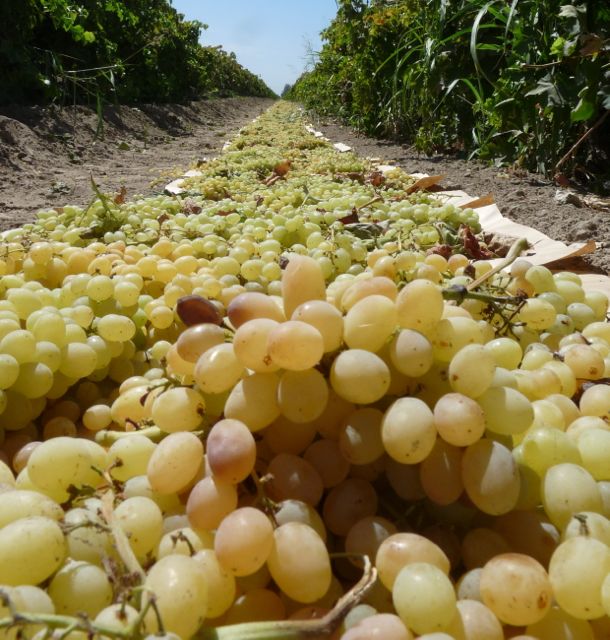
Sun-Dried Raisins

Sun-Dried Raisins

As many industries struggled with the cost and availability of labor, Spate commented that it wasn’t too difficult to fill their labor needs this year. “Going into the year growers made different decisions and chose more mechanized harvests. The handpicking crews were much larger and seemed to be readily available,” Spate said.

While grape growers were thankful for the amount of available labor this year, they have some serious concerns regarding the cost of labor in the next few years. Between a minimum wage that will incrementally climb to $15 an hour in a couple of years and the newly established shorter workday for farmworkers [before reaching the overtime threshold of 8 hours, as opposed to 10 hours], growers consider the investment in mechanization as being more cost effective in the long run.

“I think we will continue to see shifts towards any type of mechanization possible due to some of those minimum wage [increases].” Before the governor signed the overtime bill, Spate said, “We used to have the ability to have workers work longer hours before overtime kicked in.”

Raisin grape growers will still be harvesting for the next few weeks. Although it appears overall tonnage is down a bit, sugar levels seem to be higher than last year, resulting in better quality raisins.

2016-11-02T17:12:31-07:00November 2nd, 2016|

Groundwater Policy Confusion at State Level

WGA’s Puglia on Sacramento’s Muddled Potable Groundwater Policy

By Patrick Cavanaugh, Farm News Director


Groundwater Quality

Many residents in California’s agricultural regions rely on groundwater from private wells rather than from municipal supplies for clean drinkable water. Test results on many of these wells have revealed excess nitrates and other dangerous elements. Indisputably, all state residents deserve clean potable water.

Who is Responsible?

Cris Carrigan, director of the State Water Resources Control Board (SWRCB) Office of Enforcement, issued confidential letters to growers in two regions, Salinas Valley and the Tulare Lake Basin, demanding these farmers supply potable water to the citizens in need.

“The letter represents a legal proceeding by the Office of Enforcement,” said Dave Puglia, executive vice president of the Western Growers Association (WGA). “Why they desire to keep it confidential is something they would have to answer, but I think sending that many letters to a community of farmers is a pretty good guarantee that it won’t remain confidential.”

Dave Puglia, executive vice president, Western Growers Association, groundwater

Dave Puglia, executive vice president, Western Growers Association


The first letters went to growers in Salinas one year ago. “Although there has been some advancement of the discussions between some of the growers in the Salinas Valley and the Office of Enforcement,” Puglia said, “I don’t think it’s been put to bed yet.”

Which Groundwater Supply?

“It’s critical to distinguish between entire communities in need of [municipal] drinking water assistance and domestic well users whose wells have nitrate issues. Those are two different things.”

“It’s important to keep that distinction. The state has spent money and is advancing programs to provide clean drinking water to small community water systems that don’t have that capability, and that’s appropriate,” Puglia clarified. “That is not what we’re talking about here.”

“We’re talking about a smaller number of individuals whose domestic wells are contaminated with nitrates. These are people not served by a municipal system.”

“Again, these are people who depend upon wells located on property that has been previously used for agriculture, and the groundwater has nitrate levels that exceed state limits. We are talking about one to maybe five household connections serviced by one well, so it is a very small service of water.”

“This is a much smaller universe than we’re accustomed to talking about when we talk about nitrate levels in drinking water. It often conjures up the image of municipal water systems that [cannot be treated.] That is a different problem entirely, and the state has made some advances in tackling that problem and needs to do more. This is something of a smaller nature, but the cost-impacts could be very significant.”

Replacement Water

“There are different ways of providing replacement drinking water for some period of time until those folks can be connected to municipal water service. That really should be the objective here; if a domestic well is that far gone, we should get these folks connected to a municipal water service,” Puglia said.

The bigger question is what should the state’s replacement water policy be for individuals whose wells are contaminated with nitrates? Puglia said, “The state of California and the federal government encouraged farmers to apply nitrogen for decades to produce something we all need—nutritious food preferably from American soil.

“Now, with the benefit of scientific advancement, we discover that much of that nitrogen was able to leach below the root zone and enter the groundwater supply.”

Irrigated Field in Salinas, groundwater

Irrigated Field in Salinas

Groundwater Policy Debate

“This was not an intentional act of malice to pollute groundwater. These were farmers doing [best practices] to provide food as they were coached and educated by our universities and by our state and federal governments.” Puglia said the state looks at this problem as if it were a case of industrial pollution and growers should be punished.

“That is fundamentally not what this is. I think it’s really important for the state of California, for Governor Jerry Brown, and for his administration, to stand back, take a hard look at this problem and differentiate it from industrial pollution, because it is not the same. They need to go back to the SWRCB’s recommendations for best solutions,” Puglia declared.

“Three or four years ago, the Water Board recommended to the legislature the most preferable policy solution for the public good was to have everyone chip in for clean water. This is just like how all of us pay a small charge on our phone bill for the California Lifeline Service for folks who can’t afford phone service,” Puglia said.

“If we have a connection to a water system, we would all pay a small charge on our water bill to generate enormous amounts of revenue that the state could use to fix not only nitrate contamination but all of the other contaminants in the state’s drinking water supplies. Many of those contaminants are far more hazardous than nitrate, such as Chromium-6 (a carcinogen), arsenic and other toxins that are industrial pollutants, that pose a much greater health risk.”

Puglia explained that in this case, the state bypassed its own preferred ‘public goods charge‘ policy option with regard to water. The state bypassed its second preferred policy option, which is a small tax on food. The state bypassed its third preferred policy option, a fertilizer tax. “State officials from Governor Brown’s office went straight to the policy option the State Water Board said it did not prefer, which is to target farmers.”

Complex Contamination Needs a Holistic Solution

Now the big question is who ought to bear the burden of paying for that solution, both on a temporary basis and then on a permanent basis? Puglia said, “The state itself and the State Water Board itself already projected three policy options that would be preferable.”

“These options would have spread the cost very broadly among Californians through three different mechanisms, seemingly in recognition of the fact that farmers were doing the right thing for decades in growing food using fertilizer. Fertilizer that contains nitrogen has been essential to growing food since the dawn of humankind.”

Puglia said that nitrate contamination of drinking water is a legitimate problem in California. However, it pales in comparison to the presence of industrial pollutants in drinking water supplies that are highly carcinogenic and highly toxic. Such water sources throughout southern California and parts of the Bay Area can no longer be used.

Rather than looking at this holistically, Puglia said, Governor Brown’s administration has focused exclusively on one contaminant, nitrate, that affects a relatively small number of Californians and is targeting one small group of Californians to pay for replacement water.  A holistic perspective would determine that California has a severe problem with its drinking water due to contamination by different toxic substances that vary in different regions of the state and that affect many Californians diversely.

“The obvious way to ensure people have safe, clean drinking water,” Puglia said, “is a broad solution, like a fee on water connections that we all pay. And that has been, in fact, the SWRCB’s preferred solution.”

“And, yet, we have made no effort as a state to move that policy forward. Instead, we are defaulting to running over a small group of people who are relatively defenseless, politically.”

“More importantly some people in the Governor’s Office, as well as leaders and secretaries in the Governor’s administration, including Matt Rodriquez, secretary, CalEPA, expressed some agreement with our position and sympathy with our predicament. Yet the letters continued to go out,” Puglia said.

2016-10-31T15:19:55-07:00October 31st, 2016|

Select Growers Asked to Remediate Nitrates in Water

Cris Carrigan Opens Dialogue With Growers about Nitrates in Water


By Patrick Cavanaugh, Farm News Director


Over the last year, 19 Salinas Valley growers, and recently 26 citrus growers on the east side of Tulare County, each received a confidential letter from Christian Carrigan, director, State Water Resources Control Board (SWRCB), Office of Enforcement. The letter constituted an invitation to a meeting to discuss the provision of uninterrupted replacement water to communities and individuals who rely on the region’s groundwater which contains too many nitrates.

Invitation recipients are growers who farm larger tracts of agricultural land in regions identified to have elevated nitrate-contaminated groundwater based on historical evidence. The ‘Harter Report,’ officially submitted to SWRCB in 2012 as, “Addressing Nitrate in California’s Drinking Water,” reinforced the nitrate problem.SWRCB nitrates

The letter presented recipients with a choice: provide replacement potable water to disadvantaged communities with substandard drinking water or face a mandated Cleanup and Abatement Order that would require the development, installation, and ongoing operation of expensive reverse-osmosis water treatment systems or other fixes.

“We’re looking at ways to have a broader dialogue with the larger agricultural community,” Cris Carrigan explained. “I sent the confidential letter to a group of agricultural land owners in Tulare County and because I offered to maintain its confidentiality, I really don’t want to talk about the contents of it now.”

“I should be clear, this is an action by the Office of Enforcement at the State Water Board,” Carrigan said. “It is led by Jonathan Bishop, chief deputy director. I am a legal officer and he’s my client, the decision-maker at the Board.”

“We have not talked about this with the board members, Tom Howard, executive director, or Michael Laufer, chief counsel,” Carrigan clarified. “We have preserved their neutrality by not communicating with them about this action in case we need to do an adjudicatory proceeding. We did the same thing in Salinas.”

Carrigan noted that his office does not want this to go into an adjudicatory proceeding. “We are really set up, primarily, to try and resolve this in a mutually acceptable and cooperative way. We think there are ways to do that. We’ve learned a lot from engaging with the agricultural community in Salinas. Now we hope to apply those lessons and learn some new things in Tulare County.”

Carrigan commented that he is having the right kind of dialogue with farmers. “We’re talking about the right kinds of things. Again, I understand that nitrogen means food, food means jobs. We need to have a scientifically defensible way to bring back [water] resource restoration, so that our aquifers can become clean again.”

“In the meantime, we have to prevent people from being poisoned by bad water. That is what this is all about,” Carrigan said.


Are Nitrates and Nitrites in Foods Harmful? (By Kris Gunnars, BSc, Authority Nutrition)

2016-10-25T15:46:02-07:00October 25th, 2016|

Ag Uses Sound Science to Help Fish

Ag Collaborates to Help Endangered Fish


By Patrick Cavanaugh, Farm News Director


Don Bransford, president of the Glenn-Colusa Irrigation District (GCID) as well as a member of the State Board of Food and Agriculture, expressed major concerns with the proposed State Water Resources Control Board (SWRCB) diversion of 40% of the water from many irrigation districts on rivers that drain into the San Joaquin River to increase flows in the Delta to protect endangered fish.


“It’s a very difficult challenge because it appears that the SWRCB wants to increase the flows in the Sacramento River. That water has to come from somewhere, and it looks like it’s going to come from the irrigation districts. Unless we can do environmental projects on the River to improve habitat for fish and re-manage our water, we have water at risk,” said Bransford.

Don Bransford, president, Glenn-Colusa Irrigation District

Don Bransford, president, Glenn-Colusa Irrigation District


Bransford, who is also a rice farmer, said “Everyone has their own science regarding protecting those species. We’re talking about salmon, steelhead trout, and of course the smelt.”

“The difficulty is, we believe they’re using a lot of old science. There is newer science that suggests there are better ways to manage this. And, if something does not work, then you change. You just don’t throw more water at it,” he noted.

“We think habitat improvements are important in providing refuge for the fish,” Bransford explained. “We’re looking at flushing rice water into the rivers to provide food. Currently, the rivers are pretty sterile because they are just channels now. If we could apply flows from rice into the rivers like we did for the Delta Smelt this summer, you’re providing food for smelt.”

Bransford noted the Northern California irrigation districts work with the U.S. Bureau of Reclamation to increase flows in certain areas of the Sacramento River at certain times. “Our irrigation district managers work with the Bureau to provide flushing flows on the upper Sacramento.” These flows clean out diseased gravel beds in the absence of natural high water flows.”

“So they used some extra water late March of this year,” Bransford elaborated, “to just turn the gravel over to freshen it up. It did help the fish, particularly the salmon,” said Bransford.


Glenn-Colusa Irrigation District (GCID), according to its website, is dedicated to providing reliable, affordable water supplies to its landowners and water users, while ensuring the environmental and economic viability of the region. As the largest irrigation district in the Sacramento Valley, GCID has a long history of serving farmers and the agricultural community and maintaining critical wildlife habitat. The District fulfills its mission of efficiently and effectively managing and delivering water through an ever-improving delivery system and responsible policies, while maintaining a deep commitment to sustainable practices. Looking ahead, GCID will remain focused on continuing to deliver a reliable and sustainable water supply by positioning itself to respond proactively, strategically and responsibly to California’s ever-changing water landscape.

2021-05-12T11:05:45-07:00October 24th, 2016|

Farm Water Coalition Shames State Water Resources     

Farm Water Coalition Shames SWRCB Over Proposal 

By Patrick Cavanaugh, Farm News Director


The California Farm Water Coalition (Coalition) was formed in 1989 to increase public awareness of agriculture’s efficient use of water and to promote the industry’s environmental sensitivity regarding water.

Mike Wade, executive director of the Sacramento-based Coalition, has major concerns about the State Water Resources Control Board (SWRCB)‘s proposal of taking 40% of the water from many irrigation districts along three rivers that flow into the San Joaquin River to protect an endangered fish. The SWRCB proposes to divert water from the Stanislaus, Tuolumne and Merced Rivers to increase flows in the Sacramento Delta.

Mike Wade, executive director, California Farm Water Coalition

Mike Wade, executive director, California Farm Water Coalition

Wade explained, “The Endangered Species Act (ESA) is important for the United States, and we want to see it work. However, it’s not working. It’s not helping fish, and it’s hurting communities.” But Wade wants to revise the ESA “in how we deal with some of the species management issues.”

Wade said SWRCB is doubling down on the same tired, old strategy that is not going to work any more now than it has in the past. “What happened in the past isn’t helping salmon. What’s happened in the past isn’t helping the delta smelt. You’d think someone would get a clue that maybe other things are in play, there are other factors that need to be addressed.”

The State Water Resources Control Board estimated the proposed 40% diversion of river flow would decrease agricultural economic output by 64 million or 2.5% of the baseline average for the region.

Ag officials warn that if the proposal goes through it would force growers in the area to use more groundwater—which they have largely avoided because the Turlock Irrigation District and Oakdale Irrigation District historically met the irrigation need of local farms.

This is the only agricultural area in the Central Valley that does not have critical overdraft problems. If the state takes away 40% of water available to growers, it could lead to a critical overdraft issue there as well.

2021-05-12T11:05:45-07:00October 21st, 2016|

Successful Temecula Winegrape Harvest Wrap-Up

Temecula Winegrape Harvest to Become More Mechanized


By Patrick Cavanaugh, Farm News Director


Winegrape harvest is going well in the Temecula area of Riverside County, east of San Diego. Ben Drake, president of Drake Enterprises, Inc., a vineyard and avocado grove management company there, summarized this year’s winegrape harvest. “We’re doing real well,” said Drake, who is also a grower board member of the California Department of Food and Agriculture (CDFA).

“We had some real hot weather in middle of June, which reduced some of our yields. We got through that warm weather. Vines recovered and some of the fruit recovered. We’re seeing a slight reduction in yield—somewhere between 10 and 20 percent overall—because of that hot spell.”

Ben Drake, Temecula Winegrapes

Ben Drake, president of Drake Enterprises, Inc. and grower board member of the California Department of Food and Agriculture (CDFA).


Harvest began toward the end of July and is now complete, Drake’s winegrape harvest is all hand done, not yet by machine. Drake said only one winery in the Temecula area has a machine.

Hand labor will change soon, according to Drake, because the new overtime bill mandates that farmworkers will receive overtime pay after working a threshold of 8 hours instead of 10. Drake is looking at machines that will dramatically decrease the hours of his workers—a consequence the state’s agriculture industry warned the Assembly about before they passed AB-1066.

“Overall,” Drake said, “it has been a long season. I grow about 35 to 36 different winegrape varieties, which allows me to pick some earlier and some later. That’s just the way they mature. It allows us to have plenty of time to get everything harvested.”


Drake Enterprises, Inc. the premier vineyard and avocado grove Management Company located in Temecula, California. Drake Enterprises, Inc. provides a full range of vineyard and avocado related activities to its clients. These include site selection, soils and water evaluation, variety, rootstock and scion selection, vineyard and avocado grove layout and development, vineyard and avocado grove management, harvest, consulting, avocado marketing strategy and grape brokerage.

2016-10-26T20:41:03-07:00October 20th, 2016|
Go to Top