Opponents ask Governor to Veto Groundwater bills

Source: Dave Kranz; Ag Alert

Farmers, ranchers, other water users and nearly three-dozen members of the state Legislature have urged Gov. Brown to veto a package of groundwater-regulation bills that reached his desk in the waning hours of the legislative session.

The bills-Assembly Bill 1739 by Assembly member Roger Dickinson, D-Sacramento, and Senate Bills 1168 and 1319, both by Sen. Fran Pavley, D-Agoura Hills-would establish a broad, new regulatory framework for managing groundwater.

Gov. Brown has until Sept. 30 to sign or veto the legislation.

Opponents, including the California Farm Bureau Federation, say the bills go well beyond addressing issues of basins in overdraft, casting a cloud on water rights and establishing requirements that will lead to confusion and litigation.

CFBF President Paul Wenger said Farm Bureau has always encouraged the proper management of groundwater, but that doing the job efficiently and effectively should have been the priority.

“Instead,” Wenger said, “the Legislature took the ‘ready, fire, aim’ approach, rushing these bills through and creating a massive new regulatory program in the final days of the legislative session.”

Farmers, ranchers and other California landowners will be left to pick up the pieces, he said, dealing with the consequences of the legislation for years to come.

Under the bills, basins in critical overdraft would be required to develop groundwater-management plans within five years. Other basins would have seven years, but low- and very low-priority basins would not be mandated to develop plans.

A bipartisan group of 35 Assembly members and senators urged Gov. Brown to veto the legislation and to call a special session of the Legislature in December to reconsider groundwater management.

“Like you, we are concerned about the increasing conditions of overdraft in many groundwater basins,” the legislators wrote to the governor. “However, the legislation before you punishes groundwater users in basins that have little or no overdraft or already have effective management efforts in place. It will also infringe upon the right to groundwater, at a time when available water supplies are getting tighter.”

The legislators warned that the authorities granted in the groundwater legislation “will radically alter the landscape of groundwater law” in coming years and will have “a destabilizing impact on those who depend on groundwater supplies.”

In their letter, the legislators said they are willing to help the Brown administration craft a “narrower, more effective measure focused on basins where real problems exist, encouraging them to implement management measures modeled by other regions, and providing new state authority to intervene where local management fails.”

The letter was signed by Assembly members Katcho Achadjian, R-San Luis Obispo; Travis Allen, R-Huntington Beach; Frank Bigelow, R-O’Neals; Rocky Chávez, R-Oceanside; Connie Conway, R-Tulare; Brian Dahle, R-Bieber; Tim Donnelly, R-Twin Peaks; Steve Fox, D-Palmdale; Beth Gaines, R-Roseville; Jeff Gorell, R-Camarillo; Adam Gray, D-Merced; Shannon Grove, R-Bakersfield; Curt Hagman, R-Chino Hills; Diane Harkey, R-Dana Point; Brian Jones, R-Santee; Eric Linder, R-Corona; Dan Logue, R-Marysville; Allan Mansoor, R-Costa Mesa; Melissa Melendez, R-Lake Elsinore; Kristin Olsen, R-Modesto; Rudy Salas, D-Bakersfield; Donald Wagner, R-Irvine; Marie Waldron, R-Escondido; Scott Wilk, R-Santa Clarita; and Sens. Tom Berryhill, R-Twain Harte; Anthony Cannella, R-Ceres; Jean Fuller, R-Bakersfield; Ted Gaines, R-Roseville; Cathleen Galgiani, D-Stockton; Bob Huff, R-Diamond Bar; Steve Knight, R-Antelope Valley; Mike Morrell, R-Rancho Cucamonga; Jim Nielsen, R-Gerber; Andy Vidak, R-Hanford; and Mimi Walters, R-Irvine.

Other legislative opponents of the groundwater bills from Central California included Assembly members Luis Alejo, D-Salinas; Ken Cooley, D-Rancho Cordova; Susan Eggman, D-Stockton; and Henry Perea, D-Fresno. Perea noted that the bills would have a disproportionate impact on the Central Valley, and said the costs of implementing the legislation would be “enormous.”

CFBF President Wenger said Farm Bureau and other opponents had been able to “take some of the edge off” the bills during negotiations that preceded the final votes on the legislation.

“It now includes protections for water rights and other provisions that could lessen its detrimental impact,” Wenger said. “For that, we must thank those in the Capitol who helped rein in some of the proposals’ worst overreaches and the legislators, both Democrats and Republicans, who voted against the bills.”

Even so, he said, Farm Bureau considers the legislation to be fatally flawed and has urged the governor to veto all three bills.

“True resolution to California groundwater problems will come through measures that this legislation does not address, such as a streamlined adjudication process and the recognition of groundwater recharge as a beneficial use of water,” Wenger said.

Most importantly, he said, California must improve its surface water supplies.

“All the fees and fines in the world won’t heal our aquifers unless California builds additional storage and improves management of surface water in order to reduce demand on groundwater,” Wenger said.
2016-05-31T19:33:26-07:00September 15th, 2014|

Commentary: CA Reporters Discuss How and Why They Cover Agriculture Beat

Source: Dave Kranz; Ag Alert

As people have become more interested in the sources of their food, they have also become more interested in reading about where their food originates and about the people who produce it: That was the concept behind a seminar conducted in San Francisco last week titled “Journalism: The Agriculture Beat Resurgence.”

Hosted by the Commonwealth Club, the event featured three Bay Area-based reporters and editors who write about agriculture for regional or nationwide audiences.

The discussion provided insights into how the reporters view their work, and into the overall interest in agricultural reporting itself: The seminar attracted a nearly full-house audience of about 80 people on a Wednesday night.

It also underlined the continuing importance of Farm Bureau’s efforts to reach out to members, reporters and the general audience through all forms of media.

The moderator of the panel discussion, KQED Radio reporter/anchor Rachael Myrow, described the agriculture beat as “the intersection between fashion, health and politics.”

The panelists agreed, noting how agricultural news can be classified as a business story, an environmental story, a cultural story.

“Every story is an agricultural story,” said Andy Wright, deputy editor of Modern Farmer, which produces a quarterly publication and daily website updates aimed at an audience she described as young, urban and aspirational.

Where do they find story ideas? The reporters said they talk to farmers at farmers markets, talk to chefs, scan trade publications and websites, and listen to story pitches from farmers and people in the food business.

“Farmers are getting a lot more media savvy,” Wright said. “They’re on Facebook and Twitter. They understand the importance of connecting.”

Naomi Starkman of Civil Eats—a Web-based news service that says it aims to “shift the conversation around sustainable agriculture in an effort to build economically and socially just communities”—called social-media tools “essential” to promoting stories, and encouraged farmers to hire someone on their staff who does social media and other outreach as a part of their job.

Myrow noted that much of the current reporting on agriculture focuses on “small, niche” farms.

“Are too many publications chasing the foodies instead of informing the general public about their food?” she asked.

“What’s unproductive,” Wright responded, “is to pit big ag vs. small agriculture. What’s more important is to focus on what’s working.”

During part of the program devoted to audience questions, the panelists were asked if they consider themselves to have a mission to try to change people’s behavior.

Tara Duggan, a food writer for the San Francisco Chronicle, said she considered it her mission to “understand what readers are most interested in,” which, in her case, tended to be topics such as nutrition and sustainability.

In her case, Wright said, “I don’t know that it’s my role as a journalist to promote one way of eating vs. another. My role is to get stories to as wide an audience as possible.”

Duggan noted that writing for a general-interest publication such as the Chronicle presents challenges in presenting stories about farming and environmental topics. For example, she said, “With the California drought, I feel people have reached the saturation point, even though it’s a really important story.”

As the event’s organizers pointed out, the agriculture beat was once a key area of coverage for large media outlets but, as the staffs of mainstream media outlets have shrunk, agricultural reporting has been dispersed among writers who regularly handle business stories, environmental stories or general-assignment reporting.

Still, there’s significant interest in stories about farming and food among both the general media and the specialty publications, websites, blogs and other outlets that have proliferated in the last few years.

We’ve seen that here at the California Farm Bureau, where we respond to more than 450 news media inquiries a year. During 2014, driven by interest in the impact of drought on farmers and ranchers, we have spoken with reporters from throughout California and the nation, as well as to media outlets from Canada, Germany, Switzerland, France, Japan, Singapore and Australia.

For Farm Bureau, communicating with members and the non-farm audience has always been a core function, using all forms of media. That’s why, for example, stories from Ag Alert® appear not only in the newspaper, but online and as Facebook posts and tweets, as well.

Our California Bountiful® television program—produced for a non-farm audience—can be found on the air and also online and on YouTube. The TV program and California Bountiful magazine also reach out to general audiences via Facebook, Twitter, Pinterest and Instagram.

None of the outreach that Farm Bureau does would be possible without the support and cooperation of Farm Bureau members, who give of their time to talk to reporters from our media outlets and from other television, radio, newspaper and online news media every day.

As the San Francisco event showed, people are interested in what farmers and ranchers do, how they do it, and why. Only by telling their stories themselves can farmers and ranchers assure that others don’t tell their stories for them.

2016-05-31T19:33:26-07:00September 12th, 2014|

California gets $22 million from USDA for conservation programs

Source: CDFA

Agriculture Secretary Tom Vilsack announced that $328 million in conservation funding (more than $22 million to California) is being invested to help landowners protect and restore key farmlands, grasslands and wetlands across the nation. The USDA initiative will benefit wildlife and promote outdoor recreation and related sectors of the economy.

“Conservation easements help farmers and ranchers protect valuable agricultural lands from development, restore lands that are best suited for grazing, and return wetlands to their natural conditions,” Vilsack said. “These easements are making a dramatic and positive impact for our food supply, rural communities and species habitat.”

The funding is provided through the Agricultural Conservation Easement Program (ACEP), which was created in the 2014 Farm Bill to protect critical wetlands and encourage producers to keep lands in farming and ranching. Approximately 380 projects nationwide were selected to protect and restore 32,000 acres of prime farmland, 45,000 acres of grasslands and 52,000 acres of wetlands. A summary of ACEP funding provided to each state can be found online.

In addition to protecting cropland and critical habitats, conservation strengthens outdoor recreation and helps boost the economy. According to the National Fish and Wildlife Federation, annual United States conservation spending totals $38.8 billion, but it produces $93.2 billion of economic output throughout the economy – 2.4 times more than what is put in. This output takes the form of more than 660,500 jobs, $41.6 billion in income and a $59.7 billion contribution to national Gross Domestic Product, or GDP.

Through ACEP, private or tribal landowners and eligible conservation partners working with landowners can request assistance from USDA to protect and enhance agricultural land through an agricultural or wetland easement.

These easements deliver many long-term benefits. For example, this year’s projects will:

  • Improve water quality and wetland storage capacity in the California Bay Delta region;
  • Reduce flooding along the Mississippi and Red rivers;
  • Provide and protect habitat for threatened, endangered and at-risk species including sage grouse, bog turtles, Florida panthers, Louisiana black bear, and whooping cranes to recover populations and reduce regulatory burdens; and
  • Protect prime agricultural land under high risk of development in urban areas to help secure the nation’s food supply and jobs in the agricultural sector.

ACEP consolidates three former Natural Resources Conservation Service (NRCS) easement programs – Farm and Ranch Lands Protection Program, Grasslands Reserve Program and Wetlands Reserve Program – into two components. One component protects farmlands and grasslands, and the other protects and restores agricultural wetlands.

2016-05-31T19:33:26-07:00September 12th, 2014|

Got ice cream! (Thanks to UC Davis)

By Trina Wood

Chances are when you’re scooping that vanilla bean ice cream into your bowl for dessert, you’re focused on the flavor about to hit your taste buds, not on whether it may give you a foodborne illness.

That confidence in the safety of California’s dairy products  — the state’s top agricultural commodity, valued at nearly $7 billion in annual retail sales — results in part from the efforts of the San Bernardino branch of the California Animal Health and Food Safety laboratory system.

This network of laboratories, headquartered at UC Davis and administered by the UC Davis School of Veterinary Medicine on behalf of the California Department of Food and Agriculture, performs surveillance and diagnostic testing for livestock and poultry.

The San Bernardino laboratory carries out such work on milk and dairy products that are submitted by the state’s Milk and Dairy Foods Safety Branch. The lab’s on-site bacteriology section tests for a variety of disease-causing microbes including  ListeriaBrucellaSalmonellaCampylobacter and E. coli O157:H7 — all of which can cause severe illness and even death.

Protecting against foodborne diseases

The U.S. Centers for Disease Control and Prevention estimates that each year roughly one in six Americans (or 48 million people) get sick with a foodborne disease.  Of these, 128,000 are hospitalized and 3,000 die from these illnesses.

However, such diseases have almost been eliminated from licensed milk and dairy products, thanks, in large part, to a strong regulatory framework, including adherence to pasteurization and laboratory standards.

Approximately 1,500 samples of milk, dairy products and water arrive monthly at the San Bernardino lab resulting in approximately 4,200 tests conducted by a team of eight technicians. These microbiological assessments monitor bacteria populations and the effectiveness of pasteurization in destroying harmful bacteria.

Partnering with California

“The laboratory system has been a successful partnership between the state and UC Davis since 1987,” said its director, Richard Breitmeyer.

He noted that it was natural in the 1990s to expand the lab’s statewide regulatory testing services to include milk products. Before then testing was limited to samples from only Southern California.

In 2000, the California Department of Food and Agriculture was so impressed with the accuracy and timeliness of the California Animal Health and Food Safety laboratory system that it placed all such statewide regulatory compliance testing in the network of labs, in a move that  enabled the state to cut costs, speed analysis and consolidate testing.

The San Bernardino lab

Three years ago, the state asked the laboratory system to also begin testing  milk and dairy products for chemical components such as fat and protein content. The San Bernardino lab now provides this service.

“I’m proud of our efficiency,” says Jose Gallegos, the San Bernardino lab’s supervising dairy analyst, who has been with the laboratory system for 20 years and oversees the milk quality testing lab. “Results are rapid and consistent, and reduce the number of people who become ill in the event of an outbreak.”

The San Bernardino laboratory is considered the state reference lab for California and holds the distinction of being the only veterinary facility in the nation set up as a regulatory testing facility. In addition to running tests for the state, the laboratory also is certified by the U.S. Food and Drug administration, under the National Conference of Interstate Shippers program guidelines to run microbiological tests.

Testing dairy products

As part of this testing program, the state sends samples from three sources: the farm, processing plants and retail establishments where the finished product is sold. The lab also tests some exports such as ice cream for microbiological components and dry goods such as powdered milk.

State milk and dairy officials may submit samples from a location if a report comes in that someone has become ill after eating or drinking at a particular business. State and federal investigators also routinely check farmers markets and small establishments for raw or illegally processed milk and dairy products that could pose a serious health risk. Those products are sent to the San Bernardino lab to be tested for the presence of bacteria or improper pasteurization.

Samples sent to the lab must be transported at the proper temperature, arrive within 60 hours of collection and be properly packaged before they are tested for general bacteria populations. If the testing criteria aren’t met, those samples are rejected for testing and reported to the state for recollection. Any test results indicating the products were not produced in compliance with state regulations are reported to the California Department of Food and Agriculture, which is authorized to enforce the regulations.

After milk samples have been analyzed for bacteria and other indicators of improper sanitation at a facility, they move on to be tested for drug residue and other unwanted substances such as antibiotics, which may have been used to treat sick cows.

Farmers are required to keep milk out of the supply line until the medication has cleared from the cow’s system and the milk meets strict requirements established by the FDA. Other testing, such as checking for proper pasteurization and possible water contamination, complements the tools used by state officials to ensure the quality and safety of the milk supply.

“We’re always looking at developing better tests and working with our partners to provide the highest level of service,” Gallegos says. “Knowing all the quality testing processes in place, I feel great about drinking milk!”

About CAHFS

CAHFS is a public service program of the university. The primary objectives of the CAHFS are to provide appropriate and timely diagnostic support to safeguard the health of California’s dairy, livestock and poultry industries and to protect the public health from animal disease.


2016-05-31T19:33:26-07:00September 11th, 2014|

Food donations underscore drought impact

By Kate Campbell; Ag Alert

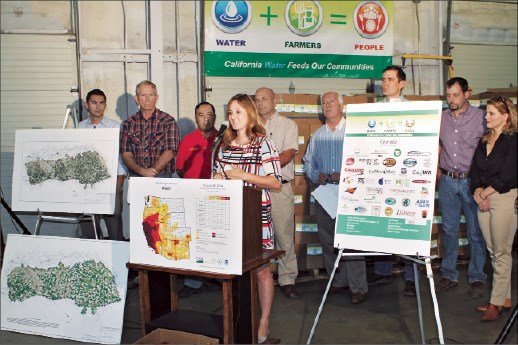
Central Valley farmers and businesses donated and shipped about 30 tons of fresh fruits, vegetables and nuts last week to help address food shortages at California food banks. A newly organized grassroots coalition, “California Water Feeds Our Communities,” was joined by the California Community Food Bank, Westlands Water District, the California Water Alliance and El Agua Es Asunto De Todos to bring valley-grown produce to those in need across the state.

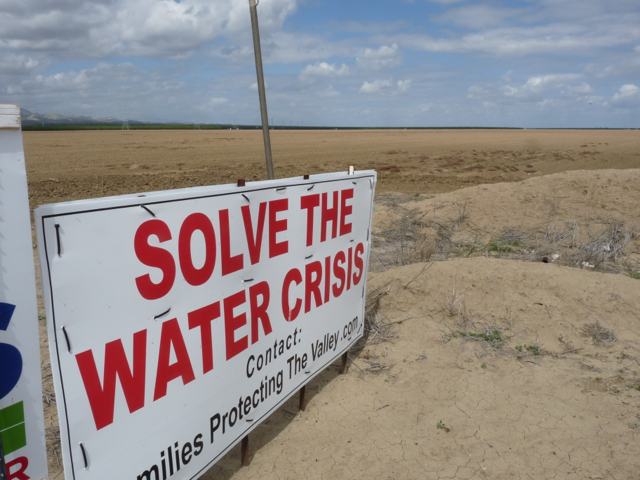
Fresno County farmer Bill Diedrich said the impact of fallowing hundreds of thousands of acres of irrigated cropland in the San Joaquin Valley this year translates into significant economic losses for the valley’s small farming communities.

“It’s the people—and the communities that depend on agricultural production—that are getting hurt,” Diedrich said at a news conference in Fresno to announce the donations. “For example, the schools are being hurt. If people are moving on, there’s no reimbursement for (school) attendance and the children of those families who’ve stayed are losing out. Besides the school districts, cities and counties also are being affected and their ability to help in this crisis is reduced.”

Diedrich said that when he drives through the valley’s small towns, he sees workers standing around idle, “because there’s so much fallowed ground there isn’t the normal demand for labor. We’re looking at a disaster and we’re hoping for regulatory relief,” noting that Congress will be considering drought-relief bills in coming weeks.

Kym Dildine with Fresno-based Community Food Bank said one in four people in Fresno, Kings, Madera, Kern and Tulare counties copes with food insecurity, a situation made worse by the ongoing drought.

Prior to the drought, she said the agency was serving about 220,000 people a month. With the drought, that number has increased by another 30,000 people a month in the five-county area.

“Every food bank we’ve spoken to is really grateful to be receiving an entire truckload of fresh produce grown right here in the valley,” she said. “Because less fruit is available, they’re having a harder time accessing it.”

To help address the problem, 15 trucks were loaded with boxes of fresh produce at Simonian Fruit Co. in Fowler before heading to food banks in Fresno, Merced, Bakersfield, Los Angeles, Watsonville, Salinas, Santa Maria, Oxnard, Riverside and San Diego.

“The food we grow here extends far and wide,” said Gayle Holman of the Westlands Water District. “In fact, most people don’t even realize the food they may be eating in other parts of the state, or across the United States, actually originates here.”

The Fresno County Farm Bureau, along with many valley farms and businesses, supported the food donation effort, as did irrigation districts and service groups such as the Girl Scouts of Central California-South and the Fresno Area Hispanic Chamber of Commerce, as well as California State University, Fresno.

Participants said the coalition hopes not only to bring attention to the impact of the drought and how far-reaching it is, but also to set the stage for future food donation drives as the crisis deepens during the winter. Diedrich said the effort also brings attention to the fact that an unreliable water supply jeopardizes everyone’s food security.

“The drought has impacted California’s food banks because they can no longer adapt to the spike in food prices resulting from a lack of water for farmers,” said Cannon Michael, president of Los Banos-based Bowles Farming Co. “This campaign has been launched to feed the needy and raise awareness about how the drought hurts the most vulnerable people in the state.”

Drought-related land fallowing brings “many unintended consequences,” Michael said.

“We hope raising awareness about the drought will bring all stakeholders together to find short- and long-term solutions,” he said.

Westside farmer Sarah Woolf said the coalition will continue to support food banks.

“This was just one small aspect of how we’re trying to help,” she said.

When the U.S. Bureau of Reclamation announced a zero water allocation for farm customers south of the Sacramento-San Joaquin Delta, Mendota Mayor Robert Silva said his community knew it was facing “a terrible situation.” But he said the city learned from the drought in 2009 and immediately began preparing.

“We got service agencies and utilities to come in and set up assistance programs right away,” Silva said. “We’ve added recreational opportunities for our youth to keep them busy and we’ve been finding ways to support our schools.”

In 2009, Silva said water shortages led to severe social problems such as domestic violence and higher school dropout rates that might have been eased with adequate social services. The unemployment rate in Mendota today is in the range of 35 percent, he said, compared to 50 percent at the same time in 2009.

“Unemployment is still high, but not as bad as we feared,” Silva said. “But we’re not out of danger yet. I understand it’s going to be a short growing season this year, harvest is nearly over, and that means more people will be unemployed for a longer time. We haven’t seen the worst yet.”

He said Mendota residents have been planning ahead and “trying to get the resources they’ll need to get by until they can go back to work next year,” and more agencies are prepared to help.

“But it’s going to be a long winter,” Silva said.


2016-05-31T19:33:26-07:00September 10th, 2014|

9/11 Memorial Plaza at California State Fairgrounds to open for September 11 anniversary

Source: CDFA

In observance of the September 11 attack of the World Trade Center in 2001, the 9/11 Memorial Plaza at the California State Fairgrounds at Cal Expo will open to the general public on September 11, 2014 from 8:00 a.m. – 6:00 p.m. The memorial honors the victims lost 13 years ago.

At 9:00 a.m., the Sacramento Young Marines will present colors at the Memorial, which is located inside the main gate near the Expo Center buildings. Admission and parking are free.

Central to the exhibit is a beautiful fountain including a granite ball inscribed with all of the names of the September 11 victims. There are also replicas of the World Trade Center buildings and memorials to American Airlines Flight 77–which crashed into the Pentagon–and United Airlines Flight 93, which crashed in a field in Pennsylvania.

Construction of the Cal Expo memorial began a year after the attack, when Cal Expo board member Larry Davis personally acquired and donated 125,000 pounds of wreckage from the World Trade Center. A massive I-beam extracted from Ground Zero was among the debris. Davis personally arranged for the wreckage to be shipped via rail to California. Through private donations to the California State Fair Memorial Plaza Foundation, the exhibit has been expanded to include additional elements.

2016-05-31T19:33:27-07:00September 9th, 2014|

Atwater High’s agriculture department getting national recognition

Source: Doane Yawger; The Merced Sun-Star

Atwater High School’s agriculture program is in the running to be named the top such endeavor in the nation.

By virtue of being named the top ag program in the state this year by the California Agricultural Teachers Association, the Atwater program was nominated for the national award and should be notified soon, Principal Alan Peterson said.

“They’re getting the recognition they deserve,” Peterson said. “They deserve it. They are a hardworking staff with a lot of motivated students.”

The national ag teachers association holds its annual conference Nov. 18 in Nashville, Tenn.

Dave Gossman, AHS agriculture department chairman, said at least half of the school’s 1,800 students have taken one or more agricultural courses. Last year it became the largest single high school ag program in the nation.

“We’re excited,” Gossman said. “We’ve got a supportive school, district, community and ag industry. The credit should go to all.”

There are five directions ag students can take. They can take pathways in agricultural mechanics, which includes welding, engines and woodworking. Or they can take agricultural science, ag biology and life science courses. Then there is floriculture; animal science and veterinary skills; and leadership and agribusiness, Gossman said.

Makala Navarro, a senior and an ag student, said she didn’t have many expectations when she took agriculture as a freshman.

“I was quiet and shy. I had no ag background,” Navarro said. “Through the past three-plus years, I have gained confidence and direction in life, and my goal is to enter a four-year university and major in agriculture education with the desire to be an agriculture teacher.

Natalie Borba, ag instructor, said the reason so many students get involved in agriculture education and Future Farmers of America is because it has personal value, it’s fun, and gets them participating in activities and events that extend beyond the classroom.

“For the parents and guardians, ag ed serves as a vehicle toward academic interest and success. For the community and ag industry, it keeps kids focused on something positive and provides a future pipeline of leaders and industry employment,” Borba said.

Gossman said if Atwater High is selected as the Region 1 winner of the State Outstanding Middle/Secondary School Agricultural Education Program Award, a teacher from its agriculture program will receive an expense-paid trip to attend the 2014 NAAE convention, where the program will be recognized during a general session. The Atwater program also received the top state award four years ago.

The Outstanding Middle/Secondary School Agricultural Education Program award is partially sponsored by Monsanto as a special project of the National FFA Foundation. Applicants are judged on teaching philosophy, effective classroom and experiential instruction, development of partnerships, and professional growth.

“The award and recognition is something we take pride in. However, it reflects the positive difference agricultural education makes on young people in terms of personal growth, academic success and career exploration,” Gossman said. “It is a proven education model that is for all kids. It provides value to both agriculture and non-agriculture-directed students.”

Gossman said the same success stories can be found in all high school agriculture programs throughout the state.

“It’s all about making a positive difference in the lives of young people,” Gossman said. “Ag ed is a great vehicle to accomplish this task.”

The National Association of Agricultural Educators, the professional organization in the United States for agricultural educators, provides its nearly 8,000 members with professional networking and development opportunities, professional liability coverage, and extensive awards and recognition programs.


2016-05-31T19:33:27-07:00September 9th, 2014|

Groundwater bills on the way to Governor

Source: Monterey County Farm Bureau News

Passage of three groundwater-regulation bills by the California Legislature-Assembly Bill 1739 and Senate Bills 1168 and 1319-threatens a number of negative consequences for family farmers, ranchers and other landowners, according to the California Farm Bureau Federation.

CFBF President Paul Wenger said Farm Bureau has always encouraged the proper management of groundwater, “but doing that job efficiently and effectively should have been a priority.”

“Instead,” Wenger said, “the Legislature took the ‘ready, fire, aim’ approach, rushing these bills through and creating a massive new regulatory program in the final days of the legislative session.”

Farmers, ranchers and other landowners in California will be left to pick up the pieces, Wenger said, dealing with the consequences of the legislation for years to come.

“The bills would allow for groundwater to be monopolized to the detriment of urban water users and farmers-including people who have not created an overdraft problem but who could need access to groundwater in the future,” he said. “The same agencies that have been hamstrung by conflicting missions and statutory mandates-including environmental restrictions of questionable value-will now control all water decisions.”

In addition, the bills reach beyond efforts to balance inflows and outflows of groundwater basins, creating requirements that will lead to confusion and litigation, Wenger said.

“Farm Bureau and other opponents have been able to take some of the edge off of this legislation. It now includes protections for water rights and other provisions that could lessen its detrimental impact. For that, we must thank those in the Capitol who helped rein in some of the proposals’ worst overreaches and the legislators, both Democrats and Republicans, who voted against the bills,” he said.

“But making this significant of a change in water law-arguably the most significant in more than 100 years-and doing so without the necessary deliberation, or even a policy hearing, shows how susceptible to flaws this legislation could prove to be,” he said, adding that Farm Bureau will ask Gov. Brown to veto it.

“True resolution to California groundwater problems will come through measures that this legislation does not address, such as a streamlined adjudication process and the recognition of groundwater recharge as a beneficial use of water,” Wenger concluded. “Most importantly, California must improve its surface water supplies. All the fees and fines in the world won’t heal our aquifers unless California builds additional storage and improves management of surface water in order to reduce demand on groundwater.”

2016-05-31T19:33:27-07:00September 5th, 2014|

Twin Tunnels Could Produce Friant Dry Year Water Woes

Source: Friant Waterline 

While “progress” on the Bay-Delta Conservation Plan’s ambitious and controversial twin tunnels planning continues to mostly be marked by delay, Friant Division contractors and the Friant Water Authority are looking long and hard at findings in troubling computer modeling.

Friant Water Authority directors were told at their August 28 meeting in Visalia that the twin tunnels proposal to bypass the fragile Delta not only lacks benefits for Friant users, it could actually make Friant’s future dry year water supply problems worse.

‘LOSING PROPOSITION’

“Computer modeling shows it is a losing proposition with less water supply reliability to Friant, particularly in dry years,” said Ronald D. Jacobsma, FWA General Manager.

The FWA and its member districts have been evaluating the state’s twin tunnels plan to determine if Friant users would benefit from the two tunnels’ development. That includes San Joaquin River Exchange Contractor water, Cross Valley Canal water and San Joaquin River Restoration Program recirculation in addition to assumptions as to allocation of costs amongst water contractors.

All of this is crucial in Friant’s BDCP consideration because the tunnels, expected to cost many billions of dollars, are to be financed on a “beneficiary-pays” basis. Jacobsma said project proponents have indicated Friant’s share could be about $3 billion.

“The current process has lots of uncertainty,” Jacobsma said. “The bottom line is they won’t be starting construction any time soon on those twin tunnels.”

MORE DELAY

Delay, in fact, popped up again in late August when the California Department of Water Resources indicated that the BDCP needs more work as a result of the massive volume of public comments received on a draft environmental impact report.

Nancy Vogel, DWR spokeswoman, told the Sacramento Bee, “We’re going through it and we’re going to revise and send it back out for public review. We continue to look for ways to reduce the impacts to Delta residents and landowners.”

With a revised BDCP now scheduled to be released early next year, the newest delay is certain to consume several months. The plan has been seven years in the making.

The entire program’s cost is estimated at $25 billion. The BDCP is not to be funded through the pending state water bonds, should Proposition 1 be approved by voters. The Legislature intentionally kept the bond “Delta neutral” because of controversy surrounding the BDCP and twin tunnels.

The tunnels would be an isolated water conveyance system under the Delta between Courtland and state and federal water export pumping plants near Byron, northwest of Tracy.

EPA CONCERN

Meanwhile, a new wrinkle in the twin-tunnels plan popped up August 28 when the U.S. Environmental Protection Agency suggested the project could violate the Clean Water Act and increase harm to endangered species. EPA said the project could increase Delta concentrations of salinity, mercury, bromide, chloride, selenium and pesticides.

2016-05-31T19:33:27-07:00September 5th, 2014|

DPR Scientists Say Most Fresh California Produce Tested Has Little/No Detectable Pesticide Residues

The California Department of Pesticide Regulation (DPR) announced that once again, the majority of produce it tested annually had little or no detectable pesticide residues and posed no health risk to the public. 95 percent of all California-grown produce, sampled by DPR in 2013, was in compliance with the allowable limits.

“This is a vivid example that California fresh produce is among the safest in the world, when it comes to pesticide exposure,” said DPR Director Brian R. Leahy. “DPR’s scientifically robust monitoring program is an indication that a strong pesticide regulatory program and dedicated growers can deliver produce that consumers can have confidence in.”

DPR tested 3,483 samples of different fruits and vegetables sold in farmers markets, wholesale and retail outlets, and distribution centers statewide. More than 155 different fruits and vegetables were sampled to reflect the dietary needs of California’s diverse population.

Of all 3,483 samples collected in 2013:

  • 43.53 percent of the samples had no pesticide residues detected.
  • 51.51 percent of the samples had residues that were within the legal tolerance levels.
  • 3.99 percent of the samples had illegal residues of pesticides not approved for use on the commodities tested.
  • 0.98 percent of the samples had illegal pesticide residues in excess of established tolerances. A produce item with an illegal residue level does not necessarily indicate a health hazard.

Each piece of fruit or vegetable may legally contain trace amounts of one or more pesticides. The amount and type of pesticide (known as a tolerance), is limited by the U.S. Environmental Protection Agency. DPR’s Residue Monitoring Program staff carries out random inspections to verify that these limits are not exceeded.

The produce is tested in laboratories using state-of-the-art equipment operated by California Department of Food and Agriculture (CDFA). In 2013, these scientists frequently detected illegal pesticide residues on produce including:

  • Cactus Pads from Mexico,
  • Ginger from China,
  • Snow Peas from Guatemala and
  • Spinach from the US

Most of the 2013 illegal pesticide residues were found in produce imported from other countries and contained very low levels (a fraction of a part per million). The majority of the time they did not pose a health risk.

One exception occurred in 2013 when DPR discovered Cactus pads, imported from Mexico, that were tainted with an organophosphate-based pesticide. This had the potential to sicken people. DPR worked with the CA. Dept. of Public Health to issue an alert to consumers in February 2014. DPR also worked diligently to remove the entire product it from store shelves and distribution centers. In addition, DPR asked the US Food and Drug Administration to inspect produce at the borders and points of entry to stop shipments into California.

California has been analyzing produce for pesticide residues since 1926 and has developed the most extensive pesticide residue testing program of its kind in the nation. The 2013 pesticide residue monitoring data and previous years are posted at: http://www.cdpr.ca.gov/docs/enforce/residue/rsmonmnu.htm

2016-05-31T19:33:27-07:00September 4th, 2014|
Go to Top