Ag Major Scholarships


It Pays to be an Ag Major: Friends of Dixon May Fair Awards $12,500 in Scholarships

Seven Solano County residents majoring in agriculture will receive some financial relief when they head for their college campuses this fall, thanks to a combined total of $12,500 awarded them in college scholarships from the Friends of the Dixon May Fair.

Dixon Winners

Olivia Ramirez of Dixon is the 2015 recipient of the Ester Armstrong Memorial Scholarship from Friends of the Dixon May Fair. With her are Donnie Huffman (far left) of Vacaville, president of the Friends; Tom Armstrong of Rocklin, husband of the late Ester Armstrong, former interim chief administrative officer of the Dixon May Fair; and JoAnn Giannoni of Dixon, scholarship chair. (Photo by Kathy Keatley Garvey)It Pays to be an Ag Major: Friends of Dixon May Fair Awards $12,500 in Scholarships

The seven include four from Dixon; two from Vacaville, and one from Rio Vista. Most are current or former members of the 4-H youth development program. Over the last 15 years, the Friends of the Dixon May Fair, headed by Donnie Huffman of Vacaville, has awarded a total of $154,500 in college scholarships to Solano students majoring in an agricultural-related field in a California university or community college.

Olivia Ramirez of Dixon, a 2015 graduate of Dixon High School headed for California State University, Chico, received the Ester Armstrong Memorial Scholarship of $3000. Her career goal is to become a veterinarian. The award memorializes fair industry veteran Ester Armstrong of Rockville, a former director of the California Division of Fairs and Expositions who served as interim chief executive officer of the Dixon May Fair from 2006-2009. She died in May 2009 of cancer.

Jordan Dosker

Jordan Dosker of Vacaville received a $2000 scholarship from the Friend of the Dixon May Fair.

Jordan Dosker of Vacaville, a third-year student at California Polytechnic University (Cal Poly), San Luis Obispo, received $2000. A 2012 graduate of Vacaville High School, she plans to become a veterinarian. This is the third year she has received a Friends of the Dixon May Fair award.

Marla Kogler of Rio Vista, a third-year student at California State University, Chico, received a $2000 scholarship.  A 2013 graduate of Rio Vista High School, she plans to become an agriculture teacher and FFA advisor. This is the third year she has received a Friends’ scholarship.

Jillian Raycraft, of Dixon, a 2015 graduate of Dixon High School, received a $2000 scholarship. She will attend Cal Poly, majoring in ag business.

Lyle Glass of Vacaville, a 2015 graduate of Vacaville High School, received the $1500 Jack Hopkins Scholarship award, memorializing  a longtime Dixon resident and supporter of the Dixon May Fair. Glass will attend Woodland Community College and plans to pursue a degree in agribusiness management.

Kyle Garlick of Dixon, a second-year student at Butte Community College, received a $1000 award. A 2012 graduate of Dixon High School, he is pursuing a career in agribusiness management. This is the second year he has received a scholarship.

Nicole Talken of Dixon, a 2015 graduate of Dixon High School, received $2000. She is currently attending Sacramento City College with plans to transfer to UC Davis as a junior. She plans to become a veterinarian.

The Friends, an all-volunteer organization raises funds by selling beverages at the Dixon May Fair. They use the proceeds for building and grounds improvements on the fairgrounds, exhibitor and special event awards, and college scholarships.

Only Solano County residents planning a career in agriculture and accepted into a California college, are eligible to apply, said JoAnn Giannoni of Dixon, the scholarship chair. Applicants have graduated from a Solano County high school and must be enrolled in or accepted for enrollment in either a four-year or two-year college.  They must major in an agricultural-related field, which can encompass dozens of majors, including agricultural business, forestry, pomology, nematology, plant pathology, viticulture, wildlife and fisheries biology, and child, family and consumer science.

Recipients are selected on their personal, civic and academic experience, academic standing, personal commitment and goals, leadership potential, civic accomplishments, and agricultural interests. Desired but not mandatory is 4-H, FFA or Grange experience.

All applicants must submit a personal statement of no more than two typed pages, explaining “why they are pursuing their desired career and what they hope to accomplish,” Giannoni said.  The rules are at http://www.friendsofthefair.org/.  Applications are generally due March 1.

The scholarship committee is comprised of Giannoni; Tootie Huffman, treasurer of the Friends; Vacaville veterinarian John Howard, who received his degree from UC Davis; and Kathy Keatley Garvey of Vacaville and Carrie Hamel of Dixon, both of UC Davis.

Capsule information on the recipients:

Olivia Ramirez was active in 4-H and FFA and also played basketball, water polo, volleyball, powderpuff football and softball in Dixon. “My plan is to go to Chico State for four years and get my bachelor of science degree in animal science, and then apply to the UC Davis Vet School to become a large animal veterinarian,” she said.  Ramirez said she intends to start a veterinary practice and also start a program that helps troubled youth of her community “learn the importance of farming, caring for animals.”  She remembers saving “every dollar from babysitting, allowance, birthday money, anything I could save” to buy a horse” when she was in middle school. She’s also raised swine and sheep and exhibited them at the Dixon May Fair.

Jordan Dosker says her ultimate goal is to become a veterinarian “and to work with either large or exotic animals.”  She didn’t grow up around animals but interned at the Sacramento Zoo. Dosker said she’d like to help people care for animals both in the United States and in third-world countries. “From Solano County to sub-Saharan Africa, I want to make an impact on people’s understanding of agriculture by taking my education on medicine and animal management and sharing it with numerous communities.”

Maria Kogler was active in the Rio Vista 4-H Club, showing market goats, and later joined the Rio Vista FFA. Both “created many opportunities for me to share my passion for agriculture with so many people,” she said. Her desire to teach is fueled by her passion for agriculture. “I want to create the same opportunities for future studenets that I was offered,” Kogler said.

Lyle Glass grew up on a 10-acre farm and continues to be active in 4-H. He served as a Solano County 4-H Ambassador, the highest 4-H rank in the county and then was named a California State Ambassador, the highest 4-H rank in the state. He seeks a career in agribusiness. “I love agriculture because of my extensive involvement in the industry,” eh said. “Also I enjoy working with people. I like to feel like I am a positive influence on people and can inspire greatness in them. I want to see people fulfill their full potential and I credit that to all the people who wanted to see me do the same.”

Of 4-H, Glass said it has morphed him into “who I am today, however, it was also the things I learned and achieved in the organization that helped make me who I am today. I was in an environment that helped me learn more about myself and what I love to do. I had a unique experience in my life that set me up for success.”

Kyle Garlick, a former 4-H’er, recalls his family moving to the country when he was in the second grade. “This was the beginning of my love for agriculture,” he said.  He credits Rhonda Rayn, a Dixon 4-H leader and former coordinator of the Dixon May Fair Junior Horse Show, with getting him involved in agriculture.  He later joined the Dixon FFA.  Garlick served as a foreign exchange student  in Argentina and attended a dairy school half of the day. “I had the opportunity to work in the dairy plant learning how to make yogurt, milk and cheese,”  he said. After graduating from Butte Community College, he plans to obtain his bachelor’s degree in ag business from Chico State and a “pursue a career with a company or agency specializing in agriculture.”

Nicole Talken, who plans to become a veterinarian, was active in both 4-H and FFA, and is presently involved in breeding and raising grand-champion rabbits. Her projects have included market goats, market lambs, market swine, dairy goats, horses, dogs, rabbits, poultry, photography, art work, taxidermy and ag mechanics. A second-year student at  Sacramento City College, she plans to transfer to UC Davis her junior year. She is majoring in animal science and management and minoring in animal nutrition and American sign language. Talken, a cancer survivor, was diagnosed with a rare cancer at age six. Her motto is “Never give up.” Said Talken: ‘Cancer opened my eyes to the world around me and I grew up wise beyond my years.:

Jillian Raycraft, raised in Dixon on a small farm, says that “agriculture has come to have most of my heart. She has fond memories of “sitting on my father’s lab, driving tractor and standing next to him trying to start an irrigation siphon with all my seven-year-old body’s might.” Raycraft was heavily involved in FFA and “raising animals and farming my own four acres of field corn and oat hay seasonally.” That further sparked her interest in pursing a career in agricultural business, which “permits me to combine the passion that I already encompass for agriculture with my willingness and dedication to further my knowledge and advocacy in this field.”  Already sparking much of her interest “are the ideas of seed distribution and agricultural lobbying.”
2016-05-31T19:28:09-07:00July 28th, 2015|

California Safe Soil Honored

California Safe Soil Honored By Forbes Reinventing America

By Patrick Cavanaugh, Associate Editor, California Ag Today

At the recent invitation-only Forbes Ag Tech Summit “Reinventing America: The AgTech Summit” in Salinas, California Safe Soil (CSS) was awarded the Thrive Accelerator Sustainability Award. The Thrive Accelerator program is a highly selective mentorship and investment program for technology-enabled startups in precision agriculture.

Mark Bauer, California Safe Soil

Mark Bauer, California Safe Soil

Mark Bauer, director of business development for CSS said, “Forbes just started this process over a year ago when they interviewed over 100 companies throughout the world. About three months ago they notified us we were among the top ten finalists, and today we found out we won the Sustainability Award! So we are extremely pleased and quite honored to receive that award, ” said Bauer.

California Safe Soil, based in West Sacramento, is a fresh food recycler that increases a farm’s productivity at a low cost, while helping to improve the environment. The company converts food that supermarkets cannot sell or donate into its Harvest to Harvest (H2H) fertilizer which promotes sustainable agriculture by returning nutrients to the soil and increasing plant vigor and crop yield.

“We think it is really important to find sustainable solutions in agriculture today,” Bauer explained. “We have partnered with Save Mart Supermarkets because Save Mart recognized the value of our process. We take all of the organic food waste that Save Mart can’t sell or donate, interrupt that trip to the landfill, and we put it through a three-hour enzymatic-digestion process that takes all the available food energy and forms it into small particles that growers apply to the roots of their crops through their existing drip lines.”

Bauer noted, “We are seeing terrific response in a number of crops, especially with strawberries, raspberries and processing tomatoes. We are growing thousands of acres of almond trees right now and seeing great results. We’ve been working in the areas of leafy greens as well growing broccoli, cabbage and lettuce crops,” he said.

California Safe Soil (CSS)

California Safe Soil (CSS)

“The H2H material moves with the irrigation water through the drip or micro-sprinklers and supercharges the soil microbes,” Bauer explained. “After it goes through our process, the H2H material is composed amino acids, fatty acids and simple sugars–not what plants eat, but what soil biology needs. H2H is the food for the microbiology of the soil; it makes the micronutrients and macronutrients in the soil more available to the plant,” he said.

CSS’s unique full-cycle process assists supermarket customers in recycling their organics, improving store hygiene, and reducing costs. In addition, H2H is a safe, low-cost, high-volume and high-quality liquid fertilizer that helps agricultural customers save money, increase crop yield, and reduce nitrate runoff. These benefits deliver improved quality in air, water, and soil environments, while employing safe, efficient, and effective solutions.

2016-05-31T19:28:09-07:00July 27th, 2015|

False Data Abounds

California Drought Information Game:

False Data Out-Markets Ag

By Laurie Greene, Editor and Producer


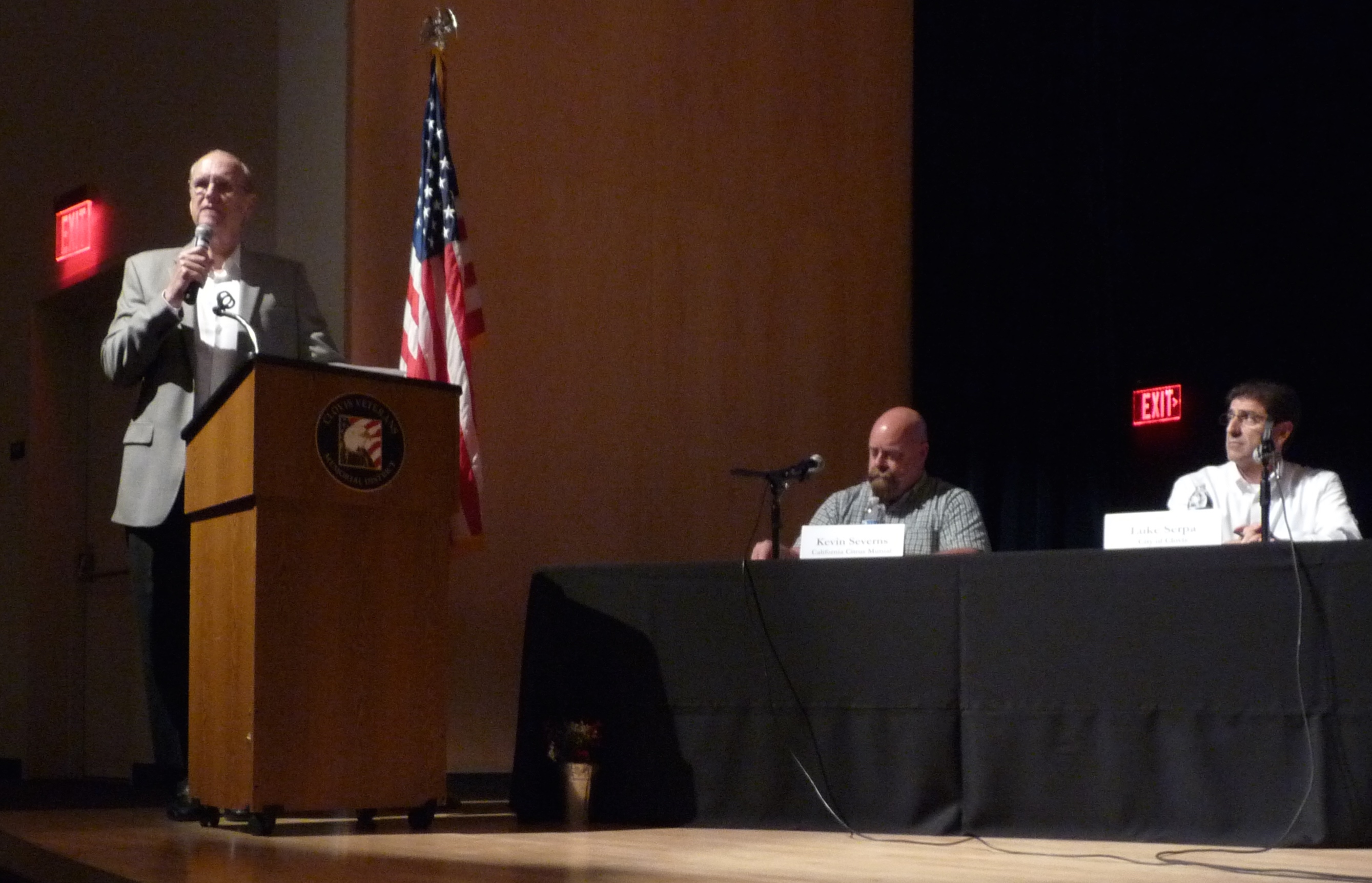
At “The Truth About the Drought” forum, organized by Assemblymember Jim Patterson recently in Clovis, CA, moderator John Broeske, executive director of Families Protecting The Valley, said he thinks Ag is doing really badly on the information game.

“I think that we are getting out-marketed in messaging in the state of California,” said Broeske. “I think a lot of the people in the Central Valley know things that the people in Southern California and in the Bay Area, don’t know.”

Broeske continued, “I don’t blame those people for not knowing because they’re being told over and over again about the ‘80% number’ for Ag water use; and the ‘2%’ Ag contributes to the economy’. These are not real numbers, but people hear them repeatedly, so it’s not hard to understand they believe it.”

“I think the environmentalists want people to believe the 80% figure,” Broeske stated, “because it’s a lot easier to demand water from us if it appears we are using it all. But we’re not, and it’s hard for us to get the message out that these numbers aren’t true.”

Broeske did not know the best way to get the message out, but said he tries to correct people when they get it wrong. He suggested correcting online articles in the comment section to empower more people with the right numbers as ammunition for when they get into conversations. “You’ve got to fight back; if you let people use these false numbers over and over again, nothing is ever going to change.”

As false data out-markets ag in messaging, Broeske said water usage accountability is unequivalent. “Farmers are getting blasted for raising almonds and using too many gallons per almond,” said Broeske. “But, there’s no article about how many gallons it takes to raise a smelt. How many acre-feet for salmon? How many is too many? I think those questions have to be asked.”

“California is spending four million dollars of water per salmon!” Broeske declared. “Should there be some accountability there? How much water are we going to spend on one salmon? At least we get almonds at the end of the farming process. That’s what accountability means; we’ve got to create some rules about how much water is too much to save one fish.”

“I think the only way the public can demand accountability from the government and the scientists is to win elections,” he conjectured. “We are not winning the marketing war on these water usage numbers, so voters keep electing the same people who tell them the wrong numbers, and there’s nothing we can do if they keep getting elected. It’s a tough battle.”

“We are outnumbered,” Broeske said, “and I don’t know how we can overcome their marketing. They’re not even buying marketing, like billboards or advertising—just newspaper articles and news stories they are quoted in—so their marketing costs them nothing.”

“For us to win the market,” Broeske concluded, “we have to buy billboards and ads, and have enough money to do so.”

2016-09-13T14:11:41-07:00July 16th, 2015|

Manufacturing Consortium

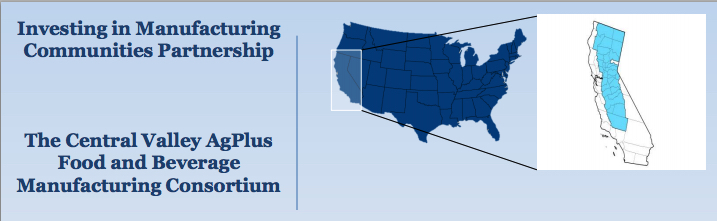
U.S. Secretary of Commerce Penny Pritzker announced late last week that The Central Valley AgPlus Food and Beverage Manufacturing Consortium, led by Fresno State, was one of 12 new communities designated this year under the Obama Administration’s Investing in Manufacturing Communities Partnership (IMCP) initiative. IMCP was designed to accelerate the resurgence of manufacturing in communities nationwide by supporting the development of long-term economic development strategies.

Consortium members represent major Central Valley public and private institutions from the education, business, economic and workforce development and civic sectors joining forces to foster the growth and creation of food and beverage businesses and middle-skills manufacturing jobs in the Central Valley.

“An IMCP designation is an important signal to potential investors that these communities are a good place to spend their money, and this is smart government at work,” Pritzker said. “By breaking down silos and encouraging communities to take a more thoughtful, comprehensive approach to their strategic plans, we are ensuring that precious federal dollars are used on the most high impact projects and in a way that maximizes return on investment.”

The new communities were selected by an interagency panel based on the strength of their economic development plans, the potential for impact in their communities and the depths of their partnerships across the public and private sectors to carry out their plans.

Consortium members worked together to identify a sector of manufacturing where their community has a comparative advantage and drafted a strategic plan that addresses workforce and supply chain challenges; infrastructure; research and innovation; trade and investment; capital access; and operational improvement for manufacturing companies.US EDA Logo

The 12 designated manufacturing communities will receive:

  • coordinated support for their strategies from 11 federal agencies with more than $1 billion available in federal economic development assistance.
  • a dedicated federal liaison who will help them navigate available federal resources.
  • recognition on a government website, accessible to prospective private foreign and domestic investors, looking for information on communities’ competitive attributes.

Mike Dozier, director of Fresno State’s Office of Community and Economic Development, the lead office for the project, said the opportunity and challenge facing the Central Valley is to claim more value from agricultural production through the food processing industry, along with its supply and distribution chains.

“California’s food system is the largest agricultural economy in the U.S. and among the top 10 globally,” Dozier said in the application. “It produced nearly $105 billion in economic output in 2012, and it was responsible for over 198,000 jobs tied directly to manufacturing.”

With 28 counties located in California’s heartland, the Central Valley plays a dominant role in this economy as America’s “Farm to Fork Capital.”

“Production agriculture has been the Central Valley’s mainstay and competitive advantage, fueling growth in the food manufacturing sector as those industries are part of a highly integrated supply chain,” he said.

The AgPlus implementation strategy will build upon the Central Valley’s unique asset base, committed partnerships and networks to:

  • capture more value-added cluster manufacturing and supply chain activity within the region, including to meet new demand and for local specialty products such as through the Farm to Fork efforts;
  • provide the workforce with the needed skills through successful career pathways models;
  • accelerate the development and adoption of innovative technologies so the Central Valley’s food and beverage manufacturing industry is the most efficient, safe, healthy, viable and sustainable national and global center of innovation for next-generation processing and supply chains;
  • facilitate the transformation of the industry to adapt to the short- and long-term impacts of drought and climate change; and
  • strengthen business operations and access to capital.

Consortium members are: 

Higher Education: Fresno State; California State University, Chico; University of California, Davis; Central/Mother Lode Regional Consortium; Fresno State’s Water, Energy and Technology Center; Los Rios Community College District; NextEd; and UC Merced Small Business Development Center.

Government Entity: Tuolumne County Economic Development Authority; City of Avenal; City of Fresno; City of Winters; and Sacramento Area Council of Governments.

Nonprofit: Valley Vision; Center for Land-Based Learning; Fresno Community Development Financial Institution; Northern California World Trade Center; Sacramento Employment and Training Agency; Sacramento Metropolitan Chamber of Commerce; and Solano Economic Development Corporation.

Private Sector: AgTech Innovation Fund; CalAsian Pacific Chamber of Commerce; Davis Chamber of Commerce; JBT FoodTech; and PackageOne, Inc.

For more information, contact Mike Dozier at 559.278.0727 or mdozier@csufresno.edu.


2016-05-31T19:28:10-07:00July 16th, 2015|

Viticulturist Mark Greenspan Confirmed as ASEV President

Announced TODAY, Mark Greenspan, president of Advanced Viticulture Inc., has been confirmed to serve as the American Society for Enology and Viticulture (ASEV) 2015-2016 president. Greenspan succeeds Lise Asimont of Francis Ford Coppola Presents to lead ASEV’s 12-member board.

mark greenspan

Mark Greenspan, president of American Society for Enology and Viticulture

“Throughout my career, ASEV has been the go-to source for reliable, thoughtful research and science that has been critical to my success and that of my vineyard clients. It’s a real honor to serve as the Society’s new president and to hopefully carry on the impressive work of Lise and the other dedicated ASEV past presidents,” said the new ASEV president. 

Greenspan, a Sonoma County resident, provides premiere vineyard consultation in water management, nutrient management, precision viticulture and vineyard design, establishment and management. He has operated Advanced Viticulture for over 10 years. Previously, he was the viticulture research manager at E&J Gallo, responsible for viticulture experiments in the north coast vineyards and collaborative projects throughout the state of California. He is a monthly contributor to Wine Business Monthly and periodic contributor to other trade publications. He presents at local, national and international events, and is a certified crop advisor (CCA) and certified professional agronomist (CPAg). Mark has served on review panels for the American Vineyard Foundation and Viticulture Consortium – West and Viticulture Consortium – East. He is a member of Sonoma and Napa Viticulture Technical Groups, Sonoma County Farm Bureau and Napa Valley Grape Growers Association. He’s a former director of the UC Davis Trellis Alliance and sponsor of the Sonoma County Winegrape Commission.

As an active 25-year ASEV member, Mark has held several ASEV positions and served as a reviewer for the American Journal of Enology and Viticulture (AJEV). He has served on the best paper review committee, annual meeting technical abstract review committee, annual meeting program committee, and as sessions chair. He received the ASEV Best Viticulture Student Paper Award in 1991. 

ASEV has also confirmed two new directors: Patty Skinkis, associate professor at the Department of Horticulture at Oregon State University, and Hans Walter-Peterson, viticulture extension specialist at Cornell Cooperative Extension. In addition, the Society has announced its 2015-2016 executive team members: Nichola Hall of Scott Laboratories, confirmed as first vice president; James Harbertson of Washington State University, elected as second vice president; and Tom Collins of Washington State University will serve as secretary-treasurer. Additional Board members continuing current terms are: AJEV Science Editor Linda Bisson and Technical Program Director M. Andrew Walker, both of the University of California, Davis; and Directors Lise Asimont of Francis Ford Coppola Presents, Kristen Barnshisel of J. Lohr Vineyards & Wines, and Kay Bogart and Anita Oberholster, both from the University of California, Davis.

Formed in 1950 as a professional society dedicated to the interests of enologists, viticulturists and others in the fields of wine and grape research and production, the ASEV’s membership of more than 2,000 includes professionals from wineries, vineyards, and academic institutions and organizations around the world.  In addition to publishing the AJEV, the Society also hosts its National Conference (slated for Monterey in June of 2016) and co-presents the Unified Wine & Grape Symposium in January with the California Association for Winegrape Growers. For more information, visit www.asev.org.

2016-05-31T19:28:10-07:00July 16th, 2015|

UC ANR Horticulture Advisor Retires After 28 Years

John Kabashima wrapped up his horticultural career on July 1, after 28 years with University of California Agriculture and Natural Resources. Nursery professionals lauded the UC Cooperative Extension advisor’s service to the nursery and landscape industry and to homeowners in Orange and Los Angeles counties.

“He’s one of the few people who could translate science into business with a sense of candor and fact-based conversation,” said Robert Crudup, president of Calabasas-based Valley Crest Tree Company, of Kabashima.” John has long-term vision, which he used throughout his career to move the nursery industry forward.”

John Kabashima

John Kabashima, UC ANR

“He is smart about political science as well as plant science,” Crudup said. On a regular basis, Kabashima would warn growers about emerging issues that were likely to affect the nursery industry, such as regulations to control the spread of polyphagous shot hole borer, red imported fire ant and palm borer.

“He’s been very, very valuable,” said retired nurseryman Gary Hayakawa, noting that Kabashima not only contributed research on pest control and water issues for the nursery and landscape industries, but also persuaded people from UC campuses, the California Department Food and Agriculture and industry to work together. “Before he was involved in issues, the work was all separate. Industry didn’t have input,” Hayakawa said. “What John has done is to work with all three to form a coalition.”

Crudup, whose company has nursery operations in Los Angeles, Ventura, Alameda and San Joaquin counties, agreed.

“John’s biggest contribution was his work with the glassy-winged sharpshooter subcommittee,” said Crudup, who served on the subcommittee. “He brought a voice of reason that helped counterbalance emotional sides of the discussion.”

“His ability to act as the primary liaison between the nursery industry, CDFA, the UC, the county agricultural departments and the wine and grape industries was the primary reason this part of the GWSS (glassy-winged sharpshooter)  program was so successful and, more importantly has resulted in the continued viability of the California nursery industry in light of significant regulatory pressures,” said Bob Wynn, who was statewide coordinator of the CDFA Pierce’s Disease Control  Program and who  continues to oversee the program as senior advisor to Secretary Karen Ross.

“The CDFA, with advisement and counseling from John, developed what is known as the Approved Nursery Treatment Program, which allows nurseries in the infested areas of the state to ship by merely treating the plants with an approved treatment,” Wynn said.  “John was the primary author in the development of the nursery ‘Approved Treatment Best Management Practices’ document published in 2008. The use of this document has allowed the nursery industry to save millions of dollars in regulatory compliance costs over time.”

A native of Los Angeles, Kabashima says he started working in his family’s nursery business as soon as he was tall enough to water 1-gallon nursery plants.  “After killing thousands of plants, I was finally allowed to manage the family business from 1970 to 1976,” he quipped.

In 1976, his family sold the nursery and Kabashima enrolled at California Polytechnic University, Pomona. After he  earned a B.S. in agricultural biology from Cal Poly Pomona in 1979, he was hired by UC Riverside horticulture entomologist Pat Morishita as a lab technician. While working at UC Riverside, Kabashima earned a  master’s degree in pest management. He would later complete a Ph.D. in entomology at UC Riverside.

Kabashima earned his MBA at Pepperdine University in 1986 while managing the Ornamental Horticulture Division at Target Specialty Products. In 1987, the UC Division of Agriculture and Natural Resources recruited him to become a UC Cooperative Extension environmental horticulture advisor in Orange and Los Angeles counties.

Over the years, he has studied the management of insects, diseases and weeds in horticulture production systems, biological control of exotic pests, and water-related problems in landscapes, golf courses, nurseries, municipalities and watersheds.

In 1998 Kabashima took over the fledgling UC Master Gardener Program in Orange County, which as of now has trained more than 300 UC Master Gardener volunteers to extend research-based information on gardening and horticulture to the public.

The UCCE environmental horticulture advisor has also served as director of UC Cooperative Extension in Orange County and interim director of the UC ANR South Coast Research and Extension Center.

In 1994, when Orange County filed for bankruptcy and the Board of Supervisors voted to discontinue funding and housing for the local UC Cooperative Extension, Kabashima worked with Gary Hayakawa to keep UCCE in the county.

“When Orange County cut Cooperative Extension’s budget, we found out that without extension you don’t have 4-H or Master Gardeners,” Hayakawa said. To preserve the UC Cooperative Extension programs, Hayakawa, who was an Orange County Fair Board member, helped Kabashima  secure office space in trailers on the fairgrounds. In 2014, the UCCE office moved from the fairgrounds to UC ANR South Coast Research and Extension Center in Irvine.

Kabashima belongs to many professional organizations including the Entomological Society of America, California Association of Nurseries and Garden Centers, Nursery Growers Association, Western Chapter of the International Society of Arboriculture, United Agribusiness League, and San Diego Flower and Plant Association. The scientist has served on numerous government and industry advisory committees.

Throughout his career, Kabashima’s achievements in education and research have been recognized by various organizations. To name a few, he received the 1987 Education and Research Award from the Orange County Chapter of the California Association of Nurseries and Garden Centers (CANGC), 1993 CANERS Research Award from CANGC, 2002 Nursery Extension Agent Award from the American Nursery and Landscape Association, 2008 Western Extension Directors Award of Excellence, 2010 Entomological Society of America’s National IPM Team Award and the 2011 California Agriculture Pest Control Advisors Association Outstanding Contribution to Agriculture Award. In 2014, he and his friend Hayakawa were inducted into the Green Industry Hall of Fame.

Being a UCCE advisor has suited Kabashima. “I love learning new things, sharing that information with others, and using my skills to solve problems facing California, such as the ever-increasing arrivals of exotic and invasive pests,” he said. The avid photographer has been able to unite his avocation with his vocation. His photographs of insects have been used to illustrate textbooks, websites and news articles.

“Success in one’s field is often a combination of natural ability, informal and formal training and education, being mentored, and networking with collaborators and colleagues, all sprinkled with a little bit of luck and support from one’s family and friends,” Kabashima said.

In retirement, Kabashima plans to seek new culinary experiences with his wife Janet and daughter Misa, at  home and in their travels together. He has been granted emeritus status by UC ANR and he will continue his efforts to help UC Irvine save trees on its campus that are infested with polyphagous shot hole borer.

UC Agriculture and Natural Resources researchers and educators draw on local expertise to conduct agricultural, environmental, economic, youth development and nutrition research that helps California thrive. Learn more at ucanr.edu.

2016-05-31T19:28:11-07:00July 12th, 2015|

Happy Fourth to All

Our Third President on This Fourth of July

On this Fourth of July, it’s fitting to focus on Thomas Jefferson, the nation’s Agrarian President and signer of the Declaration of Independence 239 years ago.

Yes, our third President was Thomas Jefferson an agronomist, an educated man of the land. So, unique in his time, he believed in proper land stewardship for posterity.

Jefferson understood that humanity affected the environment, so he practiced crop rotation with an extensive seven-year plan, using wheat, turnips, corn, potatoes, peas, rye and clover, buckwheat, and livestock grazing.

He tested to determine the exact number of cattle required to fertilize a given area of land and compared grain yields on manure vs. unfertilized fields.

“Agriculture … is our wisest pursuit, because it will

in the end contribute most to real wealth, good

morals & happiness.”


Jefferson developed scientific plowing of “least resistance,” which lifted and turned the sod to a depth of about six inches, enabling farmers to contour-ridge erodible fields, plow out shallow ditches, and ridge poorly drained flat lands.

He terraced his vegetable garden, orchard, and vineyard sites, and planted native ground cover to stop erosion.

He conserved timber by not cutting trees for any purpose as long as cut wood was available.

As U.S. envoy to France, he sent seeds of various grasses, fruits and vegetables, acorns, olive plants to agricultural societies, farmers, and botanists back home.

He brought Italian rice to South Carolina, pecan trees to the eastern United States and was first to introduce Brussels sprouts, eggplant, cauliflower, and broccoli.

He encouraged agricultural societies, agricultural education and university-level research.

Jefferson kept extensive farm journals for nearly six decades on the 170 varieties of fruits and 330 different kinds of vegetables he cultivated, and on his experiments with viticulture and beer brewing.

Another July 4th notation

Presidents John Adams (who lived to 90 years old) and Thomas Jefferson (who lived to 82) both died on the same day July 4 1826, 50 years to the day of the signing of the signing of the Declaration of Independence.


Quote from © 2015 Thomas Jefferson Foundation

2016-05-31T19:28:12-07:00July 4th, 2015|

Ag Leader Paul Martin Inducted into Sonoma County Farm Bureau Hall of Fame

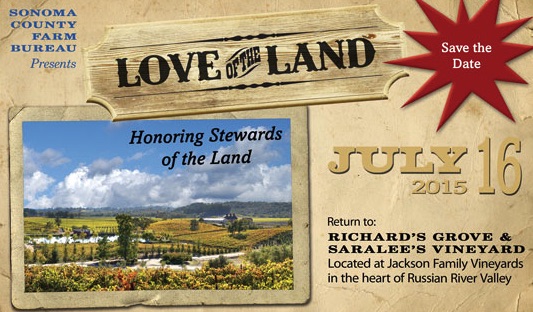
Paul Martin, a Petaluma rancher and agricultural leader who has dedicated his life to building bridges between farmers and regulatory agencies, will be honored at Sonoma County Farm Bureau’s “Love of the Land” celebration on July 16 at Richard’s Grove and Saralee’s Vineyard in Windsor, Calif.

Paul_Martin

Paul Martin (Sonoma County Farm Bureau)

Martin’s remarkable agricultural legacy has earned him a prominent place in Sonoma County Farm Bureau’s Hall of Fame. The annual award recognizes agricultural leaders who are a guiding force in preserving, protecting and propelling Sonoma County’s $4 billion farming industry. Martin joins legendary leaders in the Hall of Fame, like the late Saralee McClelland Kunde, who was the Saralee of Richard’s Grove and Saralee’s Vineyard; Gene Benedetti, who was founder of Clover Stornetta Farms; and Larry Bertolini, who was founder and president of Western Farm Center.

Martin is a former dairy rancher who had a second career as a representative for the dairy and agriculture industries. After selling his cows in the late 1990’s, Martin started working as field representative for Western United Dairymen, utilizing his knowledge of the dairy industry and his excellent communication skills to represent milk producers. After retiring from Western United Dairymen in 2012, he served a two-year stint as Gov. Jerry Brown’s Deputy Director in the Office of Business and Economic Development. Martin and his wife Jill have retired to their ranch in Two Rock.

Sangiacomo Family Photo

Sangiacomo Family Photo (Sonoma County Farm Bureau)

The Sonoma County Farm Bureau will also honor the Sangiacomo Family, a multi-generational Sonoma Valley family respected for their land stewardship, agriculture leadership and dedication to growing world-class grapes, as “Farm Family of the Year”. In addition, the Bureau will present the “Luther Burbank Conservation Award” to Harmony Farm Supply & Nursery in Sebastopol. The Farm Bureau refers to Harmony as, “It could easily be called the Institution of Organic & Sustainable Farming & Gardening, a revered center of learning that upholds an environmental ethic while helping growers produce crops the natural way.”

Harmony Farm Supply & Nursery (Sonoma County Farm Bureau)

Harmony

Love of the Land honors the stewards of the land and Sonoma County’s agricultural bounty. The event starts at 5 p.m. with a tasting of Sonoma County wine and food. A dinner featuring an array of Sonoma County grown products is at 7 p.m. The dinner will be followed by the awards presentation and live auction. The event is open to the public and anyone who wants to join in recognizing the stewards of Sonoma County’s working landscape.

Individual tickets are $65. Corporate sponsor tables for eight people are $1,250. General seating tables of eight are $700.

To make reservations, visit Sonoma County Farm Bureau or call 707-544-5575. Tickets are available until July 2 or until sold out.


2016-05-31T19:28:13-07:00June 21st, 2015|

Westlands Water District Announces Westside Scholarship Recipients

Congratulations to the Westlands Water District Westside Scholarship Recipients!

Six outstanding high school seniors from communities on the Westside of the San Joaquin Valley have been selected to receive scholarships offered by the Westlands Water District. The 2015 scholarships are offered by Westlands under a program to recognize and reward exceptional academic achievement and leadership by graduate seniors at area high schools.

The recipients of the 2015 scholarships are:

Aneet Hundal, a senior at Coalinga High School. Ms. Hundal is an honors student who plans on attending the University of California, Irvine to pursue a degree in nursing. She was actively involved in the Academic Decathlon, Mock Trial, Link Crew, California Scholarship Federation and tennis and basketball. Additionally, she has received a number of awards including the Superintendent’s Honor Roll, Lab Biology II Star of the Month and Wendy’s High School Heisman.

Phillip Augusto, a senior at Lemoore High School. Mr. Augusto plans to attend Cal Poly, San Luis Obispo to pursue a degree in BioResource and Agricultural Engineering. He is an honors student who has received awards from the Future Farmers of America – Scholar Awards, State Degree, Chapter Degree and Greenhand Degree. Additionally, he has been a Robotics Team finalist at West Hills Collect Vex Robotics Competition and Student of the Month for the Lemoore High School Math Department.

Emily Parra, a senior at Tranquillity High School. Ms. Parra plans to attend Stanford University to pursue a degree in Economics/Education. She is an honors student who has been the president of the California Scholarship Federation, Associated Student Body Secretary and World Travel Club Vice President, Mathematician of the Year and Student of the Month.

Jackelyn Sanchez, a senior at Riverdale High School. Ms. Sanchez plans to attend University of California, San Diego to pursue a degree in Aerospace Engineering. She is an honors student who has competed in Academic Decathlon, is an AVID 8th Grade Tutor, Student of the Month, Science Olympiad Competitor, and won an End of the Year Award for maintaining a GPA above 4.0 throughout her high school career.

Gaston Ruben Aganza, a senior at Mendota High School. Mr. Aganza plans to attend Cal Poly, San Luis Obispo to pursue a degree in Engineering. He has held leadership positions in chess and Upward Bound and has participated in AVID, Young Legislators Program, Lend-A-Hand and MESA. Additionally, he was a cross-country runner.

Teddi Diedrich, a senior at Firebaugh High School. Ms. Diedrich plans to attend Menlo College to pursue a degree in agricultural business. She has received several awards in AVID (Student of the Year), Future Farmers of America Greenhand Degree, Honor Roll, Athlete Scholar, the Superintendent’s List and State Future Farmers of America and has also played softball and volleyball.

Each scholarship recipient will receive $1,000 to be used for community college or university expenses. Applicants were judged on their academic performance, school activities and community leadership. Each applicant submitted an essay on an agricultural-related topic.

“Westlands is honored to provide this assistance for these outstanding student leaders,” said Tom Birmingham, general manager of Westlands. “These scholarships represent a small gesture of thanks and support to the communities on the west side of the San Joaquin Valley that make our region such a productive and vibrant place.”

2016-05-31T19:28:14-07:00June 16th, 2015|

Henry Perea Honored

Ag Council Recognizes Assemblyman Henry Perea with Influential Legislator Award

During its annual Legislative Day held this week, Agricultural Council of California (Ag Council) recognized Assemblyman Henry T. Perea (D-Fresno) with the inaugural Influential Legislator Award.

“Assemblyman Perea personifies what is good in a political leader,” said Emily Rooney, President of Ag Council. “He has found ways to collaborate on issues that have allowed him to help his constituents, but have also been good policy for the entire state. And, even on issues where we may not agree, he always maintains an open door policy to Ag Council and its members.”

Since coming into office in 2010, Perea has tackled some of California’s toughest issues head-on, including water policy. His district represents the heart of agriculture in California, and as a moderate Democrat he’s been sensitive to not only how important the industry is to the economy, but also in providing employment to many of his constituents.

Ag Council Chairman, Brendon Flynn, a farmer with Sunsweet Growers and Assemblyman Henry T. Perea (D-Fresno)

Ag Council Chairman, Brendon Flynn, a farmer with Sunsweet Growers and Assemblyman Henry T. Perea (D-Fresno)

“Assemblyman Perea was a leading advocate for securing the $2.7 billion in funding for water storage in the 2014 water bond package. At the same time, he spoke out against the overly burdensome Sustainable Groundwater Management Act last year, demonstrating the he truly understands that a healthy ag economy is good for the entire state of California,” said Brendon Flynn, Chairman of Ag Council who presented the award to Perea.

Perea’s leadership has made impacts in several areas of agricultural policy. He is currently serving as the Assembly Ag Committee Chair, and has embraced that role by seeking to learn more about California’s number one industry. Assemblyman Perea has authored a bill to help fix some of the implementation issues with last year’s groundwater legislation. In 2013, he brought together a diverse coalition to pass Assembly Bill 8, which provides funds to help lower costs for farmers who choose cleaner burning vehicles.

“This award was created to recognize legislators who might go outside of traditional roles, whether they be Republican or Democrat, and do what is actually best for the state, its residents, and the future of agriculture,” added Rooney.

Assemblyman Perea received the Influential Legislator Award during the Ag Council Annual Legislative Day in Sacramento. This award will be given on an annual basis to legislators who embody that same collaborative approach to finding positive outcomes for agriculture and all of California.

2016-05-31T19:28:16-07:00May 29th, 2015|
Go to Top