Stockton Wins Appeal to Pump From Delta

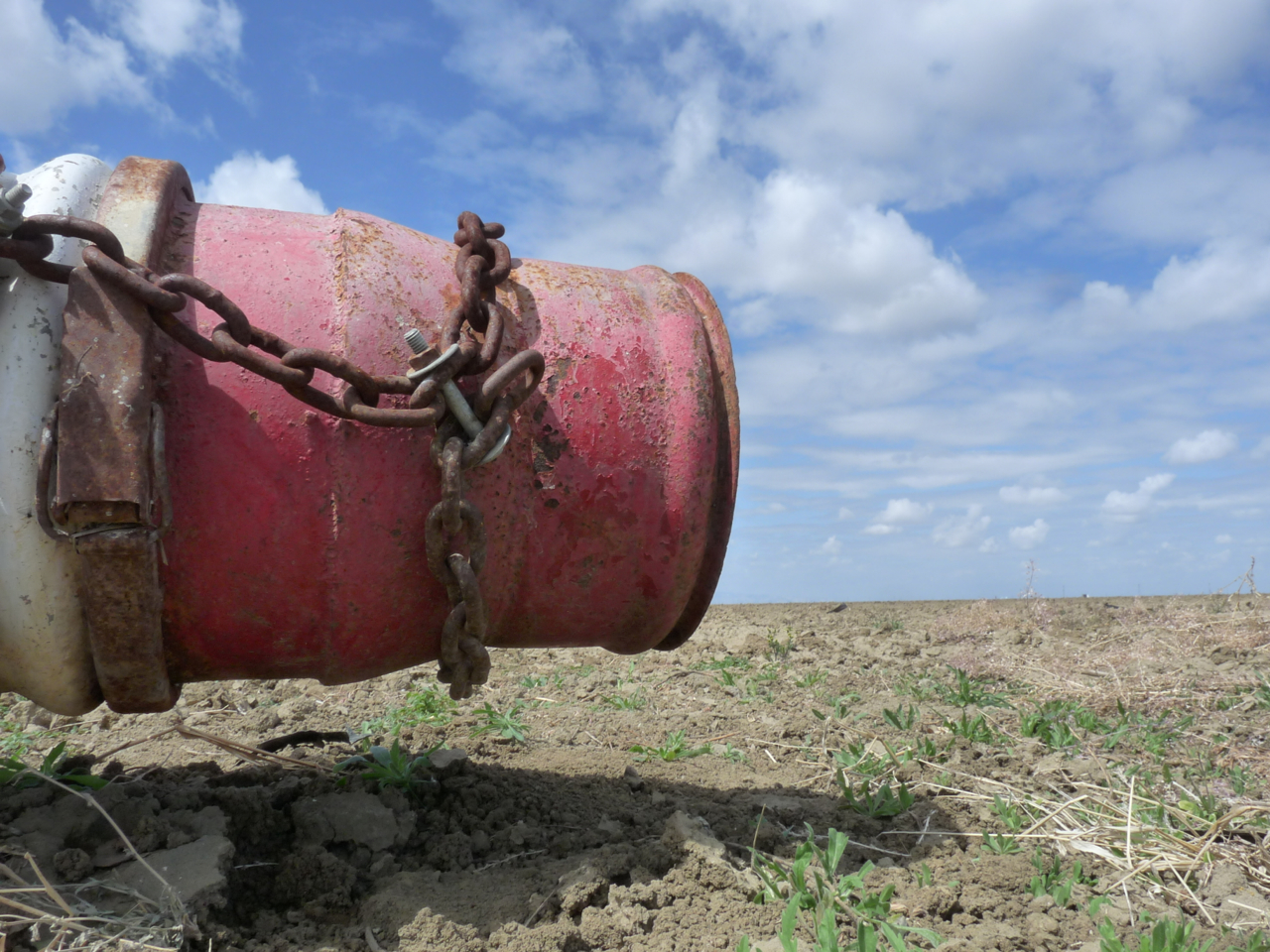
Stockton can continue to pump water from the Delta this summer, ensuring that its new $220 million drinking-water plant – funded by ratepayers – will not stand idle.

The city was one of thousands of junior water-rights holders in the Central Valley ordered to stop taking water in recent weeks because of the drought.

That water was needed by those with older, more senior water rights, the State Water Resources Control Board said at the time.

The city appealed, arguing that its circumstances are different. Under a special section of state water law, Stockton is allowed to pump only as much water from the Delta as it releases back into the Delta at its wastewater treatment plant, a few miles downstream.

Ultimately, the state agreed, acknowledging in a letter that the city’s permit is “unique” and saying that the city can continue to take the water.

“It’s good news,” said Bob Granberg, assistant director of the city’s Municipal Utilities Department. “We’ll be able to back off groundwater pumping, and that will definitely help.”

The Delta water should help the city avoid any unusually aggressive water conservation requirements or rationing, he said.

The fact that Stockton will be drinking from the Delta this summer after all does not diminish the need to conserve. While the city has not taken any unusual steps to reduce water use, the rules that are in place every summer still apply.

Those rules include no outdoor irrigation from 11 a.m. to 6 p.m., no washing cars unless hoses are equipped with nozzles, and no washing driveways and sidewalks except with pressure washers, among other requirements.

“We keep reminding people to conserve, and reminding them of the restrictions that are in place,” Granberg said.
2016-05-31T19:34:20-07:00July 2nd, 2014|

Agriculture Recognized by Governor’s Environmental and Economic Leadership Awards

Agriculture Environmental and Economic Leadership Awards

What do Joseph Gallo Farms, Gills Onions and Parducci Wine Cellars have in common? Yes, they are all California farms with well-known, high-quality products, but they have something else in common. They are all past winners of a Governor’s Environmental and Economic Leadership Award (GEELA), the state’s highest environmental honor.

This year, for the first time, GEELA has an agricultural category titled “Agricultural Ecosystem Services”. This category was designed for farmers and ranchers that demonstrate innovative and sustainable approaches to water conservation, efficiency and protection of working ecosystems.

CDFA has defined Ecosystem Services in agriculture as “the multiple benefits we gain from farming and ranching including crop and livestock production.

In addition to valuable open space and wildlife habitat, the management decisions and conservation practices of farmers and ranchers also enhance environmental quality, provide recreational opportunities and offer social benefits.”

CDFA recognizes there are many farmers and ranchers doing a lot on water conservation, especially in consideration of the drought.

In less than two weeks, the current application process will close for GEELA. Applications will be accepted through July 11, 2014. We hope farmers and ranchers will consider applying. Click here to apply.

2016-10-06T12:38:40-07:00July 2nd, 2014|

UC President Janet Napolitano Presents Food Initiative Plan to CDFA

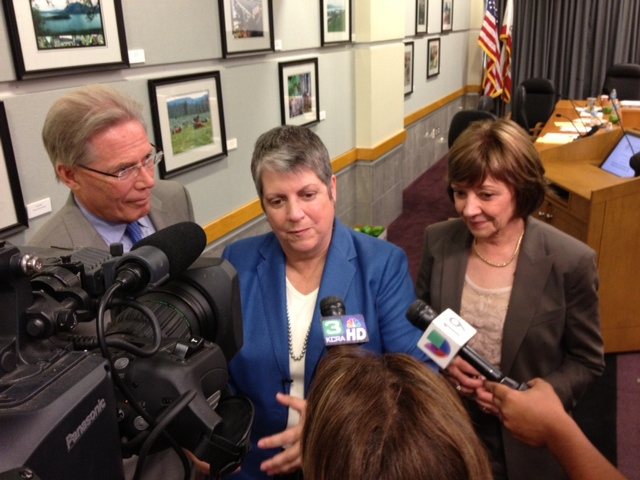
University of California President Janet Napolitano today (July 1) presented the university’s plans for a comprehensive food initiative to the California State Board of Food and Agriculture.

The UC Global Food Initiative is intended to marshal the university’s resources — including curriculum and world-class research, student efforts and operational efforts in place across the university’s 10 campuses — to address global challenges related to food.

“This initiative grows out of a commitment made by all 10 UC campus chancellors and myself,” Napolitano said. “It is a commitment to work collectively to put a greater emphasis on what UC can do as a public research university, in one of the most robust agricultural regions in the world, to take on one of the world’s most pressing issues.”

The food initiative will build on UC’s tradition of innovative agricultural research to support farmers and ranchers. Future efforts will build on work already begun by UC’s 10 campuses and its Division of Agriculture and Natural Resources (ANR) to address internal and external issues with a variety of approaches.

UC research, for example, taught Californians how to remove salts from the alkali soils in the Central Valley, transforming that barren landscape into one of the world’s most productive farming regions, Napolitano noted in her presentation to the California State Board of Food and Agriculture.

Today, the World Food Center at UC Davis stands with 26 other centers dedicated to food and agriculture on that campus; students and faculty at UC Santa Cruz are transforming the field of agroecology; and the Berkeley Food Institute is studying the relationship between pest control, conservation and food safety on Central Coast farms. The cutting-edge Healthy Campus Initiative at UCLA taps all members of the campus community.

The initiative is not limited to seeking any single solution or set of solutions to the myriad food issues confronting the world, Napolitano said.

“The idea,” she said, “is to provide the intellectual and technical firepower, as well as the operational examples needed for communities in California and around the world to find pathways to a sustainable food future.”

In describing the building blocks for the initiative, Napolitano noted that the university’s agricultural outreach and public service programs — in every California county and more than 100 nations — bring UC resources to individuals and communities to help them access safe, affordable and nutritious food while sustaining scarce natural resources.

The university’s work also will help inform and drive policy discussions from the local to the international levels, and expand partnerships with government agencies such as the California Department of Food and Agriculture.

“This initiative shows great vision and leadership from President Napolitano and the University of California,” said CDFA Secretary Karen Ross, “Climate change and population growth will greatly strain our ability to provide healthy food to people here and around the world.

“President Napolitano’s proposal to leverage the strategic assets of the entire UC organization makes it a valuable partner in addressing the significant challenges and opportunities for our production agriculture and food system.”

Emphasizing that student engagement is key, Napolitano announced, as one of her first actions, the funding of three $2,500 President’s Global Food Initiative Student Fellowships to be awarded on each campus to undergraduate or graduate students. The fellowships will fund student research projects or internships.

Among other early efforts to be undertaken as part of the initiative are the following:

  • Internally, campuses will heighten their collective purchasing power and dining practices to encourage sustainable farming practices, and model healthy eating and zero food waste; food pantries and farmers markets that exist on some campuses will be spread to all 10. Partnerships with K-12 school districts to enhance leveraging procurement for these purposes also will be explored.
  • Food issues will be integrated into more undergraduate and graduate courses, catalogues of food-related courses will be developed, and demonstration gardens will be made available on each campus to increase opportunities for students to participate in experiential learning.
  • Data mining of existing information will be deployed to help develop insights and action plans for California agriculture and responses to climate change.

New policies will be enacted to allow small growers to serve as suppliers for UC campuses.

2016-05-31T19:34:20-07:00July 1st, 2014|

State Water Efficiency and Enhancement Program (SWEEP) Built on Collaborative Partnerships

CDFA continues to accept applications for the State Water Efficiency and Enhancement Program, or SWEEP. The deadline to apply is July 15, 2014.

The program is designed to provide financial assistance to agricultural operations for the implementation of water conservation measures that increase water efficiency and reduce greenhouse gas emissions. Approximately $10 million has been made available for SWEEP through emergency drought legislation (Senate Bill 103).

Although CDFA is leading this effort, the development, implementation and success of this program is dependent on collaborative efforts across state and federal agencies and with multiple partners.

CDFA is working closely with the State Water Board and Department of Water Resources on several aspects of the program, including program design and the collection of applications through the State Water Board’s electronic application program, the Financial Assistance Application Submittal Tool (FAAST).

The United States Department of Agriculture’s (USDA) Natural Resources Conservation Services (NRCS) and the CDFA Environmental Farming Act Science Advisory Panel have been valuable assets by providing guidance and feedback on many aspects of program design.

SWEEP requires a high level of technical expertise to review the applications. Irrigation experts from the Cal Poly Irrigation Training and Research Center, the Center for Irrigation Technology at Fresno State and the University of California’s Cooperative Extension are partnering with CDFA to provide application technical review and recommendations for funding.

Verifying that projects are implemented at the farm level is a critical part of SWEEP. CDFA is partnering with the California Association of Resource Conservation Districts, which regularly works with farmers and has conservation practice experience on irrigation systems, to verify the projects. 

SWEEP was implemented under the 1995 Environmental Farming Act, which recognizes that many farmers engage in practices that contribute to the well-being of ecosystems, air quality and wildlife, and states that CDFA shall provide incentives for those practices.


2016-05-31T19:34:21-07:00July 1st, 2014|

To Rid Body of Harmful Pollutants, Drink Your Broccoli, Study Suggests

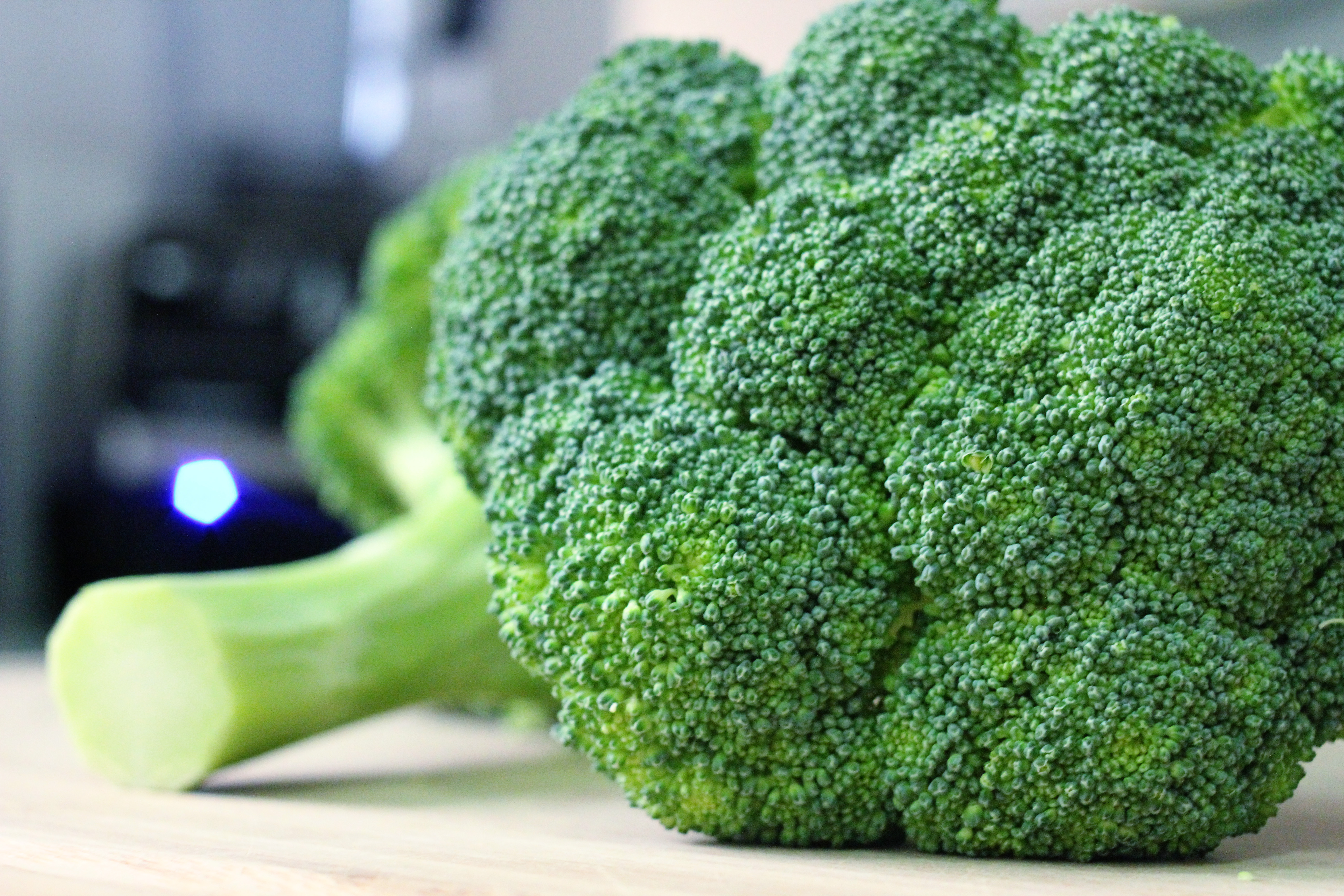
How’s this for your unexpected health tip of the day—be sure to drink your … broccoli?

A recent clinical trial involving nearly 300 people living in one of China’s most polluted regions found that daily consumption of a half cup of broccoli sprout beverage produced rapid, significant, and sustained higher levels of excretion of benzene (known to cause cancer) and acrolein (a lung irritant).

Researchers from the Johns Hopkins Bloomberg School of Public Health, working with colleagues at several U.S. and Chinese institutions, used the broccoli sprout beverage to provide sulforaphane, a plant compound already demonstrated to have cancer preventive properties in animal studies.

The study was published in the June 9 online edition of the journal Cancer Prevention Research.

“Air pollution is a complex and pervasive public health problem,” said John Groopman, professor of environmental health at the School of Public Health and one of the study’s co-authors. “To address this problem comprehensively, in addition to the engineering solutions to reduce regional pollution emissions, we need to translate our basic science into strategies to protect individuals from these exposures. This study supports the development of food-based strategies as part of this overall prevention effort.”

Last year, the International Agency for Research on Cancer classified air pollution and particulate matter from air pollution as carcinogenic to humans. Diets rich in cruciferous vegetables—of which broccoli is one—have been found to reduce risk of chronic degenerative diseases, including cancer.

Broccoli sprouts are a source of glucoraphanin, a compound that generates sulforaphane when the plant is chewed or the beverage swallowed. It increases enzymes that enhance the body’s capacity to rid itself of these types of the pollutants.

In a 12-week trial, participants who drank a beverage containing freeze-dried broccoli sprout powder mixed with water, pineapple juice, and lime juice saw a 61 percent increase in their rate of benzene excretion beginning the first day and continuing throughout the trial. In addition, the rate of excretion of acrolein increased 23 percent.

“This study points to a frugal, simple, and safe means that can be taken by individuals to possibly reduce some of the long-term health risks associated with air pollution,” said Thomas Kensler, a professor at the School of Public Health and one of the study’s co-authors. “This while government leaders and policy makers define and implement more effective regulatory policies to improve air quality.”

2016-05-31T19:34:21-07:00July 1st, 2014|

Tom Nassif on White House Announcement on Immigration Reform

Statement from Western Growers President and CEO, Tom Nassif on Monday’s White House Announcement on Immigration Reform

Tom Nassif  said: “Last Thursday, I participated on behalf of Western Growers in a meeting with Vice President Joe Biden in his office.  Now that the president has revealed Speaker Boehner’s decision not to allow a vote on the House floor on immigration reform, which he says is based on a lack of trust in the president, I can say that the vice president shared this with us last week.  Biden also said there would be administrative actions to reduce the adverse affects of that decision on workers currently in this country illegally.  He would not share what those actions would be, but emphasized they would respect the separation of powers by being clearly constitutional.

None of the industry representatives were asked what we would like to see accomplished with the exercise of executive power, nor whether we would support the president’s use of those powers to reform immigration law.  This leads to the conclusion that the president must have some sense of the policies he intends to pursue by administrative action and that those policies are being developed, at least so far, without meaningful input from industry representatives.

Action by Congress to statutorily define our immigration policies is obviously far preferable to this situation.

The House leadership’s refusal thus far to allow a vote on an immigration bill puts all U.S. industries, especially agriculture, in a desperate situation.  Clearly the majority of U.S. citizens, including Republicans, want to see the House pass immigration reform.  Clearly the U.S. economy would benefit from immigration reform. There may never be another Republican president during my lifetime.  Why, therefore, is the Speaker refusing to take up immigration reform?  If House leadership has concerns with border security, the House majority can easily pass the border security bill that passed last year in the Homeland Security committee with or without Democratic support.  If it is lack of confidence in President Obama, that should not be an issue as he will not be president when most of an immigration reform law would be implemented in 2017 or after.  With those two issues off the table, what issues, other than party politics, are stopping the House from doing what this country wants and needs?  I am confident there are reasonable women and men in both parties who could come to an agreement if that were their desire.  The question is why aren’t they allowed to?

2016-08-10T12:22:58-07:00June 30th, 2014|

Save Our Water Web Site Launches “Don’t Waste Summer” Campaign

As a drought-stricken California moves further into a hot summer, Save Our Water – a partnership between the Association of California Water Agencies (ACWA) and the California Department of Water Resources (DWR) – is launching Don’t Waste Summera campaign devoted to providing daily tips and news to help Californians find ways to conserve at home and at work every day.

Don’t Waste Summer kicks off this week with the official start of summer. Tips will range from simple ideas such as shutting water off as you brush your teeth, to checking for and fixing leaks, to helpful ways businesses big and small can do their part in saving water during the drought.

The campaign will also showcase the efforts of Save Our Water partners to conserve this summer.

The Association of California Water Agencies (ACWA) is the largest statewide coalition of public water agencies in the country. Its nearly 440 public agency members collectively are responsible for 90% of the water delivered to cities, farms and businesses in California.

The Department of Water Resources (DWR) is responsible for managing and protecting California’s water. DWR works with other agencies to benefit the state’s people, and to protect, restore and enhance the natural and human environments.

2016-05-31T19:34:21-07:00June 30th, 2014|

Table Grape Harvest Now Underway in SJV

Source: Cecilia Parsons; Ag Alert

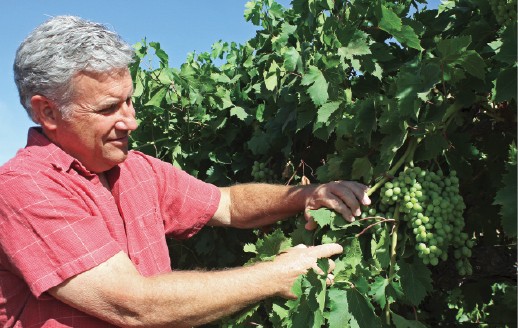
Color, sugar content and berry size of many early table grape varieties hit harvest targets last week in the southern San Joaquin Valley.

Harvest in the Arvin area of Kern County is a week to 10 days earlier than normal this year, according to grape grower Ryan Zaninovich. Harvest of the San Joaquin Valley’s 70 to 80 varieties of red, green and black table grapes will continue through November.

Zaninovich, chairman of the California Grape and Tree Fruit League and manager at Vincent B. Zaninovich & Sons Inc. in Richgrove, said warm spring weather is driving earlier harvests in all grape-growing regions of the state. The desert region table grape harvest began in late April and will wind down this month, as harvest transitions to the southern San Joaquin Valley.

Coming off a record-production year of 117.4 million 19-pound boxes for all growing regions in 2014, Zaninovich said yields from this crop are estimated to be about average to larger with excellent quality. An updated crop estimate will be released in July, prior to the peak of the California harvest. Coachella contributes about 5 million boxes to the total.

Zaninovich and retired Kern County Cooperative Extension viticulture advisor Don Luvisi said no serious pest or disease issues are looming for growers. Grape quality is expected to be excellent again this year, with only minimal sunburn where canopies are light.

“When we have good spring weather, that generally means the quality will be high,” Zaninovich said. Grape mealybug is always an issue, but growers have been able to keep them under control, he added. Growers keep up with pest control and suppress powdery mildew early, Luvisi said.

The biggest challenges this season for growers will be water and labor. Most depend entirely on groundwater supplies for irrigation. Adequate water not only ensures higher yields, but also protects vines from stress that invites pests and disease.

“We’re all relying on groundwater and hoping the wells don’t go dry. I’ve heard of a few growers who are having issues with their wells,” Zaninovich said. “We all have strategies for best water use and to protect the longevity of the vines.”

Zaninovich said different varieties of table grapes use different amounts of water during the year. Varieties that are harvested early in the season or have lighter yields use less water than heavier producers or varieties harvested later in the season.

Labor will cost more this harvest season and availability could become a problem for growers later in the season, and many varieties and other hand-harvested crops demand labor, said Barry Bedwell, president of the California Grape and Tree Fruit League.

“There are no reports of shortages now, but the crunch time comes in August and September, when we’re competing with other harvests,” he said.

Harvest crews are paid by the hour with bonuses per box. Bedwell said they average higher than minimum wage, but growers base their pay on the state minimum wage. The harvest requires skilled labor, and crew members can average $10 to $14 an hour, he said. Table grapes are field packed into boxes and trucked to cold storage prior to shipping.

California’s approximately 500 table grape growers are looking at strong prices and robust export sales this year, according to Bedwell. The trend for both is upward, as growers are coming off two strong sales years.

Kathleen Nave, president of the California Table Grape Commission, said table grape growers have been extending their harvest season with new early and later varieties of grapes. Red grapes dominate the top five. Flame, Scarlet Royal and Red Globe are the top three varieties in acres planted. Autumn King and Sugarone are two of the most popular green grapes, while Autumn Royal is the most popular black grape.

“With a longer harvest season and promotion efforts, we expect exports to be up,” Nave said.

Canada, Mexico and China are top export destinations for California table grapes. Bedwell pointed out that while California products are popular in China, that country’s table grape production far outpaces California. With annual production hitting 1 billion boxes, their Red Globe varieties alone equal all of California’s production.

China has begun the process of exporting grapes to the United States, Bedwell noted, and is currently in the pest review process—which could take another three years.

Luvisi said the biggest change in table grape production over the past 20 years has been the development of many seedless varieties.

“Seeded grapes are really hard to find now,” Luvisi said. Older varieties like Thompson Seedless are also being replaced with varieties that hit certain market windows. He noted Kern County table grape growers have planted a newer green variety, Superior Seedless, after taking out Thompson Seedless vineyards. Zaninovich said he has planted another newer green variety, Autumn King, which is a heavy producer.

In the past few weeks, Luvisi said, Kern County growers were checking vineyards for color, sugar and berry size to determine when to harvest. Market demand and prices also drive the decision, he said.

Recent weather has been an advantage. Temperatures above 95 degrees slow down development; cooler days with 85 to 95 degrees push maturity. When bunches of red grapes are 95 percent colored, Luvisi said harvest will begin. Green grape maturity is determined by sugar content. Berries will continue to size until picked, he added.

“We’ve had perfect weather for making sugar,” he said.

2016-05-31T19:34:21-07:00June 30th, 2014|

California Leads Nation in Floriculture Production – From the USDA’s National Agricultural Statistics Service

California’s floriculture crop leads the nation with a value of $1.13 billion in sales, according to a new report from the USDA’s National Agricultural Statistics Service (NASS).

In 2013, California producers increased their sales from $1.10 billion to $1.13 billion, an increase of 3 percent, giving California 26.6 percent of the total U.S. wholesale value.

California cut flower production accounts for 78.2 percent of the total cut flower wholesale value. The $327 million value was down 2.7 percent from the 2012 value of $337 million.

California leads the nation in potted flowering plant values for 2013 with a total value of $297 million, a 17 percent increase in value from $253 million in 2012. California potted flowering production accounted for 38 percent of the 15-state wholesale value.

The top cut flowers in California are lilies, daisies, roses, chrysanthemums and snapdragons. The top potted flowers are orchids, roses, poinsettias, spring bulbs and chrysanthemums. The top garden plants are vegetable varieties, pansies/violas, petunias, impatiens and marigolds.

2016-05-31T19:34:21-07:00June 27th, 2014|

Memorial Service Set for Dr. Bartell, Ag Dean Emeritus

Source: www.FresnoStateNews.com

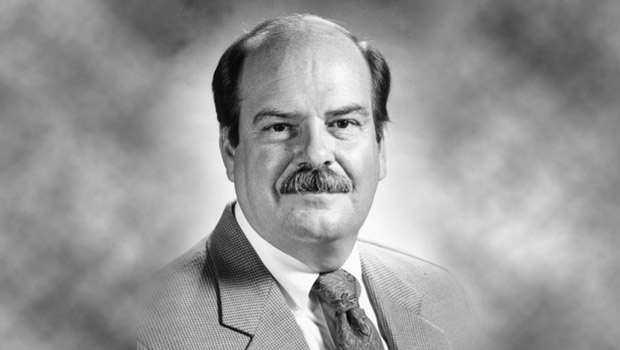
A memorial service will be held at California State University, Fresno on June 28 for Dr. Daniel P. Bartell, dean emeritus of Fresno State’s then-School of Agricultural Sciences and Technology, who led the university’s agricultural education programs during a 14-year period of growth academically and within the industry.

Under Bartell’s direction, the college developed its viticulture and enology programs, the Fresno State Winery and the Gibson Farm Market.

Dr. Bartell died June 13 in Fresno at age 70. The memorial service will be from 11 a.m.-noon at the Viticulture and Enology Research Center (2360 E. Barstow Ave.) followed by a reception with light refreshments from noon-2 p.m.

Dr. Bartell served as dean from 1992 to 2006, when he stepped down to return to teaching and was succeeded by Dr. Charles Boyer, current dean of the Jordan College of Agricultural Sciences and Technology.

In lieu of flowers, the family requests contributions be made to the Ag One Foundation in support of the Jordan College of Agricultural Sciences and Technology at Fresno State or to a university of the donor’s choice.


2016-05-31T19:34:21-07:00June 27th, 2014|
Go to Top