Navy Vet Shows Children the Value of Work and Education Through Farming

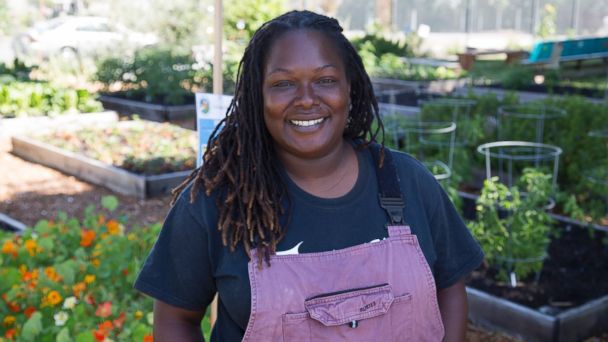
Surrounded by crime, inequality and a lack of opportunity is a quarter-acre farm in East Oakland, California. U.S. Navy veteran and Oakland native Kelly Carlisle is trying to change all that by inspiring a young group of local children through farming.

Growing up in East Oakland, Carlisle said she remembers feeling hopeless at a young age.

“At 9 years old there’s nothing to do, there’s nowhere to go, no program that my family can afford, or for me to engage in,” Carlisle said. “It was hard, you couldn’t go outside, we had a one-block radius that we can play in and I remember feeling and asking, what I am going to be and where I’m going to go?”

The former Navy Operation Specialist said she wants to be able to give “her kids” a chance at working towards a better future. Back in early 2010, Carlisle remembers hearing news reports about Oakland’s high crime rate, childhood obesity, school dropout rates and teen prostitution.

“My initial reaction was, thank God I don’t live there. Then the more I thought about it and the fact that I have a young child, it occurred to me that there’s one population that has no choice to decide where they live or what their community looks and feels like and that’s young people,” she said.

As a result, Carlisle founded Acta Non Verba: Youth Urban Farm Project, a nonprofit urban farm that focuses on serving at-risk youth from kindergarten to 8th grade, and their families. She launched Acta Non Verba to teach children how to invest in themselves and ultimately invest in their communities.

Children plant, harvest and sell produce and 100 percent of those proceeds go to savings accounts to pay for their education.

At first it was a lot of raised eyebrows and challenging to get others on board with the idea, she said. “They weren’t use to talk about farming in Oakland. But eventually people were really happy with the idea to have an urban farm in their neighborhood,” she said.

One of the ongoing challenges is to get people engaged, she said. “This is our third year of camp, fourth of growing and it’s still a challenge,” she said.

Last week, President Obama honored the work Carlisle is doing in Oakland at an Iftar dinner celebrating Ramadan in the State Dining Room at the White House. “Thanks to Kelly these boys and girls are not only learning the value of hard work at an early age, they’re changing how they think about themselves and opening their minds to what’s possible in their lives,” the president said.

Carlisle doesn’t come from a family of farmers but from a military family. Her father and grandfather both served in the military. She joined the Navy in 2001 shortly before 9/11 and was stationed aboard the USS Essex. She left active duty in 2005 and her transition was difficult, she said. She landed a corporate job and got married. But in 2009, she had to join the U.S. Navy Reserve after she ended up unemployed during the economic downturn. She left the Reserve in 2013.

Her first farming or growing experience was with a lemon tree she planted at home and that’s when she felt in love with growing, she said. Carlisle took a master gardeners course and it was there that she ran into the Farmer Veteran Coalition, a veteran outreach organization offering veteran employment and farm education programs. Carlisle is a recipient of the organization’s fellowship fund was instrumental in giving resources to Carlisle to become not only a farmer but a person with a mission to change her community.

“Most of the children here think that food comes from the grocery store. We’re giving the kids the whole experience, from seed to table, from raw to sandwich,” she said.

East Oakland is considered by the U.S. Department of Agriculture a food desert, where liquor stores and fast food restaurants outnumber supermarkets.

The City of Oakland Parks and Recreation leases the land to Acta Non Verba. The farm has cultivated beds of fruits and vegetables, including strawberries, green beans, cabbage, fava beans, sun flowers and tomatoes. It has also built a beehive.

“We like to work with kids because the excitement of seeing these seeds turn into actual fruit is magical for them and they don’t see it coming. The kids go wild,” she said.

For Carlisle, farming and providing a better future for these kids has become her life’s work. Carlisle said her dream for the farm is that children learn how to nurture the earth and themselves.

“As Oaklanders, I want them to be forward thinking about their future. I want them to remember this experience as something that at least gave them a window into something better and a different way to live,” she said.

2016-05-31T19:34:12-07:00August 1st, 2014|

August is National Peach Month!

Source: Amy Paturel; Self & Dale Mussen; Today’s Country

Not only are peaches a mere 38 calories (for a medium-sized fruit), they also boast measurable amounts of calcium, magnesium, phosphorous and vitamins C and K, plus a plethora of disease-fighting phytochemicals. A bonus: They taste great!

But don’t limit yourself to eating whole peaches as a snack. This versatile fruit is perfect as a topping for cereal or granola, or mixed into savory foods like quesadillas (think peaches with brie … YUM!), salads and salsas.

Yellow peaches are most familiar, but there are also white-fleshed varieties, as well as “donut” peaches, named for their halo-like profiles (they look like mini-donuts!).

No matter which variety you choose, there are a number of ways to play with your peaches. We asked Tara Mataraza Desmond, author of Almost Meatless — Recipes That Are Better for Your Health And the Planet, for a few suggestions:

1.     Make a salad: Just slice fresh peaches (yellow or white) with smoked mozzarella (or Buffalo mozzarella) and arugula. The combination is sweet, savory and peppery will make you think you’re eating something sinful, when in reality, it’s deliciously healthful.

2.     Get creative with salsa: Cut peaches into one-quarter inch cubes, toss with fresh torn basil, minced jalapeno and minced red onion for a quick (and tasty) topping on grilled fish or inside fish tacos.

3.     Break out the grill: Slice peaches in half, remove the pit, then grill over medium-high heat until warmed through and marked with grill char (about 2 minutes). Serve with angel food cake or berry sorbet.

4.     Take to the oven: Roast quartered peaches with cumin and chile-dusted pork tenderloin. Serve with quinoa.

5.     Get saucy: Blend two fresh peaches with three fresh plum tomatoes, one clove of garlic, one small shallot, a splash of cider vinegar and one tablespoon of olive oil for a simple barbecue sauce or marinade.

And if that wasn’t enough, here are a few fun facts about peaches:

  • Peaches are native to China, and they’ve been cultivated for more than a thousand years. To the Chinese, peaches bring good luck, wealth and protection. Chinese brides carry peach blossoms for good luck on their wedding day.
  • The Romans brought peaches to Europe from the Middle East.
  • The Spanish brought peaches to South America.
  • The French took them to Louisiana.
  • The English introduced peaches to their colonies in Jamestown and Massachusetts.
  • Christopher Columbus actually carried peach trees during his second trip to America.
  • There are over 700 varieties of peaches.
  • China is the number one producer of peaches in the world. Italy is second, California is third. California puts out about 50 percent of this country’s peaches.
  • Peaches are high in vitamins A, B and C.
  • Peach pits contain hydrocyanic acid – it’s poisonous.
  • The world’s largest peach is in Gaffney, South Carolina. It weighs over 10,000 pounds. It’s the town’s water tower built in the shape of a peach in 1981.


2016-05-31T19:34:12-07:00August 1st, 2014|

Modesto Irrigation District leaders hustling to get growers more water

By: Garth Stapley; The Modesto Bee

Nut farmers and other Modesto Irrigation District customers can wait to water crops as late as Oct. 3. That’s two weeks later than initially planned, giving trees a better chance of surviving the drought and being healthy enough to produce again next year.

The MID board also agreed Tuesday to accommodate another round of farmer-to-farmer water transfers with a Sept. 2 application deadline. And the district might offer to sell some extra water reserved in April by a few farmers who haven’t asked or paid for it since then.

Faced with a third consecutive dry winter, district officials in February said the irrigation season would end Sept. 19, several weeks earlier than usual, and capped deliveries at 24 inches per acre, down from 36 in a normal year.

But farmers, especially those raising almonds, have been pressing for later deliveries.

Citing University of California research, Ron Fisher said trees that don’t drink just after harvest can lose 74 percent of nuts the following year.

Some almond varieties, such as padre, mission, Monterey and Fritz, harvest later than Sept. 19, growers told the board.

“I’ve farmed almonds over 50 years and I’ve never got my harvest completed by Oct. 3,” said Cecil Hensley, a former board member. “There is no use having (water) next year if we don’t keep our trees alive.”

Farmers won’t get more than their fair share with the extension; Tuesday’s unanimous vote simply allows them to apply their allotment later in the year, explained board member Jake Wenger, who farms.

Board Chairman Nick Blom, also a grower, reminded people that they can rent district wells and canals after the regular season ends, for late-season irrigating.

“It’s not the purest snow water, but it’s water,” Blom said.

To augment deliveries, scores of farmers this year have taken advantage of new programs allowing them to buy or sell MID shares in fixed-price transfers managed by the district or open-market sales at any agreed-upon price.

The district has accommodated more than 100 open-market deals for farmers who submitted transfer requests by deadlines of June 1, July 1 and Friday. Tuesday’s 4-1 vote, with Larry Byrd dissenting, adds a fourth deadline of Sept. 2.

“This gives everyone a little more time and flexibility,” Modesto farmer Aaron Miller said.

Wenger initially suggested an Aug. 15 deadline. Attorneys Stacy Henderson and Bob Fores said their clients would appreciate more time and noted that MID General Manager Roger VanHoy had acknowledged that his staff has experienced no difficulty processing transfer requests.

In April, 26 farmers indicated interest in the district’s allocation return program, meaning they might want to sell a portion or all of their MID water shares, or buy water given up by others. The cost was $200 per acre-foot on either end.

The district set aside enough water to cover those potential deals, but a handful of farmers – fewer than a dozen, said civil engineering manager John Davids – did not sign contracts and have not paid for the extra water they initially said they might buy.

Davids did not know how much water remains in that pot, but said it represents a potential $300,000 loss. Board member John Mensinger said that’s “regrettable” and Wenger suggested selling the water to others in what VanHoy termed “something like a last call.”

“Let’s make it available. I think people would take us up on it,” Wenger said.

VanHoy said he will suggest rules for such deals at a future meeting.

The board next meets at 9 a.m. Tuesday at 1231 11th St., Modesto.


2016-05-31T19:34:12-07:00July 31st, 2014|

Farmers Hit With New Regulatory Fee

Source: The Porterville Recorder

Farmers who are already reeling from a lack of water to irrigate their crops this summer are being hit with an annual acreage fee to meet a mandated program to monitor water runoff from irrigated lands.

The Central Valley Regional Water Quality Control Board in September of 2013 adopted new waste discharge requirements to protect ground and surface water from irrigated agricultural discharges for the Tulare Lake Basin area. That led to a plan to monitor groundwater and what impacts irrigation has on that groundwater.

Growers who irrigate agricultural lands for commercial purposes within the Tulare Lake Basin area must comply, but they do have a choice. They can either deal individually and directly with the Water Board, or they can join one of several regional coalitions that have been formed to assist growers in meeting all the requirements.

In the Porterville area, that coalition is the Tule Basin Water Quality Coalition. There is also a coalition in Kern County, as well as the Kaweah Basin Water Quality Coalition to the north. Some growers who have irrigated lands in both, will have to sign up with both, said Tulare County Supervisor and citrus grower Allen Ishida.

The deadline to sign up is rapidly approaching. Growers must sign up with their local coalition by Aug. 4, or they will be stuck dealing directly with the Water Board and having to monitor their groundwater on their own.

“If you received the letter, you better pay it,” stressed Ishida, explaining that monitoring even just a 10-acre plot could cost several thousand dollars a year.

The plan was put into place to improve the quality of groundwater, but Ishida said “They’re regulating without the base science.”

He contends the cause of nitrates in the ground, which is very common in Tulare County, has not been pinned down and that the Water Board is incorrectly blaming farmers. “We’re not the only ones contributing to high nitrates,” said Ishida, agreeing that some nitrates naturally occur, but no one has determined how much is natural.

David DeGroot, who is with 4 Creeks, an engineering firm working for the Tule Basin Coalition, said the only farming operations exempt from this latest order are dairy farmers because they are already under an irrigated management plan.

He said the basin began monitoring surface water in 2003 and now that has been extended to water pumped from the underground.

Farmers got the Water Board to agree to the coalition idea. “Rather than do this individually, maybe we can form a coalition to do the work,” said DeGroot of the idea. “It is a lot more cost-effective.”

The coalition will handle all the monitoring and reporting, which DeGroot said is extensive. Also, it will deal with the Water Board.

The cost for the Tule Basin Coalition is $5 per acre of irrigated land and a $100 participation fee. Both are annual costs. DeGroot and Ishida said the cost for the Kaweah Basin is higher. DeGroot said having to deal with the Water Board is much more expensive.

If a person ignores the order, then there are hefty fines. DeGroot also said if a grower misses the Aug. 4 deadline, they are prohibited from signing up later unless the Water Board grants them permission. Either way, not signing up by Aug. 4 will mean the grower will have to deal with the Water Board, and probably face a fine for not signing up.

According to the state, the Tulare Lake Basin Plan identifies the greatest long-term problem facing the Basin as the increase in salinity in groundwater. Because of the closed nature of the Tulare Lake Basin, there is little subsurface outflow. Thus salts accumulate within the Basin due to the importation and evaporative use of water. A large portion of this increase is due to the intensive use of soil and water resources by irrigated agriculture.

However, the order covers the entire San Joaquin Valley. DeGroot said the total acreage of the Tule Basin is 600,000 acres, of which 350,000 aces are irrigated ag land. He said basically the boundaries are roughly Avenue 196 on the north and the Kern County line on the south, the foothills on the east and the Tulare/Kings county line on the west.

The Water Board said the order requires “the implementation of management practices to achieve compliance with applicable water quality objectives and requiring the prevention of nuisance. The Order requires implementation of a monitoring and reporting program to determine effects of discharges on water quality and the effectiveness of management practices designed to comply with applicable water quality objectives.”

DeGroot said the initial objective is to summarize conditions in a basin. “Once those are approved, then we’ll go out and start monitoring wells,” he said. The plan is to test a well every nine sections.

So far, DeGroot said the sign-ups have gone well, but they know a lot of landowners have held off. As of late last week, he estimated 65 percent of farmers have joined the coalition.

2016-05-31T19:34:12-07:00July 31st, 2014|

California and Mexico – a win-win relationship

By: Karen Ross, California Agriculture Secretary

It speaks volumes that during our meetings in Mexico, the notion of “ganar-ganar,” or a “win-win” relationship was mentioned more than once. Our discussions have focused not only on building stronger trade relationships between our two markets, but in also in capitalizing on the shared resources of our people, climate and economy. A strong and growing Mexican market is a win for California and a win for Mexico.

In our meeting with Mexico’s Ministry of Agriculture, Livestock, Rural Development, Fisheries and Food  we discussed the great opportunities for cooperation between our two markets that can have long lasting benefits for both of our economies. Working collaboratively to solve cross-border trade delays that impact businesses on both sides of the border is an issue that can be resolved. Further, we wish to explore opportunities that jointly leverage our resources and production capacity.

We can no longer consider a California/Mexico divide. We need to see how cooperation can benefit us both in the long-run. I’ve committed to SAGARPA that within the next 60 days we will have progress in moving forward with a collaborative relationship that involves the public and business sectors finding solutions to cross-border issues that benefit both markets and producers.

Following our meetings with SAGARPA we had the pleasure of meeting with Walmart Mexico and Central America. The company also stressed cooperation and a “win-win” relationship that California and Mexico can share.

In celebrating the successes of the 20th Anniversary of the North American Free Trade Agreement (NAFTA), we should also celebrate the ongoing trade benefits of this relationship. Demonstrating this success, Walmart shared that their imports of U.S. produce has increased more than 10 percent each year for the last three years. This underscores that Mexico’s economy is growing and California is benefiting.

I look forward to furthering our trade relationship and cooperation with Mexico. It can be a “win-win” relationship like no other.

2016-05-31T19:34:12-07:00July 31st, 2014|

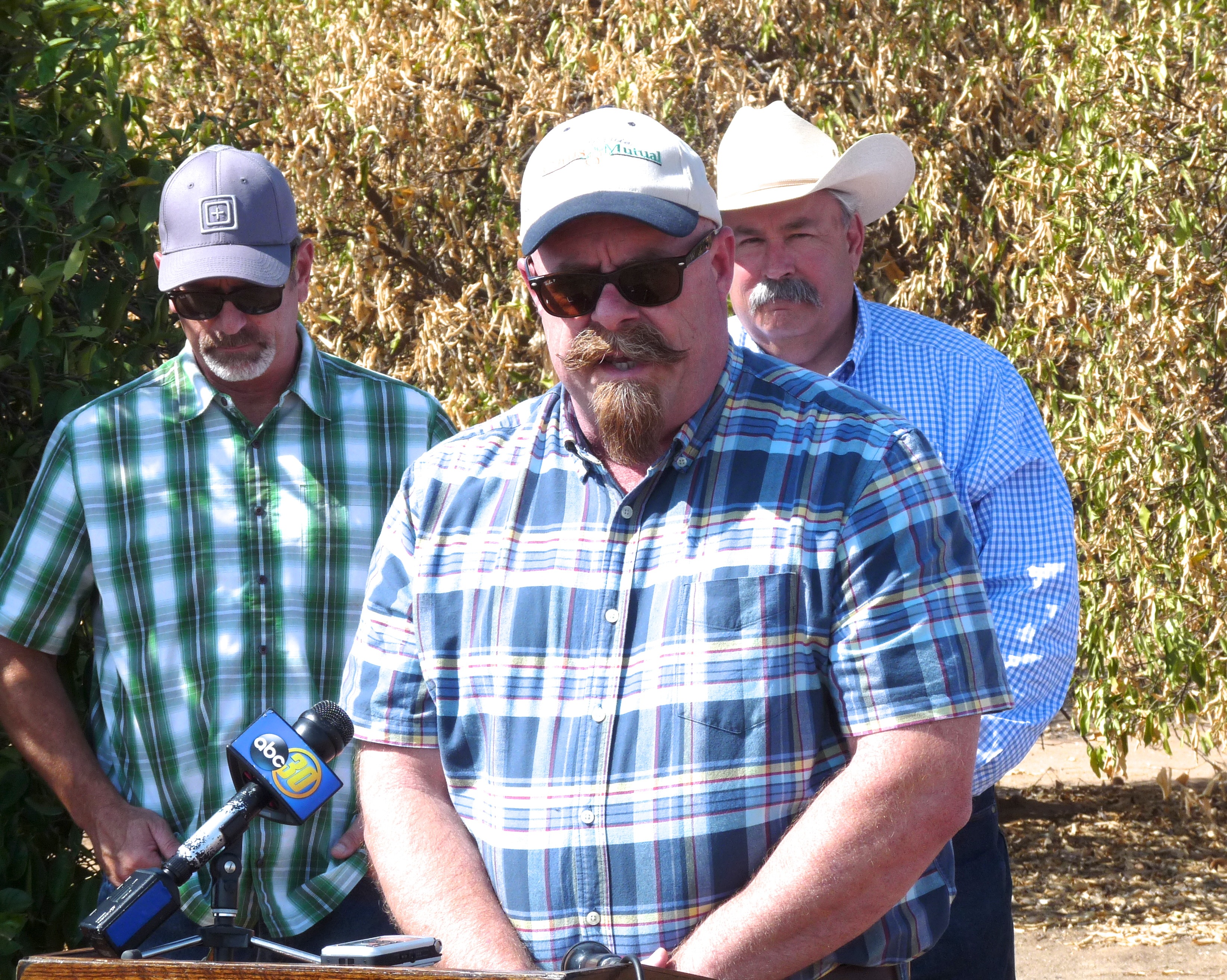
Harlan Ranch Pushes Citrus Trees Due to No Water


Califonia Citrus Mutual Holds Press Conference at Harlan Ranch to Show Catastrophe

Kevin Severns, a citrus grower and manager of Orange Cove – Sanger Citrus Association and chairman of California Citrus Mutual, spoke to the crowd gathered at third-generation, family-owned Harlan Ranch, Clovis, CA, TODAY, “This is what a zero allocation looks like, folks, this is what zero allocation looks like.”

“Harlan Ranch and Orange Cove-Sanger Citrus have a long history together. Next year we will receive our lowest-ever deliveries from Harlan Ranch simply because of the number of trees are being pushed. Why are they being pushed? No water.

“This is an inexcusable situation and something we are desperate to do something about. Thankfully, this doesn’t have to be the end of the story. We can do something about this, and that’s what this is all about–to bring attention to both the plight and what can be done about it,” said Severns.

“The packing house that I manage is about 25 miles, as the crow flies, from where I’m standing, and the fruit from this ranch is delivered there along with fruit from the other growers who also own the packing house. It’s a cooperative of family farmers. We employ about 100 people directly in our packing house, and another 200 to 250 in the crews that pick, harvest and prune,” Severns said.

2016-05-31T19:34:13-07:00July 30th, 2014|

Will Mandatory Water Conservation Regulation be Effective?

By Laurie Greene, Editor

As the agricultural sector does its part in coping with curtailed water allocations and conserving what remains, an emergency regulation to increase conservation practices for all Californians went into effect TODAY. The new mandatory water conservation regulation targets outdoor urban water use. In some areas of the state, 50 percent or more of daily water use is for lawns and outdoor landscaping. This regulation establishes the minimum level of activity that residents, businesses and water suppliers must meet as the drought deepens and will be in effect for 270 days unless extended or repealed.

The regulation, adopted by the State Water Board July 15, and approved by the Office of Administrative Law July 28, mandates minimum actions to conserve water supplies both for this year and into 2015. For more information please visit the Conservation Regulation Portal.

In “The Public Eye: Voluntary water conservation not effective, data show,” Matt Weiser and Phillip Reese confirm, “only mandatory conservation measures, backed by a threat of fines, seem to prompt consumers to save.”

They reported state water agencies used five percent less water (January-May 2014) under mandatory rules alone than the previous three-year average. Agencies under voluntary conservation measures increased water usage four percent over the same timeframe.

Most significantly, water agencies working under mandatory water conservation regulations used fourteen percent less water in May 2014; whereas, other agencies increased usage slightly. And, seventy-five percent of water districts north of the Grapevine reduced usage compared to previous years, while only thirty percent of those south showed reductions.

Now let’s put this into perspective, the authors say that, for instance, Santa Ana residents, each, consume 108 gallons of water daily versus Sacramento residents, who use 218 gallons each. Likewise, San Francisco residents increased their water consumption in May, but they use forty-nine gallons daily, and of course,they do not have substantial landscaping to nourish.

With this regulation, all Californians are expected to stop: washing down driveways and sidewalks; watering of outdoor landscapes that cause excess runoff; using a hose to wash a motor vehicle, unless the hose is fitted with a shut-off nozzle, and using potable water in a fountain or decorative water feature, unless the water is recirculated. The regulation makes an exception for health and safety circumstances.

Larger water suppliers are required to activate their Water Shortage Contingency Plan to a level where outdoor irrigation restrictions are mandatory. In communities where no water shortage contingency plan exists, the regulation requires that water suppliers either limit outdoor irrigation to twice a week or implement other comparable conservation actions. Finally, large urban water suppliers must report water use on a monthly basis to track progress beginning Aug. 15.

Local agencies could ask courts to fine water users up to $500 a day for failure to implement the conservation requirements of the regulation, in addition to their existing authorities and processes.

In addition, Governor Brown has called on all Californians to reduce their water use by 20 percent and prevent water waste and has signed a bill that bars state homeowners associations and common interest developments, such as condominiums, from fining residents for drought-respectful brown lawns. As yet, all other homeowners are not protected.

Visit SaveOurH2O.org to find out how everyone can do their part; Drought.CA.Gov to learn more about how California is dealing with the effects of the drought, and Saveourh2o.org/report-water-waste to report state agency water waste.

2016-05-31T19:34:13-07:00July 29th, 2014|

California’s Malibu Coast winemakers secure AVA status

Source: Louis Villard in San Francisco

The Malibu coastline outside Los Angeles has become California’s newest American Viticultural Area (AVA), which winemakers hope will raise the region’s profile.

Officially named Malibu Coast AVA, the sub-region will stretch northbound along the Pacific Coast Highway for approximately 46 miles and inland to the Santa Monica Mountains for about eight miles.

Malibu currently has 198 acres of vines in production and over 50 grape growers and wineries.

Elliot Dolin, proprietor of Dolin Malibu Estate Vineyards, helped initiate the classification process and was delighted to see it approved.

‘In Malibu we’ve proven we can produce high-quality, award-winning wines,’ Dolin told Decanter.com. ‘With the AVA designation, we hope it will inspire a curiosity among consumers to explore our wines, and a commitment from producers to continue to improve.’

Despite the low profile until now, the first documented vineyard in the Malibu area was planted in the 1820s, which is venerable for California. The first modern operation, The Malibu Vineyard, was planted in 1985 with red Bordeaux varieties.

Malibu Coast joins two established AVAs in Los Angeles County: Malibu-Newton Canyon, which became a region in 1996, and the more recent Saddle Rock-Malibu, which was classified in 2006.

Malibu Coast elevations range from sea level to 3,111 feet. During the summer, days can be hot and sunny but this new AVA will benefit from a large diurnal shift with very cool nights.

Malibu is regularly in the news for autumn wildfires and a section of the AVA proposal suggested that planting vineyards could provide natural barriers against future fires, which could be beneficial for drought stricken California.

Currently a large variety of well-known international wine grapes are planted. Of those, Dolin believes ‘Chardonnay in the cooler-climate areas is of a great quality and the higher elevation vineyards do very well with Bordeaux and Rhone varieties’.

A second AVA was also established alongside Malibu Coast for the Upper Hiwassee Highlands in Georgia. The state’s first official AVA covers 690-square miles in Cherokee and Clay Counties, North Carolina, and Towns, and Fannin Counties.


2016-05-31T19:34:13-07:00July 29th, 2014|

UC leads a long tradition of environmental stewardship in California

By  Brook Gamble, Community Education Specialist, UC ANR California Naturalist Program, Hopland Research & Extension Center

Featured Photo:  Jeannette Warnert


Stewardship: \ˈstü-ərd-ˌship: the activity or job of protecting and being responsible for something.

In 1862 the Morrill Act was passed to support and maintain colleges of agriculture and mechanical arts, including a later provision that included the donation of public land. As one of the first land grant Universities, the University of California was well positioned to manage agricultural extension across the state as part of the Smith Lever Act of 1915. Today, many people think of California agriculture as strawberries, broccoli and rice; but it is livestock and forestry that dominated California working landscapes in those early days.

Farmer seeks assistance from UCCE farm advisor on the running board of a historic UC Cooperative Extension vehicle.

Farmer seeks assistance from UCCE farm advisor on the running board of a historic UC Cooperative Extension vehicle.

Research and extension efforts to improve forestry practices and range production throughout California have evolved over time. Research questions gradually changed over the last 100 years from a “how can we economically produce more” perspective to how can rangeland management practices improve ecosystem composition and function? How can extension programs be employed to educate stakeholders and help land managers implement change? How can we conserve working landscapes for biodiversity conservation in a period of rapid development? How can we assess and monitor management effectiveness?

This year, the University of California Division of Agriculture and Natural Resources celebrates 100 years of UC Cooperative Extension serving as a research and outreach partner in communities throughout California. For an interesting read on this rich history and the evolution of UC rangeland management perspectives, see M. George, and W. J. Clawson’s The History of UC RangelandExtension, Research, and Teaching: A Perspective (2014). Additionally, UC ANR California Rangelands Website includes a free Annual Rangeland E-book; current project descriptions, publications, and online learning modules: http://californiarangeland.ucdavis.edu/.

Maintaining and improving environmental quality on public and private land requires an informed strategy that encourages stewardship by land owners and community members. In present times, we face the challenges of managing land in the face of growing population, drought, invasive species, and climate change, just to name a few forces of global change. Out of necessity, our broader perspective on land management has shifted to one of “ecosystem stewardship” which is defined as a strategy to respond to and shape social-ecological systems under conditions of uncertainty and change to sustain the supply and opportunities for use of ecosystem services to support human well-being (Chapin et al. 2010). The stewardship framework focuses on the dynamics of ecological change and assesses management options that may influence the path or rate of that change.

Using an ecosystem stewardship framework, the UC ANR’s California Naturalist Program is building astatewide network of environmental stewards. The program is designed to introduce the public, teachers, interpreters, docents, green collar workers, natural resource managers, and budding scientists to the wonders of our unique ecology and engage these individuals in the stewardship of California’s natural communities.

Tejon Ranch Conservancy California Naturalists help with a pipe capping project to keep small animals and birds from getting trapped (Photo: Scot Pipkin)

Tejon Ranch Conservancy California Naturalists help with a
pipe capping project to keep small animals and birds from
getting trapped (Photo: Scot Pipkin)

The California Naturalist Program uses a science curriculum which includeschapters in forest, woodland, and range resources and management, geology, climate, water, wildlife, and plants. Experiential learning and service projects instill a deep appreciation for the natural communities of the state and serve to engage people in natural resource conservation.

Land management is the focus of many of the partnering organizations that offer the California Naturalist Program. For example, land conservancies and preserves are involved including, Tejon Ranch Conservancy, at 270,000 acres the largest contiguous private ranch in California; Pepperwood Preserve, a private rangeland preserve dedicated to conservation science in the Northern SF Bay Area; UC Berkeley’s Sagehen Creek Field Station, a forested research station in the Sierra; UC Hopland Research & Extension Center, a rangeland research and education facility in California’s north coast region; and the Sierra Foothill Conservancy, a non-profit land trust in the Western Sierra Nevada including Fresno, Madera, eastern Merced, and Mariposa counties. Land trusts are increasingly responsible for conserving working landscapes and open space across the state and often rely on a trained volunteer corps to steward these valuable landscapes. UC ANR is pleased to advance training opportunities for those actively managing these lands.

California Naturalists trained at these locations and more are involved in ecosystem stewardship, rangeland management, watershed restoration, and helping outdoor education programs that benefit the environment and people of all ages. Naturalists have donated over 13,000 hours of in state service in the last three years. These types of stewardship opportunities are essential for the active adaptive management that both public and private lands need to ensure resilience and continue to provide ecosystem services that we all rely on. These trained environmental stewards are an important part of this growing community of practice who not only steward land but also pass on critical knowledge about California’s natural and managed ecosystems.

With Special Thanks to Brook Gamble.


UC Berkeley’s Sagehen Creek Field Station


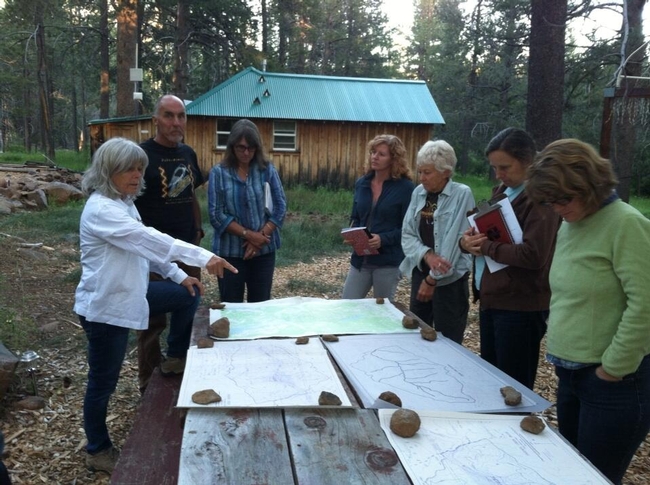
California Naturalists examine watershed maps

2016-05-31T19:34:13-07:00July 29th, 2014|

Everyone Plays a Part in Protecting California Citrus

Protecting California Citrus

By Victoria Hornbaker; Ag Alert 

Recently, the U.S. Department of Agriculture released its final crop estimate for the Florida orange crop, reflecting a reduction of 30 million cartons in total production from the previous season. There is no denying the devastating impact that Huanglongbing has had on the Florida citrus industry since the disease was first discovered in 2005. A drive through Florida citrus country will offer vastly different scenery than that of California’s premier citrus-producing regions.

In some respects, the California citrus industry has been fortunate to learn from the situation in Florida and has taken a very proactive approach to protect itself from a similar fate. In 2009, the industry supported a mandatory self-assessment to fund a comprehensive treatment and trapping program to manage the insect carrier of HLB, the Asian citrus psyllid, and prevent HLB from taking hold.

The Asian citrus psyllid is now endemic throughout a majority of Southern California, particularly in dense, urban areas where citrus trees can be found in six out of every 10 backyards. In March 2012, HLB was discovered for the first time in a backyard citrus tree in Los Angeles County. Although there have not been any additional confirmed cases of HLB since then, as an industry we must remain vigilant statewide in order to protect our $2 billion citrus crop.

Currently, there are eight counties in California that are entirely quarantined for the Asian citrus psyllid: Imperial, Los Angeles, Orange, Riverside, Santa Barbara, San Bernardino, San Diego and Ventura. Additionally, portions of Fresno, Kern, San Luis Obispo and Tulare counties are also under quarantine for the Asian citrus psyllid.

The total quarantined area statewide is now 46,530 square miles. Maps are available online at www.cdfa.ca.gov/plant/go/acp-quarantine.

With a large portion of the state’s commercial citrus production now within quarantine zones, it is increasingly important that growers and packers are up to date on current regulations and protocols, to best manage psyllid populations and prevent the pest from spreading any further.

There are two approved options under the Bulk Fruit Movement Performance Standard available for commercial citrus growers and packers to comply with the quarantined regulations: Remove all leaves and stems/plant debris using a field cleaning machine, or apply a University of California integrated pest management-recommended material within 14 days prior to harvest.

There are no restrictions on moving fruit with leaves and stems if shipping to a packinghouse or processing facility located within the same quarantine boundary.

Asian citrus psyllids can easily “hitchhike” on citrus plant debris, so it’s important that we all do our part to minimize the movement of plant material between work sites. It is strongly recommended that growers and packers work with farm labor contractors, picking crews, pesticide applicators and hedging/topping services to ensure that all equipment, picking bags, field bins, clothing and gloves are free of stems and leaves before leaving the field.

We all have a commonality in agriculture and can understand the pressures posed by invasive insects and diseases. This is a fight that no commodity can win without the support of homeowners and consumers, which is why everyone with a backyard citrus tree should:

  • Not move citrus—Do not move citrus plants, plant material or fruit into or out of a quarantine area or across state or international borders.
  • Inspect your trees—Inspect your citrus trees for signs of the psyllid or HLB whenever watering, spraying, pruning or otherwise tending to trees.
  • Plant responsibly—Plant trees from reputable, licensed California nurseries.
  • Talk to your local nursery—Ask about products that are available to help stop the Asian citrus psyllid.
  • Graft with care—Use only registered budwood that comes with source documentation.
  • Be mindful of clippings—Dry or double-bag plant clippings prior to disposal.
  • Cooperate—Cooperate with agricultural officials who are trapping and treating for the Asian citrus psyllid.

By working together, we can help stop the Asian citrus psyllid and protect California citrus from Huanglongbing.

2016-10-14T21:15:31-07:00July 28th, 2014|
Go to Top