
Pacific Legal Foundation Appeals to U.S. Supreme Court Over Water Cutbacks Based on Delta Smelt Biological Opinion

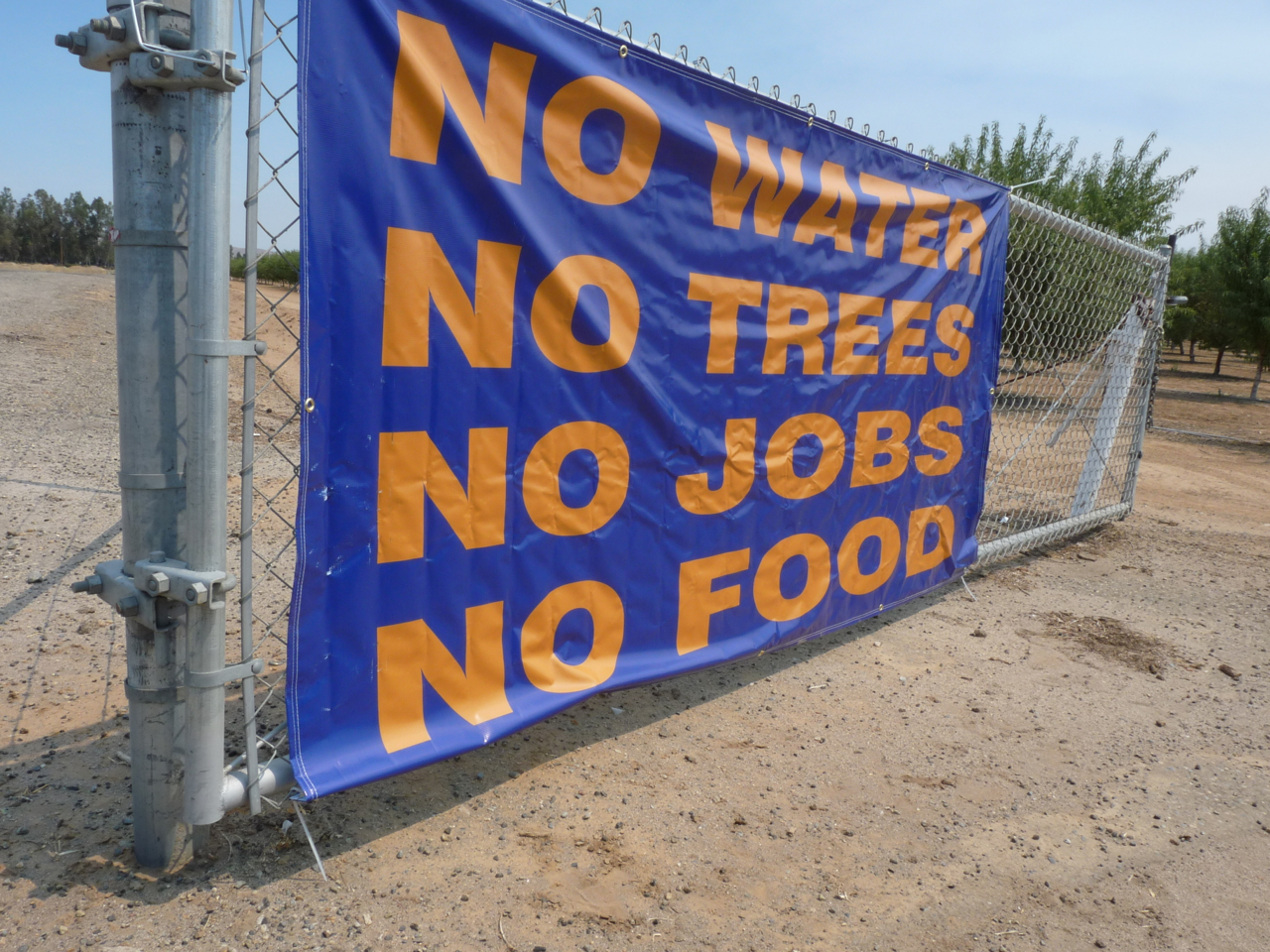
On behalf of San Joaquin Valley almond, walnut, and pistachio growers, Pacific Legal Foundation (PLF) filed an appeal TODAY, asking the U.S. Supreme Court to review a Ninth Circuit decision this past March that upheld the Delta smelt “biological opinion” — an Endangered Species Act regulation that has caused devastating water cutbacks in Central and Southern California, worsening the effects of the current drought.

PLF’s petition for certiorari asks the High Court to reconsider — and reverse — the controversial precedent on which the Ninth Circuit relied:  the Supreme Court’s 1978 decision in TVA v. Hill, which gives a blank check for onerous species regulations, “whatever the cost.”

PLF’s appeal:  Regulators broke their own rules by ignoring economic impacts

Listed as “threatened” under the ESA, the smelt is a three-inch fish in the Sacramento-San Joaquin Delta.  In a controversial strategy to help the smelt, regulations under the 2008 “biop” send vast quantities of fresh water directly to the ocean — instead of storing it behind dams or pumping south for use in cities and towns and on farms.  However, the smelt hasn’t improved — but the economy has suffered, with even more severe effects as the natural drought has set in.

PLF has been battling the Delta smelt water cutbacks for many years, and once before sought Supreme Court review, in our separate challenge based on the Commerce Clause.

PLF’s current case is based on the fact that the U.S. Fish and Wildlife Service violated its own regulations in drafting the Delta smelt biop.  Specifically, the biop’s drafters ignored the potential harms — even though they were supposed to take economic considerations into account.

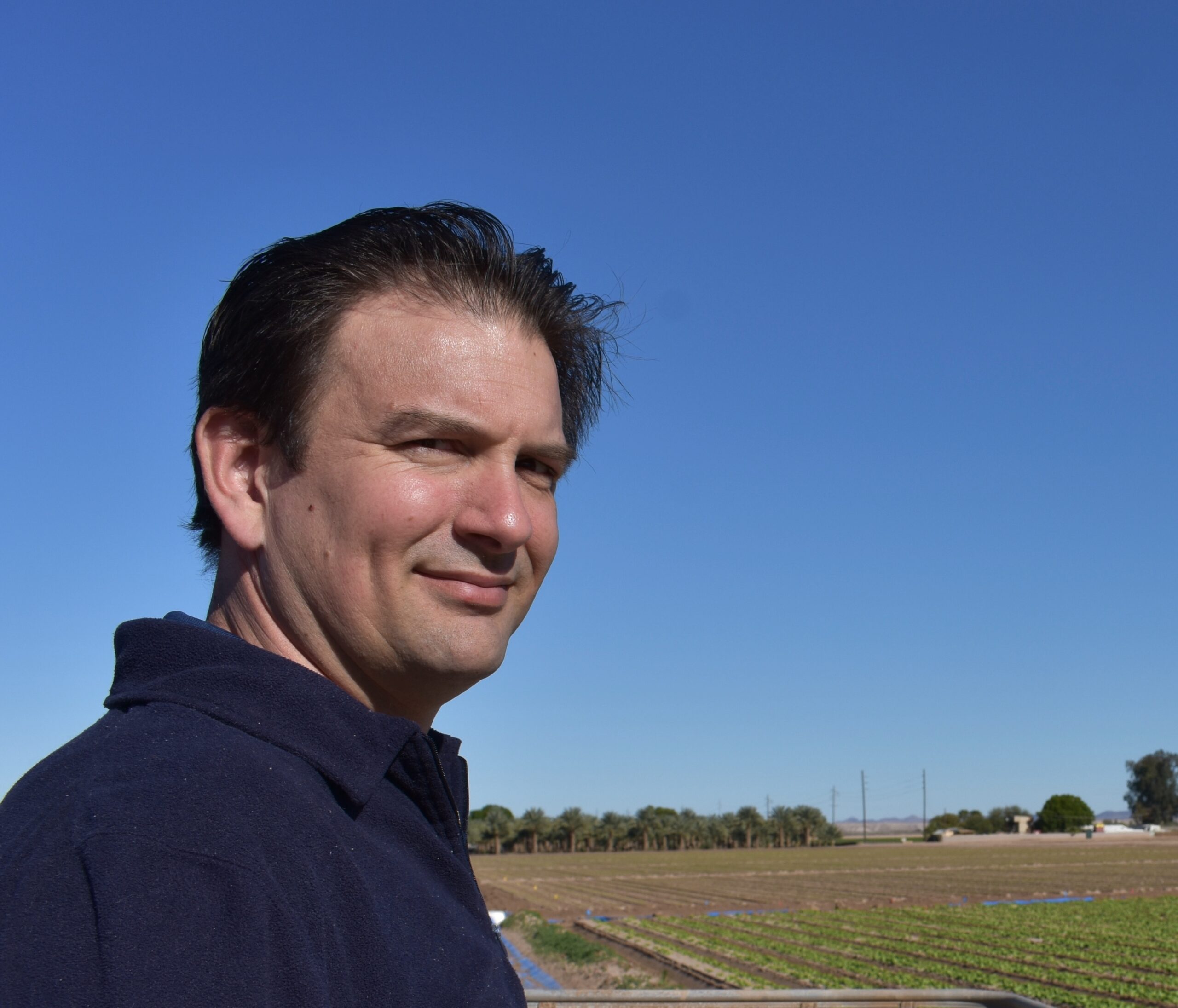
Damien M. Schiff, Principal Attorney, Pacific Legal Foundation's National Litigation Center

Damien M. Schiff, Principal Attorney, Pacific Legal Foundation’s National Litigation Center

“Under the U.S. Fish and Wildlife Service’s own rules, officials must consider economic impacts of proposed ESA regulations,” said PLF Principal Attorney Damien Schiff.  “But with the smelt biop they bypassed this requirement.  We’re asking the Supreme Court to call them out for not making good on their legal duty — and on their duty to the public interest.

“The economic impacts that regulators ignored have been tremendous — and tremendously negative,” Schiff continued.  “Even before the drought, pumping restrictions fallowed hundreds of thousands of acres of farmland, contributing to unemployment of 40 percent in some rural communities.  In Southern California, we saw what amounts to a Delta smelt tax, with water rates hiked by 17 percent or more in some areas.

“The biop has also worsened the impacts of the drought,” he added.  “It reduced the amount of water that was stored when we had ample rainfall and should have been saving for the dry times.”

PLF asks Supreme Court to help drought-stricken Californiaby rejecting the Delta smelt biop — and the “anti-human” TVA v. Hill

In 2010, then-U.S. District Court Judge Oliver W. Wanger, of Fresno, struck down the Delta smelt biop, holding that it had been drafted “arbitrarily and capriciously,” with “sloppy science and uni-directional prescriptions that ignore California’s water needs.”

However, this past March, a divided Ninth Circuit panel reversed Wanger’s order that the biop be rewritten.  Although the Ninth Circuit acknowledged that the biop is a “chaotic document,” poorly reasoned and written, the court cited TVA v. Hill in upholding it.

“The Ninth Circuit’s ruling was another example of the anti-human bias of TVA v. Hill and its staggering assertion that species protection takes absolute precedence over all other considerations,” said Schiff.  “As California suffers a third year of drought, we are asking the Supreme Court for relief from illegal regulatory cutbacks on water — and from the pernicious judicial precedent that is used to justify them.

TVA’s indifference to the welfare of human beings was a misreading of the Endangered Species Act from the first, but it’s more incorrect than ever today,” Schiff said.  “Ironically, the Ninth Circuit’s decision undercuts Congress’ attempts to temper TVA’s extremism.  Congress added a framework to the ESA requiring ‘reasonable and prudent alternative[s]’ when protecting species.  The FWS’s rule for considering economic impacts furthers this purpose of bringing balance to the process.  Yet the Ninth Circuit has permitted the agency to violate that rule and ignore the devastating impact of water cutbacks on families, farms, businesses, and the California economy.

“In recent years the U.S. Supreme Court has begun to back away from TVA,” Schiff noted.  “The Delta smelt case offers the court an opportunity to help drought-scorched California — and to finally overturn this radical and harmful precedent.”

PLF represents Central Valley farmers

In all of PLF’s legal efforts against the Delta smelt regulations, PLF attorneys represent three farms in California’s San Joaquin Valley that have been seriously affected, since 2008, by the water cutbacks:  Stewart & Jasper Orchards (an almond and walnut farm); Arroyo Farms (an almond farm); and King Pistachio Grove (a pistachio farm).  PLF represents the clients in this case — as in all our cases — free of charge.

The case is Stewart & Jasper Orchards v. Jewell.  PLF’s petition for certiorari, a video, a blog post, and a podcast, are available at:  www.pacificlegal.org.


About Pacific Legal Foundation

Donor-supported Pacific Legal Foundation (www.pacificlegal.org) is a nonprofit public interest watchdog organization that litigates for limited government, property rights, and a balanced approach to environmental regulation, in courts across the country.  PLF represents all clients free of charge.

2018-04-23T12:23:43-07:00October 1st, 2014|

WIFSS Animals in Disasters Courses Piloted in Sonoma

2015 WIFSS Animals in Disaster Course Series

Source: Chris Brunner; UC Davis Western Institute for Food Safety and Security


Without coordinated response, awareness and resources, those animals left behind in a natural or man-made disaster most often do not survive. The Western Institute for Food Safety and Security (WIFSS) offers a series of Animals in Disasters courses that help prepare first responders and community members for animal-related emergencies.

WIFSS instructors, Tracey Stevens, deputy director, Animals in Disasters Project, and Dr. Michael Payne, dairy Ooutreach coordinator, piloted two new Department of Homeland Security Animals in Disasters courses this summer in Sonoma, California.

Class participants in “Emergency Animal Sheltering: Veterinary Considerations” learned skills and knowledge on how to establish an emergency animal shelter, and how to safely shelter and reunify animals that have been displaced during a disaster. In the “First Responder Guidelines for All Hazards Large Animal Emergency Evacuation” class, emergency personnel were provided instruction on safe approaches to emergency evacuation of large animals.

First responders, county officials, animal services personnel, veterinarians and other individuals can look forward to the 2015 WIFSS Animals in Disaster Course series which, in addition to the two courses above, will include:

  • Guidelines for Establishing an Emergency Animal Shelter: Veterinary Considerations – CE approved
  • Loose Livestock, Injured Wildlife and Humane Euthanasia of Animals for First Responders
  • First Responder Guidelines for Equine Emergencies – Level 1
  • Veterinarian Integration into Multi-Agency Emergency Equine Rescue and Disaster Response – CE approved

View WIFSS Animals in Disasters for announcements of course dates and registration information.

2021-05-12T11:17:15-07:00October 1st, 2014|

AG CRIME ALERT: HUNDREDS OF FOSTER FARMS CHICKENS SLAUGHTERED

Investigators with the Fresno County Sheriff’s Office Ag Task Force are asking for the public’s help in identifying the suspects responsible for a Foster Farms facility burglary and hundreds of Foster Farms chickens slaughtered.

On September 20, shortly before 8:30am, deputies responded to the facility located at 3691 W Swanson Ave in Caruthers regarding the burglary.

The investigation revealed the suspects pulled back a portion of the fence and entered the chicken shed. Once inside, the suspects used a golf club, and possibly another similar type instrument, to slaughter the birds.

Foster Farms officials advised nine hundred twenty chickens were killed during the incident. They put the loss at approximately five thousand dollars.

Foster Farms is now offering a reward for information leading to the arrest and prosecution of the persons responsible for the crime. Anyone with information on this investigation is asked to contact Ag Task Force detectives at 559-600-8150, the Sheriff’s Office at 559-600-3111, or CrimeStoppers at 559-498-STOP(7867).

The Fresno Sheriff’s Ag Task Force’s primary focus is to investigate and suppress all agriculture-related and all metal theft-related crimes in Fresno County, its secondary objective is to prevent ag crime through education and communication with partners in the ag industry. ACTION Network Ag Crime

The  Fresno Sheriff’s Ag Task Force also participates in ACTION (Ag Crimes Technology Information & Organization Network), an association of 13 central California counties that regularly share information, support and technology to battle Ag and rural crime. Ag criminals often freely move from one County to the next, and this association has been very effective in bring criminals to justice who live in one County and commit crimes in another County.

You’ll find useful anti-Ag-crime tips on the Office of the District Attorney County of Tulare website and information about the Owner Applied Number (OAN) Program.

Another great resource is the California Rural Crimes Prevention Task Force website.

2016-05-31T19:33:23-07:00October 1st, 2014|

Drought’s impact on crops

Source: Dale Kasler; The Sacramento Bee

It’s harvest time in much of California, and the signs of drought are almost as abundant as the fruits and nuts and vegetables.

One commodity after another is feeling the impact of the state’s epic water shortage. The great Sacramento Valley rice crop, served in sushi restaurants nationwide and exported to Asia, will be smaller than usual. Fewer grapes will be available to produce California’s world-class wines, and the citrus groves of the San Joaquin Valley are producing fewer oranges. There is less hay and corn for the state’s dairy cows, and the pistachio harvest is expected to shrink.

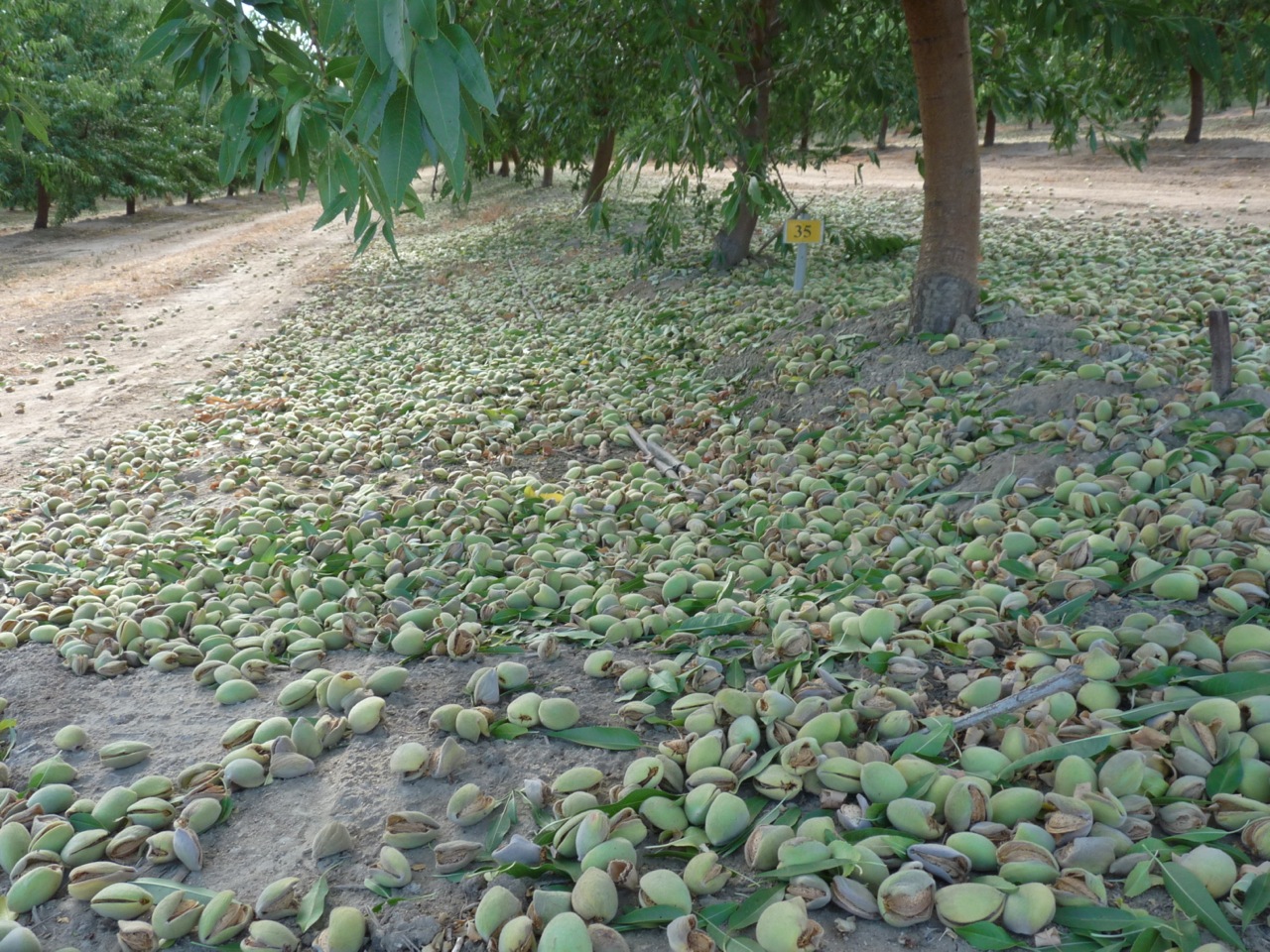
Even the state’s mighty almond business, which has become a powerhouse in recent years, is coming in smaller than expected. That’s particularly troubling to the thousands of farmers who sacrificed other crops in order to keep their almond orchards watered.

While many crops have yet to be harvested, it’s clear that the drought has carved a significant hole in the economy of rural California. Farm income is down, so is employment, and Thursday’s rain showers did little to change the equation.

An estimated 420,000 acres of farmland went unplanted this year, or about 5 percent of the total. Economists at UC Davis say agriculture, which has been a $44 billion-a-year business in California, will suffer revenue losses and higher water costs – a financial hit totaling $2.2 billion this year.

Rising commodity prices have helped cushion at least some of the pain, but more hurt could be on the way. With rivers running low and groundwater overtaxed, the situation could get far worse if heavy rains don’t come this winter.

“Nobody has any idea how disastrous it’s going to be,” said Mike Wade of Modesto, executive director of the California Farm Water Coalition, an advocacy group based in Sacramento. “Is it going to create more fallowed land? Absolutely. Is it going to create more groundwater problems? Absolutely.

“Another dry year, we don’t know what the result is going to be, but it’s not going to be good,” Wade said.

Central Valley residents don’t have to look far to see the effects. Roughly one-fourth of California’s rice fields went fallow this year, about 140,000 acres worth, according to the California Rice Commission, leaving vast stretches of the Sacramento Valley brown instead of their customary green.

“We’d all rather be farming, as would everybody who depends on us – the truck drivers, the parts stores, the mills,” said Mike Daddow, a fourth-generation rice grower in the Nicolaus area of southern Sutter County.

Daddow opted to fallow 150 of his family’s 800 acres this year and counts himself lucky. “We did better than a lot of people,” he said.

Last week, Daddow was gearing up for the harvest, which begins Monday. It was pleasantly warm, but the faint smoky smell from the King fire was another unwelcome reminder of the parched season of discontent.

“It affects me, yes, I will have less profit,” he said. “It affects hourly workers. If there’s no ground to till, I can’t hire them to do anything.”

Daddow hired just six workers during spring planting, instead of the usual nine or 10.

Calculating total job losses related to the drought is difficult, especially in an industry in which many workers are transient and much of the work is part time. The state Employment Development Department, drawing from payroll data, said farm employment has dropped by just 2,700 jobs from a year ago, a decline of less than 1 percent.

But experts at UC Davis say they believe the impact is more severe. Richard Howitt, professor emeritus of agricultural economics, said he believes the drought ultimately will erase 17,000 jobs. He bases that, in part, on the increased number of families seeking social services.

The human cost shows up at rural food banks, which are reporting higher demand for assistance from farmworkers and their families. At the Bethel Spanish Assembly of God, a church in the Tulare County city of Farmersville, the number of families receiving food aid every two weeks has jumped from about 40 last year to more than 200. Farmersville, a city of 10,000, is at the heart of a region that grows an array of crops, from lemons to pistachios to grapes.

“Some of them are working … but they’re not putting in the hours,” said the Rev. Leonel Benavides, who is also Farmersville’s mayor. Thanks to state-funded drought relief, the church has been able to meet the increased demand – and then some.

“Instead of just two boxes, we give them three,” Benavides said.

The effect goes beyond the farm fields. N&S Tractor, which sells Case IH brand farm equipment throughout the Central Valley, has seen business tail off as farmers conserve cash.

“It’s not just our dealership,” said N&S marketing director Tim McConiga Jr., who works out of the company’s sales office in Glenn County. “You talk to John Deere, you talk to Caterpillar, everyone is going to tell you their numbers are down.”

The drought has had varying impacts on different areas of the state, depending in part on who has first dibs on the dwindling water supply. Some growers have stronger water rights than others. Generally speaking, Sacramento Valley farmers have had it easier than their counterparts south of the Sacramento-San Joaquin Delta, where the cutbacks have been more severe.

The Modesto and Turlock irrigation districts are delivering about 40 percent of their usual amounts. The Merced Irrigation District is far worse off, as are many of the West Side areas supplied by the federal Central Valley Project. The Oakdale and South San Joaquin irrigation districts have not had large cutbacks, but leaders worry about a dry 2015.

Regardless of geography, many growers have had to make difficult choices about which fields to water, leaving portions of their farms idle.

Bruce Rominger of Winters, chairman of the California Tomato Growers Association, made the decision to push ahead with his tomato crop at the expense of other commodities. With tomatoes selling for a robust $83 a ton, vs. about $70 a year ago, it was a matter of simple economics.

“Other crops are not getting the water,” said Rominger, who owns and leases a total of about 5,000 acres. “We sacrificed some alfalfa, we sacrified some sunflowers, we sacrificed quite a bit of rice. We fallowed 25 percent of our farm.”

Much of the processing tomato crop goes to canneries in Modesto, Oakdale, Escalon and Los Banos.

Choosing to focus on one crop doesn’t guarantee victory. Even the $4 billion almond industry – the great success story of California agriculture in recent years – could not be shielded from the drought’s effects.

As worldwide demand for almonds has boomed, prices have soared past $4 a pound and farmers have responded with more supply. Orchard plantings have continued unabated, even this year. With water supplies running low, many almond growers set aside other commodities to keep their orchards going.

Even so, the almond yield declined. Blue Diamond Growers, the big farmer-owner almond cooperative based in Sacramento, predicts that production in California will fall this year to around 1.9 billion pounds when the harvest is complete in a few weeks. That compares with the 2 billion pounds harvested last year and the U.S. Department of Agriculture’s forecast, released in late June, that this year’s crop would total 2.1 billion pounds.

What went wrong? Almonds are one of the thirstiest crops around, and there wasn’t enough water to generate big yields.

“I don’t think there was anyone who used as much (water) as they normally do,” said Dave Baker, director of member relations for Blue Diamond. The hot spells in June and July “stressed the trees even further” and curtailed production, he said.

With California accounting for 80 percent of global almond supply, Baker said he’s worried about being able to meet demand. “We have a growth industry,” he said.

Blue Diamond has plants also in Salida and Turlock, and several smaller processors are in or near Stanislaus County.

The lack of water last spring likely also has stunted navel orange production in the San Joaquin Valley, where harvest is expected to begin in a few weeks.

“We’re expecting some kind of damage to the crop,” said Alyssa Houtby, spokeswoman for California Citrus Mutual, a grower-owned association based in Tulare County. “We didn’t have the water in those key months.”

Economist Vernon Crowder, a senior vice president with agricultural lender Rabobank, said farmers went into this difficult season with a couple of advantages: Most commodity prices have risen in recent years, and most growers are in pretty good financial shape as a result. But another dry year could bring more serious hardship, he said.

“They have a little bit of cash to withstand this,” Crowder said. “They’re going to get through it. The real question is what is going to happen next year.”

Similar questions are being raised in the California wine industry, which produces much of its volume in the Modesto area. The last two grape harvests were extraordinarily strong, leaving an overhang of product that should help offset the slight declines in this year’s harvest. “Pricing should be steady,” said industry consultant Robert Smiley, a professor emeritus of business at UC Davis.

That doesn’t eliminate fears that next season’s crop could shrink substantially. Craig Ledbetter of Vino Farms, a Lodi grape producer, had enough water this year but said he’s afraid he’ll receive “curtailment notices” from the state signaling significant cutbacks in next season’s water supply.

“I’m very nervous about water,” said Ledbetter, who also raises wine grapes in Sonoma County. “If we don’t have a rainy winter, I can pretty much guarantee we’re all going to be receiving curtailment notices. If that happens, we’re going to be concerned about keeping the vine alive rather than harvesting it.”

2016-05-31T19:33:23-07:00September 30th, 2014|

California Citrus Mutual to Contribute $150k to Water Bond Campaign; $50k to Latino Outreach

California Citrus Mutual (CCM) will directly contribute $150,000 to the campaign to pass Proposition 1, the water bond measure.

The CCM Board of Directors voted unanimously to support the measure in order to secure a reliable and sustainable water supply for California agriculture and communities across the state.

“We are in a state of unprecedented crisis in terms of water supply,” says CCM President Joel Nelsen.  “CCM worked closely with members of the legislature to create a long term solution path for the State’s water infrastructure and sustainability needs.  It is essential to the future of agriculture in California that voters approve Proposition 1 this November.”

Proposition 1 includes $2.7 billion to build additional water storage that will alleviate pressure upon Millerton Reservoir and water users on the Friant-Kern Canal in critical drought years such as this.  Approximately 58% of U.S. fresh citrus is grown by farmers in the Friant service area who received zero surface water allocation from the Central Valley Project for the first time in the project’s history this year.

“CCM’s contribution of $150,000 is an investment in our future, and the future of California,” says CCM Board Chairman Kevin Severns.  “It is critical that voters understand the importance of the issue and vote to pass Proposition 1.”

Additionally, CCM has committed $50,000 to the “El Agua es Asunto de Todos” (Water is Everybody’s Business) outreach campaign to raise awareness among the Latino community about the importance of a reliable water supply for California’s economy and jobs.

“CCM is proud to support the ‘El Augua’ campaign in its effort to empower the Latino community to support policy that creates water for California,” concludes Nelsen.

2016-05-31T19:33:23-07:00September 29th, 2014|

Asian Citrus Psyllid Quarantine Covers Tulare County Completely

UPDATE: The Asian citrus psyllid (ACP) Quarantine covers Tulare County, in its entirety, following the detection of two psyllids in the City of Tulare. The first ACP was detected in a trap in a residential neighborhood on September 10, in the City of Tulare.  The second detection was on September 17, also in a residential setting within the City of Tulare.  These detections, when added to previous detections elsewhere in the county, dictate that a county-wide quarantine is the most effective response to contain the pest.  A map is available online at: www.cdfa.ca.gov/plant/go/acp-quarantine 

The quarantine prohibits the movement of host nursery stock out of the quarantine area and requires that all citrus fruit be either cleaned of leaves and stems or treated in a manner to eliminate ACP prior to moving out of the quarantine area.  Residents with backyard citrus trees in the quarantine area are asked to not remove fruit from the quarantine area.

In addition to quarantines in portions of Fresno, Kern, and San Luis Obispo counties, ACP entire-county quarantines remain in place in Imperial, Los Angeles, Orange, Riverside, San Bernardino, San Diego, Santa Barbara, and Ventura counties.

The ACP is an invasive species of grave concern because it can carry the disease huanglongbing (HLB), also known as citrus greening.  All citrus and closely related species are susceptible hosts for both the insect and the disease.  There is no cure once a tree becomes infected.  The diseased tree will decline in health until it dies.

HLB has been detected just once in California – in 2012 on a single residential property in Hacienda Heights, Los Angeles County.  HLB is known to be present in Mexico and in parts of the southern U.S.  Florida first detected the psyllid in 1998 and the disease in 2005, and the two have been detected in all 30 citrus-producing counties in that state.  The University of Florida estimates the disease has tallied more than 6,600 lost jobs, $1.3 billion in lost revenue to growers and $3.6 billion in lost economic activity.  The disease is present in Georgia, Louisiana, South Carolina, and Texas.  The states of Alabama, Arizona, Hawaii, and Mississippi have detected the pest but not the disease.

Residents in the area who think they may have seen the Asian citrus psyllid are urged to call CDFA’s Pest Hotline at 1-800-491-1899.  For more information on the Asian citrus psyllid and huanglongbing disease, please visit: www.cdfa.ca.gov/go/acp

Featured Photos, Source: M.E. Rogers, M. Luque-Williams, on CDFA website, “ASIAN CITRUS PSYLLID PEST PROFILE


Citrus Pest and Disease Prevention Committee Vacancy

The California Department of Food and Agriculture is announcing one vacancy on the Citrus Pest and Disease Prevention Committee. The Committee advises the CDFA secretary on activities associated with the statewide citrus specific pest and disease work plan that includes, but is not limited to outreach and education programs and programs for surveying, detecting, analyzing, and treating pests and diseases specific to citrus.

The members receive no compensation, but are entitled to payment of necessary travel expenses in accordance with the rules of the Department of Personnel Administration.

A committee member vacancy exists for a grower representative from Tulare County and will expire on September 30, 2017. Applicants should have an interest in agriculture and citrus pest and disease prevention. Individuals interested in being considered for a committee appointment should send a brief resume by November 1, 2014 to the California Department of Food and Agriculture, Plant Health and Pest Prevention Services, 1220 N Street, Room 221, Sacramento, California 95814, Attention: Victoria Hornbaker.

For additional information, contact: Victoria Hornbaker, Program Manager at (916) 654-0317, or e-mail (Victoria.hornbaker@cdfa.ca.gov).

2016-05-31T19:33:23-07:00September 29th, 2014|

Plant Scientist Urges Proactive Palmer Amaranth Prevention

By Colby Tibbet, Cal Ag Today reporter

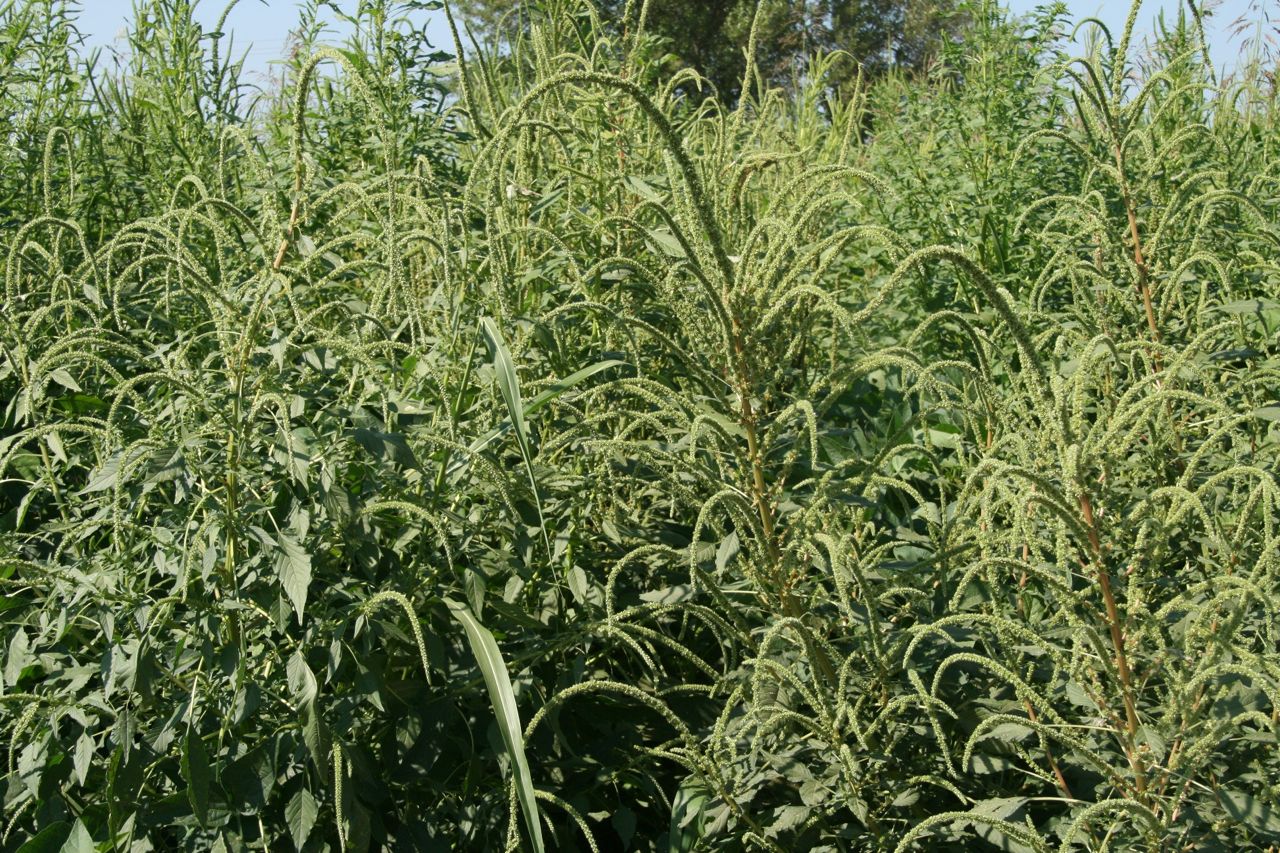
Palmer amaranth, aka Amaranthus palmeri S. watson or carelessweed, is an annual herb of the pigweed species that is native to California where it thrives and poses a serious threat to farming.

Amaranth

Amaranthus palmeri S. Watson – carelessweed (Source on USDA Website: Britton, N.L., and A. Brown. 1913. An illustrated flora of the northern United States, Canada and the British Possessions.


Lynn Sosnoskie, a project scientist in the UC Davis Department of Plant Sciences who focuses on weed ecology and biology, says Palmer amaranth, spotted on the edge of fields in California, is remarkably aggressive both in growth rate and spread amidst field crops. It develops a lot of wind-blown seeds that spread rapidly.”

“I would suggest that growers in the state of California be particularly diligent about this plant,” said Sosnoskie. “It is a desert annual and is particularly well-adapted to dry environments where it can out-compete, create root growth and achieve stability well. And the recent drought has only escalated the problem.”

“Preventive measures are absolutely essential before this plant becomes established,” continued Sosnoskie. “We found out the hard way in the Southeastern U.S. that Palmer amaranth produces an exceptional number of seeds; if even one plant is missed by applications or escapes regular herbicide applications, that plant can essentially repopulate an entire field.”

“So its absolutely essential that growers here and everywhere become familiar with the weed and remove all plants quickly from a field before it hits reproductive maturity and forms seed,” she said.

Sosnoskie added that some cotton fields in the south have suffered up to 50 percent yield losses and worse. “Some growers have actually abandoned their fields and haven’t harvested their cotton for those years,” said Sosnoskie.

Sources and Resources:

Illustration Source: Amaranthus palmeri S. Watson – carelessweed (Source on USDA Website: Britton, N.L., and A. Brown. 1913. An illustrated flora of the northern United States, Canada and the British Possessions. 3 vols. Charles Scribner’s Sons, New York. Vol. 2: 2. Courtesy of Kentucky Native Plant Society. Scanned by Omnitek Inc. Usage Requirements.

USDA Natural Resources Conservation Service

Palmer Amaranth

Compensatory growth and seed production: A tale of two weeds

2016-05-31T19:33:23-07:00September 27th, 2014|

CDFA Secretary Karen Ross Celebrates Banned Books Week

According to the American Library Association, more than 11,300 books have been “challenged” by schools, bookstores and libraries. Banned Books Week was created to celebrate the freedom to read, and celebrates open access to information.

To draw attention to the harms of censorship and celebrate the importance of free speech, the California State Library is hosting an online video “Read-Out” during Banned Book Week, September 21-27.

Many books that have been removed from library shelves and classrooms over the years are now considered classics of modern literature and taught in schools throughout the country.

John Steinbeck’s The Grapes of Wrath is included in that list, and is the same book from which CDFA Secretary Karen Ross was invited to read. In 1939, it was banned due to its harsh portrayal of Dust Bowl refugees and the hardships they faced coming west. It was banned in at least one California county, and Joseph Stalin banned it in the Soviet Union.

California State Librarian Greg Lucas started the week by reading a passage from One Flew Over the Cuckoo’s Nest, and Secretary Ross has joined other Brown Administration cabinet members in reading from banned books throughout the week.

Banned Books Week ends on September 27; make sure to celebrate your right to read and your freedom of speech.

2016-05-31T19:33:24-07:00September 26th, 2014|

Water Bond Campaign Launched by Tree Nut Industry

Tree Nut Industry Partnership to Help Fund Campaign to Pass Water Bond


The Western Agricultural Processors Association (WAPA), the Almond Hullers and Processors Association (AHPA), American Pistachio Growers (APG) and the California Pecan Growers Association have come together to help fund the campaign to support Proposition 1 – The Water Bond.

The Water Bond is a multi-pronged approach to solve a portion of the state’s water crisis by providing $7.5 million for water quality, supply, treatment, and storage projects.

The bond is on the November 2014 ballot and is completely in the hands of California voters.  The participating organizations are asking their members for donations of at least $1,000 each with the goal of raising $200,000 on behalf of the tree nut industry.

Agriculture is being asked to raise $5 million towards the $20 million campaign, with labor, business and other organizations kicking in the remaining $15 million.

Other agricultural commodities, including cotton, citrus, rice, fresh fruit and dairies have already committed to contributing in excess of $100,000 each.

With over 1.5 million total tree nut acres in California, it boils down to approximately 14 cents per acre!

The organizations are asking their membership “to consider contributing and send your contributions in ASAP, as the campaign is already underway!

2016-05-31T19:33:24-07:00September 25th, 2014|

New Standards for California Olive Oil

By: Monique Bienvenue; Cal Ag Today Social Media Manager

The California Department of Food and Agriculture has approved grading and labeling standards for California olive oil, which are scheduled to take effect on September 26, 2014.

The standards were recommended by the recently-formed California Olive Oil Commission – brought into existence by olive oil producers in recognition of their fast-growing industry. The standards will set California-specific guidelines that will apply to handlers producing 5,000 gallons or more of olive oil made from olives grown in California.

“California agriculture has an enviable reputation for high-quality products sought by consumers here and around the world,” said CDFA Secretary Karen Ross. “We believe the time has come to designate a ‘California-grown’ olive oil, and these standards are an excellent way to do it.”

The standards, which are based on scientific research at the UC Davis Olive Center, are unique to California production – only extra-virgin olive oil is produced here, and the standards will establish a more stringent limit for free fatty acids, a negative attribute that signals a breakdown of olive oil quality due to exposure to heat, light and oxygen.

The UC Davis Olive Center was built in 2008 and has built a strong university/industry coalition aimed at meeting the research and education needs of olive growers and processors. The Center has delivered more than $3 million in research benefits while supporting itself through product sales, fee-based laboratory analysis, research grants, and donations.

For additional information, please click on the link below:
http://it.cdfa.ca.gov/igov/docs/hearingdocs/Ca_Olive_Oil_Standards_Sept26_2014.pdf


2016-05-31T19:33:24-07:00September 24th, 2014|
Go to Top