Tasteful Selections Opens Cal Green Potato Facility

Tasteful Selections Opens Cal Green Potato Facility in Arvin, CA

By Patrick Cavanaugh, Associate Editor

Bob Bender, a partner with CSS Farms, in Watertown, South Dakota, came out to Kern County several years ago to grow many different crops including chip potatoes, garlic, onions and bell peppers, as well as black-eyed peas. “We were looking for an opportunity in California to diversify our company so that we were not so dependent on the chip potato income.”

Bender said he was always looking for crops in which he could diversify, and in 2007, he had the opportunity to grow some baby, bite-sized potatoes for a Canadian company. “This worked out well for a few years, and then we decided in 2009 to pack the baby potatoes under our own CSS Farms label,” Bender said.

“That business started taking off a lot bigger than we expected, and in 2010, we saw that the business was growing to be too much for us to handle. We needed some marketing help because we did not know  much about it,” said Bender. “Plus, we were packing everything in 50-pound cartons, and we knew there would have to be more margin to the product if we sold directly to retail.

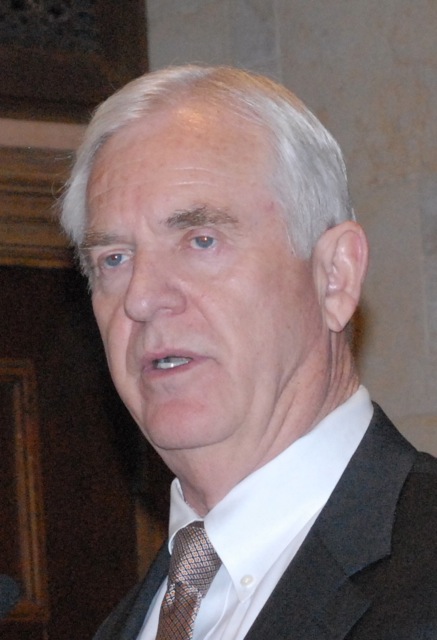
Bob Bender, Tasteful Selections

Bob Bender, Tasteful Selections

“That’s when we teamed up with the Wysocki family, owners of the Bancroft, Wisconsin-based RPE Company and experts in packing and marketing,” said Bender. “The marketing took off, and they built our first packing shed in a leased facility in Bakersfield. They sold product in smaller mesh bags for the consumer retail market under the Tasteful Selection brand,” noted Bender, who is now president and general manager of Tasteful Selections.”

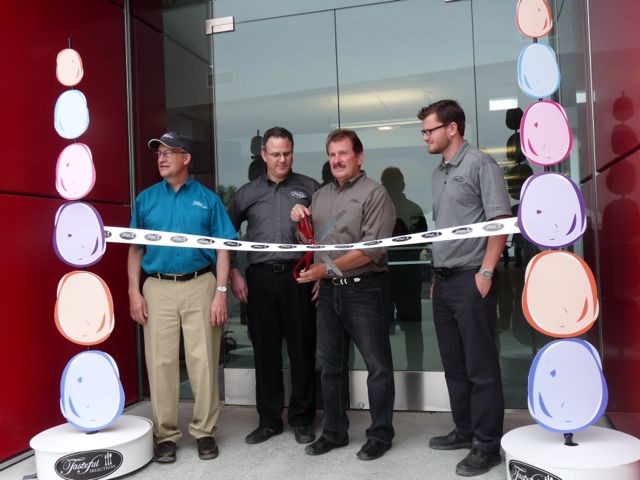
Fast forward to March. 18, 2015 when CSS, along with RPE, and Stevens Point, Wisconsin-based Plover River Farms Alliance, Inc. partnered together and opened a new, stainless steel, 200,000 square foot facility in Arvin, near Bakersfield—all dedicated to Tasteful Selections specialty potatoes.

The expansion increases Tasteful Selections’ production capacity from eight to 12 packaging lines, doubles the potato washing capacity and adds more shipping docks and improved refrigeration and storage to meet the company’s double digit growth (over the past five years), leading the specialty potato category.

In all, the company sells eight flavors of potatoes in one-, two- or three-bite sizes, plus offers a medley of flavors in each bite size. The potatoes have unique flavors, creamy textures and tender skins. The products are pre-washed, so consumers do not have to clean or peel the product. And the small sizes equate to faster cooking times.

“Fifty percent of our team is marketing, so we’re not just growing and packing the potatoes. RPE handles all of our marketing and sales, which has been so instrumental in our growth,” said Bender, who now oversees the day-to-day operations in California. RPE has been a tremendous asset to Tasteful Selections; the fact that we are in all fifty states, in 52 percent of all grocery stores, with growth in every store, says a lot about RPE,” Bender noted.

The fact that the facility was built with all stainless steel components is an invaluable addition to our operations and food safety protocols.  The facility’s design honors Cal Green Certification Standards. The Cal Green Certification ensures that we are maximizing our efficiency while reducing our environmental impact. Not only does this benefit us, it also helps the surrounding communities in promoting water savings, environmental responsibility, cost effectiveness and a healthier place to live and work for its currently 257 employees.

Tasteful Selections

Tasteful Selections

Milt Carter is CEO and President of CSS Farms, which grows all the potatoes for Tasteful Selections. “We are co-owner of the company, along with RPE, and the grand opening of our facility is a big day for us as we continue our journey to bring unique potatoes to the potato category and to the table,” said Carter.

“We particularly like the qualities of our baby potatoes, including unique flavors and better taste than the average potato. The uniform sizes we pack allow for uniform cooking times, making cooking easier for the consumer. And the growth we have seen reflects that consumers really like them.”

“When we started Tasteful Selections in 2010, we knew we had something amazing, and even we were surprised by the success that we had,” said Russell Wysocki, President and CEO of RPE. “The opening of this new plant shows that we are consistently investing in our future in specialty potatoes,” he said.

“The new plant will allow us to bring in new product lines, do a better job in precise-sizing, and maintain our high quality standard,” noted Wysocki. “On the farm, Bob and Milt bring us five separate crops a year; we have the ability to deliver the freshest potatoes with the best quality to our customers throughout the country and throughout the season.”

“The one-, two- or three-bite Tasteful Sections potatoes in the one pound or 1.5 pound bag are very popular with consumers.” said Wysocki. “It use to be that you would sell a lot of potatoes in a 10-pound bag, but that’s getting a lot harder to do. However, this product offers consumers a package from which they can get multiple meals, without taking five weeks to consume and perhaps resorting to the garbage can to get rid of them.”

“The baby potatoes are immature potatoes, before they grow bigger, but they still contain all the nutrients found in the larger potatoes,” said Wysocki.

Carter explained, “Our signature flavor Honey Gold baby potatoes are proprietary to Tasteful Selections, and they have a very unique flavor. A high percentage of people the taste distinctive in taste tests, and most like it very much.”

“It’s a great product,” noted Wysocki. “We basically took product that was being discarded in the market 10 years ago. We saw the quality of what was culled, and we felt it was something significant we could bring to the marketplace. So we considered the possibility, then brought it to market, and we have had phenomenal growth,” he said.
2016-05-31T19:30:24-07:00May 17th, 2015|

Court Awards Right to Choose to Gerawan Farming and its Farmworkers

By Laurie Greene, Editor, and Patrick Cavanaugh, News Director

Gerawan Farming, a major family-owned and operated tree fruit and grape operation in Fresno and Madera Counties, established in 1938, and its farmworkers were victorious yesterday when a panel of 5th District California Court of Appeal judges in Fresno ruled the California Agricultural Labor Relations Board (ALRB) violated the law when it forced Gerawan into a statutory Mandatory Mediation and Conciliation (MMC) process with the United Farm Workers of America (UFW) to reach terms in a collective bargaining agreement.

The Court’s decision, filed May 14, 2015, states:

UFW was certified as the employees’ bargaining representative in 1992, but after engaging in initial discussions with Gerawan, disappeared from the scene for nearly two decades. In late 2012, UFW returned and both parties renewed negotiations. A few months later, at UFW’s request, the ALRB (the Board) ordered the parties to a statutory MMC process pursuant to Labor Code section 1164 et seq.1.

Under the MMC process, if a 30-day mediation period does not succeed in producing a collective bargaining agreement (CBA) by voluntary agreement, the mediator decides what the terms of the CBA should be and reports that determination to the Board. Once the mediator’s report becomes the final order of the Board, the report establishes the terms of an imposed CBA to which the parties are bound.

Following the ALRB’s final order adopting the mediator’s report, Gerawan Farming challenged the validity of the order and the MMC process on both statutory and constitutional grounds.

Over the last two years since, the UFW and Gerawan have been mired in a legal battle over who has the authority to represent the nearly 3,000 Gerawan fieldworkers in contract negotiations with Gerawan Farms, the union or the fieldworkers themselves.

A union contract was never implemented by Gerawan employees in the 1990’s, nor did the UFW collect dues and represent the employees in negotiations. Gerawan employees worked hard to advocate and petition (twice) to hold an ALRB-sanctioned election to decertify the union. The decertification election was held in November 2013; however, the ALRB impounded the ballots, and has not counted the votes to date.

Paul Bower, an attorney representing Sylvia Lopez, a Gerawan employee who helped lead the anti-union drive, said, “Gerawan workers are joyful over the decision.”

Here are excepts from the Court Decision:

Among Gerawan’s claims is the contention that UFW’s lengthy absence resulted in an abandonment of its status as the employee’s bargaining representative. We agree with Gerawan’s statutory argument that it should have been given an opportunity to prove abandonment to the Board once UFW requested the MMC process.

More fundamentally, we agree with Gerawan’s constitutional arguments that the MMC statute violates equal protection principles and constitutes an improper delegation of legislative authority.

Where a union has arguably abandoned the employees but later returns to invoke the MMC process, that situation may create a crisis of representation. It is clear that the employees’ right to a representative of their own choosing would be seriously jeopardized in the situation of abandonment by a union where, as here, the absentee union suddenly reappeared on the scene to demand the MMC process.

A union that has had little or no contact with the employees or the employer over many years (here, decades) would be unlikely to have an adequate working knowledge of the employees’ situation or their wishes. From the employees’ standpoint, that union would be reappearing on the scene as something of a stranger.

Most importantly, during the union’s long absence, the employees’ working conditions, wages and attitude toward the union (if they even knew they had a union) may have significantly changed over the years. Indeed, it may be the case that the employees do not want to be represented by that union or any other union, which Gerawan asserts was the situation here.

[Under the MMC process,] “a collective bargaining agreement will be imposed whether the employees want it or not; and it will be imposed with the formerly absent union, whether the employees want its representation or not.” Accordingly, it is appropriate to allow the employer to raise the abandonment issue at that stage, because only that result will preserve the ALRA’s purpose of protecting the employees’ right to choose.

UFW officials said they would appeal the Court’s decision.

2016-05-31T19:30:24-07:00May 16th, 2015|

Top Ten Issues Facing Ag

The Top Ten Issues Facing Agriculture:

California Fresh Fruit Association’s Bedwell Lays Them Out

By Patrick Cavanaugh, California Ag Today

For the first time in nearly eight decades, the California Fresh Fruit Association met in San Diego to carry on all the traditions established over the previous 79 years by the organization originally known as the California Grape & Tree Fruit League.

“How does that feel?” said President Barry Bedwell as he addressed a big part of his membership. “For the most part, I think the feedback has been more than positive. As we explain the rationale behind the name change and why we have moved from a very dear moniker, if you will, for an association that has such a great history, I think it is altogether fitting and proper to recognize our position in the state of California,” said Bedwell.

The Association covers the state from Lake County in the North to the Coachella Valley in the South, and represents 13 commodities with a combined value of $2.5 billion.

“The new name transition has gone very well,” noted Bedwell. “And as we look at 2015, I think it is a ‘schizophrenic’ time for agriculture. On the one hand, as our chairman, David Jackson, pointed out, economically, things look very strong for most commodities.”

“However, here we are in a situation of increasing anxiety. If you look at the feedback every year on our top ten issues, you can see the concentration of issues that are not simply operational in scope. They may be historic in impact when talking about water availability and groundwater management, as we move forward,” said Bedwell. “The availability of water, along with the availability of labor, are simply game changers. They can change things overnight. And I think, inherently, farmers understand that and all of you in this room working together as a supply chain understand that.”

Bedwell then announced his traditional Top Ten Issues Affecting Ag and the association and discussed how they changed from the prior year:

#10  Workers’ Compensation costs.  We bought up our partnership with Zenith Insurance. It’s about how to run programs more efficiently to save you money, but we understand that when it comes to the issue of worker’s comp, it is the issue of the legislature changing the laws to benefit certain classes of participants that leads to higher costs that render our competitiveness more difficult.

#9 Invasive Pest Issues. Look no further than what’s happening with the citrus industry and their struggle agains HLB and the idea of the Citrus psyllid continually being found in new counties throughout the state. Pests for us on one hand are more associated with things like the European Grapevine Moth, where we have done a good job, made progress, and have a chance at eradication, but pests are always on our minds because we are only one quarantine away from not being able to ship our fruit, and we understand that.

#8 Water Quality. We hear so much about water availability, but creeping up into our mindset as well, is water quality because we know we have issues with salts and nitrates in the Valley. How does agriculture get involved with this? It continues to be an issue.

#7 Groundwater Management Legislation. We saw on our list—for the first—groundwater management legislation. This is potentially a game changer. We just had a meeting with some of you in Visalia with the California Water Foundation. They are trying to explain the timeframe for this new law, and quite frankly, the more you learn about it, the more you have to be concerned about any potential outcome other than the scope of agriculture in the state of California.

Because what they are saying in an almost commonsense contradiction is that this has nothing to do with your water rights. Those don’t change, but we may limit the amount of water you can use. That is a tough one to figure out at times, but that is potentially where we are headed in the fourth year of the drought. As you hear the vernacular in Sacramento, the mindset begins to change from one of, ‘Maybe we’ll get rain this year,’ to ‘Maybe we are in the fourth year of a ten-year drought.’ So all of the sudden, the mindset begins to change to more management of water. This is a major concern.

#6 Labor Costs. Knowing and trying to educate legislators about the fact that seventy to perhaps eighty percent of our variable costs as farmers is tied up with labor because we deal with the most labor-intense costs possible with our 13 commodities. I don’t look at any as being machine harvested or machine pruned. So, every time there’s a good-will gesture of, ‘Boy, we should move that minimum wage up,’ we try to explain to people we don’t pay minimum wage. Wages are higher; but incrementally, all of our sectors move up, whether you are a tractor driver or an irrigator, and that has a major impact on our ability to compete on a world-wide basis. And you start to see the labor influence spilling into Baja, California.

As you read recently, workers there are demonstrating because they are making about $8/day, and we are probably more about $12/hour for seasonal labor. But we still have to compete with those instances, so labor is always going to be a concern. We always talk about labor laws and regulations.

#5 Agriculture Labor Relations Act. A year ago at this time, we talked about a case involving one of our members, Gerawan, and the United Farm Workers (UFW), who won an election back in 1990, disappeared for 22 years, then showed up again last summer. The UFW said, “We are the certified representatives for the employees, we’re now here, we want our contract.” The catch was that the employees said: “We don’t know anything about you; we don’t know why we should pay you three percent of our wages for dues.”

That situation resulted in a hearing beginning on September 29th. At that time, the hearing was in front of an administrative law judge in Fresno, and was scheduled to go for ten weeks. Those ten weeks finished up about two weeks ago—after 23 weeks had past. That’s incredible, to think, we have heard it cost as high as 7 million dollars to have that administrative hearing, all paid by California taxpayers.

This is not really how the law was intended to benefit the workers. So, as we move forward, we are always going to see efforts by organized labor to change the law to change the scale for their benefit. We saw it last year with SB 25, which really tried to create a perpetual mandatory mediation situation.

We have to continually push back on these bills. The most effective way to do that is to communicate the voices of those impacted, and in this case it is the employees. And so we have tried very hard to create a relationship with the members on the Agricultural Labor Relations Board, and a couple of weeks ago when we were in Sacramento, we had dinner with two of the three board members. And I know the chairman spent most of the time speaking with Harold McClarty, president of HMC Farms, so I know we are in good shape. It is really about relationships and that is what we continue to work on.

#4 Healthcare Mandates. What is happening with the Affordable Care Act, and how is impacting you?

We saw some very practical instances last year where many of our members who use farm-labor contractors were approached. And the labor contractors said, “Well, because of the Affordable Care Act, I’m going to have to raise my rates from $0.70 to $1.10/hour. But under closer examination, we said: “Well—hold it. What percent of your workforce really has to be covered under the Act?” In many cases we found that it certainly wasn’t 100 percent; it was sometimes closer to 10 percent. So we are trying to help administer the understanding of that Act for the best benefit of our members.

#3 The Continuing Need for Immigration Reform. It hasn’t gone away. I am so pleased to have Tom Stenzel, president of the United Fresh Produce Association, here with us today, along with his Board chairman Ron Carkoski, because we work very closely on these national issues with Tom and Ron. And our voice is still there. Our level of frustration has grown because as we entered this legislative session in Congress, guess what? What did we hear most about? E-Verify; the Legal Workforce Act; and the concern that we have documented workers. We don’t disagree with that. We think that’s a great idea, but you don’t put the cart in front of the horse; you don’t do E-Verify before you create a system for a legal workforce. That’s a very simple message we are trying to get to the leaders in Congress, and Tom and Ron do an absolutely fantastic job in helping to get that message across.

#2 Food Safety. Last July, I received a phone call from one of our members on a Saturday. It was hard to gauge the impact at the time, because that member said, “I want to let you know that we had four peaches show up in Australia, and there was an indication of Listeria.” Now in Australia, there is technically a tolerance for Listeria, and these were such low levels of Listeria, that that shipment was released.

It went on its way with no issues. But under further examination, Listeria was discovered in the plant. As the U.S. and FDA have no tolerance for Listeria and as U.S. law requires, there was a recall. This was not a small recall. It was a period from June 1st to, I think, July 17th. That is a huge amount of product.

During that time, there were no confirmed illnesses. That doesn’t mean there weren’t claims, because once you start a recall and information goes out to the public, there will be plenty of claims. But from an association point-of-view, how do we react and plan for the future with regard to food safety? Because all of the sudden, the perception of tree fruit in this instance, and peaches and nectarines, in particular, being a low-risk commodity, has changed.

Is it really a low-risk commodity? Absolutely, it is a low-risk commodity. But are we immune? Absolutely not. We found out that we have food safety issues, like so many other fresh produce commodities. We had to communicate the right way not only to the segment of our members who were involved. Many of them were, quite frankly, in a state of denial, saying, “This shouldn’t be happening.” Well it happened.

But I want to applaud the industry, and especially our leadership Association, who said, “We have to do the right thing. We have to communicate our concern. We have to be positive about this.” They not only moved forward with our membership aspect, but  they also created the partnership with the Center for Produce Safety in Davis to develop the best possible practices as we move ahead.

Food safety was further complicated late in the year because of the apple recall. Now those were candied apples, they had caramel on them. But as you can see, the fact is the Listeria found was attributable to the apples, not the coating. Again, we had an industry that thought, quite rightfully, they were low-risk. And once again, we are learning we are not immune. As we move ahead, food safety is going to be a very important component of our work as an Association.

We have created a food safety sub-committee, chaired by George Nicolate.

#1 Can anybody guess? Water. From our perspective, there are three general areas of water we have to focus on. Number one, the Water Bond, and what happened last summer. It is a very good success story, in that we were able, with the help of individuals in the legislature, to maximize the amount of dollars in that bond for above-ground storage. But in Sacramento today, there are challenges and perceptions regarding dams. People have mindsets that unfortunately go to the extreme and in many case, dams is one of those.

I can guarantee that through the efforts of people who were involved in our Association and through the Agricultural President’s Council, we were able to move up what was first a $2 billion proposal, then $2.5, then $2.7, with a commitment for a subsequent legislation on Cross-Valley conveyance in Kern County.

This was a major accomplishment, but as accomplishments go, unless you follow-through, you’re never going to realize the results. And I think George Soares, attorney with Kahn, Soares, and Conway in Sacramento, said it best when he said, “As these things happen, amnesia sets in with people very quickly. And all the sudden the people with whom you were discussing above-ground storage with will start to say, ‘Well, you know the bond says it doesn’t have to be above-ground storage; maybe we could do local projects, regional projects, or maybe we can do underground banking.’”

Our message has been very clear, “No, the deal that was made was on two above-ground storage units, and the fact is that these will be decided by water commissioners. There are public benefit formulas, and those projects should be at the top. And until they are disqualified, they should be the first two that are qualified.”

As we were up in Sacramento a couple weeks ago, I think there was frustration among our participants as we heard the governor’s point person on water start to demonstrate that amnesia right in front of us. And that was a concern.

Number one, we have to push the true intent of the water bond to the finish line.

Number two, we have to have input into the groundwater management regulations a process that will require regulations sustainable management agencies for local water agencies. This is a very complicated issue. It’s very difficult to talk about what sustainability is. When they set baselines to talk about the ability to use groundwater, it is vital that we have the opportunity to give our input to stress the importance of sustainability and to emphasize that human health also involves vibrant farms and the employment of individuals. We have to have those concepts melded together.

Lastly we have the long-term issues of water conveyance in the state. If we are going to remain the agricultural giant that we are with the, I believe, all time record in 2014, we are going to have to find a more efficient way to move water, whether is that is the governor’s BDC plan, which doesn’t appear to be gaining traction, or not. But longer-term, members have said, “We are not against moving excess water South. We have to make sure the health of the Delta is maintained. We have to respect environmental laws, but we have to respect the impact of agriculture on our quality of life. So, water is at the forefront.

So, how’s the association doing? Very well. Financially we are on strong terms, I feel very good about our name change and our voluntary leadership moving ahead. I think we can take confidence in looking ahead at the future for this Association.

In summary, I just want to reiterate my thanks for being able to work for production agriculture. It is frustrating at times. It’s always difficult. Working with people who sometimes don’t understand, … it reminds me of the saying that I read in the paper yesterday and need to share with you. It is by Mark Twain, who said, “You never want to get into an argument with a stupid person, they will simply drag you down to their level, and then beat you with experience.”

Many times, in the world of public policy, that’s what we’re are dealing with at times. But we tend to look at it as an opportunity to educate as well as advocate. Those are two separate things, you have to be good at both of them, and I think our leadership does a very good job with them.

Bedwell gave special thanks to this year’s Chairman David Jackson and his wife Gale. He also reached out to thank his staff for the great job they are doing back at the office and in the field.

For more information, go to: California Fresh Fruit Association.

2016-05-31T19:30:24-07:00May 14th, 2015|

Crop Production Service’s Justin Dutra on Pest Control

Justin Dutra on Pest Control

Cal Ag Today recently caught up with Justin Dutra, a crop consultant in pest control for the Hanford branch of Crop Production Services (CPS) to discuss some of the crops he looks after, including, “row crops, dairy crops, cotton, nuts and tree crops.

CPS logo”The staff and management at CPS are focused on providing their customers with the products and services they need to grow the best crops possible,” said Dutra. “They do this by providing an extensive selection of herbicides, insecticides and fungicides that farmers need to keep their crops pest-free.” Dutra reported the  leaffooted bug is causing concern for a few growers in his region.

CPS conducts year-round research and training to order to stay up-to-date on crop protection products and provide their members with accurate information on their use, benefits and limitations. While his region has seen relatively low levels of the leaffooted bug, Dutra noted some other bugs that are worrying growers, such as, “leafhoppers on tomatoes and stink bugs.”

Adult leaffooted bug, Leptoglossus zonatus. Note the two yellow spots on the pronotum behind the head, characteristic of this species. (Photo by David R. Haviland, UC Statewide IPM Program)

Adult leaffooted bug, Leptoglossus zonatus. Note the two yellow spots on the pronotum behind the head, characteristic of this species.
(Photo by David R. Haviland, UC Statewide IPM Program)

The problem with leafhoppers is they puncture the underside of plant leaves and extract much-needed nutrients. Their saliva can cause spotting or yellowing of the leaves and stunting or distortion of the plant. The bigger concern growers have is leafhoppers can also transmit disease. Commenting on the disease that has been most problematic for farmers, Dutra said, “Curly top used to be just a virus you would see every once in a while; now it can wipe out a field.” Dutra noted when they started realizing leafhoppers were becoming a problem two years ago, and again this year, “We are starting to treat for them, and they are beginning to die down now, but they are still there to be reckoned with.”

While the shortage of water has affected growers up and down the state, Dutra noted, “I’m on the East Side and the West Side, and there are more tomatoes coming in on the East Side because of water restrictions on the West Side.”

2016-09-09T10:00:47-07:00May 12th, 2015|

Mario Santoyo On Allocating Enviromental Water to Cities and Farms

All Sectors Of California Have Had to Reduce Water Usage, Except the Environment

By Kyle Buchoff, Correspondent

Mario Santoyo is the Assistant General Manager of the Friant Water Authority as well the Executive Director of the Latino Water Coalition. He suggests the environment give up some of its water, like the other sectors in California, to free up supply for cities and farms that are suffering this year.

He told California Ag Today, “This is the fourth year of a serious drought and the second year of what I call ‘double zeros,’ meaning zero water allocation on the West Side and zero allocation on the East Side of the Central San Joaquin Valley. Historically, a year of double zeros has never happened, much less a second year of it. This translates to the worst possible condtion for agriculture in the Central Valley—ever,” Santoyo said.

“At this point there is clearly nothing we can do relating to Mother Nature; she’s going to do what she’s going to do. But the fact is, it is not just Mother Nature causing this drought; human involvement in the operations and management of water has resulted in this level of crisis,” he said.

Santoyo emphasized that the environment must be considered in any  water usage allotment, but “to the degree that there are no requirements to justify the level of the water that it needs, unlike municipal and agricultural allocations, that is not reasonable,” Santoyo noted.

“So as we move further down the drought road in terms of farmer hardship, we’ve tried to appeal to policymakers to rethink how environmental water is being used. We’ve talked to legislators in Washington D.C. and we are talking with the Governor Brown.”

“The governor has implemented a 25 percent water reduction for municipalities, and of course you cannot receive less than a zero water  allocation for agriculture, so a similar cutback to environmental water use is warranted,” Santoyo said. “It is very reasonable, given the dire circumstances we all face, that everyone share in the pain. Reductions in  environmental water could be reallocated to the communities and farms to ease at least some of the pain.”

Santoyo hopes that state and federal legislators will help to reallocate some of the water supply this summer.

2016-05-31T19:30:25-07:00May 12th, 2015|

California Water Usage

Joel Nelsen, President of California Citrus Mutual on Water Usage 


By Courtney Steward with California Ag Today


Joel Nelsen, president of California Citrus Mutual (CCM), commented on the recent upsurge in negative public opinion on the state’s agricultural water usage, “They don’t want the attention focused on their cherished agenda item, which is environmentalism.”

“There are good reasons to protect the environment,” Nelsen explained, “we don’t want salt-water intrusion in the Delta and we don’t want fish to become extinct. However, we do want a realistic approach to solving environmental problems starting with science-based assessments, partial limits and sustainable solutions.”

Nelsen said “’sustainability’ varies depending on who you talk to. “Ask a farmer and they will tell you that sustainability is about producing a legacy, ensuring that future generations too will be able to cultivate a viable crop on the same land. Sustainability is about learning from the past to prepare for the future and fulfilling an inherent responsibility to the environment and to society, working with the land in order to feed the world today and in the future. The California citrus industry has not only sustained, but thrived for over 125 years.”

“So, how do we solve this complex issue of a limited water supply for competing needs with solutions that deliver sustainable results with accountability from all parties involved?  Nelsen stated, “You want a thorough assessment of the current situation; are our current solutions solving our water problems?”

“When you talk about restoring the San Joaquin River,” Nelsen explained, “our current solution is not biologically viable. The smelt population is not recovering; it continues to decline. Let’s honestly ask ourselves ‘is this solution effective or is it time to quit wasting money, quit wasting water and try another science-based solution?”

2016-05-31T19:30:25-07:00May 8th, 2015|

Northern CA Walnut Trees Confused

Some Walnut Trees in Northern California Suffering from Lack of Sleep!

By Laurie Greene, Editor

We all know what the day after a night of insomnia is like; befuddled, confused and tiring. Sometimes we cannot even get our act together. The walnut trees of Northern California are experiencing just that.

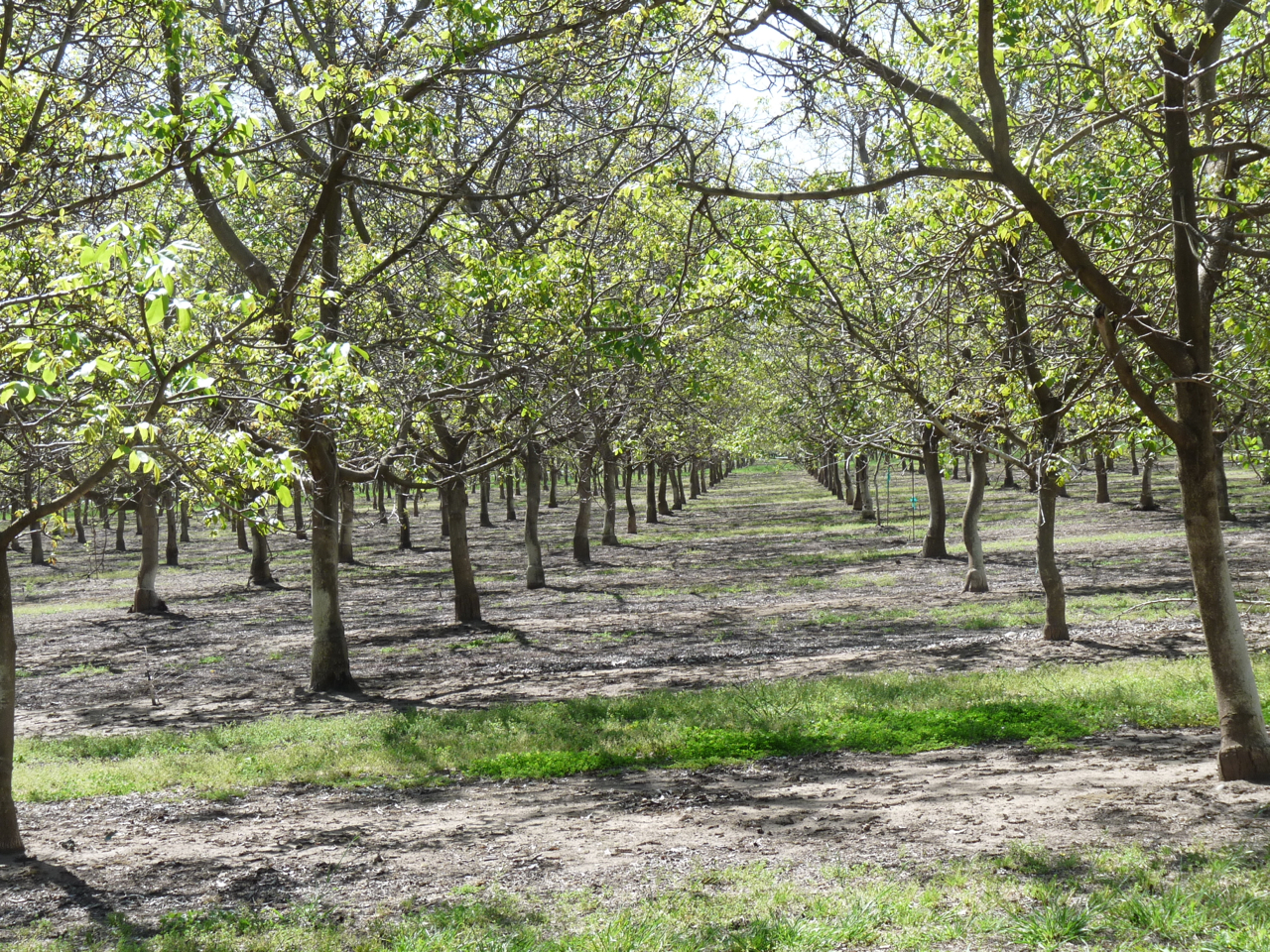
Richard Buchner, a UC Cooperative Extension Farm Advisor in Tehama County, explained, “Tehama has a lot of Chandler varieties and the trees are sort of behaving like they did not get too much sleep, in the case of the tree it is more like chilling, and we think that the lack of chilling is confusing them. We have trees with full leaves out, and trees that might have some flowers out, or maybe the right-hand part of the tree, is flowering and the left side is not or it’s flowering. They are really confused.”

Commenting on the potential crop, Buchner said, “We had a lack of chilling last last year, but had a pretty good crop, so we are not wholly sure what this means. It looks funny, but it is getting a little better as the trees grow older.”

“Walnuts need a pollinator to set the crop, but that cannot happen if the blooms have not opened,” noted Buchner. “The problem is if the bloom straggles way out, and we don’t get flowers pollinated, we can’t set a nut and sometimes we get lots of mixed nut sizes,” he said.

2016-05-31T19:30:25-07:00May 5th, 2015|

Fresno County 2014 Crop Report May Fall Further than 2013

Fresno Ag Commissioner Les Wright Concerned About Regaining #1 County Status

By Patrick Cavanaugh, Associate Editor

Recently, California Ag Today spoke with Les Wright, Ag Commissioner of Fresno County on how that county is traditionally the highest rated in statewide, and nationwide, in agricultural output of many specialty crops, but water restrictions have bumped the county down a few rungs.

“Fresno County, since 1954, has been the number one agriculture producing county in the world, with two exceptions. The most recent exception was in 2013, documented in our last crop report, when the water shortage was a West Side-only issue,” said Wright.

That year, the East Side received a nearly 50 percent allotment from the Friant Water Authority of the federal Central Valley Project. In 2014 there was a zero allocation for both an East-side and a West-side issue.”

“I’m not sure how 2014 will wash out, but other dynamics are also playing into it. Nut crops are very valuable, and they have high yields, and our Southern neighbors are planting a lot of nuts.”

But Wright said that things are different in surrounding counties. “They don’t have the diversity that Fresno County has. I’m very optimistic that once we get our water allotments back, we’ll be number one again. But until that occurs, I’m not sure where we are going to end up.”

2016-05-31T19:30:25-07:00May 3rd, 2015|

AHPA Leadership Urges Members to Support Voluntary Almond Industry PAC

By Laurie Greene, Editor

Almond Hullers & Processors Association (AHPA) Chairman Dick Cunningham and President Kelly Covello urged their membership to support the voluntary California Almond Industry PAC at the association’s 34th Annual AHPA Convention, held on the Big Island in Hawaii over the past three days.

Almond Hullers & Processors Association

Facing immense challenges such as the slowdown of West Coast ports, air quality laws and regulations, net energy metering (NEM), food quality and safety, worker safety, bees and bee health, wastewater treatment, crop protection regulation, aboveground petroleum storage Spill Prevention Control and Countermeasure (SPCC) Plans, competing research priorities and most urgently, unprecedented drought conditions and public misunderstanding and criticism of almond water usage, the Almond Industry aims to create a unified voice for candidate support, political information and education services.

Through a Memorandum of Agreement with the Almond Board of California (ABC), AHPA is able is able contract for a portion of ABC Logostaff time/expertise to assist in AHPA’s advocacy efforts and provide a unified voice for the industry. The ABC educates regulatory agencies and legislators but is prevented by the USDA Federal Marketing Order to advocate for government policy or legislation.

The California Almond Industry PAC will hold a fundraiser in Bakersfield on May 14th, at Imbibe, 4140 Truxtun Avenue, from 5:30-7:00pm, sponsored by Golden Empire Shelling, LLC., Landmark Irrigation, Inc., Pacific Ag Management, Inc., Paramount Farms, and Supreme Almonds of California.

Fundraisers will also be arranged in the Northern and Fresno areas in the upcoming months.

Sponsorship Levels include:

  • Platinum: $2500
  • Gold: $1500
  • Supporter: $500 (includes a guest)

You do not need to be an AHPA member to contribute or attend the event.

For more information, contact (209) 599-5800 or staff@ahpa.net.

California Almond Industry Political Action Committee

California Almond Industry Political Action Committee

2016-05-31T19:30:25-07:00May 1st, 2015|

Governor Brown, legislative leaders announce $1 billion emergency drought package

Mobilizing state resources to face another year of extreme dry conditions, Governor Edmund G. Brown Jr. joined Senate President pro Tempore Kevin de León, Assembly Speaker Toni Atkins, and Republican Leaders Senator Bob Huff and Assemblymember Kristin Olsen to announce legislation to help local communities cope with the ongoing, devastating drought. The $1 billion package will expedite bond funding to make the state more resilient to the disastrous effects of climate change and help ensure that all Californians have access to local water supplies.

“This unprecedented drought continues with no signs yet of letting up,” said Governor Brown. “The programs funded by the actions announced today will provide direct relief to workers and communities most impacted by these historic dry conditions.”

The legislation includes more than $1 billion for local drought relief and infrastructure projects to make the state’s water infrastructure more resilient to extreme weather events.  The package accelerates $128 million in expenditures from the Governor’s budget to provide direct assistance to workers and communities impacted by drought and to implement the Water Action Plan. It also includes $272 million in Proposition 1 Water Bond funding for safe drinking water and water recycling and accelerates $660 million from the Proposition 1e for flood protection in urban and rural areas.

“Taken together, this package provides a major boost to our state’s efforts to manage the drought and strengthen our infrastructure,” said pro Tempore De León. “I want to thank the Governor and the Speaker for working together to respond to this crisis. It shows how we—as leaders–can get things done when we all work together in common purpose.”

“The drought isn’t letting up, so we can’t let up either,” said Speaker Atkins. “This legislation will deliver relief to Californians harmed by the drought and help us manage the significant problems the drought continues to cause. Since our skies are still clear—our job is too. And making sure we meet emergency needs, prepare for short term problems, and advance longer-term projects are an important part of that effort.”

“I want to thank the Governor, the pro Tem and the Speaker for inviting us today. We were briefed on this proposal just this morning, and so far it sounds like a good approach.  We need to review the legislation in detail but it seems like a reasonable start,” said Senate Republican Leader Bob Huff. “Republicans have consistently said that storage is essential for providing a reliable water source to all of California for future generations. The Prop 1 water bond that was passed last year is a critical step forward in meeting the needs for California’s future. There’s no question California’s drought crisis has worsened, as once again we’ve experienced a dry winter.  With the hot summer months approaching, it’s incumbent on all Californians to be responsible with how they use water. It’s critical that we act now.”

“This emergency drought relief is an important band aid,” said Assembly Republican Leader Kristin Olsen. “We must move beyond temporary fixes. Projects to increase water supply have been hung up in government red tape for decades. I’m glad today we are making decisions that help people and look to us all to take real actions on long-term projects so emergency actions are no longer needed.”

The Sierra Nevada snowpack, which Californians rely on heavily during the dry summer months for their water needs, is at a near record low. The March snowpack measurement came in at 0.9 inches of water content in the snow, just 5 percent of the March 3rd historical average for the measurement site. The overall water content for the Northern Sierra snowpack came in at 4.4 inches, just 16 percent of average for the date. Central and southern Sierra readings were 5.5 inches (20 percent of average) and 5 inches (22 percent) respectively. Only in 1991 has the water content of the snow been lower.

Taking action to further strengthen water conservation in the state, the State Water Resources Control Board on Tuesday voted to expand and extend an emergency regulation to prohibit certain water use, such as washing down sidewalks, and create a minimum standard for outdoor irrigation restrictions by urban water suppliers.

Since last February, the state has pledged over $870 million to support drought relief, including money for food to workers directly impacted by the drought, funding to secure emergency drinking water supplies for drought impacted communities and bond funds for projects that will help local communities save water and make their water systems more resilient to drought. Last month, Governor Brown met with U.S. Secretary of the Interior Sally Jewell in Sacramento to announce nearly $20 million in federal drought relief for California’s Central Valley Project.

In December 2013, the Governor formed a Drought Task Force to closely manage precious water supplies, to expand water conservation wherever possible and to quickly respond to emerging drought impacts throughout the state. The following month, the administration finalized a comprehensive Water Action Plan that charts the course for California to become more resilient in the face of droughts and floods and the Governor declared a drought state of emergency. In April 2014, the Governor called on the state to redouble their efforts at combating drought.

Last fall, the Governor signed legislation requiring local, sustainable groundwater management as well as legislation to put a water bond before voters, which won bipartisan approval in the Legislature and was approved overwhelmingly at the polls. He also issued an Executive Order streamlining efforts to provide water to families in dire need as the extreme drought continues to grip the state by making funding available through the California Disaster Assistance Act to provide water for drinking and sanitation to households currently without running water.

Governor Brown has called on all Californians to reduce their water use by 20 percent and prevent water waste. Visit SaveOurWater.com to find out how everyone can do their part and Drought.CA.Gov to learn more about how California is dealing with the effects of the drought.

2016-05-31T19:30:26-07:00March 24th, 2015|
Go to Top