


A Great Time to Be in Agriculture
Lowell Catlett On Ag, Part One
Agriculture Is Primed to Provide Different Food to Masses
By Jessica Theisman, Associate Editor

Lowell Catlett says California agriculture is in a good place.
Lowell Catlett, a former professor at New Mexico State University who continues to lecture with a style that keeps the audience engaged, shared with us what a great time it is to be in agriculture. “I think it is the best time because we have never had a period in history where we have had so many people, worldwide, rising out of abject poverty into middle class” he explained.
“They become consumers, and they want things, and they want a lot of things. They want the things that they see other people have. That means they want California pistachios, almonds and walnuts, and all the bounty that California produces, including its milk and eggs and cheeses, and everything else,” Catlett said.
“Once someone earns more money, one of the first things they change is their diets, and they like to get things that are unusual and unique. And California is the breadbasket of the world in terms of its ability to produce different things, and you’re seeing that translate into best time ever to be in agriculture,” he said.
Not only does current agriculture have the products, but there is plenty of money to buy those products. “There is so much money. The net worth of the United States right now over 123 million households is $94 trillion. The world’s output last year was $73 trillion, so we have $20 trillion more in household net worth than the whole world combined, The consumers want organic, or they want certified to the source. We have to certify those things to the source. They want all kinds of different food choices,” Catlett said.
“Before, people just wanted food, and they now want all these other foods. They may want gluten free, and they many not even have celiac disease. And it all helps the farmers to have markets we never had before, and that is fabulous,” Catlett said.
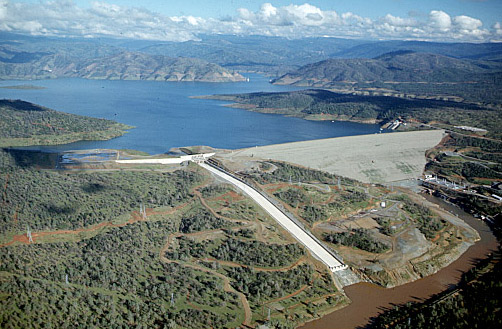
Saving Fish May Have Caused Oroville Disaster
Were Fish Cause of Oroville Dam Disaster?
By Jessica Theisman: Associate Editor
Reportedly, an effort to save millions of salmonoid fish below the Oroville dam may have caused a delay in releasing water from Oroville Dam on February 12. It set up the evacuation of at least 188,000 people in the area after authorities warned of an emergency spillway in the structure was in danger of failing and unleashing uncontrolled floods of water on towns below.
It was a near disaster and would have taken agricultural irrigation water with it, which has a lot of people asking questions. One person is Edward Needham. He provides agricultural services for growers throughout the state.
“I was trying to figure out what the missing piece was, why they could all of a sudden release 100,000 CFS and go from 65,000 to 100,000,” he said. Needham had spoken with a friend who worked at the refuge that day, who had told him he had been down at the fish hatchery, cleaning it out and saving all of the salmon.
“You’re telling me that they delayed the releases on the dam to save the four million salmon that were downstream?” Needham asked.
That may be correct! Many local news stations had reported that approximately 40 employees from the refuge were saving the salmon and loading them into trucks to be hauled away.
“That was two days before the dam nearly failed because of all the water it was holding back” Needham remarked.
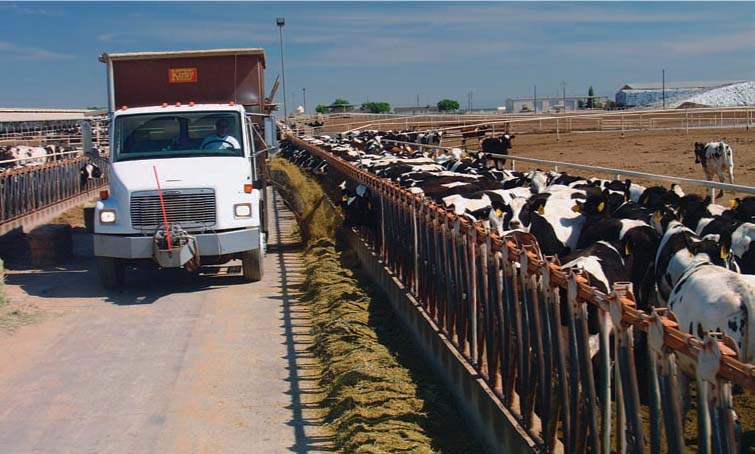
Caution Advised on USDA Proposal
California Dairies Cautious On USDA Proposal
By Jessica Theisman, Associate Editor
California Ag Today met recently with Kevin Abernathy, the general manager for Milk Producers Council. Milk Producer’s Council is an advocacy organization trying to make sure the dairies in California are being treated correctly. The MPC has been working for a long time to ensure that the California dairies are well taken care of. Especially when it comes to the USDA proposal to add the California dairy industry into the Federal Milk Marketing Order (FMMO).

Kevin Abernathy, Manager of Milk Producers Council
“MPC has been an advocacy group on behalf of California dairy families since 1949. This FMMO process is something we have been akin to since the start of it,” Abernathy said. “It was the early leadership of MPC that started the process of adding twenty-some odd years ago. Then the work evolved into work done by Sye Vanderdusson, Jeffery Vandenheuvel and Rob Vandenheuvel, with their growth management plans, which lead to the Holstein plan, which got evolved into the Foundation For The Future plan, which ultimately ended up where we’re at today.”
It is said that CDFA still has the upper hand in the situation concerning quotas and pay. The MPC is taking a look into these concerns.
“If this was something that was announced by CDFA because we have the experience in working in the California system, it is easy for us to calculate and the compute the outcomes. … So that is the process that we are going through right now and understanding how this thing works,” Abernathy said.

AgJobs4U Connects Employees and Ag Businesses
AgJobs4U.com Helps Workers and Farmers
By Brian German, Associate Broadcaster
Two years ago, Josh Pitigliano encountered a problem when coming into harvest season. He didn’t have enough qualified labor for his almond orchard. Timing is critical during almond harvest, and Josh had sweepers and pickup machines parked because of a lack of labor. That was the motivator for establishing AgJobs4U.com, a website that connects motivated employees to successful agriculture businesses.
Josh offered some insight as to how the website works. “We are connecting farmers to employees and making that connection through a profile that the employee can create, that gives them access to a job board,” Josh said.
Last year at the World Ag Expo, Josh and his wife, Jennifer, officially launched AgJobs4U.com, and the website has been gaining momentum ever since. There are over 4,000 job seekers in the database this year.

Jennifer and Josh Pitigliano
Jennifer said, “We have a handful that are outside of California, but we’re focused really on California to make sure that we’re doing a good job and offering a good service here before we would potentially expand out.”
Josh said the website has an overall goal of going national sometime in the future.
The website boasts that it was “created by a farmer, for a farmer, to alleviate the stress of finding skilled agricultural workers.” They have a wide variety of positions listed on the website. “Anything from irrigator checker, milker, feeder, mechanic, harvester, driver, specialized jobs like a shaker driver, to a bookkeeper, front secretary, packing house personnel, even PCAs,” Josh said.
Employers can purchase a subscription that will give them unlimited access to the database of employees available for immediate hire. Employers can also post a job that is available in order to create a pool of candidates. “For an employer, it works two different ways,” Jennifer said. “They can either wait to see who contacts them, or who has a profile in the database. … It’s beneficial for an employer to post a job, in addition to extracting people out of the database.”
The website is designed to be easy to navigate and fill the needs of both employers as well as those looking for ag jobs. “When an employer puts a job on the job board, they have the choice, too, of whether it’s a part-time or full-time job,” Jennifer said. “That way, in case someone is looking for another job to supplement their current job, they have access to do that.”
AgJobs4U.com also helps to bridge the language barrier by offering a Spanish language option on the site. “Right at the top right of the website, with the click of a button, it will translate the whole website over to Spanish. … That way, me as someone who only speaks English, I can still find that person for that job by easing that translation barrier that’s between the two of us,” Jennifer said.
The company is 100% web-based. It is also very mobile sensitive, so employers and potential employees alike can use their smartphones to navigate the site. AgJobs4U.com is all about getting the right person for the right agricultural position. “It is the American way,” Jennifer said. “People are trying to improve themselves, and if we give them the ability to do that by connecting them to different farmers, then at the end of the day, it’s a good job.”

Avian Flu Risk is High
Protect Poultry from Avian Flu
University of California poultry experts are urging poultry owners to examine biosecurity for their flocks after avian influenza was confirmed in commercial chickens in Tennessee by the USDA Animal and Plant Health Inspection Service on March 5. To protect the birds’ health, UC scientists recommend taking measures to prevent poultry from coming into contact with wild birds.
“Based on the initial sequence of the virus, the source of the virus is thought to be waterfowl,” said Maurice Pitesky, UC Cooperative Extension poultry specialist in the School of Veterinary Medicine at UC Davis. “This is consistent with the current understanding of how avian influenza spreads and evolves. Specifically, juveniles are infected at breeding locations and travel south in the fall carrying virus. As the waterfowl move southward, they are more likely to interact with other species, increasing the risk of interspecies transmission and formation of new varieties of avian influenza.”
The case in Lincoln County, Tenn., is the first report of highly pathogenic H7 avian influenza in commercial poultry in the United States this year. The flock of 73,500 affected chickens is located within the Mississippi Flyway, one of four North American flyways for migratory birds.
“Lincoln County is located in one of the medium-high risk areas that were identified by our risk map, said Beatriz Martínez López, director of the Center for Animal Disease Modeling and Surveillance in the School of Veterinary Medicine at UC Davis.
The UC Agriculture and Natural Resources researcher, who studies risk factors for the spread of avian influenza, noted that California is within atthe Pacific Flyway.
“We need to increase awareness of poultry producers to maximize the biosecurity implemented in their operations, particularly in those located in high-risk areas, mainly farms that are in close proximity to wetlands or other wild bird feeding and resting areas,” Martínez López said.
Poultry owners can identify biosecurity strengths and weaknesses for their own farm or backyard flock by filling out a free survey designed by Martínez López and other poultry experts. People who raise chickens, quail, ducks, turkeys, geese or other birds anywhere in the United States are invited to use the resource. At the end of the survey, participants receive specific research-based recommendations of biosecurity measures they can apply on their own types of farms. The poultry biosecurity survey is available in English http://bit.ly/2kkMycf and Spanish http://bit.ly/2mjO13G. The survey takes 15 to 20 minutes to complete and will be open until June 1.
If you would like UC Cooperative Extension to notify you if there is an avian influenza outbreak in your area, sign up on the California Poultry Census page: http://ucanr.edu/sites/
Owners of backyard chickens who observe illness or increased mortality among their birds should call their veterinarian or the California Department of Food Agriculture sick bird hotline at (866) 922-BIRD (2473).
For more information about raising poultry, visit http://ucanr.edu/sites/poultry
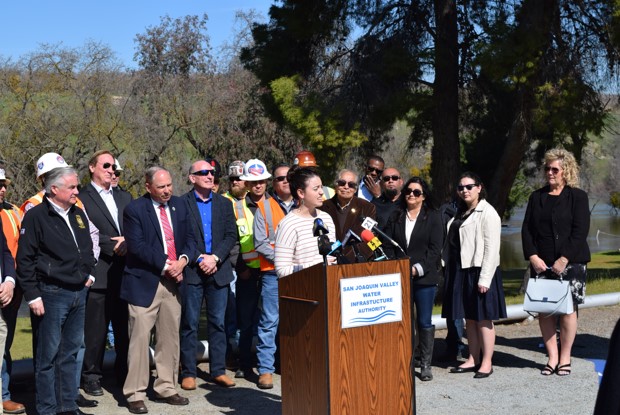
Temperance Flat Could Control Floods
Association Calls for Flood Control through Temperance Flat
With the rising San Joaquin River in the background, board members of the San Joaquin Valley Water Infrastructure Authority (SJVWIA), assemblymen, city officials and stakeholders of the Temperance Flat project gathered recently to discuss the importance of flood control.
 The Western Ag Processors Assocation (WAPA) Director of Regulatory Affairs Jodi Raley spoke at a recent news conference highlighting the impacts of flood damage as it relates to agriculture. Noting the acres of valuable agricultural land along the river, Raley expressed that while it is important for the future dam to capture water, this season, we are seeing how the project would play a critical role in flood control.
Many acres of orchards and fields have experienced saturation or an inundation of water during this heavy rain season. These conditions on an extreme not only lead to situations concerning crop health, but could also result in loss of jobs for ag workers in affected areas.
In addition, it was highlighted that the amount of water released from Friant, currently 9,000 cubic feet/sec (cfs), has very little to no demand. It is being said that with the rain received and the significant snow pack in the Sierras, Millerton Lake will receive enough water to be drained and refilled seven times over.
The SJVWIA and the Technical Advisory Committee, along with the large breadth of stakeholders, are calling upon Governor Brown to recognize the need for this project’s construction. Raley said that the association will continue to push and fight for the construction of Temperance Flat to bring more water not only to the Central Valley, but to the entire state.

Early Registration Open for MRL Workshop in San Francisco
Annual MRL Harmonization Workshop May 31 to June 1
The California Specialty Crops Council will hold its twelfth annual 2017 MRL Harmonization Workshop May 31-June 1 in San Francisco. The interactive seminar based on maximum residue limits (MRLs) will address critically important issues for stakeholders with interests in exporting agricultural products.
Registrants, growers, packers, shippers, PCAs, regulators, trade experts, and other stakeholders in international trade are strongly encouraged to attend. Presentation topics include: international trade trends, global registrations, pesticide residue monitoring, MRL strategies for growers, updates for international residue standards, global MRL challenges, and research reports regarding the impacts of residues.
Ed Ruckert, Partner at McDermott Will & Emery LLP, will kick off the Workshop discussing “Pesticide Regulatory Trends in the New Administration.” Julia Doherty from the US Trade Representative will discuss “Recent Work in the WTO SPS Committee on Pesticide MRLs.” The agenda also includes international speakers from the EU, Korea, Australia and Taiwan.
A copy of this year’s speaker lineup can be found at the link below. The Workshop will be held at the Hyatt-Fisherman’s Wharf in San Francisco. On-line pre-registration is required by May 22. For all meeting, hotel information and an updated agenda go to http://specialtycrops.org. The registration fee is $425 by March 31 and $475 after that date.
The California Specialty Crops Council (CSCC), a 501(c) 5 non-profit organization, is a trusted source of field-based information spanning horticultural crop production, pest management, food safety and stewardship activities in fruit, root, vegetable, vine and berry crops (fresh, dried, and processed). Its diverse partnership of ag organizations also includes the CA State Beekeepers Association. Combined, CSCC growers generate almost $4.1 billion annually on approximately 522,000 acres of California farmland.

EPA Reviews Agricultural Pyrethroids
Pyrethroid Products Reviewed
By Brian German, Associate Broadcaster
Pyrethroids are synthetic chemical insecticides that are included in more than 3,500 registered products, with many of those being used in agriculture. Every 15 years, the Environmental Protection Agency is required by congress to review all registered pesticides. They received their first-ever review evaluating how they impact fish and aquatic plants.
John Cummings is the Registration and Regulatory Affairs Manager for FMC, a diversified chemical company that has been serving the agricultural community for over a century. “We are very concerned with the content of that risk assessment – that they have identified that there is high-risk concerns to certain aquatic organisms, not necessarily fish or anything like that, but small aquatic organisms,” Cummings said.
The underlying purpose of these kinds of reviews is to ensure public safety, especially when reviewing products used in ag production. “They’ve done a very high level, simple, cursory risk assessment that has identified these concerns,” Cummings said.
During the past decade, the use of pyrethroids has increased, as the use of organophosphate pesticides continues to decline. That is due to their higher toxicity to birds and mammals when compared to pyrethroids. Cummings expressed his concern regarding the data that the EPA bases their decision on. “There’s been other actions by EPA recently around the use of the best available data and the best science around risk assessment. … The EPA should be using the best science to make the right regulatory decisions while protecting the environment,” Cummings said.
Through their industry consortium, the Pyrethroid Working Group, FMC is in the process of putting data together that they hope the EPA will take into consideration. Cummings explained that their research will “make it more real world while still conservative and protecting the environment. It’s more real world and typical of how these products are used.”
Pyrethroids are a broad-spectrum insecticide that have shown tremendous success in controlling a variety of different insects considered to be economically important to the ag industry. “Pyrethroids are a very important element of both integrated pest management as well as resistance management. Growers today are facing very complex insect control problems, and it’s necessary to have many tools in the tool box,” Cummings said.
“I think EPA needs to understand how important it is to consider the benefit of these to production agriculture as well as society, in feeding the world,” Cummings concluded.
The public comment period for the EPA’s risk assessment has been extended to March 31st.
Ag Stakeholders are urged to comment at http://www.defendbifenthrin.com
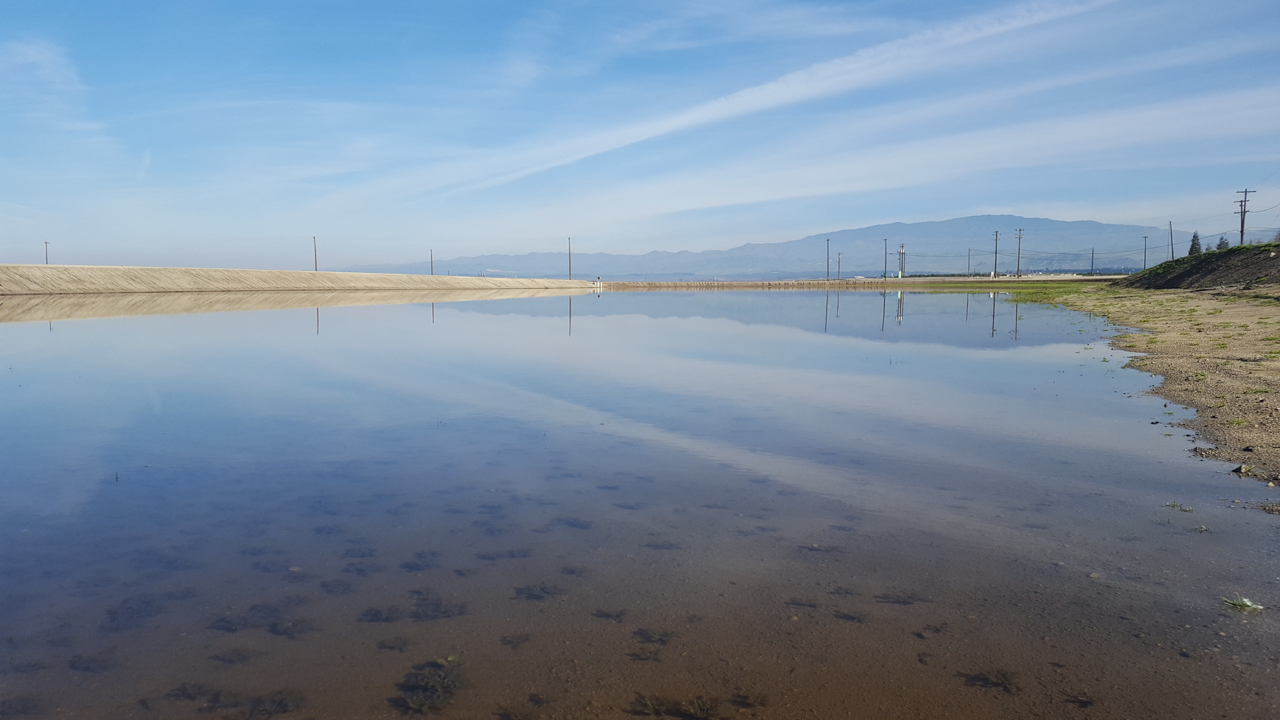
Recharging Aquifer: Job One Today
Water Districts Recharging Aquifer
By Patrick Cavanaugh, Farm News Director

David Nixon, Deputy General Manager of the Arvin Edison Water Storage District
With the reservoir and all water district canals brimming, there is a great effort to move water into underground aquifer recharge ponds, said David Nixon, general manager of the Arvin-Edison Water Storage District in Kern County.
“Absolutely, we tried to get every acre foot of water in this district we possibly can,” he said. “With that water at this time of year, before it’s needed by agriculture, it’s all about water storage and rebuilding that underground aquifer.
“We have about 1500 acres of recharge ponds that we can use to refill the underground aquifer,” Nixon said.
It has been a great, wet year, with Middleton Lake filling in Fresno County, and water moving Southward in the Friant-Kern Canal all the way to Kern County, right where Arvin-Edison Water Storage District is located.
“It’s beautiful out there. Ponds are full, and hopefully, if everything works out with our water supply, they’ll be full all year long,” Nixon said.
“We take a wet year supply and turn it into dry year water. When we do not have ample water supply for the 53,000 acres that are under a long-term surface water contract with us, then we will run our wells,” Nixon said.
This year will not be one of those years.
