Atmospheric Rivers Hit California

Many Atmospheric Rivers Hit State

By Patrick Cavanaugh, Farm News Director

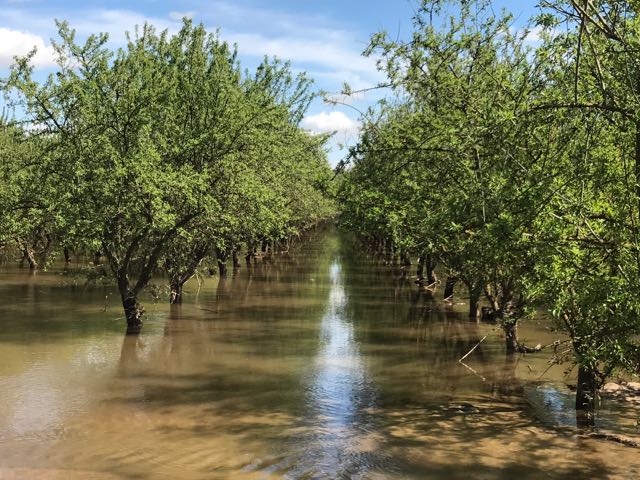
California needs an average of three atmospheric rivers annually to reach its average yearly rainfall. So far this year, the state has seen an incredible 46 atmospheric rivers. This intense rainfall has pushed much of California out of longstanding drought conditions.

California Ag Today spoke with Steve Johnson, a private meteorologist for farmers in California. We discussed atmospheric rivers (AR) and the abundance of rain California has seen in late winter and early spring.

“We had four very big AR flows, and that made a big difference. I think we’re up to 46, and that’s what has made the big difference this year,” Johnson said. With the additional 41 smaller AR, we have seen a very wet California; it is an astounding amount of atmospheric rivers.

Johnson explained that because the storms have been so difficult to predict, it has made things difficult for farmers planning their season. “This year, there was no signal at all. These storms crept up on us this winter. It was very, very dicey for forecasting,” he said. “The year was difficult because some of these storms – in fact the big ones – even though they showed up in the 14, 16-day period, they didn’t look gigantic until about day seven or eight. Then they start gaining and gaining and gaining, and by day four or day five they looked monstrous. Well, that’s not very much time to prepare.”

Johnson noted that these unpredictable storms were caused by an anomaly in the Pacific Ocean that is a remnant of last year’s El Nino. “The predominant reason that we kept getting these atmospheric rivers has been the fact that the sea surface temperatures across the Pacific Ocean have been in a very unusual anomaly,” he said. “They’ve been cold in the Gulf of Alaska, and we have a leftover bit of warmth from last year’s record-setting El Nino that has spread north to just west of the California coast – very warm waters that go all the way over to Japan.”

“If you take a look at the differentiation between the cold water in the Gulf of Alaska versus the warm water, the anomalies between Japan and California, that has created a zonal flow since October.

“Those atmospheric rivers have been grabbing a lot of moisture coming up from that warm water off the California to the Hawaii coast, and then coming into California. It’s just been one right after another,” Johnson said.


2021-05-12T11:05:16-07:00April 25th, 2017|

SJV Olive Oil Competition Winners Revealed

Big Fresno Fair Names Winners of SJV Olive Oil Competition

News Release

After extensive judging of quality olive oils, The Big Fresno Fair is excited to reveal the winners of the 3rd Annual San Joaquin Valley Olive Oil Competition (SJVOOC).

This competition, open to all olive oil producers in the State of California with products made from their most recent olive harvest, received a total of 69 entries from 18 different olive oil producers from throughout the State.

Entries were received in two classes, Extra Virgin Olive Oil and Flavored Olive Oil, with 9 subcategories in total. Gold and Silver Medals were awarded, as well as an overall “Best of Show” selected from all of the highest scoring gold medal entries received in the EVOO and Flavored Oil categories.

All of the flavored oils used for the Best of Show, were all co-milled. In total there were 47 EVOO and 22 Flavored Olive Oil entriesthat were entered for judging. The winners of the 3rd annual San Joaquin Valley Olive Oil Competition are:

  • Best of Show

Organic Roots Olive Oil’s Organic Roots Koroneiki (Maxwell)

Calivirgin – Coldani Olive Ranch’s Calivirgin Hot Virgin Jalapeno (Lodi)

Extra Virgin Olive Oils

  • Gold Medal Winners

Spanish Blends: Corto Olive Co.’s Corto Olive Company Olive Oil (Lodi), La Panza Ranch’s Outlaw Blend (Santa Margarita) and Kimberley Wine Vinegars’ KimberleyCalifornia Olive Oil (Acampo)

Spanish Singles: The Mill at Kings River’s The Mill (Sanger), ENZO Olive Oil Company’s Delicate Ranch 20 (Clovis), The Olive Press’ Empeltre EVOO (Sonoma),The Olive Press’ Sevillano EVOO (Sonoma) and Organic Roots Olive Oil’s Arbosana (Maxwell)

Italian Blends: Alta Cresta Olive Oil’s Italian Blend (Paso Robles), The Olive Press’ Italian Blend (Sonoma), Scarlata Farms Olive Oil’s Tuscan Blend Reserve (Tracy), San Miguel Olive Farm’s Tuscan Gold Nectar (San Miguel) and San Miguel Olive Farm’s Tuscan Gold/Pristine (San Miguel)

Italian Singles: Bozzano Olive Ranch’s Bozzano Organic (Stockton) and Calivirgin – Coldani Olive Ranch’s Lodi Olive Oil Early Harvest Ascolano (Lodi)

Other Blends: Mangini Ranch Olive Oil Company’s Mangini Ranch (Wallace)

Other Singles: Organic Roots Olive Oil’s Koroneiki (Maxwell)

  • Silver Medal Winners

Spanish Blends: ENZO Olive Oil Company’s Tyler Florence Test Kitchen EVOO (Clovis)

Spanish Singles: Calivirgin – Coldani Olive Ranch’s Calivirgin Premium EVOO (Lodi), ENZO Olive Oil Company’s Medium Ranch 11 (Clovis) ENZO Olive Oil Company’s Delicate Ranch 11 (Clovis), ENZO Olive Oil Company’s Medium Ranch 20 (Clovis), The Olive Press’ Arbequina EVOO (Sonoma), The Olive Press’ Arbosana EVOO (Sonoma), The Olive Press’ Picual EVOO (Sonoma), Corto Olive Company’s Truly EVOO – Arbosana (Lodi), Corto Olive Company’s Truly EVOO – Arbequina (Lodi), Organic Roots Olive Oil’s Arbequina (Maxwell) and Rosenthal Olive Ranch’s Arbosana (Madera)

Italian Blends: Scarlata Farm’s Olive Oil’s Tuscan Blend (Tracy), Bozzano Olive Ranch’s Toscana Organic (Stockton), Calivirgin – Coldani Olive Ranch’s Lodi Olive Oil – Miller’s Blend (Lodi) and Winter Creek Olive Oil’s Winter Creek (Winter Creek)

Italian Singles: Calivirgin – Coldani Olive Ranch’s Lodi Olive Oil Frantoio (Lodi)

Other Blends: Bozzano Olive Ranch’s A2 (Stockton) and Rancho Azul y Oro’s Estate EVOO (San Miguel)

Other Singles: ENZO Olive Oil Company’s Bold Ranch 11 (Clovis), ENZO Olive Oil Company’s Bold Ranch 20 (Clovis), The Olive Press’ Heritage Mission EVOO (Sonoma), Bamford Family Farms’ Silverstar Early Harvest Mission (Oroville), Mangini Ranch Olive Oil Company’s Mangini Ranch (Wallace), Rosenthal Olive Ranch’s Koroneiki (Madera) and Corto Olive Company’s Truly EVOO (Lodi)

Flavored Olive Oils

  • Gold Medal Winners

Citrus: Enzo Olive Oil Company’s Clementine Crush (Clovis) and The Olive Press’ Limonato (Sonoma)

Herbal: CaliVirgin – Coldani Olive Ranch’s Calivirgin Bountiful Basil Olive Oil (Lodi)

Other Flavors: ENZO Olive Oil Company’s Fresno Chili Crush (Clovis) and Calivirgin -Coldani Olive Ranch’s Calivirgin Hot Virgin Jalapeno (Lodi)

  • Silver Medal Winners

Citrus: Calivirgin – Coldani Olive Ranch’s Calivirgin Blood Orange Olive Oil (Lodi) and Calivirgin – Coldani Olive Ranch’s Calivirgin Lusty Lemon Olive Oil (Lodi)

Herbal: ENZO Olive Oil Company’s Basil Crush (Clovis) and Calivirgin – Coldani Olive Ranch’s Calivirgin Rustic Rosemary Olive Oil (Lodi)

Other Flavors: The Olive Press’ Jalapeno Olive Oil (Sonoma), Calivirgin – Coldani Olive Ranch’s Calivirgin Jalapeno Garlic (Lodi), Calivirgin – Coldani Olive Ranch’s Calivirgin Extreme Heat Habanero (Lodi) and Calivirgin – Coldani Olive Ranch’s Calivirgin Guilty Garlic Olive Oil (Lodi)

“The SJVOOC continues to grow each year, and we are very excited to have received a record number of entries this year,” said Stacy Rianda, Deputy Manager II at The Big Fresno Fair. “California has such a vast and rich food-producing community that it is important to hold competitions, like this, that showcase some of the great products our regions offer the world.”

Participating producers had the opportunity to submit multiple entries under one category but could not submit a particular entry to more than one category. For each entry, producers had to submit two, 250 ml bottles of their olive oil with retail labels and a $60 non-refundable fee, per entry.

Additionally, each entry had to be available for commercial sale at the time of submittal. Submissions were accepted starting mid-January through March 24.

All submissions were evaluated and scored on the following criteria:

  • Gold Medal: Awarded to an olive oil that demonstrated its type and/or varietal character, balance, structure and complexities to the highest standards. Gold Medals were awarded to those oils receiving scores between 86 – 100 points.
  • Silver Medal: Awarded to an olive oil reflecting the correct distribution of balance and character of its type or variety; an oil deemed to be well crafted and of excellent quality. Silver Medals were awarded to those oils receiving scores between 76 – 85 points.
  • Best of Show: Awarded to an olive oil recognized to possess special characteristics of the highest quality overall.

Gold Medal and Best of Show winners will have the opportunity to have a booth in the Wells Fargo Agriculture Building on one day during a weekend of the 2017 Big Fresno Fair where they can taste, display and sell their award-winning product. Additionally, educational information will be set up so that fairgoers can learn more about the art of making olive oil, its health benefits, recipes and more.

2017-04-18T17:28:14-07:00April 18th, 2017|

California Rice Growers are Model of Environmental Stewardship

Understanding Water Usage For California Rice Growers

By Brian German, Associate Broadcaster

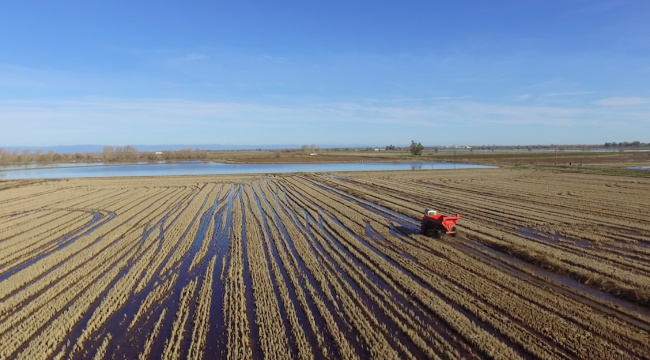
The amount of rain California received in March has put a hold on rice planting.  In a normal year, California rice growers would be finishing up their fertilizer regimen, getting ready for their April planting.  Luis Espino, a UC Cooperative Extension Farm advisor in Colusa County, explained that the wet weather has caused many farmers to push back their planting schedule.  “We had a lot of rainfall, so the ground is pretty soaked. There are some areas that are still flooded; they still have water in the field. It’ll be a while before tractors can get in there, but I’m guessing that as things dry out, things should start moving soon,” Espino said.

Photos Courtesy of Matthew Sligar of Rice Farming TV

After five years of drought conditions, California finally had a considerable amount of rainfall over the winter months.  Available water supplies are at a much better level than they were in recent years, but there is another aspect that could hurt rice planting this season.  “There’s been a good winter, so they’re going to have enough water to plant acreage as they would on a normal year. What’s not helping is the price of rice. It’s a little too low, and so that might hinder some of the plantings,” Espino said.

The California rice industry is a model of environmental stewardship, working closely with regulatory agencies and conservation groups to ensure that rice production improves wildlife habitats while promoting sound management of water resources.  The rice industry has faced quite a bit of scrutiny over the past few years because of misconceptions regarding flooded rice fields.  It is important to understand that the water used to flood rice fields has more than one use and eventually goes back into the water cycle.  “There is a constant flow of water coming into the field and then leaving so that water is going back to the canal, going back eventually to the river and so it does get recycled,” Espino said.

Rice production in the state has changed remarkably over the past 50 years, with improved varieties, increased yields and improved marketability.  With water on the minds of many Californians, Espino explained some of the reasons why rice fields are flooded for planting.  “It can produce biomass and grain when the field is flooded. Maybe more important than that is the fact that water functions as a herbicide. By having water on the field, you have a way to suppress weeds from growing,” Espino said.

Aside from a small percentage of water being lost to evaporation, most of the standing water in rice fields stays in the overall water cycle.  “The water used in rice fields – before it gets back to the river – is used four times, so in four different fields,” Espino said.

2017-04-13T16:39:24-07:00April 13th, 2017|

Data Loggers Could Impact Cattle Comfort

Data Loggers Could be Hardship on Cattle Being Transported

By Patrick Cavanaugh, Farm News Director

Transporting cattle, or any livestock for that matter, has special nuances so drivers can get to the destination quickly for the animals’ comfort. Occasionally a driver can self-adjust the drive time beyond the mandated limit.

But now a new regulation regarding electronic logging devices by the Federal Motor Carrier Safety Administration in Washington D.C., may be implemented December this year, forcing drivers to stop.

“It would essentially require commercial truck drivers to use a electronic device to comply with the hours of service schedule that they’re required to meet, which limits both on-duty time and driving time,” said Justin Oldfield, a California cattleman and vice president of governmental affairs with the California Cattlemen’s Association in Sacramento.

“We not only have the cattle’s welfare that we need to take into account for, but we’ve got to get to that destination and make sure those cattle are off-loaded properly and safely,” Oldfield said.

Oldfield said they’re looking at some alternatives that would help the California Cattlemen’s Association members. “One of the things that we are concerned about is our distance to a lot of buyers, which would be in the Midwest,” Oldfield explained. “So any additional cost that this regulation might cause would probably be felt more significantly farther from the Midwest, which would primarily represent California, other states in the West and the Southeast.”

The current regulation is maximum on-duty time of 14 hours, with maximum driving time being 11 hours, with a 10-hour break. If a driver hauling cattle was only 100 miles from the destination, he would want to keep going for the comfort of the cattle. But with the electronic logger in place, he’d be forced to take that 10-hour break.

“Some of the issues that we have, for instance, is technically you’re on-duty even if you’re waiting to load cattle. So there are situations to where maybe there’s eight trucks waiting to load cattle, and you could be waiting in line for 2, 3 hours. And that entire time is counting against your on-duty time,” Oldfield said.

“We’re looking at where we can try to ensure that those hours are not counted against your maximum on-duty time,” he said.

And another area that’s being looked at is an exclusion for drivers hauling live animals, in order to have time to get to destinations.

“Our membership is basically past policy that asks us to look at everything, including that. There’s of course the challenge politically of making these changes on the regulatory side. I can tell you that nothing is off the table at this point,” Oldfield said. “Again, the reform is not necessarily the electron log-in device. The reform itself is the hours of service.”

2021-05-12T11:17:10-07:00April 11th, 2017|

White Rot Poses Threat to California Garlic and Onions

Research Committee Works to Prevent White Rot

 By Brian German, Associate Broadcaster

The California Garlic and Onion Research Committee was established in 2005 as a state marketing order under the supervision of the California Department of Food and Agriculture.  Bob Ehn is the CEO & Technical Manager for the committee.  The organization’s main goal is to organize onion and garlic growers to develop white rot management programs.  “Once we find a white rot field, we mark it. We then prepare a white rot list that we hand out every fall to our processors or handlers for them to be able to know not to go back into a field,” Ehn said.

Once infected with white rot pathogens, leaves of the plant will begin to show yellowing and wilting.  Leaf decay will also occur starting at the base, with older leaves collapsing first.  Plants can become infected with white rot at any stage of growth, but symptoms typically appear from mid-season to harvest.  “It has a window of where it’s viable. It’s stimulated by organosulfur oxidate or odor that comes off the roots. … That sends out a message like ringing a dinner bell,” Ehn said.

One of the reasons white rot pathogens are so dangerous to California growers is because of their longevity in the soil.  “If you had a field that had light damage, you go back into that field another time and that 10 percent is probably going to turn into 50 percent because of the ability to reproduce,” Ehn explained. “They are hardy little critters. They’re still viable [in] we know, we’ve documented, 20 years. And anecdotally, we have information that it’s been there 30 years.”

California is the leading producer of garlic and onions in the country, growing more than 90 percent of the commercial garlic in the U.S.  Ehn described how white rot destroys the bulb from the inside out.  “The sclerotia virtually wake up and send out a germination tube looking for that source of the organosulfur compounds, find it, enter the roots, and then can enter the base plate of the garlic. Once it’s inside the base plate, it will reproduce.”

Each year, garlic and onions contribute between $150 to $300 million to the overall farm gate value.  If white rot is found in a field, there is still a chance that the land can remain viable.  “If we could GPS a corner or a piece of ground where the white rot was, and it wasn’t in the rest of the field, we will then map that. By mapping that, we ultimately could come back and treat only that area, thereby not having to do the cost of treating the entire field,” Ehn said.

2021-05-12T11:05:17-07:00April 7th, 2017|

Water District Talks Low Water Allocation

Water District’s Water Allocation Disappoints

 By Brian German, Associate Broadcaster

The Bureau of Reclamation announced an initial 2017 water allocation for the Central Valley Project, and it’s considerably lower than what was expected.  Despite a wet winter and a significant snowpack, the Bureau has only allocated 65 percent of their contract supply to South-of-Delta contractors.

Johnny Amaral is the Deputy General Manager for the Westlands Water District – the largest agricultural water district in the United States.  Amaral thinks the deck is stacked against area growers as a result of water policy. “There are laws on the books that were deliberately put into place that created this bottleneck in the CVP and have hamstrung the CVP. This is the outcome that you get when you purposely curtail project operations or pumping: You get shortages,” Amaral said.

San Luis Reservoir is full this season, yet the allocation is only 65 percent.

The 65 percent allocation is especially disheartening since the announcement was not released until well into the planting season, forcing farmers to make decisions about land use and labor without any assurance of water supplies.  Amaral thinks there’s a need for a serious policy discussion as to whether the government truly values what growers produce.  “Those laws are going to have to be changed if we’re ever going to restore water supply to a situation where the westside ag contractors get 100 percent,” Amaral said.

Westlands Water District is made up of more than 1,000 square miles of premier farmland in western Fresno and Kings counties and provides water to 700 family-owned farms, averaging about 875 acres in size.  Amaral believes that it is time for legislators to reevaluate their priorities.  “It really comes down to a very simple but more fundamental policy question about, ‘Do we value being able to grow our own food in a safe way? Does that matter to people?’ ” Amaral said.

During election season last fall, then-candidate Donald Trump vowed to fix the water problems in California.  Farmers are going to need to be patient in their desire to see some action on those promises. “The agencies that have direct influence over western water issues and western resources issues, it’s really the Department of Interior. The Secretary of Interior was just confirmed a couple of weeks ago. … There are a whole host of positions and people that need to be nominated and put into place for the Trump Administration to really have a day to day impact over how the decision’s made on water supply and project operations,” Amaral said.

2017-04-06T11:42:51-07:00April 6th, 2017|

Citrus Referendum Coming Up

Citrus Growers to Vote on Referendum

News Release from Citrus Research Board

California citrus growers soon will receive a critical citrus referendum ballot from the California Department of Food and Agriculture (CDFA) asking them to vote on continuing the work of the Citrus Research Board (CRB) for the next five years.

The grower-funded and grower-directed CRB was chartered nearly 50 years ago to enable California citrus growers to sponsor and support needed research that industry members otherwise would be unable to individually fund or access on their own. The Board’s mission is to ensure a sustainable California citrus industry for the benefit of growers by prioritizing, investing in and promoting sound science.

Some key areas funded include general production research, a variety improvement research program, a quality assurance program on agricultural chemical residues, and pest and disease control activities. Currently, disease control is crucially important.

The California citrus industry is now in the fight of its life to prevent the spread of the devastating disease huanglongbing (HLB) from California’s orchards.

HLB already has decimated most other major citrus growing regions, including Florida.

In California, HLB so far only has been found in 40 residential trees in Los Angeles; however, unless researchers are able to find a solution, HLB could gain a foothold in the state’s commercial groves. Currently, the CRB is dedicating its primary research efforts to controlling the spread of HLB and eradicating the disease. The Board is beginning to see some promising results; but without the CRB, much valuable research will go unfunded.

“We urge all citrus growers to vote when they receive their ballots from the CDFA,” CRB President Gary Schulz said. “Citrus is important to our state’s economy, employment, health and positive identity. We are proud to proactively protect and sustain the world’s largest fresh citrus market. The work that our researchers are conducting is vital to sustaining the California citrus industry and ensuring its continued success.”

The CRB administers the California Citrus Research Program, the grower funded and grower-directed program established in 1968 under the California Marketing Act as the mechanism enabling the State’s citrus producers to sponsor and support needed research. More information about the Citrus Research Board may be found at www.citrusresearch.org.

2021-05-12T11:01:59-07:00March 30th, 2017|

HLB Detected Again in San Gabriel

46 HLB Positive Trees in California

News Release from Citrus Insider

CDFA routinely conducts HLB surveys throughout the state based on a risk model that considers factors that may make an area more likely to have a presence of the disease. CDFA has further fine-tuned this approach by increasing the number of samples pulled from citrus trees that are considered high risk. This strategic approach – developed by the CDFA lead diagnostician with input from the Citrus Pest & Disease Prevention Program and leading scientific researchers – has helped pinpoint infected trees.

State and local crews are building relationships with residents in the area, which not only helps gain access to properties, but also results in swift removal of trees identified as having HLB. While removal of diseased trees is mandatory, positive homeowner relationships encourage cooperation. Of the eight trees recently detected, seven have already been removed or been scheduled for removal by CDFA. Crews are contacting the property owner of the remaining citrus tree Tuesday, March 28, and will pursue quick removal.

In 2016, CDFA collected nearly 50,000 plant samples and nearly 80,000 Asian citrus psyllid samples to test for HLB. Since sample collection began in 2008, more than 400,000 plant and psyllid samples have been collected and processed. This diligent work has contributed to quick detection and eradication of diseased trees.

As a part of the Citrus Pest & Disease Prevention Program, CDFA will continue surveying and sampling the area for HLB and keep the industry abreast of finds as they occur.

2021-05-12T11:05:17-07:00March 29th, 2017|

Meat Consumption Expected to Rise

Lowell Catlett On Ag, Part Three

Meat Consumption Increases as Population Rises

By Jessica Theisman, Associate Editor

Lowell Catlett, who is a Regents Professor emeritus in Agricultural Economics and Agricultural Business and Extension Economics and was the Dean of the College of Agricultural, Consumer and Environmental Sciences at New Mexico State University until he retired in 2015, told California Ag Today that increased income for the lower to middle classes is leading to an increase in meat consumption.

“As their incomes rise and they want to change their diets,” Catlett explained, “the first change they want to make is meat-based proteins. When we [isolate] just the income effect of the world getting more money, we must increase global meat output in the next 20 years by 50 percent. As of 2014, the average adult American consumed approximately 198 pounds of meat annually. By 2024, that number is expected to rise to 207.5 pounds.”

A surge in meat consumption requires increased grazing acreage for those production animals. “If the world grows to 9 billion people,” Catlett said, “we must double meat-based proteins — whatever they may be. I maintain most will come from intensive animal operations that are well-managed, more efficient, have a small impact on the environment, and cater to the overall physical health of the animal.”

“We’ll be doing most of that global meat supply in the United States because we have the infrastructure to provide those intensive animal operations,” Catlett said.

2021-05-12T11:17:10-07:00March 28th, 2017|

GMOs Are Part of Nature’s Technology

Lowell Catlett On Ag, Part Two

GMOs Are an Ancient Technology

By Jessica Theisman, Associate Editor

Lowell Catlett says GMOs have been around for thousands of years.

There is not a morsel of food that 7.2 billion people put it their mouth today that is not GMO. “That is called agriculture,” said Dr. Lowell Catlett, Ph.D. He is a futurist with a positive and upbeat predictions about agriculture.

Catlett gave California Ag Today the inside story on hybrids and GMOs. One question arose about whether hybrids are indeed considered genetically modified organisms. “Of course they are,” he said. “If you want to say it’s transngenetic, somebody moved a gene out of a fish into corn, that’s trans genetic. If you say GMO, that’s all of agriculture.”

What many people do not understand is that their non-GMO products, do come from GMO sources. “I get a kick out of people saying, ‘Well, this is non-GMO milk for ice cream.’ That Holstein has been genetically modified for 400 years. She is a genetically modified organism. There is no question about it,” Catlett said.

“We have the ability to move things around with genetics. The whole green revolution that gave people more food than at any time in history was all about accelerating genetically. Genetic modification in the old traditional ways is [what] we now call hybridization or crossing, ” Catlett said.

Corn is a GMO crop as well. “It was domesticated about 8,000 years ago by Neolithic women by crossing two grasses. Also, diabetic insulin is the result of GMO technology,” Catlett explained. “If you love yogurt, most yogurt in the United States is manufactured through a genetic modification called CRISPR, which is mother nature’s way of modifying genes.”

This process is caused by the bacteria in the yogurt. “It is the technology that bacteria use to protect themselves from invading other bacteria or pathogens. Right now, the 27 countries that are the EU, or soon to be the 26 EU countries that have banned GMOs, are now having to come back and say, ‘Wait a minute, CRISPR technology is Mother Nature’s technology.’ Mother Nature was a good genetic engineer long before we did it in laboratory” Catlett said.

“It is going to be an interesting time for GMOs in the next few years as the technologies merge to help us have better understandings and better control over things,” Catlett said.

2021-05-12T11:17:10-07:00March 23rd, 2017|
Go to Top