Who Safeguards California Farm Employees’ Rights? – Part 9

Court Allows UFW to Force Representation and Dues on Gerawan Employees


By Laurie Greene, Founding Editor


The California Supreme Court announced their decision on Nov. 27, 2017 in favor of forced UFW representation on Gerawan employees, thus mandating these workers pay three percent of their wages to the UFW or lose their jobs.

As background, the UFW was elected to represent Gerawan employees in 1990, but never successfully represented them in contract negotiations. Subsequently, the UFW disappeared from this farm operation for nearly two decades, so 99% of current Gerawan employees never voted for union representation; many were born after 1990. In addition, Gerawan employees have reportedly been paid the highest wages in the industry.

Gerawan Employees

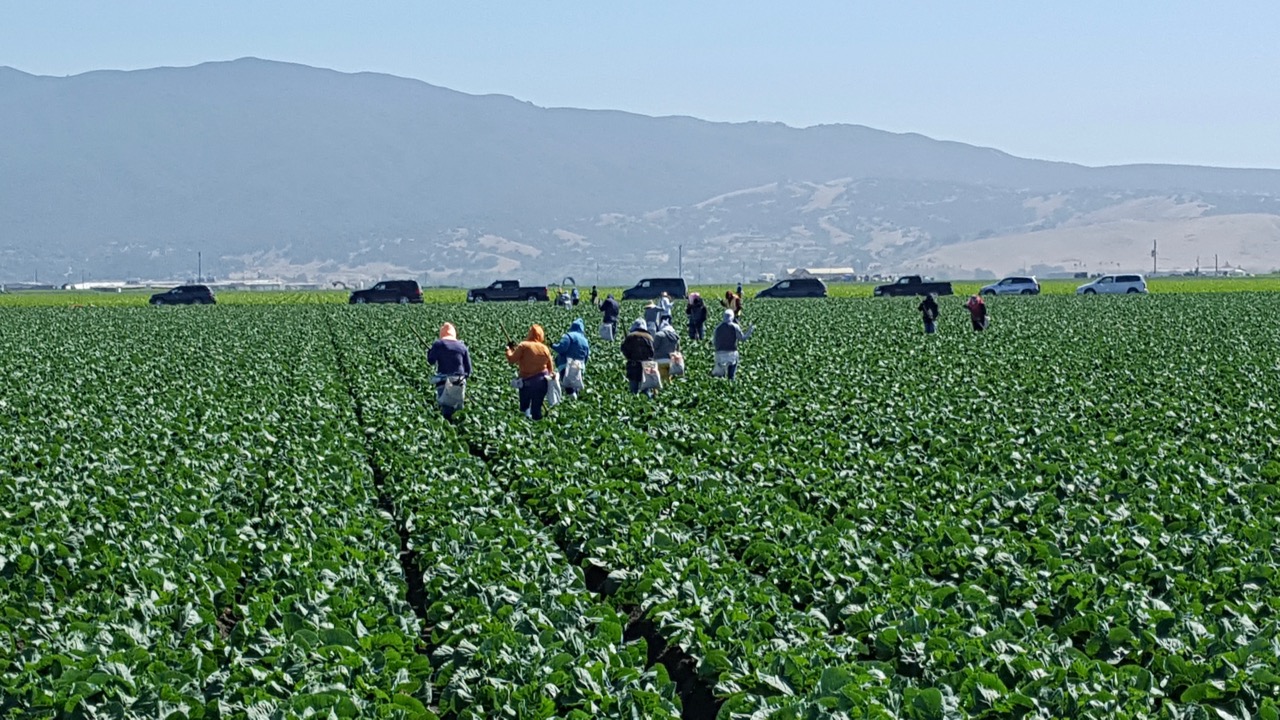
Gerawan Farm Workers Protest against UFW at California Supreme Court.


Below is the transcript (in English) of the message, which was recorded in Spanish, that all Gerawan employees heard when they called in on Nov. 27, 2017 to hear their work schedules.

Hi, this is Dan Gerawan.

Unfortunately, the California Supreme Court today decided to overturn the lower court that had said you should have the right to choose whether a contract is forced on you. Instead, the California Supreme Court agreed with UFW and ALRB that you should not have the right to choose, even though you have to pay UFW.

Fortunately, today’s decision does not strip your right to decide whether the UFW can represent you. The majority of you asked for the right to make that decision, and the ALRB held a decertification election over four years ago.

Nothing in today’s court decision prevents your ballots from being counted. As you may know, the California Fifth District Court of Appeal is still going to decide whether your votes from the November 2013 election will be counted.

You are entitled to the same dignity and respect that all other workers in our state and country have, which is the right to choose who represents you.

As for today’s decision, we intend to ask the United States Supreme Court to review it.

Thank you for listening.

According to the November 27, 2017 press release posted by David A. Schwarz, legal counsel for Gerawan Farming, “We believe that coerced contracts are constitutionally at odds with free choice. The employees are entitled to the dignity and respect that they earned by giving them what is their right. A secret ballot election allows them to decide for themselves who will speak for them at the bargaining table.”


Laurie Greene Wins Journalism Award

Greene Wins Fresno County Farm Bureau Award for Series on Farm Workers’ Rights,  by Patrick Cavanaugh, Editor 


2019-12-25T15:59:00-08:00December 7th, 2017|

California Supplies Thanksgiving

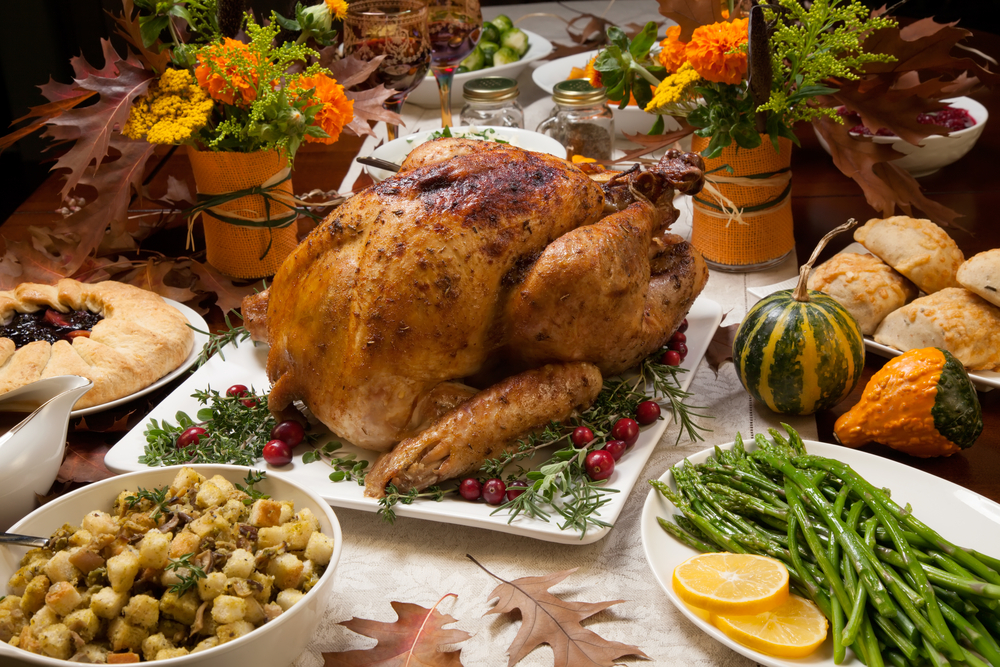
California Feeds the Nation on Thanksgiving!

By Patrick Cavanaugh, Farm News Director

California ranks #8 in turkey production in the United States (2016), and we supply most of the western states from our poultry farms located in several areas in the state.

The famous Mrs. Cubbison’s Stuffing or “Dressing” originated from a ç, born in 1890 in the San Marcos area of San Diego County. In short, Cubbison graduated from California Polytechnical University in May 1920 with a degree in Home Economics having paid her way through school with the money she earned feeding the farm workers.

Cubbison created her popular stuffing in 1948 using broken pieces of the popular Melba toast and various seasonings. The factory in Commerce, California churns it out in mass quantities this time of year.

California farmers produce almonds, raisins, walnuts, prunes, figs, dates, apricots, pistachios, and pomegranates, right on up the food line.

These are all celebrated Thanksgiving foods.

Celery from the Oxnard and Ventura area completes the stuffing mix. Nutrient-dense carrots, lettuce and fresh spinach from Salinas now arrive, pre-washed and bagged, in your local produce department. Your Thanksgiving traditional green beans come from California growers.

An ample supply of freshly harvested oranges and kiwi fruit, table grapes, strawberries, and raspberries are shipped from many areas in the state. Seasonal features include sweet potatoes from the Merced, about an hour north of Fresno, plus all kinds and colors of potatoes and tomatoes, parsley, onions, and garlic—all crops are raised in California.

Nearly all the fruits, vegetables and nuts that are part of America’s Thanksgiving are sourced from California.

Don’t forget about the great varieties of wine grapes grown in the No. 1 agricultural state that are deftly crafted into delectable California wines.

Or the thirst-quenching Martinelli sparkling apple or grape cider from Watsonville California, near the Monterey Bay area. Local growers provide the tree-ripened fruit to the award-winning company that is still family-owned after almost 150 years and is managed by the founder’s grandson and great-grandson. Here’s something to discuss at your Thanksgiving meal:  the company won its first Gold Medal at the 1890 California State Fair in  Sacramento.

How about those heirloom and new apple varieties, plus those small round watermelons that we snack on or toss into a dessert fruit salad, topped with California pomegranate arils?

Of course, we raise poultry, and even California lamb, if you want to go that way. Here is a Did-you-know? challenge for your holiday meal:  What are the most recent Presidental Thanksgiving Turkeys from California pardoned by United States presidents? (Answers are below.)

And by the way, you know that food-safety pop-up turkey timer that indicates when the turkey has reached the correct internal temperature? Public relations genius Leo Pearlstein and a turkey producer in Turlock, a small town north of Fresno in Stanislaus County, invented this Thanksgiving fixture.

Back in the 1960s, they were sitting in a room trying to solve the undercooked poultry challenge, when they looked up and noticed ceiling fire sprinklers. The sprinklers sprayed water when the room temperature became hot enough to melt a tiny piece of metal alloy in the mechanism. This innovative team of two applied the same concept to the pop-up timer!

With the exception of cranberries, our national day of giving thanks for a bountiful harvest is really a California Thanksgiving.


Here are some friendly topics for discussion at your Thanksgiving Table:

  • What is the name of the famous Thanksgiving stuffing that originated in California?
  • What beverage company that is still operating won its first Gold Medal at the 1890 California State Fair?
  • How was the pop-up timer invented and by whom?
  • How does high does California rank in U.S. turkey production?
  • What are the most recent Presidental Thanksgiving Turkeys from California pardoned by United States presidents?

In 2010, President Obama pardoned Apple, a 45-pound turkey from Modesto, California-based Foster Farms; and alternate bird Cider. 

In 2015, President Obama pardoned Apple, a 45-pound turkey and an alternate 43-pound bird named Honest, again from Foster Farms.

The Presidential Turkey flock are Nicholas White turkeys, which originated in California’s Sonoma Valley in 1957. Today, the Nicholas White is the industry standard. (Foster Farms)

2021-05-12T11:17:10-07:00November 20th, 2017|

LGMA Partners with Stop Foodborne Illness Group

Leafy Green Marketing Agreement Aids Decline in Citations

By Jessica Theisman, Associate Editor

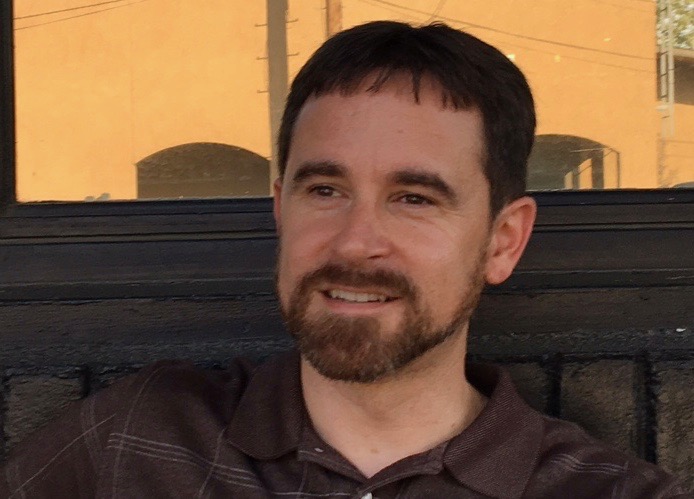
Scott Horsfall, CEO of LGMA

After a severe E. coli outbreak in 2006, California farmers created the California Leafy Green Products Handler Marketing Agreement (LGMA) in 2007 to help prevent foodborne illness. Scott Horsfall, LGMA CEO, addressed the critical role LGMA currently plays in California agriculture, “If you are going to be in the leafy greens business, in particular, you are going to have to invest in what it takes to put a food safety program in place.”

“LGMA has partnered with a group called Stop Foodborne Illness, a national nonprofit, public health organization dedicated both to the prevention of illness and death from foodborne pathogens and to its victims. These two groups collaborated to create a video that is used in all training workshops. The video not only tells them why food safety is important, it shows them.”

Citations for foodborne pathogens in recent years have declined. Most of the citations are noted as minor infractions or minor deviations.

“They are not threatening public health; sometimes they indicate an oversight in having some documentation on hand, or something along those lines,” Horsfall said.

“Yet, there are still a handful of major deviations that are more significant and are treated differently,” Horsfall said. “Auditors are required to go back out, but if [the situation] is flagrant, they will go back out within a week to make sure that all corrective actions that were submitted are actually put in place.”


Links:

California Leafy Green Products Handler Marketing Agreement (LGMA)

Stop Foodborne Illness


2021-05-12T11:01:58-07:00September 19th, 2017|

SGMA Workshop Features GSA Updates

SGMA Workshop Sept. 20

Clovis Veterans Memorial District

Join the Department of Water Resources (DWR) staff for an interactive workshop to discuss DWR Sustainable Groundwater Management Act (SGMA) implementation efforts and key components of Groundwater Sustainability Plan (GSP) development.

The workshop will feature groundwater sustainability agency (GSA) formation updates, assistance & engagement information; guidance, data, and tools overviews; interactive forums on Groundwater Sustainability Plan development; and information booths on the Proposition 1 Sustainable Groundwater Planning Grant Program (SGWP).

Don’t miss the opportunity to meet DWR’s SGMA Program and Region Office Staff! Information booths will open at 12:30 P.M.

The workshop will be held on September 20, 2017, from 1 PM to 5 PM at the Clovis Veterans Memorial District, 808 Fourth Street, Clovis, CA 93612.

Please RSVP for the workshop by clicking here.  Registration is not required but is appreciated to ensure suitable accommodations for all attendees. This workshop is free of charge and is open to all interested persons and the public.

2017-09-08T16:56:14-07:00September 8th, 2017|

Who Safeguards CA Farm Workers’ Rights? # 7 – CA Supreme Court

CA Supreme Court Hears Case of Gerawan Farming, Inc. vs. UFW/ ALRB


By Laurie Greene, Founding Editor


Gerawan Farm Workers Show Company IDs and Paystubs (Identification has been blurred out for privacy reasons.)

A significant labor hearing occurred at the California Supreme Court (Court) in San Francisco yesterday, the day after Labor Day, between the team of the United Farm Workers (UFW) and the California Agricultural Labor Relations Board (ALRB or Board) versus Fresno County-based Gerawan Farming, Inc. over self-determination. At stake is the right of farm workers to determine if they want to be represented by the union or not. Under scrutiny is the Mandatory Mediation and Conciliation (MMC) provision of the Agricultural Labor Relations Act that paves the road for the UFW to force unionization on all farm workers.


Anthony Raimondo, of Fresno-based Raimondo & Associates, lawyer for Gerawan farm worker spokesperson, Silvia Lopez

“Although Gerawan farm workers attempted to participate in this hearing, as well as other hearings, they were denied legal participation in the trial by the state of California and by the UFW,” according to Anthony Raimondo, of Fresno-based Raimondo & Associates and lawyer for Gerawan farm worker spokesperson, Silvia Lopez. Nevertheless, hundreds of Gerawan employees in blue t-shirts attended the proceedings and protested outside the courthouse, lending their voices, exercising their free speech and showing their legitimate Gerawan company ID cards and payroll stubs.


Dan Gerawan, who co-owns Gerawan Farming, Inc., with his brother Mike and father Ray, commented on the court hearing just after it ended. “It is frightening to see the deference that the Court gives to the ALRB. Everyone in our industry and all farm workers should be scared by the deference this Court gives to a Board that is clearly not interested in the employees’ best interests.” Describing his perceptions in the courtroom, Gerawan said, “It was Orwellian to hear the government attorneys argue that they are defending self-determination, when in fact, what they are doing is the exact opposite.”


“That said,” he continued, “I am encouraged by the questions I heard from the Court. They obviously are taking this very seriously, and I’m hopeful that they will side with our employees and us.”


Silvia Lopez, Gerawan farm worker spokesperson

Members of the UFW were also present at the Court in red t-shirts, though only one person claimed to be a Gerawan employee. Marc Grossman, spokesperson for the United Farm Workers of America and communications director of the Cesar Chavez Foundation, said that the Gerawan operation should be unionized because the UFW was elected in 1990 by Gerawan farm workers and certified in 1992 by the ALRB.


However, the UFW did not successfully reach a contract for the Gerawan farm workers, and therefore did not collect dues. Furthermore, the UFW abandoned the Gerawan farm workers for nearly 20 years.


Grossman said the Court discussed today the long-standing principle that a union is certified until it is decertified. Workers have a right to decertify the union but it has to be the workers—not the company. It is patently illegal for an employer to have anything to do with determining union representation by his or her employees.

Marc Grossman, spokesperson for the United Farm Workers of America


When asked to account for UFW abandonment of Gerawan farm workers, Grossman said, “Bogus issue! The UFW never abandoned the workers at Gerawan. It repeatedly attempted to negotiate with Gerawan. At every step, it was met with virulent resistance by the company. It became apparent that only a law that would allow neutral state mediators to be brought in to hammer out a union agreement when the grower refused to do so would be the only course, and we followed it.”


Grossman asked us to read the September 5 ‘News from UFW’ press release he provided, entitled, “Giant grower challenging law giving farm workers the union contracts they voted for already owes its workers $10 million under a state-imposed union contract.”  Here are excerpts:


What about Gerawan’s claim the union “abandoned” the workers for 20 years?

Even before the Mandatory Mediation statute was adopted in 2002, the ALRB and the courts consistently rejected employer claims that unions should not be deemed workers’ bargaining representatives if they allegedly “abandoned” them. It is long-established law that a union remains certified as bargaining representative until workers—and only workers—vote to decertify it. At the time of the law’s passage in 2002, Gerawan was one of the 243 companies where farm workers voted for the UFW but the companies never agreed to contracts. (See UFW-Gerawan chronology)

1995-2002: Gerawan workers and the UFW continued working to improve conditions while the ALRB stopped enforcing the farm labor law under Republican political appointees.

2002: The Mandatory Media law was enacted. The agricultural industry mounted a major constitutional challenge.

2006: The Third District Court of Appeals in Sacramento upheld the Mandatory Mediation law. The industry appealed to the state Supreme Court, which refused to take the case. The industry declined an appeal to the U.S. Supreme Court—and the law’s constitutionality was settled.

2012: The UFW sent a new negotiations request to Gerawan. At least 10 bargaining sessions failed to produce a union contract.

March 2013: The UFW requested mandatory mediation at Gerawan with the ALRB.


The above chronology vaguely refers to UFW involvement between 1995 and 2002 that remains unsubstantiated. UFW contact with Gerawan farm workers appears to have been reestablished in 2012.

Dan Gerawan, co-owner Gerawan Farming, Inc.

Dan Gerawan, co-owner Gerawan Farming, Inc.

The ALRB did supervise a sanctioned election for Gerawan farm workers to decertify the UFW on November 5, 2013; however, the ballots were collected, sealed and never counted.

When told that UFW representative Grossman said they never walked away, Gerawan asked, “If they didn’t abandon, then where were they for almost two decades? They did not phone us or send us a fax. They did not show up on our property. They did not inquire on behalf any of our employees. They did not file an unfair labor practice. They did nothing during that time. They abandoned our employees.”

Ron Barsamian, attorney for Gerawan Farming, Inc.


One of Gerawan’s attorneys, Ron Barsamian, managing shareholder of Fresno-based Barsamian & Moody, stated, “I’m very encouraged. I think the Justices’ questions indicated that they understood the issue we were raising. I think they certainly read the briefs. I think they understand the difficulty in how locked-in workers, such as the [Gerawan] ones behind us, can be under the way this law works: if you have an MMC contract, [the workers] never have an opportunity to decertify the union. Even the questions asked by the justices that we expected to be against us were great, and I certainly loved the answers that Mr. Schwartz gave.”

David Schwarz, attorney for Gerawan Farming, Inc.


Barsamian was referring to another Gerawan attorney, David Schwarz, from the law firm, Irell & Manella, who addressed the central issues of the case: “I think it was a full and fair hearing. I think the Court—all members—are deeply concerned about the unaccounted for two-decade [UFW] absence, an unaccountable power given to a mediator [ALRB], and uncheckable power given to the union [UFW] to compel one grower and one group of employees into this process. Ultimately, I think the justices were very much focused on and troubled by the inability of the [ALRB] agency to step in in a situation of gross abandonment where a contract is being imposed by that agency.”


The California Supreme Court typically releases it decisions and commentaries after 90 days.

Protesting are Gerawan farm workers (in blue) and UFW members (in red)

Protesting are Gerawan farm workers (in blue) and UFW members (in red)


Who Safeguards Farm Worker Rights? – Part 8

Pick Justice, Gerawan Farm Workers Protest Forced Unionization


2019-12-25T15:44:52-08:00September 6th, 2017|

Who Safeguards CA Farm Workers’ Rights? Part 5

Post-Labor Day, Forced Unionization Hearing at CA Supreme Court


By Laurie Greene, Founding Editor


Forced Unionization Hearing

On Tuesday, Sept. 5, one day after Labor Day, busloads of concerned farmers and farm workers will arrive at the Supreme Court of California in San Francisco to support Gerawan Farming and farm workers—and quite possibly 80,000 family farms in the state—against forced unionization in the first case on the Court’s agenda:  Gerawan Farming, Inc. v. Agricultural Labor Relations Board (United Farm Workers of America, Real Party in Interest) and Consolidated Case, S227243 (Kline, P. J., assigned justice pro tempore).


Gerawan Case History

Explaining the case history, David Schwarz, attorney for Gerawan Farming, Inc. from the Los Angeles-based law firm of Irell & Manella LLP, said, “This case began almost five years ago in mid-October of 2012. The United Farm Workers (UFW) sent a letter to Gerawan Farming demanding that the company resume bargaining over a collective bargaining agreement. The UFW had won an election at Gerawan in 1990 and was certified to represent the workers by the California Agricultural Labor Relations Board (ALRB) in 1992. After one preliminary negotiating session in early 1995, the union disappeared and wasn’t heard from by Gerawan for nearly 20 years.”


“The UFW resurfaced in late 2012 demanding negotiations,” Schwarz stated, “but after ten bargaining sessions, the union abandoned the bargaining table.” This scenario was similar to UFW’s behavior after having won several certification elections by California farm workers employed on separately-owned farms but was unable to obtain first contracts with many growers on behalf of these farm workers.


Farm Worker Rights under the Agricultural Labor Relations Act 

According to the ALRB website, all agricultural employees in California, whether or not they are represented by a labor organization (union), have certain rights under the Agricultural Labor Relations Act (ALRA or Act). The purpose of the Act is to ensure peace in the agricultural fields by guaranteeing justice for all agricultural workers and stability in labor relations. The ALRA became law in 1975.

The Act describes and protects the rights of agricultural employees to make their own decisions about whether or not they want a union to negotiate with their employer about their wages, hours, and other working conditions. Where the employees, through a secret ballot election, have selected a union to represent them, the Act requires that the employer bargain in good faith with the union concerning wages, hours, and other working conditions.

The Agricultural Labor Relations Board (ALRB) is the state agency established to enforce the Act.


Mandatory Mediation and Conciliation (MMC)

“At this juncture, UFW invoked a process known as “Mandatory Mediation and Conciliation (MMC), a euphemism for forced-contracting, passed by the legislature in 2002 at the behest of UFW,” Schwarz explained. “Through MMC, the State of California imposes a contract on the employer and its farm workers at the union’s request. In Gerawan’s case, the failure to reach a contract can be explained by the failure of the UFW to show up and attempt to negotiate; however, that failure to bargain—or for that matter, the union’s complete abandonment of the Gerawan farm workers—was deemed irrelevant in the eyes of the ALRB.”

Count our votes Farm workers' rights UFW Endorsement

“The ALRB argued that the union certification in 1992 means the UFW remains the perpetual representative of Gerawan workers now and forever,” said Schwarz, “and until such time as the workers vote the union out through a petitioned election process known as decertification.” The ALRB disregarded both UFW’s failure to represent Gerawan farm workers in any successful contract negotiation and the UFW’s failure to qualify to collect union dues from Gerawan farm workers. Most significantly, the ALRB disregarded the legally-sanctioned and ALRB-supervised election on November 5, 2013, in which Gerawan farm workers had the opportunity to vote to decertify the UFW or not—the ballots of which have never been counted and are believed to be stored in an unknown, unsecured location.


“Let’s be clear,” Schwarz explained, “at no point after this union was certified until this union invoked the MMC process, was there an allegation that Gerawan refused to show up or refused to negotiate the terms of the contract. So this is not a case about a grower refusing to show up at the bargaining table or a grower inserting that the abandonment forfeits the right of the union to bargain.”


“Rather, this is a case about whether or not the union’s abandonment means that it forfeits the right to compel the State of California to force a contracting process on the workers. And that’s the key difference: between duty to bargain, which is a continuous bargain, and the right, as the union claims, to impose a state-ordered contract.”


What is at Stake for Farm Workers?


Tal Cloud, president and co-founder of Fresno-based family-owned Paper Pulp & Film, Inc., a converter of printing and industrial papers, including raisin (drying) trays, is part of the team that organized the trip. Cloud said, “The UFW and the California ALRB are hoping the California Supreme Court will rule in their favor by forcing unionization on California farms and farm workers—the next flash point in the two-decade long battle between Gerawan Farming and the UFW.”


“People don’t understand that this is incrementalism,” Cloud said. “If the California Supreme Court rules against Gerawan, it literally puts every agricultural operation of any size in the state right in the “bulls-eye” for mandatory UFW unionization, and that is what is so concerning. And although people do not understand it, the laws are already all there; they just need to be formalized. So, yes, it is really scary.”


“The ALRB has power in these courts due to California legislators who have given the ALRB all these powers, but without checks or balances,” said Cloud. “So, you have an agency that basically plays god with people’s lives and there are no legitimate governmental organizations or courts looking at it, until now that [the forced unionization case] has come to the California Supreme Court.”


The upcoming California Supreme Court hearing follows the UFW’s appeal of a lower court ruling in favor of Gerawan on the same issue in 2015. “We are hoping that the Court goes by the law, and does not give [the ALRB and UFW] this kind of opportunity to really put all of our operations in California at risk for forced unionization and forced contracts,” Cloud said.


“The bus trip on Tuesday is to make a statement and not sit by silently. The hearing is at 9:00 A.M., and more than 300 people from the Valley are going. We are leaving at 3:30 AM, providing food for our passengers and protesting outside the Supreme Court. The UFW also will be rallying at the Supreme Court.


It remains uncertain if farm workers will be allowed inside the courtroom. Cloud said, “There has already been a lot of back and forth about not allowing any farm workers, or Silvia Lopez (the Gerawan farm worker spokesperson) into the courtroom. The attorneys are still fighting on that. But there will be a big protest, so to speak, outside.”


“There are public areas for us to be in, and we will be peaceful like all the other demonstrations that we have done,” Cloud said. “My hope is that everyone stays safe and we do not have extremists or rabble-rousers there who try to cause problems.”


Cloud said there is a glimmer of hope for the farming industry because the UFW lost to the lower courts. “But, you just don’t know. We are hoping these farmers, farm workers and protesters will bring attention to this issue,” he said.


Once the California Supreme Court hearing is completed, the court will have 90 days to make its ruling. “The reality is:  If agriculture does not get behind the effort against MMC now, and the California Supreme Court reverses the lower court’s decision, literally every farming organization in California could face unionization. And that is a scary thought,” said Cloud.


“Likewise, if the ruling goes against the UFW,” Cloud said, “I am sure the case will go to United States Supreme Court, which would certainly be a do-or-die point for agriculture.”


Who Safeguards CA Farm Workers’ Rights? Part 6 – Facts vs. PR


2019-12-25T15:36:31-08:00September 4th, 2017|

Blue Tech Valley Innovation Cluster – Part 1

Blue Tech Valley Funded by California Energy Commission

By Patrick Cavanaugh, Farm News Director

The Blue Tech Valley Central Valley regional innovation cluster represents an expansion and interconnection of multiple incubators in entrepreneurship programs, with services located at each of the seven designated Blue Tech Valley cluster hubs, collectively serving 39 counties and covering two-thirds of California’s geographic area. Funding for the new cluster is provided by a $5 million grant from the California Energy Commission.

The designated hubs for the Blue Tech Valley innovation cluster features Fresno State as the central portion. Other hubs include: CSU Bakersfield, Chico State, Humboldt State University, Cal State University, Monterrey Bay, Sacramento State, and a Sierra small business development center.

California Ag Today recently spoke with Erik Stokes of the California Energy Commission Research and Development Division. Blue Tech Valley was part of a major $60 million initiative the Energy Commission launched about a year ago to really try to create a state-wide ecosystem to support clean energy entrepreneurship across the state.

“As part of this initiative, we created four regional innovation clusters to manage a network of incubator-type services that can encourage clean tech entrepreneurs in the region and really try to help make what can be a very tough road towards commercialization a little bit easier,” Stokes said.

“Blue Tech Valley and their partners were selected to be the Central Valley cluster. A big reason for that was their strength and expertise in the food and agricultural sector,” he explained.

One of the focus areas of the incubator is to find areas in farming to save costs and minimize greenhouse gases.

“We really want to focus on those technologies that can help both reduce water use, as well as energy use,” Stokes said.

2021-05-12T11:05:15-07:00August 30th, 2017|

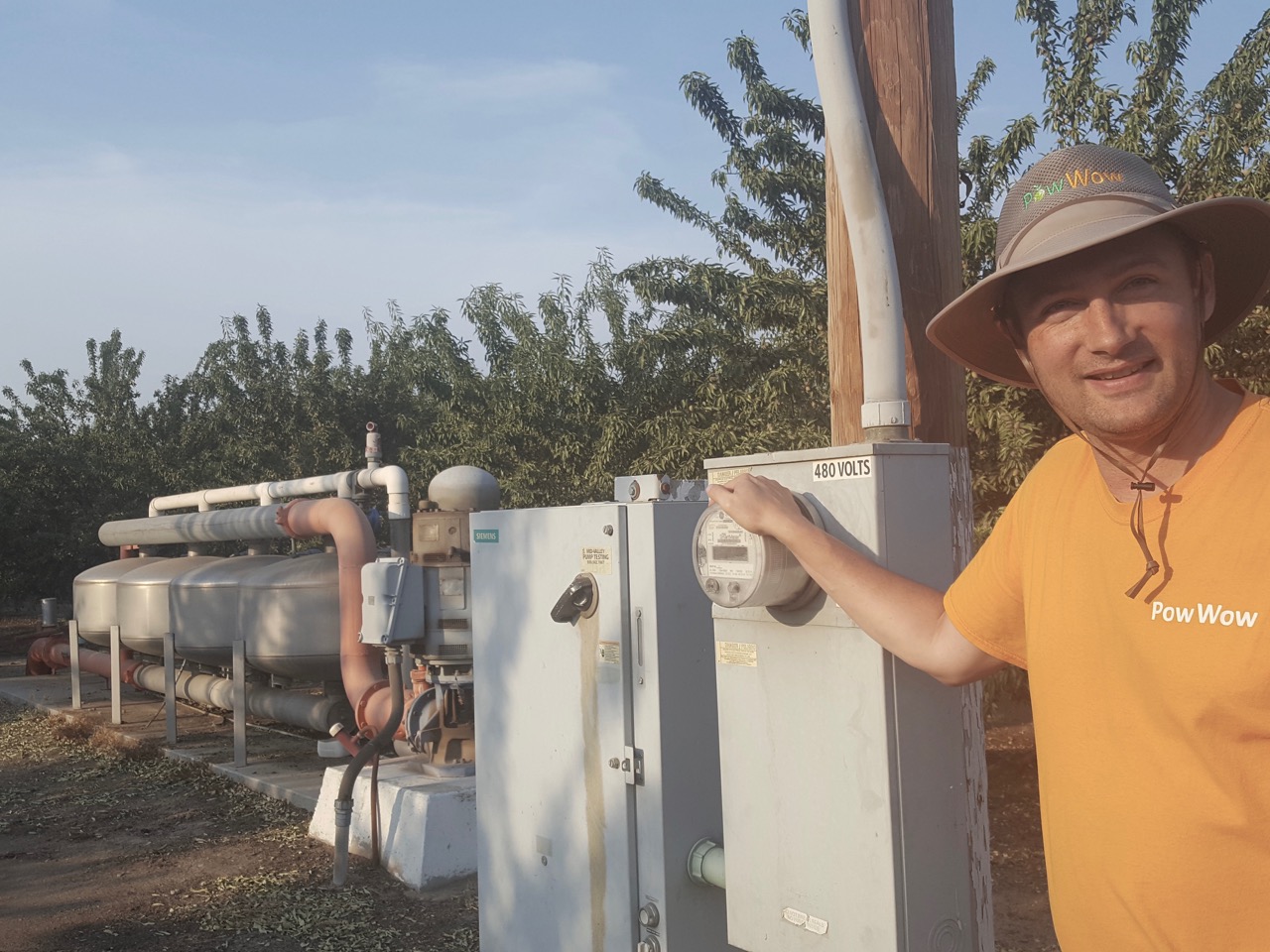
PowWow Energy Gets Major Funding

The Central Valley Angel Group Invests in PowWow Energy, Inc.

News Release

PowWow is applying data science to solve practical problems in agriculture. It provides a simple water compliance solution using a clever algorithm that turns energy data into useful text alerts and water records for growers.

The team of agronomists and computer scientists are extending the data-mining platform with 100 Terabits of aerial images and weather forecasts to identify where farms can recover revenue losses and improve their bottom-line.

Fund Chairman A. Emory Wishon said, “We are thrilled to invest in a company that is passionate about working with farming communities to save water and energy while preserving quality crops.”

PowWow CEO Olivier Jerphagnon added, “Central Valley Angel Group’s investment expands PowWow’s presence in the San Joaquin Valley. We started to work at the Water and Energy Technology incubator in Fresno three years ago, and we’ve taken the time to work closely with growers to understand their needs”.

The local commitment of Central Valley farmers and investors, when combined with the experience of Silicon Valley technology entrepreneurs and investors, strengthens the unique dual culture of PowWow Energy, which is critical to its continued growth and success.

Formed in September 2015, Central Valley Angel Group is a $1 million+ fund whose members are accredited investors. The Central Valley Angel Group invests in high-growth, early-stage companies that are located within the region. In addition to making a return on its investments, the goal is to educate local Angel investors and create ongoing investment capital to help the Central Valley’s start-up economy thereby retaining businesses and supporting job growth.

To learn more about the Central Valley Angel Group or to apply for funding visit www.centralvalleyangels.com

Contact: A. Emory Wishon III, Chair, Central Valley Angel Group, 559-439-4000

2021-05-12T11:05:16-07:00August 29th, 2017|

Maintaining Food Safety – LGMA Part 3

Understanding the Farming Operation

By Jessica Theisman, Associate Editor

California Ag Today met recently with Jon Kimble, and among other topics, he reported on food safety in the state of California. Kimble is the operations business development manager at Safe Food Alliance.

Jon Kimble, Safe Food Allicance

Safety is a big concern for those who work in the agricultural community. Kimble spoke on how it is important that farmers assess those on their property.

“If you see somebody getting out, and getting into your fields, certainly you want to talk to them and make sure they are not going to impact the safety of your products, because that is your financial future.”

Operations such as U-Pick, people out in the fields, or people part of an activity raise concern. Risks may be managed in terms of providing hand washing, communication, putting up signs, and making sure they understand that they can impact the safety of others when they’re out in the field.

“It really comes down to just practical due diligence, activities, recommendations that come right out of the good agriculture practices that has been developed over the past few decades,” Kimble said.

Kimble also spoke to California Ag Today about the Leafy Green Marketing Agreement (LGMA). This puts standards and measures in place to protect the safety of the crops.

“That is a great example of voluntary activity rising up from within the industry to control risks and control hazards,” he said.

The industry has established the best practices, which have led to a world class food safety program through the LGMA.

“The first compliance dates are coming up in January, and I think a lot of growers do not realize how soon their compliance dates are hitting,” Kimble said.

2021-05-12T11:05:16-07:00August 23rd, 2017|

Expert Talks Protecting Our Food Supply And Industry

Maintaining Food Safety – Part 2

By Patrick Cavanaugh, Farm News Director

Continuing our series on food safety in the state of California, we spoke with Jon Kimble, Operations Business Development Manager at Safe Food Alliance, and he explained the need for worker awareness when it comes to protecting our food supply.

“Too often, we see these recalls on foods where people are getting ill. Many times, it gets tracked back to an employee. Somebody’s got a virus, somebody’s got a bacteria, they’re sick,” Kimble said. “They come in contact with the food while they’re ill, and that translates back to getting out in the food supply and making people sick.”

“That’s what we’re trying to minimize. In a practical sense, in cases where we’ve observed people getting sick from things, we track that back, see what the source is, and try and share that information with everybody so that they can minimize that from happening in the future,” Kimble explained.

There are economic implications to consider as well.

“It is really paramount to prevent not only economic damage to your own farm and your own business, but also an entire industry,” Kimble said. “We see [that] one bad apple affects the whole industry.”

“We’ve even seen situations, such as a few years ago ,where there were some contaminated peppers, but they suspected tomatoes initially. It impacted an entire year’s harvest of tomatoes,” Kimble said. “We want to minimize the damage to the industry, and how people protect their businesses legally, by doing the right thing.”

Buyers are also setting a higher standard of quality, in light of the new rule.

“The regulation does set a minimum requirement, but buyers, customers, purchasers are setting a higher standard,” Kimble said.

“We’re seeing that trickle down effect as a result of the Food Safety Modernization Act (FSMA), that even folks who aren’t necessarily required to do certain things in their operation are being asked by their customers to do above and beyond what the regulation requires, and even in advance of their compliance dates for the regulation.”

“We’ve seen it both on the processing side and on the growing side, that customers are starting to raise their expectations for growers,” he said.

This is Part 2 of a 3 Part Series.

2017-09-02T23:13:09-07:00August 23rd, 2017|
Go to Top