Critical Water Legislation Introduced by Valadao

2021-05-13T16:17:40-07:00February 5th, 2021|

Farm Credit Helping Non-Profits Impacted by COVID

Farm Credit Provided Over $1 Million to California Non-Profits in 2020

In a challenging year, leading ag lender awarded grants to over 100 groups to support agriculture in the Golden State

The COVID-19 pandemic posed remarkable challenges for California’s farmers and ranchers in 2020. Abrupt shifts in demand caused by restaurant and school closures and a jump in meals prepared at home forced producers to pivot to respond to these market shifts and many farmers experienced significant losses as a result.

But the state’s farming industry is by nature resilient and will rebound as the pandemic eases. And as it has done for over 100 years, Farm Credit continued to demonstrate its unwavering commitment to agriculture in 2020 by supporting the industry through sponsorships, education and grants to young and beginning farmers.

In fact, the Farm Credit Alliance – American Ag Credit, CoBank, Colusa-Glenn Farm Credit, Farm Credit West, Fresno Madera Farm Credit, Golden State Farm Credit, and Yosemite Farm Credit – contributed over $1 million in 2020 to over 100 agricultural organizations. That’s in addition to several million dollars the individual associations donated directly.

Approximately half of these funds were devoted to industry support – the preservation of agriculture and raising awareness of the importance of agriculture. The remaining funds provided funding for the future of agriculture through supporting youth programs and farming groups that provide networking and continuing education for their members. And like farmers, these organizations had to quickly adjust by operating virtually instead of in person.

One program Farm Credit supports is the Center for Land-Based Learning’s FARMS program, which normally takes students from participating high schools into the fields once a month to give them hands-on experience about different types of crops and how they are raised, harvested and processed. This year, with such tours canceled, the Center set up daily Zoom calls to give students the chance to talk to and learn from farmers and other agricultural experts.

“Our state’s youth and beginning farmers are the future of agriculture, which is why Farm Credit strongly supports programs like the Center for Land-Based Learning, along with FFA and 4H to encourage young people to go into farming and ranching,” said Mark Littlefield, President and CEO, Farm Credit West. “Farm Credit also is committed to helping small and beginning farmers become established.”

Supporting small farmers is a top priority because one-third of the 75,000 farms in California are less than nine acres. Evan Wiig, director of membership and communications for the Community Alliance with Family Farmers, said support from sponsors like Farm Credit is the only way events like their California Small Farm Conference could take place.

“Our primary constituents don’t have a lot of extra spending power. We have to keep the event affordable, and we couldn’t do that on ticket sales alone,” he noted. “Farm Credit’s support has allowed us to grow and offer services to more people.”

Preserving and raising awareness of California agriculture is vital as well. One way Farm Credit helps make that happen is by sponsoring California Ag in the Classroom, a nonprofit organization dedicated to educating youth throughout the state about the importance of agriculture in their daily lives, and the California Farm Water Coalition, which regularly provides fact-based information on-farm water issues to the public.

“California is the nation’s leading farm state. Given our great natural resources such as soil and climate, nearly anything can be grown here,” said Keith Hesterberg, President and CEO, Fresno Madera Farm Credit. “But the industry continually faces new laws and regulations that make it harder for agriculture to succeed. Farm Credit strongly supports efforts to educate policymakers and the public about the role California agriculture plays in the U.S. food system, and how important agriculture is to the state’s economy.”

And as the spreading coronavirus forced many businesses to shut down last spring, Farm Credit, the Dairy Farmers of America and Hilmar Cheese quickly stepped in to help expand the state’s Farm-to-Family Program by providing seed money for food banks and donating 37,000 pounds of cheese. Gov. Gavin Newsom noted that private-sector contributions from Farm Credit and others were leveraged to launch a $15 million campaign to support the program through the end of the year.

Farm Credit plans to continue its strong support to California agriculture in 2021 and into the future.

2021-01-26T18:04:40-08:00January 26th, 2021|

Water Infrastructure Letter Sent to President Biden

National Coalition Pushes for Investment in Aging Water Infrastructure

A national coalition of more than 200 agricultural organizations and urban and rural water districts urged President-elect Joe Biden and congressional leadership this week to address aging Western water infrastructure in any potential infrastructure or economic recovery package.
The coalition includes organizations from 15 states that collectively represent $120 billion in agricultural production, nearly one-third of all agricultural production in the country, and tens of millions of urban and rural water users.
In separate letters to President-elect Biden and congressional leaders, the coalition said existing Western water infrastructure is in desperate need of rehabilitation and improvement. Most of the federal water projects in the West were built more than 50 years ago and were not designed with present and future population demands and climate conditions in mind. Without immediate attention, the coalition said, the Western water system will quickly prove inadequate to meet the needs of urban and rural users and the environment.
The coalition encouraged the federal government to invest in a diversified water management portfolio that enhances water supply and quality for urban and environmental uses while keeping water flowing to Western farms. Specific recommendations include funding for:
  • Water conservation.
  • Water recycling, reuse and desalination projects.
  • New water storage facilities, both surface and groundwater.
  • Watershed management, fish passage and recovery, and habitat restoration.
  • Federal financing mechanisms for water projects.
  • Loans for local districts operating and maintaining federally owned irrigation projects.
  • Water quality improvement for rural communities.
Beyond financial support, the coalition also called on the federal government to ensure the timely construction of water projects by streamlining the regulation and permitting processes.
“While many think of infrastructure in terms of highways, bridges and other transportation facilities, there is an equally compelling need for federal investment in water infrastructure across the West. Meaningful and timely federal investment in water infrastructure, along with a regulatory system that prioritizes efficiency and completion of projects, is necessary to preserve our farms and strengthen our rural communities in the West,” said Western Growers President and CEO Dave Puglia.
“Federal investment in water projects will bring widespread benefits to the environment and throughout the American economy, and will provide jobs, both in rural communities throughout the West and in communities across the country where the equipment and materials for the projects would be produced,” California Farm Bureau President Jamie Johansson said.
“Water is the lifeblood of the West. Without reliable and affordable water supplies, every sector of our economy would suffer – from agriculture to manufacturing and high-tech to local community needs. As Congress and President-elect Biden consider an infrastructure stimulus package, it is of paramount importance that maintenance, rehabilitation and development of water infrastructure is a high priority,” said Family Farm Alliance Executive Director Dan Keppen.
“A reliable water supply is a frontline defense in the effort to prevent the spread of COVID-19. It is also a cornerstone of our nation’s economy and the environment. Investing in water infrastructure will jumpstart the economy with jobs and provide sustained economic activity by allowing farms, industry and communities to grow and thrive,” stated National Water Resources Association Executive Vice President Ian Lyle.
“For the well-being of the people of this country and our nation’s economy, we stand together in calling for our leaders in Washington, D.C., to join us as partners in making the essential investments in our aging water infrastructure across America that are so long overdue,” Association of California Water Agencies Executive Director Dave Eggerton said.
Click here for the letter to President-elect Joe Biden and click here for the letter to congressional leadership.


2021-01-22T18:43:00-08:00January 22nd, 2021|

Gov. Newsom Proposed Budget

Governor Newsom Proposes New Fiscal Year Budget

Governor Newsom unveiled his Proposed Budget on January 8th, outlining his budgetary and policy priorities for the coming fiscal year. Following upon a tumultuous economic year with a $54 billion deficit, this year’s budget paints a rosier picture with a proposed $227 billion “balanced” spending plan, $22 billion in budget reserves and a one-time $15 billion budget surplus. This does not, however, reflect the $7.6 billion structural deficit projected for 2022-2033—one that will grow to $11 billion in 2024-2025. Below is a brief synopsis of proposed expenditures and policy changes offered in the Governor’s budget:
  • $ 6.7 million one-time General Fund ($3.35 million in the current year and $3.35 million in July 2021) with the University of California Cooperative Extension to provide technical assistance and grants to small, mid-sized and underserved farmers; this assistance may include business planning, compliance, and accessing state and federal funds
  • $8.7 million in federal funds and 24 positions at the Department of Food and Agriculture to implement the Food Safety Modernization Act
  • Climate smart agriculture funding (see the Climate Change section below)
  • $40 million General Fund for the State Water Efficiency and Enhancement Program (see the Water section below)
  • $6 million General Fund ($4 million for current year and $2 million in July 2021) to do an assessment of EPA/CDFA regulations and identify opportunities to streamline regulations, reporting, and develop a unified licensing portal for program regulation and payment
  • Proposed extension of the Carl Moyer Memorial Air Quality Standards Attainment Program (Carl Moyer Program) which provides grant funding for cleaner-than-required engines, equipment, and other sources of air pollution with the State Air Board and local air districts until 2024
  • Allow the Department of Industrial Relations to increase budget by $14.4 million and position allocations by 70 to hire additional Cal/OSHA inspectors
  • Provides $8.6 million and 43 positions to allow access to workers comp benefits under SB 1159 and investigate workplaces that violate COVID-19 specific guidelines and regulate businesses for adequate personal protective equipment stockpiles for future crises
  • Establish a new Department of Better Jobs and Higher Wages compromised of several existing Labor Workforce Development Act agencies involved in job training, labor market information, and apprenticeship programs
  • Replacing the current pesticide mill assessment structure (which is non-discriminatory on pesticide type), with a risk-based assessment strategy that charges a higher mill for higher risks (i.e. those pesticides with no classification or a ‘caution’ classification would go from 21to 26 mills, ‘warning’ would go to 40 mills and ‘danger’ would go to 45 mills)
  • $54 million in Cap and Trade expenditures ($30 million in current year and $24 million in July 2021) for the Safe and Affordable Drinking Water fund
  • $60 million in one-time General Fund ($30 million in current year and $30 million in July 2021) to DWR for implementation of the Sustainable Groundwater Management Act (SGMA) to support economic mitigation planning and implementation projects
2021-01-15T18:32:00-08:00January 15th, 2021|

Schuil & Associates, Inc. Assisting on Land Purchases

Schuil & Associates, Inc. and New Current Water and Land, LLC Collaborate on Land Purchases in Westlands Water District

Schuil & Associates, an industry-leading, family-operated ag real estate firm, today announced a cooperative relationship with New Current Water and Land, LLC – a Fresno-based firm specializing in the assessment, development, management, acquisition, and banking of water supplies throughout the Western U.S. – to counsel those interested in purchasing farmland in the San Joaquin Valley including, importantly, the fertile Westlands Water District of California.

Providing water to farms in an area of approximately 600,000 acres (2,400 km²) in Fresno County and Kings County in California’s San Joaquin Valley, the Westlands Water District is the largest agricultural water district in the United States. The recent repayment of the District’s capital obligations to the Central Valley Project has resulted in a lifting of the acreage limitation provisions of Reclamation Law which previously had restricted allowable ownership of irrigated land to 960 acres (3.9 km²). This change has made Westlands’ farmland more compelling and accessible to farmers and investors alike.

Land in the Westlands Water District contains some of the best soil in the country but historically has sold for nearly half of the cost of the Eastside of the Central Valley (which has similar soil composition) presenting a unique investment opportunity. This highly-productivity, lower-cost land also offers two sources of water – surface water and groundwater.

“It is important that those interested in purchasing farmland in California, particularly on the Central Valley’s Westside, be provided excellent counsel on water issues,” said Marc Schuil, Principal and Agent, Schuil & Associates. “With our relationship with New Current Water and Land and their decades of water experience, we are better able to help clients navigate this critically-important sector.”

Fresno-based New Current Water and Land provides multi-faceted strategic planning services to investors, farming organizations, and others seeking to develop long-range approaches to water supply, water development, and water management.

“When it comes to agriculture, water is key,” Gary Sawyers, Principal, New Current Water, and Land said. “We’re excited to work with Schuil to help counsel their clients on the nuances of water issues in Westlands and open this region to investors.”

2021-01-12T19:14:26-08:00January 12th, 2021|

Driscoll’s Goes Vertical with Strawberries

(Featured photo courtesy of Tex AgriLife Today)

Driscoll’s and Plenty Team Up to Grow Strawberries Indoors

By Tim Hammerich, with the Ag Information Network

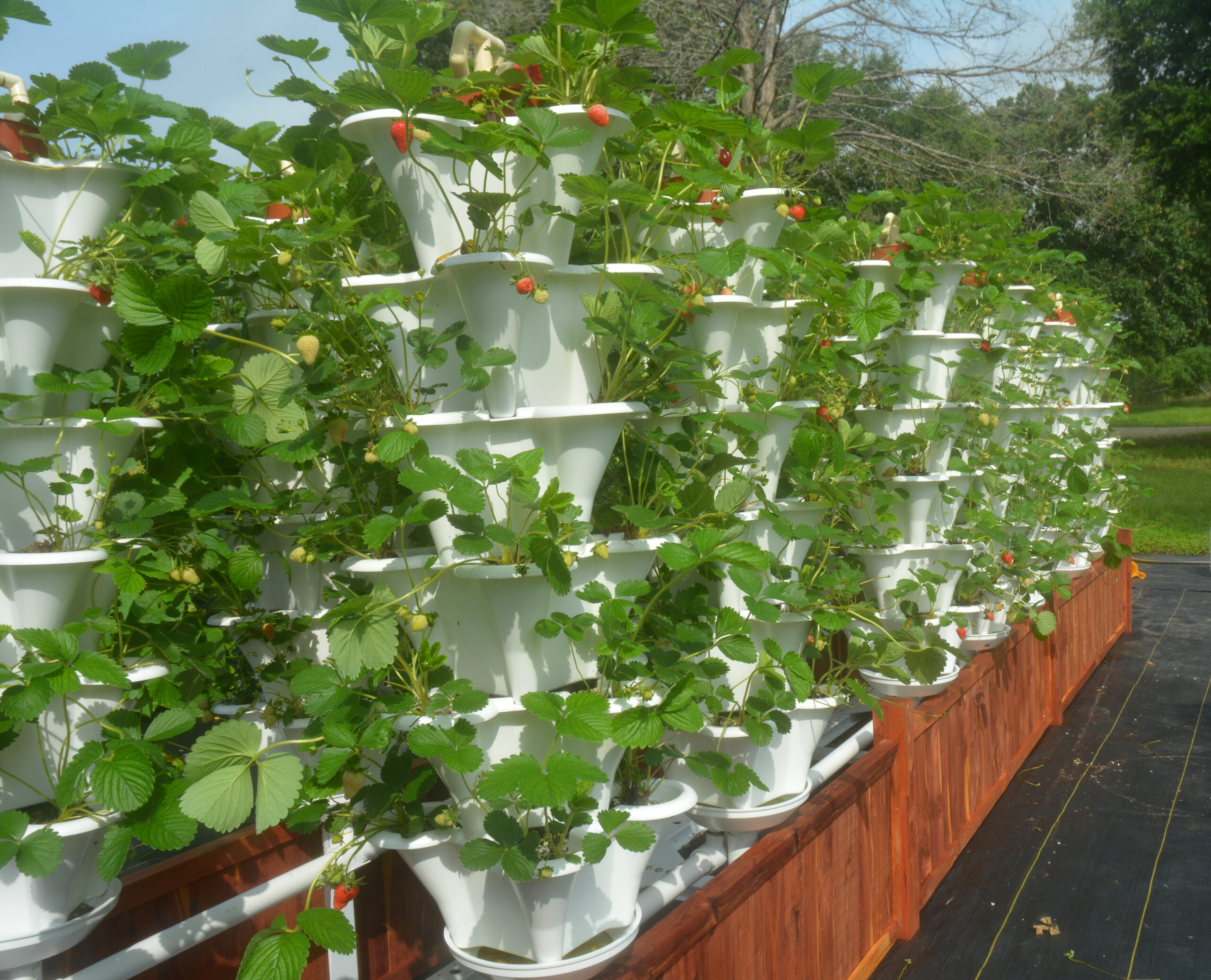
The concept of growing crops in vertical farms with plants indoors stacked on top of each other has been around for years. But this industry got some serious validation when Driscoll’s the global berry leader announced a partnership with Plenty – a San Francisco-based vertical farming company.

Plenty Chief Scientific Officer Dr. Nate Storey says this is a big deal for the evolution of vertical farming.

“It’s a big deal for several reasons. The first reason is, you know, people just need more delicious things – access to more delicious things. You know, that’s a source of excitement and joy and just part of the human experience. And the other thing is, I think it signals to folks that, you know, indoor ag is a thing,” said Storey. “It’s not a concept anymore-it’s a thing. And when you have people who know their business, who are serious about production, who have been in the space for a very long time and are kind of the best at what they do investing and engaging. You know, that’s a pretty big deal,” Storey.

Traditionally, one of the criticisms of vertical farming was it was somewhat limited commercially to leafy greens. Nate says this deal with Driscoll’s is exciting to expand their offerings into strawberries, and eventually, far beyond.

“At the end of the day, the number of crops that are going to move indoors, I think is going to surprise everyone. And, strawberries are just the first; definitely not the last,” noted Storey.

2021-01-11T16:47:17-08:00January 11th, 2021|

Lower Almond Prices Will Promote Big Sales

How to View Lower Almond Prices

By Patrick Cavanaugh, with the AgInformation Network

Lower prices should help move them quickly around the world, said Dan Sumner a Distinguished Professor in the Department of Agricultural and Resource Economics, and the director of the UC Agricultural Issues Center at UC Davis. He thinks that lower price of almonds will not last long, but in the meantime, it’ll help move the crop around the world—a hungry world for almonds!

“A little price moderation will help you move the crop. And we’ve got a big world out there,” said Sumner. “We’ve got income growth in other countries over the longer haul. We’ll see how tough it is over the next few years,” he said.

“We think about our problem with COVID and our economy and our government spent….. If I can say it….trillions keeping money in the hands of consumers, keeping people employed to the extent that it was possible, but the rest of the world who can still buy some of our almonds have also been hit. So, if you look at Europe, their economy’s been hit as bad as ours. That’s a big market for our almonds,” said Sumner.

Sumner spoke about India, new big market for California almonds

“Of course only the higher income Indians can afford almonds, the very poorest to the Indians couldn’t buy our almonds, but you know, you get well over a billion people and you can get a few hundred million in a kind of a middle-class that can buy our crops, and so India is a good market,” Sumner noted. “But they’ve been hit by the COVID pandemic as well.”

“Regarding almond pricing? It’s going to be tough over a year or two. It seems to me,” Sumner said.

2021-01-06T18:31:33-08:00January 6th, 2021|

SGMA Resource for Growers

New SGMA Resource for Underrepresented Growers

By Tim Hammerich, with the Ag Information Network

Vicky Espinoza is a PhD candidate at UC Merced who is researching the impacts of the Sustainable Groundwater Management Act on agricultural land use. She noticed that there weren’t enough resources out there for underrepresented growers about SGMA, especially those who English is not their first language. So she developed a series of bilingual videos and posted them on a new YouTube channel: CaliWaterAg.

“Hopefully through CaliWaterAg, they can obtain what is SGMA, how does it impact them and how they can become involved. Because you know, our growers and communities can attend Groundwater Sustainability Agency meetings, and they could voice their concerns and any suggestions that they may have for developing solutions,” said Espinoza

Those videos are free on YouTube and can be found just by searching CaliWaterAg. Espinoza is also hosting a series of workshops on the topic next month.

“So it’s really a channel to inform, empower and encourage them to become involved in the conversation. And I will be hosting a workshop January 13th in English and January 14th in Spanish to talk to growers and community members, answer any questions they may have regarding the series, SGMA, land use or land re-purposing options that I go over in the fourth video of the series,” noted Espinoz.  “And to listen to them, to listen to their perspectives and what they think about land re-purposing options and to address groundwater overdraft.”

2020-12-21T18:02:01-08:00December 21st, 2020|

Individual 24/7 Bee Monitoring Now Available


ApisProtect Has Launched in the US

More than ten years of research, decades of beekeeping, three years of validating and testing, over 15 million anonymized data sets and more than 20 million honey bees monitored. There have been a few challenges along the way but the day is finally here.

“We are delighted to launch our new technology now exclusively available in the United States. There are a limited number of monitors available now,” said ApisProtect VP of Sales Dennis Kautz.

“Watch our short video here to demonstrate just how quickly and easily our monitors can be installed in the hive,” noted Kautz

“Our science-based honey bee monitoring technology empowers beekeepers to manage their apiaries more efficiently, reduce labor and transport costs, and focus on cultivating larger and stronger colonies. Using ApisProtect, beekeepers can generate an additional $98 of value from each hive per year,” Kautz said.

Commercial beekeepers in the United States will now be able to drive operational improvements, including increased labor efficiencies of up to 50% and reduced transportation costs during pollination by up to 25%.

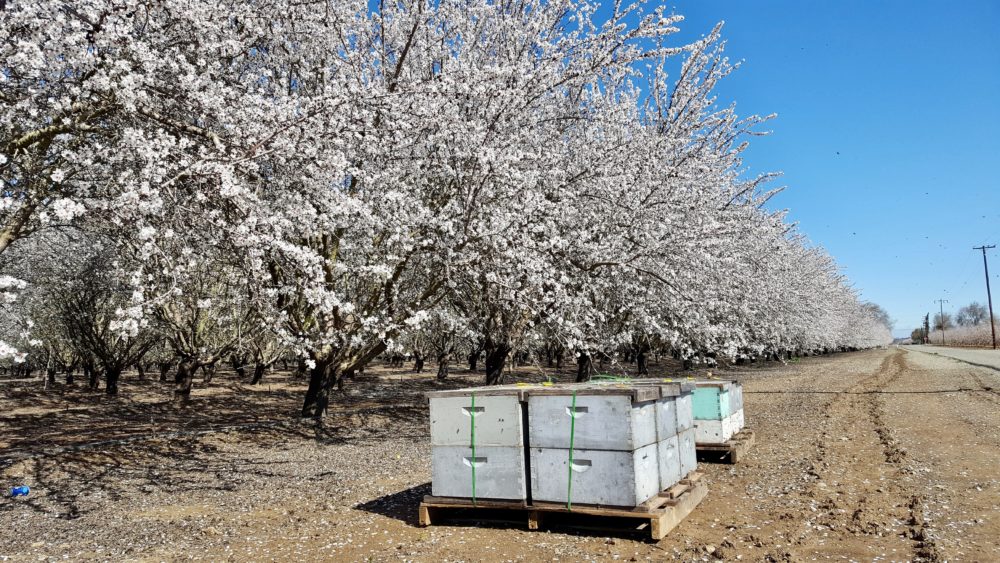
Deciding which hives to send to pollination is important and time-consuming. “We provide beekeepers with an instant condition report on each hive so they can identify strong hives to travel to the almond orchards. This ensures beekeepers can fulfill their pollination contracts, earn bonuses, and increase productivity for growers,” Kautz said.

ApisProtect works with the beekeepers to ensure they have the strongest hives to maximize revenue from the pollination season. “Critically, we give beekeepers control of their information and data, enabling them to maximize the value to their operation,” noted Krautz.


2020-12-15T18:44:03-08:00December 15th, 2020|

Driscoll’s Goes Vertical with Strawberries

(Featured photo courtesy of Tex AgriLife Today)

Driscoll’s and Plenty Team Up to Grow Strawberries Indoors

By Tim Hammerich, with the Ag Information Network

The concept of growing crops in vertical farms with plants indoors stacked on top of each other has been around for years. But this industry got some serious validation when Driscoll’s the global berry leader announced a partnership with Plenty – a San Francisco-based vertical farming company.

Plenty Chief Scientific Officer Dr. Nate Storey says this is a big deal for the evolution of vertical farming.

“It’s a big deal for several reasons. The first reason is, you know, people just need more delicious things – access to more delicious things. You know, that’s a source of excitement and joy and just part of the human experience. And the other thing is, I think it signals to folks that, you know, indoor ag is a thing,” said Storey. “It’s not a concept anymore-it’s a thing. And when you have people who know their business, who are serious about production, who have been in the space for a very long time and are kind of the best at what they do investing and engaging. You know, that’s a pretty big deal,” Storey.

Traditionally, one of the criticisms of vertical farming was it was somewhat limited commercially to leafy greens. Nate says this deal with Driscoll’s is exciting to expand their offerings into strawberries, and eventually, far beyond.

“At the end of the day, the number of crops that are going to move indoors, I think is going to surprise everyone. And, strawberries are just the first; definitely not the last,” noted Storey.

2020-12-11T18:11:39-08:00December 11th, 2020|
Go to Top