Fresno State Helps Hungry Students

Fresno State Program Helps Hungry Students

By Brian German, Associate Editor


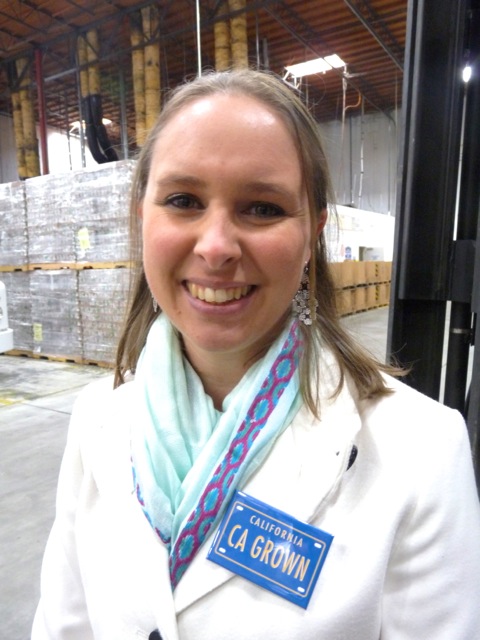
California State University, Fresno (Fresno State) recently began a multi-initiative program to support students who are struggling with food insecurity. Jessica Medina, coordinator of the “Food Security Project” at Fresno State, said, “The project has five initiatives: an on-campus food pantry, education and resources, an app titled, “Catered Cupboard,” that shows students where on campus they can receive free food, complimentary meals at the university dining hall and the Good Samaritan Fund,” she explained.

Medina said the on-campus food and hygiene pantry, named, “Student Cupboard,” provides students with access to free food and hygiene on a daily basis. We also provide them with education—how to cook those things, how to budget, how to make sure they can afford different things as a student, and connections to resources such as CalFresh, the WIC program and other agencies in the community they can benefit from. We offer emergency funding if they ever need things, as well as lots of other initiatives that access fresh nutritious food,” she noted.

Medina said Fresno State is also a member of the College and University Food Bank Alliance (CUFBA), a professional organization of campus-based programs focused on alleviating food insecurity, hunger, and poverty among college and university students in the United States. As of TODAY, there are 257 active member institutions of CUFBA.

Medina said such CUFBA members are growing in numbers. “We are starting to pop up on other campuses,” she stated, “and we are excited the chancellor of the CSU system, Chancellor White is going to be supporting a conference to have these conversations and create a model for other institutions for the future.”

Medina said students who go hungry are less likely to do well in their studies, “There are a lot of studies on what students are like in the elementary classrooms, but [food insecurity] continues on to college and beyond as well. When you don’t know where your next meal is coming from, when you don’t have that food access available to you, it is hard to concentrate. It is hard to focus. It is hard to be successful as a student. And that is what this program isa ‘student success’ program for our students.”

Hired as a fulltime employee by Fresno State to coordinate this, Medina commented, “I think we are one of the first campuses to create a full-time position to coordinate this effort. I graduated from Fresno State with both my undergraduate and master’s, and I am very fortunate to continue on here and be a part of this.”

________________________

Links


CalFresh

California State University, Fresno

Catered Cupboard

College and University Food Bank Alliance (CUFBA)
Food Security Project

Food Security Project Resources

Good Samaritan Fund

Students Covered

WIC program

2016-05-31T19:26:58-07:00January 15th, 2016|

Project Apis m. Helps Almond Growers Empower Bees

Project Apis m. Helps Almond Growers Empower Bees

With Free Flowering Forage

By Patrick Cavanaugh, Deputy Editor


Christi Heintz, executive director for Project Apis m. (PAm), elaborated on the message she presented at the annual Almond Conference last month in Sacramento, “Our purpose at the Almond Industry Conference was to meet growers and talk to them about planting additional forage before and after almond pollination. These are times of dearth when honey bees are not getting the nutrition they need and beekeepers have to feed tremendous amounts of sugar syrup or high-fructose corn syrup to keep the bees alive,” Heintz said.

Project Apis m.Established as a non-profit organization in 2006, PAm has the goal of funding and directing research to enhance the health and vitality of honey bee colonies while improving crop production. Heintz explained PAm.—named after Apis mellifera, the scientific name for the European honey bee—offers farmers free mustard mix for pre-almond bloom or clover mix for post-almond bloom to extend the season of nutrition availability for bees when they are most vulnerable. The increase in forage also benefits bees by providing additional natural and more diverse sources of nutrition resulting in better pollination and increased crop yields.

Heintz wants more growers to take part in the program. She reemphasized, “Honey bees love almonds, but we worry about those times just before and just after bloom. If you can get something going before bloom, you’ll get bee colonies that want to go out and forage for pollen, and they will be in great shape for almond pollination,”Heintz said.

Heintz enthusiastically urges growers to get involved by contacting PAm at ProjectApis@gmail.com and ask about forage seed mix to plant for honeybees. Growers can also go to the Project Apis m. website and to their web page For the Almond Grower.

Heintz has managed research, including pollination research since 1979, and has focused on honey bees since 2006. She also manages the Environmental Sustainability Program and production research for the Almond Board of California.

2021-05-12T11:05:58-07:00January 14th, 2016|

Protecting California Citrus from ACP

Protecting California Citrus from ACP

By Charmayne Hefley, Associate Editor

[embedvideo id=”ZWgOOjpxwE8″ website=”youtube”]


California’s $2.2 billion fresh citrus industry that supplies 85 percent of the nation’s fresh citrus is currently healthy and vibrant despite the background threat of the Asian Citrus Psyllid (ACP), according to Kevin Severns, a citrus grower in Sanger, CA; general manager of the Orange Cove-Sanger Citrus Association, a cooperative citrus packing house in eastern Fresno County; and  chairman of California Citrus Mutual.

“We’re quite concerned about it,” Severns said about the ACPa tiny bug that is a known carrier or vector of “huanglongbing” (HLB), a devastating, incurable disease of citrus trees  that has already demolished the citrus industry in Florida. “We’ve been able to keep the bug at bay to this point,” Severins continued, “at least here in the Central Valley, but we’re very concerned about it. There are a lot of issues to be concerned about with this bug.”

Save Our CitrusCalifornia has taken note of the devastation of Florida’s industry, Severns said, and is taking steps to ensure the safety of California’s citrus. “Having gone to Florida with many of our citrus growers,” Severns explained, “I heard Florida growers tell we must control the bug. So we’re trying to keep this bug at bay and not allow [the infestation] to expand. We’ve had varied success in different areas of California, but so far, we’ve been able to keep the bug’s expansion here in the Central Valley to a minimum. We continue to have finds from time to time, but we haven’t yet had an explosion of the population of the ACP.”

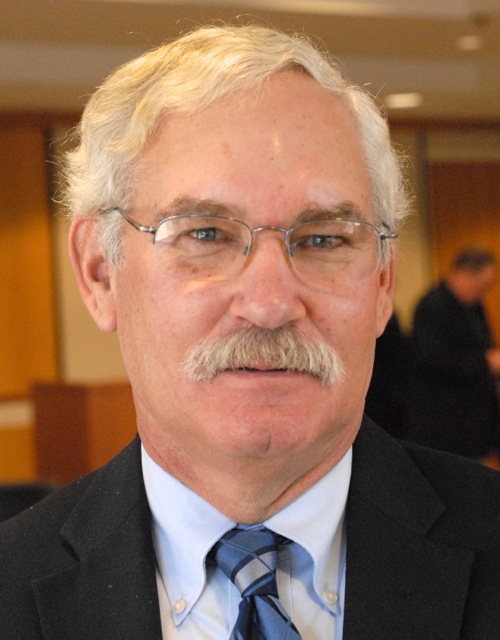

Severns said, “We have a very successful partnership with the California Department of Food and Agriculture (CDFA).” While trapping ACP is critical, he emphasized the importance of enlisting the help of residential folks with citrus in their backyards to get involved in the conversation, to look for this pest, and to join in the fight. “The trap is very limited in its ability to pick up ACP, so it’s very important that we have visual surveys in which growers and homeowners actually go out and look at their trees for the bug.”

Severns said current measures against the spread of the ACP is helping to buy time for researchers to find a cure for HLB. “We realize every place on earth where the ACP has gone, eventually has been followed by HLB,” Severns said, “so we’re trying very hard to buy time and give our researchers and scientists a chance to come up with a solution to this disease—whether it is a resistant type of citrus variety or a cure for the trees.”

Preventing the spread of ACP and HLB, from commercial citrus growers to residential citrus growers, will require that everyone works together. To learn more, go to CaliforniaCitrusThreat.org or contact your local Ag Commissioner.

_________________

Did you know, the historical time period establishing the California citrus industry is known as the “other” California Gold Rush? (Source: California Citrus Mutual)

_________________

2021-05-12T11:05:58-07:00January 12th, 2016|

New Dietary Guidelines for Healthy Eating

HHS and USDA Release New Dietary Guidelines to Encourage Healthy Eating Patterns to Prevent Chronic Diseases


Secretary of Health and Human Services Sylvia M. Burwell and Secretary of Agriculture Tom Vilsack TODAY released updated nutritional guidelines that encourage Americans to adopt a series of science-based recommendations to improve how they eat to reduce obesity and prevent chronic diseases like Type 2 diabetes, hypertension, and heart disease. The 2015-2020 Dietary Guidelines for Americans is the nation’s trusted resource for evidence-based nutrition recommendations and serves to provide the general public, as well as policy makers and health professionals with the information they need to help the public make informed choices about their diets at home, school, work and in their communities.

The newly released 8th edition of the Dietary Guidelines reflects advancements in scientific understanding about healthy eating choices and health outcomes over a lifetime. This edition recognizes the importance of focusing not on individual nutrients or foods in isolation, but on the variety of what people eat and drink—healthy eating patterns as a whole—to bring about lasting improvements in individual and population health.

“The Dietary Guidelines for Americans is one of many important tools that help to support a healthier next generation of Americans,” said Secretary Vilsack. “The latest edition of the Dietary Guidelines provides individuals with the flexibility to make healthy food choices that are right for them and their families and take advantage of the diversity of products available, thanks to America’s farmers and ranchers.”

The specific recommendations fit into five overarching guidelines in the new edition:

1. Follow a healthy eating pattern across the lifespan. Eating patterns are the combination of foods and drinks that a person eats over time.

2. Focus on variety, nutrient-dense foods, and amount

3. Limit calories from added sugars and saturated fats, and reduce sodium intake

4. Shift to healthier food and beverage choices

5. Support healthy eating patterns for all

Healthy eating patterns include a variety of nutritious foods like vegetables, fruits, grains, low-fat and fat-free dairy, lean meats and other protein foods and oils, while limiting saturated fats, trans fats, added sugars and sodium. A healthy eating pattern is adaptable to a person’s taste preferences, traditions, culture and budget.

Importantly, the guidelines suggest Americans should consume:

1. A variety of vegetables, including dark green, red and orange, legumes (beans and peas), starchy and other vegetables

2. Fruits, especially whole fruits

3. Grains, at least half of which are whole grains

4. Fat-free or low-fat dairy, including milk, yogurt, cheese, and/or fortified soy beverages

5. A variety of protein foods, including seafood, lean meats and poultry, eggs, legumes (beans and peas), soy products, and nuts and seeds

6. Oils, including those from plants: canola, corn, olive, peanut, safflower, soybean, and sunflower. Oils also are naturally present in nuts, seeds, seafood, olives, and avocados.

Further, Americans should be encouraged to consume:

1. Less than 10 percent of calories per day from added sugars. ChooseMyPlate.gov provides more information about added sugars, which are sugars and syrups that are added to foods or beverages when they are processed or prepared. This does not include naturally occurring sugars such as those consumed as part of milk and fruits.

2. Less than 10 percent of calories per day from saturated fats. The Nutrition Facts label can be used to check for saturated fats. Foods that are high in saturated fat include butter, whole milk, meats that are not labeled as lean, and tropical oils such as coconut and palm oil.

3. Less than 2,300 milligrams (mg) per day of sodium for people over the age of 14 years and less for those younger. The Nutrition Facts label is a helpful tool to check for sodium, especially in processed foods like pizza, pasta dishes, sauces, and soups.

Based on a review of current scientific evidence on nutrition, the 2015 edition includes updated guidance on topics such as added sugars, sodium, and cholesterol and new information on caffeine. For example, the 2015-2020 Dietary Guidelines is the first edition to:

1. Recommend a quantitative limit to consume less than 10 percent of calories from added sugars.

2. Reaffirm guidance about the core building blocks of a healthy lifestyle that have remained consistent over the past several editions

3. Suggest there is still work to be done to encourage more Americans to follow the recommendations outlined in the Dietary Guidelines.

The 2015-2020 Dietary Guidelines continues the nation’s dependence on California agriculture, which includes more than 400 commodities. According to the California Department of Food and Agriculture (CDFA) in 2014, the state produced nearly half of US-grown fruits, nuts and vegetables. Across the nation, US consumers regularly purchase several crops produced solely in California.

California’s top-ten valued commodities (USDA/NASS Crop Year Report 2014):

* Milk — $9.4 billion

* Almonds — $5.9 billion

* Grapes — $5.2 billion

* Cattle, Calves — $3.7 billion

* Strawberries — $2.5 billion

* Lettuce — $2 billion

* Walnuts — $1.8 billion

* Tomatoes — $1.6 billion

* Pistachios — $1.6 billion

* Hay — $1.3 billion

The 2015-2020 Dietary Guidelines for Americans is available at dietaryguidelines.gov.USDA has also released updates for consumers on ChooseMyPlate.gov, and new resources will soon be available on Health.gov from HHS that will help health professionals support their clients and patients in making healthy choices.

The Dietary Guidelines is required under the 1990 National Nutrition Monitoring and Related Research Act, which states that every 5 years, the U.S. Departments of Health and Human Services (HHS) and of Agriculture (USDA) must jointly publish a report containing nutritional and dietary information and guidelines for the general public. The statute requires that the Dietary Guidelines be based on the preponderance of current scientific and medical knowledge.

2021-05-12T11:17:15-07:00January 7th, 2016|

USDA Official Talks TPP in CA

USDA Official Talks TPP in California

By Brian German, Associate Editor


United States Department of Agriculture (USDA) Under Secretary for Farm and Foreign Agricultural Services Michael Scuse held a roundtable at the California Farm Bureau Office in Sacramento with California ag leaders in December to discuss the proposed Trans-Pacific Partnership (TPP) trade agreement. “The reason we came out here now is the Trans-Pacific Partnership is finalized and the text has been released. We wanted to meet with the representatives of the different commodity groups to get their take on the agreement,” said Scuse. “It was a very good, interesting meeting,” he noted.

While not all industries are behind the TPP, Scuse said, “Agriculture, as a whole, is very supportive of the TPP. There were a couple of concerns about sanitary and phytosanitary issues and about how other countries may address those going forward.  California ag leaders asked us to put together a fact sheet on these phytosanitary issues, labor, and other topics, so they have some talking points to converse with their constituents as well as their representatives in Congress.”

To make this trade agreement law, Scuse explained, “We are hoping Congress will take this up as soon as they possibly can. Every day we delay getting approval on TPP from Congress puts our producers at a disadvantage. The sooner we get this approved, the better it will be for all our farmers and ranchers across the United States,” he noted.

For California, the leading agricultural state, shipping more than $23 billion worth of food and agricultural products in 2014, time is expensive.

______________________________

Links:

USDA Farm and Foreign Agricultural Services helps to keep America’s farmers and ranchers in business as they face the uncertainties of weather and markets. They deliver commodity, credit, conservation, disaster, and emergency assistance programs that help improve the stability and strength of the agricultural economy.

Trans-Pacific Partnership (TPP) trade agreement, “Economy, Water, Trade and Labor were Big Topics at 32nd Agribusiness Conference.”

California Farm Bureau Federation

2021-05-12T11:05:59-07:00January 4th, 2016|

Are EDF and Farmers on Same Page?

Are EDF and California Farmers on Same Page?

By Patrick Cavanaugh, Deputy Editor

The Environmental Defense Fund (EDF) wants clean air and water, abundant fish and water life, a stable climate. California farmers want clean air and water, abundant wildlife, a stable climate with enough rain and snow for everyone, plus a good harvest so they can provide the nutritious food everyone needs to thrive. Are EDF and California farmers on the same page?

Meet Sara Kroopf, agriculture project manager with the Environmental Defense Fund’s San Francisco office. Kroopf’s expertise in agriculture economics, sustainable agriculture systems and corporate social responsibility, combined with her emphasis on building relationships with agricultural producers places her not only on the same page with California farmers, but on the same side of science.

Kroopf became interested in agriculture at an early age. “My best friend was the Dairy Princess,” she explained, “who has a thousand-head dairy facility in upstate New York. I think she is really the inspiration for my education and why I want to work in food and ag.”

Kroopf is amazed by California agriculture because it is very different. “The diversity,” she stated, “over 400 specially crops—is incredible! “I went to grad school at UC Davis because I had heard of the wonderful things that were out here, and I’ve stayed because I know there is a lot of innovation in California agriculture. It is the place to be.”

“I also spent some time working with a biopesticide company and learned about Asian Citrus Psyllid. So being in Kern County, learning about realities on the ground and the fight against the invasive Asian Citrus Psyllid, I think that was a good experience for me.”

Commenting on California farmers, Kroopf said, “I think we are doing a great job in California, and people don’t see that enough. I find myself in my urban community, now that I live in Oakland, California, trying to communicate about the realities of drought, the harsh realities that some farmers are seeing, but also the success and resilience of those communities. It is critical to have that dialogue at these times.”

Kroopf knows that farming should continue uninterrupted, “not only here, but in other places as well. Otherwise, we are not going to have a successful 2050 and feed the population. I mean, America has done a great job, historically; we have been feeding the world. But now it will become more challenging. I think we are up for the opportunity and like I said, California is leading the way.”

Kroopf commented about the flexibility of the California farmer to learn new things, such as a new way to apply fertilizer or conserve water, and the adaptability to take them on. “Having access to information is key. Historically, farmers didn’t necessarily know how much nitrogen to apply. And farmers always want to reduce the input application costs as much as possible. I know growers are not being fast and loose with their nitrogen, but there is always an opportunity to improve, and I see that in my own life. I think that is in all professions; farmers are not the only ones.”

Kroopf is quite bullish on California agriculture, even with the drought years. “Absolutely, I do hope farming continues here. The climate is right, and I want to be here, so I hope the drought doesn’t last too long.”

When asked about California farmers, Kroopf replied, “They are the smartest business people that I know. Someone once said, and I don’t know whom to quote, ‘farming is not rocket science, it is harder than rocket science.’ I honestly believe that. So of course, they are extremely intelligent. They deal with more variables in their work than pretty much anyone else.”

_____________________

LINKS:

Environmental Defense Fund (EDF)

2021-05-12T11:06:00-07:00December 29th, 2015|

Ross Supports Desalination

CDFA’s Karen Ross Supports Desalination Plants

By Brian German, Associate Editor


Following the opening of the Carlsbad Desalination Plant near San Diego, the largest seawater desalination plant in the Western Hemisphere, CalAgToday asked CDFA Secretary Karen Ross if she views desalination as a possible solution to the drought-induced water reductions in California.

“Desalination is an important part of the solution,” answered Ross. “Israel has really advanced this technology and there is much for us to learn about its use from Israel.”

Israel has had great success in battling drought by building many desalination plants along the Mediterranean Sea. The plants provide fresh desal water to the cities, which is used, cleaned and recycled for use on the country’s farms.

Ross continued, “I am especially optimistic about the use of practical smaller-scale desal projects to reuse our brackish water—the more inland saline water. Our researchers can use this technology to help us solve the ‘brine waste’ problem; it will absolutely be part of our new water picture. There is no single solution to our water picture, and I think we need to look to Israel to learn from their experiences as well.”

“’There is, no doubt, a cost to this new technology, but by figuring out the technology and foçusing on smaller scale projects, we should be able to scale this up to a point that will make it cost-effective,” said Ross. “Let’s face it, the value of the water it brings back for reuse is potentially going to change the price we all pay for it. But we really need to focus on improving this technology and getting those costs down as much as we possibly can.”

“The Carlsbad plant is a billion dollar investment, which is overwhelming and intimidating,” said Ross. “But when we amortize the cost and calculate what it means per household, this investment represents a very important source of supplemental water that also gives us some flexibility and resiliency for the next drought, and the one after that. Our circumstances are different than ten or twenty years ago, so the costs pencil out in a different way.”

________________________________

The Claude “Bud” Lewis Carlsbad Desalination Plant is a 50 million gallon per day (56,000 acre-feet per year (AFY)) seawater desalination plant located adjacent to the Encina Power Station in Carlsbad, California. Desalination has evolved into a desirable water supply alternative by tapping the largest reservoir in the world – the Pacific Ocean. The technology, available for decades, is at work in many arid areas of the world including the Middle East, the Mediterranean and the Caribbean. A 30-year Water Purchase Agreement is in place between the San Diego County Water Authority and Poseidon Water for the entire output of the plant. The plant has been delivering water to the businesses and residents of San Diego County since December 2015.

________________________________

Poseidon Water, the developer and owner of the Claude “Bud” Lewis Carlsbad Desalination Plant, is a privately held company that develops and invests in water projects throughout North America. Poseidon offers customized solutions to meet the water needs of municipal governments, businesses and industrial clients.

________________________________

The Huntington Beach Desalination Project is also a 50-million gallon per day facility currently in late-stage development, also by Poseidon Water. Located adjacent to the AES Huntington Beach Power Station, the plant is scheduled to be operational by 2018.

2021-05-12T11:06:00-07:00December 23rd, 2015|

Avian Influenza

Waterfowl  Migration Flyways Have Poultry Industry on Guard

By Brian German, Associate Editor

We are at the peak of migrating bird traffic flying north to south, and poultry operations throughout California and the rest of the country are looking skyward with dread. The industry aims to detect all flyways as migrating birds are suspected of spreading Asian Highly Pathogenic Avian Influenza (HPAI) A (H5N1) virus that devastated the poultry business last year throughout the Midwest with some lesser problems in California. In fact, more than 48 million birds, primarily turkeys and laying hens, were infected and had to be depopulated last year throughout the Midwest.

“These global flyways waterfowl use to move north and south and back again every year are basically like freeways,” said Maurice Pitesky, a Veterinarian and UC Cooperative Extension assistant specialist and UC Davis School of Veterinary Medicine lecturer in Population Health & Reproduction. “And in those freeway lanes,” he continued, “different birds interface with each other. We have a Pacific flyway that covers California, which can interface with the East Asia and Australian flyways. If you look at the genetics found in North America, especially in California, the genetics match some of the HPAI found in South Korea.”

Locating birds in flyways can alert poultry operations to implement immediate measures to prevent potential HPAI spreading on anything on the outside or inside of the poultry house.

_______________________________

Feral Swine Also a Problem

Pitesky noted a great abundance of feral swine in California, and the geographical extent is poorly understood. “But what we do know with respect to influenza is that although feral swine, and swine in general, are unique species, influenza viruses from humans and influenza viruses from birds can infect swine. That represents one of the ways we get new strains of Avian Influenza that could adversely affect all animals, including birds and potentially humans,” he noted.

Of course, poultry HPAI is not a problem for humans. Pitesky noted, “When people say ‘highly pathogenic,’ it has nothing to do with whether humans get it or not. The ‘highly pathogenic’ label is specifically for birds in that it makes birds sick. There is no evidence any of those strains we found in North America are zoonotic, meaning able to infect humans, at this point,” he said.

_______________________________

_________________

Biosecurity Explained – 6 Simple Steps

The USDA Animal and Plant Health Inspection Service (APHIS) wants to help poultry owners keep their birds healthy by practicing biosecurity to reduce the chances exposure to animal diseases such as avian influenza (AI) or exotic Newcastle disease (END).

APHIS advises the following consistent daily biosecurity practices:

_________________

The USDA’s Fall 2015 HPAI Preparedness and Response Plan to preventing and responding to future HPAI cases, in collaboration with industry and State partners, includes:

 Promoting improved on-farm biosecurity practices in order to prevent future HPAI cases to the greatest extent possible

 Improving HPAI surveillance in wild birds as a means to provide “early warning” risk information to States and industry

 Expanding Federal, State and industry response capabilities, including availability of personnel, equipment, and depopulation, disposal and recovery options

 Improving USDA’s capabilities to rapidly detect HPAI in domestic poultry and to depopulate affected flocks within 24 hours to reduce the environmental load of HPAI viruses and their subsequent spread

 Streamlining the processes for payment of indemnity and the cost of eliminating viruses so that producers receive a fair amount quickly, to assist them in returning to production

 Enhancing our ability to communicate in a timely and effective way with producers, consumers, legislators, media, and others regarding outbreaks and other information

 Making preparations to identify and deploy effective AI vaccines should they be a cost beneficial addition to the eradication efforts in a future HPAI outbreak.

_________________

Resources:

UC Davis School of Veterinary Medicine 

2015 Avian Influenza News (Bird Flu)

California Animal Health and Food Safety (CAHFS) Laboratory System

_________________

CDFA

Poultry Facility Biosecurity Risk Assessment Guide: “We will always be one step ahead.”

Highly Pathogenic Avian Influenza (HPAI) outbreak in the United States

Avian Entry Requirements into California Update

_________________

USDA

Animal and Plant Health Inspection Service

2015 Avian Influenza News 

Avian Influenza Disease

_________________

2021-05-12T11:17:15-07:00December 22nd, 2015|

Plea for Farmers to Engage with Consumers on Social Media

Joe Del Bosque’s Plea for Farmers to Engage with Consumers on Social Media 

By Charmayne Hefley, Associate Editor

[embedvideo id=”VoA5UkJBw6I” website=”youtube”]


While many farmers toil in the fields, consumers expend their energies on social media in the growing disconnect between farms and food. Joe Del Bosque, owner of Del Bosque Farms, Inc., and Fresno Chamber of Commerce’s 2015 Agriculturalist of the Year, is one of the many farmers who has begun to appreciate the importance for farmers to engage with consumers on social media accounts. “Initially, I got involved to reach out to my customers,” Del Bosque said, “and make a connection so people would know who their farmer was and where their food came from. It’s invaluable because people really want to know not only where their food comes from and from whom, they want to know how they grow it. They too want to make a connection, and it’s up to us farmers to reach out to them because they won’t know how to find us.”

The use of social media over the last decade has increased tenfold with 65 percent of adults now actively using social media accounts according to “Social Media Usage: 2005-2015,” an October 2015 Pew Research Center study by Andrew Perrin. “So, if every farmer could reach out to two or three or 500 people,” explained Del Bosque, “we could reach a lot of people out there.”

For members of the agriculture industry looking to get involved in social media, Del Bosque advises they consider Facebook and Twitter first as they are probably the easiest two. “With Twitter, if you open up an account, you can start following a few people who are active. You could even retweet what they say out to your audience. That would be an easy way to get started.”

A July 2013 article on BufferSocial titled, “10 Surprising Social Media Statistics that will make you Rethink Your Strategy,” by Belle Beth Cooper, revealed that Twitter’s fastest growing demographic was the 55-64 year age bracket, jumping 79 percent from 2012-2013. On Facebook the fastest growing demographic in 2013 was the 45-54 year age bracket, up 46 percent from 2012-2013. Cooper recommended reaching adults 18-34 via YouTube, which reaches more adults in that age range than any cable network.

____________________

To learn the ropes on social media, please view previous issues of The Golden Agricast:

October eNewsletter

November eNewsletter

Consider a free subscription here: The Golden Agricast- A Monthly eNewsletter.

____________________

Links:

Cooper, Belle Beth, “10 Surprising Social Media Statistics that will make you Rethink Your Strategy,” BufferSocial, July 2013.

Del Bosque Farms, Inc.

Perrin, Andrew, “fa,” Pew Research Center, October 2015.

2016-05-31T19:27:01-07:00December 21st, 2015|

PIGS RESISTANT TO PRRS VIRUS

FIRST PIGS RESISTANT TO PRRS VIRUS

By Laurie Greene, Editor

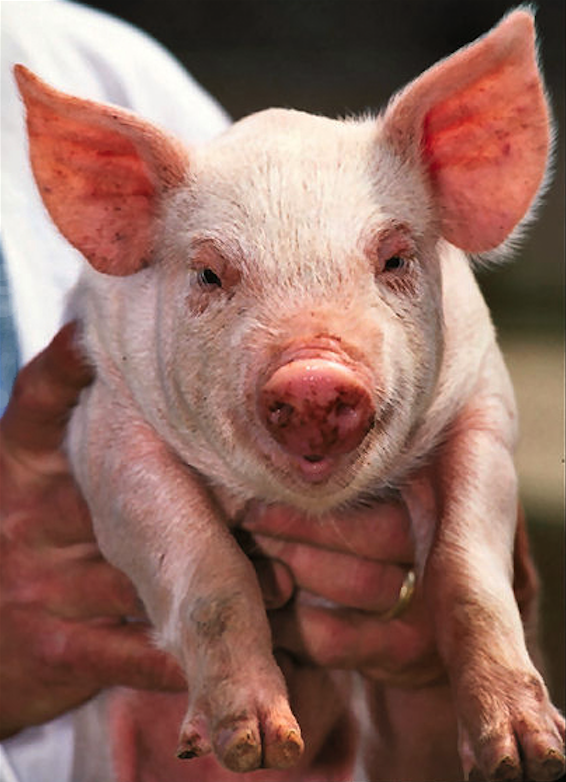
First detected in the U.S. in 1987, Porcine Reproductive and Respiratory Syndrome Virus (PRRS Virus or PRSSv), a recently recognized incurable viral disease of pigs that can cause animal reproductive failure, reduced growth and premature death, costs American farmers approximately $600 million in damages each year.[1] Genus PIC, a global pioneer in animal genetics, announced the development of the first pigs resistant to PRRS Virus through a long-standing collaboration with the University of Missouri’s College of Agriculture, Food and Natural Resources. Specifically, they bred pigs that do not produce a protein necessary for the virus to spread.

The swine industry is invaluable to California’s agriculture, according to the California Department of Food and Agriculture (CDFA), and the demand for swine in California is increasing greatly. Expanding ethnic populations have created new demands in the marketplace.

CDFA’s Animal Health Branch aids in the management of swine diseases because of the highly contagious nature of some diseases to swine, other species of livestock and/or people. Due to expanding international trade and travel, highly transmissible foreign animal disease can spread rapidly if undetected or detected but not reported.

Currently, CDFA participates in monitoring for PRRSv through the California Animal Health and Food Safety Laboratory System; however, since no vaccine has been effective and no control program has been proposed, preventing the spread of PRRSv within and between pig populations is a critical component of a farm’s disease control program.

CDFA Animal Health and Food Safety Services’ swine health experts recommend farmers look for blisters on hooves and on the snout, unusual or unexplained illness, hemorrhagic septicemias, unusual skin lesions ranging from cyanotic patches on the ears and abdomen to raised, scabby lesions mainly on the legs, high morbidity or mortality. If you suspect you are dealing with such a disease, contact CDFA at (916) 900-5002 or your district office.

Genus is dedicated to the responsible exploration of new innovations that benefit the wellbeing of animals, farmers, and ultimately consumers. PIC, a subsidiary of Genus, is the global leader in providing genetically superior pig breeding stock and technical support for maximizing genetic potential to commercial pork producers. PIC has been delivering genetic improvements for over 50 years.

The University of Missouri has signed a global licensing deal for future commercialization with Genus. If development continues, Genus will seek approvals and registration from governments before a wider market release. Genus expects that it will be at least five years until PRRSV resistant animals will be available to farmers.

(Photo Source: USDA)


[1] Holtkamp, Derald J.; Kliebenstein, James B.; Zimmerman, Jeffrey J.; Neumann, Eric; Rotto, Hans; Yoder, Tiffany K.; Wang, Chong; Yeske, Paul; Mowrer, Christine L.; and Haley, Charles (2012) “Economic Impact of Porcine Reproductive and Respiratory Syndrome Virus on U.S. Pork Producers,” Animal Industry Report: AS 658, ASL R2671. Available at: http://lib.dr.iastate.edu/ans_air/vol658/iss1/3

_________________________________

Sources

Basi, Christian, Pigs that are Resistant to Incurable Disease Developed at University of Missouri: Discovery about PRRS virus could save swine industry hundreds of millions of dollars; Exclusive deal signed with global leader in animal genetics, December 8, 2015

CDFA Swine Health Information And Resources

California Pork Producers Association

Genus tackles major pig disease with breakthrough technology, December 8, 2015

Porcine Reproductive and Respiratory Syndrome (PRRS)

Schmidt, Stephen, Big Cat Collaboration: CAFNR geneticist teams up with Kansas State researcher to make PRRSv-resistant pigs, December 8, 2015

2016-05-31T19:27:01-07:00December 16th, 2015|
Go to Top