It’s Avocado Month!

Celebrate the Magic of California Avocados.

By Emily McKay Johnson, Associate Editor


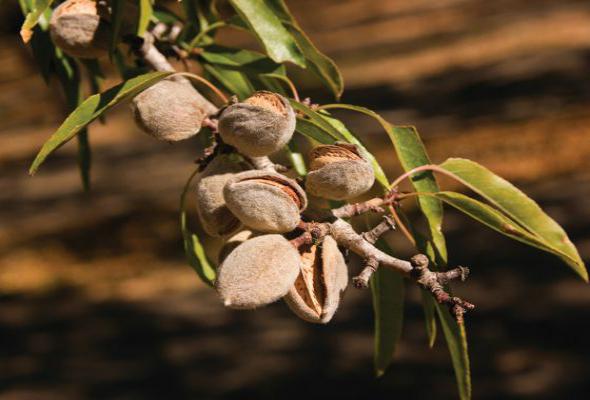
Chefs and foodies alike, get ready for California Avocado Month which begins TODAY, June 1st. Menus across California are celebrating this magical fruit, not only for its postive health benefits as a source of Omega-3 and Vitamin E, but also for its resiliency to thrive in spite of the prolonged drought.

california-avocados-logo


“Avocados are at their peak of the season,” said Jan DeLyser, vice president of marketing for the California Avocado Commission (CAC), “so we’re in very good supply and their eating quality is just second to none.”


Avocados are so diverse, they can be incorporated into daily menus for breakfast, lunch, dinner, snacks, beverages and even desserts. Consider celebrating summer gatherings with chocolate avocado pudding, avocado ice cream or, perhaps, even an avocado cake. Links to recipes are included at the end of the article.


Would you believe California avocados can be used as a butter alternative—with 300 fewer calories per quarter cup serving?


Despite entering year five of the drought, California and its farming industry received enough rain in the northern part of the state this year to replenish reservoirs and actually increase this year’s avocado harvest. Roughly 4,000 growers on approximately 53,000 acres have harvested 392 million pounds of avocados.


“We actually have more fruit this year than we had last year,” acknowledged DeLyser. “Our growers are continuing to be good stewards of the resources that are available to them and able to produce avocados for us all to enjoy throughout the summer months.”


The CAC’s collaboration with chefs around the country to feature California avocado items, helps support growers of the tree-bearing fruit in the state. Approximately 90 percent of the nation’s avocado crop comes from fertile, California soil, mostly on small family farms, which can ensure the avocados are carefully handled and inspected.


Recipes incorporating delectable avocados:  Chocolate Avocado CakeAvocado Ice Cream

2021-05-12T11:05:56-07:00June 2nd, 2016|

LGBTQ+ Agriculture Summit

Cultivating Change: Building A Network of LGBTQ+ Agriculturists

June 8th – 11th, 2016 Kicks off the 2nd Annual Cultivating Change Summit In Sacramento

The Cultivating Change Foundation is hosting their 2nd annual Cultivating Change Summit designed to explore and empower the intersection of the agriculture industry and the LGBTQ+ communityLesbian, Gay, Bi, Transgender and Questioning  (and allies)a group of people rarely represented in either of the communities of which they are a part, the agriculture community or the LGBTQ+ community, for the most unique professional development conference ever. 

CDFA LOGOParticipants can go to http://www.cultivatingchangefoundation.org and register to join this important conversation. The Summit is the first of its kind providing a safe space for LGBTQ+ agriculturalists and people who love and respect them to come together and connect through a shared experience. With over 200 participants from industry leaders to innovators uniting June 8th-11th, in Sacramentothe epicenter and capital of the number one agriculture producing state in the nation, with a common goal of amplifying and elevating this global conversation. This Summit will allow LGBTQ+ agriculturists of theUSDA past, present, and future to see that they are not alone and recognize the Ag industry needs all of us for a sustainable future.

“It is important that the community come together to share information and best practices, not only to ensure we all reach our full potential, but also to support one another as so many LGBTQ people across the country contribute daily to our rural and agriculture communities.” – Ashlee Davis, LGBT Rural Summit Series, U.S. Department of Agriculture.

Over the three days, the Cultivating Change Summit will have 40 speakers, workshop presenters, and keynotes delivering content focused on four different areas: agricultural education, production agriculture, government and policy in agriculture, and urban agriculture. Some of the Summit’s distinguished guests include the California State Secretary of Agriculture, Karen Ross, and the President of California Farm Bureau, Paul Wenger. Representatives from the United States Department of Agriculture, Sacramento government officials, and individuals from global agricultural companies will be present.

CFBF logoThe main summit events will take place at the Crest Theatre in Downtown Sacramento, 1013 K Street. The final day of the summit will include tours of Northern California’s Agriculture landscape and local agricultural operations.


“I’ve waited more than 20 years for someone to start the conversation. I believe in Cultivating Change! Let’s do this!” – Rob Larew, Staff Director, US House Committee on Agriculture.

About The Cultivating Change Foundation

Founded in 2015, the Cultivating Change Foundation, a 501(c)(3) nonprofit, focuses on valuing and elevating minorities in agrarian communities through innovation, education, and advocacy.

Tickets are available for the Cultivating Change Summit and can be purchased through the website for $225. Special group ticket packages, sponsorship opportunities, and a detailed schedule are also available online. Visit www.cultivatingchangefoundation.org for more information.

2016-05-31T19:24:03-07:00May 16th, 2016|

A Positive View of Agriculture

Use Buzzwords to Convey Positive View of Agriculture

By Charmayne Hefley, Associate Editor


While it may not always seem that consumers view agriculture favorably, David Spady, Americans for Prosperity of California state director, said agriculture is actually viewed positively, as demonstrated through the “So God Made a Farmer” Ram 2013 Super Bowl ad, an extended version of the “So God Made a Farmer” video based on the speech authored and narrated by legendary radio broadcaster Paul Harvey and produced by the truck manufacturer to commemorate Ram’s “Year of the Farmer.” Spady also included FarmersOnly, the online dating site, as portraying a positive view of agriculture, among other programs and outreach.

“How you present farming to the public is very important,” Spady said, “ to make sure you’re hitting those values that people do see in farming.”

Spady suggested one way farmers can maintain the value placed on agriculture is by using the buzzwords that anti-agricultural groups have used against agriculturein favor of agriculture. “Sustainability has become a very common buzzword,” Spady said, “but it’s very important to project [sustainability] with the idea of farming because farming is sustainable—sustainable for not just our food production but also for the environment,” he affirmed.

“[Farmers] are really growing large-scale gardens, not just planting rows of crops. But, ultimately, that’s what people are doing even in their backyards. So, giving people an image they can relate to that has a values-connection is a really important message for projecting who farmers are.”

_________________

The mission Americans for Prosperity (AFP) California, as reported on their website, is:

  • to educate citizens about limited government, lower taxation, and free market principles
  • to advocate for public policies that champion the principles of entrepreneurship as well as regulatory and fiscal restraint.
  • to mobilize citizens to advocate for policies that cut red tape and increase opportunity and get the economy working for hard workers–not special interests.

What we do:

  • AFP mobilizes citizens to effectively make their voices heard in public policy campaigns.
  • We build coalitions of like-minded organizations in California fighting for the common cause of lower taxation and free market principles.
  • AFP California educates citizens about where their elected officials stand on our issues.
  • AFP combines state-of-the-art national capabilities with local on-the-ground armies to create Grassroots operations that win.
  • Through its Grassroots Training Schools, AFP Foundation has recruited and educated thousands of citizens on how to promote greater economic prosperity.
2016-06-03T10:01:25-07:00May 13th, 2016|

The Fight Against Food Misinformation

Kavin Senapathy: Correcting Food Misinformation and Alarmism

By Patrick Cavanaugh, Deputy Editor

Kavin Senapathy, science communicator/advocate and contributor to Forbes Magazine, among others, is tightly focused on her goal to debunk miscommunication about human health, as well as genomic, food, and genetic engineering. Senapathy stated, “There is this culture of alarmism,” about food safety and food misinformation versus the science-based reality of our food safety management. “The alarmism and fear is so amplified, people don’t realize how very safe we are right now.”

Senapathy gets her facts from the source, “I speak to as many scientists as possible, and I know how to read and dissect a scientific paper. I know there is a very important difference between cherry picking from one study to support a bias, and looking at the weight of scientific evidence,” she said.FDA, FSMA Food Safety

“I also talk to farmers and I’m learning more about the hands-on practices,” Senapathy said. “California farmers produce a wide variety of fruits and vegetables,” she said, “and we all should be eating more of them.”

“I think a lot of the fear and misinformation take away from the message of eating the right things,” continued Senapathy. “Thinking, ‘I should avoid MSG, I should avoid GMOs or xyz additive,’ really detracts from the most important message—that we should be eating less unhealthy things like sodium and saturated fat, and not too many calories,” noted Senapathy. “We should be eating lots of fruits and vegetables and whole grains.”

And though she lives in Wisconsin, Senapathy says she is amazed by how many fruits and vegetables are available, even in the wintertime. “I can go to the grocery store in February and come home with grapes, strawberries, bananas, and all kinds of fruits and vegetables,” Senapathy said. “You know, we should marvel at the bounty of this more often.”

She’s quick to thank farmers for feeding her family and those of everyone, everywhere. “We forgetwith all the fear and misinformation in social mediathat our food supply is more abundant and safer than it has ever been,” she noted. “We should all be appreciative and thankful for that.”

2021-05-12T11:00:54-07:00May 12th, 2016|

Common Sense ESA Enforcement

NCBA Calls for Common Sense ESA Enforcement and Critical Habitat Designations

By Brian German Associate Editor


The interpretation and impact of the Endangered Species Act  (ESA) continues to be a concern for growers and ranchers. Ethan Lane, executive director for the Public Lands Council of the National Cattlemen’s Beef Association, is working to inject more common sense into ESA enforcement.

“We’re spending a lot of time on the ESA. It’s an issue that impacts producers all over the West, and it’s starting to creep East as species like the northern long-eared bat and wolves” are added to the list. “So we’re engaging with Congress, talking about ways to improve the act and get it back to its original intention,” Lane said.

NCBA Public Lands Council logoLane addressed the difficulty in changing anything on the ESA, “Right now, because of outside litigation pressure, the ESA and its implementation is totally focused on listing. That’s because they’re completely swamped—the United States Fish and Wildlife Service (USFWS) is totally swamped—responding to those listing petitions and subsequent lawsuits.”

Land, who has 18+ years of experience in natural resource and land use issues, commented that to ensure the act is appropriately enforced, “We need to transition back to a place where they can focus on listing, recovery and then delisting a species once those species have recovered. That’s going to take Congress probably getting involved and making sure to refine how those resources are spent and where the attention is placed inside the USFWS.”

Lane emphasized the importance of the ESA and the necessity to ensure it achieves its purpose. “There’s no secret, I don’t think, to anybody who pays attention to this issue,” Lane said. “The ESA is popular with the American people. I think we need to be realistic that we’re not going to be doing away with the ESA anytime soon, so we had better make sure it works for everybody.”

“The first step in doing that,” Lane explained, “is making sure that it is a fully-functioning act; because right now, it is really broken. So we’re putting our attention on solvable issues that people can get behind where we can build consensus and actually try to make some changes.”

As a result of a new rule concerning critical habit guidelines, Lane anticipates potential problems for California’s cattle industry. “There are more species than I can count that could potentially impact the cattle industry in California and beyond,” he said. “So right now, where the rubber meets the road, is in the expansion of critical habitat guidelines on behalf of USFWS. They’ve just released a new expanded rule definition on what constitutes critical habitat. This new designation includes areas that have the biological potential to support that habitat needed for a species’ survival,” he said.


2016-05-31T19:24:04-07:00May 10th, 2016|

Union Advances Fair Market Access

National Farmers Union Advances Fair Market Access for Growers

By Brian German, Associate Editor

Chandler Goule

Chandler Goule, senior vice president of Programs for the National Farmers Union (NFU)

Chandler Goule, senior vice president of Programs for the National Farmers Union (NFU), introduced his organization,”The National Farmers Union is the second largest general farm organization in the United States. We represent about 200,000 family farmers and ranchers. We have membership in all 50 states, but we’re organized in 32.”

Goule described NFU membership, “We were founded in 1902 down in Point, Texas, so we represent everybody from row crops, to dairymen, to ranchers, to specialty crops, to those who are selling in Community Supported Agriculture (CSAs) . You name it, we’ve got somebody. Bee collectors and honey producers are also in our organization.”

Since its inception, the NFU has been an advocate for helping the family farmer address profitability issues and monopolistic practices by increasing cooperative rights along with advancing fair market access for growers. “We are a federation of states,” Goule said, “so we’re a grassroots organization. NFU could not exist without California Farmers Union and North Dakota Farmers Union and Minnesota Farmers Union. So when you bring all the state farmers union devisions together, that’s what makes up National Farmers Union. It’s a very bottom-up approach.CA Farmers Union

“Of course, with California being the bread basket for the United States and by far the largest in gross domestic product (GDP) in agriculture,” Gould stated, “California Farmers Union membership is very heavy in dairy, has a little bit of viticulture and then specialty crops.”

____________________________________

National Farmers Union is a grassroots, producer-driven organization that believes good opportunities in production agriculture are the foundation of strong farm and ranch families, and strong farm and ranch families are the basis for thriving rural communities. Vibrant rural communities, in turn, are vital to the health, security and economic well-being of our entire national economy.

2016-05-31T19:24:04-07:00May 9th, 2016|

TPP Must Pass

Kent Bacus: Congress Must Pass TPP To Help All Ag Exports


By Brian German, Associate Editor


The Trans-Pacific Partnership (TPP) trade agreement has the potential to increase demand for U.S. food products among 500 million consumers in 11 Pacific Rim countries that are included in the partnership. Many of those ag products are from California, including beef.

NCBA LogoKent Bacus, director, International Trade and Market Access for National Cattlemen’s Beef Association (NCBA), said, “First and foremost, Congress needs to hear more from the people back home and they certainly need to hear from the business community.

Recently, we sent a letter to Capitol Hill urging a vote this year on TPP, that was signed by 225 agricultural associations and companies from all across the United States, from cows to cranberries,” stated Bacus. “We had a very diverse group of people on that letter. But, by and large, it really says, ‘It’s time to move. It’s time to stop finger-pointing. Its time to put our differences aside, and its time to move forward with TPP.’”

Kent Bacus, Director of International Trade for NCBA

Kent Bacus, Director of International Trade for National Cattlemen’s Beef Association (NCBA)

Bacus said passing TPP will greatly help California farmers and ranchers. “Unfortunately,” he explained, “we have a 38.5 percent tariff on our beef that goes into the Japanese market. TPP levels the playing field for us with our leading competitors for those Japanese consumers. Without that, we’re going to see our market share continue to drop in our leading export market. The benefits of this trade agreement far outweigh the status quo,” he said.

Noting opposition from both the right and the left, Bacus  stated, “Politically this is an easy target to swing at because not a lot of people understand trade. So it’s important for us to tell the positive stories of trade, and for the beef industry, it is simple: Americans aren’t willing to pay a premium for cuts like the beef tongue or short ribs, much like our Japanese consumers will,” he said.

One key component of the TPP is the reduction in tariffs and other market barriers. Failing to get the agreement passed would essentially give other nations a competitive advantage in the international market. “In 2015 we sold $1.3 billion dollars worth of beef to the Japanese,” Bacus said. “But that was down nearly $300 million dollars from 2014 because our leading competitors, the Australians, had a trade agreement that went into effect giving them a 10+ percent tariff rate advantage over us into our leading export market.”

“So unless we want to level that playing field—if we are fine with the status quo,” Bacus said—then we’re going to lose that market. And we’re going to lose a lot of the value added that the market brings back to cow-calf producers and feeders, and everyone along the production chain.”

2021-05-12T11:17:13-07:00May 6th, 2016|

California Groups Join National Effort to Reject TPP

California Farm and Rural Groups Join 160+ Organizations to Ask Congress to Reject TPP, Stand Up for Independent Farmers and Ranchers

The Trans-Pacific Partnership (TPP) has become a divisive issue in the nation’s capital, and criticism intensified after 161 food, farm, faith and rural organizations, including 9 from California, sent a letter to Capitol Hill yesterday, April 27, 2016–urging lawmakers to reject the trade pact.

“The main beneficiaries of the TPP are the companies that buy, process and ship raw agricultural commodities, not the farmers who face real risks from rising import competition. TPP imports will compete against U.S. farmers who are facing declining farm prices that are projected to stay low for years,” the organizations wrote. California groups including Belcampo, California Dairy Campaign, California Farmers Union, Community Alliance with Family Farmers, Ecological Farming Association, Food & Water Watch, Rooted in Community, Rooted in Community Youth Food Justice Leadership Network and Roots of Change signed the letter.TPP madeInAmerica

The White House has promoted the TPP as an export-boon for farmers to generate support for the agreement, but past trade agreements have not always delivered on export promises, the letter noted. For example, the United States’ total combined exports of corn, soybeans and wheat have remained steady at about 100 million metric tons for the last 30 years despite a raft of free trade agreements since the mid-1990s.

“Trade deals do not just add new export markets – the flow of trade goes both ways – and the U.S. has committed to allowing significantly greater market access to imports under the TPP,” the groups explained. Especially “alarming” to the organizations is the agreement’s complete lack of enforceable provisions against currency manipulation, a substantial cause of America’s debilitating $531 billion trade imbalance.

California Dairy Campaign President Joe Augusto stated, “The Trans-Pacific Partnership will mean that imports from New Zealand and other countries will greatly increase, especially imports of concentrated dairy products. As more and more dairies in California go out of business, passage of the TPP will lead to a further decline in milk production across our state.”

The TPP poses particular risks for dairy farmers and cattle producers. The TPP dairy export opportunities were more modest than promised, but the TPP will likely increase imports of milk and whey protein concentrates from global dairy powerhouse New Zealand during a period of declining farmgate milk prices in the U.S. The United States imported nearly 2.3 billion pounds of beef from TPP partners but only exported about 1.2 billion pounds in 2015. The TPP will also increase beef and cattle imports while domestic cattle prices are plummeting.

California Farmers Union President Joaquin Contente stated, “Farmers in California are some of the most highly regulated in the world, and under the Trans-Pacific Partnership, they will have to compete against a flood of imports that do not meet the same high standards that farmers here are required to follow. Any potential export gains can be erased at any point when our competitors devalue their currency because currency manipulation is not addressed in the TPP. The TPP also does not crack down on the value-added taxes (VAT) that our competitors can impose which make our exports uncompetitive in other markets.”

The TPP also covers important agricultural policy areas such as investment, procurement, labeling, food safety, animal health and crop disease. The stringent rules and dispute system under the TPP make it easier to successfully challenge and overturn domestic laws, as happened last year to country of origin meat labels.

“The TPP will bring a wave of fruit and vegetable imports that will inundate farmers, consumers and inspectors,” said Food & Water Watch California Director Adam Scow. “The TPP benefits the biggest agribusiness and food companies at the expense of California communities that are trying to strengthen and rebuild local, sustainable food systems.”

The letter and complete list of signers can be read here.
http://www.foodandwaterwatch.org/sites/default/files/farm-food_tpp_coalition_letter_4-27-16.pdf

California Farmers Union contact: Lynne McBride, 925-385-0217, lmcb44@comcast.net
California Dairy Campaign contact: Lynne McBride, 925-385-0217, lmcb44@comcast.net
Food & Water Watch contact: Adam Scow, ascow@fwwatch.org
_______________________________
See the California TPP website for the government’s perspective.
2021-05-12T11:17:13-07:00April 28th, 2016|

Tree Nut Theft Alert

Roger Isom Warns: Take Precautions to Thwart Tree Nut Theft

By Patrick Cavanaugh, Deputy Editor


Roger A. IsomWestern Agricultural Processors Association (WAPA) president and CEO, told CalAgToday, “Tree nut theft is still a serious issue this year, as it was last year. Folks behind the thefts have not been caught. We’ve had over 30 thefts in the last 6 months.”

There is good news. “We’ve had numerous attempts thwarted,” Isom commented, “because folks have started to implement some of the procedures that we talked about at our emergency Tree Nut Cargo Theft Summit back in December.” Following the successful Summit, nut theft legislation sponsored by the WAPA passed out of the Assembly Agriculture Committee unanimously. According to WAPA, AB 2805 (Olsen) would form a statewide California Agriculture Cargo Theft Crime Prevention Task Force with combined law enforcement services and support activities to fight agricultural cargo theft. Among the loads of tree nuts stolen was a load of almonds reportedly stolen during the Summit.”

Roger Isom, president and CEO, Western Processors Association

Roger Isom, president and CEO, Western Processors Association (source: LinkedIn)

Isom explained, “We brought experts in cargo theft from across the country to the training seminar held in mid-April in Modesto to make sure all members understood: What has happened? How are the thefts occurring? What have we learned from those thefts and the investigations? What can people do to prevent these thefts from happening at their locations?”

“What we’ve learned, for sure,” he explained, “is that if you do not implement the procedures, you will be hit. Following the December meeting, we’ve had companies hit by cargo theft; the [companies] that implemented the practices we talked about prevented thefts from occurring; those that did not have lost truckloads of tree nuts.”

Isom understands it is time consuming to follow the recommendations, and there is some cost associated with it. “You have to take the time to take pictures of the drivers,” he elaborated. “You have to fingerprint the drivers. You’ve got to make calls. You’ve got to make sure these truckloads of shipments have been placed at least 24 hours in advance. If there are driver changes, you cannot allow that. It takes some serious steps to prevent [theft].”

“We had one a few weeks ago,” Isom explained, “where they switched drivers and trucks—literally the day of [transport]. It ended up being OK, but the alarms went off. The next time it could be an actual fictitious pickup.”

Tracking a stolen truckload is difficult. Isom reported, “Typically they do get the license plate number. Prior to these thefts, they might have just asked the driver for the license plate number and taken his word for it. Maybe they would go to the extent of taking a picture of [the plate], but what if it is what they call a “cold plate”, a stolen plate?”

“In at least one of the thefts,” said Isom, “the license plates had been switched. The thieves literally stole somebody’s license plates off a pickup truck and put them on the truckload of nuts. Had someone in charge been educated on license plate numbers—just normal [information]—they may have easily discovered the plates were not valid; they were not applicable for a truck-tractor-trailer setup.

Isom remarked the thieves are clever. “Most occur on a Friday or just prior to a holiday,” he stated. “In some cases, the theft might not be discovered for 3 or 4 days. The damage depends on the value of the nuts at the time,” Isom said, “and are we talking about finished product? Has it been processed? Seasoned? But you’re talking a stolen value of at least $100k-$150k. That’s what makes it so attractive and why cargo theft is on the increase across the country.”

Furthermore, Isom stated, “We’ve been told by law enforcement that Los Angeles (LA) is now the highest cargo theft location in the world. It has increased dramatically in the last couple of years, and more so this past year. We did not see theft in tree nuts until recently. We had the occasional theft out-in-the-field or maybe at the huller—someone picks up a couple of trailers and tries to get rid of them—but not to this level, not this brazen, and not with finished product.

Cargo Theft Interdiction Program (CTIP) with the California Highway Patrol

Cargo Theft Interdiction Program (CTIP) with the California Highway Patrol

“Now it’s over 30 loads!” he said. “We’ve had almonds taken from 4 or 5 different locations; we’ve had walnuts; we’ve had pistachios from several different locations; and we’ve had cashews stolen. We didn’t even know there were cashews here in California, but they are imported and processed here in Fresno, and there have been multiple loads stolen.”

“Nobody is immune to it,” Isom commented. “Tree nuts are the preferred product right now compared to other cargo thefts—TVs, tires, or tablets. Tree nuts have no serial numbers; thieves can turn and burn them faster than you-know-what. The other attractive part about the tree nuts is you can also store them for while. You can hit the farmers’ markets just a little bit at a time. It’s easy.”

“This is not the common criminal,” Isom surmised. “This is something sophisticated. Look how they have hacked into the U.S. Department of Commerce (DOC) database to get this information. Look how shipping papers have been modified; they put their phone numbers on them, and it looks legitimate. We’ve had trucking companies’ identities stolen. They’re using their forms, their information, their drivers’ names, but it is somebody else doing this.”

“And trust me,” Isom added; “it’s not the guys just right along California State Highway 99 (‘the 99’), they’ll go to the smallest processor off the beaten path. They fool people with what looks like very legitimate paperwork. This isn’t something that somebody took a sharpie to; these look like legitimate shipping papers.”

Isom and WAPA are engaged with “all the law enforcement, not just the local county sheriffs, including the Cargo Theft Interdiction Program (CTIP) with the California Highway Patrol. We’ve got the U.S. Department of Justice, Federal Bureau of Investigation (FBI) involved now. There are a lot of people on it, but, because of the value, it’s so attractive that we’ve got to make everybody is aware of this.”

“This is a new type of theft facing our industry,” warned Isom, ” and you have to do your due diligence. It takes somebody taking some time, and it is going to slow down shipments. There’s no doubt about it; you have to be prepared and aware.”

Through the use of fictitious pickup, even if the drivers are caught, Isom explained it’s not a felony anymore due to changes in California laws. “If you hold the driver at gunpoint,” he said, “and you basically carjack the truck; that’s a felony. So they’re basically saying that legally, the processor or handler voluntarily gave up the load. So it is not a felony; it’s a misdemeanor. So guys aren’t doing any state prison time. They’re doing a couple of weeks in county jail. With all the overcrowding, Boom, they’re gone; let them go.”

“Quite frankly,” Isom relayed, “the majority of the trucks end up in LA, so that’s where law enforcement finds the trucks. And that’s where they say the theft ‘happened.’ You can’t get the LA district attorney to prosecute these cases because they are too busy with murderers, rapists, and other—what they consider more serious—crimes than your voluntarily giving up a load, in their opinion. Even though some of these loads are worth half a million dollars.”

“But now we have the FBI involved,” Isom affirmed. “Thieves are now stealing on interstate highways; these are now federal crimes. There is certainly more teeth in federal law. When we catch these guys, they’ll be in federal prison, doing some serious time.”

(Featured Photo Source: USDA-NRCS)

2016-05-31T19:24:05-07:00April 26th, 2016|

Bee Health Fugitives

Bee Health: Varroa Mite Is Public Enemy No. 1

By Laurie Greene, Editor

The varroa mite is “Public Enemy No. 1” for bees, according to Becky Langer, the North American Bee Care manager for Bayer CropScience. “It’s the giant tick that’s attaching to [bees],” said Langer, “transmitting viruses and bacteria. This mite has to be constantly managed and we’ve seen very high levels. When our bee experts were out visiting with people last fall, people were reporting very high levels of mites. So we anticipate high [bee] losses coming out of this winter because of the cyclic effect of the mite.” Langer explained. “It really re-emphasizes the necessity of controlling that mite—all the time—and staying on top of it.

Bayer Bee Health's Feed a Bee Program

Bayer Bee Health’s Feed a Bee Program

Commenting on other “Most Wanted Criminals” against bee health, Langer discussed recent research findings that well-fed bees are better able to defend themselves against the notorious nosema, a fungi-related parasite. “They actually found higher counts of nosema in those bees, but the well-fed bees could manage the nosema populationas opposed to not-well-fed bees.”

“That of course ties into Bayer Bee Care Program‘s Feed a Bee Program and its forage and nutrition initiative,” commented Langer. Launched last year to address the lack of food and habitat for bees Feed a Bee worked with more than 250,000 people and 75 partners to plant 65 million flowers and thousands of acres of forage across the country. “We’ve got to be feeding these bees better,” Langer reinforced.

According to their website, this year, Feed a Bee kicks off the spring with the launch of a new song and video for children of all ages. Other ways people can become involved with the program to help these hardworking insects are: request a free packet of wildflower seeds, for a limited time while supplies last; commit to growing pollinator-attractant plants of your own; and locate Feed a Bee plantings in your own communities on the interactive partner map. You can also tweet a emoji and #FeedABee to have Bayer plant on your “bee-half.” 

Langer commented on crop protection products—”the usual suspects”—by stressing the importance for growers to follow labels.  “If that’s the case and they are used properly and in the proper settings, there is no long-term effect on colony health,” she said. “Really, where we see colony health problems correlates well with the varroa mite and with forage and habitat issues.”

Among the Feed a Bee Program collaborators in California are: Wilbur-Ellis, San Francisco, CABee Happy Apiaries, Vacaville, CA; Carmel Valley Ranch & Golf Course; PROJECT APIS M.; and Vitamin Bee.

__________________________________________

Resources:

Fleming, James C.; Daniel R. Schmehl; James D. Ellis,Characterizing the Impact of Commercial Pollen Substitute Diets on the Level of Nosema spp. in Honey Bees (Apis mellifera L.),” PLOS ONE [an international, peer-reviewed, open-access, online publication], July 30, 2015.

2021-05-12T11:05:56-07:00April 25th, 2016|
Go to Top