Farm Safety is Critically Important

Nut Harvest Safety – Part 3

By Jessica Theisman, Associate Editor

Farm safety is extremely important. The U.S. Department of Labor reported that the farming industry saw about 600 fatalities across the country last year. More than 200 laborers are injured in the U.S. on a daily basis. Many of these injuries result in permanent disability.

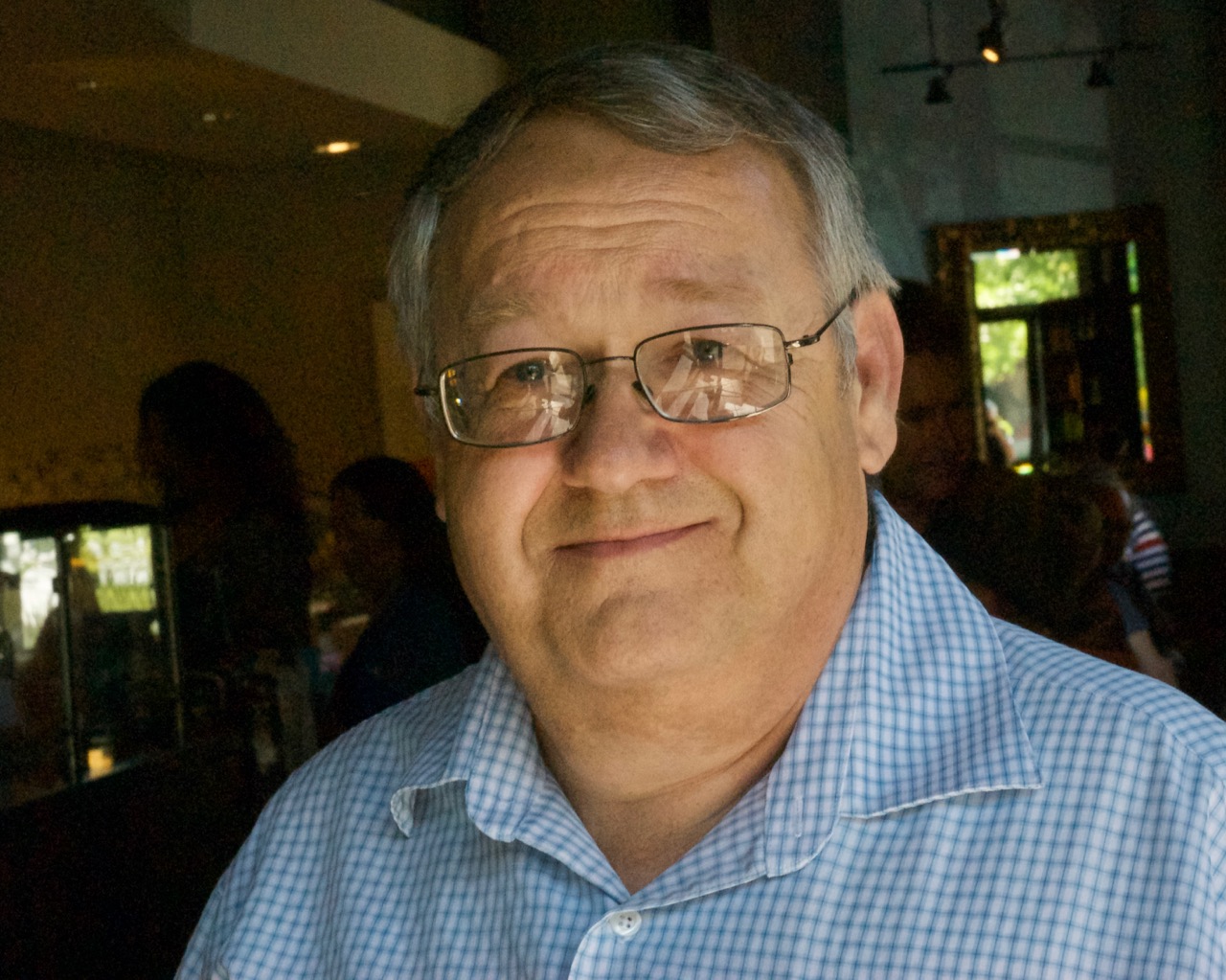
Paul Williams

Safety is not just important on the road; electrical safety is also a hot topic, noted Paul Williams, a senior loss prevention consultant for State Compensation Insurance Fund.

“We always talk about lock-out, tag-out, chocking and blocking tires, and before you make any repairs, making sure that equipment is shut off, and then doing repairs in the field,” he said.

Yet, many people are lost every year at harvest when they decide to make repairs in the field with just a quick adjustment.

“Sometimes people are in a hurry, they’re impatient, they’re tired, maybe fatigue sets in there; too easy to get caught in moving parts,” Williams said.

Although many ranchers have mechanics they go to, some choose to ‘fix’ the problem themselves.

“It’s the seasonal guys, the guys that aren’t trained, they’re trying to do good work but they try to do things they’re not trained to do. … This is why many ranchers stress that employees not be afraid to ask for help,” Williams said.

For more information on safety on the farm, go to: http://www.agsafe.org/
2017-09-02T23:48:01-07:00August 9th, 2017|

Seat Belts Important to Farm Worker Safety

Year-Round Nut Harvest Safety –  Part 2

By Patrick Cavanaugh, Farm News Director

Safety should be top priority on farms, especially during harvest. Most farm accidents and fatalities involve machinery and a busy atmosphere like harvest creates many opportunities for injury. However, farm worker safety is important year round. Paul Williams, a senior loss prevention consultant with the State Compensation Insurance Fund, talked to California Ag Today about the topic.

“Some things like wearing seat belts is critical. All the new farm equipment has seat belts, and workers should be encouraged to wear the seat belts because if they are unfortunate enough to get rear ended, that seat belt’s going to keep them in the equipment. You’re not going to get ejected out onto the road,” Williams said.

“A lot of it’s just simple common sense, but the whole idea of doing these before harvest is to remind people, that they are getting ready to enter a busy time of the year. And fatigue is always a factor when you’re working six days a week, 10-12 hours a day. It’s just natural that you get tired, and when you’re tired, you don’t always think clearly,” he said.

“Worker reaction times are slower so we just want to remind people, about safe work practices to follow. And they are good to follow year-round,” Williams noted.

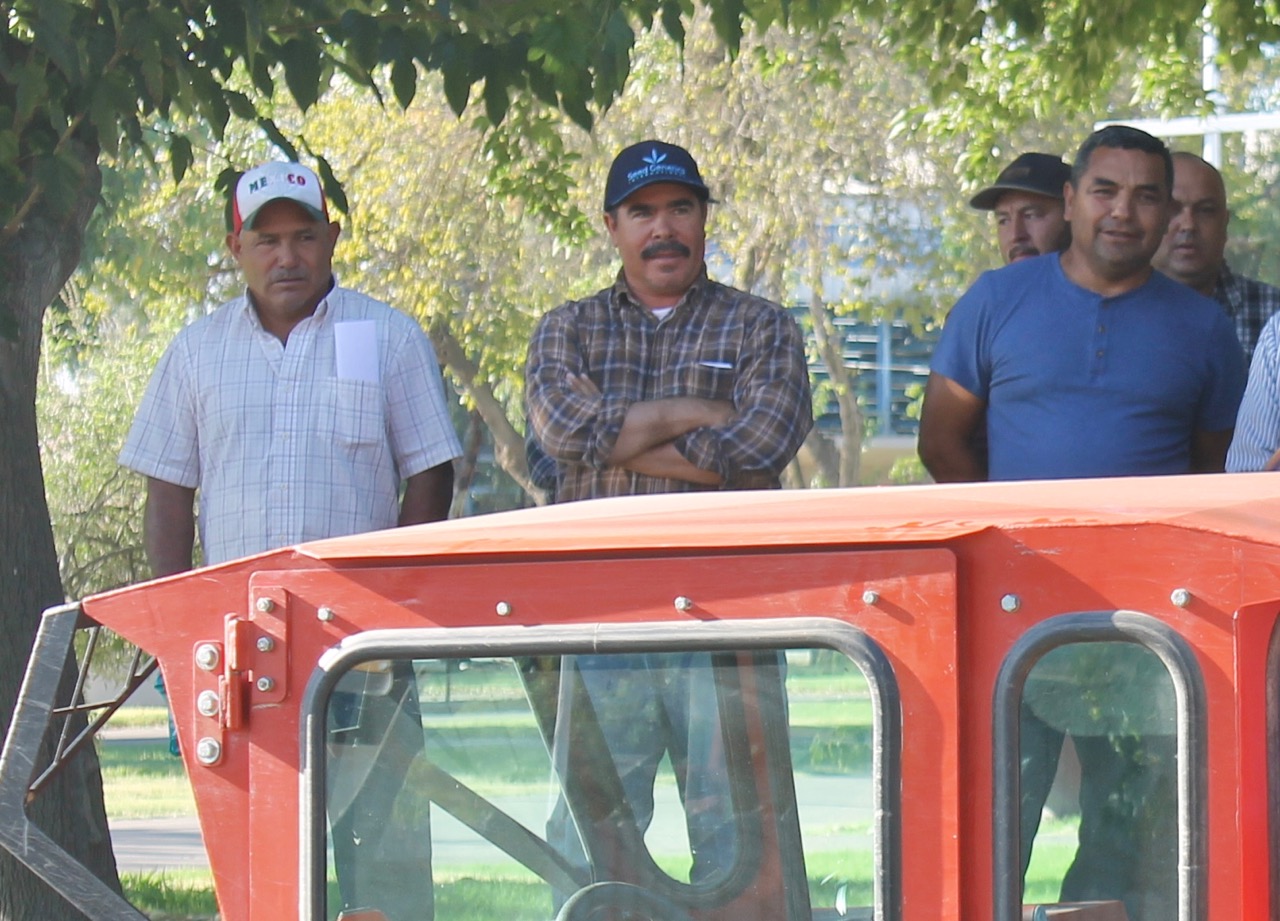
It’s also important to consider safety when riding from one area of the farm to another.

“If there is not a seat and a seat belt, then there should not be a rider. And it does not matter if it is a tractor or bin trailer or a tractor pulling irrigation pipe,” Williams said.

“We’re all basically lazy; none of us like to walk any further than we have to. We don’t see any harm in hitching a ride, but we have a number of fatalities and serious injuries on California farms every year. We have way too many accidents occur where people are passengers on bin trailers and harvest, whether it’s in the vineyards or in the orchards.

“People jumping on a bin trailer where a tractor driver up front may be making a sharp turn to get out of a row. A lot of times there can be pinch points and that’s where people get pinched between that part of the trailer or that bin that they can’t always see. It’s a very dangerous place to be because all it takes is one bump, one hole in the ground or a rough spot to cause someone to be bounced off the tractor.

“The worst injury we see is not so much being bounced off, but just being caught in between row end or the poles at the end of a vineyard,” Williams said.

For more information on safety on the farm, go to: http://www.agsafe.org/
2017-09-03T00:23:27-07:00August 9th, 2017|

Worker Safety During Nut Harvest – Part 1

Nut Harvest Safety –  Part 1

By Patrick Cavanaugh Farm News Director

Safety is very important, especially when working with heavy machinery. As most farm accidents and fatalities involve machinery, farm safety begins with educating and preparing workers for emergency situations, and making them aware of hazards. California Ag Today interviewed Paul Williams, a senior loss prevention consultant with the State Compensation Insurance Fund, regarding nut harvest safety.

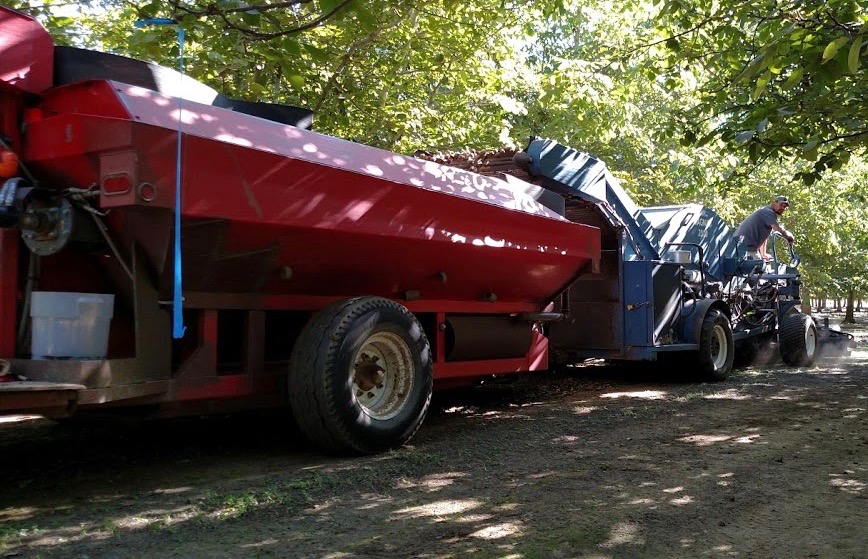
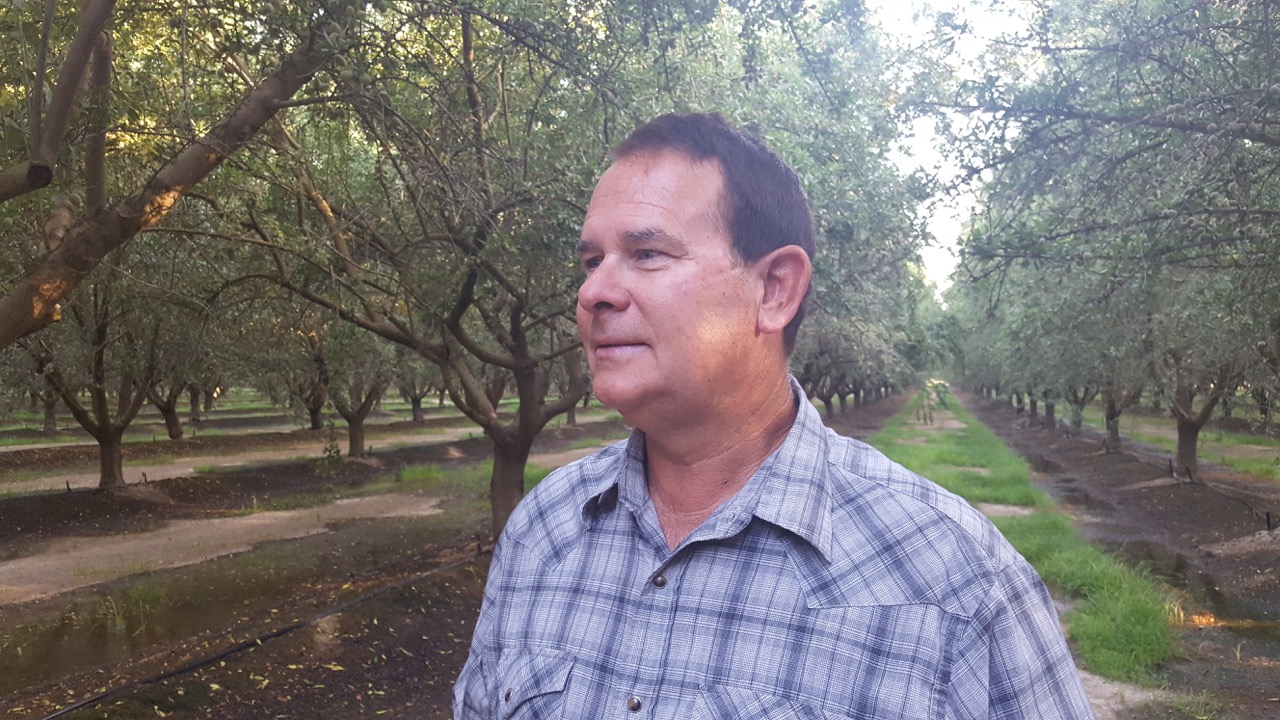
“The hazards are primarily with walnuts and almonds. They tend to stir up more dust in the harvest process,” Williams said. “There are respiratory issues that employees need to be protected from.”

“There’s also a need for hearing protection with any type of farm equipment. A lot of times, you’re sitting there all day at elevated levels of noise – there’s potential for hearing loss. Hearing loss is often overlooked because it’s slow acting, but it can have a huge effect on workers lives down the road,” Williams explained. “It’s important to be aware of it as a factor, and we talking about it as one season, probably not going to be any noticeable … you do that for 20 and 30 seasons, and you’re not able to understand your grandchildren when they talk to you. It’s one of those things that sneaks up on you.”

Williams said there are also a lot of safety issues with farm equipment and transportation. “You’re driving a slow-moving vehicle down a county road at 10 miles an hour, and you’ve got impatient drivers who want to pass you. Many drivers are not paying attention at all and they rear-end your equipment,” Williams said. That happened in Kingsburg a couple weeks ago.

This is always a danger whenever you’re transporting harvesting equipment or any kind of farm equipment on a county road. “It’s always nice if you have a pilot car; it’s always nice if you have a truck behind with their flashers on, trying to control traffic and periodically being a good neighbor and pulling over and letting traffic get by you when that’s possible,” Williams said.

For more information on safety on the farm, go to: http://www.agsafe.org/
2017-09-02T23:57:46-07:00August 7th, 2017|

Sharing Secrets to a Successful Bowl of Cherries

Weather and Pruning Make Life a Bowl of Cherries

By Laurie Greene, Founding Editor

Clark Goehring, a third generation Kern County farmer, produces cherries and almonds. He summarized his cherry harvested as “good compared to the other years when we have had rain. Some people in our area still had rain during harvest, but we were able to harvest and bring our cherries to market in good condition.”cherry tree

“Of course, it rained a lot this winter and spring, but you do not want rain when cherries are maturing on the tree; they don’t like rain.”

Goehring explained that when it rains beyond the point when cherries start coloring, they split, making them unmarketable. “But while it may take some rained-on cherries off the market, the price of the marketable fruit goes up,” he said, benefiting those growers who had a quality crop, like him.

Goehring’s farm workers train the cherry trees to keep them low—approximately 8 feet tall. “We have tried to have them bush out instead of being more of a central leader. Actually, it’s called Spanish Bush style or, in modified form, KGB.”

Kym Green Bush designed the KGB training method in Australia to use multiple leaders and have them fruit on the leaders themselves. KGB simplifies pruning so less experienced farm workers can learn the skill more easily. The trees are replenished every five years.

Goehring said the method saves money on the farm, cuts labor and increases workers’ safety because it requires no ladders and the harvest is quicker. Harvesting without ladders also gives Goehring an advantage of attracting farm labor over other orchards that require ladders.

“In California, if farm workers have their choice of picking your cherries without using ladders, which is usually piecework, or someone else’s crop with ladders, they are going to want to come to you,” he explained.

2017-08-02T16:14:04-07:00August 2nd, 2017|

Who Safeguards CA Farm Workers’ Rights? Part 4 – Motion to Disqualify ALRB Member Hall

ALRB Rejects Gerawan’s Motion to Disqualify Isadore Hall III

By Laurie Greene, Founding Editor

Our ongoing coverage of developments among United Farm Workers (UFW), Agricultural Labor Relations Board (ALRB), Gerawan Farming, Inc. and California farm workers chronicles the continuing, increasingly complex quagmire that masquerades as protecting California farm workers’ rights.

In short, after a series of legal volleys between Gerawan Farming and ALRB this past spring, the ALRB, again, refused to disqualify ALRB Member Isadore Hall III, former state senator (35th District, D-Compton), from participating in specific Gerawan legal cases on the basis of alleged pro-UFW bias.

In legal terms, ALRB issued an administrative order on June 9, 2017, denying Gerawan Farming, Inc.’s May 23, 2017 motion for reconsideration of request to disqualify Isadore Hall III from participating in specific case deliberations and decisions regarding Gerawan Farming, Inc.  Likewise, ALRB also denied Gerawan’s request for a stay of the proceedings pending resolution of Mr. Hall’s participation.

BACKGROUND

Condensed Early History

The UFW was certified as the bargaining representative for Gerawan’s agricultural employees in July 1992, after a 1990 election. After one preliminary negotiating session in February 1995, the UFW disappeared for almost two decades, having never collected dues, negotiated for a wage increase, attempted to bargain for a contract or filed a single grievance on behalf of Gerawan employees during their abandonment, according to an April 17, 2017, Gerawan news release.

In 2013, the UFW  invoked a controversial 2002 Mandatory Mediation and Conciliation (MMC) law that allows the ALRB to draft and impose a “contract” on the employer and employees against their will. UFW also proposed that Gerawan employees pay 3% of their wages to the UFW or be fired. Fewer than 1% of the current Gerawan workforce voted in the 1990 election, and many current employees were not even born when that election took place.

California Gerawan farm workers harvesting tree fruit

California farm workers harvesting tree fruit

The majority of employees twice asked ALRB for an election to decertify the UFW. At the ALRB’s request, the Fresno Superior Court intervened and supervised the decertification petition processthe first time in ALRB history that a court oversaw an ALRB election.

On November 5, 2013, thousands of Gerawan workers cast secret ballots to decide whether to decertify the UFW. The ALRB impounded the ballots, which remain uncounted to this date in an undisclosed (possibly insecure) location.


Current History – 2017

Appointment of Isadore Hall III to ALRB

In his January 13, 2017, letter of resignation to Governor Brown as ALRB Chairman, William B. Gould IV stated that the Agricultural Labor Relations Act [ALRA or “Act”] “is now irrelevant to farm workers, in particular, because, for the most part, they are not aware of the provisions, procedures, and rights contained in the law.”

“I have pointed out [in several speeches] that only one representation petition has been filed during the 34 months of my Chairmanship,” Gould continued. “More than 99% of the agricultural workforce appears to be unrepresented and the instances of unfair labor practice charges and invocation of the Mandatory Mediation and Conciliation Act (MMC) are few and far between.”

William Gould, IV, former ALRB chair

William Gould, IV, former ALRB chair

“Regrettably, though the Board adopted the proposed rule 14 months ago for worker education about the Act’s features, the rule has languished in the bowels of state bureaucracy for the past 14 months. My view is that this long delay is substantially attributable to the fact that the ALRB, unlike the NLRB, is not a standalone, independent administrative agency.”

Also on January 13, 2017, Governor Brown designated Genevieve Shiroma as Chair of the ALRB, where she had served as a member since 1999, an appointment that did not require Senate confirmation. Likewise, Governor Brown appointed Isadore Hall III, and the California Senate confirmed his appointment, despite Hall’s public history of pro-UFW activity and endorsements and allegations that he threatened farmers who opposed his nomination.


Agricultural Community Responds to Hall’s Appointment

In Farmers Deserve a Balanced Ag Labor Board,”a letter published in the Sacramento Bee on February 23, 2017 by George Radanovich, (president of the California Fresh Fruit Association), Joel Nelsen (president of California Citrus Mutual) and Tom Nassif (president of Western Growers Association), the authors explained, “The purpose of the Agricultural Labor Relations Act (ALRA) was to bring about a sense of justice and fair play during a tumultuous time in the farm fields of California in 1975.”

“When the ALRB was formed in 1975,” the authors stated, “it was with the understanding that membership would consist of two members representing labor, two representing agriculture, and one public or neutral member. Instead, the board has become one of the most contentious, lopsided administrative boards ever assembled by the state of California. The recent resignation of Chairman William Gould IV and his prompt replacement by former state Sen. Isadore Hall, D- Compton, only further illustrate this imbalance.”

Tree fruit farm worker in California.

Tree fruit farm worker in California.

In place of conducting outreach to all affected stakeholders, including agriculture, “in a matter of 48 hours, Gov. Jerry Brown appointed a termed-out state senator and failed congressional candidate who has no labor law background whatsoever but with strong ties to the UFW.”

Hall’s UFW ties were listed as “financial support by the UFW, personal ties with UFW President Arturo Rodriguez and raising the union banner while marching with the UFW. While a state senator, Hall was the principal co-author of two UFW-sponsored bills and voted in favor of two other bills that would make it easier to force ALRB-written contracts on farmers and workers. These close ties should disqualify him from the position where he will judge UFW issues almost daily.”

“There is no denying that the ALRB’S recent decision to prevent the disclosure of the November 2013 election results, from the high-profile decertification fiasco of Gerawan Farming of Fresno was to cover up the fact that most farm workers don’t want to unionize.”

“Today, California farm workers are protected by the strictest labor laws in the nation, and they decline to unionize because they value a good employer over a union. Brown should recognize this and rewrite the ALRA to guarantee employer representation on the board. California farmers deserve better than a lopsided Agricultural Labor Relations Board.” 


ALRB Decides Gerawan Negotiated “in Bad Faith”

On April 14, 2017, ALRB Administrative Law Judge (ALJ) William Schmidt issued an interim decision finding that Gerawan committed an unfair labor practice by refusing to negotiate “in good faith” with the UFW. Essentially Judge Schmidt contended, “Gerawan engaged in collective bargaining negotiations with the UFW with no intention of reaching an agreement covering the wages, hours, and other terms and conditions of employment for the employees in the collective bargaining unit.”

According to David Schwarz, counsel for Gerawan Farming, “This decision was riddled with legal and factual errors. The most glaring of these errors was the fact that ALJ Schmidt found that Gerawan failed to negotiate when it had already been ordered to [follow] a process [MMC] where traditional give-and-take negotiation had been replaced by government-imposed forced contracting.”

According to an April 17, 2017 Gerawan newss release, “The so-called MMC procedures are neither consensual nor voluntary. It is forced contracting. The ALRB tells the employer what wages to pay, what employees to hire, or fire, or promote, and what portion of the employees’ salary will be turned over to the union. The employer may not opt out and the employees are not given the choice to ratify or reject the so-called contract that will be forced on them, even if there are provisions detrimental to them.”

“There is a fundamental – and constitutional – difference between consensual bargaining and state-compelled contracting,” said Dan Gerawan, president and CEO of Gerawan Farming. “The ALJ obliterates this distinction.”

Gerawan added that MMC does not facilitate negotiations. Rather, it is an imposed agreement by force of law and Gerawan was compelled to abide by it.

Schwarz explained, “Per the ALRB’s own regulations, MMC kicks in only after the Board has certified that further negotiation between the parties would be futile.”

At that point, according to Schwarz, a government-appointed arbitrator steps in, hears evidence from each party, drafts a CBA (or collective bargaining agreement), which the Board approves and imposes on the parties by force of law. Since there is no place for negotiation in this process, Schwarz contends there is no logical or legal basis for ALJ Schmidt to conclude that Gerawan’s conduct during MMC could justify his finding that Gerawan failed to negotiate in good faith with the UFW.


Gerawan Files Motion to Disqualify Member Hall from participating in “Bad Faith” Negotiating Case
Isadore Hall III UFW flag ALRB

Isadore Hall III with UFW flag prior to his appointment to the ALRB.

On April 28, 2017, Gerawan Farming, Inc. filed a Motion to Disqualify Board Member Isadore Hall from participating in the deliberations in the case above based on documented “sweeping prejudicial” statements Member Hall made against Gerawan.

“Our DQ motion was very compelling,” Dan Gerawan said. “Hall marched specifically against us and our employees and received an endorsement from UFW in return. It’s ridiculous that he was assigned to a job where 90% of his work will be to adjudicate UFW-related issues, and half of his work will be Gerawan-related.”


ALRB Rejects Gerawan’s Motions to Disqualify ALRB Member Hall and to Request a Stay from Participating in “Bad Faith” Negotiating Case

On May 18, 2017, the ALRB rejected Gerawan’s motions to disqualify ALRB member Isadore Hall and to request a stay in order to resolve the motion to disqualify.

“Hall’s disqualification would leave the ALRB without a current valid quorum of three members to hear the case,” Schwarz said, “thus lacking the statutory power to act. The Governor can resolve this issue by simply doing what the ALRA requires him to do –  appoint two additional ALRB members, thus bringing the Board to its statutorily-requisite composition, which is five members.”


Gerawan Files Motion for Reconsideration of the Board’s Order Denying Motion to Disqualify Member Hall

On May 23, 2017, Gerawan filed a Motion for Reconsideration of the Board’s Order Denying Motion to Disqualify Member Hall, repeating its request for a stay of the proceedings pending resolution of the motion.

“Gerawan filed this motion for reconsideration both to correct serious legal errors in the Board’s initial decision,” Schwarz said, “and to bring to light new evidence regarding the identity of an individual who participated in a conversation with Mr. Hall in which Mr. Hall stated that he was going to ‘get’ Gerawan once he was a member of the Board. This individual, Mr. Shaun Ramirez, provided a declaration in support of Gerawan’s first motion to disqualify Member Hall. However, Mr. Ramirez and his employer, concerned that the Board (or Mr. Hall) might retaliate against them for speaking out, initially asked that Mr. Ramirez’s identity remain confidential.”

“The Board initially refused to consider Mr. Ramirez’s declaration – precisely because he asked that Gerawan not reveal his name for fear of retaliation. After the Board denied Gerawan’s motion to disqualify Mr. Hall, Mr. Ramirez allowed Gerawan to file an unredacted version of his declaration with this motion for reconsideration. This declaration set out in great detail Mr. Ramirez’s interactions with Mr. Hall and Mr. Hall’s statement, in reference to Gerawan, ‘I am going to get their ass.’”


ALRB Denies Gerawan’s Motion For Reconsideration to Disqualify Board Member Hall from Deliberations in this Case

On June 9, 2017, ALRB denied both Gerawan’s motion for reconsideration to disqualify Board Member Hall from deliberations in the case and Gerawan’s request for reconsideration of an immediate stay of the proceedings.

“As discussed,” Schwarz said, “Gerawan filed a motion for reconsideration with an unredacted version of Mr. Ramirez’s declaration. The Board again refused to consider Mr. Ramirez’s detailed account of his conversation with Member Hall. The Board took the position that it was under no requirement to consider such evidence in a motion for reconsideration, as the declaration was not ‘newly discovered’ or ‘previously unavailable.’ The Board discounted Mr. Ramirez’s reasons for desiring anonymity, and disregarded the merits of his sworn statement, without explaining why the revelation of his identity did not require it to reconsider the basis [the anonymity of the declarant] for disregarding it in the first place.”

“Of equal significance is that Mr. Hall participated in deciding his own disqualification motion,”  Schwarz added. “This violates a basic rule of due process and long-standing Board precedent that a member accused of bias cannot decide his own disqualification motion. Instead, Member Hall offered his own statement that he was not biased against Gerawan, albeit without denying or affirming the truth of Mr. Ramirez’s declaration.”

“Unlike Mr. Ramirez,” said Schwarz, “Member Hall’s ‘concurring’ opinion was not under oath.”

In the official ALRB Decision, Hall wrote, “I reject the claims of bias leveled against me by Gerawan and decline to recuse myself from participation in the deliberations in this case.”

Next Steps

In reaction to the Board’s refusal to disqualify Member Hall, Schwarz said, 
“Gerawan will appeal the Board’s decision. We are confident that this unprecedented and unconstitutional decision will not stand.”


Featured photo:  Isadore Hall III marching with UFW prior to ALRB appointment.

Who Safeguards CA Farm Workers’ Rights? Part 5


Resources

Farmers Deserve a Balanced Ag Labor Board,” by George Radanovich, Joel Nelsen, and Tom Nassif, Sacramento Bee, February 23, 2017.

Mandatory Mediation and Conciliation


2019-12-25T15:29:53-08:00July 21st, 2017|

Heat Wave Puts Renewed Focus on Worker Safety

Worker Safety and Heat Illness Prevention is Important

By Melissa Moe, Associate Editor

There has been a definite heatwave in the Central Valley, and that means an extra effort should be in place to protect farm workers from heat illness. Darren Stevens is an associate safety engineer with Cal/OSHA Consultation. He explained to California Ag Today the areas where growers need to comply to ensure that all workers make it home safely.

“The big things to remember is that the employers need to have written policies and procedures that address the specific requirements provided for water, shade, written procedures, emergency procedures and training. Those are the real keys,” Stevens said.

With temperatures in the triple digits, heat illness can be a very real threat. It is important to know the signs and have a plan in place to prevent overexposure to heat. There are regulations in place to protect worker wellness, with guidelines that producers must follow to guarantee their safety.

“The minimum temperature for shade is 80 degrees, but shade also needs to be available below 80 degrees if it’s requested by the employees. Water has to be available at all times. Really, we want to make sure that the shade and the water is available at all times, primarily just because of the heatwave. Or if they’re coming from another area, they’re not used to this type of weather. We need to have those precautions in place,” Stevens said.

For more information about heat safety, visit https://www.dir.ca.gov/dosh/heatillnessinfo.html.

2017-06-26T15:45:17-07:00June 26th, 2017|

Risk & Safety Manager Talks Heat Illness

Preventing Farm Worker Heat Illness

By Patrick Cavanaugh, Farm News Director
Part of a Series

Larry Williams, Executive Risk and Safety Manager for the Hall Companies.

With temperatures heating up throughout the San Joaquin Valley, it’s extremely important that farm workers know how to prevent heat illness. Larry Williams is CEO of the Hall Companies, among the largest Ag labor contractors in this state. Williams is also the Executive Risk and Safety Manager for the company. They take workers’ safety in the field very seriously.

“The heat illness is a big thing for us, because we employ over 25,000 employees throughout the state of California. We’re in the ag industry, so heat is a big thing, especially coming up in the summer time for us,” Williams said.

Williams told California Ag Today how they protect workers across the state.

“We provide shade trailers for 100 percent of our people. In addition to the shade trailers, if needed, we have canopies, [and] umbrellas where needed for our individual irrigators or others. We try to make sure we’re ahead of the game,” Williams said.

Regulations state that shade must be available to all workers when temperatures reach 80 degrees.

“Yes, we have to have shade available, and every site that we pull up to, we automatically bring shade, whether it’s 60 degrees, or 100 degrees,” Williams explained.

“And of course, plenty of water must be available for all workers,” he said.

2017-06-21T15:44:21-07:00June 21st, 2017|

Family Tree Farm Sees Good Season Despite Labor Laws

Family Tree Farm Rising to Meet Challenges

By Melissa Moe, Associate Editor

New state labor regulations continue to make daily operations more difficult for California farmers. With these increasing costs, it is difficult to stay competitive in a global market. Family Tree Farms is a family owned operation out of Reedley. Daniel Jackson of Family Tree Farms said that they’re doing well even, with the new labor laws that are making business more difficult for California farmers.

“The regulations grip us around the throat a little bit, and they’re getting tighter and tighter every year. We’re just trying to keep air in our lungs. To get creative, we have to find ways to be better farmers. To produce more yield and to do it more affordably with less labor. We have to be creative on our cultural practices and how we do that so that we can survive in the marketplace. We’re trying to make it work, but at the end of the day, it seems like every time you solve an obstacle three more pop up,” Jackson said.

Even with these new regulations, Family Tree Farms has been doing well. They have risen up to meet these new challenges, and the year ahead looks promising.

“The labor has been better this year, and I can’t really give the reason why. It wasn’t a great pollenization year, so crops are a little bit lighter as far as the fruits that are on the tree or actually having workers available. That could change as more crops start to come on as the blueberry harvest continues. Cherry seems like they’ll be wrapping up around here as grapes kick into gear later on in another few weeks, so we may run into those challenges as the season goes on, but right now, so far so good,” Jackson said.

2017-06-19T12:50:39-07:00June 19th, 2017|

Keeping Workers Safe from Heat Illness

How Farmers Prevent Heat Illness

Part of a Series

By Patrick Cavanaugh, Farm News Director

With the rising temperatures, farmers must ensure the safety of their workers to prevent heat illness and ensure that everyone gets home safely. California Ag Today spoke with Daniel Jackson, of Family Tree Farms, about the rising temperatures and worker safety.

“It’s amazing how you see canopies up all over,” Jackson said. “As you drive by, you’ll see the canopies that are up, providing shade. The water sources are close. As far as sanitary goes, most farmers now are — especially the larger ones — under global good agricultural practices (GAP) certifications. We’re not only required to have excellent bathrooms and wash station in place. it, but it’s also the right thing. … It helps to protect our workers, keep them safe and also provide a safe, sanitary food source for the public.”

Family Tree Farms has a proactive approach on keeping their workers safe. “We’re taking care of the workers by giving them their breaks and doing everything that we need to ensure that they’re healthy and that they’re able to make it through the day,” Jackson said.

“That takes great supervision. We have a great team. We have about eight people that work for us, that are going around checking people, making sure that they’re safe,” he said.

“We also visit the workers in the field. I think the farmer needs to be there in the flesh from time to time, making sure everybody’s healthy. So far, it’s been fine this year, but as the heat goes up, we’re going to have to take more precautions,” Jackson said.

2017-06-23T17:37:08-07:00June 14th, 2017|

Who Safeguards California Farm Workers’ Rights? Part 3 – Bargaining in Bad Faith

What Does “Bad Faith” Mean?

By Laurie Greene, Founding Editor

Our ongoing coverage of developments among United Farm Workers (UFW), Agricultural Labor Relations Board (ALRB), Gerawan Farming, Inc. and California farm workers chronicles the continuing, increasingly complex quagmire that masquerades as protecting California farm workers’ rights.

As previously published, ALRB Administrative Law Judge William L. Schmidt issued a decision on April 14 in favor of the UFW, finding Gerawan violated labor law by negotiating a collective-bargaining agreement with UFW “in bad faith—commonly called “surface bargaining”—in the eight-month period from January 2013 through August 2013.

“Candidly,” said Anthony Raimondo, president and owner of Raimondo & Associates and attorney for Silvia Lopez, the Gerawan Farming employee and petitioner to decertify the UFW from representing Gerawan farm workers, “it is not surprising to me at all that this type of decision went against the company, because this ALRB has been in the pocket of the [UFW] … this whole time.”

“This is very much what happened to the workers in the [decertification] election case,” Raimondo said, “when the ALRB refused to count the ballots. They slammed the workers for exercising their right to free speech—to protest. They attacked the workers for engaging in actions of civil disobedience, and they denied the workers the right to vote, essentially, by refusing to count the ballots.”

On March 20, the UFW filed a claim alleging that Gerawan violated the ALRA by “proposing and insisting on” the exclusion of the farm labor contractor (FLC) employees from the terms of any collective bargaining agreement the parties might conclude.

“What the union was claiming here,” Raimondo explained, “is that Gerawan had made a contract proposal, as I understand it, that said that the employees that it receives from farm labor contractors would be excluded from the terms of the collective bargaining agreement. According to both the UFW and the Agricultural Labor Relations Board, making such a proposal alone represents “bad faith bargaining.”

Raimondo Bad Faith“Bad faith bargaining is when you bargain without the intention to make an agreement,” Raimondo said. “In this case, for example, I don’t see how that could be possible in the Gerawan case because I’ve seen UFW contracts from the past that did exactly that—they agreed to exclude labor contract farm employees.”

“It is very common,” Raimondo explained. “I negotiate collective bargaining agreements all the time. It’s very common when you’re negotiating a collective bargaining agreement to look at other contracts in the same industry, with the same union, to get an idea of what they’ve agreed to in the past. I do not know how recently they’ve done it, but in past years, I have certainly seen contracts that the union has agreed to, where labor contractor employees were excluded.”

Among the mandates issued by ALRB Administrative Law Judge William L. Schmidt in his April 14 decision on Case 2013-CE-010-VIS is a requirement that Gerawan Farming cease and desist from persisting in its refusal to bargain with the UFW about the wages, hours and other terms and conditions of employment for those members of the above bargaining unit who are employed by farm labor contractors.

“I personally am very skeptical of this decision,” Raimondo commented. “It seems to me to be a stretch of the whole idea of bad faith bargaining, which is bargaining without the intention to reach an agreement, especially since what we’re talking about here is a proposal. But the fact that an administrative law judge of the ALRB made a decision in favor of the UFW does not shock me at all.”

“It’s difficult for me to see how proposing something that a union had agreed to in another contract, with another employer, would trigger an accusation of ‘bad faith bargaining.’ I would be surprised if this stands up an appeal, but to me, it’s most indicative of what we’ve seen from the ALRB over the last few years, and it’s likely to continue. The ALRB is no longer an objective, independent state agency that enforces the law. This is an arm of the United Farm Workers Union, whose mission is to save this obsolete union from the consequences of its own failures.”

“Biased as the original election decision was against the farm workers, the one thing that really stood out to me, even for this biased judge,” Raimondo said, “is even the ALRB admitted that the movement in favor of decertification of the UFW was not started by Dan Gerawan. It was a movement that started organically among the workers; they organized themselves to take the action that they wanted to take.”

“The fact is,” Raimondo continued, “these workers had their minds made up. They were disgusted by the UFW’s absence, they were disgusted by the union trying to force a contract on them, without even talking to them about it first. When they found out that this contract was going be shoved down their throats, they organized themselves and they fought back. The ALRB wants to discredit the entire movement that exists amongst the Gerawan workers.”

ALRB Notice to Gerawan Employees

ALRB Notice to Gerawan Employees

“When you have a law that is designed to grant farm workers their voice, and their right to self-determination, as we have with this agricultural labor relations act, it seems to me to be an abomination, when you can acknowledge that workers organize themselves to be heard, and then you deny them that voice because of something that their employer did. What control do the workers have over their employer? The workers are now responsible for things that the employer does, that cost them their right to vote?”

“There is no basis in the law for this idea that the entire process is somehow tainted in a way that invalidates the election,” Raimondo said. “If you read the Agricultural Labor Relations Act and the case law, the law is very clear that when an election is held, the only time that we reverse the outcome of an election, or ignore the outcome of the ballots, is when there has been misconduct by a party that actually affected the outcome of the election.

“You can go back to cases from the ’70s and ’80s,” Raimondo continued, “where the UFW had protestors out there at the polls, and employers complained that that affected or influenced the workers, or intimidated them in some way. Unless the employer could show that there was some actual effect on how the workers voted—that affected the outcome of the election—the election would be upheld.”

“No one in this case has ever produced the slightest shred of evidence that anything that Gerawan did or said ever affected how these workers voted, or how they felt about the union. This idea of a so-called ‘tainted election,’ is something that was invented in the last few years by ALRB judges. It doesn’t appear in the law. This whole process has been biased.”

“In fact, more than anything else, the thing that shaped how the farm workers felt about the union was the 17 years when the union wasn’t there. The union has never had to defend their absence from Gerawan employees because the ALRB never forces them to answer for it. The ALRB considers that to be irrelevant.”

“Yet, they slander Gerawan. They discredit the workers’ efforts to organize themselves. They want to discredit the entire movement that exists amongst the Gerawan workers. They deny the workers the right to vote, but they completely ignore the fact that the union failed in its most fundamental purpose, which is to represent workers.”

Featured Photo: Attorney Anthony Raimondo


Who Safeguards CA Farm Workers’ Rights? Part 4 – Motion to Disqualify ALRB Member Hall

2018-05-07T01:03:23-07:00May 26th, 2017|
Go to Top