Latinos and Immigration Reform – Part 1 of 4 Parts

The Need for A Critical Analysis For Immigration Reform

By Arnoldo S. Torres with National Institute of Latino Policy

This is an analysis of the immigration debate and the responsibility Latinos must examine on the strategy and tactics applied and the corresponding consequences of these actions.

Now that DACA and the President’s immigration enforcement package have been placed on hold by Congress and the courts, all parties have some time to try and work out a short-term or long-term compromise. Latino and DACA “leaders” must step back and consider the strategy they have been following, its pros and what I believe are many cons. It is an arduous task they have taken on, and I respect and admire the determination, emotion, and commitment they have demonstrated to date.

However, the strategy they have been following has had little success on the bottom line, while having severe consequences. It’s great to be mentioned by Hollywood actors at the 90th Oscar Awards, but that does not provide the relief and fairness being sought and earned by hardworking people whose motivations are no different than those who migrated to the U.S. at the turn of the 19th century.

Over the last 17 years, Latinos have seen how fear and anger has manifested itself towards our U.S.-born and immigrant communities. Despite all who suffered (including many immigrants from many parts of the world) from the horrific and permanent scars caused by the attacks on September 11, 2001, we began to experience the unprecedented damage to our national psyche and identification.  The door of anti-immigrant sentiment had been nudged open.

With the beginning of the presidential campaign in 2015, the door came off the hinges. We have been experiencing a level of intolerance, scapegoating, ignorance, nationalist xenophobia and racism most had not seen or felt before. Those of us who remember that these attitudes and behavior have long been a part of our history in this nation also remember the ugly experiences of our parents and grandparents. I cannot help but believe that fixing that damn door may not be possible after what we have been through the last seven years.

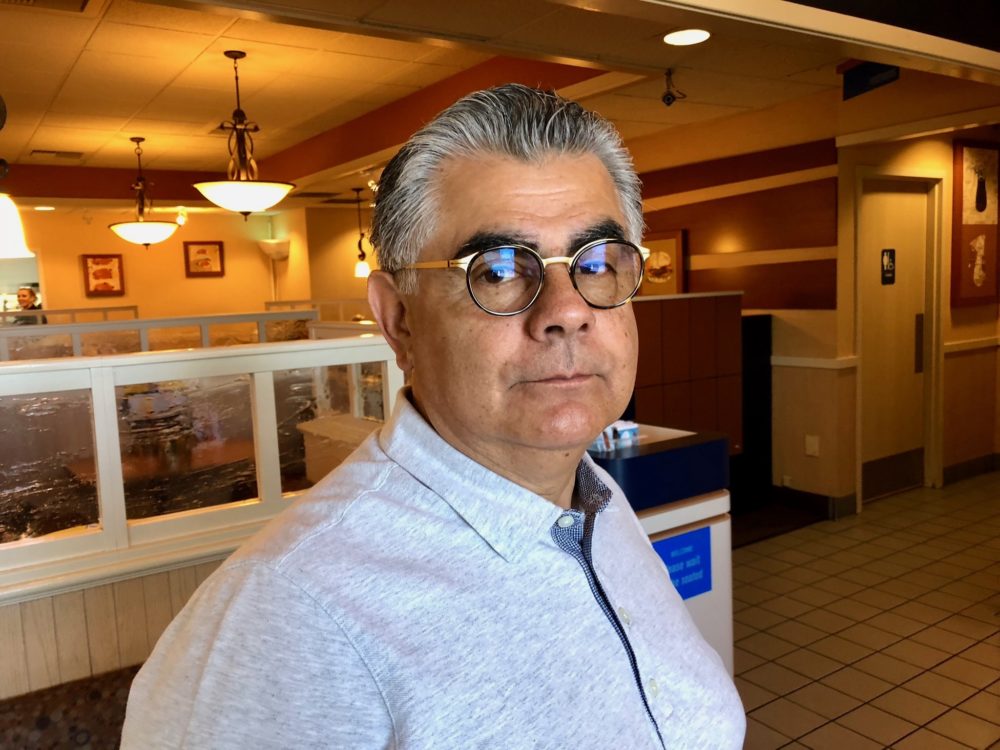
Arnoldo Torres

Latinos need to accept the reality that we have a fair share of responsibility for what has happened to us in this immigration dynamic. The perspective and analysis I offer do not come at an easy time nor will it be well received by many. However, I ask that you look beyond the political correctness lens that will surely be applied.

Some will say how dare I question what Latino advocates on immigration have been doing. I would respond how dare there is no dialogue or transparency of what has been going on for years with no tangible results!  It is essential and imperative that all so-called “movements del pueblo, of conscious” have a critical analysis of their strategy, tactics, plans, and results.

It was Latino “Dreamers” who accepted the political argument and strategy that said, “These kids are not to blame for the actions of their parents who brought them to the U.S. illegally.” This political argument should never have been made, and the political strategy never followed. But liberal left and “progressive” foundations began to fund immigrant rights groups during the Obama years, and this was the argument and strategy followed to a tee. Democratic leaders went right along.

“Dreamers” were portrayed as being “Americans” who have and would contribute significantly to the nation because they were educated, had or were willing to serve in the military and their faces and pictures made for excellent optics. It was clear that the strategist behind this approach believed that these pictures and young faces would be hard to condemn.  Another clear element in this self-defeating strategy was the confident feeling that Hilary would take care of all remaining undocumented family members.

This line of argument and thinking was dishonorable and unfair to the parent generation in the U.S. Parents who entered the US without papers did not do so to hurt their children. Their parents were seeking what parents all over the world want, economic survival and opportunity for their family. The parent generation of the “Dreamers,” like their parents before them, were recruited and encouraged to come to the U.S. by specific industries. Over time these industries became dependent on and preferred these immigrant workers over U.S.-born workers. In other words, Mexicans were not the cause of any displacement, the economic market and U.S.-born workers work ethic changed. This process formally and informally began during the first World War because of labor shortages.

These generations of undocumented immigrants have made exceptional contributions to this nation up until this very time in our history.  They have labored hard in whatever jobs they secured, they have paid taxes, made sure their children did well in school so one day they would meet the criteria for the DACA program, they purchased homes, started small and medium businesses, took jobs that paid little and offered little protection or benefits but were indispensable to our economy, and seldom complained!

Shame on the Republicans who have portrayed these generations of hard-working people as welfare dependents, criminals, drug smugglers, or “not the best.” Shame on Democrats for speaking out of both sides of their mouths while playing politics with the desperation of vulnerable people, and hubris and inexperience of youth that found a voice. Shame on the liberal foundations and the Frank Sharrys (America’s Voice) in this network who were fighting other battles besides the one that was facing good people.

This unprecedented investment in the immigrant community has undoubtedly raised the profile of DACA recipients, helped fund the building of capacity and infrastructure of immigrant community advocacy groups. They indeed developed and gave voice to the individuals who became DACA leaders. However, these liberal/progressive institutions and their public faces contributed significantly to the strategy, talking points, and tactics that put exclusive focus and political capital on DACA recipients. DACA has pushed aside all the other immigration policy, domestic and international issues confronting the large Latino family that exists in the U.S.

I do not doubt that there is good faith and that there are many individuals on the left that are well motivated and committed. However, there should be no doubt that “the road to hell is paved with good intentions.” This side of the political spectrum has a clear pattern of telling us what is in minorities’ best interest and how to get there. They may not see it as clearly as many of us have over decades, but do not doubt its existence, prevalence, and negative consequences.

The challenge Latinos and Dreamers must overcome is the inclination to place critical issues before us in only a political context. We seriously ignore the role policy has in deciding the future and moving the needle. I am not naïve enough to maintain that perfection should be the enemy of good, but I certainly hope I will not hear perfection should not be our motivation. Politics is not the engine that drives all things and cannot replace sound policy proposals that are opposed because they do not satisfy our bias or ignorance.  Bad public policy makes for bad politics and presents intended and unintended consequences for the future. It is a dangerous habit to break, as evidenced by what Congress has been doing for far too long.
2018-05-14T16:38:51-07:00May 14th, 2018|

H2-A is Only Legal Solution For Labor Without Immigration Reform

H2-A is Heart of One Farm Labor Contractor

By Patrick Cavanaugh, Editor

H2-A employees are the heart of one major farm labor company. Steve Scaroni owns Fresh Harvest, a premier labor provider and staffing and harvesting company to the agricultural industry and the western United States. But the company’s main emphasis has always harvested crops related to salads; they have also expanded into permanent crops.

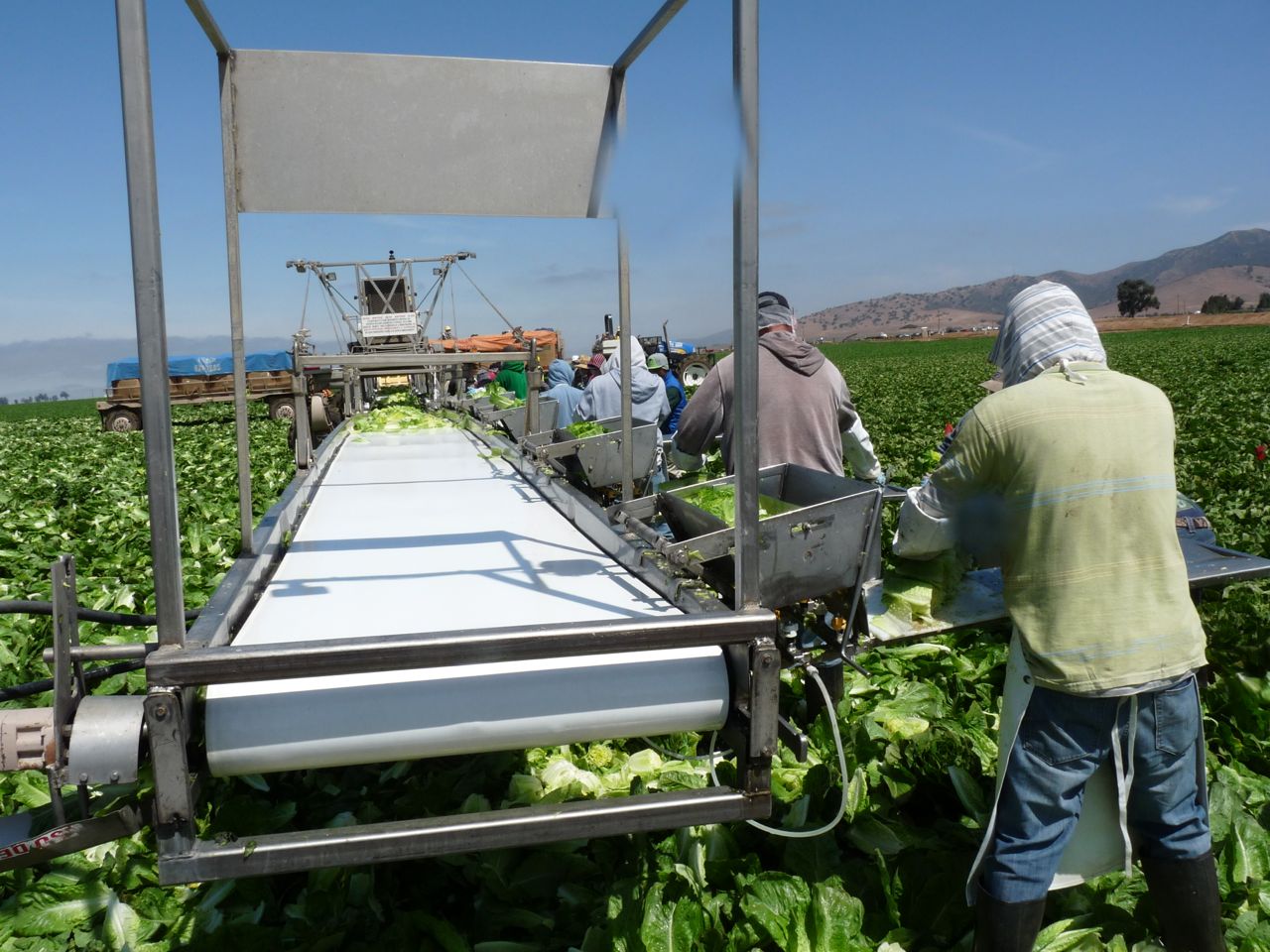
“Last year, we started citrus and pears, and we will continue to expand in vegetables with anything that goes into a salad, lots of head lettuce, romaine, and broccoli, which is what we have been doing for a long time,” Scaroni said.

And then we touch a lot of salads every day. The H2-A temporary agricultural program allows agricultural employers when anticipating a shortage in domestic workers to bring non-migrant foreign workers to the US to perform agricultural services for a temporary or seasonal nature.

Steve Scaroni

“If it wasn’t for H2-A, I wouldn’t be in business. I mean that’s the only way to get a legal worker into California to serve my customers demands for the services we offer, which is mostly labor and harvesting,” Scaroni said.

“And we’re even starting to do a lot of farm services. We’re bringing up 100 irrigators this year to put throughout the Salinas Valley because our Salinas customers can’t get enough irrigators,” he said.

Being a labor contractor has its difficulties. It takes a lot of work. It’s a very bureaucratic process-driven application process.

“Laborers that show great work ethic will be able to work for a longer period of time. A worker could technically stay if I can move it from contract to contract, and I can keep the temporary employee for three years,” Scaroni said. “But then he has to go back for 90 days, but it’s very hard to time the contracts for that to work.”

“So most guys, they’ll do five, six, seven months. They’ll go home before they can come back. And then the guys that are really good workers with and a great attitude and really get it done for us. We’ll move to another contract. Will even retrain them in a different crop if they have the right attitude and work ethic,” he said.

2018-05-08T17:11:52-07:00May 8th, 2018|

Laurie Greene Wins Journalism Award

Greene Wins Fresno County Farm Bureau Award for Series on Farm Workers’ Rights


By Patrick Cavanaugh, Editor


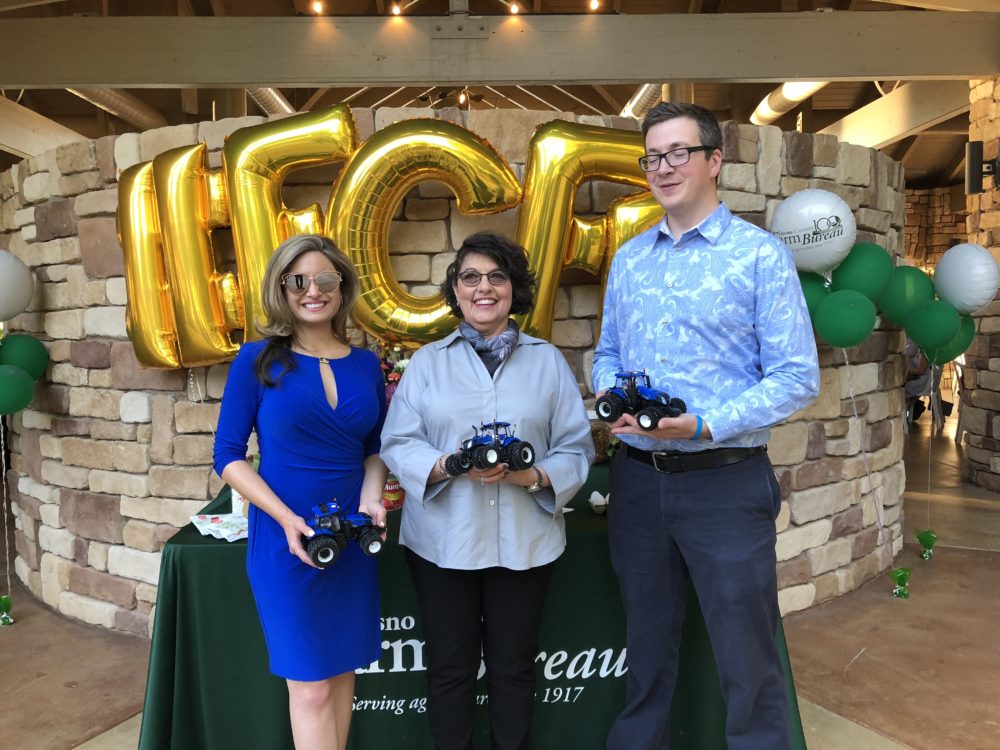
The Fresno County Farm Bureau (FCFB) recognized Laurie Greene, founding editor of CaliforniaAgToday.com,  with a First Place Journalism Award in the Farm Trade Print category on May 3. Her nine-part series published on our Google News-recognized CaliforniaAgToday.com website entitled, “Who Safeguards California Farm Workers’ Rights?” focused on recent, predominantly legal developments that illustrate the increasingly complex quagmire that masquerades as protecting farm employees’ rights in the state.

Laurie Greene wins Journalism Award

Ryan Jacobsen, FCFB CEO; Laurie Greene holding tractor award; and Donny Rollin, FCFB President.

According to the FCFB, “The annual awards recognize excellence in reporting on agricultural issues from journalists throughout the region. The criteria for the awards were: awareness of agriculture’s importance in the Valley; use of visuals to tell the story, where applicable; thorough and objective coverage of the issues, given time and space limitations; and portraying the ‘human side’ of the industry, making the issues relevant to consumers and/or producers.”

Laurie’s careful coverage of a complicated story was unrelenting in its meticulous research and thorough in cultivating numerous sources to tell the complete legal story of Gerawan’s farm employees. Laurie has been cited as a journalist with a sharp legal mind and is a strong asset to the company.

“When I moved to the Central Valley,” Greene said, “I was shocked to discover that Cesar Chavez’s legacy was tarnished. His UFW had evolved to mandate that farm employees submit to mediated union representation and payment of dues—all this by a union elected a quarter century earlier that subsequently abandoned the workers for two decades.

Gerawan Employees

Gerawan Farm Workers Protest against UFW at California Supreme Court.

Greene explained, “Current farm employees have had to fight to have their voices heard, to gain access to pertinent court hearings, to work unimpeded for the employer of their choosing, to face employment termination if they refuse to pay union dues, to exercise their right to vote to decertify the union in a sanctioned election and to have their votes publicly counted. I felt compelled to relay the facts in this important story.”

FCFB 2018 Journalism Award Winners Alex Backus, CBS47; Laurie Greene, CaliforniaAgToday.com; and Dominic McAndrew, 580AM KMJ. (Absent was Maria G. Ortiz-Briones, Vida en el Vale)


Greene’s work in the series was shared across the California Ag Today’s social media platforms and broadcasted across the California Ag Today Radio Network of 22 radio stations. She is also the owner of Cultivated Words, which provides professional editing services and college application essay coaching.


Other award winners were:

Audio:  Dominic McAndrew, News Talk 580AM, KMJ, “Signing the application for state funding of Temperance Flat Dam,” August 14, 2017.

Video:  Alex Backus, CBS47, “Fear in the Fields,” May 19, 2017.

General Print:  Maria G. Ortiz-Briones, Vida en el Vale, “Farmers, immigration rights advocates push back after ICE checks in the Central Valley,” February 12, 2018.


Who Safeguards California Farm Workers’ Rights?  (abridged)

Greene focused on the ongoing pressure the United Farm Workers (UFW) and the California Agriculture Labor Relations Board (ALRB) has placed on Gerawan farm workers in an attempt to force them to accept mandatory fee-based union representation by the UFW. Gerawan employees voted in favor of UFW representation in 1990, an election the ALRB certified in 1992. UFW never reached a contract to represent Gerawan employees in wage negotiations with their employer and never collected union dues. The UFW effectively abandoned the farm workers for 20 years.

The California Legislature amended the Agricultural Labor Relations Act in 2012 to impose a mandatory mediation and conciliation process for union contracts. The UFW offered Gerawan employees a new contract proposal via this forced legal process.

On Oct. 25, 2013, Gerawan employee Silvia Lopez filed a petition to decertify the UFW as the bargaining representative for the company’s workers. Gerawan voted in an historic, ALRB-sanctioned election on November 4 or 5, 2013; however, the ALRB impounded the ballots, reportedly without having counted them.

Silvia Lopez, Gerawan farm worker spokesperson

The twists and turns of who actually safeguards California farm employees’ rights have been strikingly dramatic, undemocratic, political, and arguably unconstitutional. And yet, the conflict remains legally unresolved.

Click here to read the series.

Click here to search for California Ag Today’s multimedia coverage since 2013 of this ongoing battle.  Search suggestions:  Gerawan Farming, Silvia Lopez, UFW, and ALRB.

2019-12-25T16:01:33-08:00May 7th, 2018|

Pedestrian Orchards Will Reduce Injuries

Pedestrian Orchards in the Making

By Jessica Theisman, Associate Editor

California Ag Today recently spoke with Becky Phene with the University of California out of the Kearney ag center. She’s working alongside Kevin Day, UC tree fruit advisor in Tulare County, on development of pedestrian orchards.

“My background is irrigation. I got asked to participate in the pedestrian orchard with Kevin because he wanted to demonstrate multiple technologies that would be beneficial not just now, but in the future,” Phene said.

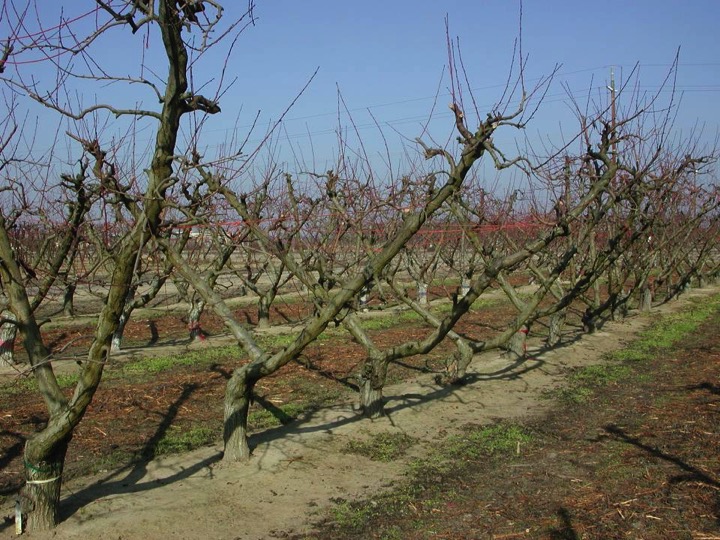
Day has combined his pedestrian orchard with subsurface drip irrigation. The pedestrian orchards are by design kept short so that there is no usage of ladders. Eliminating the usage of ladders can help prevent on the job accidents.

“The pruning lets the tree grow quickly and fill in as quickly as possible in the first couple of years, and then he develops the shape of the canopy and the shape of the leaders,” Phene said.

Photo by Kevin Day, UCANR Cooperative Extension Farm Advisor, based in Tulare County.

2021-05-12T11:05:13-07:00March 14th, 2018|

HR 4760 Must be Opposed

Nisei Farmers League Opposes Congressman Goodlatte’s Bill H.R. 4760

By Manuel Cunha, President of Nisei Farmers League

Nisei Farmers League strongly opposes HR 4760, the bill known as “Securing America’s Future Act of 2018.”

This amended legislation does not deal with the most pressing issues we had with it.  The legislation should not alone deal with agriculture production, but the other industries as well, that are working in our country, our states, our cities, as well as our rural communities.

Those are the people and families we should be trying to help, versus penalizing the employers, penalizing the people that work and provide the taxes, the social security and contribute economically to their communities. Congressman Bob Goodlatte of Virginia, the bill’s author, never worked with local communities and local elected officials, and did not receive input from organizations, such as ours.

The legislation does not adequately address the people and their families who are currently working here. Our workers are not criminals. They should not be involved in the touchback process and should not have wages withheld.

This bill has allotments for guest workers, but doesn’t adequately deal with DACA. Congressman Goodlatte is trying to appease the March 5th deadline on DACA with a half-hearted solution.

Until they sit down with the real people who deal with immigration every day, such as businesses, law enforcement, and churches, NO LEGISLATION LIKE THIS SHALL BE PASSED.

We will do everything in our power to STOP IT!!!!”

For comments and questions, call Manuel Cunha, Jr. at 559-251-8468.

See the Text of HR4760 at this link:

https://www.congress.gov/bill/115th-congress/house-bill/4760

2018-02-23T15:29:35-08:00February 23rd, 2018|

Latino Workers Appreciated on Dairies

Campaign Targeting Latino Community for Dairy Workers

By Patrick Cavanaugh, Farm News Director

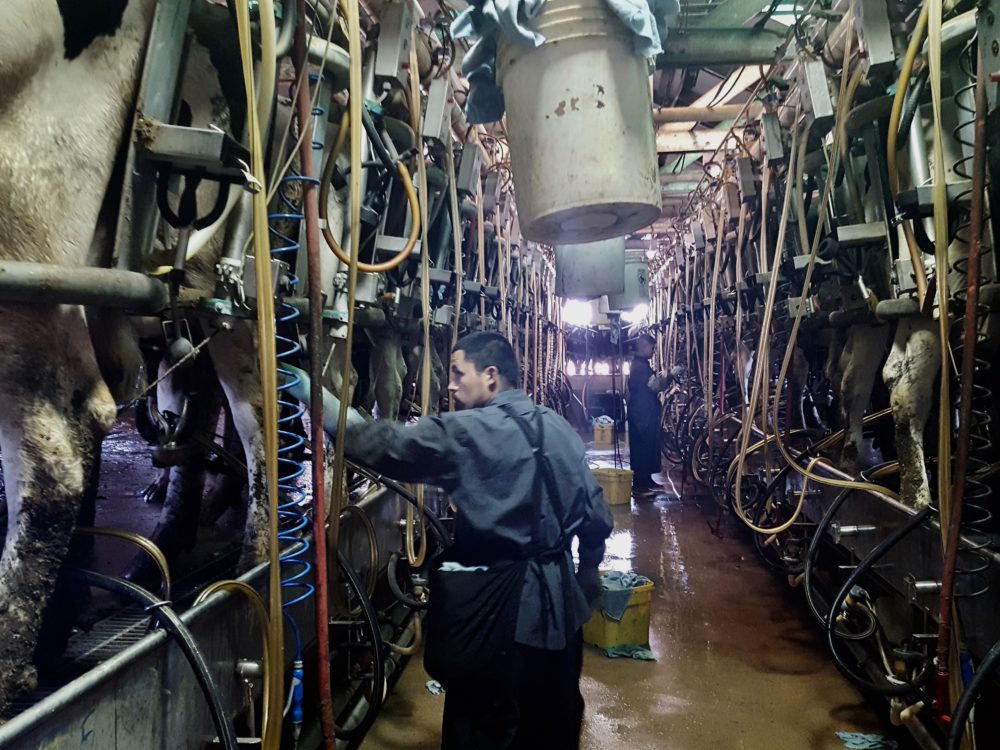
Western United Dairymen, based in Modesto, is launching a Spanish language campaign to educate the Latino community about working for California dairies, according to Anja Raudabaugh, chief executive officer of the organization.

“We’re basically going to be offering a lot of benefits for Latino employees and their families to stay working for dairies or to come to work for dairies,” she said. “We’re going to be doing quite a bit of immigration services, free of charge for those families. We want to elevate the status of women on the dairy farm because they tend to do really well with the cows and the calves.”

The campaign is known as Lecheros Unidos de California.

“We are really targeted and branding, with the dairy community and not just Western United Dairy,” Raudabaugh said.

The campaign will be heard throughout the San Joaquin Valley on Spanish radio and television. The California dairy industry compensates Latino workers well beyond minimum wage to get the work done.

“This is a effort to strengthen the connection that the Latino community has with the dairy industry,” Raudabaugh. “We want them to know that we care for the community and count on them to work in our industry.”


2018-02-06T17:03:01-08:00February 5th, 2018|

Seek out CalAgJobs for Opportunities

Job Possibilities in Agriculture

By Jessica Theisman, Associate Editor

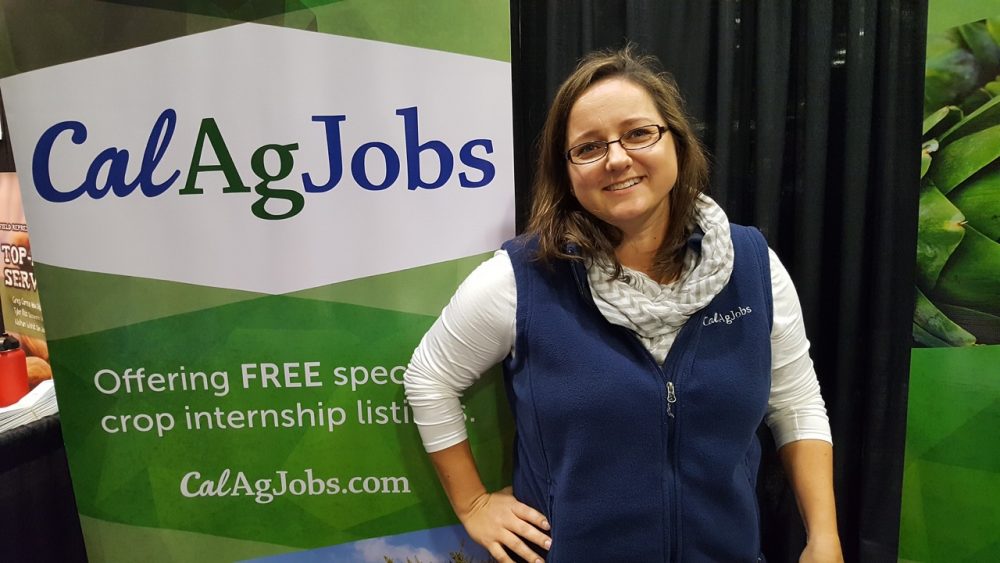
California Ag Today recently spoke with Shannon Douglass, co-owner and recruiter for CalAgJobs. She spoke about the job possibilities in agriculture and the vast amount of positions.

“There are a ton of great jobs in agriculture, especially for people coming right out of school or even those high school students right now that are thinking about what their career options might be after college,” Douglass said.

CalAgJobs wants all to consider the opportunities available in agriculture. Technology is now a huge part of agriculture that is being implemented all over.

“There is a lot of opportunity for people who want to work in food production, that in some ways, that aren’t necessarily in the field. There are a whole lot of people supporting the farmer these days,” Douglass explained. “Not all high paying agricultural jobs require a college degree. It all depends on the goal of the company and the variety of jobs. There is a lot of work in the technical trade field, from welding to any type of mechanist experience. There is also opportunities for those who have production experience but do not have a degree.”

Although you do not need one, having a degree is beneficial for a variety of positions.

“There is a lot of opportunities to people that do have a degree somewhere related to crop or soil science or agronomy,” Douglass said. “All across the spectrum, we have opportunities for people in agriculture with great long-term career opportunities.”

For more information: https://calagjobs.com/

2018-02-06T16:26:41-08:00January 25th, 2018|

My Job Depends on Ag Continues Growth

Decal Sales Go to Nonprofit

By Patrick Cavanaugh, Farm News Director

California Ag Today recently spoke with Steve Malanca, one of the founders of My Job Depends On Ag Facebook group, which he started alongside Erik Wilson. The page was inspired by an economic number that stated that California Agriculture is only two percent of the gross domestic product of the state.

Not want to sit still on what looked like very small contribution to the overall California economy, Malanca, a former equipment salesman, crafted a decal in 2013 with the message My Job Depends on Ag. The idea was to spread the word that agriculture contributes to millions of jobs in the state, including restaurants, banks, clothing stores, supply stores, almond candy manufacturers, tortilla factories and virtually every business in smaller farm communities.

The Facebook page was launched in April 2015.

“It continues to grow,” Malanca said. “It grows in increments of a thousand members every four to six weeks, and we’re reaching 78,000 members in the three-year existence, and the message continues to grow.”

“Our California decal sales are now more than 60,000, and for the third year in a row, through the Central Valley Community Foundation, our profits are going to add more than $20,000 to a nonprofit account in order to continue giving out scholarships for kids.

Malanca’s job definitely depends on ag. He now works at West Valley Almond Huller in Mendota. And he told us about research trying to find a way to use of excess almond hulls. It’s called bio-solarization, which targets the use of almond hulls in row crop applications.

“The idea is to add 10 to 12 tons of hulls per acre on row crop beds, which come in various widths of 60 inches to 80 inches,” Malanca said. “By incorporating a huge amount of hulls over the top couple of inches of that soil, they can then cover it with plastic and create an environment that’s conducive to fumigant application, which kills soil pathogens. The idea is to substitute a chemical fumigant for hulls and accomplish the same goal.”


2018-01-17T16:41:07-08:00January 17th, 2018|

Tom Stenzel Says Produce Safety Critical

California Ahead of the Curve on Food Safety

By Patrick Cavanaugh, Farm News Director

Tom Stenzel, President and CEO of the United Fresh Produce Association, a lobbying group in Washington D.C., recently spoke with California Ag Today about new developments in food safety as well as some recent issues in regards to labor.

“Our industry’s been revolutionized in the commitment to food safety over the last ten years. Everybody from the ground up through the processing facilities … it’s our number one priority. The same time, the feds have these new rules and regulations that are coming out with some compliance states starting now in 2018, so we’re just trying to make sure that it is reasonable enforcement that the Feds understand as they’re looking at farms, looking at processing facilities, that we’re in this together. Ultimately, all of us just want to make sure that consumers have safe food,” Stenzel said.

Stenzel said many producers in California are already ahead of the curve when it comes to food safety.

“I mean, you look at the leafy greens industry on the Central Coast: They’ve been ready for a good while with very high produce safety standards,” he noted. “But … there’s some areas across the country where it’s going to be a little bit more challenging. But that’s OK, too, because everybody wants to raise their game. They want to make sure that we’re doing everything we possibly can to deliver safe food.”

Stenzel noted that labor is a big issue, especially in California.

“The number one issue I’m hearing across the country from fruit and vegetable agriculture is the shortage of labor. Now for us, the solution – it’s going to be two parts. It’s got to be a new future guest worker program, and for that, we really thank U.S. Congressman and Chair of the House Judiciary Committee Bob Goodlatte for raising the issue [and] pushing a bill. It’s not everything we want to see, but at least he’s raising his head on that issue,” Stenzel said. “However, we need to deal with the current workforce.”

“We also need to have a bigger commitment to get legal status for those who are already here. These are men and women who’ve been here for twenty years,” he explained. “This is their home where they have raised their families, they’ve got children who are U.S. citizens and they’re working in our fields. We can’t deport them. That doesn’t make sense as a country and certainly not as an agricultural industry.”


2018-01-16T17:42:29-08:00January 16th, 2018|

Congress Fails on Agricultural Workers

A Failing Congress

 Editor’s Note: This letter was submitted by Manuel Cunha Jr. He is President of the Fresno-based Nisei Farmers League.

Every day, thousands of people wake up before the sun rises, pack their lunches, and drive or carpool their way to work. Some toil underneath the hot sun, while others are inside feverishly packing perishable items to make sure they make their cross country or ocean voyage in time. Six days a week they repeat this routine and how are they rewarded? With the fear that they will not be able to continue this routine.

These are OUR agricultural workers. Who provide us with the safest food that we, our representatives in Washington D.C., and officials in the White House buy at our stores, farmer’s markets, and restaurants.

These workers have children, many born in the U.S., that they must figure out who is going to take them to and from school, practice for sports and other activities, or who is going to care for their child while they’re at work. The same thing that any U.S. citizen parent must figure out.

They pay taxes and Social Security deductions, the latter which they will receive no benefit from.

They are the backbone of an industry where, in California alone, farmers sold almost $50 billion worth of food in 2013. Yet, between 2002 and 2014, the number of field and crop workers in the state declined by about 85,000, leading to a drop in the number of entry-level workers available for difficult jobs like hoeing, harvesting, and planting. While technology is often touted as a cure for every economic ailment, when it comes to delivering California’s crops to the nation’s kitchen tables, there is no app for that. Instead, we need skilled farmworkers, along with smart land and water use, to maintain our agriculture rich history.

On October 2, 2017, Congressman Goodlatte introduced H.R. 4092, it provides a pathway for our undocumented agricultural workers to obtain an agricultural work visa (H-2C visa). It also provides for a system, instead of our broken H-2A program, to bring in more agricultural workers into the U.S. to make up for our shortfall. By October 25, 2017, the bill had been amended to the detriment of our current agricultural workers. There are many flaws with the legislation, especially the deduction of 10% from these worker’s wages which was to be put in a trust account. The purpose of this is to provide “a monetary incentive for H-2C workers to return to their country of origin upon expiration of their visas.” To receive the money that they already earned, they must apply and establish that they have complied with the terms and conditions of the H-2C program. They then have return to their home country to obtain the payment.

Did we not learn anything from the Bracero Program, implemented between 1942 to 1964, that also withheld 10% of the worker’s wages as an incentive to return to Mexico? They never received those wages, and the workers of the proposed legislation may have received the same fate.

The inability by Congress to provide legislation for our undocumented agricultural workers living in the U.S. and a workable guest worker program has led to more members in my industry clamoring for more H-2A workers. This is a betrayal to the hardworking men and women who work for them.

Some have been living and working here for over 25 years, hoping that Congress passes legislation similar to the Immigration Reform and Control Act of 1986 – the last time Congress passed meaningful immigration legislation for our undocumented agricultural workers. Instead of meaningful legislation, some want to give them pink slips. These are skilled, hardworking people that are vital members of our communities and some want to toss them aside. What will become of them, their children, our communities?

Not only has Congress failed to protect our undocumented agricultural workers, but they seek to punish them. Congressman Lamar Smith recently introduced H.R. 3711. The bill would make mandatory and permanent requirements relating to use of an electronic employment eligibility verification system, more commonly known as E-Verify. It is a federal program that allows businesses to check a new employee’s immigration status within a matter of seconds. It will replace the current system, where the new employee fills out Form I-9 and present documents that they are eligible to work along with an identity document. The employer must take the documents at face value.

This would decimate our agricultural workforce, along with the hospitality industry, and in California, the building industry. It won’t just effect businesses, but more importantly, it will hurt families. Families that go to our schools and churches.

It is time for Congress and for all the members in my industry to get behind some of the hardest working members in our society and provide them with legal status. These are the people who make America great!

Sincerely,

Manuel Cunha, Jr., President, Nisei Farmers League

1775 N. Fine Avenue, Fresno, CA 93727

559-287-5610 cell

559-251-8468

2017-12-15T15:14:04-08:00December 15th, 2017|
Go to Top