@AlmondGirlJenny AgVocates on Social Media

@AlmondGirlJenny Urges Everyone in Ag to AgVocate on Social Media


By Laurie Greene, Editor


Digital platforms—not newsprintlead the information superhighway-world we live in. Beyond news websites, everyone in the agricultural industry who is able should engage and agvocate on a few social media platforms such a Twitter, Facebook, Instagram or blogs, according to @AlmondGirlJenny.


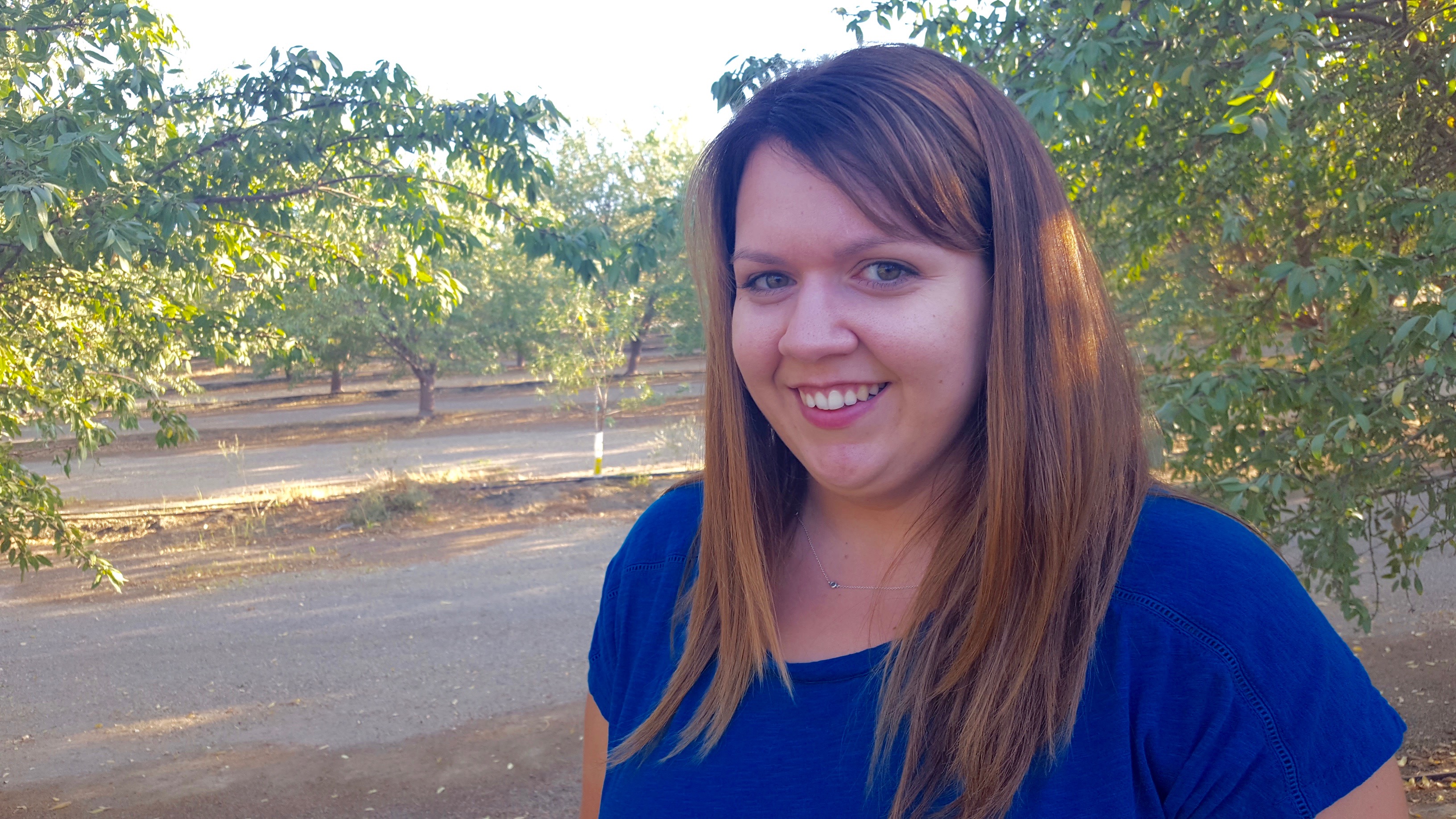
Jenny Holtermann, aka @AlmondGirlJenny, fourth-generation almond farmer in Kern County, is fully engaged with social media. Social media has become the news source for her, her friends and her generation. “I think it’s important to be involved in social media to tell your story,” Holtermann explained. “That’s how people are getting their news; that’s how people are getting their information these days.”

@AlmondGirlJenny is engaged on such social media platforms as FacebookInstagram, Twitter and YouTube.

Tim Holtermann and son, Henry, @AlmondGirlJenny

Tim Holtermann and son, Henry


“It’s critical for us to be out there,” she added, “showcasing what we’re doing and highlighting the benefits of agriculture and how it’s multi-generational, how it’s family oriented. Get people to relate to it and become engrossed in it,” Holtermann said.

Last year a reporter from the Los Angeles Times asked Holtermann about water use in farming almonds. “I was able to set the reporter straight regarding all the myths about almonds and water use,” she commented. “I told her that over the last 10 years, almond growers have reduced their water use by 30 percent and we are working on saving even more.”

Jenny and her husband, Tim Holtermann, have a big story to tell. “I’m a fourth generation California farmer” she began. “My family farms almonds and walnuts in northern California. Then I married a fourth generation California farmer as well.

“We farm together with my husband’s family in the Wasco area. It’s very important to us to care for our land and treat it as best as we can so that it can be passed down to future generations. We’re raising the fifth generation, and we hope that someday, if he so chooses, our son has the opportunity to farm here as well,” she said.

“All of us in agriculture should tell our story,” Holtermann said, so others who are not involved with Ag can learn. “If social media is not your game, hire someone to help you get started.”

Resources:

Bayer CropScience AgVocate

2016-10-19T16:21:47-07:00October 19th, 2016|

Clinton’s Backdoor UFW Endorsement Deal Trumps Farmworkers’ Rights

Assemblyman Patterson Comments on Clinton’s UFW Endorsement vs. Farmworkers’ Rights


By Laurie Greene, Editor


As reported in, “Leaked Clinton emails include pledge to help UFW in fight with Gerawan Farming,” published by the Fresno Bee last Friday, presidential candidate Hillary Clinton, traded support for the United Farm Workers Union (UFW) endorsement and then conspired to undermine Fresno County-based Gerawan Farming and its farmworkers’ rights.

Jim Patterson

Assemblyman Jim Patterson (R-Fresno)


Assemblyman Jim Patterson (R-Fresno) has been supportive of the constitutional rights of farmworkers at Gerawan Farming whose votes cast in a sanctioned 2013 election to decertify UFW representation have never been counted. Under the jurisdiction of the California Agricultural Labor Relations Board (ALRB), the ballots were collected, sealed, and locked away. To date, election results and the location of the ballots are unknown.


In an exclusive interview, Assemblyman Patterson stated:

I think it’s the height of hypocrisy when a candidate for president of the United States goes behind closed doors and makes a backroom deal with an institution that is trying to deny the very privilege of having a free election to decide whether or not [farmworkers] want to be a part of the UFW.

Not supporting or recognizing the Gerawan workers’ right to an election to determine their own future—how they wish to organize, how they wish to value their labor and how they wish to conduct the relationship with their employer through elections—is to me, a slap in the face of the electoral process, of the fundamental constitutional right of everyone to be able to vote and to have a say in their labor and in their future.

alrb_ufw_fwr_logo_frIt also demonstrates just how deep and wide this intertwining web of deceitfulness really is. Of all things, for the democratic nominee for President of the United States to make a deal over something that is happening in Central California, with 3,000 workers who decided that they wanted to have elections?”

After the election, the ALRB took and hid the ballots. The ballots were never counted. Election results were never announced. The election was not the expression of individual farmworkers exercising their right to vote, but considered [by the ALRB] an unfair labor practice.

 [The Democratic nominee] decided to make a deal with the UFW over this. It tells me in no uncertain terms that the revolution that is happening with Silvia Lopez and the Gerawan workers—the independence, the thinking for themselves, the willingness to chart their own course with their employer—is frightening the UFW and the ALRB to its foundations.

To the degree that [the UFW] would literally go into a back room and get a pledge from the democratic nominee. . . Notwithstanding the facts—information about the election, the efforts of the ALRB and UFW to suppress [decertification] elections, and their choices for making decisions themselves. . . but to just simply decide to go low . . . and in this instance, go so low that she would be making a deal to abridgedestroythe fundamental right of an election. That is just unconscionable.

2017-05-10T16:28:50-07:00October 18th, 2016|

Unprecedented CAPCA Conference Attendance!

Agriculture Needs a Hero! Welcome to the Annual CAPCA Conference.


In an exclusive interview at the 42nd Annual California Association of Pest Control Advisers (CAPCA) Conference & Agri-Expo TODAY in Anaheim, CAPCA CEO and President, Ruthann Anderson, shared, “We have had an unprecedented response here at CAPCA.”

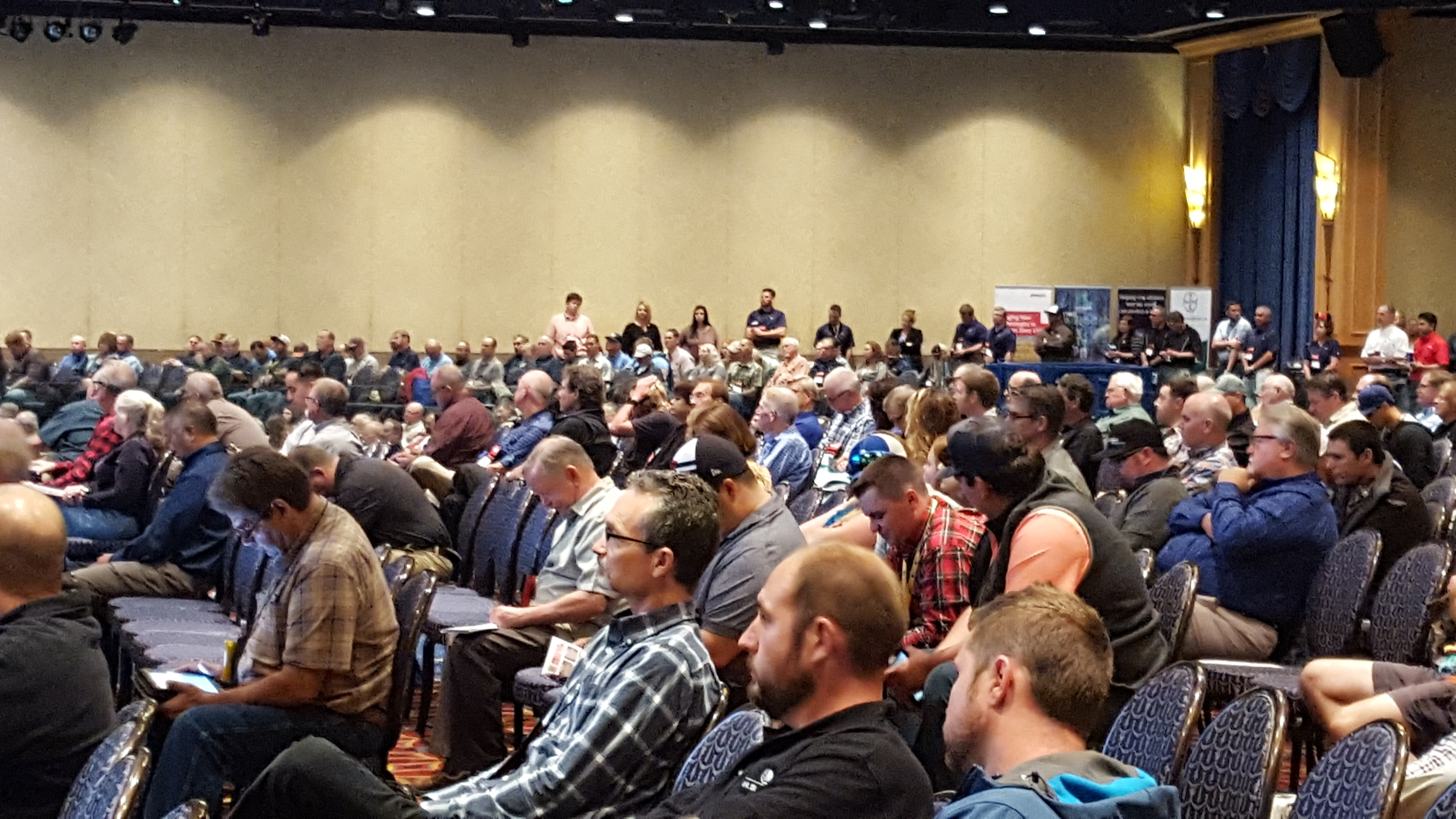
CAPCA CONFERENCE 2016 audience

Ruthann Anderson, CAPCA CEO and President

“Registrations are at an all-time high,” she continued. “We’ve actually sold out the entire show as well as registrations with 1600 attendees. There were just a handful of walkups that we unfortunately just couldn’t accommodate today. We are excited and looking forward to continuing to have a high professional continuing education program as well as an exhibit hall here today.”

“This year’s theme is ‘Fighting the Fear, Feeding the Nation,’ said Anderson, “so we’ll have Captain CAPCA as well as Doctor Foe here this morning.”

Click here to meet Captain CAPCA and Doctor Foe on this CAPCA ‘NEWS’ video!


Anderson reflected, “You know for us, CAPCA really represents the Pest Control Advisors (PCAs) for production ag and turf and ornamental. As a requirement for their continuing education, they need 40 hours in order to renew [their certification]. For us, bringing together continuing education as well as networking is so valuable for them as they move into the new year.”


Some “Top Gun” people speaking this year, according to Anderson, “are obviously some of our main sponsors. Bayer CropScience and FMC Corporation are both doing high-level presentations. We also have Kern County agricultural commissioner Ruben Arroyo talking about the new proposed regulations for buffer zones around schools, so that’s going to be a great conversation starter for all of our members.”


“We appreciate all of the support we receive,” Anderson stated. “It’s so valuable for us. We exist because of volunteers and we exist because of our membership. We are grateful for all of them.”


The California Association of Pest Control Advisers (CAPCA) represents more than 75% of the nearly 4,000 California EPA licensed pest control advisers (PCAs) that provide pest management consultation for the production of food, fiber and ornamental industries of this state.

CAPCA is dedicated to the professional development and enhancement of our member’s education and stewardship, which includes legislative, regulatory, continuing education and public outreach activities.

CAPCA membership covers a broad spectrum of the industry including agricultural consulting firms, U.C. Cooperative Extension Service, city, county and state municipalities, public agencies, privately employed, forensic pest management firms, biological control suppliers, distributors, dealers of farm supplies, seed companies, laboratories, farming companies and manufacturers of pest management products.

2021-05-12T11:05:45-07:00October 17th, 2016|

Despite Great Harvest, California Apple Growers Face Challenges

California Apple Growers Face Regulatory Disadvantage

By Patrick Cavanaugh, Farm News Director


Many California apple growers are in the midst of harvest season right now. Alex Ott, executive director of the Clovis-based California Apple Commission expects a 3% increase in production across the country. Ott foresees a 1% increase in California this season, where apples stand out because of their freshness.

“California is the fifth largest producer of apples in the United States,” Ott explained. “We are about the third largest exporter of apples in the United States. We like to pick, pack and ship. Unlike other states that like to store fruit and have that fruit around longer, California apple growers like to get in and get out,” Ott said.california-apple-commission-logo California Apple

“We have a small marketing window and we pride ourselves on fresh crops,” Ott elaborated. “So we try to get out of the market no later than December. Sometimes we go as late as January, but the idea is to [quickly] fill that niche window between the Chilean and the Washington state fruit.”

Alex Ott, executive director of the Clovis-based California Apple Commission

Alex Ott, executive director of the Clovis-based California Apple Commission

Yet, the California apple industry faces challenges going forward. Ott stated, “Over the last five years, California apple crop production has decreased by nearly 39%. A lot of that has to do with the changing of the crops. Any time you start to see an uptick in another crop, especially when it is not hand labor-intensive like apples, you will see a migration to those types of crops.”

Transitioning toward less labor-intensive crops may accelerate since Gov. Jerry Brown signed AB 1066. This bill will enable California farm employees to accrue overtime pay after working an 8-hour day, instead of a 10-hour day.

“It’s definitely going to be a challenge for California apple growers,” Ott said, especially given the labor shortage. “So apple production in the state will decrease.”

Ott lamented many countries already produce a lot of these other less labor-intensive crops. AB 1066 definitely puts us at a competitive disadvantage in keeping up with demand. The challenge is how can California apple growers compete with farmers in other state and countries who can do it faster and cheaper?

2016-10-14T18:26:24-07:00October 14th, 2016|

FFA Student is Great Reporter

Hughson FFA Student Thrives on Agriculture


By Patrick Cavanaugh, Farm News Director


California FFA Association, a high school youth leadership and career development organization, is very dynamic in the state. FFA chapters are located throughout the state’s agricultural areas. We had a conversation with Michelle Borges, a sophomore at Hughson High School. She is an active member of the Hughson FFA and serves as the 2016-17 FFA Chapter reporter.California FFA student

“My job is publicizing the FFA to everyone in the community. I write articles to the local newspapers. I’m in charge of the social media for Hughson FFA. Basically any radio broadcast, television broadcast, anything like that to get the word out about FFA,” Borges said.

Borges was also active in the 4-H starting at age five. She raised and sold goats, and she is devoted to California agriculture to this day. “One of the reasons why I love agriculture is because both my parents work in the agriculture industry. Both my brothers were super involved in the FFA, so I was kind of born into it,” she said.

Borges noted that while her family does not farm, they are involved in agricultural education. “My dad is the Dean of Agriculture at Modesto Junior College, and my mom used to be an agriculture teacher in high school, but now she teaches junior high,” she said.

While still in high school, Borges wants to continue pursuing her passion for agriculture. “When I grow up, I want to be an animal nutritionist. I’m really interested in nutrition for animals and I have also raised goats. . . ‘Seeing them grow up and then selling them. That whole project; it is really interesting to me. Also, with FFA, there’s a lot of public speaking competitions and I really enjoy public speaking in front of a crowd,” she said.

To hone her skills for that animal nutrition career, Borges plans to go to Cal Poly, San Luis Obispo, after she graduates from high school.

2021-05-12T11:17:11-07:00October 12th, 2016|

California Growers Confront Labor Issues

Labor Issues—Costs and Farmworker Shortages—Challenge Growers

By Brian German, Associate Broadcaster


This year, farmers grappled with labor issues such as shortages and increased labor costs. Some growers had more than enough workers available, while others experienced difficulty in meeting their labor needs. Dave Phippen, co-owner of Travaille & Phippen Inc., a vertically integrated company that grows, packs and ships their own almonds, described some of their struggles with labor this year. “We employ a little more than 50 people year-round, but for harvest we ramp up an extra 15-20 people. There was a squeeze on the availability of the labor and a challenge with what we thought was an acceptable rate of pay,” said Phippen.

almond assessment increaseAs minimum wage increases incrementally every year, growers will struggle to keep up with the higher wages. “There was a new reality in the typical forklift driver, people working in receiving, people sampling,” Phippen elaborated. “We’re paying a little bit more for all of those tasks this year, and because there were more employment [opportunities], it was harder to find people who were available and willing to work.” Phippen also noted that employees “were requiring a greater compensation rate than last year for the same job.”

Travaille & Phippen’s operation has had to reevaluate employee compensation. Phippen explained the principle that as minimum wage increases, compensation rates compress, such that a person who was earning $15 used to be $5 above minimum wage, but is now is only $4 above minimum wage,” Phippen said.

The current federal minimum wage, established in 2009, is $7.25 per hour, up from $5.85 just two years prior. Of the top 10 agricultural producing states in the country, only 4 have minimum wage rates higher than the federal level. California and Massachusetts have the highest minimum wage levels of any other states.

Travaille & Phippen was already compensating a great deal of their labor force above minimum wage; however, to stay competitive and retain their workers, they increased their compensation rates, which caused a ripple effect throughout the supply chain. As their labor costs increased, they had to charge growers more for processing. “It had a big impact on them,” said Phippen, “particularly because those growers are receiving less revenue for their crop this year than they did last year. It was quite a squeeze for our growers and we were caught in the middle of that squeeze,” Phippen explained.

almond-tree-shaking-harvestingLabor issues have also been a significant concern for Mark Van Klaveren, a diversified farmer in Madera who grows almonds, watermelons and Thompson seedless grapes. Van Klaveren noted that timing plays a big role in their labor situation. “Since we tend to pick our Thompson seedless late, when there is a lot of sugar, we were able to get plenty of labor because most of the other vineyards were finished. Their farmworkers were looking for someplace to work.”

Van Klaveren reported that labor proved more challenging for their other crops. “I have a steady crew for watermelons, although with the new laws coming into effect, we are going to have to make some changes and mechanize a lot more of that harvest,” Van Klaveren noted.

Labor costs will become further complicated in the years ahead as overtime limitations established in AB 1066 phase in, beginning in 2019, with all agricultural operations expected to be in compliance by 2025. The combination of increased wages and the limitation of hours will change the way many farms operate. Some growers will increase mechanization. Others growers of labor-intensive crops may replace their crops with commodities that require fewer hours to harvest.

Van Klavern noted, “The only options we have are to mechanize or get out—one of the two. We can’t afford to produce at the same prices we’re getting right now with much higher labor costs. Some machinery out there can do what we need to do and we will look real hard to get some of that in our operation,” said Van Klavern.

An economic analysis conducted by the Highland Economics firm, shows AB 1066 having significant consequences for California agriculture. The study found the policy would reduce farm production as well as farmworker income, and the new time constraints on farmworkers would negatively impact California’s overall economy.

Van Klaveren is skeptical the new legislation will create any positive outcomes. “Workers want to put in the hours. They want to work. If we’ve got to pay them higher wages to start with, and then overtime on top of that after eight hours? There are certain jobs that won’t sustain the higher wages,” Van Klavern said.

In addition to increased costs for employers, increased minimum wage negatively affects workers who are trying to get their foot in the door of a farming operation. When the government raises the entry-level wage so high that people really have to produce a lot per hour, Van Klavern clarified, inexperienced applicants will suffer. “If you cannot produce a volume of work that is worth $15 an hour or more, you cannot work because nobody is going to hire you to lose money,” noted Van Klaveren.

Collectively, farmers are looking at overall labor cost increases between 5 and 15% over the next few years, depending on the crop. Van Klavern expressed a widely-held view that continued government intervention, particularly in the area of wages, is making farming in California unnecessarily difficult. “The whole issue of employment is a private agreement between an employee and employer, as in, ‘I will work for you for so much an hour and try to produce to your expectations.’ In other words, if somebody is willing to work for $8 an hour, why not let them work for $8 an hour? If it is fine with them and fine with the employer, then why not?” said Van Klavern.

The costs of labor and limitations on farmworker hours, combined with the costs of water and increasing environmental regulations, may prove insurmountable for California agriculture. “The economics is all simple, but the government steps in and complicates everything. I guess that leaves it to us to have to figure out how to swerve between all the regulations and stay in business,” noted Van Klavern.

2016-10-07T10:51:51-07:00October 7th, 2016|

Calcot Could Market 70 Millionth Bale this Year

Calcot Ltd. Chairman Talks California Cotton at 89th Annual Meeting

By Patrick Cavanaugh, Farm News Director

Calcot Ltd., a democratically-run cotton marketing cooperative owned by 1,200 select cotton growers in California, Arizona, New Mexico and Texas, held its 89th Annual Meeting in Tempe, Arizona, this week. 

Gregory Wuertz, chairman of Calcot and an Arizona cotton grower, said, “The cooperative started in 1927, and it is just amazing to me that we will reach 70 million bales sometime this year.”

“That’s a lot of cotton if you think about it,” Wuertz said. “And it has a great effect on all the growers. A lot of money has been run through the organization, and we are still doing it.”

Wuertz said Calcot directors are in the field across the western cotton belt, interacting with the industry.

“We have Calcot personnel in each cotton region who are also out in the fields talking to people and bringing up questions. They just don’t stay in their office. We try to get great members, and we work really closely with gin managers and their staff. We want to be on a first-name basis,” he said.

Wuertz noted, “You have to love the lifestyle of cotton production. You get attached to the crop. You plant it in March and harvest it in November. It’s a long-term thing.”

Yet, Wuertz acknowledged, “There are ups and downs. There always are. There is always a new catastrophe because you deal with the weather and the water issues. I think you just build up a little bit of a strength and have tougher skin than maybe some growers have with other commodities.”

Many Calcot growers outside of California are in awe of California producers. 

“California has a lot more regulations,” Wuertz said. “They’re blessed with a really nice climate—just a perfect area. Our climate is a little harsher, but California people work with air quality, labor laws, and their water issues. They have to have a real sharp pencil to make all that work.”

However, Wertz says, California growers always enjoy a better per-pound price for their cotton.

“I think over the years they have developed markets, and because of their climate, they do grow a real [high] quality crop that just demands a higher price. Everybody says there’s no difference, but there is some kind of difference that is just a little better,” he said.

Wuertz explained that the Calcot cooperative is good for growers when it comes to the prices they receive.

“It is the classic cooperative idea,” he said. “It is too risky to try and peak these cotton markets. It is risky to just hold all your cotton and try to peak it at one time.”

“You have to be conservative,” he continued. “Like cotton growers are — very conservative. So you sell some and hold some and seek financing from banks for the short term. We have good tight covenants with the bank, and that’s part of our risk-management policy. We don’t want to speculate, so that is why we sell throughout the year, and we try and watch all those things.”

“We have a very strong relationship with mills and we can sell directly to them, which I think demands more of a premium for Calcot growers,” Wuertz said. “And while most cotton-spinning mills are offshore, we still have a good chunk of cotton going to some very good domestic mills, where they turn out top of the line sheets and higher-count shirts.”

2016-10-05T11:16:36-07:00October 1st, 2016|

First the Feds, Now The State Plans More Water Diversions From Farms

More Planned Water Diversions From Farms to Fish-Not Just by Federal, but Also State Officials

By Patrick Cavanaugh, Farm News Director


California’s State Water Resources Control Board (SWRCB), regulators and environmental organizations want more water diversions to flow into the San Francisco Bay Delta Watershed to help save the declining Delta Smelt and Salmon. They have targeted three tributaries of the lower San Joaquin River; one of which is the Tuolumne River. Phase 1 of the Bay-Delta Plan is a real threat to all Modesto Irrigation District (MID) and Turlock Irrigation District (TID) customers including ag, urban water, and electric.

Coalitions for a Sustainable Delta, water diversionsMichael Boccadoro a spokesperson for the Coalition for a Sustainable Delta, commented on the SWRCB: “They need to be pushed back. They need to be told no.” Boccadoro explained the water in question represents about 400,000 acre-feet taken from communities, businesses and farms. Ironically 400,000 acre-feet is roughly equivalent to the capacity of Hetch-Hetchy Reservoir (360,400 acre-feet) that funnels water, unabated, to San Francisco.

“This is only Phase One of the Boards’ decision,” said Boccadoro. “This is going to eventually encompass the Sacramento River; this is just the beginning. This isn’t by any stretch of the imagination the only potential impact agriculture would feel,” he said.

Boccadoro, like other people in the industry, cannot fathom why the SWRCB needs to take this water when it doesn’t seem to be doing anything beneficial for the endangered fish species. “This issue of continuing to take water that is providing no benefit—or no clear benefit—for fish, while we do nothing [to mitigate] the other stressors that are having a huge impact on the fish, has to stop,” Boccadoro said.

Boccadoro noted, “It looks like Governor Brown has it in for farmers. We have problems with groundwater and increasing water scarcity in the state, and the result of this [plan] would be increased groundwater pumping—until they tell us we can’t pump groundwater. At that point, they are basically telling us, ‘You can’t farm any more.'”

“It’s a huge problem, said Boccadoro. “For whatever reason, it appears that the Brown administration has declared war on California agriculture. Enough is enough. We need to push back hard against the Water Board’s decisions,” noted Boccadoro.

“This is as good a place to fight as any as I can think of,” Boccadoro explained. “We need to start the fight and continue the fight, which is the only way it’s ever going to be turned back. The regulators and environmental groups must address the other stressors [to the endangered species]. Taking water from agriculture has not corrected the problem.

In the meantime Boccadoro hopes the farmers are taking notice. “I sure hope they’re willing to come up here [to Sacramento] and demand that the state not take their water,” he said.

2021-05-12T11:05:46-07:00September 28th, 2016|

Food Tank’s Farm Tank Summit in Sacramento Reveals Knowledge Gap

Food Tank’s 1st Annual Farm Tank Summit in Sacramento Reveals Gap in Agricultural Knowledge

Good Starting Point for Constructive Conversation

By Patrick Cavanaugh, Farm News Director


Several hundred food activists attended the First Annual Farm Tank Summit in Sacramento last week, hosted by Food Tank, in partnership with the Visit SacramentoCalifornia Farm-to-Fork Program, and University of California, DavisDanielle Nierenberg, co-founder and president of Food Tank noted having the event in Sacramento enabled West Coast agricultural experts to contribute to the discussion.

“We were really excited to feature California agriculture, because it’s such a huge part of the American economy,” said Nierenberg. “Californians are feeding the world, and we need to really highlight what these amazing producers are doing. When the Farm to Fork program of the Visitors Bureau reached out to us, we were thrilled to partner with such an amazing group of people, as well as UC Davis folks and the Center for Land-Based Learning,” she said.

Food Tank, an abbreviation of Food Think Tank, is a 501(c)3 non profit organization focused on building a global community for safe, healthy, nourished eaters that values education, inspiration and change.

According to their website:

Food Tank is for the 7 billion people who have to eat every day. We will offer solutions and environmentally sustainable ways of alleviating hunger, obesity, and poverty by creating a network of connections and information for all of us to consume and share. Food Tank is for farmers and producers, policy makers and government leaders, researchers and scientists, academics and journalists, and the funding and donor communities to collaborate on providing sustainable solutions for our most pressing environmental and social problems.

The organization begins with the premise, “Our food system is broken. Some people don’t have enough food, while others are eating too much. There’s only one way to fix this problem—and it starts with you and me.”

Food Tank, Farm Tank SummitWith the goal of feeding the hungry world of nine billion people in a few years, “Food Tank highlights hope and success in agriculture. We feature innovative ideas that are already working on the ground, in cities, in kitchens, in fields and in laboratories. These innovations need more attention, more research, and ultimately more funding to be replicated and scaled-up. And that is where we need you. We all need to work together to find solutions that nourish ourselves and protect the planet.”

Nierenberg clarified, “I don’t necessarily think we need to scale up food production; I think we need to scale out different innovations that are working. We’re wasting about 1.3 billion tons of food annually. That’s enough to feed everyone who’s hungry today, so we don’t necessarily need to ramp up production. We need to have better distribution, and processing practices that can help get food to people who need it the most,” she said.

“We need the political will behind those things,” she continued, “to build the infrastructure necessary for farmers to have better processing facilities, to have better storage facilities, to have better roads—if we’re talking about the developing world. I don’t necessarily think that we need to invest in producing more calories; we need better calories. We need more nutrient-dense food, and we need less starchy staple crops,” she noted.


Editor’s Note: Activists overtook the stage during the event, and the conversation was notably challenging for panelists. In an effort to Cultivate Common Ground to link consumers with the farmers who grow their nutritious food—and vice versa—California Ag Today has chosen to share some interesting statements from presenters and attendees to illustrate, perhaps, where the discussion could begin:

Regarding farms and processing facilities, big is bad, and small is good.

Regarding food quality, organic produce is healthy and safe, while conventional produce is unsafe and full of pesticides.

One of many moderators from the Bay Area, Twilight Greenaway, managing editor of Civil Eats mistakenly introduced Oscar Villegas, Yolo County Supervisor, District 1, as being from Sacramento County. When Villegas corrected her, Greenaway said, “I’m showing my Central Valley and Bay Area eliteness.”

Eric Holt-Giménez, executive director of Food First, noted that farmworkers are invisible in California agriculture. “There is racism in the fields. We need more worker unions and we need farmworkers to be paid much more than they are now and the farmworkers should be getting pensions from the farmer.”

Michael Dimock, president, Roots of Change, said to the audience, “You guys are doing a great job. Keep doing it. Keep working with your NGOs. They know policy. In turn, they can work with the legislators.”

“You need to be in the capital, pursuading the legislatures to support their bills. They want to be reelected, and if they don’t do what we ask them to do, they are scared.”

“In the meantime, we have to be nice to farmers because farmers are scared. We are putting a lot of pressure on them; They are in a vice. Our movement has supported bills AB 1066 – the overtime bill, minimum wage increases, organic farming legislation,  and workers’ rights.”

Kerryn Gerety, founder and CEO, Lazoka, referred to John Purcell, vegetables global R&D Lead, Hawaii business lead, vice president and distinguished fellow, Monsanto Company, and said, “There is an elephant in the room, the Monsanto rep. Monsanto has all the technology patents. We all want transparency and we need you to be more transparent.”

Continuing, “Why doesn’t Monsanto open-source some of your patents and release the intellectual property so others can take advantage of your teçhnology?”

Purcell answered, “We are an Ag company. Why would our company invest a million dollars on technology and let everyone have it? It is our investment and we need to have the opportunity for a return on that investment.

During a panel discussion of food companies including Blue Apron, Almond Board of California, and Bayer CropScience, that covered organics, Jennifer Maloney, food chain sustainability manager, Bayer CropScience, said, “We do support  the organic industry, because we have biological products that work in organic as well as conventional [farming].”

Maloney also talked about agricultural Integrated Pest Management (IPM) technology such as smart sprayers that spray only targeted areas.

Matt Wadiak, founder & COO, Blue Apron, responded, “It’s not about smart sprayers; it’s about biological systems in the field and trying to lean on them instead of spraying.”

Maloney replied, “Yes, that is exactly what IPM is.”

Keith Knopf, COO, Raley’s Family of Fine Stores, commented on the organic question, “the way we see organic versus inorganic—that is not the discussion for us. What’s more important to us is, is it the candy bar or the apple?”


This two-day event featured more than 35 speakers from the food and agriculture field, interactive panels moderated by top food journalists, networking, and delicious food, followed by a day of hands-on activities and opportunities for attendees. This was the second in a series of three 2016 Summits, following the Washington, D.C. Food Tank Summit that completely sold out and drew in more than 30,100 livestream viewers. The third Summit will be held in Chicago on November 16, 2016.

2021-05-12T11:05:46-07:00September 27th, 2016|

Fresno State Launches New Agricultural Leadership Program

Fresno State’s Avery Culbertson Launches Solid Agricultural Leadership Program


By Lauren Dutra, Associate Editor


Dr. Avery Culbertson, who is passionate about agricultural leadership joined California State University, Fresno (Fresno State) in August, in a newly created position to develop an Ag leadership curriculum for the Jordan College of Agricultural Sciences and Technology.

Dr. Culbertson’s interest in Ag leadership was initially sparked by “being a product of National FFA Organization* (FFA). You have a lot of role models and influences around you. You start getting an idea of what Ag leadership is,” said Culbertson.

“After I got my degree in agricultural education and was looking for a job, I met with a colleague who said, ‘There are adult leadership programs around the country, and I want you to start one at New Mexico State University.’”

Having been trained by the California Agricultural Leadership Program, Culbertson was confident that she could successfully launch a program. “They really opened their arms to me,” she commented, “and provided resources. As that progressed, I started defining what leadership was.”

Culbertson asserted, “An agricultural leadership program is not only [about] understanding our industry, but understanding our customer. That became very important to me in and outside of the job. The only way that agriculture can lead in society is by understanding our stakeholders.”

Culbertson thinks it is critical not only to know how to lead—having the skill set to be a great speaker or to be knowledgeable in different fields,” she explained, “we also need to know who we are leading. As I’ve been discussing with my classes right now, leadership is a matter of taking a group of people and accomplishing a collective goal,” she said.


*National FFA Organization (FFA), formerly known as Future Farmers of America, helps students by developing their potential for premier leadership, personal growth and career success through agricultural education.

2016-09-21T10:50:45-07:00September 21st, 2016|
Go to Top