Raul Calvo: Good Employee Communication Shows Respect

Organizations Must Improve Their Culture

By Laurie Greene, Founding Editor

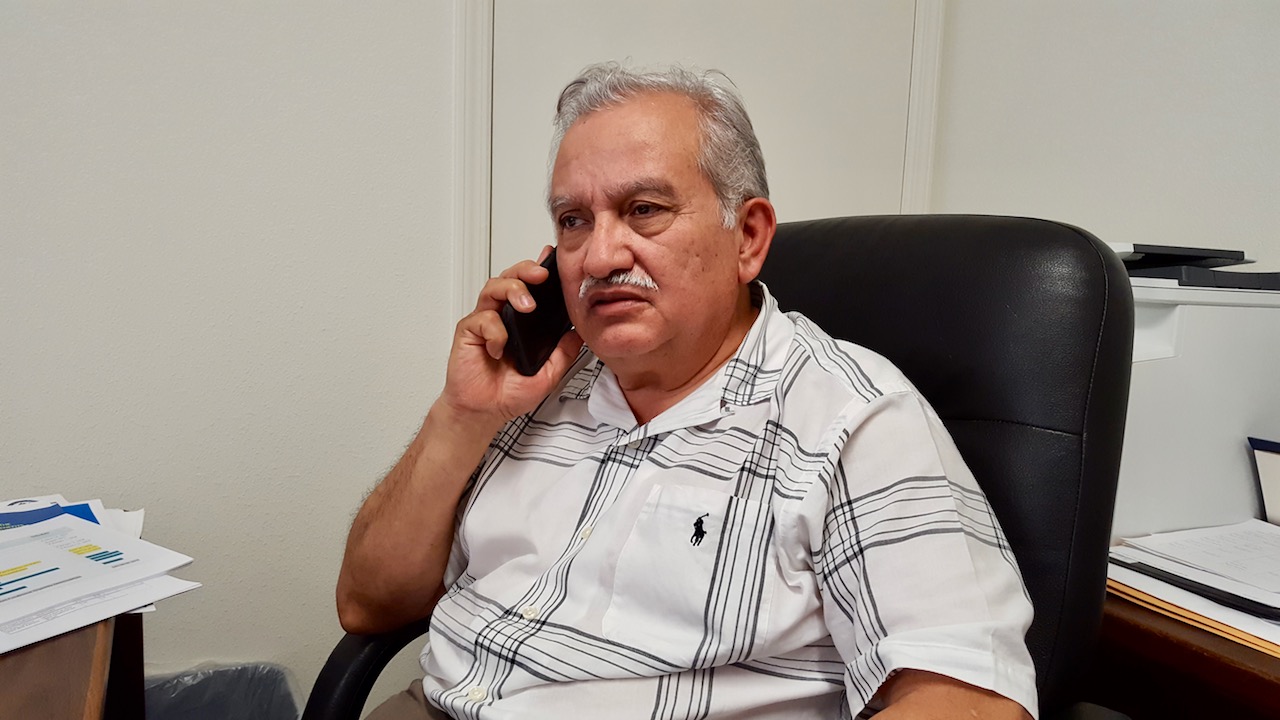
Communicating with employees on the farm is essential. Furthermore, according to Raul Calvo, owner of Employer Services, the manner in which an employer communicates is critical in terms of making employees feel respected.

“The services I provide to employers, including those in agriculture,” Calvo explained, “are typically designed to improve the culture of their organizations by helping them better manage their employees.”

Calvo described himself as “nonstop-busy because as long as companies have employees, there will always be some sort of conflict. And there are certain skills that foremen and supervisors should have to be able to better manage their employees. Unfortunately, the majority of foremen and supervisors are not very adept in those skills, so we work on helping them with those skills.”

“One such skill is conflict resolution—their ability to resolve conflict among themselves, with their employees, and among the employees,” Calvo said.

“Another skill is their ability to manage and minimize favoritism, probably one of the most difficult things to manage. Favoritism causes employees to come to work with this sour taste in their mouths. You know, they’re constantly thinking, ‘Why me?’ ‘Why not me?’ or ‘Why do they only do this?’ So, favoritism makes any little issue or small problem become much bigger because the employees are already carrying this baggage.”

“Third, we evaluate their ability to communicate with employees, which is very difficult.”

Moreover, Calvo believes communicating technical information is exceptionally difficult, “so we work on programs to help supervisors develop that skill. For instance, I’ll see a supervisor talking with an employee about a movie, a TV show, or a sports game they saw, and they’re communicating this vivid information so clearly. But as soon as the supervisor needs to communicate technical information that is required for the employee to be able to do the job, the supervisor stumbles and often says the wrong thing to the employee.”

“Finally,” Calvo said, “supervisors need to meet with their employees on a regular basis—two or three times per week sometimes. Meetings that should take three to five minutes to end up taking 20 to 25 minutes. A meeting that should take 10 minutes takes 40 to 45 minutes because the supervisor does not have the skills to run an effective meeting. So, we put them through the process of running effective meetings and to be quicker and more to the point.”

These are four essential skills that supervisors and foremen need to develop, according to Calvo.

2019-04-22T17:01:52-07:00April 22nd, 2019|

Charlie Arnot: A Better Way to Talk To Consumers About Ag

Listening to Customers Concerns Will Help With Skepticism

By Patrick Cavanaugh, Editor

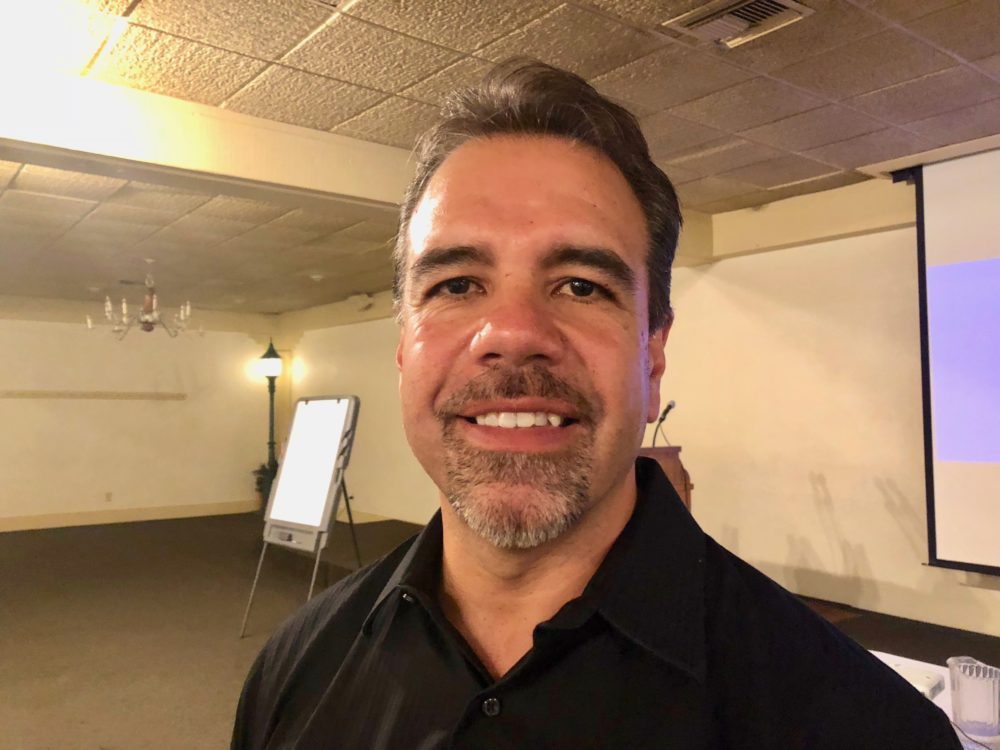
There are biases against large-scale businesses, according to Charlie Arnot, CEO of The Center For Food Integrity. He said that listening to customers concerns will help with the skepticism.

“The fundamental bias we see against size and scale is a belief that the larger companies, the larger entities, will put profit ahead of public interest. We know that’s not true,” Arnot said. “Those of us who work in agriculture … know that the people—the men, and women who work in agriculture—are terrific. They’ve got values that resonate. They’re committed to doing what’s right. But because of the size, the scale of agriculture today, it raises greater questions.”

Charlie Arnot, CEO of The Center For Food Integrity

Arnot explained that this means that the ag industry needs to embrace that consumer skepticism and be willing to address those questions and not be defensive.

“We want to help people understand that yes, the size and scale has changed, but our commitment to do what’s right has never been stronger.

Consider the adage, “it’s better to make a friend than win an argument.”

“And when you get into that conversation, do you want to win an argument or do you want to win a friend?” Arnot asked. “You know, what’s important to you? And frequently if we listen hard enough, we can hear people’s values. We can listen to what they’re talking about and find that place of connection.”

“So when someone says, you know, ‘it makes me uncomfortable to see all the pesticides and the spraying on all the produce in California. I don’t think it’s safe.’ We can either defend pesticides and applications of crop protection chemicals, or we can listen to say, okay, well [what] I heard them say is they care about safe food.”

“Terrific. I care about safe food. Let’s have a conversation about our commitment to safe food as opposed to a conversation about trying to defend pesticides or crop protection chemicals,” Arnot explained.

He said that consumers have many needs when they’re making decisions about food. “Historically, we’ve thought about their rational needs. We’re going to give them information, but they also have social and emotional needs that they’re trying to meet as well.”

“They want to feel good. They want to have that emotional reinforcement [that] they’ve made the right decision for their families. They want to have confidence and feel good [that] they’ve decided to buy food that’s going to be safe and nutritious,” Arnot said. “They want to get that social reinforcement when they bring it out of the bag, when they talk to their friends, when they post a picture on Instagram or Facebook about what they’re doing. They want people to reinforce [that] they made the right choice about what they purchased.”

For more information on the Center For Food Integrity: http://www.foodintegrity.org/


2019-04-19T15:47:57-07:00April 19th, 2019|

65% Percent Water Allocation for Westlands with 163 Percent Snow Pack

Statement on Bureau of Reclamation’s April Water Allocation Announcement

News Release from Westlands Water District

Today, the Bureau of Reclamation announced the water allocation for south-of-Delta Central Valley Project agricultural water service contractors is being increased to 65%. In light of current hydrologic and reservoir conditions, this minor increase is astonishing.

Thomas Birmingham, Westlands Water District’s general manager, stated: “This announcement begs the question, what has to happen before south-of-Delta farmers served by the Central Valley Project can get a full supply?”

With San Luis Reservoir full and flood flows coming, the 65 % allocation was more than disappointment.

Since October 1, the beginning of the current water year, California has been blessed with abundant precipitation; the 2018-19 water year is now classified as wet. As of April 8, the snow water content in the northern and central Sierra Nevada was 160% and 163% of the long-term average, respectively. Storage in every CVP reservoir used to supply south-of-Delta CVP agricultural water service contractors was more than 100% of average for that date. Indeed, these reservoirs were and remain in flood control operations.

Birmingham added, “I know that Reclamation staff understands the consequences of the decisions they make. Reclamation staff understands reduced allocations in a year like this needlessly increases overdraft in already overdrafted groundwater basins. Reclamation staff understands delayed allocation announcements make it nearly impossible for farmers to effectively plan their operations. If Reclamation’s leadership could, they would make a 100% allocation. But Reclamation’s hands are tied by restrictions imposed by biological opinions issued under the Endangered Species Act. These restrictions have crippled the CVP and have provided no demonstrative protection for listed fish species, all of which have continued to decline despite the draconian effect the biological opinions have had on water supply for people.”

Birmingham concluded, “Notwithstanding the restrictions imposed by the biological opinions, Westlands firmly believes that there is sufficient water to allocate to south-of-Delta agricultural water services contractors 100%. Today’s announcement by Reclamation is disappointing for every south-of Delta farmer served by the CVP, and we hope Reclamation will increase the allocation quickly to enable farmers to quit pumping groundwater.”

After 2019, no one will be able to argue that water supply reductions for south-of-Delta CVP agricultural water service contractors are a result of hydrologic conditions. This year demonstrates only too well the crippling consequences of ineffective and unchecked regulations. Because of restrictions imposed on operations of the CVP under the guise of protecting fish, the CVP cannot be operated to satisfy one of the primary purposes for which it was built, supplying water to farmers.

2019-04-18T16:42:08-07:00April 18th, 2019|

Tom Nassif: Ag Immigration Reform is Critical

All Fruits and Vegetables Harvested by Foreign Hands

By Cory Lunde, Western Growers Assoc. Director of Strategic Initiatives and Communications

Recently, Western Growers President and CEO Tom Nassif detailed the critical labor shortages facing American agriculture and laid out the case for agricultural immigration reform before the House Judiciary Subcommittee on Immigration and Citizenship.

In his testimony, Nassif stated that experienced workers are aging out of the agricultural workforce, with few Americans lining up to take their place, despite wages well above state and federal minimums. Farmers in all sectors of U.S. agriculture, especially in the labor-intensive fruit and vegetable industries, are experiencing chronic labor shortages, which have been exacerbated by recent interior immigration enforcement and tighter border security policies.

As a result of the uncertain agricultural labor market, Nassif explained, many American farmers are either shifting toward more mechanized crops or moving their operations to other countries.

“The simple fact is this,” Nassif said, “fruits and vegetables that are eaten in the United States will be harvested by foreign hands.”

He continued: “The simple question for you, as members of Congress, is do you want those foreign hands harvesting your fruits and vegetables to be on farms here in the United States or do you want to see production continue to shift to farms in foreign countries?”

After touching on the existing, flawed H-2A agricultural guest worker program, rife with burdensome regulatory red tape, Nassif outlined a two-pronged proposal for agricultural immigration reform that jointly provides a pathway to legalization for existing farmworkers and their immediate families and creates a more flexible, efficient and market-based agricultural worker visa program to ensure a sufficient future flow of labor.

Nassif concluded that while “immigration can be among the most divisive and difficult to resolve in Washington,” this issue is decidedly non-partisan, as agricultural immigration reform is really about securing the future of American agriculture and, by extension, long-term U.S. food security.

Western Growers appreciates the efforts of Chairwoman Zoe Lofgren and Ranking Member Ken Buck to elevate the dialogue around this vital issue, and we look forward to working across the aisle to advance bipartisan legislation that provides our country and farmers with a legal, stable and reliable source of agricultural labor.

2019-04-16T15:40:09-07:00April 16th, 2019|

Dire Need for Temperance Flat

Temperance Flat Dam Could Minimize the Devastation of SGMA

By Jessica Theisman, Associate Editor

Mario Santoyo, Executive Director at San Joaquin Valley Water Infrastructure Authority, explained the dire need to build Temperance Flat Dam to California Ag Today recently, and the possible consequences if it is not built.

“With the new groundwater sustainability law coming into play, it is going to basically shut down a lot of farming,” he said.

If farmers cannot prove that they are replenishing the amount of groundwater as they are taking out, they are not going to be allowed to use the groundwater pumps.

“With the continuing extraction of our surface water by the environmental community and by governmental regulations, farming in the Central Valley is in for a world of hurts,” Santoyo said.

The Temperance Flat Dam would give the ability to manage the high run-off water that is otherwise lost into the ocean.

“We are losing millions and millions of acre-feet into the ocean that makes absolutely no sense to anyone,” Santoyo explained.

Temperance Flat would provide additional storage opportunities—up to an additional 1.2 million acre-feet—and will allow farmers to have carryover water from year to year. This will carry the farmers through the dry years, and it will give the allowance to stabilize the groundwater condition.

This dam needs funding from federal, state, and local water agencies.

“The JPA that we represent secured 171 million dollars, which is enough money to pay for the environmental paperwork and initiate the engineering,” Santoyo said.

The remainder of the funds has come in chunks from the federal government through the WIIN Act.

“The bulk of it will have to be the end users, the beneficiaries, i.e. the water agencies,” Santoyo said.

Right now, they are working on the process to evaluate the level of investment that they want to partake in.

“The way this project will work is multidimensional. But the key element will be storage management,” Santoyo said.

The investors would be buying chunks of storage cells in that reservoir to manage.

“In some cases, if you have a bad year in which you have water and others don’t, you’d be able to work something out with them,” Santoyo explained.

“Temperance Flat was a part of the focus when the WIN Act was being put together by Senator Feinstein and Congressman McCarthy,” Santoyo said.

The money allocated is enough to keep the project moving forward on an annual basis.

President Trump signed a memorandum a few months ago, however, Santoyo said, “Since I’ve been involved for a longer period of time, unfortunately, that memorandum that was signed in effect really didn’t do anything.”

Federal courts had already ruled previously that the biological opinions needed to be redone.

“All this memorandum did was just accelerate the study of it,” Santoyo explained.

A resolution on the Delta does not look like it will be here anytime soon.

“That’s why I think that if you have an opportunity to do something positive that doesn’t affect usage of the Delta water you should take it,” Santoyo said.

That’s what Temperance Flat does.

“Three billion dollars represents the full construction of the dam,” Santoyo said.This is the targeted budget for the dam. If the funds can be collected and in time, the dam will be fully operational by 2033.

2019-04-15T16:22:59-07:00April 15th, 2019|

Heat Illness Prevention Event April 12 In Easton

Water, Rest and Shade for Heat Illness Prevention

News Release Edited By Patrick Cavanaugh

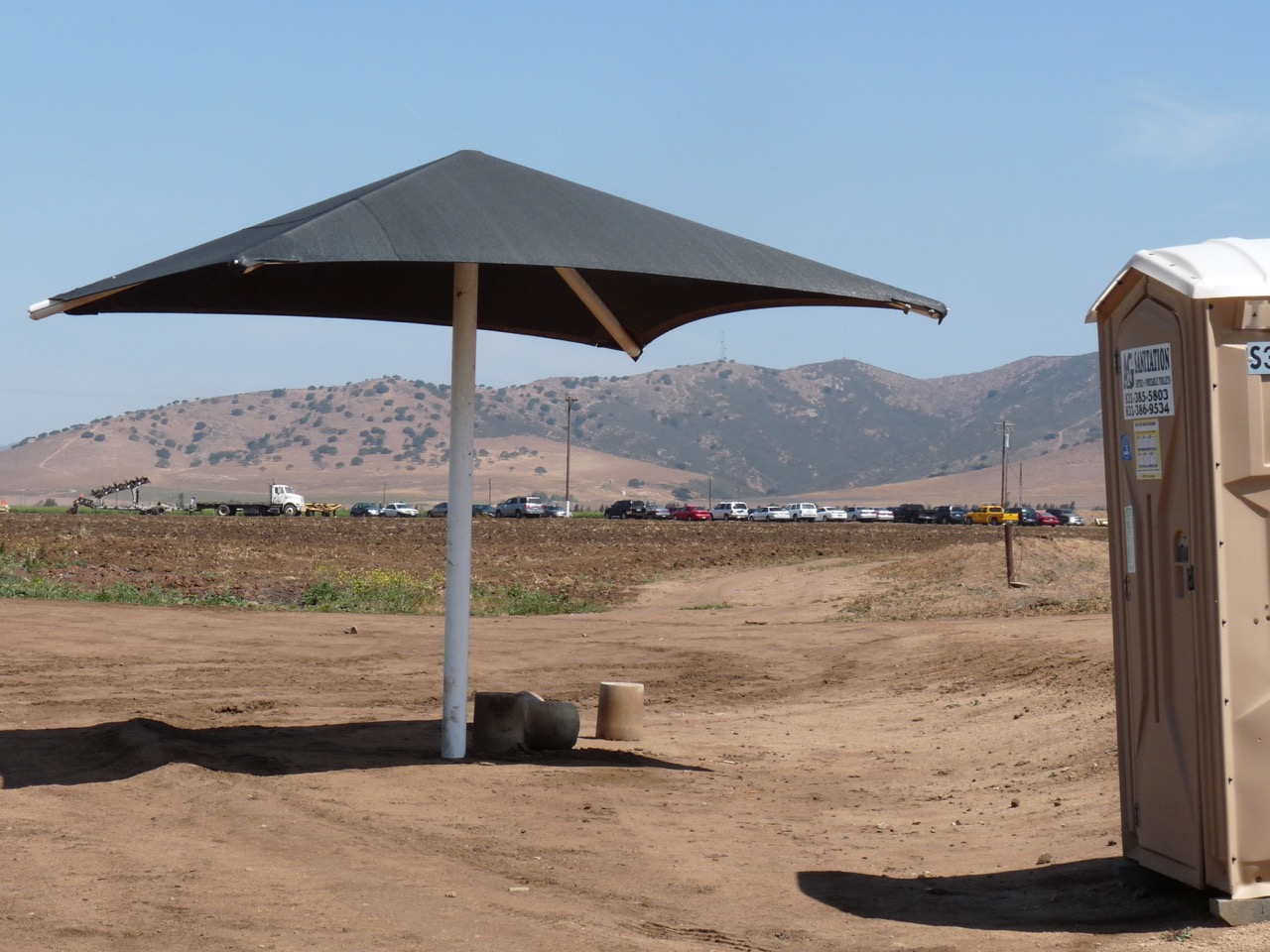
On April 12, a coalition of agricultural organizations will hold two Heat Illness Prevention Sessions in Easton.

Manuel Cunha, Jr., President of Nisei Farmers League, said, “We appreciate the staff and the efforts of the Department of Industrial Relations, Cal/OSHA Consultation with their presentation of the safety message: WATER, REST, SHADE.”

Cunha continued, “the efforts by all our agricultural partners, as well as Cal/OSHA is to educate employers and supervisors about the dangers of working in the heat. We have held many educational sessions, sent out publications, had media events and continue to have ongoing outreach efforts throughout the state. Education is the key to reducing the number of heat illnesses that we see in our fields.”

Attend one of the sessions on April 12 for the latest documents outlining high heat procedures, including additional steps to be taken to ensure our employees’ safety.

Date: Friday, April 12, 2019

Time: Session One in Spanish 10:00 a.m. to noon. Session Two in English 1:30 p.m. to 3:30 p.m.

Place: C.P.D.E.S. Portuguese Hall, 172 W Jefferson Avenue, Easton.

There is no cost for attending these training sessions.

We want to thank our agricultural partners listed below: Nisei Farmers League, Fresno County Farm Bureau, Allied Grape Growers, California Fresh Fruit Association,  African America Farmers of Calif., American Pistachio Growers, California Apple Commission, California Blueberry Commission California Olive Growers Council and Sun-Maid Growers of California.

2019-04-10T16:38:37-07:00April 10th, 2019|

Lettuce Aphids Showing Up on Late Produce

Lettuce Aphid Pressure Has Been Steady

By John Palumbo, University of Arizona Professor/Extension Specialist, Department of Entomology

This season has been a banner year for aphids in the desert.  Aphid pressure has been steady on most crops throughout the spring.  Consistent with the warm weather we have been experiencing lately, Lettuce aphids, Nasonovia ribisnigri, (aka., Red aphid) have shown up in desert lettuce again.

The last time lettuce aphid was this abundant on desert produce was the spring of 2012.  However, in the past couple of weeks, I’ve identified lettuce aphid appearing on both head lettuce and romaine in Roll and Wellton. I’ve also had reports of the aphid showing up in the Imperial Valley.

At the Yuma Ag Center, we began seeing lettuce aphid a couple of weeks ago on untreated lettuce, and they have recently built up to high numbers. Previous experience has taught us that daytime high temperatures in the 80’s are ideal for population growth.  A few things to remember about lettuce aphids relative to the other aphids we commonly see.

First, the immature nymphs are small and have a red appearance, whereas the apterous adults are typically a large brown colored aphid with dark bands running across the abdomen.  Second, among the crops we grow locally, lettuce aphids are only found on the lettuce types(Lactuca spp.)

Lettuce aphids prefer to colonize the terminal growth, and can often be found in heads or hearts, whereas green peach aphids are often found on the frame leaves in high numbers before moving into the heads. Sampling should be focused on the terminal growth of young plants and in the heads and hearts of older plants. Third, they can reproduce prolifically, producing many more winged alates than other species, which can quickly lead to widespread abundance throughout a field or a growing area.  Finally, as the saying goes “he who hesitates is lost”.

If lettuce aphids are found on your lettuce, it is recommended that you respond quickly with an insecticide treatment. The product of choice is Movento at 5 oz/ac. Because of its systemic activity, Movento will reach aphids in the protected terminal growth.

Be sure to include a penetrating adjuvant for best results at a rate of at least 0.25% v/v. It normally requires 7-10 days of activity before a significant reduction in the infestation is observed. For more information on lettuce aphid please refer to Lettuce Aphid on Late Season Produce.   If you’re finding lettuce aphid on organic lettuce, you’re out of luck; none of the registered biopesticides will control this aphid.

2021-05-12T11:01:49-07:00April 9th, 2019|

Winning on Reducing Food Waste Month

In U.S., One-Third of all Available Food Goes Uneaten Through Loss or Waste. 

News Release Edited By Patrick Cavanaugh

Recently, the U.S. Environmental Protection Agency (EPA), the U.S. Department of Agriculture (USDA), and the Food and Drug Administration (FDA) kick off Winning on Reducing Food Waste Month by calling for greater collaboration with public, private, and nonprofit partners as well as state and local officials to educate and engage consumers and stakeholders throughout the supply chain on the need to reduce food loss and waste.

In the U.S., more than one-third of all available food goes uneaten through loss or waste. Food is the single largest type of waste in our daily trash. In recent years, great strides have been made to highlight and mitigate food loss and waste, but the work has just begun. When food is tossed aside, so too are opportunities for economic growth, healthier communities, and environmental prosperity—but that can change through partnership, leadership, and action. Further elevating the importance of this issue, the recent announcement follows a Presidential Message from President Trump acknowledging the month of April as Winning on Reducing Food Waste Month and encouraging public action and participation from all sectors.

“Reducing food waste and redirecting excess food to people, animals, or energy production provide immediate benefits to public health and the environment. I am proud to join President Trump and my federal partners in recognizing April as Winning on Reducing Food Waste Month,” EPA Administrator Andrew Wheeler said. “We are working closely with our federal partners and stakeholders across the nation to reduce the amount of food going to landfills and maximize the value of our food resources.”

“USDA alone cannot end food waste, it will require partners from across the supply chain working together on innovative solutions and consumer education. We need to feed our hungry world, and by reducing food waste, we can more wisely use the resources we have. I am pleased President Trump identified this issue as one of importance, and I look forward to USDA’s continued work with our agency partners at EPA and FDA to change behavior in the long term on food waste,” U.S. Secretary of Agriculture Sonny Perdue said.

“With 1 in 6 people getting a foodborne illness every year in the U.S. and up to 40 percent of food left uneaten, it’s understandable why food safety and food waste are major societal concerns,” FDA Deputy Commissioner Frank Yiannas said. “The FDA is working to strengthen its collaboration and coordination with the EPA and USDA to strategically align our federal efforts between the two issues to better educate Americans on how to reduce food waste and how it can be done safely.”

As part of the month’s observances, on April 9, EPA will host a live-streamed event with USDA and FDA. Additional joint agency actions will be announced at the event regarding the Winning on Reducing Food Waste Initiative. At the event, a panel of food waste stakeholders will share how state and local communities can join the federal government in reducing food waste and loss.

USDA, EPA, and FDA invite public and private partners to participate in Winning on Reducing Food Waste Month through the following:

  • Join the conversation: Share your efforts with the #NoWastedFood hashtag in your social media posts throughout the month.
  • Educate your community: Learn about USDA, EPA, and FDA programs and resources to reduce food loss and waste.
  • Be a U.S. Food Loss and Waste 2030 Champion: Join other corporate and business leaders who have made a public commitment to reducing food loss and waste in their U.S. operations by 50 percent by the year 2030.

The Winning on Reducing Food Waste Initiative is a collaborative effort among USDA, EPA, and FDA to reduce food loss and waste through combined and agency-specific action. Individually and collectively, these agencies contribute to the initiative, encourage long-term reductions, and work toward the goal of reducing food loss and waste in the United States. These actions include research, community investments, education and outreach, voluntary programs, public-private partnerships, tool development, technical assistance, event participation, and policy discussion.

2019-04-08T16:37:18-07:00April 8th, 2019|

Quarantines in Place to Prevent ACP Spread

Quarantines Painful For Some Growers

By Mikenzi Meyers, Associate Editor

It’s been a tough road for citrus growers since the discovery of the Asian Citrus Psyllid (ACP) back in 2012. Those affected have been forced to quarantine their crops, a task that Beth Grafton-Cardwell, director of Lindcove Research Extension Center in Tulare and research entomologist with UC Riverdale, said can be difficult.

“There’s been a lot of discussion about the quarantines because they’ve been painful for some growers who have low psyllid numbers to have to treat them and move their fruit to other zones,” Cardwell explained.

Beth Grafton-Cardwell

The growing concerns have led to continuous research regarding whether or not the zones should be changed.

There have been more than 1,100 citrus trees that have tested positive for HLB. There have been more than 230 positive finds of the psyllid, and although this sounds like a big number, Cardwell said its actually normal due to how difficult the disease is to detect.

“We can’t tell that the tree is infected early on because a localized infection might be on one stem of the entire tree, and it might take a year before it moves throughout the tree,” she said.

Right now, quadrant sampling is being done, where four quadrants of the tree are sampled for the disease. Current samples are showing that one in four quadrants are coming back positive.

“It’s finding the trees that are infected that’s really difficult, and meanwhile, the psyllid is spreading, spreading, spreading the disease,” Cardwell said.


More information can be found at this link:

https://maps.cdfa.ca.gov/WeeklyACPMaps/HLBWeb/HLB_Treatments.pdf

2021-05-12T11:01:49-07:00April 5th, 2019|

Attorney Suggests That Meters Go on Pumps Now for SGMA

Meters Could Help From a Legal Standpoint

By Mikenzi Meyers, Associate Editor

There are different options available to make the implementation of the Sustainable Groundwater Management Act (SGMA) a bit easier on farmers. Lauren Layne of Baker, Manock & Jensen is helping her clients in the Central Valley carry out the SGMA Act in the most beneficial way possible.

“We want to see the Central Valley thrive. So we represent irrigation and water districts who are the local agencies that are forming these groundwater sustainability agencies, and I serve as a council to a number of those groundwater sustainability agencies as well,” explained Layne.

According to Layne, a lot of farmers are considering fallowing certain land to put in recharge projects that will allow them to regulate irrigation, while simultaneously being beneficial to the groundwater basin as a whole.

Layne also highly encourages growers to install meters or transducers to monitor how much water is being used, and what the groundwater table looks like.

“Data is very, very, important from a legal standpoint. It’s important to have the information as a backup for any argument we’re going to make,” she said.

If the cost of installing a meter is an issue, Layne is working on an incentive program that will grant funding to farmers and incentivize them to put meters on.

2019-04-04T16:37:04-07:00April 4th, 2019|
Go to Top