Food Safety Inspections Coming

Operations with More than $500,000 Are First

By Patrick Cavanaugh, Editor

Shelly Phillips is with the CDFA’s Produce Safety Program and supervises four inspectors with the eventual hiring of six more. She spoke about what to expect during a food safety inspection of farm operations at the recent Safe Food Alliance Conference in Monterey.

“These will not be surprise inspections. We will be calling and letting growers know that we want to inspect the operation and scheduling an appointment,” Phillips said.

From that point, an inspector will be following up with the farmer with logistic questions such as: “What are you growing?”, “When are you harvesting?”, and “What is the best time in terms of coming out to the operation?”

The goal is to have the inspection be collaborative between the farmer and inspector. It needs to be done during harvesting and handling conditions.

If an operation is unwilling or unresponsive, there could be an unannounced inspection.

“If we have called a grower three or four times and there are no return calls, and we have tried to reschedule multiple times, we may do an unannounced inspection because there might be a reason for the push back,” Phillips explained.

Also, if there are uncorrected produce safety issues, there could be an unannounced follow-up inspection.

“This will happen if we have been out to a farm under an announced inspection and there have been corrective actions that need to be observed, and there needs to be a follow-up; then there could be an unannounced inspection,” Phillips said. “We can also come out in response to a complaint or a foodborne outbreak investigation.”

Arriving On The Farm

“Let’s say the inspector arrives on a Tuesday … his or her identification will be shown, as well as a notice of inspection,” Phillips said. “They will want to speak to someone who is directly in charge. That person will be a farm manager or food safety manager, instead of someone not responsible for anything on a day-to-day basis.”

The inspector will explain the scope of the inspection based on what the grower is doing on the operation.

“If the grower is harvesting or packing, then we will be looking at that. We also want to see the grower training, [and] health and hygiene records.”

There is no set time length for the inspections, as it will depend on the size of the farming operation, as well as what the farm has prepared ahead of time for the inspector. Being prepared means having all food safety records available, and knowing where all water sources are. Also, if there are many observations that need to be corrected, then that could extend the inspection time.

2021-05-12T11:01:47-07:00July 16th, 2019|

Preparing for SGMA — The Time is Now

It’s Time to Manage Your Water Assets

By Mikenzi Meyers, Associate Editor

It’s time for growers to start preparing for the implementation of the Sustainable Groundwater Management Act, otherwise known as SGMA, and groundwater consultant Chris Johnson is here to help.

Johnson, owner of Aegis Groundwater Consulting based out of Fresno, stressed the significance of farmers instrumenting their wells.

“It’s good for them to be able to manage them as assets, and then the data is important to defend themselves if they find they are being lumped in through SGMA and not being effectively represented,” he said.

Being misrepresented under SGMA can be a result of an “index well” data measurement. Index wells are a method of measuring water table levels in the area. However, their location might differ from where a farmer’s well is—meaning the data may not be indicative of the water the farmer is actually using.

Some growers might be concerned that metering their well may put them at risk of exceeding a pre-established limit, but according to Johnson, the meters provide enough data to prevent this from happening.

“The flow rate from the well not only tells you how it is behaving, but it also gives you another number to evaluate what the distribution and application systems are doing, so it’s a check that is available for them as well,” he said.

2019-07-11T15:56:37-07:00July 11th, 2019|

Citrus Growers’ Response To Huanglongbing

Industry Committee Endorses Voluntary Best Practices

News Release

To provide California citrus growers with a strong toolbox of science-supported strategies and tactics to protect their orchards from Huanglongbing (HLB), the Citrus Pest & Disease Prevention Committee endorsed a set of best practices for growers to voluntarily employ in response to HLB in California.

Adult Asian citrus psyllid, Huanglongbing

Adult Asian citrus psyllid (Photo by J. Lewis). Courtesy of Citrus Research Board

The recommendations—which were developed based on a grower’s proximity to an HLB detection—represent the most effective tools known to the citrus industry at this time and are meant to supplement the California Department of Food and Agriculture’s required regulatory response. The best practices were developed by a task force consisting of growers from various regions across the state and scientists, all of whom were nominated by the Citrus Pest & Disease Prevention Committee.

Voluntary best practices were developed for growers in the four following scenarios:

  • Scenario 1: Orchards outside of an HLB quarantine area
  • Scenario 2: Orchards located between one and five miles of an HLB detection (within an HLB quarantine area)
  • Scenario 3: Orchards within one mile of an HLB detection but not known to be infected
  • Scenario 4: Orchards with HLB

The best practices vary in each scenario but all address: awareness, scouting for the Asian citrus psyllid, controlling Asian citrus psyllids with treatments, protecting young trees and replants, employing barriers or repellents, visually surveying for HLB, testing psyllid and plant material for HLB using a direct testing method like polymerase chain reaction (PCR), and tending to trees’ root health. The voluntary best practices in all four scenarios can be found at CitrusInsider.org.

While HLB has not yet been detected in a commercial grove in California, the disease continues to spread throughout residential communities of Los Angeles, Orange, and Riverside counties. HLB has infected more than 1,400 citrus trees, and 1,003 square miles are currently in an HLB quarantine area.

“Our state’s citrus industry has held the line against HLB since the first detection seven years ago. We should commend our efforts but must not forget the devastating impact HLB could have on our orchards and our livelihood,” said Jim Gorden, chair of the Citrus Pest & Disease Prevention Program and a citrus grower in Tulare County.

“We know the cost to manage the Asian citrus psyllid is far less than any potential costs or loss to the industry should HLB take hold throughout our state. These voluntary best practices are meant to serve as a box of tools so growers can use as many as are feasible for their operation in order to limit the spread of the psyllid and disease,” said Keith Watkins, chair of the task force that developed the best practices and vice president of farming at Bee Sweet Citrus.

2021-05-12T11:01:47-07:00July 3rd, 2019|

Help Avoid Cardiovascular Death—Produce is Medicine

Study: Low Produce Consumption Results in Millions of Cardiovascular Deaths

News Release

Over the last two months, the findings of three major peer-reviewed studies have led the lead authors to the exact same conclusion:  We must increase our efforts to promote produce consumption for the benefit of public health.

The most recent study published in Science Daily found that one in seven cardiovascular deaths could be attributed to not eating enough fruit, while one in 12 of these deaths could be attributed to not eating enough vegetables. Put another way, low fruit and veggie consumption resulted in an estimated three million deaths from heart disease.produce

“Fruits and vegetables are a modifiable component of diet that can impact preventable deaths globally,” according to lead author Dr. Victoria Miller, Tufts University, Friedman School of Nutrition Science and Policy. “Our findings indicate the need for population-based efforts to increase fruit and vegetable consumption throughout the world.”

Another study recently published found that “prescriptions” for healthy foods could save more than $100 billion in healthcare costs.  The healthy foods included fruits and veggies plus seafood, whole grains and plant oils. And the third found that improving eating and drinking habits could prevent one in five deaths around the world.  “Eating too few fruits and vegetables and too much sodium accounted for half of all deaths and two-thirds of the years of disability attributable to diet,” according to this study.

While these findings about the nutritional benefits of produce are significant and dramatic, the three studies simply support decades of research which found that a plant-rich diet leads to better health and a longer life.

This is why the Alliance for Food and Farming (AFF) strongly advocates for consumer choice by working to remove misguided safety fears as a barrier to consumption.  Click here to continue reading or to “Like” or share this blog post.

2021-05-12T11:05:02-07:00July 2nd, 2019|

Friant Water Blueprint Focused on Counties South of Delta

Blueprint Will Help Deliver Message for More Water

By Jessica Theisman, Associate Editor

An important blueprint for the success of farming in the Central Valley is being developed to present to California government officials. This blueprint outlines what must be done to get water to the eight counties south of the delta. The blueprint is a critical step to help keep farmers in business due to the pressure from the Sustainable Groundwater Management Act.

Johnny Amaral is the Friant Water Authority, Chief of External Affairs. Amaral overseas Friant’s engagement with San Joaquin Valley farmers, businesses, and related industry groups regarding water policy and water supply matters as well as legislative lobbying and communications activities.water allocation

“I remember this isn’t just about farmers. This entire Central Valley depends on a functioning water system. Whether you are a farm owner, a farm worker, a city councilman or somebody who works at a milk plant or at a library, it doesn’t matter,” he said. “San Joaquin Valley is in this together, and it is an all or nothing situation. This is being labeled as a farmer-led effort, and it is misleading.”

“This is a very broad coalition of very unusual interests coming together to promote this,” Amaral said.

2019-07-01T14:46:27-07:00July 1st, 2019|

Commentary on Water Issues from Families Protecting The Valley

Unintended Consequences

By Families Protecting The Valley

As Californians endured the drought, they did an excellent job conserving water—maybe too good.  As the article below from Families Protecting The Valley explains, all the low flow toilets, all the 1-minute showers meant less water pushing waste through the sewers.  All that “resulted in corroded wastewater pipes and damaged equipment, and left sewage stagnating and neighborhoods stinking. Less wastewater, and thus more concentrated waste, also means higher costs to treat the sewage and less recycled water for such things as irrigating parks, replenishing groundwater or discharging treated flows to rivers to keep them vibrant for fish and wildlife.”

So now some water agencies are pushing for more outdoor conservation efforts rather than indoor to keep the wastewater flowing.  Adam Link, director of operations with the California Association of Sanitation Agencies asks the key question:  “At what point are you causing more harm than the benefit you are getting from saving those drops of water?”

Another major point we would point out is with the reduced VOLUME of water flows, it has created higher concentrations of pollutants per each gallon of water that gets discharged into the Bay-Delta. With low flow toilets’ rates at 1/2 or lower previous volumes and appliances using less water, all the pollutants that impact fish and people are at double or more on a per-gallon basis getting dumped into the Bay-Delta. Some permit to dump 180 million gallons of sewage water into the Bay-Delta, but the pollutant concentration is double or more.  This makes the pollution from sewage plants going to the delta that much more troubling.

Remember, in 2010, water authorities determined the Sacramento Regional Wastewater Treatment Plant “was discharging too many pollutants into the Sacramento River, threatening public health and harming aquatic life in the Sacrament-San Joaquin Delta.”  The water board found that high volumes of ammonia in the water were disrupting the food chain and endangering fish such as salmon and Delta smelt. Single-celled organisms posed health risks to people who came in contact with the river water.

Wastewater authorities were given until 2021 to remove the ammonia, giardia, and cryptosporidium which endanger fish and humans.  In the meantime, the pollutants keep coming and the policy of cutting off water for farmers is still the favored solution.

This is why farmers are so frustrated.  They see the wastewater situation as the real threat to endangered fish, but water the bureaucrats sole solution to Delta health problems is withholding water from farmers.

More Information at Familiesprotectingthevalley.com

2019-06-26T17:04:54-07:00June 26th, 2019|

North American Climate Smart Agriculture Alliance Looks for Solutions

Solutions From The Land on System Implementation

By Jessica Theisman, Associate Editor

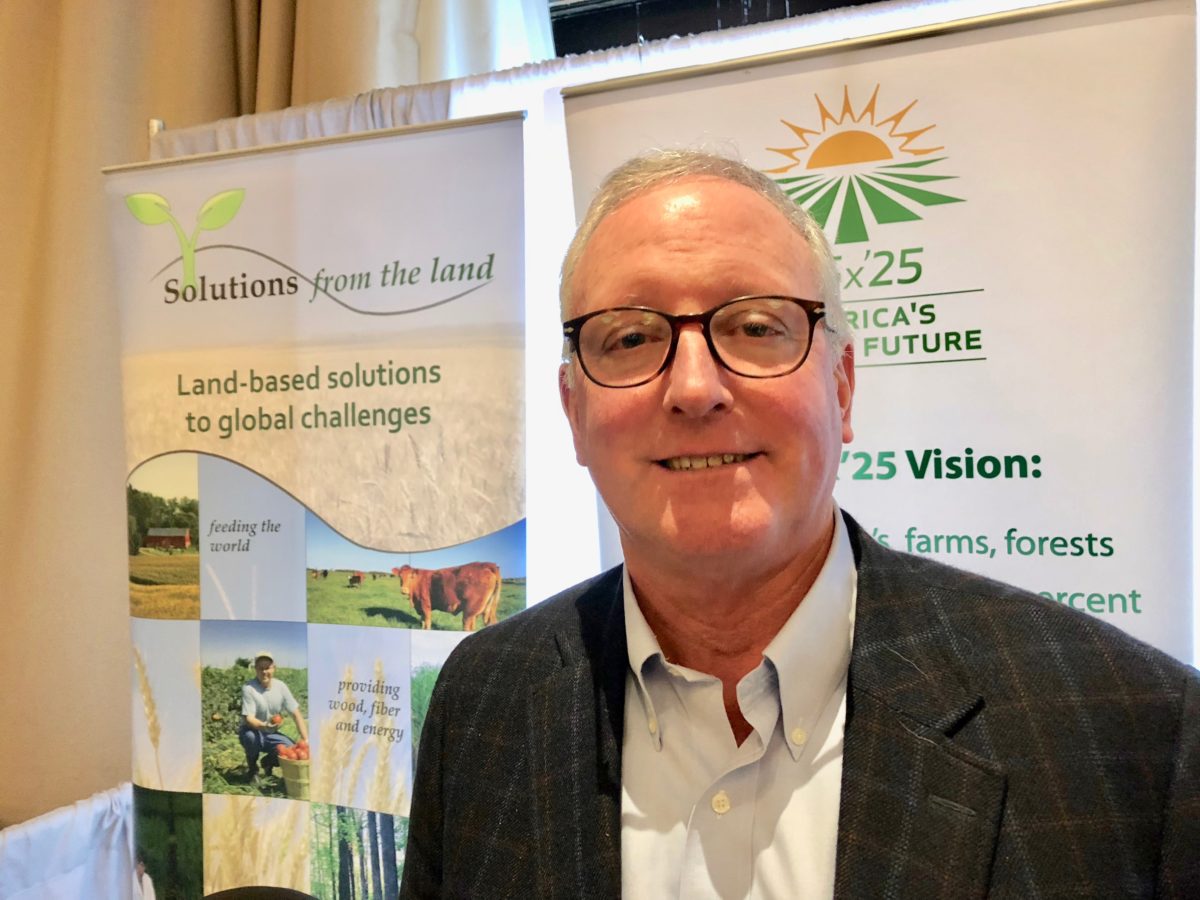
California Ag Today recently spoke with Ernie Shea, president of Solutions From the Land. He explained the importance of system implementation and the North American Climate-Smart Agriculture Alliance.

“Our primary areas of focus at the moment are clean energy, climate change, and soil and water conservation in the 21st century,” he said.

They are integrating these areas of focus and the systems involved. There is still a need to find a solution for profitability.

“The biggest and important areas of focus is finding a way to respond to the changing climatic conditions and deliver solutions that create wealth and job opportunities for agriculture,” Shea said.

North American Climate Smart Agriculture Alliance is looking for ways to deliver solutions.

“We have created the North American Climate Smart Agriculture Alliance, and it is the continental platform for farm and conservation groups that are looking at ways these landscapes can deliver solutions,” Shea explained.

There are conversations taking place at the state level about becoming more sustainable, resilient, and participating in the low carbon economy.

“Carbon sequestration is one of the more exciting new areas of opportunity that are coming for agriculture,” Shea said.

Farming has been framed as a problem in the past.

“Oftentimes, we’re framed as the problem child,” Shea said.

When managing a farming operation, good solid conservation practices are important.

“No-till cover crops are an example that you are increasing the organic content. You are sequestering carbon at a scale that goes beyond what people originally gave us credit for it,” Shea explained.

Well-managed agricultural systems help on many levels. In the upper Midwest, there are continuous corn operations, even no-till corn operations.

“They were measuring the carbon content in the first meter, and they weren’t realizing that the root systems, we’re pulling carbon down well below one meter down to two meters in deeper,” Shea said.

These monoculture landscapes are labeled as something bad. This landscape, in particular, was a critically needed solution. Well-managed agricultural systems can deliver food, feed, fiber, energy, and environmental services.

“If we can figure out a way to create a monitoring and measuring system, then 21st-century agriculture will be seen as solutions, not defined as problems,” Shea said.

2021-05-12T11:05:03-07:00June 25th, 2019|

Elaine Trevino Given USDA Appointment

Almond Alliance President Appointed to USDA Agricultural Trade Policy Advisory Committee 

News Release

USDA Secretary Sonny Perdue and United States Trade Representative Robert Lighthizer have appointed Almond Alliance President Elaine Trevino to the USDA Agricultural Policy Advisory Committee for Trade.

The Agricultural Policy Advisory Committee provides advice and information to the Secretary of Agriculture and the U.S. Trade Representative on the administration of trade policy, including enforcement of existing trade agreements and negotiating objectives for new trade agreements.almond crop

“I am honored to be appointed to this prestigious agricultural trade policy committee,” Trevino said. “Given the almond industry’s dependence on global trade health, this position is an important one to ensure there is a continued strong presence at the table for California almonds.”

Congress established the advisory committee system in 1974 to ensure a private-sector voice in establishing U.S. agricultural trade policy objectives to reflect U.S. commercial and economic interests. USDA and the Office of the U.S. Trade Representative jointly manage the committee.

2019-06-19T22:50:19-07:00June 18th, 2019|

Rep. Josh Harder: Trade War With India Must End for Almond Industry

India is Top Export Destination for Almonds, Worth $650 Million Annually

News Release

Representative Josh Harder (CA-10) released the following statement after India imposed retaliatory tariffs up to 70 percent on American products, including almonds. Rep. Harder’s district is one of the largest producers of almonds in the country, and India is the top export destination for the product.

Josh Harder

Josh Harder

“This trade war has to end. The president is shooting from the hip on his trade policy and it’s Central Valley almond farmers that are left holding the bag. India is our top export partner and we just can’t afford to take this hit. I’m going to continue pushing the administration and the USDA to stop this devastating cycle of retaliatory tariffs. We need to be supporting our farmers, not cutting off our markets and depressing our economy.”

According to the United States Department of Agriculture (USDA), the United States exported over $650 million worth of almonds to India in 2018.


2019-06-18T20:59:02-07:00June 18th, 2019|

Solutions From The Land: Improving Soils for Increased Production

High Demands for Sustainability Call for Solutions from the Land

By Mikenzi Meyers, Associate Editor

With an increasing population and fewer resources, the agriculture industry is under increasing pressure to remain sustainable. Solutions from the Land is meeting this challenge head-on by examining more progressive ways to produce.

Solutions From The Land is a farmer-led platform that advocates for multiple solutions towards well-managed agricultural landscapes that can still meet the demands of an increasing population.

Ernie Shea, president of Solutions From The Land, is optimistic about California agriculture’s future.

“We’ve had significant investments in technology and infrastructure that have allowed the systems to deploy at a scale, but more than anything, we’ve had progressive leaders that have helped to champion this cause,” he said.

One of the pathways Solutions From The Land is working towards is soil health programming. Through this, farmers are improving the organic content in their soil and soaking up leached water.

“They’re sequestering greenhouse gases and delivering global solutions,” Shea explained.

The organization has partnered with the California Department of Food and Agriculture and encouraged government leaders to endorse soil health programming in hopes that they will help farmers adapt to changing climatic conditions.

“We hope someday we’ll add economic value to the carbon that we’re sinking and reward the producers for it,” Shea said

2021-05-12T11:05:03-07:00June 18th, 2019|
Go to Top