Fight Against SB1
|
|||
|

|
|||
|

WASHINGTON – Representative Josh Harder (CA-10), alongside Senator Dianne Feinstein (D-CA) and Representatives Jim Costa (CA-16), John Garamendi (CA-03), and TJ Cox, (CA-21) released the following statement in advance of Governor Gavin Newsom’s veto of SB1.

Congressman Harder
“While we support the objectives of SB1 – to protect clean air, drinking water, and our environment – the bill as written would jeopardize those very goals. It is critical that all Californians, especially those in our disadvantaged communities, have a reliable supply of clean, fresh drinking water, in addition to water for our environment and essential agriculture industry. We applaud the Governor’s leadership in vetoing this bill, and his efforts to solve California’s difficult water challenges with solutions that meet the needs of the 21st century.
“Working together with all water users provides the best hope for avoiding endless litigation on the management of California’s water supply. We know this through experience. Continuing the collaborative process put in motion by the Governor can result in improved habitats and protect fish and wildlife species, while also ensuring improved water supply reliability for our communities and family farms across California.”
American Pistachio Growers’ (APG) efforts to reduce or eliminate trade barriers in several key overseas markets have been a significant boon to pistachio exports and to growers’ bottom-line. A new study, “An Analysis of the Effects of the American Pistachio Growers’ Program to Reduce/Eliminate Tariffs on U.S. Pistachios,” has quantified, for the first time, the direct benefit to the U.S. pistachio industry from APG’s strategic program to vanquish trade barriers.
The analysis from Dr. Dennis H. Tootelian, an emeritus Professor of Marketing, sought to determine what shipments of U.S. pistachios would have been if tariffs had not been lowered or eliminated in Israel, Mexico, China and Hong Kong, and the European Union which are the export markets prioritized for focus by APG. Many of his analyses centered on the period from 2009 through 2017 — the period in which tariffs were reduced in all five geographic areas.
Tootelian’s study showed that actual shipments of U.S. pistachios after the tariffs were reduced or eliminated for each export market were more than 2.3 billion pounds greater than what would have been expected had the tariffs remained in place. Equated in economic terms, the boost in export volume after the trade barriers had been removed amounted to nearly $3 billion greater value than what would have been expected had the tariffs remained in effect.
While Tootelian did not have any prior expectations of what his study would show, he was surprised by the findings.
“To see this kind of an increase in shipments on a before and after basis with the tariffs did surprise me. I did not expect this kind of result in the marketplace. These are not small numbers,” Tootelian said. “What the data tell me is that there is latent demand for U.S. pistachios and once the tariffs come down, foreign markets want to buy them.”
Tootelian said the projected economic boon to U.S. growers is even more profound if the fluctuations in prices in China and Hong Kong were eliminated from the analysis.
“If you take the price fluctuations in China and Hong Kong out, the increase in value of pistachio shipments amounts to nearly $355 million more dollars per year — nearly $4.5 billion in total from the time when tariffs were in effect to after they were reduced or eliminated,” said Tootelian.
Data from the analysis estimated that more than 1.7 billion pounds of U.S. pistachios in total, or an average of more than 192 million pounds annually, may have gone into storage if they were not diverted to other markets. While the effect of the projected added supply on the world market is unknown in terms of lower prices, Tootelian said that it would surely have had a detrimental impact on U.S. growers.
“It is unknown what that would have done to the price,” he said. “In order to divert from storage and into other markets, prices probably would have had to come down considerably and whether they would have been able to market that much supply is an unknown.”
Underlying Tootelian’s analysis is the fact that price is not the sole determinant of the volume of U.S. pistachio exports. He said when tariffs are lowered or eliminated, traditional economics would dictate that increased shipments would lead to lower prices, but his data show demand for U.S. pistachios in some key markets remained high in the post-tariff era. Several factors, he said, appear to be in play.
“One is the reputation of U.S. pistachios, which carries a very positive market image with consumers and importers. Second, it could be the quality of the product is better or more consistent, or both, for what consumers can buy from other countries,” said Tootelian. “And third, there are a lot of reputable health studies that show nuts are healthy and nutritious. APG has invested considerable resources raising consumer awareness of the healthful attributes of pistachios, and consumers appear to be willing to pay a higher price. That is pretty clear from the data.”
APG has aggressively worked in the halls of Congress, with U.S. trade officials and with foreign governmental bodies to alleviate burdensome trade barriers and create a more open market for U.S-grown pistachios.
“Quantifying the value of APG’s efforts to growers has been difficult up to now, but this new study gives us some tangible answers to the importance of the work we are doing on behalf of the U.S. pistachio industry,” said Richard Matoian, APG’s executive director. “Frankly, we were quite surprised at the magnitude of these numbers. It’s our strong belief that whenever and wherever trade barriers exist to the free flow of American-grown pistachios around the world, we will confront them vigorously.”
In a postscript to his analysis, Tootelian added, “If I were a grower, I would be encouraging APG to be doing this more in other markets because the greater the demand there is for the product, the less goes into storage and that helps boost the price.”

AgTech Insight LLC, Salinas, CA and Agritecture LLC, Brooklyn, NY are excited to announce the formation of a strategic alliance between the two firms. In its simplest form, AgTech Insight will advise and provide services to Agritecture clients in the large scale outdoor agriculture industry while Agritecture will advise and provide services to AgTech Insight clients in the urban agriculture space. The focus of the mutually beneficial effort is aimed at improving both the firm’s capabilities across a broader array of services for clients in the ag sector globally.
Aaron Magenheim, Founder of AgTech Insight stated that “The urban and indoor Agriculture space is rapidly growing around the world and collaborating with Agritecture, given their leadership in their industry sector and global vision using innovation and best practices to help a growing population is a natural fit! Over the past year, it has been great to work with David Ceaser and the Agritecture team sharing our expertise and working on projects together. There is a unique resource we have been developing together which we will be sharing with the world soon and are excited to be working together to bridge the Urban and large scale agriculture sectors!”
David Ceaser, Agritecture horticultural specialist said, “Agritecture is very excited about our collaboration with AgTech Insight. Urban and Peri-urban farming is generally smaller-scale agriculture and focuses on smaller more niche consumer markets. But, as far as farming goes, there is no reason to re-invent the wheel. There is a ton that we can learn from large scale outdoor ag. The vast amount of experience and knowledge that Aaron and his team bring to the table is invaluable for us.”
AgTech Insight is a global leader in full-spectrum agriculture technology consulting services. We have an elite team of subject matter experts around the world, each of whom has a unique skill set to help our clients execute both short and long-term strategies. We deliver distinctive consulting and advisory expertise to a variety of companies and large corporates, governments, investors, farmers, industry leaders, and more. Our team tracks over 3,000 digital AgTech companies around the globe and get past the smoke and mirrors to work with real companies to make a huge impact on the world’s food supply. In 2014 we saw the Agriculture and Tech industries starting to collide and were inspired to start AgTech Insight as a bridge to help these two very different industries collaborate. We specialize in sharing deep, on-the-ground experience in the emerging AgTech space that is necessary for success in this evolving industry. –http://www.agtechinsight.com/ Solutions@AgTechInsight.com
Agritecture Consulting provides a comprehensive approach to CEA project development. In operation since 2014, Agritecture has helped more than ninety organizations determine the feasibility of their ideas, validate their business strategies, recruit talent for their projects, and manage operational challenges. Our job is to jumpstart your knowledge of CEA, help you navigate barriers to entry, make industry connections, and mitigate risk. Our consulting services are backed by several years of operations data and a team of
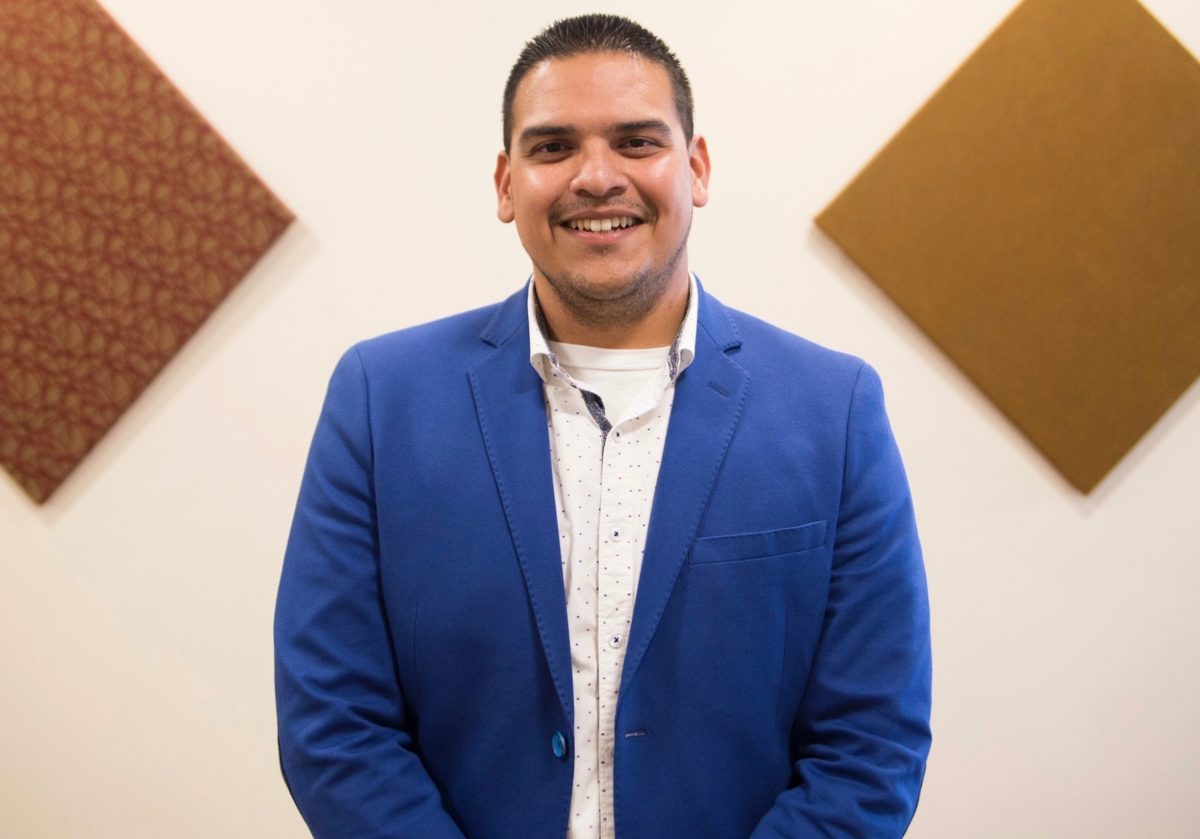
Jesse Rojas is the CEO of the Redd Group based in Bakersfield. “In essence, the Redd Group primarily offers labor management consulting, primarily in agriculture. But in general, what the group provides is everything from improving your employee relations by using and implementing new methods of communications.
Union avoidance is a big part of the Redd Group’s work to helping companies and employees know their information, their rights under the NLRB and also the ALRB to avoid unionization. “However, at the same time, we want to improve human resources departments and management. We also offer training and leadership development for supervisors and middle management and upper management within companies,” Rojas said.
“We also handle the aspect of properly enforcing arbitration agreements and those type of issues, and anything related to HR and labor relations and labor management,” said Rojas. ” I grew up in agriculture, and I love this industry. I love the people behind it, and that’s where I’ve been focusing the most with the Redd Group, which is labor management in agriculture.”
UFW Still up To There Usual Business
“The UFW is still trying to unionize employees wherever they can. But, they’re resorting to a different type of tactic in terms of organizing employees because they don’t have much relevance or positive things to offer employee anything that would attract them to join the union,” said Rojas.
“They’re resorting to their friends at the ALRB, and the legal process, to push themselves on companies. In terms of the ALRB, we thought that they would change after the big corruption deal and violation of rights that they did at Gerawan. But it seems like the ALRB is just back to business as usual,” noted Rojas
The latest situation is that Governor Gavin Newsom recently appointment Barry Broad to an ALRB board position. Broad is an attorney by training, and he has spent most of his recent career as a union lobbyist in Sacramento, primarily with the Teamsters Union.
“He’s a 100% pro-union big labor guy,” said Rojas. “My concern is he still doesn’t have any experience in agriculture or labor relations with farm employees. So, based on what he’s been doing in Sacramento, which is lobbying for big labor for unions, I can’t see and expect any non-bias from him,” explained Rojas.
Many do not expect that ALRB in California to change their tactics. The ALRB is expected to have farmers on the board so that there is a more balanced approach to decisions. “If they didn’t want to have a farmer or someone who is in the interest of the agriculture industry. At least put an actual employee who’s been in the farms, who understands what they need, what they want, their rights, their work, which is what this agency is supposed to do,” he said.
Farm employees need to be involved in the structure of how things happen in Sacramento. Many times its just big special interest employees that make the decisions up in Sacramento. It’s about time real people, real citizens, actual employees get involved in the process, and they have a say of what’s going on.
For more information on the Redd Group go to www.reddgroup.org

This week the Assembly will consider Senate Bill 1 by Senate Pro Tem Toni Atkins.
SB 1 proposes dangerous changes to how the state implements the Endangered Species Act (ESA) and will have devastating impacts on how water is managed in California.
The bill seeks to preserve environmental regulations against perceived rollbacks by the Trump Administration by empowering state agencies to immediately adopt the “baseline” standard in place before January 19, 2017 (the day before President Trump was inaugurated).
As currently written, SB 1 would lock in the existing biological opinions that determine how much water must flow out of the Delta to protect native fish species. This directly influences how much water is available to ALL water users south of the Delta.
The State and Federal agencies are currently in the process of updating the biological opinions, which will result in lower flows and more water for communities and agriculture. But, by locking in the existing biological opinions, SB 1 prohibits State from using the best available science to manage how water moves through the Delta.
Recent amendments do not go far enough to address the ESA provisions.
California Citrus Mutual and many other agricultural and business-sector groups have proposed constructive amendments to address these concerns. The Pro Tem’s office, however, did not make substantive changes to the bill before it was passed out of the Assembly Appropriations Committee on Friday despite pressure from the Governor’s Office.
The Legislature will adjourn next Friday and it is imperative that SB 1 be amended THIS WEEK.
We are calling on our Assembly Members and Senators to urge the Senate Pro Tem to accept amendments to the ESA section.
Please click on the link below to send a letter to your representatives asking them to support amendments to the ESA section in SB 1.
So over the last 50 years, there have been enough violations of public trust by all kinds of institutions, be they government, be they religious institutions, educational institutions, dating all the way back to 1968.
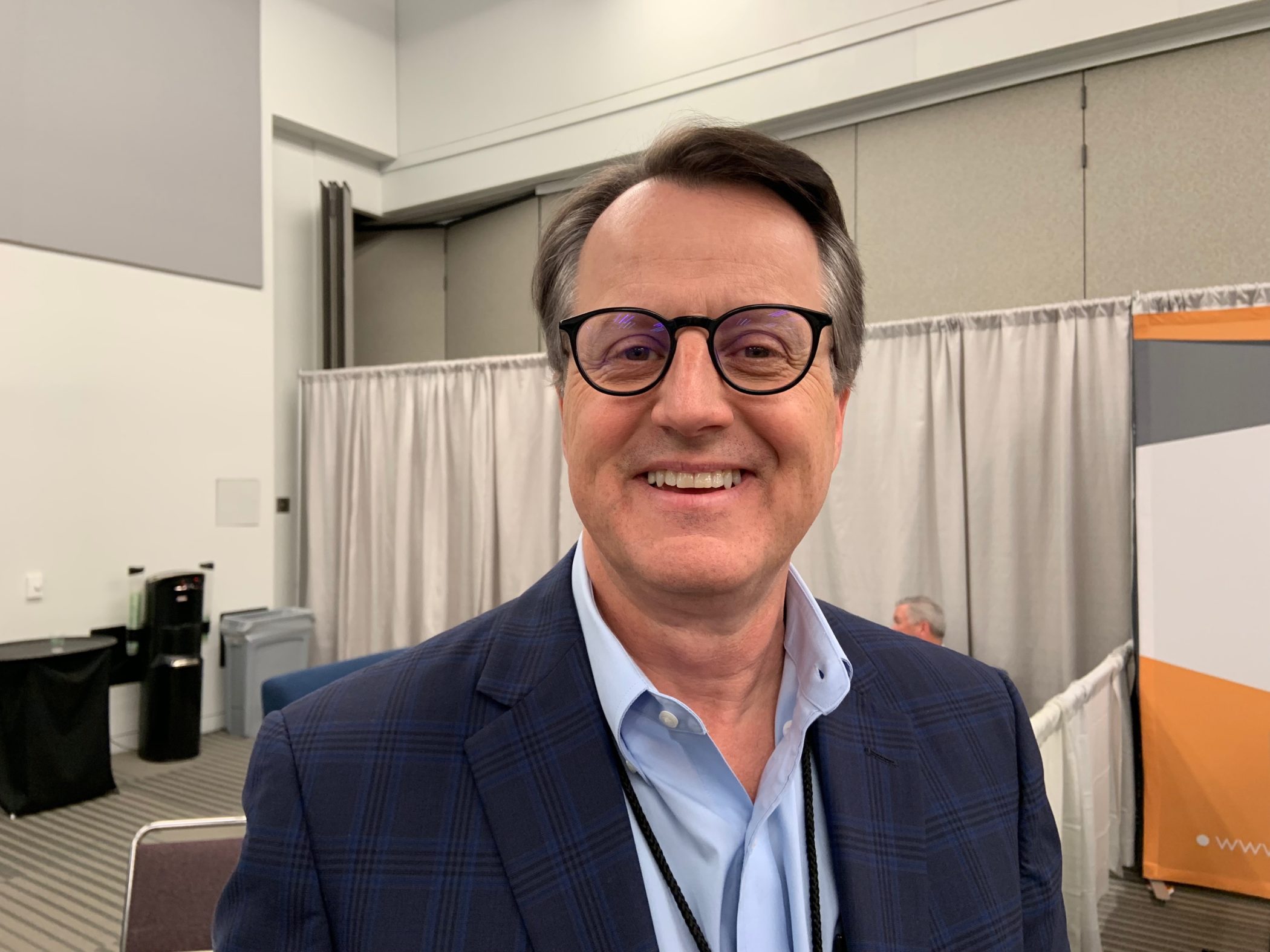
Charlie Arnot is the CEO of The Center for Food Integrity.He said consumers have questions about food — where it comes from, who’s producing it and how. Their healthy curiosity and skepticism is why The Center for Food Integrity exists.
“As a society, we’ve been conditioned to be skeptical about whether or not institutions are worthy of trust,” said Arnot. “Over that same period of time, we’ve seen phenomenal consolidation integration and the application of technology in agriculture, which results in food being safer, more available and more affordable than it’s ever been before.”
“It really is a marvel, but yet in now causes people to think of the food system as an institution and therefore really questioned whether or not we’re still worthy of trust,” noted Arnot.
Arnot explained the fundamental bias we see against size and scale is a belief that the larger companies, the larger entities will put profit ahead of public interest. “We know that’s not true. Those of us who work in agriculture know that the people, the men and women who work in ag are, are terrific. They’ve got values that really resonate. They’re committed to doing what’s right. But because of the size of scale of agriculture today, it raises greater questions,” he said.
“So what it means is we have to embrace that consumer skepticism and be willing to address those questions, not be defensive and help people understand that yes, societal scale has changed, but our commitment to do what’s right has never been stronger,” noted Arnot.
For more information on The Center for Food Integrity click here.
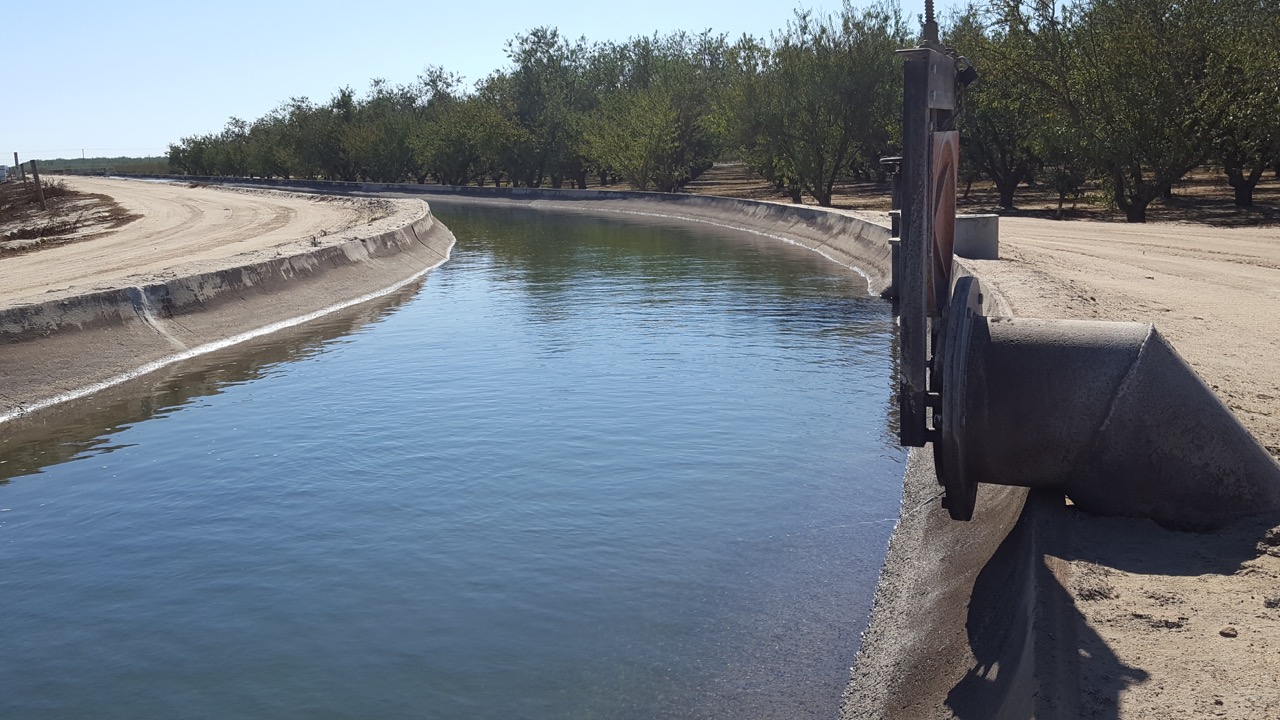
The California Water Alliance announced today California Senate Bill 1, or SB1, by Senator Toni Atkins (D-San Diego), advanced from the California Assembly Appropriations Committee. SB 1 will now be considered on the California Assembly floor before the Legislature adjourns on September 13th.
Assemblyman Frank Bigelow (R-O’Neals), Vice-Chair of the Assembly Appropriations Committee, shared with the California Water Alliance, “I am disappointed that SB1 was released off suspense file with amendments that make it much worse for farming and California as a whole.”
SB1 effectively declares that California would adhere to laws governing clean air, water, endangered species and labor that were in place in January 2017, before the beginning of the Trump Administration.
“SB 1 is bad for farmworkers, farmers, and communities throughout the state of California,” said William Bourdeau, Chairman of the California Water Alliance. “Our environmental laws and regulations should be defined by current, sound science, not petty politics.”
SB1 would freeze the existing federal biological opinions. Future permits would be subject to outdated science and ineffective federal baseline measures, thus permanently, constraining the coordinated operations of the Central Valley Project and the ç.
The California Water Alliance has led effort to demand that the California Legislature “Fix or Nix SB1”: https://californiawateralliance.org/fix-it-or-nix-it/. The California Water Alliance is a non-profit, non-partisan organization that advocates for an increase in water supply for municipal, agricultural and environmental needs: https://californiawateralliance.org/.

Arnoldo Torres has worked hard for nearly 20 years to get doctors from Mexico to rural farmworker areas of California. Torres wrote the bill in 2000, which former California Governor Gray Davis signed in 2002. But no medical schools wanted to do the orientation program for the doctors in Mexico.
“The medical schools avoided the program, but we found other ways to do what we need to get done and should have 29 doctors coming in October,” said Torres a journalist, consultant, partner in the Sacramento, California based public policy consulting firm Torres & Torres, and the executive director for the California Hispanic Health Care Association.
“We have funding on both sides of the border from private foundations, that will not be public funding,” noted Torres.
This all came about after Torres met with the president of the Mexican Foundation who happened to know the Mexican Ambassador to the U.S. Torres requested that the Mexican Ambassador seek approval for the Visas of the 29 doctors.
The problem is that California, as well as the United States since the 1970s when this data was collected, has had significant doctor shortages primarily in rural and farmworker communities.
“The problem is even worse today than it was even ten years ago. California produces 700 doctors a year. Close to 600 doctors practice in California, but they do not practice in the areas where they’re the most needed,” Torres said. “And so this program is designed to be a pilot to garner enough experience to decide whether this program should be expanded, and we ought to be bringing in more doctors.”
“The whole idea is that this is only a pilot program. We’ve never wanted this program to be permanent because California should be developing the doctors who have cultural, linguistic competency, said Torres. “When we did this bill in 2000, the largest population of non-English speakers were from Latin America, primarily Mexico. But California’s diversity has grown significantly since then. Rural and farmworker areas are still the most difficult to serve. The state now has much more diversity with languages and cultures, and the doctors in the California medical school system are not being educated on culture and language, and so, therefore, it’s tough for them to serve these communities,” he said.
This speaks to Trump’s recent decision on legal immigration. The reality is that many undocumented people, as well as legal residents, work in agriculture. “They work full time in most cases. And despite the increase in salaries that many in agriculture have extended to the farmworker population, illegal and undocumented, the reality is that it’s not a year-round job in most cases, it’s seasonal,” said Torres. “There are so many months out of the year in which they’re going to work, and they’re never going to earn enough money to be able to pay for insurance.”
What I think Trump is doing flies in the face of the argument that this population comes in to take benefits from the public. “They work. They do invaluable work. Growers are providing greater care. They are providing much better benefits, but they can only do it for so long in a year. And then you have a terrible economic policy with this president. You don’t have enough labor. He doesn’t want to bring any labor to work in these areas. The reality is that our bill underscores so many of the things that so many people get wrong about immigration,” explained Torres.
Torres noted that the Mexican doctors would come in only for three years and then they would have to return. Their visas would be for only three years. “The clinics where the doctors will work will have to pay them all of the salaries. This is in the law that we wrote. They have to pay them the salaries and the fringe benefits that they pay their current doctors, but they can only work for three years,” noted Torres.
“We are seeking are only three-year visas, and we have made an agreement with Mexico that we would only borrow them for three years. The idea is that we don’t want to be taking doctors from Mexico on a permanent basis. That is the responsibility that California has, as well as this country has, to develop enough doctors to work in the areas where they’re needed the most,” said Torres. “But Mexico has agreed to lend them to us. Because going back, they’re going to be even better doctors than they were before they came.”
And they’re all going to be very fluent in English as well. So they’re going to be serving all patients that come in for care, not just the Mexican workers.
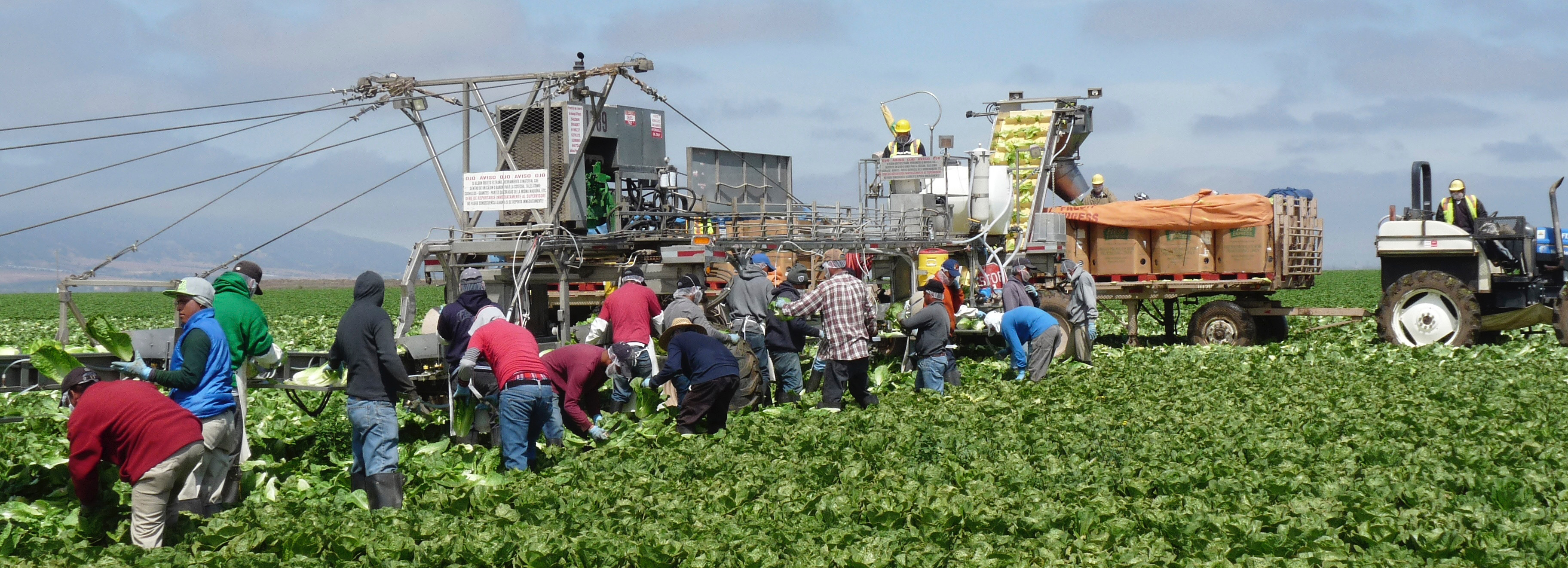
The Alliance for Food and Farming (AFF), in conjunction with Markon Cooperative, hosted its third “Facts, Not Fears” Produce Safety Media Tour for registered dietitians, health and nutrition writers and bloggers on August 19, 20 and 21 in the Salinas Valley. Tour participants visited fruit and vegetable fields as well as engaged with farmers, chefs and scientists with expertise in nutrition and food safety during the three-day event.
“It was another great group and we shared many meaningful conversations and dialogue,” said Tim York, Markon President and AFF Management Board Chair. “Our goal is to provide our guests with a firsthand look at farming and how we strive to provide safe and healthy foods for consumers. But, all of us walk away learning so much from our tour guests, including how we can communicate better with consumers about produce safety.”

Alliance for Food and Farming tour guests are joined by host Tim York of Markon, along with Markon’s food safety team, Dr. Carl Winter of U.C. Davis and tour sponsors Lisa Lochridge, Florida Fruit and Vegetable Association, Carolyn O’Donnell, California Strawberry Commission and Dr. Bob Whitaker of Produce Marketing Association. (Tour sponsors also included California Giant Berry Farms and First Fruit Marketing)
“The opportunity to build one-on-one relationships with these influencers is so important. Our tour guests have a direct connection to consumers so their efforts to share information about farming and food safety are always impactful,” said Teresa Thorne, AFF Executive Director. “We want to thank our tour partner, Markon, for making this experience possible, as well as the farmers and scientists who provided information and perspectives,” Thorne said.
In addition to the farm tours, the AFF and Markon facilitated a Roundtable discussion where tour guests were joined by farmers and farming companies, scientists, chefs and trade groups for a free-flowing discussion that encompassed food safety, organic and conventional farming practices, produce consumption, food waste, pesticide use, food safety regulations and consumer outreach. “Nothing is off the table during this discussion and everyone is encouraged to ask questions, provide their perspective, agree or disagree,” York says. “This has become among the most popular components of the tour for everyone involved,” York said.
The eight RDs, writers and bloggers involved in the tour provide content and articles to media outlets including, Washington Post, Today’s Dietitian, Shape Magazine, U.S. News and World Report, Dr. Oz, Sirius XM’s Dr. Radio program, CNN, Huffington Post, Buzzfeed, Glamour, Health Magazine, LA Times and Prevention, among others. The tour participants’ social media properties also reach thousands of followers each day.
“We have seen the benefits of engagement and sharing of AFF social content by these influencers over the last couple years,” York says. “We strongly believe their efforts in mainstream and social media has contributed to a recent and steady decline in one-sided coverage of the annual release of the ‘dirty dozen’ list,’” York says.
The “dirty dozen” list recommends avoidance of popular and healthy produce items based upon scientifically unsupportable claims about pesticide residue levels. When the AFF began its Safe Fruits and Veggies campaign in 2010 to counter inaccurate produce safety messaging, the “dirty dozen” list enjoyed widespread coverage each year in major newspapers, national news broadcasts and online news outlets. “Since 2010, overall coverage of the list release has declined significantly and now only 25% of the coverage is one-sided,” Thorne said.
The goal of the AFF is to provide science-based food safety information about organic and conventional produce so that facts, not fears, can guide consumers’ shopping choices. The cornerstone of the AFF’s outreach efforts is the newly updated safefruitsandveggies.com website, which includes information about farming, nutrition, health, toxicology and risk analysis for consumers, media and nutritionists and dietitians.
“We want to extend our sincere thanks to all of our guests for joining us, sharing their insights and suggestions on how we can all work together to reassure consumers about the safety of produce,” York said.
“We also extend our appreciation and thanks to the California Strawberry Commission, California Giant Berry Farms, First Fruits Marketing, Florida Fruit and Vegetable Association and the Produce Marketing Association for their sponsorship and participation in the AFF’s 2019 tour,” Thorne concluded.
California Ag News…
At Your Fingertips!
Copyright 2021 California Ag Today | CaliforniaAgToday.com owned and operated by Californians.
Copyright 2021 California Ag Today | CaliforniaAgToday.com owned and operated by Californians.

