Farmers Doing What They Can—No COVID-19 Penalty Needed

Farmers Pushing Back on Cal/OSHA COVID-19 Penalty


By Patrick Cavanaugh with AgInformation Network 

Pushing back on Cal/OSHA that want to press criminal charges of ag employers do not protect their employees during the COVID-19 pandemic.

Roger Isom is president and CEO of the Western Agricultural Processors Association, based in Fresno. It’s a trade association representing tree nut processors. He said, ag employers are trying very hard to protect their employees and don’t need a threat from Cal/OSHA.

“We want to provide a safe workplace,” said Isom. “You have to, I mean, this is a serious virus and can spread easily. So you’ve got to be careful about it. The problem we see is if you’re grossly negligent, yes, that’s an issue. But what we’ve seen historically is that Cal/ OSHA could cite you for checking your employees every day, but you didn’t document that you did. Why is that a criminal penalty,” noted Isom.

“We checked our employees and the workers say that we did it, but we don’t have documentation of it. And so now Cal/OSHA wants to make this a criminal penalty. No, that’s, that’s not acceptable,” Isom said.

“My guess is that there certainly is pressure on the legislature to do something. If they eliminate that criminal element and make it a standard penalty that we see typical Cal/OSHA requirements, it’s going to be enforceable.

“People are going to follow it,” said Isom. “Again, we need to do this. We don’t need Cal/OSHA to tell us to do this. We have to do this. So we don’t think it’s necessary for the criminal element at all,” said Isom.

2020-07-03T08:50:08-07:00July 3rd, 2020|

Farm Equity Act – Part 1

All California Farmers Must Have Access  to the Same Resources

By Tim Hammerich, with the Ag Information Network

The California Department of Food and Agriculture recently released the first annual report on the Farmer Equity Act. CDFA Secretary Karen Ross explains some of the key priority areas.

“Land tenure, especially for many of these farmers. They’re small scale. They are renting land because we know the cost of land is a barrier for new beginning farmers, regardless of what your ethnicity is, understanding that and what that means,” noted Secretary Ross

“Language: making sure that we’re providing as much of our services and program content in multiple languages if possible. Engagement with the agricultural industry, as well as being engaged with advisory boards and our marketing orders and commissions. And then how do we facilitate access to resources,” Secretary Ross said.

“The vast majority of resources are going to be USDA programs, but we’re an important partner with USDA. So what are we doing to make sure the word is out? And then how do we think through our own resources, especially around climate smart agriculture, as one example. And other grant programs that we might have, or that our sister agencies might have. Are we being very intentional, very thoughtful to make sure that we’re making those connections,” Secretary Ross explained.

2020-07-07T09:43:32-07:00July 3rd, 2020|

Editorial on Delta Tunnel Project

A Social Justice Perspective on the Delta Tunnel Project

By Gary Kremen

As California confronts increasing water challenges, the most equitable statewide solution from a social justice perspective is the single-tunnel project proposed by Gov. Gavin Newsom, known as the Delta Conveyance Project.

More than 27 million Californians rely on imported drinking water conveyed through the Sacramento-San Joaquin Delta. This imported water also serves millions of acres of local agricultural lands and vital wildlife refuges.

The reliability of that imported water supply is threatened by a variety of risks, including climate change, sea level rise, increasing regulatory restrictions, seismic risks and deteriorating ecosystem conditions. The Delta Conveyance Project will help address many of these threats.

The project proposes the construction of a single tunnel that would provide an alternative conveyance pathway for moving water from the north Delta to the existing pumping plants in the south Delta. The addition of intakes in the north Delta would allow operational flexibility to adjust to where fish are at a given time and protect our water supply from saltwater intrusion.

This enhanced flexibility will reduce the number of fish that end up in the existing pumping plants. The project includes state-of-the-art fish screens that minimize the number of fish impacted by water diversions. The project would improve water management for California communities, farms, fish and wildlife.

Scientists have predicted that climate change will result in more spring runoff and less snowpack in the Sierra Nevada. There is not enough storage to capture this additional runoff.  Having the ability to rapidly move water south cushions inevitable climate change effects.

The levees that make up California’s water distribution system in the Delta are not engineered to withstand major earthquakes. There is a high probability of a major earthquake within the next 25 years which could cause catastrophic levee failure, which would result in seawater inundation, interrupting fresh-water deliveries to more than 27 million people.  COVID-19 demonstrates that unexpected disasters happen.

In a catastrophic levee failure, who stands to be hurt the most? Not the affluent, as we have seen in this COVID-19 crisis; they have second homes, alternative sources of food and access to health care. It would hurt poor, working class and middle-class people the worst.

The alternatives to not having a tunnel are grim, especially given California’s excellent record on conservation and its growing population. One viable option is ocean desalination.  However, the same NIMBYs who don’t like the tunnel don’t like desalination. Maybe their ocean views will be impeded? For those few water districts near the ocean, the cost of desalination is at least three times the cost of the water yield from the tunnel.

Why not recycled wastewater? All over California there are ambitious recycling programs. The cost of recycled water, like desalination, is at least three times more expensive than water from the tunnel. Depending on expensive water sources exclusively would disproportionately hurt low-income families.

Reduced water to Central Valley agriculture would mean higher prices for food, higher carbon footprint from food importation and decreased food security. Higher food prices disparately affect those who are poor and vulnerable. It is well documented that the transportation related pollution for importing food especially damages communities of color.

Opponents of a tunnel project never say their position will lead to higher water prices and reduced water reliability, which leads to higher food prices, and can even lead to class-based disparities in health outcomes.  Other opponents seemingly promote the protection of endangered species, while others seek to ocean harvest the same species with fishing practices that kill whales.  Real estate speculation by some opponents of the project isn’t helping the health of the Delta.

Water agencies statewide have done an excellent job of becoming more water efficient while supplying water to a growing state population and keeping the environment healthy. For these reasons, the Delta Conveyance Project will further California’s goal of achieving water justice.

Gary Kremen is elected to the Santa Clara Valley Water District board of directors and is vice chairman of the Delta Conveyance Finance Authority, gkremen@valleywater.org. He wrote this commentary for CalMatters.


2020-06-30T08:08:25-07:00June 30th, 2020|

Bee Friendly Farming Promoted By Almond Board

Almond Board Launches Bee+ Scholarship to Promote Bee Friendly Farming


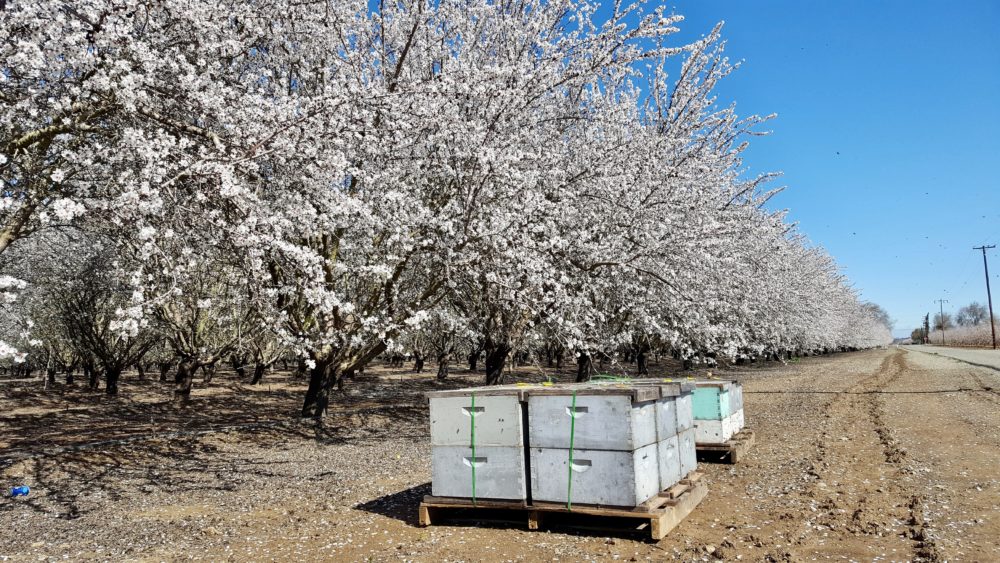
 The Almond Board of California (ABC) and Pollinator Partnership are proud to announce the alignment of ABC’s California Almond Sustainability Program (CASP)[1] and Pollinator Partnership’s Bee Friendly Farming (BFF) program to promote the importance of providing pollinators with nutritional forage. To further support almond growers in planting pollinator habitat, the Almond Board is simultaneously launching its Bee+ Scholarship, through which it will provide free cover crop seed to 100 almond growers through Project Apis m.’s Seeds for Bees program. The scholarship will also cover the cost for growers to register for the BFF program.

The CASP and BFF program alignment and Bee+ Scholarship expand on a commitment made in the Pollinator Protection Plan, announced in January, to promote pollinator health and biodiversity by encouraging almond growers to provide habitat for pollinators in or near their orchards.

“Protecting and improving honey bee health, not only during the short time that bees are in our orchards but year round, is critical to the success of every almond grower. By working with national organizations such as Pollinator Partnership and Project Apis m., we are expanding our focus to all pollinators, viewing working lands as part of biodiverse ecosystems,” said Almond Board Chief Scientific Officer Josette Lewis, Ph.D.

“Responsible farming is at the heart of what the California almond community does. ABC’s Bee+ Scholarship and the alignment between CASP and BFF allow us to increase our support to growers as they remain committed to growing almonds in better, safer and healthier ways, adding biodiversity to their farms, and improving outcomes for pollinators.”

Funding provided by ABC’s Bee+ Scholarship will allow growers to plant an estimated 3,500 acres of quality pollinator forage statewide – that’s in addition to the cover crop seed Project Apis m. typically distributes directly to almond growers through their Seeds for Bees program each year.[2] Currently, over half of almond growers participating in ABC’s California Almond Sustainability Program report allowing native cover crops to grow in their orchards.[3] This scholarship will help to convert more of those native cover crops to quality pollinator forage.

Partnerships Work to Best Serve Pollinators, Almond Industry

With the alignment of the CASP and BFF programs, almond growers who complete assessments in CASP specifically focused on bee health and pest management, and who meet certain BFF criteria, will qualify to register for the BFF program and become Bee Friendly certified. This certification will allow growers and their processors to use the Bee Friendly Farming logo on their product, and growers will be publicly recognized on Pollinator Partnership’s website as being a “Bee Friendly Farm” – in addition to receiving a BFF metal sign to display on their property.

The criteria to become Bee Friendly certified[4] are as follows:

  • provide cover crop forage in or near orchards
  • provide bloom of different flowering plants throughout the growing season
  • offer clean water for pollinators
  • provide habitat for nesting via hedgerows, natural brush and more
  • practice integrated pest management

“Pollinator Partnership’s Bee Friendly Farming program is a perfect conduit to increase pollinator benefits and to ensure protection and sustainability within the almond industry. Almond growers are terrific partners in best management practices, and we look forward to a close and growing relationship in support of pollinators and producers,” said Laurie Adams, president and CEO of Pollinator Partnership.

Because the CASP and BFF program alignment focuses on providing nutritional forage to supplement the diets of native pollinators in addition to honey bees, the decision to launch the Bee+ Scholarship and encourage greater forage planting among growers was a natural complement to the industry’s broader pollinator health initiatives.

“With a crop that relies primarily on honey bees for pollination, it is in almond growers’ best interest to ensure their orchards are a safe place for bees each spring,” said Billy Synk, director of Pollination Programs for Project Apis m.

Seeds for Bees aims to provide California farmers with a variety of seed mixes that bloom at critical times of the year when natural forage is scarce, but managed and native bees are active. While the mixes are designed to meet the nutritional needs of honey bees, they also provide habitat and nutrition for other pollinators and beneficial insects. Research supported by Project Apis m. and the Almond Board has shown that pollinator habitat is fully compatible with typical almond production practices and does not interfere with important growing activities like harvest.

“Working together with organizations like the Almond Board of California, Pollinator Partnership and many more, along with many researchers, almond growers and beekeepers, we can achieve far more collectively than we can separately,” said Project Apis m. Executive Director Danielle Downey. “These collaborations, focused on research and data, communication and forage, are a critical component to the long-term sustainability of beekeeping and almonds.”

2020-06-29T10:13:09-07:00June 29th, 2020|

Should Farmers Meter Their Wells Now for SGMA?

Prepping for SGMA Regulations

By Patrick Cavanaugh, Editor

With the Sustainable Groundwater Management Act (SGMA) is closing in on growers throughout California, there are many questions. One big one: should growers go ahead and put a meter on their pumps?

Helping the farming industry comply with SGMA, is Chris Johnson owner of Aegis Groundwater Consulting located in Fresno. He recommends that growers put flow meters on their wells. But he does understand the hesitation.
It’s pretty straightforward. Instrument your wells, and monitor them, including water levels, flow rates, electrical use. It’s good for growers to be able to manage wells as assets

Johnson thinks growers are afraid to put flow meters on their wells. They believe it may provide a mechanism where someone can measure, record, and evaluate how much water they’re using, that’s going to go against them. “And the reality of it is that somebody might very well do that, but they’re better off knowing that going in. They’re better off understanding and being able to manage and represent for themselves upfront.

And while the local Groundwater Sustainability Agencies have created the Groundwater Sustainability Plans, Johnson noted that the GSPs are the deliverable that the groundwater sustainability agencies are tasked with.

“But we need to understand that the lack of data that we have to work with and be able to make decisions. And as a consequence, what so many different GSAs are forced to do is to either accept existing data at face value, or they have to interpret what the data might be in the absence of actual functional information,” noted Johnson. And so, it may very well misrepresent what the basin as a whole has to go through, and regulators may put restrictions on farmers and growers based on that. That’s where having your data helps you defend and protect yourself.

2020-06-29T08:42:40-07:00June 29th, 2020|

Federal Dietary Committee Recommends 3 Daily Servings of Dairy

Dairy in Healthy Foods Category with Fruits, Veggies, Legumes, Whole Grains


 The International Dairy Foods Association (IDFA) released the following statement recently:

“Today, members of the Dietary Guidelines Advisory Committee (DGAC) confirmed dairy products should maintain a central, important role in federal nutrition recommendations for people beginning at a very early age. In addition to maintaining three servings of dairy per day, the committee found strong evidence pointing to positive health outcomes from dairy foods. In fact, a diet including low-fat and fat-free dairy, legumes, whole grains, fruits and vegetables is considered the ideal, healthy dietary pattern for all ages.


“In other key findings from their draft scientific report presented today, the DGAC highlighted new evidence strengthening dairy’s role in maintaining bone health for adults. For mothers, the committee dispelled misinformation about dairy’s link to asthma, saying there is no association between a mother’s consumption of dairy and the development of asthma in children.

And a new topic introduced in these Dietary Guidelines lays the groundwork for clearer nutrition recommendations for children from birth through 24 months of age, with the experts recommending small amounts of some foods including dairy foods, alongside fruits and vegetables, nut and seed products, and whole grain products, beginning at 6-12 months and continuing thereafter.

For toddlers, dairy foods are particularly important for the vitamins and nutrients they provide. This recommendation could not be clearer, demonstrating what the American Academy of Pediatrics has stressed for years, that dairy plays a critical role in the diet of children to bolster long-term health.

“Once again, the committee found no linkage between consumption of dairy foods and incidences of breast cancer, which should put an end to a longstanding disinformation campaign to alarm and confuse the public.

“IDFA is disappointed that the reported outcomes today did not include a mention of relevant scientific studies which show the benefits of dairy at each fat level. There is robust evidence to support the inclusion of dairy foods at all fat levels in recommended food patterns. With the DGAC’s role coming to an end, IDFA encourages USDA and HHS to remedy this oversight in the final guidelines to be released this year. 

“The conclusions offered today by the Dietary Guidelines Advisory Committee firmly establish dairy as one of the most nutritionally beneficial foods in dietary patterns alongside fruits and vegetables, legumes, and whole grains. IDFA is pleased to see federal nutrition guidance continue to affirm the important nutritional contributions made by dairy foods and remind Americans that a healthy diet includes three daily servings of dairy.”


2020-06-26T08:41:39-07:00June 26th, 2020|

Almond Alliance– A Big Advocate

The Almond Alliance is Major Advocate For the Entire Almond Industry


By Patrick Cavanaugh, Editor

Elaine Trevino is President of the Almond Alliance. “The Almond Alliance is the trade association and is membership-based for the California Almond Industry,” she said. “We exist to advocate for almond growers, hullers, shellers, handlers and processors. We do the political work and the political advocacy with both state legislators federal agencies, and of course, Congress in D.C.,” Trevino said.

“So we’re very active and making sure that the industry is receiving access to all the programs that it needs to,” said Trevino. “We’re very active in working with state and federal legislators on legislation and policies that impact agriculture, specifically almonds. We’ve been very active to make sure that the USDA and Congress are aware of the damages to the almond industry regarding COVID, and that the almond industry receives their fair share of help through the Coronavirus Food Assistance Program (CFAP),” she said.
The Almond Alliance constantly fights for the almond industry. “And we also tell the story of the almond industry to ensure that, elected officials and stakeholders are aware of the value, both economically, job-wise, tax-wise, nutrition-wise, and food-wise. We want to be aware of the benefit of the industry to the overall economy, to the state, to the world,” she said.


2020-06-25T08:21:03-07:00June 25th, 2020|

AgvisorPro Here to Connect with Farmers


AGvisorPRO Hopes to Connect Farmers with Experts

By Tim Hammerich with the Ag Information Network of the West

Farming is complex and it requires deep expertise in a variety of fields. So what can a farmer do to access that expertise especially in a remote environment, especially during COVID-19? Rob Saik of AgVisor Pro has a solution: he calls it the Uberization of agricultural knowledge.

“The number of times through the course of the year, when a farmer could reach out to really talk to people with deep domain expertise that could help the farming operation are numerous, said Saik. “And so the farms that I talked to, many of them have agronomists that are working with them, or many of them have veterinarians that are working with them. But geez, if the market’s moving, you need access to a marketing person.

 “The farmers told me that what they sensed was advisor pro would give them instant access to an entomologist when they needed to talk to an insect guy. Advisor pro would give them instant access to a marketing guy with deep domain marketing experience when they wanted to talk to somebody about marketing. And so it created a way for farmers to, first of all, find these people. And secondly, in some cases, a farmer just wants a second opinion,” explained Saik.

Farmers and experts can download the AgVisor Pro app and connect with each other to give and receive expertise in exchange for money. The experts are both vetted and rated to make sure the level of on-demand service remains high. Learn more at agvisorpro.com.

2020-06-24T08:03:12-07:00June 24th, 2020|

Remote Food Safety Audits Available


LGMA Partners with Western Growers to Offer Remote Food Safety Audits During Pandemic

Mandatory government food safety audits of leafy greens farms under the California Leafy Greens Marketing Agreement are continuing during the COVID-19 pandemic. Announced today by Western Growers (WG) and the California Leafy Greens Marketing Agreement (CA LGMA), is the availability of a new process developed through a collaboration with iFoodDecisionSciences (iFoodDS), that streamlines all verification documents and data for online review by government auditors.

This process will allow the execution of remote audits and has been reviewed and accepted by the California Department of Food and Agriculture, which has oversight of the LGMA programs and auditors. While in-person inspections may be temporarily limited to protect farm workers, farm office employees and government auditors, much of the LGMA audits are focused on reviewing verification documentation which can be presented in various forms, including large amounts of paperwork.

“As an industry leader in produce safety, Western Growers remains committed to leading produce safety initiatives and solutions,” said Sonia Salas, WG assistant vice president of food safety, science & technology. “In a time where COVID-19 is testing all industries, this new auditing process will support food safety oversight during this pandemic.”

The system was developed over the past few weeks, has been tested and is now available to certified members of the LGMA who are audited an average of five times over the year.

“We were able to use this new process in a real audit situation and it worked extremely well from start to finish,” said Sharan Lanini, Director of Food Safety for Pacific International Marketing and chair of the LGMA’s Technical Committee. “This is a great development in the government audit process.”

“The streamlining of data and verification documents online is a really positive outcome of our ‘new normal,’” said Diane Wetherington, Executive Chair of the iFoodDS board. “The use of iFoodDS software will not only save the auditors time, but it will allow them to more efficiently assess compliance with LGMA food safety metrics through the use of a consistent online verification system.”

“When the LGMA began in 2007, it was the first program of its kind in the nation. As we navigate through these unprecedented circumstances, the LGMA program continues to find innovative ways to move forward and achieve its objective of advancing food safety for leafy greens products,” said Scott Horsfall, Chief Executive Officer of the California LGMA. “This new auditing system is another example of the pioneering spirit of the LGMA and its commitment to find new and better ways to enhance the safety of leafy greens.”

WG has worked with the AZ and CA LGMAs since their inception in 2007 and is currently the facilitator of proposed changes to the LGMA food safety guidelines. WG continues to explore and support new ways to enhance food safety efforts, particularly in these challenging times.

2020-06-23T08:17:53-07:00June 23rd, 2020|

No-Till Saves Water, Increases Yield


No-Tillage Sorghum Yields Exceed Standard Tillage in a Four-Year Rotation

Since the advent of irrigation in California with the widespread drilling of wells in the 1930s and the proliferation of orchard crops during the past two decades, total annual water use in many watersheds exceeds supply. Partly as a consequence, California enacted the Sustainable Groundwater Management Act in 2014, which limits withdrawals to replenished levels.

Because irrigated agriculture accounts for nearly 80% of total water use, reductions in irrigation will be required, but preferably without decreasing either productivity or food supply. Furthermore, with some climate change projections suggesting a potential 20% water loss by the middle of the century, the need for more efficient water use could become acute. Fortunately, some water-saving methods such as drip irrigation have been supported by the government and there have been programs that have increased implementation and farmers understand these methods well.

Reduced disturbance tillage, or no-till, however, also offers an under-utilized strategy for increasing agricultural water use efficiency in California. There has been very little research and there is very little information available to farmers on no-till production systems for the diverse array of crops that have been produced in the state historically.

UC Cooperative Extension cropping systems specialist Jeff Mitchell led a diverse team of ANR, farmer, private sector and other public agency partners to evaluate the potential for producing sorghum and garbanzos, using high residue, no-till techniques in the San Joaquin Valley in a four-year study conducted at ANR’s ag experiment station in Five Points, Calif.

Standard tillage practices have been used throughout the region for nearly 90 years. Using similar inputs and amounts and pest management, they showed that a garbanzo and sorghum rotation in no-till yielded at least as well as in standard tillage.

Sorghum yields were similar in no-till and standard tillage systems while garbanzo yields matched or exceeded no-till than in standard tillage, depending on the year.

In the trial, no-till garbanzos yielded an average of 3,417 pounds per acre versus standard tillage with an average of 2,738 pounds per acre; garbanzo production in California, which is almost all in standard till, averages 2,300 pounds per acre.

We envision that if water costs continue to rise and as curtailments on water supply increase, the value of agricultural land in California will eventually decline, providing more of an economic incentive for using no-till for growing a portfolio of crops, such as sorghum and garbanzo, amenable to these pending constraints on irrigation.

In addition, there already exists high acreage of relatively low-value field crops in the state. As annual row crop farmers are faced with the need to reduce water use, knowing which field crops perform well in no-tillage conditions is important for the region. For this reason, this work may serve as a decision-making tool for growers in the future, especially if there is the opportunity to both reduce management costs and maintain yields

An outgrowth of this work on no-till systems is the group of about 15 farmers who’re now a part of a USDA NRCS Conservation Innovation Grant Program project that is looking at opportunities and approaches for reducing disturbance in organic vegetable production systems.


2020-06-22T08:14:15-07:00June 22nd, 2020|
Go to Top