USDA Coronavirus Funds Expand for Farmers

More California Farmers Eligible for USDA Coronavirus Food Assistance Program Funds

By Pam Kan-Rice, UCANR Assistant Director, News and Information Outreach

California farmers stand to benefit from the addition of more commodities now covered by the USDA Coronavirus Food Assistance Program, say UC Agriculture and Natural Resources expert. This week, the U.S. Department of Agriculture expanded eligibility and extended the deadline to apply to Sept 11.

Farmers of aquaculture, nursery crops and flowers, sheep and specialty crops such as dates, dragon fruit, nectarines, pomegranates, pumpkins and many other specialty crops grown in California are now eligible for financial assistance to help keep their operations afloat during the business disruption caused by the pandemic.

Below are UC Cooperative Extension advisors and specialists who are available for comment:

Daniel K. Macon, UC Cooperative Extension livestock and natural resources advisor serving Placer, Nevada, Sutter and Yuba counties, dmacon@ucanr.edu

“Including all sheep will be HUGE for California producers. Most California lambs are born in the fall and marketed in the late spring. The rest of the West has lambs born in the spring and marketed in the fall/winter/early spring. The original CFAP payments provided a maximum payout to lambs that would have been marketed earlier than most California lambs. And provided no payment for what we call running-age ewes (breeding animals).”

Jackson Gross, UC Cooperative Extension aquaculture specialist at UC Davis, jagross@ucdavis.edu

“This is a big distinction for our California freshwater fish producers. While it doesn’t cover all of the diversity in California aquaculture, it does cover the majority of our industry as far as freshwater fish producers. A specialty crop distinction is important for our fish farmers, making them eligible for specialty crop funding and numerous other federal and state programs that were previously inaccessible.” 

Cheryl Wilen, director of UC Cooperative Extension in San Diego County, cawilen@ucanr.edu

“It is my impression that ornamental nurseries will really have a good opportunity to recover money for unsold crops.”

Ruth Dahlquist-Willard, UC Cooperative Extension small farms and specialty crops farm advisor for Fresno and Tulare counties, rdwillard@ucanr.edu

“For the small-scale specialty vegetable and herb growers, it’s definitely helpful to have some of their crops on the list, like bok choy, daikon, etc. But the process of signing up can be prohibitive, especially with some USDA offices only offering remote service, and the payment amounts are very low compared to the amount of paperwork required.”

Ramiro Lobo, UC Cooperative Extension small farms and agricultural economics advisor in in San Diego County, relobo@ucanr.edu

“The specific mention of minor crops can be significant for small-scale growers in the state, and Southern California in particular.”

Aparna Gazula, UC Cooperative Extension small farms and specialty crops farm advisor for Santa Clara, San Benito, and Santa Cruz counties, agazula@ucanr.edu

“It’s great that the USDA Coronavirus Food Assistance Program has been expanded to include more minor crops. I hope the USDA offices have bilingual staff who can work with socially disadvantaged farmers with language barriers that often grow these crops.” 

Aliasghar Montazar, UC Cooperative Extension irrigation and water management advisor in Imperial and Riverside counties, amontazar@ucanr.edu

“Maintaining date palms over the season is very labor oriented. During February to May, a lot of activities need to be conducted at a certain time. As you know, we had high pressure from the pandemic in the Coachella Valley during these months. It made labor less available, which created some challenges for growers.” 
2020-08-17T09:54:32-07:00August 17th, 2020|

Livestock and Soil Health

Regenerative Agriculture Without Animals- Is It Possible?

By Tim Hammerich, with the Ag Information Network

While some consumers are looking for alternatives to animal products, others are becoming increasingly more interested in soil health. This begs the question: can you have regenerative agriculture, which focuses on regenerating the soil, without animal agriculture?

Paige Stanley doesn’t think so. She is a Researcher and Ph.D. candidate studying regenerative practices at the University of California Berkeley.

Stanley states, “If you want to create closed nutrient loops, I don’t see a way to do that without animals. Now, the degree to which you apply animals to any one system, you know, we can argue about all day.”

“I study animal-only systems, but there’s plenty of opportunities to adopt integrated crop-livestock systems in order to make both of those systems more efficient,” Stanley added. “So I’m thinking, yeah, small ruminants, like sheep, goats for brush management, or even bringing chickens in before you plant a cover crop or behind another animal in a cropping system.”

“There’s plenty of ways to introduce fertility without bringing in off-farm inputs and to create a more diversified setup – to stack your enterprises. I think among agroecologists that’s a pretty widely accepted concept, but you know, there’s a whole slew of anti-animal ag people who would not like that answer,” explained Stanley.

Regenerative practices using crops and livestock are being explored to build healthier soils and potentially sequester carbon.

2021-05-12T11:17:06-07:00August 14th, 2020|

Help for for Growers and Climate Change Risk

Helping Growers Manage Risk

By Tim Hammerich, with the Ag Information Network

Scientists project climate change will significantly alter the way our food is produced, but what can farmers do about this today? Especially when making decisions such as planting perennial crops that will be in place for decades?

Tapan Pathak is a UCANR Cooperative Extension Specialist based at UC Merced. He is working to develop a tool to translate weather and climate data into management insights for growers.

“It’s a huge effort because we want to be really crop-specific in terms of what type of decisions for we can provide to growers. And so, we’re just getting started on developing this crop-specifically, region-specific tools and the website is going to be Cal Agro Climate,” Pathak noted.

Pathak says they are currently finalizing a prototype in order to share with growers for feedback.

“Since we want to make it a very grower friendly, our next planning is to involve some of the growers and advisory committee to provide some feedback and kind of incorporate their changes. So we are hoping to get those tools up and running by next year or so,” said Pathak.

Once completed, the Cal Agro Climate tool will be able to help farmers reduce weather and climate related risk on their farms.

2020-08-13T10:46:35-07:00August 13th, 2020|

Dairy Restores Riparian Areas

Sonoma County Dairyman Works Hard to Fix Carbon in the Soil

By Tim Hammerich, with the Ag Information Network

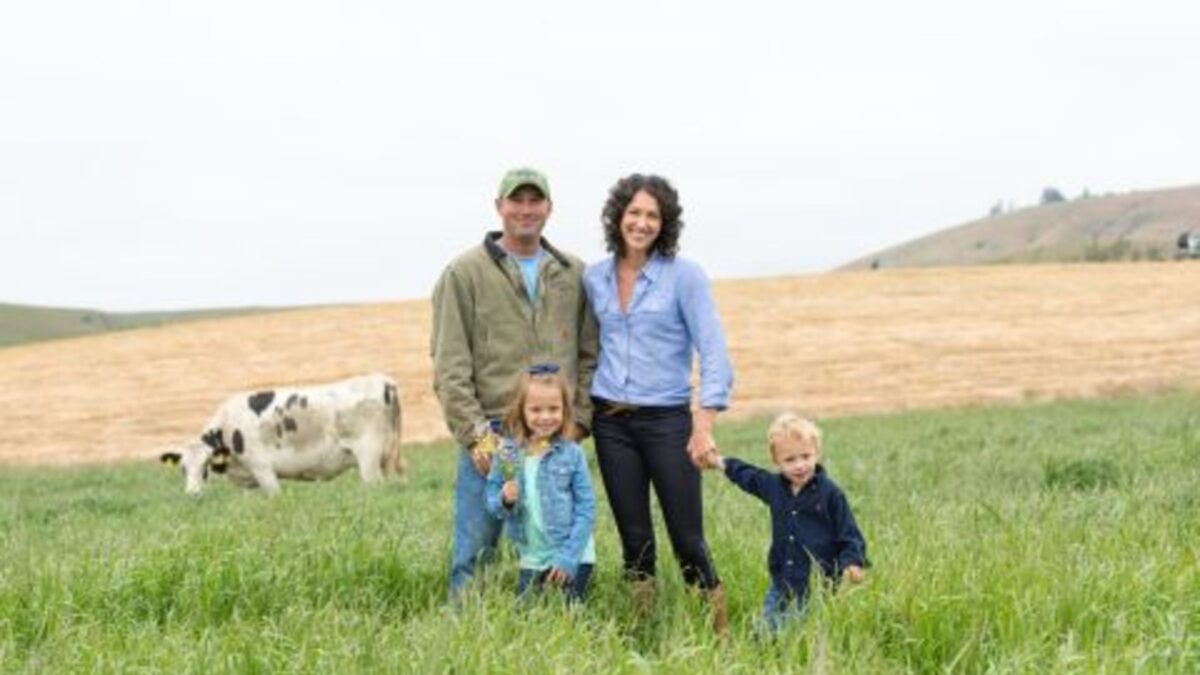
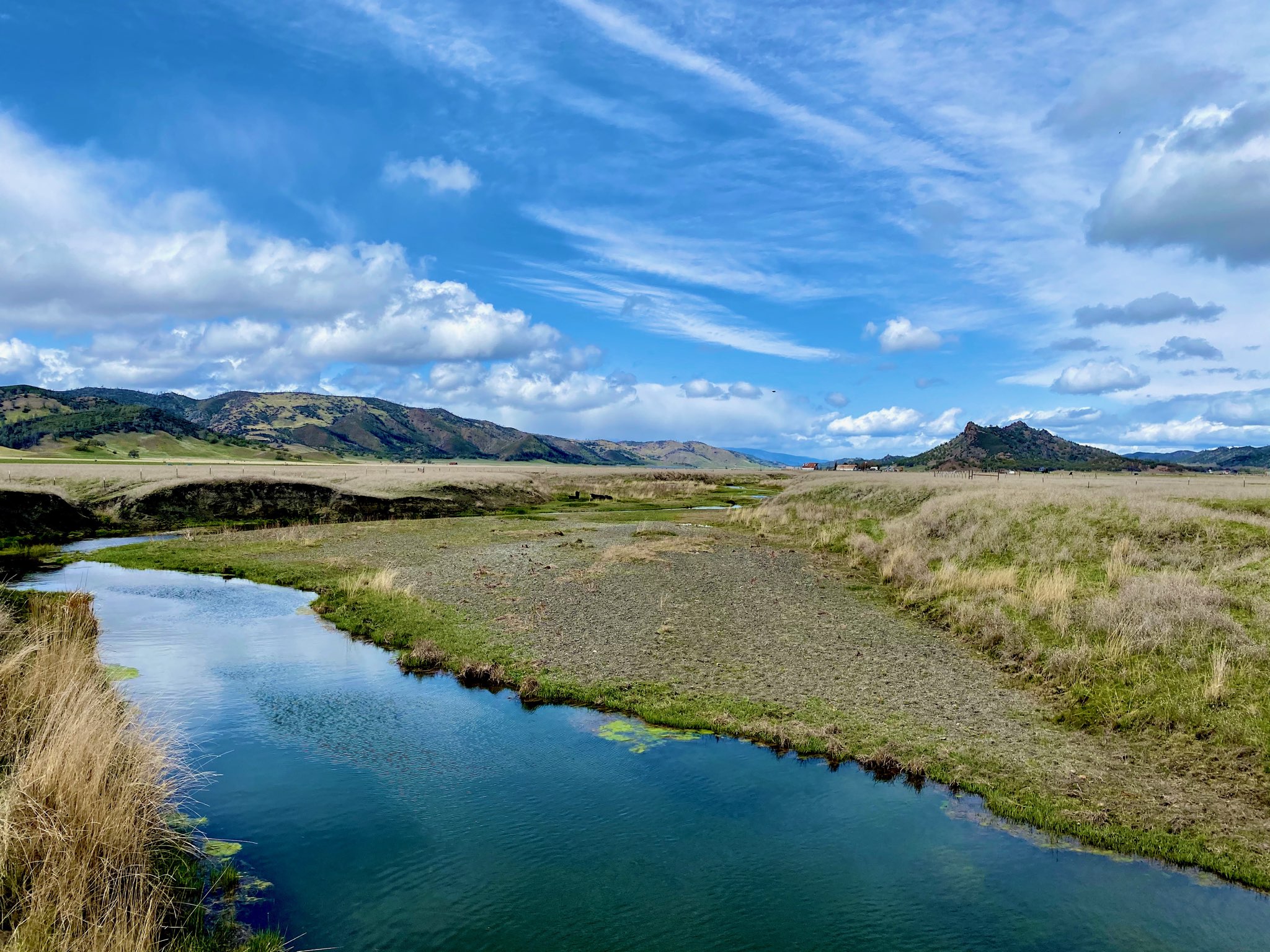
Sonoma County Dairyman Jarrid Bordessa has been working with his cooperative, Organic Valley, to develop a carbon farm plan. As part of that plan, he decided to restore a riparian area on his farm.

“The carbon farm plan identified the creek restoration as being the number one impact we can do to fix carbon to our soil per acre,” said Jarrid Bordessa.

“So along that restored area, they’re going to plant 600 trees and per acre that practice had the highest carbon fixing potential. Behind the obvious one when we did our carbon farm plan is applying compost to all our pastures,” Bordessa added.

“Doing it this way is the cheapest way, it gives us the most bang for the buck,”  said Bordessa, adding “It actually benefits us the most.”

“The Creek restoration has other benefits as well, ” explained Bordessa.

“It’s supposed to create wildlife habitat and pollinator habitat, Bordessa added. “I think it’s just going to aesthetically look nice on our farm also.”

Bordessa received help from over 400 students, teachers, and volunteers to plant the nearly 700 trees in the area.

2021-05-12T11:17:06-07:00August 12th, 2020|

Vine Mealybug

Grape Pest Transmits Grapevine Leaf-roll Virus

By Tim Hammerich with the AgInformation Network 

Vine Mealybug is a pest that transmits the grapevine leaf-roll associated viruses. The University of California Ag and Natural Resources are trying to find better management techniques for vine mealybug. Statewide IPM Program Director Dr. Jim Farrar explains why.

“Vine mealybug is an invasive from the Mediterranean area and it’s more efficient at transmitting the virus,” said Farrar.  “And I think that we sort of didn’t recognize the great potential for damage when this new mealybug came in and was a more prolific vector of the virus. And so now we’re recognizing how important the virus is in impacting grape quality and yield.

“Associated with that, a heightened importance of this new new mealybug in transmitting the virus. And so now we’re starting to play catch up in developing much more robust management plans for vine mealybug and the leafroll virus,” Farrar said.

Grapevine leafroll virus can reduce yields, delay fruit ripening, and reduce soluble solids in the grapes.

For more information on the control of Vine Mealbug, go to the UC IPM website.

2020-08-05T12:39:51-07:00August 5th, 2020|

Legislation Provides Tax Credit for Farms With Uncollected Sales


Tax Credit Could be part of of federal stimulus addresses biggest pain point for distributors that provide food to restaurants, professional kitchens

This week, Representatives Darin LaHood (IL) and Jimmy Panetta (CA) introduced the Providing Liquidity for Uncollectible Sales (PLUS) Act. This legislation provides a tax credit to offset uncollectable debt incurred as a direct result of COVID shutdowns. It is supported by the United Fresh Produce Association, the International Food Distributors Association, and National Fisheries Institute.

The foodservice distribution industry collectively experienced more than $12 billion in uncollected debts as restaurants and other facilities shutdown in response to the global pandemic and were not able to pay their distributors. Seafood distributors reported approximately $2.2 billion of debt owed to them, fruit and vegetable distributors hold an additional $5 billion in such debt, and broadline foodservice distributors reported more than $5 billion of debt.

“Produce foodservice distributors absorbed a devastating blow with the spring shutdown of the restaurant and hotel industry. The impact of lost inventory and unpaid bills is not recoverable,” said Tom Stenzel, President & CEO of United Fresh Produce Association. “I commend Representatives LaHood (IL) and Panetta (CA) for introducing the Providing Liquidity for Uncollectible Sales (PLUS) Act, a helpful solution to an insurmountable challenge for produce foodservice distributors and the companies on both ends of their business agreements.”

Foodservice distribution is a crucial part of the food supply chain, delivering fish, fruits, vegetables, meat, and other products to restaurants, schools, hospitals and long-term care facilities. Distributors provide not only food supplies but the essential financing their customers need to purchase these products. Restaurants buy their supplies on payment terms that allow them to generate revenue before the bill comes due, normally 30-60 days after delivery. In the aftermath of the sudden and near complete closure of the food-away-from-home channel, sales plummeted, customers were unable to pay their bills and distributors were left with more than $12 billion in debt.


“Family-owned seafood businesses support restaurants by providing fish on credit, but now are stuck with billions in debt owed them by these customers,” said John Connelly, President, National Fisheries Institute. “This legislation will significantly help revive a complex system that brings seafood from water to table. If we don’t have functioning distributors bringing seafood to market, fish will simply rot on the dock, effecting everyone from boat owners to restaurateurs.”


While many of the provisions of the CARES Act provided critical assistance for foodservice distribution companies, it did not account for the biggest issue they face: large, unpaid debts owed to distributors for food that restaurants could not use due to COVID-related shutdown orders. Tax credits for this $12.2 billion in outstanding debts will provide the liquidity distributors need to continue to extend credit to their restaurant customers and help them get back on their feet as the economy restarts.

“The PLUS Act would provide tax credits for uncollectible accounts receivable, ensuring that distributors can continue to provide assistance to their restaurant customers,” said Mark S. Allen, President & CEO of the International Foodservice Distributors Association (IFDA). “I applaud Representatives LaHood and Panetta for their commitment to the foodservice distribution industry, a vital part of our economy.”

Foodservice distributors themselves suffered more than a 50 percent decline in sales due to the global pandemic, making it difficult to provide the financing their customers depend on to run their businesses; jeopardizing restaurants’ ability to purchase food and ingredients. Without restaurants and other places where people eat out, the economy will be missing a significant part of the $1 trillion food-away-from-home economic driver. The PLUS Act provides a solution to this complicated and critical challenge for the food supply chain.


###


2020-08-05T10:38:19-07:00August 5th, 2020|

GROUNDBREAKING RESEARCH INTO WORKING LANDSCAPES

Protecting California rangeland provides $1 billion in ecosystem services annually, according to new study

(SACRAMENTO) – Working lands conservation by California’s largest land trust annually provides between $900 million to $1.44 billion in environmental benefits — including habitat, carbon sequestration, food and watersheds, according to a new study released today.

The study, conducted by the University of California, Berkeley, examined 306,718 acres of California Rangeland Trust’s conservation easements across the state to explore both the environmental and monetary value of preserving California’s open spaces.

“This study demonstrates the importance of caring for and stewarding California’s land, so that it can serve our communities in return,” said California Rangeland Trust CEO Michael Delbar. “Conserving the state’s open spaces and rangelands isn’t just about ranching. It’s about investing in environmental services that will benefit Californians now and into the future.”

Employing a comprehensive literature review of ecosystem services and a global average of the monetary value of environmental services per acre, the study reports conservation easements—an agreement between a landowner and a qualified land trust regarding the future uses of private property—return up to $3.47 for every dollar invested under current zoning requirements, further emphasizing the long-term benefits of land conservation.

“Our research found there is immense economic value in ecosystem services provided to society through rangeland conservation,” said Lynn Huntsinger, professor of Environmental Science, Policy, and Management at UC Berkeley. “The study further underscores how protecting California’s working landscapes provides us with food, clean water, fire protection and many more vital benefits.”

Since 1984, more than 1.4 million acres of land in California have been converted from agricultural to other uses—78 percent of which has been lost to urban development.

The study’s findings estimate that conservation efforts by California Rangeland Trust provide ecosystem services valued at more than $236 million in food and $13.9 million in water annually. Similarly, California Rangeland Trust’s conservation supports $250.6 million in the maintenance of biodiversity, nearly $100 million in habitat lifecycle production, and $28.5 million in recreation opportunities annually to the state.

“The data is clear – conserving rangeland is a smart investment as Californians look for ways to protect our environment,” said Delbar.

Using conservation easements as a tool, the California Rangeland Trust seeks to balance against the demands of urban and land use planning and ensure local food, water, and habitat security in communities across the state.

The California Rangeland Trust is an organization by and for ranchers committed to preserving California’s open spaces and supporting cleaner, healthier communities for Californians. The Trust has permanently protected more than 340,000 acres of land in California since 1998 through conservation easements.

###

The California Rangeland Trust, a 501(c)(3) public benefit corporation, was created to conserve the open space, natural habitat and stewardship provided by California’s ranches. To date, the Rangeland Trust has protected more than 342,815 Acres of productive grazing lands across the state through the use of conservation easements. For more information, visit www.rangelandtrust.org.

2021-05-12T11:17:06-07:00August 4th, 2020|

Harder Introduces Protecting Fairs During Coronavirus Act

Fair Cancellations Could Result in Permanent Closures, Sale of Fairgrounds


 In response to concerns from county and state fair leaders, Representative Josh Harder (CA-10) is introducing the Protecting Fairs During Coronavirus Act. The bill would create a new emergency grant program to help offset the massive revenue losses our fairs are experiencing because of health care measures taken to combat the Coronavirus Pandemic.

And, of course, all California fairs have a major agricultural component including livestock shows by 4-H and FFA. Many counties will showcase their agricultural bounty as well. The loss of fairs would be devastating for all agricultural participants.

Hundreds of thousands of Californians attend these fairs every year and generate approximately $3.5 billion in annual economic impact. Without action, fair advocates warn that some fairs could close permanently or be forced to sell fairgrounds, permanently damaging these essential portions of our communities.

“We don’t want to lose a single acre of fairgrounds or see a single fair shut down permanently because of this pandemic,” said Rep. Harder. “I went to the Stanislaus County Fair as a kid and even won some blue ribbons along the way – but these fairs are more than family fun – they are also an economic engine and job creators for rural communities. We have to do everything we can to protect them.”

“The Western Fairs Association, the California Fairs Alliance, and our Service Member partners are in strong support of Representative Josh Harder’s efforts to include the fair industry in Congressional legislation to assist during this time of National Emergency,” said Sarah Cummings, President & CEO of the Western Fairs Association. “Fairgrounds are an essential part of the infrastructure necessary for state and local communities to effectively respond in natural disasters and emergencies.

“More importantly, fairgrounds are often the heartbeat of their communities, generating multi-millions of dollars in non-profit and community benefits, promoting agriculture and a quality of life serving as gathering spots, recreation facilities and learning centers.  Now is the time to provide emergency funding and preserve the legacy of the state’s Fairgrounds for future generations to come.”


The California State Fair typically takes place during this period every year and generates millions of dollars in economic impact for the Sacramento and Central Valley Regions. In 2019, over 600,000 people attended the California State Fair in Sacramento. Locally, the Stanislaus County Fair boasted a 2019 attendance of over 260,000 resulting in a massive economic impact. In a normal year, all fairs across California preserve over 30,000 jobs, generate $3.5 billion in annual revenue, and contribute $200 million in tax revenue for local and state governments, according to the California Fairs Alliance.

The Protecting Fairs During Coronavirus Act would establish a $5 billion federal grant program to offset fair revenue losses during the Coronavirus Pandemic. The fund would be available for both 2020 as well as 2021. States could apply for aid from the United States Department of Agriculture (USDA) and then distribute the funds to fairs in their state.

2020-08-03T12:40:13-07:00August 3rd, 2020|

Is it Salt Damage or Almond Leaf Scorch

Salt Damage and Almond Leaf Scorch Look Similar

By Patrick Cavanaugh

Franz Niederholzer is a UCANR Cooperative Extension Orchard System Advisor based in Colusa County. In his area some growers are seeing symptoms on their almond leaves and they don’t know if it’s leaf scorch or chloride damage.

“Could it be salt damaged, take a sample for chloride and sodium. Just to check that box,” Niederholzer said.

He said to send those leaf samples to an agricultural lab. “If that comes back negative, there are labs that do test for the bacteria Xylella fastidios that causes almond leaf scorch. Answer that question,” he said. “The symptoms are similar, but not exactly the same. The chloride test is easier to do, but if it comes back that the chloride levels are low, then that leaves you with the option of testing for the almond leaf scorch bacteria, to be absolutely certain that that’s what’s going on,” Niederholzer explained.

And Niederholzer said, depending on where you’re growing your almonds in the Northern Sacramento Valley harvest could be starting about two weeks from now.

“I bet that’d be some people going in the next 10 days at the very earliest site. Maybe I’m getting ahead of myself, but on the farthest West side where there are some gravelly soil, things happen early. So those are the earliest sites in the Sacramento Valley,” Niederholzer said. “I know the weather between now and then could alter things, but I wouldn’t be surprised that somebody was shaking first week of August.”

2020-08-03T08:55:45-07:00August 3rd, 2020|

UCCE advisor’s Breadth of Experience and Education Support Ranchers’ Economic Viability

By Jeannette Warnert, UCANR Communications Specialist

Livestock and natural resources advisor Dan Macon came to UC Cooperative Extension three years ago with much more than a formal education in integrated resource management and agricultural and managerial economics.

He had years of hands-on experience running a successful foothill sheep operation, toiling long days and often into the night tending animals, irrigating pastures, training livestock guardian dogs and managing forage.

“I came to this position mid-career,” said Macon, who also accumulated skills working for a family auction company and in various capacities for the California Cattlemen’s Association, the California Rangeland Trust and USDA’s Natural Resources Conservation Service.

The love of a rural lifestyle prompted his family to purchase a small ranch in Auburn to raise sheep 15 years ago. Natural communication skills led Macon to become respected local blogger at Foothill Agrarian and, eventually, a social media influencer with nearly 2,000 followers on Instagram @flyingmule.

When Macon bought his ranch, he needed help dealing with invasive Himalayan blackberries. He called Roger Ingram, the UCCE livestock and natural resources advisor in Placer and Nevada counties from 1997 to 2017.

“Roger helped me take care of the problem,” Macon said. “Following his recommendation, I bought goats and they grazed the blackberries into submission. Now the grass can out-compete the invasive plants. We’ve turned the area into grassland.”

Macon began volunteering for UC Cooperative Extension by teaching fellow ranchers about his experiences raising sheep, managing rangeland and raising and training livestock guardian dogs. Macon was a presenter at Ingram’s annual California Multi-Species Browsing Academy.

“I finally recognized that the parts of my earlier jobs that I most enjoyed involved things I’d be doing on a daily basis as a farm advisor – teaching and research,” Macon said. He earned a master’s degree from Colorado State University and applied to succeed Ingram after his retirement. Macon also took on the role in Sutter and Yuba counties, succeeding Glenn Nader.

Livestock production in the Sierra Nevada foothills ranks among the top five agricultural commodities. Economic viability is a major issue. Macon’s research and extension program is focused on ranch economics and business management, drought resilience, predator-livestock coexistence and irrigated pasture management.

At the UC Sierra Foothill Research and Extension Center in Browns Valley, Macon is conducting research that will help ranchers make decisions about maintaining a cattle herd when faced with impending drought. Even when the weather forecast is dry and forage isn’t growing at a sufficient pace, ranchers can be reluctant to sell off their cattle.

“Science tells us you shouldn’t try to feed your way out of a drought,” Macon said. “Ranchers want everything to stay the same. They want to maintain their genetic potential and keep cows that are familiar with the area.”

The research will compare cows weaned on a traditional weaning schedule with others that are weaned early.

“The cattle will be out on the range from March to early September under different parameters,” Macon said. “We’re also tying in economics, the value of genetic potential and the value of having cows who know the landscape.”

Macon is securing funding to conduct research on livestock guardian dogs in different production settings. Using low-cost GPS technology developed at New Mexico State University, Macon plans to study the relationship between dogs, predators and livestock in terms of space and time.

“One unknown is whether they displace predators or disrupt predatory behavior,” Macon said.

Macon uses livestock guardian dogs on his ranch and will be able to draw on his own experiences in designing the study. He recently wrote a fact sheet on guardian dog selection with UCCE human-wildlife interaction advisor Carolyn Whitesell.

“We’ve had great success with our guardian dogs,” he said. “But not everyone has that level of success. Using scientific tools like remote sensing and GPS technology will give us more details about wildlife-guardian dog-livestock interactions.”

During this year’s shelter-in-place, Macon has become more creative in reaching out with scientific ranching information. He and large-scale sheep producer Ryan Mahoney of Rio Vista created a weekly podcast, “Sheep Stuff Ewe Should Know.” Early episodes cover such topics as risk management, the effects of COVID-19 on the sheep industry and livestock guardian dogs. The podcast is available on Spotify and other mobile podcast apps.

Macon developed a new bi-weekly webinar series, “Working Rangeland Wednesday,” with UCCE specialist Leslie Roche and UC Davis graduate student Grace Woodmansee. Recordings are posted on YouTube.

Traditional, one-on-one farm calls are also a part of Macon’s extension program. He conducts five or six a month. Even so, the COVID-19 pandemic prompted Macon to begin remote advising. Soon after Gov. Newsom’s shelter-in-place order was issued, Macon got a call from a woman whose ewes had recently given birth.

“She thought the lambs weren’t doing well and wondered what she could do,” Macon said. “We both had Facetime, so I asked her to show me what the sheep looked like. I was able to assure her that things were normal and suggested bottle feeding. I talked to her several times over the next couple of days, and she was able to save the lambs.”

Most queries from local ranchers center on pasture or grass management, species composition, fencing, paddock design and animal husbandry. Last year, ranchers called with blue oaks suddenly and inexplicably dying on their land.

“The trees had no visible injuries. Ranchers were wondering if it was a lingering effect of drought or due to habitat fragmentation,” Macon said.

Macon contacted UC Cooperative Extension plant pathology specialist Matteo Garbelotto, a UC Berkeley-based tree disease expert. The scientists collected scorched leaves, wood samples and soil near the trunks of the dead or dying trees. They found evidence of fungi Botryosphaeria corticola and B. dothidea in wood chips collected at breast height. However, blue oak is not an official host for the two pathogens in the USDA fungus-host database.

The researchers believe that recent droughts and climate change may be causing an increased and widespread susceptibility of blue oaks or that an unknown pathogen may be increasing the susceptibility of blue oak to the canker disease. The progress made in solving these mysterious blue oak deaths was published in the most recent California Agriculture journal and will be the subject of continuing investigations in the future by Macon and his colleagues.


2021-05-12T11:17:06-07:00July 30th, 2020|
Go to Top