Gov. Newsom Signs AB 685 on COVID Notices

AB685: COVID-19 New Exposure Notice Requirements

Governor Newsom signed AB685 on September, 17th which is effective January 1, 2021.  This new law requires:

  • employers to notify employees who may have been exposed to COVID-19 and notify public health departments of workplace COVID-19 outbreaks,
  • requires California Department of Public Health (CDPH) to publicly report information on workplace outbreaks, and
  • authorizes Cal/OSHA to enforce COVID-19 hazards.

Employers are to provide notices and information upon identifying a COVID-19 case in the workplace within one (1) business day to 1) employees and subcontracted workers who were at the worksite where a potentially sick employee or member of the public was; 2) information about benefits, and 3) disinfection and safety plan.  The employer must determine which employees are to receive this information, the type of notice those employees will receive, and how the information will be delivered to the employee. The notice can be hand delivered or given by email and should be in English or any other language understood by the majority of employees.

Additional guidance has been published by CDPH to assist employers prepare to implement the requirements, you can click on the following links here and here.  The guidance outlines the new law requirements, information required to provide employees, what to report to local health departments and COVID-19 case and outbreak definitions, etc.  Also, CDPH has updated the Responding to COVID-19 in the Workplace for Employers guidance (originally released June 16, 2020) click here for the update dated September 18, 2020.  The Cal/OSHA guidance document, which is enforceable via citation to enforce COVID-19 hazards as imminent hazard to provide immediate protection for workers, click on the following link here.

The Association will continue to monitor any amendments to this new law.  Also, the Association strongly encourages its members to consult legal counsel and/or human resource services to ensure compliance with the new law.

 

2020-10-29T14:44:12-07:00October 29th, 2020|

Natural Habitats Help With Pest Control

How Surrounding Natural Habitats Can Shape Pest Outbreaks and Pesticide Use in Vineyards


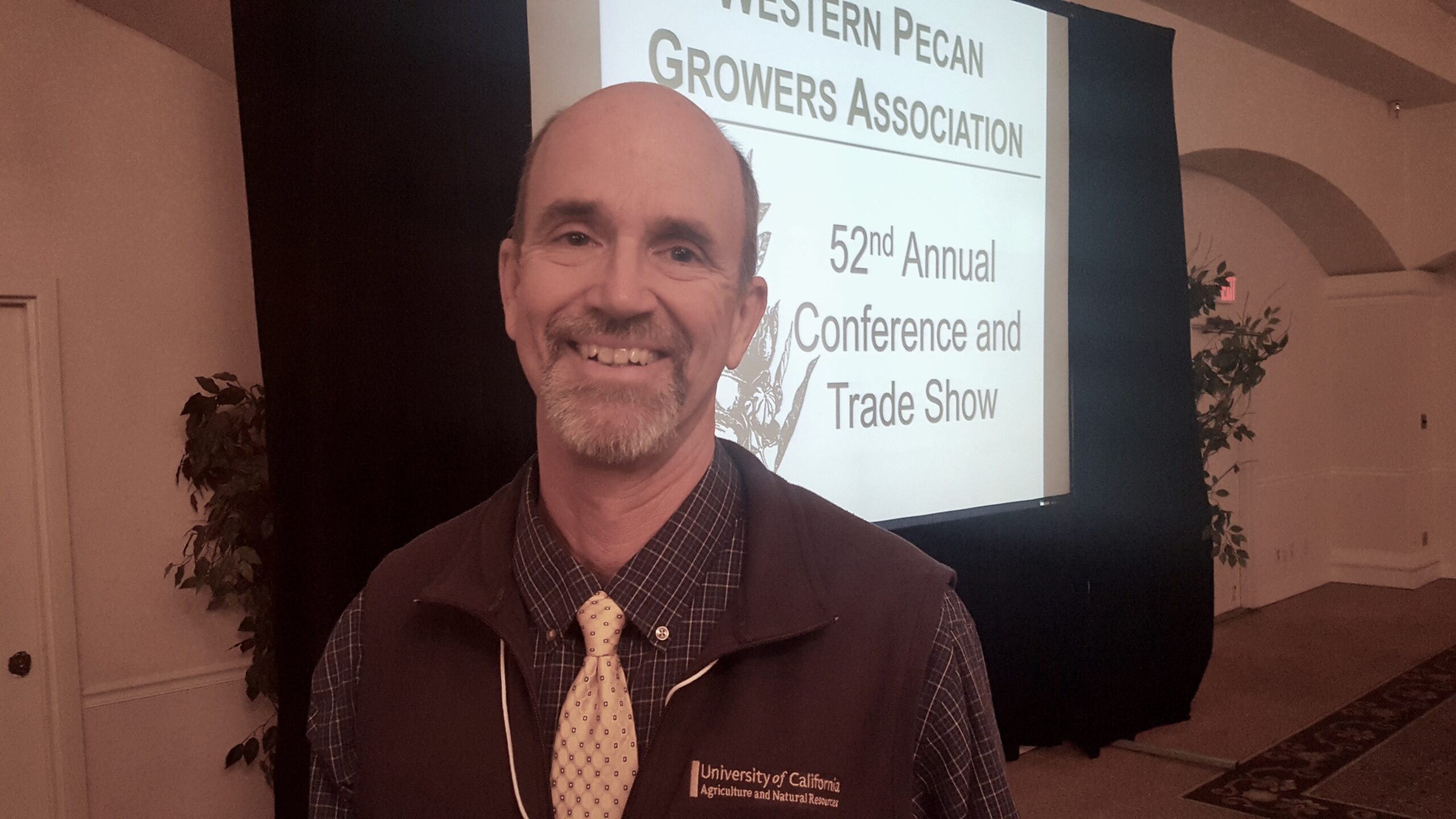
Photo at top is Daniel “Dani” Paredes

Natural landscapes surrounding vineyards can decrease pest outbreaks and depress pesticide use, according to a UC Davis paper published in the current edition of the journal Ecology Letters.

A five-member team led by postdoctoral researcher Daniel “Dani” Paredes of the Daniel Karp lab, UC Davis Department of Wildlife, Fish and Conservation Biology (WFCB), analyzed a 13-year government database to assess how the landscapes surrounding 400 Spanish vineyards influenced European grapevine moth (Lobesia botrana) outbreaks and insecticides application rates.

The article, “Landscape Simplification Increases Vineyard Pest Outbreaks and Insecticide Use,” is now online.

“At harvest, we found pest outbreaks increased four-fold in simplified, vineyard-dominated landscapes compared to complex landscapes in which vineyards are surrounded by semi-natural habitats,” said lead author Paredes, who holds a doctorate in environmental sciences (2014) from the University of Granada, Spain.  “Overall, our results suggest that simplified landscapes increase vineyard pest outbreaks and escalate insecticide spray frequencies. In contrast, vineyards surrounded by more productive habitats and more shrubland area are less likely to apply insecticides.”

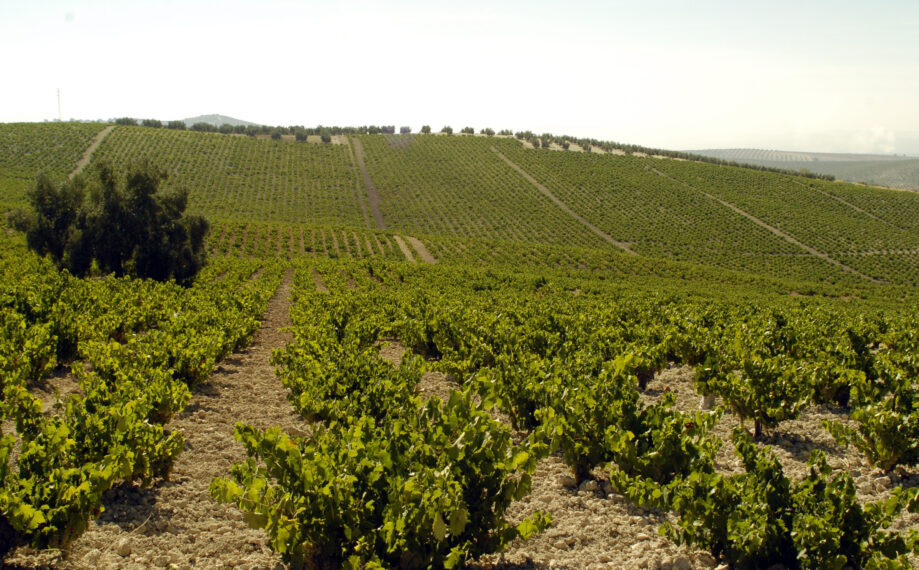
Vineyard in Montilla Spain

Landscapes around farms are rarely managed to suppress damaging crop pests, partially because researchers rarely measure the key variables that drive farming decisions. This paper, however “shows how using really huge datasets—in this case generated by government employees working with farmers in Spain–can reveal how natural habitats surrounding agriculture can shape pest outbreaks and pesticide use in vineyards,” said co-author Jay Rosenheim, distinguished professor in the UC Davis Department of Entomology and Nematology.

Their results suggest that landscape simplification could affect not only farm yields, but also  environmental and human health. They noted that insecticide applications doubled in vineyard-dominated landscapes but declined in vineyards surrounded by shrubland. “Habitat conservation thus represents an economically and environmentally sound approach for achieving sustainable grape production in Spain,” said Karp.

Why might pests be more of a problem on vineyards surrounded by more vineyards? One possibility is that vast stretches of vineyards allow pest populations to build up quickly. Another possibility is that simple vineyard landscapes may not contain enough resources to support predatory insects that natural control vineyard pests. Whatever the reason, it seems clear that “cultivating crops in monoculture creates the perfect conditions for specialist pest outbreaks,” they related, so “farmers have consistently turned to insecticides to maintain high yields under constant pest pressure.”

A solution? At an individual level, farmers may better control L. botrana populations through planting native vegetation in and around their farm. Ideally, they would coordinate with each other to maintain and/or restore large patches of productive, shrubland habitats in the surrounding landscape.

Other co-authors are Rebecca Chaplin-Kramer, Natural Capital Project, Stanford University; and Silvia Winter, Institute of Plant Protection, University of Natural Resources and Life Sciences, Vienna, Austria.

Their work was financed by the research project SECBIVIT, or “scenarios for providing multiple ecosystem services and biodiversity in viticultural landscapes,” and a National Science Foundation/USA grant.


2020-10-26T10:52:39-07:00October 26th, 2020|

Smoke Taint May Impact 2020 Vintage


2020 Winegrape Vintage May be Impacted by Smoke Taint

By Tim Hammerich with the AgInformation Network

As the 2020 grape finishes up , so do concerns about how smoke-tainted grapes might impact wine quality. Growers are getting samples tested, but labs are inundated.

“The backlog at labs are now like around anything from 5-30 days, depending on what lab you’re sending it to,” said  Dr. Anita Oberholster a cooperative extension specialist in enology.

She says many of the results are falling into a grey area which can really limit a grower’s options.

“What sometimes happens is because there’s this huge gray area a winery would say: Okay, I will accept your fruit. However, if the wine ends up being impacted, I will pay you only this percentage of the value of your fruit. Or I will send you the fruit back and you need to pay me for my processing costs,” said Oberholster.

That grey area is due to the fact that there are not industry standards for how much of these compounds are tolerable in the fruit. In some cases growers have insurance that can help recoup some of their costs.

“If you have a higher end contract, some insurance contracts will give you some money for decrease in quality. So if it gets rejected down the line, you can potentially still put a claim in, but it really depends on your specific insurance,” Oberholster said.

2020-10-21T12:51:52-07:00October 21st, 2020|

New Reporting Obligations For COVID-10

Employer’s New Notice and Reporting Obligations for COVID-19 Workplace Exposure


Written by The Saqui Law Group and Jorge Lopez Espindola


In response to the Coronavirus Pandemic, the California Legislature passed Assembly Bill (“AB”) 685, requiring employers to notify every employee of potential COVID-19 exposure at the workplace. Governor Newsom signed AB 685 into law and it will go into effect on January 1, 2021. AB 685 will bring the following changes to employers in California:

Expand Cal/OSHA’s Power to Issue Stop Work Orders
AB 685 expands Cal/OSHA’s authority to issue Stop Work Orders for workplaces that pose risk of an “imminent hazard” in relation to COVID-19. This “imminent hazard” is a hazard that threatens immediate and serious physical harm. This allows Cal/OSHA to prohibit entry into a section of a business or place of employment where there is an imminent risk of COVID-19 exposure and requires the immediate area where the imminent hazard exists to be prohibited. Violation of this law order is considered a criminal offense.

Employers Must Notify Employees of COVID-19 Exposures
AB 685 establishes a comprehensive notice procedure that employers must follow, within one (1) business day, when they receive notice of potential exposure to COVID-19:

  1. Provide written notice in a manner typically used to communicate to all employees, employers of subcontracted employees, and employee-representatives (e.g., unions), where they may have been exposed to the virus. Employers may send a letter, email, or text message, but only if employees anticipate receiving communication from the employer in this manner. The notification must be in writing and a phone call will not satisfy this requirement. Also, written communication should be in English, and the language understood by the majority of the employees;
  2. Provide written notice to all employees and employee representatives regarding COVID-19 related benefits that employees may receive, including paid sick leave, workers’ compensation, and anti-retaliation protections;
  3. Notify all employees regarding the Company’s disinfection protocols and safety plan to eliminate any further exposures;
  4. Notify California’s Department of Public Health if there are sufficient COVID-19 positive cases that meet the definition of a COVID-19 outbreak.

Fast-Tracks Cal/OSHA’s Citation Procedure
Normally, when Cal/OSHA intends to issue a serious citation, they give an employer some notice of the imminent citation to allow the employer to defend itself before the issuance of the formal citation. AB 685 disperses with the employer’s opportunity to defend itself before the formal issuance of a COVID-19 related-serious citation. Therefore, if Cal/OSHA issues a serious citation, employers should closely monitor the statute of limitations to respond to the citation in a timely manner. Employers should also contact counsel to evaluate the citation since penalties can be shocking.

COUNSEL TO MANAGEMENT
Employers should have a COVID-19 preparedness plan. Employers should develop a plan NOW on how to comply with AB 685—January 1st is looming near. If you have any questions about how this new law will affect your company, contact the experts at The Saqui Law Group.


2020-10-20T11:02:43-07:00October 20th, 2020|

AgTech Honors Women That Solve Modern Problems!

‘From Farms to Incubators’ exhibition honors women who merge ag and tech to solve modern problems

Multimedia exhibition premiers Nov. 12 at National Steinbeck Center

The modern intersection of agriculture and technology has brought to the forefront a diverse generation of women working to overcome rising challenges through new perspectives and solutions.
A new special exhibition at the Steinbeck Center in Salinas lifts up stories of these innovators to help inspire and encourage young women to consider careers in agtech.

“From Farms to Incubators: Women Innovators in California Agtech” uses multimedia and digital storytelling – including video, documentary and still photography – to honor these groundbreaking pioneers. The exhibition is the brainchild of Amy Wu an award-winning journalist for women’s ag and agtech movement and the creator of “From Farms to Incubators.”


“My passion to unearth underreported stories and amplify new voices is what led me to highlight the stories of emerging communities in agriculture,” says Wu. “Ultimately, I hope the exhibition, film series and book serves as vehicles to inspire youth – especially those from rural or underserved communities – to consider that agriculture extends far beyond tractors and overalls and it is a sector that offers an amazing range of opportunities that involve innovation.”


Michele Speich the Executive Director National Steinbeck Center says:

“Women for centuries have played a vital role in farm operations across the country and globally. We are thrilled that Amy Wu has chosen to tell the stories of minority women entrepreneurs in Agtech in the Salinas Valley and beyond in a book and in an exhibition at the National Steinbeck Center,” says Speich.

Presented by the group From Farms to Incubators, the exhibition kicks off Thursday, Nov. 12 with a virtual opening event from 4-6 p.m. PACIFIC TIME, with viewing available through Jan. 12.


The virtual opening will include special speakers including California Senator Anna Caballero, Dennis Donohue the head of Western Growers Center for Innovation and Technology and Karen Caplan the president and CEO of Frieda’s Specialty Produce, a panel discussion led by leading women innovators in ag and agtech, and a sneak preview of the exhibition and films.

Attendees have the opportunity to win prizes, including a copy of the forthcoming book “From Farms to Incubators: Women Innovators in California Agtech,” telling the stories of women entrepreneurs who use technology to help solve problems ranging from climate change and limited water to uncertainties in immigration policy.  The book will be published in April 2021 under Linden Publishing’s Craven Street Books division, specializing in titles on California and the history of the western United States.

Many of those portrayed are women of color who come from diverse backgrounds, the first in their families to complete higher education. What drew them into the nascent but fast-growing sector of agtech? What caused them to uproot themselves to pursue a start-up dream in an industry that continues to be dominated by men? How are they getting their innovation into the hands of growers?

The exhibition and the book attempt to answer these questions and create awareness of women leaders and entrepreneurs.

The National Steinbeck Center in Salinas, Calif., is dedicated to Steinbeck’s creative legacy: to participate, to inspire, to educate, and to understand one another. Find out more at www.steinbeck.org.


“From Farms to Incubators” is a multimedia platform that uses digital storytelling to increase awareness of women leaders and entrepreneurs and their contribution using technology through the agriculture sector, and encourage women to pursue careers in agtech. Find out more at www.farmstoincubators.com


For more information email Amy Wu at amy@farmstoincubators.com or call 914-771-1275.


2020-10-12T11:24:45-07:00October 12th, 2020|

NO on Proposition 15 Campaign – CALL FOR ACTION

If Passed, It Would be the Largest Tax Hike in California’s History

The largest tax hike in California’s history is on the ballot, and if passed would create $12.5 billion in new taxes, the largest tax hike in our state’s history.  

It is known as Proposition 15, and it would eliminate the 1% cap on property taxes for businesses throughout the state, including agricultural processing facilities such as tree nut hullers and processors.  In addition, it would trigger annual reassessments for agricultural fixtures, such as irrigation systems, solar installations on farms and processors, barns, and even permanent crop trees and vines.  

In a year like 2020, it is difficult to fathom we are facing something like Proposition 15.  For tree nut growers, hullers and processors, the time to take a stand is right now!  We need your help!  We need every member to contribute!

Therefore, we are respectfully asking each of our members to send us a check for $500 to $1,000 to help specifically on this effort.  We have raised over $35,000 to date towards our goal of $50,000!

We want to thank members that have stepped up to help so far, like Central California Almond Growers Association, Horizon Nut, Superior Almond Hulling, JSS Almonds, River Oak Orchards, Gold River Orchards, Cortina Hulling and Shelling, Kern Pareil, Inc, Alldrin Farms, and Andersen & Sons Shelling.  I also want to thank our Associate members like Fresno Rack and Shelving, Boer Commodities, Daniel C. Salas Harvesting and North Valley Ag Services for helping as well.  Lastly, we want to thank individuals and farms like AJ Carvalho & Sons, Pretzer Farms, Barton Ranches, Bill and Dan Prosperi, Clausen Almonds, David Munro and Donald Milburn for their efforts too!

Please fill out the attached form and make the check payable to Alliance of California’s Farmers and Ranchers and mail it back to our office at 1785 N. Fine Avenue, Fresno, California, 93727.  If you should have any questions, please call our office at (559)455-9272.

2020-10-07T12:54:28-07:00October 7th, 2020|

Preparing for the 2021 Almond Crop

Think About the 2021 Budget

By Patrick Cavanaugh, with the Ag Information Network
Franz Neiderholzer is a UCANR Orchard System Farm Advisor based in Colusa County and he also helps growers in Sutter and Yuba counties. He said over the next couple of months, it’s good to budget for next year.


“The price looks like it might be coming up a little and that’s good, but careful budgeting needs to be stated—basically everything you do now, other than watering, the trees in preparation for the 2021 crop,” Neiderholzer said.

Neiderholzer spoke about the potential less water available for growers, next year. “There’s talk about a La Niña winter, which isn’t a guarantee of anything, except it’s more of a chance of a light rainfall year. So what that means to growers is possibly reduced surface water application,” noted Neiderholzer.

“So when you’re budgeting for next year, start with your, paying for water or whatever you need to do to have good quality water available that could cut into your budget for next year, but it’s critical for good production,” he explained.

“So basically build your budget for the 2021 season on stuff that you know is going to bring you value,” he said.


2020-10-05T13:30:27-07:00October 5th, 2020|

USDA To Help Many Affected by Wildfires

Disaster Supplemental Nutrition Assistance Program Available for Those In Need Due Fires

U.S. Secretary of Agriculture Sonny Perdue announced today that low-income California residents dealing with the ongoing wildfires could be eligible for a helping hand from the U.S. Department of Agriculture’s Disaster Supplemental Nutrition Assistance Program (D-SNAP).
Secretary Perdue said that households who may not normally be eligible under regular Supplemental Nutrition Assistance Program (SNAP) rules may qualify for D-SNAP – if they meet the disaster income limits and have qualifying disaster-related expenses.
forests“USDA is committed to ensuring Californians affected by these wildfires have enough to eat and will be here to help throughout their entire recovery. D-SNAP will be a vital part of our ongoing, on-the-ground food assistance,” Secretary Perdue said.
To be eligible for D-SNAP, a household must either live or work in an identified disaster area, have been affected by the disaster, and meet certain D-SNAP eligibility criteria. Eligible households will receive one month of benefits – equal to the maximum amount for a SNAP household of their size – to meet their temporary food needs as they settle back home following the disaster. California will share information about D-SNAP application dates and locations through local media.
The timing of D-SNAP varies with the unique circumstances of each disaster, Secretary Perdue said, but always begins after commercial channels of food distribution have been restored and families are able to purchase and prepare food at home. Before operating a D-SNAP, a state must ensure that the proper public information, staffing and resources are in place.
Although current SNAP (known as CalFresh in the state of California) households are not eligible for D-SNAP, under the Families First Coronavirus Response Act of 2020, USDA previously approved emergency allotments for California in response to the ongoing COVID-19 pandemic. Therefore, ongoing SNAP households have already received the maximum allotment for their household size for the month of September. California will continue to issue replacement benefits to current SNAP households who lost food as a result of the wildfires.
The D-SNAP announcement today is the latest in a battery of USDA actions taken to help California residents cope with the wildfires. These include:
  • Allowing participants to buy hot foods with their SNAP benefits at authorized SNAP retailers in certain counties.
  • Automatic mass replacement of a portion of SNAP benefits for residents of specific counties who may have lost food due to the wildfires and associated power outages.
  • Extending the deadline for school meal program operators in certain counties to submit reimbursement claims for meals served;
  • Providing households in certain counties with more time to request replacement SNAP benefits for food lost; and
  • Retroactively distributing Commodity Supplemental Food Program food packages that The Redwood Empire Food Bank was unable to deliver in August due to wildfire-related road closures and evacuations.
Individuals seeking more information about this and other available aid should dial 2-1-1. For more information about California’s SNAP program, CalFresh, visit www.cdss.ca.gov/food-nutrition/calfresh.
Further, USDA’s Food and Nutrition Service (FNS) continues to provide significant support to California residents as part of its ongoing response to COVID-19. For more information on flexibilities provided to California, visit the FNS California COVID-19 Response webpage.
USDA’s Food and Nutrition Service administers 15 nutrition assistance programs that leverage American’s agricultural abundance to ensure children and low-income individuals and families have nutritious food to eat. FNS also co-develops the Dietary Guidelines for Americans, which provide science-based nutrition recommendations and serve as the cornerstone of federal nutrition policy. Follow us on Twitter at @USDANutrition.
2020-10-01T10:31:12-07:00October 1st, 2020|

Hotels Expanded for COVID Positive Farm Workers

More Hotels in More Counties Are Available for Any Farm and Food Processing Employees Not Able to Isolate At Home Due to COVID-19


The California Department of Food and Agriculture (CDFA) has announced that the counties of Kings, Riverside and Tulare will participate in Housing for the Harvest, a program announced by Governor Gavin Newsom in July to provide temporary hotel housing options for farm and food processing employees to self-isolate if they are COVID-19 positive and do not require hospitalization, or have been exposed and cannot properly self-isolate at home. Six counties are now participating in Housing for the Harvest: Kings, Riverside, Tulare, Santa Barbara, Fresno and San Joaquin.

The state is securing hotel rooms in participating counties, with local governments identifying administrators to manage the program and local community organizations to provide additional services, like meals, wellness checks and in-language assistance. Local administrators will serve as a point of contact for eligible workers. “Counties across the state are stepping up to provide a safe, temporary housing solution to protect agricultural workers who need to isolate,” said CDFA secretary Karen Ross. “These hardworking men and women are on the front lines of the pandemic and it is critical that we protect them, their families, and local communities.”

Housing for the Harvest will ultimately be made available statewide and provide opt-in housing support for any counties or regions that are interested. California has received FEMA approval for this program during the COVID-19 pandemic and will seek federal reimbursement for 75 percent of hotel costs.

Kings County
Kings County has partnered with Kings Community Action Organization (KCAO) to administer Housing for the Harvest as part of Kings Cares. In addition to hotel quarantine support such as transportation, meals, wellness checks and laundry service, Kings County has allocated resources for financial assistance and additional support for family at home.  Farmworkers and food processing workers in Kings County who are in need of these services are urged to visit www.thehealthyharvest.org or www.cosechasana.org or call 559-710-2000. Please note that personal information gathered through this process will be kept confidential. For agricultural business on-site testing scheduling, please visit www.thehealthyharvest.org.
Riverside County

Riverside County’s Department of Housing, Homelessness Prevention and Workforce Solutions has partnered with the local TODEC Legal Center to manage Housing for the Harvest in the county. The Riverside program will include meals, food, transportation and direct financial assistance of $2,000 for each family participating in the program.  Farmworkers or food processing workers in Riverside County who are in need of these services are urged to contact the TODEC Legal Center at (888) 863-3291 or via email at campo@todec.org. Please note that personal information gathered through this process will be kept confidential.
Tulare County

Tulare County’s program will be administered by Proteus, Inc. in coordination with the county’s Community Care Coalition. Through additional efforts of coalition partners, supplemental services are being offered to support families at home. The Central Valley Community Foundation has formed a regional Healthy Harvest program and will provide additional funding for support services and outreach. These partnerships are crucial to ensure needed outreach and investment in local communities.

Farmworkers and food processing workers in Tulare County who are in need of these services are urged to visit www.thehealthyharvest.org or www.cosechasana.org or call 559-710-2000. Please note that personal information gathered through this process will be kept confidential. For agricultural business on-site testing scheduling, please visit www.thehealthyharvest.org. We will continue to update you as more counties come on line.

2020-09-23T13:31:13-07:00September 23rd, 2020|

UC Riverside Awarded Big Grant

UC Riverside Wins Grant to Bring Artificial Intelligence to the Colorado River Basin

By Tim Hammerich with the Ag Information Network

The University of California, Riverside recently won a $10 million grant to develop artificial intelligence to improve environmental and economic stability throughout the western U.S.

Elia Scudiero is a Research Agronomist at the UC Riverside

“So this will bring together university personnel and ag-tech companies that will provide training that will serve the farming communities in California, Arizona, Colorado, and the native American communities in the Colorado River Basin,” said Scudiero. “So we really hope that this is well -received by the growers and it can be useful to improve their current practices so that we can then continue this program beyond the duration of the project.”

Partnering with UC Riverside on this are Colorado State, Duke, University of Georgia, and the University of Arizona. Included in the program is an undergraduate Digital Agricultural Fellowship.

“So we are going to pair these undergraduate students with a faculty advisor for over a year, creating a very tight relationship there,” said Scudiero. “And these students will carry out independent research in the university lab. But at the same time, we will complement this type of experience for the students by sending them to have industry internships at our partners in the ag-tech industry.”

Stay tuned for more information on this exciting project to bring more artificial intelligence to agriculture. The researchers plan to release a website in the coming year.

2020-09-21T11:01:37-07:00September 21st, 2020|
Go to Top