Alliance for Food and Farming: EWG Unfairly Targets Apples and Needlessly Scares Consumers

Watsonville, CA — A non-profit group representing farmers of conventional and organic fruits and vegetables is urging caution concerning claims made today by the Environmental Working Group (EWG).

According to the Alliance for Food and Farming, the EWG is making an attempt to reinvigorate waning media interest in its upcoming Shoppers Guide to Pesticides in Produce,  by making inflammatory claims about the safety of apples, a favorite fruit of Americans and, in particular, children.

“EWG is once again scaring consumers about an extremely safe and healthy product that parents should be feeding their children more of for good health,” said Marilyn Dolan, Executive Director of the Alliance for Food and Farming.  “The Alliance is disappointed apples are once again being unfairly targeted by an activist group, which is distorting the facts.  We are urging reporters to use caution and that they contact reputable scientists, government agencies and nutritionists for more information before jeopardizing the livelihoods of family farmers and needlessly scaring consumers.”

The Alliance notes the EWG claims concern a compound, known as DPA, applied to apples following harvest to prevent them scalding during cold storage.  Monitoring of this compound is regularly conducted as part of the United States Department of Agriculture Pesticide Data Program (PDP) and it has been found to be well below tolerance levels. More than 60 countries and the World Health Organization have found this compound to be safe when used according to stringent regulations governing all uses of pesticides by U.S. farmers.

Dr. Carl Winter, a toxicologist with the University of California, Davis, states that DPA residues specifically have been shown to be 208 times lower than the US. Environmental Protection Agency’s reference dose.

It should be noted, however, that fresh apples were not included in this year’s PDP report, although they have been tested through this program many times before.  Data from this government report is used by EWG to develop its so-called dirty dozen list, but they may be using old data to make these most recent claims about apples.

“The United States Department of Food and Agriculture and the U.S. Environmental Protection Agency have stated residues do not pose a food safety concern,” said Dolan. “Residues of DPA, or any other pesticide, that may be found on apples are consistently extremely low according to decades of monitoring by government agencies.   The residues are so low, in fact, that an independent toxicological report finds that a small child could eat 154 servings of apples every day without any impact from any residues that might be present.”

The Alliance for Food and Farming has developed a website working with experts in toxicology, nutrition, risk assessment and farming where people can learn more about the regulations in place to ensure the safety of fruits and vegetables at www.safefruitsandveggies.com.

Dolan urged consumers to use its pesticide residue calculator to learn more about residues on their favorite fruits and vegetables and she emphasized that health experts around the world agree, and even the EWG has stated, that a diet rich in fruits and vegetables far outweighs any risks from residues that may be present.

She also emphasizes that decades of research backs up the clear health benefits associated with eating conventionally grown fruits and vegetables.  A series of reports on these health benefits can be found on the Safe Fruits and Veggies website.

The Alliance for Food and Farming has been preparing for the annual release of the EWG’s Dirty Dozen list, which is scheduled for release next week. The Alliance has been successful in recent years in shedding more light on the topic of pesticide residues by giving consumers and media more information about the safety of conventional and organic fruits and vegetables. As a result of this work, consumers now have a science-based resource for information, unlike the EWG Shoppers Guide, which is not based on peer-reviewed science.
2016-05-31T19:38:00-07:00April 25th, 2014|

Seminar on Sustainable & Organic Practices in Southern California

An all day seminar for growers and crop consultants focusing on sustainable and organic farming practices for pest management and plant health in Southern California will be held on June 19.

Subjects include: County of San Diego Department of Agriculture Regulatory Update, BioControl of Pests, Micronutrient Use, Essential Plant Nutrition, Soil Testing, Mycorrhizal Inoculants, Soil Amendments/Compost, Organic Weed Control, Optimizing Organic Fertilizer Application and an Organic Grower Panel Discussion.

Also exhibits by firms providing products acceptable for organic and sustainable production.  CEUs are offered for Certified Crop Advisers (6.0 hours) and licensed Pest Control Advisers (6.0 hours).

WHO: Presented by the San Diego County Chapter of California Association of Pest Control Advisers and Organic Fertilizer Association of California.

WHEN: Thursday, June 19, 2014, 8:00 am – 3:00 pm.

WHERE: Pala Mesa Resort, 2001 Old Highway 395, Fallbrook, CA

INFO: Contact Steven Beckley, (916)539-4107, sbeckley@aol.com.

Program and Registration is available at https://capcaed.com/continuing-ed-seminars/june-19-2014-fallbrook-sustainable/organic-practices-in-southern-california


2016-05-31T19:38:00-07:00April 25th, 2014|

A Rant on the War for Water — or perhaps just a restatement of the obvious

Commentary by Laurie Greene, Editor

The War for Water has become more complex, fractious, and dire.


The battles are marked by staggering amounts of purchased-but-undelivered water supplies; broken contract obligations;


local water districts scrambling to find any source of water at any price; water theft; water diversion; water re-diversion; fishery restoration;


rapidly escalating overdraft and land subsidence conditions; lack of river improvements; reservoirs drying and dying; an epidemic of well drilling;


aging water infrastructure; farmers resorting to water sales profits instead of crop profits; fallowed fields;


threatened species, pitting environmental conservationists against farmer environmentalists and humans versus fish;


fish trucking; climate change confusion and unpreparedness; deals for more water imports; decisions for no Delta exports; water supply runoff;


compromised and halted agricultural research; approvals, denials, exceptions. . .

Drought - No Water Logo


We are employing politicians, lawyers, government agencies, scientists, and institutions of education to discuss and solve our water crisis. . .


and money has been thrown at farmers, food banks, and emergency services;


but we are not investing in, creating, and aggressively launching new water storage, balanced and effective environmental solutions for threatened species;


improved sewage disposal; enforced urban water conservation; modern water conveyance and infrastructure; groundwater renewal; wide-use of desalination technology.


We face curtailed critical agricultural research; unemployment; increased crime–according to some; increased health costs; declining water quality; disappearing snowpack;


school and business shutdowns; mortgage forfeiture; homelessness;


community failures; permanent loss of farm laborers; food shortages; increased stress on food banks with dwindling food supplies;


increased food insecurity and exposure to imported food safety risks; raised food and water prices; possible loss of domestic and foreign markets; threatened economies—


‘not to mention sheer human stress, panic, and grief.


Yet, we are urging, pleading, debating, meeting, emailing, tweeting, phoning, rallying, regulating, appealing, suing, petitioning, curtailing, strategizing; lobbying . . .


What academic or worldly discipline – geography, sociology, biology, chemistry, economics, politics, psychology, medicine – or realm of life – will NOT be affected?


Who does not need food, water, air, and an income?


At what point will we hit bottom, having suffered so much that we are finally forced to compromise and reach a survivable compromised existence?


At that point, will it even be possible?


Sources and Inspiration:

Friant Waterline, “Today’s River And Salmon”, http://friantwaterline.org/todays-river-and-salmon/

Merced Sun-Star, “Merced Irrigation District Seals Deal with State for More Irrigation Water”, mercedsunstar.com/2014/04/23/3615393/mid-seals-deal-with-state-for.html?sp=/99/100/&ihp=1

Western Farm Press, “Drought Chokes Research Efforts in California”, http://westernfarmpress.com/irrigation/drought-chokes-ag-research-efforts-california?page=5

Maven’s Notebook, in general, http://mavensnotebook.com

Salt, “Fields And Farm Jobs Dry Up With California’s Worsening Drought”, http://www.npr.org/blogs/thesalt/2014/04/22/303726931/fields-and-farm-jobs-dry-up-with-californias-worsening-drought

State Water Resources Control Board; ACWA eNews; ACWA; Western United Dairymen

2016-05-31T19:38:01-07:00April 25th, 2014|

California Wine Sales Grow 3% by Volume and 5% by Value in the U.S. in 2013

California wine shipments within the U.S. were 215 million cases in 2013, up 3% from the previous year, with an estimated retail value of $23.1 billion, up 5%. California wine sales to all markets, both domestic and international, increased 3% by volume to 258 million cases in 2013.

“With two record winegrape harvests in 2012 and 2013, California wineries were able to meet consumer demand, and these recent vintages are receiving high praise worldwide,” said Robert P. (Bobby) Koch, Wine Institute President and CEO.

“In 2013, wineries gradually released the highly acclaimed wines from the large 2012 California harvest, offsetting the slowdown in American wine market growth due to short vintages in 2010 and 2011 and continuing soft economic conditions,” said wine industry consultant Jon Fredrikson of Gomberg, Fredrikson & Associates in Woodside.

“In response to these market factors, California wineries focused on sales of premium table wines priced at $10 and above, which increased by 9% in volume and made up nearly half of winery revenues.”

Fredrikson explained that 2013 remained highly competitive. The U.S. Tax and Trade Bureau approved nearly 99,000 wine label registrations, the majority of these from foreign producers, which crowded trade channels and vied for consumer attention and shelf space.

In addition, over the past five years the number of alcohol production permits increased by 4,100, up 47%, not only for new wineries, but for craft breweries, distilleries and cider producers, expanding the product mix offerings.

The large number of beverage alcohol products continued to squeeze distribution channels, and many small- and medium-sized wineries looked to direct-to-consumer sales through tasting rooms, wine clubs, online marketing and other direct sales channels, using social media and other digital communications to reach out to consumers.

Brick and mortar retail outlets selling wine continued to increase, expanding by 62,000 locations over the last five years, up 12% to 550,000 outlets, according to the Nielsen Company, a global provider of information and insights into what consumers watch and buy.

“Retailers are stepping up their game with more sales locations, making wine more accessible to consumers than ever before,” said Danny Brager, Senior Vice President of Nielsen’s Beverage Alcohol Practice Area. “Consumers have also shown that they’re willing to spend a bit more on a bottle of wine than in previous years.”

According to Nielsen measured U.S. off-premise channel numbers, the most popular wine types were Chardonnay (20% share), Cabernet Sauvignon (13%), Merlot (9%), Red Blends/Sweet Reds (9%) and Pinot Grigio (9%), followed by Moscato (6%), White Zinfandel (5%), Pinot Noir (4%), and Sauvignon Blanc (4%). Moscato, Malbec and Red blends experienced double digit growth, while after that, Pinot Grigio and Pinot Noir exhibited the next strongest upward trends.

The U.S. Wine Market

Wine shipments to the U.S. from all production sources—California, other states and foreign producers—grew 3% to 375.2 million cases with an estimated retail value of $36.3 billion. This represents 21 consecutive years of volume growth.

The U.S. has been the largest wine consuming nation in the world since 2010. California’s 215 million cases shipped within the U.S. represent a 57% share of the U.S. wine market.

Sparkling Wine and Champagne

Lifted by the popularity of Prosecco, shipments of sparkling wine and champagne to the U.S. reached 18.4 million cases in 2013, up 4% over the previous year.

U.S. Wine Exports

U.S. wine exports, 90 percent from California, reached $1.55 billion in winery revenues in 2013, an increase of 16.4% compared to 2012. Volume shipments reached 435.2 million liters or 48.4 million cases.

Wine Institute is the voice for California wine representing more than 1,000 wineries and affiliated businesses from the beautiful and diverse wine regions throughout the state.

2016-05-31T19:38:01-07:00April 24th, 2014|

Rice Growers Selling Water, Not Rice

Kirk Messick, Senior Vice President, Farmers Rice Cooperative in Sacramento, reviewed the water allocations announced last Friday. “The federal water districts have allocated 75% and the state has allocated 100%; however, the districts on the state side are planning to sell 20% of their water to growers who have permanent crops, such as people in the San Joaquin area.”

Messick says rice growers will plant 60 – 65% of their rice acreage, compared to last year, and he thinks there will be quite a movement of federal water towards permanent crops.

Rice growers in northern California are selling their water to growers who need water for permanent crops. Messick said, “Rice farmers are diverting water to San Joaquin, in general, especially to those along the Westside who lack water. They are even providing water to farmers in the north for young permanent crops such as walnut trees, pistachio trees, grapevines, etc.”Rice Field

Messick is worried rice growers will not meet the demand for the rice industry this year because they can make more money by conveying their water elsewhere. “They’re being offered $1500 an acre-foot, and they cannot make that money with rice. They have the right to move the water, and the state is encouraging it because it wants the water to go to the highest and best use, whether for permanent tree crops or urban use. Other water recipients may pay $2-3,000 per acre.

“Though the state has allocated 100% water for ag use in northern California,” Messick continued, “we know already that 6 of the 15 districts in the state system are going to sell 20% of their water, and that’s the minimum.”

“We are going to see water sales for sure. The numbers are upwards of $1500/acre and will reduce what we thought would be 75% planting (compared to last year) down to 60% – 65%.”

Messick expressed concern “that we will not meet some of our markets, particularly the Middle East or those with less money to spend. Some markets will have to buy from other suppliers in the world.”

“We’re better off than a month ago,” Messick reasoned, “because we didn’t know if we would have any water so decisions to sell water have come up.”

“But,” he said, “there’s a lot more going on with competitive medium-grain rice growers facing droughts in the rest of the world, such as in Australia, Turkey, and Egypt. These droughts will cause dramatic cutbacks in rice planting overseas.”

Back at home, Messick is concerned about 2015, “because we have less than 15% snowpack compared to normal, and very low levels in both Shasta and Oroville—and we haven’t even started to use any water for agriculture.”

2016-05-31T19:38:01-07:00April 23rd, 2014|

Agriculture Business Resources announces 2014 Specialty Crop Schools

Two short agriculture business courses will be offered in 2014 for agri-business professionals who want to learn about the scope and intensity of fruit, nut and vegetable production in California.

The June 14-17 session in the San Joaquin Valley and the October 6-9 session in the Salinas Valley will provide outstanding opportunities to delve into California specialty crop agriculture with its unique challenges and opportunities.

The format of the classes will be of value to those new to horticultural crop production as well as seasoned agri-business professionals.

The three-day courses, organized by Visalia-based AgBusiness Resources, have been specifically designed to equip participants with a broad understanding of intense crop production in these unique farm settings.

The San Joaquin Valley session will focus on some of California’s most iconic crops – almonds, citrus, grapes and stone fruit as well as processing tomatoes and Asian vegetables. In the Salinas Valley, lettuce, cole crops, artichokes, strawberries and wine grapes will be featured.

Both Crop Schools will include field visits to farms, processing facilities and research centers as well as classroom time with growers, pest management experts and university scientists.

Representatives from the food, chemical, fertilizer, equipment, packaging, financial, transportation and environmental monitoring industries are encouraged to participate.

Pest Control Advisors and Certified Crop Advisors in attendance will have access to 15 PCA and 15 CCA continuing education units.

Participants at the inaugural 2013 Specialty Crop School benefited from the extensive knowledge and experience of growers, crop managers and other professionals in the agricultural supply chain.

Due to the favorable response and interest expressed last year by attendees at the San Joaquin Valley event, a coastal session has been organized for 2014.

Class sizes will be limited and seats are available on a first come first served basis. For complete course topics and registration information for both schools, go to www.specialtycropschool.com.

For media inquiries: Email Cecilia Parsons at Ceciliaparsons8@gmail.com or call at 559-920-4936

2016-05-31T19:38:01-07:00April 23rd, 2014|

Valley Citrus Growers Receive 0% Water Allocation; Citrus Growers Available for Interviews April 23, 2014!

Late last week, the California Department of Water Resources (DWR) announced that rain and snow storms in February and March have allowed an increase of water contract allocations for State Water Project deliveries from zero to five percent.

Although this appears to have been positive news for agricultural interests in the San Joaquin Valley, it is far from it.  The DWR announcement went on to state that the precipitation from these recent storms eliminates the need for rock barriers to be constructed in the Delta.  This means that the increase in water deliveries will be flushed into the ocean in order to protect fish species and prevent saltwater intrusion in the Delta. San Joaquin Valley agriculture remains at zero percent allocation.

Approximately 75% of the California citrus crop is produced in Tulare, Kern, and Fresno Counties.  A majority of this acreage relies on surface water from the Friant-Kern Canal.  DWR’s delivery increase does nothing to reduce the pressure on the Friant from exchange contractors who would otherwise receive their water via the State Water Project.

Earlier this month, the DWR and State Water Resources Control Board (SWRCB) released a 168-page document they refer to as the “plan.”  However, the plan does not refer once to the people or the economy that will be impacted by zero water allocation to agriculture.  The word “farmer”, or “agriculture”, appears once.  The word “fish” is stated 328 times.

California Citrus Mutual President Joel Nelsen

California Citrus Mutual President Joel Nelsen

“Friday’s announcement was made with much fanfare and yet the decision completely ignores the East side of the San Joaquin Valley, and even stipulates that we are not important,” says CCM President Joel Nelsen.

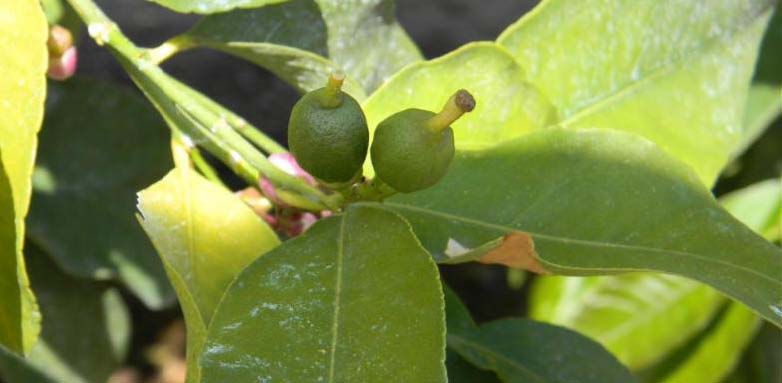
The photo above depicts “petal fall” and the first life stages of an orange, when the blooms have fallen.  It is at this critical point of the growing season, when we enter into the hottest months of the year, that sufficient water is available for the cultivation of the crop.

California is the Nation’s number one supplier of fresh citrus. “Our Valley is the number supplier of fresh fruits and vegetables and yet that does not enter into the equation for water needs,” continues Nelsen.  “What ever happened to the goal of providing a bountiful array of fresh produce at affordable prices?”

The Friant-Kern Canal needs at least 200,000 acre-feet to remain functioning.  The decision not to release sufficient water to the State Water Project guarantees that exchange contractors will call upon their first rights to water supplies in Millerton Lake and reduce the amount that would otherwise flow to the Friant-Kern Canal.  This decision is forcing growers to make their own decision – between pushing out trees and holding out for water that may come too late, or not at all. Over 50,000 acres of citrus in the San Joaquin Valley is at risk. But, it is not just trees that will be pushed if Friant does not receive water – jobs will be pushed, people will be pushed, and the economy will surely suffer.

“I continue to be mystified by the announcement last Friday and the inconsistencies it presents,” says Nelsen.  “The announcement on Friday and previous announcements all state that the public should strive to conserve at least 20% of their normal water use.  Yet the producers I represent, and for that matter all producers on the Eastside of the San Joaquin Valley, are being told to give up 100% of their water.  In fact, those in the Friant Service area are the only contractors being asked to give up 100% of their water.”

This situation is real and devastating for many family citrus farmers.  Here are a just a few growers who are facing zero water allocations. 

Andrew Brown

Andrew Brown

These growers, and others, will be available for interviews tomorrow, April 23rd at 2:00 p.m. at the Lamp Liter Inn in Visalia.  Please provide advanced notice to Alyssa Houtby, 559-737-8899 if you plan to attend. 


Andrew Brown, a fourth generation citrus grower in the Orange Cove, Orosi/Cutler area works alongside his father and brothers on his family’s farm.  Andrew has known since college he would follow in his father’s footsteps and return to faming because it is a rewarding business mentally, spiritually, financially. Now he has his own ranch where, one day, his two young children want to be second generation farmers.  


Gus Carranza

Gus Carranza

Gus Carranza grew up picking oranges in the San Joaquin Valley alongside his parents. He worked through school as a truck driver for a farming operation. His career in the citrus industry eventually led him to work for a major citrus grower-shipper operation.  He now manages their field department.

In 2000, he started farming his own acreage in Terra Bella with his brothers.  What began as a 10-acre operation has now expanded to 130 acres.  Carranza has received zero surface water this year. Unless something changes, he will watch his trees die, and watch his investment of $30,000 per acre die with them.

Maribel Nenna

Maribel Nenna


Maribel Nenna works for a packing house in Southern California as the operation’s field advisor in the Central Valley. Ten years ago, she and her brother took their passion for the citrus industry and purchased 10 acres of citrus. Today, they farm 40 acres – all have received zero water allocation. In two weeks those trees, approximately 135 trees per acre, will lose their crop if they do not receive water. 

Matt Leider

Matt Leider


Matt Leider is a 5th generation citrus producer.  He grew up working on his mother’s ranch in Southern California before going to college. His involvement in the citrus industry is now two-fold.  He works on his uncle’s citrus ranch in Porterville, and manages a successful mechanical pruning business that services citrus growers throughout the Valley.  He needs one acre-foot of water per acre just to keep his family’s citrus acreage alive, but he doesn’t have it.

Carlos Gutierrez

Carlos Gutierrez


Carlos Gutierrez came to Lindsay when he was four years old. In 1999 he started a portable restroom business servicing citrus harvest crews.  He then bought 12 acres of citrus on his own in 2001.  Now, he manages harvesting crews for a packing house and owns over 100 acres on his own.  He has a little water, but not enough to keep all of his acreage alive.


Jesus Ramos farms 86 acres in Terra Bella and another 50 acres in Strathmore.  He put down a deposit of $600 per acre-foot for water, and now hopes to find water at $1,200 an acre-foot.  But, he can’t find any because none is available.  He hopes to save his best acreage because he knows he can’t save everything.


The California citrus industry is dominated by family farmers.  “Everybody talks about protecting the family farmer, but by denying surface water to the Friant service area the state’s water agencies are aiding in their demise,” concludes Nelsen.


2016-05-31T19:38:01-07:00April 23rd, 2014|

Cooperative Extension Turns 100 May 8

Barbara Allen-Diaz, University of California Vice President, Division of Agriculture and Natural Resources, talked with California Ag Today about the 100th anniversary of the Cooperative Extension.

On May 8, 1914, President Woodrow Wilson signed into law the Smith-Lever Act, which created Cooperative Extension to help farmers, homemakers and youth apply the latest university research to improve their lives.

Barbara Allen-Diaz“For us, it’s very exciting,” said Allen-Diaz, “because we re going to celebrate our 100th birthday party of Cooperative Extension over this entire year; but in particular, on May 8, 2014, we will try to engage as many people as possible across the state of California in our day called, “A Celebration of Science and Service.” 

Allen-Diaz continued, “We’re asking folks through our local community groups, public K-12 schools, students on our campuses, all of our 4-H clubs throughout the state, even folks on our Google campus, to participate with us in celebrating 100th years of cooperative extension by being a scientist for the day.”

Cooperative Extension wants everybody to go to their “Be a Scientist for a Day” website for this day of citizen science and service, to answer all three or any one of the three following questions:

“The first question is on pollinators,” said Allen-Diaz. “We want people to count how many pollinators they see outside in their yard, in their school garden, at their place of work, wherever they are when they log on, and count how many pollinators, such as bees, butterflies, dragonflies, etc., they see over a three-minute period.”

“We have information on our website to learn about pollinators, since we’re an education institute, and how important they are not only to the future of agriculture,” she explained, “but really to the future of life on this planet. Because that’s how plants are able to produce seeds—having their flowers pollinated.”

UCCE Centennial Carrots

“Pollinators are an incredibly important part of our ecosystems throughout the world so, not only for food production,” commented Allen-Diaz, “but also for the health of all our ecosystems.

“The second question deals with water,” continued Allen-Diaz. “Obviously, water is incredibly important to all of us. In this particular year of record drought we’d really like to know how you conserve water in your daily life. There will be a series of drop down menus where you can input your data.”

Allen-Diaz stated, “The third question is on food, again with drop-down menus. Where does your food come from? Where do you get your food?”

“We ask for your location, though you can choose not to answer,” remarked Allen-Diaz, “whether people log on through their phone, computer, iPad or other instruments. With these geopoints, we can analyze the data and produce a map of the state and show everyone where pollinators are, water use by region, and where our food comes from. The more people who log on and participate, to the more we can populate our map of California.”

“For 100 years, we have engaged our local communities to work with us in problem-solving issues of importance in agricultural natural resources, nutrition, urban horticulture, home economics, and use development,” said Allen-Diaz.

2016-05-31T19:38:01-07:00April 22nd, 2014|

Earth Day, 2014

Source: Tara Weaver-Missick, USDA Agricultural Research Service Information Staff 

Today is Earth Day, which gives us the opportunity to celebrate the magnificence of our planet.  It’s a day to observe and support our environmental commitment to our pearth daylanet now and in the future.

USDA scientists play an important role in protecting our environment.  Much of our research is focused on finding sustainable agricultural solutions to producing food, feed and fiber to meet our nation’s and the world’s ever-growing demand.

We develop environmentally friendly practices that farmers, ranchers, and others involved in food production can integrate into their operations.

One such project spearheaded by USDA-Agricultural Research Service scientists is the Long-Term Agro-ecosystem Research (LTAR) network, which addresses how to intensify production while minimizing environmental impact.

ARS established LTAR—which includes 18 experimental watersheds, rangelands and farms—to more closely coordinate and examine large-scale, multi-year research, environmental management and technology transfer efforts related to the nation’s agricultural ecosystems.

ARS scientists are gathering data from these sites to evaluate and develop practices that help keep farmers in business, but that are economical as well.  To do so, scientists will analyze agricultural production, environmental quality, natural resource use and economic return over the next 30 to 50 years, against a background of global population growth, land use change and climate variability that makes predicting future trends difficult.

LTAR sites are spread across the United States and are located in major watersheds—each with its own unique landscape, environmental influences and habitat. Each region has its own unique environment and growing conditions that farmers and ranchers have to weigh.

Information derived from this project will be used to develop site- and region-specific agricultural production practices that protect and enrich our natural resources.

LTAR network research will help producers provide agricultural and other ecosystem-related goods and services under changing environmental conditions to meet society’s changing demands on natural resources.

When the network was formed in February 2011, it began with 10 sites.  Seeing a critical need for even more robust data, in 2014 ARS added eight more LTAR sites, filling network gaps in key agricultural regions.

The driving factor behind this network approach to gathering and conducting long-term research was the need to provide enough food, feed, fiber and fuel for a global population expected to grow to more than 9 billion people by 2050.

Changing climatic conditions, like extreme temperatures and precipitation, have a major impact on our global food production system—and related natural resources used to produce that food.  ARS scientists and our partners are searching for sustainable solutions that will help us be good stewards of the earth and its environment.

USDA scientists are doing their part to preserve our planet for generations to come.  Happy Earth Day!

See more at: http://blogs.usda.gov/2014/04/22/celebrating-our-glorious-planet/#more-51355

2016-05-31T19:38:01-07:00April 22nd, 2014|

USDA Awards California $19M Specialty Crop Block Grant

The United States Department of Agriculture (USDA) announced yesterday that California has been allocated $19.76 million in funding for the 2014 Specialty Crop Block Grant Program (SCBGP). The agency awarded approximately $66 million nationwide for projects that help support growers of specialty crops through research, market development, environmental stewardship and more.

The Specialty Crop Block Grant Program is designed to enhance the markets for specialty crops like fruits, vegetables, tree nuts, dried fruits, horticulture and nursery crops, including floriculture.

“California’s leadership in the production and development of specialty crops is due in large part to the innovative nature of our growers,” said CDFA Secretary Karen Ross. “The research, market development and other projects supported by this partnership with USDA help keep our farmers on the cusp of innovations from food safety to stewardship, from identifying niche markets to expanding international exports.”

Today’s announcement marks the beginning of the 2014 grant cycle. In 2013, CDFA was awarded approximately $18 million and solicited competitive proposals for projects including market enhancement, agriculture education, nutrition, and research. The 64 projects funded under the 2013 SCBGP reflect the diversity of California’s specialty crops across the state, including: creating economic opportunities for specialty crop producers through market development activities that focus on local, regional, or international markets; development of effective agritourism associations to enhance rural tourism and promote specialty crops; food safety benefits and training programs; growing community food systems in underserved neighborhoods; online irrigation nitrogen management tool for cool season vegetables; and research to mitigate impacts of invasive pests.

In addition, CDFA partnered with the Center for Produce Safety in the evaluation and recommendation of food safety related projects. These proactive research projects represent an ongoing effort to minimize outbreaks.

Information about the program, including California’s 2013 projects, is available online at www.cdfa.ca.gov/grants. Stay tuned for future announcements regarding the development and submission of proposals for the grant funds announced today. The USDA announcement, including award amounts by state, is available online at http://www.usda.gov/wps/portal/usda/usdahome?contentid=2014/04/0064.xml&contentidonly=true.

USDA posted the following:

Our dedication to strengthening rural America and increasing opportunities for specialty crop farmers will help keep our nation’s economy—and people—healthy for years to come.

As directed by the Farm Bill, USDA block grants are now allocated to U.S. States and territories based on a formula that takes into consideration both specialty crop acreage and production value. Nearly all states are seeing an increase in funds.

USDA’s Agricultural Marketing Service (AMS) encourages applicants to develop projects that enhance the competitiveness of specialty crops, sustain the livelihood of American farmers, and strengthen rural economies by:

• Increasing nutritional knowledge and specialty crop consumption among children and adults,
• Improving efficiency within the distribution system,
• Promoting the development of good agricultural, handling and manufacturing practices while encouraging audit cost-sharing for small farmers, packers, and processors,
• Supporting research through standard and green initiatives,
• Enhancing food safety,
• Developing new/improved seed varieties and specialty crops,
• Controlling pests and diseases,
• Creating organic and sustainable production practices,
• Establishing local and regional fresh food systems,
• Expanding access to specialty crops in underserved communities,
• Developing school and community gardens and farm-to-school programs,

Enhancing the competitiveness of specialty crop farmers, including Native American and disadvantaged farmers.

2016-05-31T19:38:01-07:00April 18th, 2014|
Go to Top