Farm Credit Helping Non-Profits Impacted by COVID

Farm Credit Provided Over $1 Million to California Non-Profits in 2020

In a challenging year, leading ag lender awarded grants to over 100 groups to support agriculture in the Golden State

The COVID-19 pandemic posed remarkable challenges for California’s farmers and ranchers in 2020. Abrupt shifts in demand caused by restaurant and school closures and a jump in meals prepared at home forced producers to pivot to respond to these market shifts and many farmers experienced significant losses as a result.

But the state’s farming industry is by nature resilient and will rebound as the pandemic eases. And as it has done for over 100 years, Farm Credit continued to demonstrate its unwavering commitment to agriculture in 2020 by supporting the industry through sponsorships, education and grants to young and beginning farmers.

In fact, the Farm Credit Alliance – American Ag Credit, CoBank, Colusa-Glenn Farm Credit, Farm Credit West, Fresno Madera Farm Credit, Golden State Farm Credit, and Yosemite Farm Credit – contributed over $1 million in 2020 to over 100 agricultural organizations. That’s in addition to several million dollars the individual associations donated directly.

Approximately half of these funds were devoted to industry support – the preservation of agriculture and raising awareness of the importance of agriculture. The remaining funds provided funding for the future of agriculture through supporting youth programs and farming groups that provide networking and continuing education for their members. And like farmers, these organizations had to quickly adjust by operating virtually instead of in person.

One program Farm Credit supports is the Center for Land-Based Learning’s FARMS program, which normally takes students from participating high schools into the fields once a month to give them hands-on experience about different types of crops and how they are raised, harvested and processed. This year, with such tours canceled, the Center set up daily Zoom calls to give students the chance to talk to and learn from farmers and other agricultural experts.

“Our state’s youth and beginning farmers are the future of agriculture, which is why Farm Credit strongly supports programs like the Center for Land-Based Learning, along with FFA and 4H to encourage young people to go into farming and ranching,” said Mark Littlefield, President and CEO, Farm Credit West. “Farm Credit also is committed to helping small and beginning farmers become established.”

Supporting small farmers is a top priority because one-third of the 75,000 farms in California are less than nine acres. Evan Wiig, director of membership and communications for the Community Alliance with Family Farmers, said support from sponsors like Farm Credit is the only way events like their California Small Farm Conference could take place.

“Our primary constituents don’t have a lot of extra spending power. We have to keep the event affordable, and we couldn’t do that on ticket sales alone,” he noted. “Farm Credit’s support has allowed us to grow and offer services to more people.”

Preserving and raising awareness of California agriculture is vital as well. One way Farm Credit helps make that happen is by sponsoring California Ag in the Classroom, a nonprofit organization dedicated to educating youth throughout the state about the importance of agriculture in their daily lives, and the California Farm Water Coalition, which regularly provides fact-based information on-farm water issues to the public.

“California is the nation’s leading farm state. Given our great natural resources such as soil and climate, nearly anything can be grown here,” said Keith Hesterberg, President and CEO, Fresno Madera Farm Credit. “But the industry continually faces new laws and regulations that make it harder for agriculture to succeed. Farm Credit strongly supports efforts to educate policymakers and the public about the role California agriculture plays in the U.S. food system, and how important agriculture is to the state’s economy.”

And as the spreading coronavirus forced many businesses to shut down last spring, Farm Credit, the Dairy Farmers of America and Hilmar Cheese quickly stepped in to help expand the state’s Farm-to-Family Program by providing seed money for food banks and donating 37,000 pounds of cheese. Gov. Gavin Newsom noted that private-sector contributions from Farm Credit and others were leveraged to launch a $15 million campaign to support the program through the end of the year.

Farm Credit plans to continue its strong support to California agriculture in 2021 and into the future.
2021-01-26T18:04:40-08:00January 26th, 2021|

Kings River Conservation District Get’s Grant

Kings River Conservation District Awarded $300,000 Watershed Coordinator Grant

The California Department of Conservation (DOC) today announced five watershed coordinator grants totaling $1.5 million to support regional sustainable groundwater management goals. The grants will go to organizations around the state within medium- and high-priority groundwater basins.

“California’s world-class economy – its unparalleled agricultural sector, diversity, and abundance of industry and communities of all sizes and geographies — depends on water, and with the reality of climate change, that increasingly means groundwater,” DOC Director David Shabazian said. “Groundwater is a critical resource that we must manage more intently to meet today’s needs while also ensuring adequate water supply in the future. These grants, which support the goals of the Sustainable Groundwater Management Act (SGMA), help us do that.”
Established by legislation in 2014 and managed by the Department of Water Resources (DWR), SGMA is California’s framework for sustainable groundwater management. SGMA requires governments and water agencies that overlie high- and medium-priority basins ​to halt overdraft and bring pumping and recharge of groundwater basins into balance.
Staff from DOC’s Division of Land Resource Protection — which administers programs that conserve California’s agricultural land, support land-management efforts, and map and analyze land-use change — coordinated with DWR in developing the grant program. Residual funds from the Water Security, Clean Drinking Water, Coastal and Beach Protection Act of 2002 supported the grants.
“DWR appreciates the opportunity to coordinate with the Department of Conservation and is very excited about these watershed coordinator grants,” said Steven Springhorn, acting deputy director of DWR’s Sustainable Groundwater Management Office.
“SGMA emphasizes that groundwater is best managed at the local level, and DWR is administering a number of projects and programs to assist locals with SGMA implementation. These grants build upon these efforts and support the need for ongoing collaboration between local agencies and their communities.”
The watershed coordinator positions funded by these grants will build broad coalitions of government, stakeholders, and communities to develop plans and projects to improve watershed health, and to achieve state and local natural resources goals​.
The successful applications are listed below; view details including a map of the grants here​. Note: The San Joaquin Valley grants are for different subbasins of the large watershed.
“We received 26 grant applications requesting $7.5 million for the available $1.5 million in funding,” said Keali’i Bright, who heads DOC’s Division of Land Resource Protection. “This demonstrates that the local organizations both understand how critical the implementation of SGMA is and need support to do so.”​
​​​​Contact:​​
2021-01-25T18:01:21-08:00January 25th, 2021|

Water Infrastructure Letter Sent to President Biden

National Coalition Pushes for Investment in Aging Water Infrastructure

A national coalition of more than 200 agricultural organizations and urban and rural water districts urged President-elect Joe Biden and congressional leadership this week to address aging Western water infrastructure in any potential infrastructure or economic recovery package.
The coalition includes organizations from 15 states that collectively represent $120 billion in agricultural production, nearly one-third of all agricultural production in the country, and tens of millions of urban and rural water users.
In separate letters to President-elect Biden and congressional leaders, the coalition said existing Western water infrastructure is in desperate need of rehabilitation and improvement. Most of the federal water projects in the West were built more than 50 years ago and were not designed with present and future population demands and climate conditions in mind. Without immediate attention, the coalition said, the Western water system will quickly prove inadequate to meet the needs of urban and rural users and the environment.
The coalition encouraged the federal government to invest in a diversified water management portfolio that enhances water supply and quality for urban and environmental uses while keeping water flowing to Western farms. Specific recommendations include funding for:
  • Water conservation.
  • Water recycling, reuse and desalination projects.
  • New water storage facilities, both surface and groundwater.
  • Watershed management, fish passage and recovery, and habitat restoration.
  • Federal financing mechanisms for water projects.
  • Loans for local districts operating and maintaining federally owned irrigation projects.
  • Water quality improvement for rural communities.
Beyond financial support, the coalition also called on the federal government to ensure the timely construction of water projects by streamlining the regulation and permitting processes.
“While many think of infrastructure in terms of highways, bridges and other transportation facilities, there is an equally compelling need for federal investment in water infrastructure across the West. Meaningful and timely federal investment in water infrastructure, along with a regulatory system that prioritizes efficiency and completion of projects, is necessary to preserve our farms and strengthen our rural communities in the West,” said Western Growers President and CEO Dave Puglia.
“Federal investment in water projects will bring widespread benefits to the environment and throughout the American economy, and will provide jobs, both in rural communities throughout the West and in communities across the country where the equipment and materials for the projects would be produced,” California Farm Bureau President Jamie Johansson said.
“Water is the lifeblood of the West. Without reliable and affordable water supplies, every sector of our economy would suffer – from agriculture to manufacturing and high-tech to local community needs. As Congress and President-elect Biden consider an infrastructure stimulus package, it is of paramount importance that maintenance, rehabilitation and development of water infrastructure is a high priority,” said Family Farm Alliance Executive Director Dan Keppen.
“A reliable water supply is a frontline defense in the effort to prevent the spread of COVID-19. It is also a cornerstone of our nation’s economy and the environment. Investing in water infrastructure will jumpstart the economy with jobs and provide sustained economic activity by allowing farms, industry and communities to grow and thrive,” stated National Water Resources Association Executive Vice President Ian Lyle.
“For the well-being of the people of this country and our nation’s economy, we stand together in calling for our leaders in Washington, D.C., to join us as partners in making the essential investments in our aging water infrastructure across America that are so long overdue,” Association of California Water Agencies Executive Director Dave Eggerton said.
Click here for the letter to President-elect Joe Biden and click here for the letter to congressional leadership.


2021-01-22T18:43:00-08:00January 22nd, 2021|

Tree Dormancy Explained

Winter Dormancy In Treenuts

By Patrick Cavanaugh

Craig Kallsen a UCAR Farm Advisor, Kern County. He explains why tree nuts, particularly pistachios go dormant.

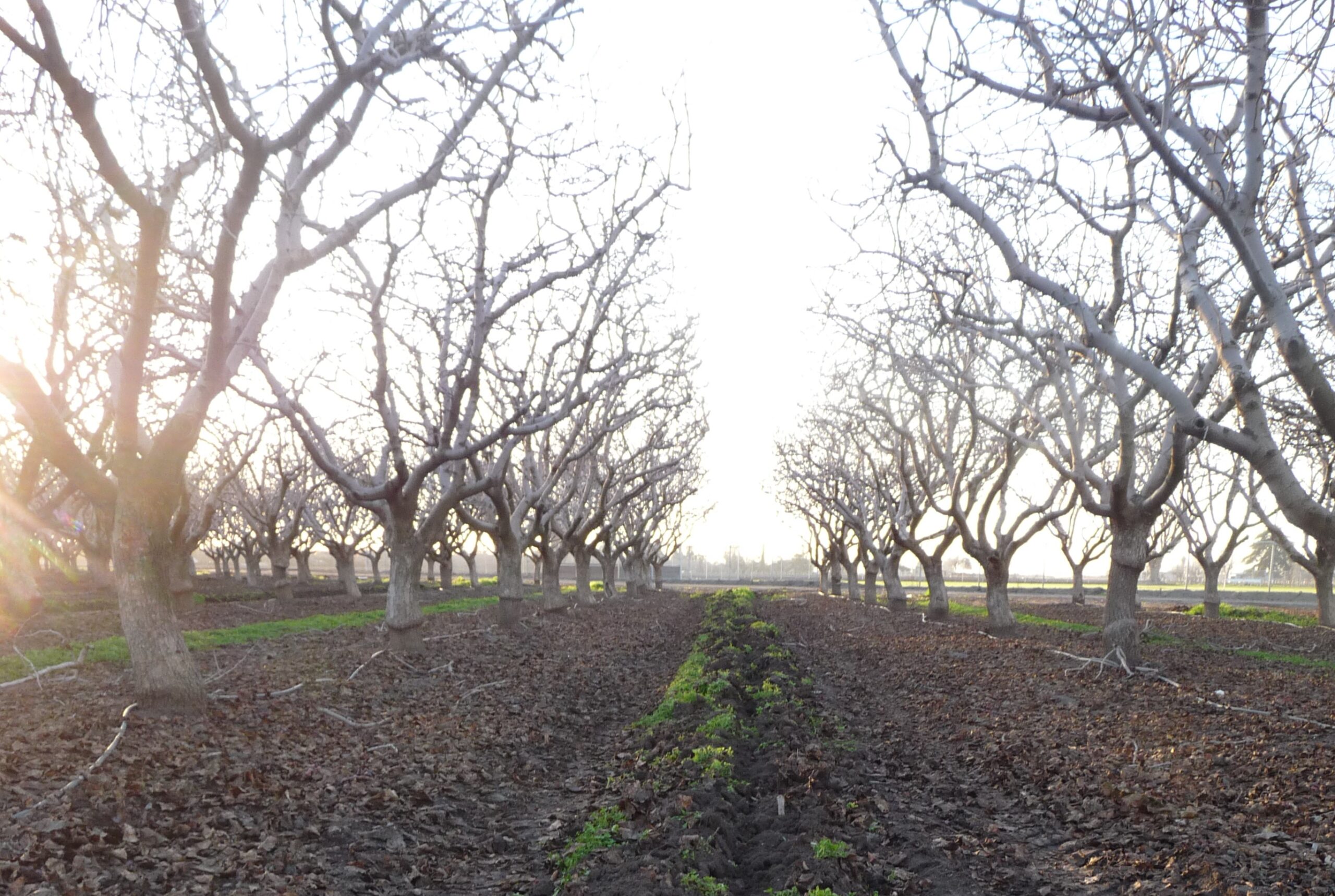
“Trees that go dormant generally are adapted to cold climates. Dormancy reduces the chance that the tender vegetative and flower buds will push into freezing winter temperatures,” explained Kallsen.  “Since we’re well north of the equator, a lot of our nut and fruit trees that are successful here have this characteristic.”

“We can subdivide dormancy into endodormancy and ecodormancy. We’re all familiar with the general temperature change that occurs as we go from autumn into winter. Temperatures are decreasing and at some point in winter, temperatures start increasing. And then when we get to spring, they increase rather rapidly, and bloom occurred in trees in Kern County,” he said. “In fact, it happens throughout the entire San Joaquin Valley.”

Endodormancy usually starts in October early November and continues into about the 1st of March and for leaf-out and bloom to occur, the plants endodormancy requirement for an adequate fall and winter cold period must first be met. And this is also known as chilling hours.

“So in pistachio for leaf-out and bloom to occur, the weather has to provide the trees with a certain amount of cold before the trees will come out of dormancy. Once we’ve got the trigger, the trees are triggered to bloom, we go into an ecodormancy period,” noted Kallsen

Kallsen said this usually happens at the end of February early March. “And then continues into the spring until we start getting temperatures warm enough for bloom. And this keeps going until early April,” he said.

2021-01-21T18:01:36-08:00January 21st, 2021|

Gov. Newsom Proposed Budget

Governor Newsom Proposes New Fiscal Year Budget

Governor Newsom unveiled his Proposed Budget on January 8th, outlining his budgetary and policy priorities for the coming fiscal year. Following upon a tumultuous economic year with a $54 billion deficit, this year’s budget paints a rosier picture with a proposed $227 billion “balanced” spending plan, $22 billion in budget reserves and a one-time $15 billion budget surplus. This does not, however, reflect the $7.6 billion structural deficit projected for 2022-2033—one that will grow to $11 billion in 2024-2025. Below is a brief synopsis of proposed expenditures and policy changes offered in the Governor’s budget:
  • $ 6.7 million one-time General Fund ($3.35 million in the current year and $3.35 million in July 2021) with the University of California Cooperative Extension to provide technical assistance and grants to small, mid-sized and underserved farmers; this assistance may include business planning, compliance, and accessing state and federal funds
  • $8.7 million in federal funds and 24 positions at the Department of Food and Agriculture to implement the Food Safety Modernization Act
  • Climate smart agriculture funding (see the Climate Change section below)
  • $40 million General Fund for the State Water Efficiency and Enhancement Program (see the Water section below)
  • $6 million General Fund ($4 million for current year and $2 million in July 2021) to do an assessment of EPA/CDFA regulations and identify opportunities to streamline regulations, reporting, and develop a unified licensing portal for program regulation and payment
  • Proposed extension of the Carl Moyer Memorial Air Quality Standards Attainment Program (Carl Moyer Program) which provides grant funding for cleaner-than-required engines, equipment, and other sources of air pollution with the State Air Board and local air districts until 2024
  • Allow the Department of Industrial Relations to increase budget by $14.4 million and position allocations by 70 to hire additional Cal/OSHA inspectors
  • Provides $8.6 million and 43 positions to allow access to workers comp benefits under SB 1159 and investigate workplaces that violate COVID-19 specific guidelines and regulate businesses for adequate personal protective equipment stockpiles for future crises
  • Establish a new Department of Better Jobs and Higher Wages compromised of several existing Labor Workforce Development Act agencies involved in job training, labor market information, and apprenticeship programs
  • Replacing the current pesticide mill assessment structure (which is non-discriminatory on pesticide type), with a risk-based assessment strategy that charges a higher mill for higher risks (i.e. those pesticides with no classification or a ‘caution’ classification would go from 21to 26 mills, ‘warning’ would go to 40 mills and ‘danger’ would go to 45 mills)
  • $54 million in Cap and Trade expenditures ($30 million in current year and $24 million in July 2021) for the Safe and Affordable Drinking Water fund
  • $60 million in one-time General Fund ($30 million in current year and $30 million in July 2021) to DWR for implementation of the Sustainable Groundwater Management Act (SGMA) to support economic mitigation planning and implementation projects
2021-01-15T18:32:00-08:00January 15th, 2021|

Lemon Economics in Ventura County


Lemons Became More Popular, But then COVID Hit


By Tim Hammerich, with the AgInformation Network 

A recent study on the costs and returns of establishing and producing lemons in Ventura County was released by UC Cooperative Extension in Southern California and UC Agricultural Issues Center.

“We grow lemons along the coast because it doesn’t get hot, and we do a really good sour lemon. The trees flower year-round, and so there’s production year-round,” said Ben Faber, a Farm Advisor based in Ventura County.”

He says lemon prices had been stagnant for a long time but started to really rise in the past decade or two with the popularity of restaurant dining.

“And so the consumption just soared. Prices had been around five or six, eight dollars a box, and boy, they went up to $18 – $20 a box. So people saw a lot of money there.

“And so what do you do? You respond to it, and you plant. The market for strawberries had fallen, labor availability diminished. So along the coast here, a lot of people had said, ‘I don’t care. I’m going to risk it. I’m going to plant lemons’. And it doesn’t take a whole lot of labor to do, it takes less water. We’re stressed about water availability along the coast. And so, you know, the choice of lemons sounded really good until…boom…COVID.”

The pandemic has certainly taken its toll on lemon prices. Faber is hopeful they will recover but also concerned about the threat of citrus greening disease.

2021-01-14T18:10:18-08:00January 14th, 2021|

Schuil & Associates, Inc. Assisting on Land Purchases

Schuil & Associates, Inc. and New Current Water and Land, LLC Collaborate on Land Purchases in Westlands Water District

Schuil & Associates, an industry-leading, family-operated ag real estate firm, today announced a cooperative relationship with New Current Water and Land, LLC – a Fresno-based firm specializing in the assessment, development, management, acquisition, and banking of water supplies throughout the Western U.S. – to counsel those interested in purchasing farmland in the San Joaquin Valley including, importantly, the fertile Westlands Water District of California.

Providing water to farms in an area of approximately 600,000 acres (2,400 km²) in Fresno County and Kings County in California’s San Joaquin Valley, the Westlands Water District is the largest agricultural water district in the United States. The recent repayment of the District’s capital obligations to the Central Valley Project has resulted in a lifting of the acreage limitation provisions of Reclamation Law which previously had restricted allowable ownership of irrigated land to 960 acres (3.9 km²). This change has made Westlands’ farmland more compelling and accessible to farmers and investors alike.

Land in the Westlands Water District contains some of the best soil in the country but historically has sold for nearly half of the cost of the Eastside of the Central Valley (which has similar soil composition) presenting a unique investment opportunity. This highly-productivity, lower-cost land also offers two sources of water – surface water and groundwater.

“It is important that those interested in purchasing farmland in California, particularly on the Central Valley’s Westside, be provided excellent counsel on water issues,” said Marc Schuil, Principal and Agent, Schuil & Associates. “With our relationship with New Current Water and Land and their decades of water experience, we are better able to help clients navigate this critically-important sector.”

Fresno-based New Current Water and Land provides multi-faceted strategic planning services to investors, farming organizations, and others seeking to develop long-range approaches to water supply, water development, and water management.

“When it comes to agriculture, water is key,” Gary Sawyers, Principal, New Current Water, and Land said. “We’re excited to work with Schuil to help counsel their clients on the nuances of water issues in Westlands and open this region to investors.”

2021-01-12T19:14:26-08:00January 12th, 2021|

Effort to Stop Colony Collapse Disorder Underway

Scientists Developing Electronic Honeybee ‘Veterinarians’

By Jules Bernstein, UC Riverside, Senior Public Information Officer


The University of California, Riverside, is leading a new effort to stop and reverse a worldwide decline in honeybees, which threatens food security and prices.

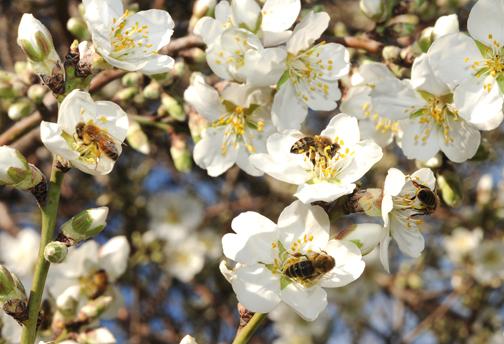
Honeybees pollinate more than 80 agricultural crops, which account for about a third of what we eat. Several factors, including pesticide exposure and the spread of parasites and environmental changes, are to blame for the widespread collapse of bee colonies over the past decade.

To boost dwindling honeybee populations, the University of California’s Office of the President has awarded $900,000 to a four-campus network of bee researchers and engineers.

“This will become one of the largest honeybee health networks in the country,” said Boris Baer, a professor of entomology at UC Riverside and principal investigator of the project. “I’m very excited about so many different kinds of bee expertise joining forces through this project.”

The network, which includes researchers from the Davis, San Diego and Merced campuses, is approaching the problem in three main ways.

The first is through breeding programs — a particular focus of Baer’s laboratory. “We seek to identify and breed bees that are better able to cope with environmental stress,” he said.

A second goal of the new network is to develop medications and treatments for sick bees. Certain types of honeybees generate molecules that make them more tolerant of pesticides and parasites. New technology will enable the scientists to isolate those molecules and use them as a basis for drugs.

Finally, the group is looking to give beekeepers tools to better monitor bees’ health. Small devices will be able to ‘listen’ and ‘smell’ inside hives to give beekeepers indications about the health of the hive.

“We know bee queens have a special pheromone they give off when they’re hungry or dying, and these can be traced,” Baer said. “We are essentially building ‘electronic veterinarians.’”

Preventative devices like these are key to keeping bees alive, because once the colony collapses, it’s too late to bring it back, Baer said.

Read more: https://news.ucr.edu/articles/2021/01/07/scientists-developing-new-solutions-honeybee-colony-collapse

2021-01-11T18:21:20-08:00January 11th, 2021|

Stop Use Order on Agro Gold Organic Fertilizer


CDFA Issues Stop Use Notice and Statewide Quarantine on Organic Fertilizer Agro Gold Was

Agro Gold WS was found adulterated with glyphosate and diquat and CDFA has issued a stop order for use on organic farms in the state of California.

The California Department of Food and Agriculture (CDFA)  announced recently a Stop Use notice and statewide quarantine have been issued for the organic fertilizer product AGRO GOLD WS to all organic operations registered in California. CDFA lab analysis of the product detected the presence of Diquat and Glyphosate, which are substances prohibited by the U.S. Department of Agriculture (USDA) National Organic Program for use in organic production. Continued use of this product in organic production may jeopardize an operation’s organic status.

Pursuant to authority under the California Food and Agricultural Code (FAC), Division 17, Chapter 10, CDFA’s State Organic Program (SOP) in coordination with the Fertilizer Materials Inspection Program (FMIP) issued a Stop Use notice today for AGRO GOLD WS to all organic operations in California registered with the SOP. CDFA’s FMIP also announced today that all California operations registered as organic in possession of AGRO GOLD WS must hold the product and contact CDFA for quarantine instructions on how to handle it.

AGRO GOLD WS is manufactured by Agro Research International, LLC. It has been distributed in a co-packaged box that also contains the product WEED SLAYER. CDFA continues to provide follow up to this investigation and is working with state and federal agencies. CDFA received a complaint about the AGRO GOLD WS product and program staff collected product samples from various locations to conduct lab analysis in CDFA’s Center for Analytical Chemistry. FMIP is an industry-funded program that ensures consumers receive fertilizing materials that meet the quality and quantity guaranteed on the product label. Investigators located throughout the state conduct routine sampling and inspections, respond to consumer complaints, and enforce the laws and regulations that govern the manufacturing and distribution of fertilizing materials in California. CDFA’s State Organic Program protects the organic label through enforcement, education and outreach.

If you are in possession of AGRO GOLD WS and seek additional information, please contact the Fertilizing Materials Inspection Program at FMIP@cdfa.ca.gov. Any appeal of the determination that this product violates the Food and Agricultural Code must be filed with the Fertilizing Materials Inspection Program no later than 15 days from receipt of the Stop Use notice and statewide quarantine. See Food and Agricultural Code section 14659.

2021-01-11T16:47:17-08:00January 11th, 2021|

Driscoll’s Goes Vertical with Strawberries

(Featured photo courtesy of Tex AgriLife Today)

Driscoll’s and Plenty Team Up to Grow Strawberries Indoors

By Tim Hammerich, with the Ag Information Network

The concept of growing crops in vertical farms with plants indoors stacked on top of each other has been around for years. But this industry got some serious validation when Driscoll’s the global berry leader announced a partnership with Plenty – a San Francisco-based vertical farming company.

Plenty Chief Scientific Officer Dr. Nate Storey says this is a big deal for the evolution of vertical farming.

“It’s a big deal for several reasons. The first reason is, you know, people just need more delicious things – access to more delicious things. You know, that’s a source of excitement and joy and just part of the human experience. And the other thing is, I think it signals to folks that, you know, indoor ag is a thing,” said Storey. “It’s not a concept anymore-it’s a thing. And when you have people who know their business, who are serious about production, who have been in the space for a very long time and are kind of the best at what they do investing and engaging. You know, that’s a pretty big deal,” Storey.

Traditionally, one of the criticisms of vertical farming was it was somewhat limited commercially to leafy greens. Nate says this deal with Driscoll’s is exciting to expand their offerings into strawberries, and eventually, far beyond.

“At the end of the day, the number of crops that are going to move indoors, I think is going to surprise everyone. And, strawberries are just the first; definitely not the last,” noted Storey.

2021-01-11T16:47:17-08:00January 11th, 2021|
Go to Top