Almond and Pistachio NOW Sanitation Critical This Winter

Joel Siegel on NOW Sanitation

By Patrick Cavanaugh, Farm News Director

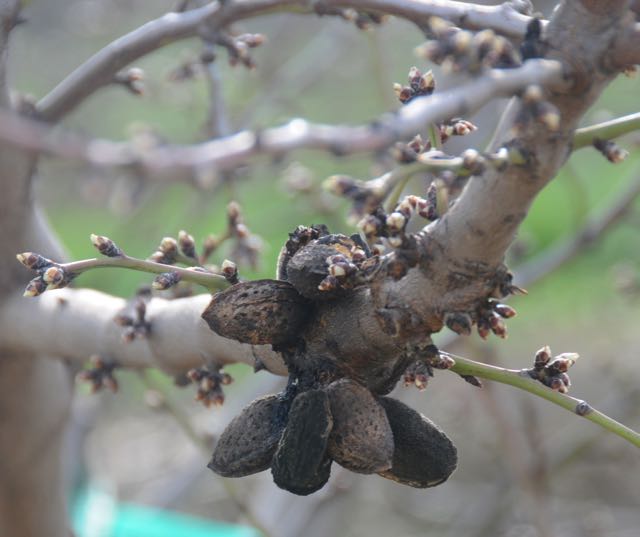
Last year was a bad year for navel orangeworm (NOW) mainly in pistachios, but also in almonds. If left in the trees, infested nuts become a great reservoir for more NOW to inhabit them.

Joel Siegel, NOW research entomologist, USDA Agricultural Research Service

Joel Siegel, research entomologist, USDA Agricultural Research Service

Joel Siegel, a research entomologist for the USDA Agricultural Research Service based in Parlier, stresses the importance of having a good sanitation plan in place to remove those NOW mummy nuts. “When we talk about sanitation, it should be the foundation for everyone’s nut program. That’s something that you control.”

“In almonds, it’s absolutely essential. Where we’ve taken a look at it in the south, every infected mummy per tree is good for 1 percent damage. So going from one mummy to two mummies, your damage on average increases another 1 percent.”

“It’s also important to destroy the mummies on the ground. You figure, for every eight or nine mummies on the ground, that’s good for about a half a percent increase in damage. Get them off the tree and shred the almonds.”

Siegel noted that while pistachio growers can clear mummy nuts off the tree, the industry has not been able to shred the fallen pistachios effectively. The hard, rounded pistachio shells just bounce around in the shredder machine.

almond_mummies

Almond Mummies

“What you can do is shake them off the tree as soon as possible so they’re on the ground where they can start rotting. You get those weeds growing around them. It has been shown that they break down faster in the weeds,” said Siegel.

“Growers disc them in. But if you’re going to disc them in, you have to disc them twice. Again, you’re not destroying the nuts, you are burying them so that NOW cannot lay eggs in the spring,” he said.

The risk of poor sanitation is high. Considerable NOW damage can prevent pistachio and almond growers from earning the premium paid for nuts that are pest-free.
2021-05-12T11:05:44-07:00November 22nd, 2016|

Gary Schulz Gives California Citrus ACP and HLB Update

California Citrus ACP and HLB Update from Gary Schulz

By Brian German, Associate Broadcaster


The Citrus Research Board (CRB) recently held their annual California Citrus Conference in Exeter, bringing together a variety of guest speakers and research presentations. The Conference focused on pressing Asian Citrus Psyllid (ACP) and Huanglongbing (HLB) issues, along with political action updates and current projects that are important to the citrus industry. Gary Schulz, president of the CRB, said “We have a 21-member board and we’ve been planning this event for the last 12 months. It’s been 4 years since we held the last conference,” noted Schulz.

Gary Schulz, president, Citrus Research Board

Gary Schulz, president, Citrus Research Board

The CRB is responsible for overseeing the California Citrus Research Program (CCRP), a grower-funded and grower-directed program created in 1968 under the California Marketing Act. The CCRP’s purpose to enable California’s citrus producers to sponsor and support research that furthers the overall industry. Therefore, close to 70 percent of the CRB’s overall budget is allocated to research.

Schulz said the Conference “was a great, great day to have a good update on some of the dollars the Citrus Research Board has been spending on the growers’ behalf on research.” Schulz explained HLB represents the single greatest threat that citrus growers have faced worldwide.

For the past seven years, the USDA and Congress have allocated between $10 and $12 million dollars annually for ACP and HLB research operations.  Advocacy groups and other supportive ag organizations have contributed the difference to reach an annual ACP and HLB research budget of close to $90 million dollars a year. We fund a lot of UC Riverside and USDA agricultural research, service researchers, plus research at UC Davis and the University of Arizona,” Schulz noted.

Schulz, who has many years of experience in California agriculture, having served as general manager of the Raisin Administrative Committee and CEO of the California Raisin Marketing Board, stated that CRB has a great working relationship with California Citrus Mutual (CCM). “Joel Nelson and CCM have worked very hard with the packers to assess themselves, put together a private foundation, and work with the university,” Schulz said.

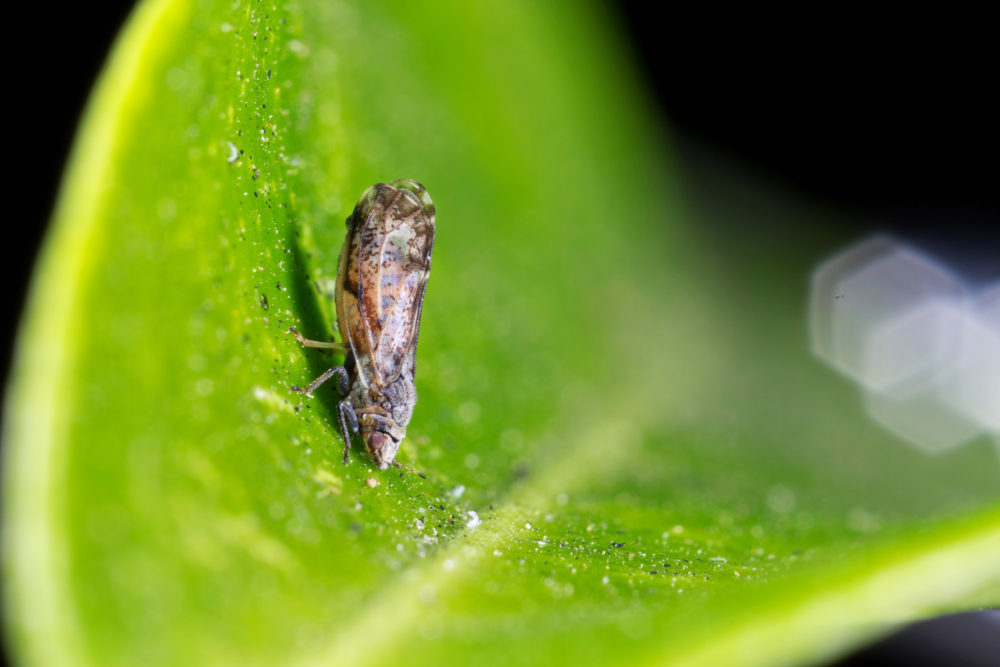
Featured Photo:  Adult Asian Citrus Psyllid (Source: The Citrus Pest & Disease Prevention Program)


Resources

California Marketing Act

Citrus Research Board (CRB)

California Citrus Mutual

2021-05-12T11:05:44-07:00November 18th, 2016|

Another Record Season for Walnuts

Walnut Yield Could Continue to Increase Over Next Few Years

By Brian German, Associate Broadcaster

October was the peak of harvest for the state’s biggest tree nut crops: almonds, pistachios and walnuts. California growers have completed this year’s walnut harvest, and so far growers are pleased with the yields. Final statistics for California walnut production in 2016 will not be available until mid- to late-January 2017.

The USDA National Agricultural Statistics Service (NASS)’s 2015 estimate of 365 thousand walnut acres in California (of which 300 thousand were bearing acres), represents a 50 percent increase versus a decade ago, according to Dennis Balint. Balint, who just retired as longtime executive director of the Folsom-based California Walnut Board and CEO of the California Walnut Commission since 1995, became the new special assistant to the California Walnut Board on November 1, 2016.

Dennis-Balint, California Walnuts

Dennis-Balint, California Walnuts

Growers had a record walnut harvest last year, and this year looks even more promising. “This year’s crop estimate from USDA’s California Agricultural Statistic Service (CASS) is 670 thousand tons, an 11 percent increase over last year’s 603,000 tons. 

The NASS office in Sacramento, as relayed by Balint, reported this year’s walnut season began with a significant amount of winter moisture, along with an ample amount of chilling hours and average weather conditions during walnut bloom.  Springtime rain concerned some growers because of the increased chances of blight and any resulting damage is under assessment.

While overall weather conditions were advantageous for growers, results were varied. “If you’re in Reading or Modesto, or Visalia, different factors affected you: climates, your own horticultural practices, what varieties you’re growing, etc.,” said Balint.

The estimate of this year’s harvest is good news for growers who, not many years ago, were fortunate to harvest merely 300,000 tons. Even with the estimated record harvest, there are still close to 80,000 acres of younger, nonbearing walnut trees in the state. Balint commented, “As those acres mature and come into production over the next few years—all things being equal—California’s walnut harvest could potentially increase by another 30 to 40 thousand tons per year.”

california-walnut-boardBalint also reported the Walnut Board has four tests in the grocery marketplace to determine how to increase stores’ holiday inventory of walnuts. [EDITOR’S NOTE: For fans of inshell walnuts, buy your supply early and often. Inventory of inshell walnuts is not expected to extend beyond the holidays.]

As of November 1, 2016, board members of the California Walnut Industry appointed Michelle Mcneil Connelly, former senior marketing director, as executive director of the California Walnut Board and as CEO of the California Walnut Commission.


Links:

The California Walnut Board was established in 1948 to represent the walnut growers and handlers of California. The Board is funded by mandatory assessments of the handlers. The California Walnut Commission, established in 1987, is funded by mandatory assessments of the growers.

USDA’s National Agricultural Statistics Service California Field Office is operated in cooperation with the California Department of Food and Agriculture.

2016-11-17T13:33:58-08:00November 16th, 2016|

US Citrus Industry Working Together on ACP, HLB Funding

Critical ACP, HLB Funding Comes Only After Industry Helps Itself

By Patrick Cavanaugh, Farm News Director


State Citrus Mutuals in California, Texas and Florida are diligently working in Washington, D.C., for $10 to 12 million in annual funding to help their citrus regions fight Asian Citrus Psyllid (ACP) infestation and Huanglongbing (HLB), the disease that ACPs vector.

The three Citrus Mutuals have collaborated well for the half dozen years of the American ACP invasion. Initially, the Florida Citrus Mutual team developed the Citrus Health Response Program (CHRP),” said Joel Nelsen, president of California Citrus Mutual.

Joel Nelsen, president of California Citrus Mutual, acp and hlb funding

Joel Nelsen, president of California Citrus Mutual

“They initiated it at a very minor funding level. However we sat down with them and said, ‘Look, this is an opportunity to ensure that all of the U.S. citrus industry can work together to protect itself from Huanglongbing.’ They were gracious enough to say okay. We exerted our leadership because we had people in positions in Washington who could be very beneficial to this,” Nelsen said.

“Initially it was a Florida/California effort. We said we need to double the size of the CHRP program and allocate more dollars to California, some to Texas, and some to Arizona. Now everybody is participating to the extent that they can. Today, it is still a Florida/California effort and a Florida/California-run program in partnership with USDA.

Nelsen said those involved are working hard to protect the citrus industry, and not just chasing a problem. Funding has been helpful to California. Only after the industry does all it can, will the state expect the federal government to help.

“It’s true for all three states’ industries,” Nelsen said. Unfortunately, Texas made a mistake. They did not have a policy in place to immediately remove an HLB-infected tree. As a result, they have an HLB infection spreading.”

“Texas is being adversely impacted on the dollar level. We don’t want to see that industry die, so there is a partnership that does exist on behalf of our colleagues,” Nelsen said. “We can’t afford to make mistakes like that.”

“In order to justify the continued progress of funding on an annual basis we are going to have to continue looking ahead, taking the steps necessary and doing what is needed to protect the citrus industry from the spread of Asian Citrus Psyllid and Huanglongbing.”

“We definitely have to show progress. We can’t ask homeowners to spray their trees if in fact we are not spraying ours. We can’t ask the federal government to continue helping us looking for ACPs if we are not willing to tarp our trucks to stop the spread of it. If we’re not willing to do a coordinated spray program then why should the government help us in finding HLB? If we are allowing snake oil merchants to conduct research projects, why should the federal government fund those?

2021-05-12T11:05:44-07:00November 9th, 2016|

FSMA Deadlines and Details

Aspects of the Food Safety Modernization Act (FSMA) Explained

By Brian German, Associate Broadcaster


As many 2011 Food Safety Modernization Act (FSMA) provisions near their deadline for the first step in compliance, the U.S. Food and Drug Administration (FDA) announced an extension for many aspects of the new rules to allow growers and processors more time to clarify certain provisions to ensure compliance. Jon Kimble, food safety services manager with Sacramento-based DFA of California, a non-profit trade association formerly called the Dried Fruit Association, weighed in on several FSMA provisions and compliance.

Jon Kimble, food safety services manager with DFA of California, FSMA

Jon Kimble, food safety services manager with DFA of California

“The Preventive Controls Rule is the biggie that came out. This rule is largely based on the existing Hazard Analysis Critical Control Point (HACCP) structure that the food industry is familiar with, but with some slight modifications and specifics that are unique to the regulation,” noted Kimble. HACCP is an international standard that defines requirements for effective food safety control from biological, chemical, and physical hazards in the production processes that could cause the finished product to be unsafe.

The Preventive Controls Rules for Human and Animal Food was enacted September 18, for large operations. Small and mid-sized companies will have until September 2017 and very small companies have until September 2018.


The Produce Safety Rule, another critical part of the Food Safety Act that was published last November, provides farm standards for the growing, harvesting, packing, and holding of produce for human consumption.

The Produce Safety Rule will come into effect for large farming operations within the next month.


Other portions of the act include the Foreign Supplier Verification Programs (FSVP) for Importers of Food for Humans and Animals and Accredited Third-Party Certificationwhich relate to imported food products. “There are some regulations that you have to comply with whether you are a food processor or a broker importing food,” Kimble explained.

Finalized earlier this year, the Sanitary Transportation Rule pertains to service scenarios where foods are exposed and not packaged. This rule covers food transported in bulk; vehicle cleanliness, design and maintenance, temperature control; prevention of the contamination of ready-to-eat food (from touching raw food, non-food items in the same load or previous load, and cross-contact with food allergen); training of carrier personnel in sanitary transportation practices; documentation of the training; and maintenance and retention of records.

The Sanitary Transportation Rule has a compliance deadline of April 2017 for large companies.


FSMA also includes the Intentional Adulteration Rule, which “relates to what we would traditionally call food defense or security measures to prevent intentional contamination of the food supply,” Kimble said.


Founded in 1908, DFA is one of the oldest food safety companies in the U.S. that provides commodity inspection services and support to packers, processors and exporters in the dried fruit, tree nut, and kindred product industry through commodity inspection, the Red Seal Program, and the Export Trading Company (ETC)

Safe Food Alliance, a new division of DFA of California serves as a resource to the food industry for any and all food safety practices. Services include food safety training and consulting, laboratory testing and analysis, and third party certification audits conducted by Safe Food Certifications, LLC.

2021-05-12T11:00:48-07:00November 3rd, 2016|

ACP Spread in Bakersfield Area, Ingenious Research Proceeds

Ingenious Research Effort to Fight ACP Spread with Natural Predators


By Joanne Lui, Associate Editor


beth_grafton-cardwell

Beth Grafton-Cardwell, Cooperative Extension specialist, University of California, Riverside Department of Entomology

As we have reported in-depth before on California Ag Today, the Asian Citrus Psyllid (ACP) is a tiny, mottled brown insect that poses an ever-increasing threat to the state’s robust citrus industry, as well as to residential citrus trees. The pest can spread a bacterium known as Huanglongbing (HLP) that is fatal to citrus trees. The disease has nearly shut down Florida’s citrus industry.

Beth Grafton-Cardwell, cooperative extension specialist in integrated pest management, UC Riverside Department of Entomology, explained the significance of the recent ACP spread to Bakersfield. “That is really problematic because it’s mostly in the urban areas. It’s very difficult to find, to control and to stop that spread. It’s going to move out from that region into the local citrus orchards, and so there are lots of meetings and discussions right now to mobilize growers to get treatments to help protect their citrus orchards against the psyllid.”

#CitrusMatters

#CitrusMatters

To contain the ACP problem, Grafton-Cardwell stated, “There are traps everywhere, but the traps are not terribly efficient. So, we really need to carefully examine groves and flush [new leaf growth] for the nymph form,” she said.

According to Agriculture and Natural Resources, University of California’s Statewide Integrated Pest Management Program:

Adults typically live one to two months. Females lay tiny yellow-orange almond-shaped eggs in the folds of the newly developing “feather flush” leaves of citrus. Each female can lay several hundred eggs during her lifespan.

ACP UC IPM

ACP (Source: ACP UC IPM)

The eggs hatch into nymphs that are wingless, flattened, yellow or orange to brownish, and 1/100 to 1/14 inch long. Nymphs molt four times, increasing in size with each nymphal stage (instar), before maturing into adult psyllids. The nymphs can feed only on soft, young leaf tissue and are found on immature leaves and stems of flush growth on citrus.

Save Our CitrusThe nymphs remove sap from plant tissue when they feed and excrete a large quantity of sugary liquid (honeydew). Each nymph also produces a waxy tubule from its rear end to help clear the sugary waste product away from its body. The tubule’s shape—a curly tube with a bulb at the end—is unique to the Asian citrus psyllid and can be used to identify the insect.

Grafton-Cardwell and other experts are concerned because once the ACP becomes established in urban areas, it is difficult to eradicate. “It starts spreading into the commercial citrus, and we’re off and running,” she commented.

bayer-save-our-citrusIn a ingenious effort to control the spread of the psyllid, trained teams of entomologists have imported Tamarixia radiata, a tiny wasp that naturally preys on ACP, from Pakistan to research and release in California. A cooperative effort of the University of California Riverside, Citrus Research Board, United States Department of Agriculture and California Department of Food and Agriculture, researchers are also exploring the effectiveness of another beneficial insect called Diaphorencyrtus aligarhensis to assist Tamarixia with control of the Asian citrus psyllid. To see where Tamarixia and Diaphorencyrtus have been released, visit this University of California’s website map at, “Distribution of ACP, HLB and Parasites in California,” and turn on the parasite layers.
Grafton-Cardwell said, “They’re going to inundate that area,” with natural ACP predators, “so hopefully that will push back a little bit.”

2021-05-12T11:05:46-07:00October 10th, 2016|

Better Year for Western Cotton Growers

Western Cotton Growers See Market Improvement


By Patrick Cavanaugh, Farm News Director


Cotton growers throughout California and the West fared better this year compared to last year in terms of prices and exports, as reported at the Calcot, Ltd. 89th Annual Meeting last week in Tempe, Arizona. Jarral Neeper president and CEO of the Bakersfield-based Calcot, Ltd., the cotton marketing cooperative representing growers in California, Arizona, New Mexico, and Texas, announced, “Last year we produced about 13M bales. We should be a hair over 16M this year.”

California Cotton, Merced County, Sept 2016

California Cotton, Merced County

Neeper estimated, “We’re going to go from about 10.2 million bales in exports to 11.5 million based on a review of our historical shares of the marketplace and the world, the foreign production/consumption gap, our historical shares of filling that gap, and how much we should export.”

“One year ago at this time, cotton prices were at a very low $0.61 per pound,” said Neeper. “The market eventually fell. Prices rallied a little bit, and then fell down to $0.55. Then, the last month of the crop year, we had calcot-logothis unforeseen $0.10 rally—almost $0.12 rally.

In cotton marketing where there are highs and lows, Neeper acknowledged, you can’t always sell high; you have to sell when you can. “As a cooperative, in order to make progress payments to your membership, you do have to sell cotton and turn it into cash.”

“The cotton futures look good,” Neeper said, “even better for the coming year. We’re sitting at roughly $0.70 a pound, about ten cents higher than a year ago. And, generally, California cotton growers tend to get a $0.05 to $0.10 premium per pound because of our growing additions and high quality lint.”

Neeper believes the future of Calcot, Ltd. is “terrific.” He added, “89 years and still going strong; we’re looking for another 89 years.”


2016-10-05T13:14:34-07:00October 5th, 2016|

Fear-Based Messaging Reduces Produce Consumption – Both Organic and Conventional

New Study Finds Fear-Based Produce Safety Messaging Negatively Impacts Low Income Consumers’ Produce Consumption


New peer reviewed research, “Low-Income Shoppers and Fruit and Vegetables: What Do They Think?” published in Nutrition Today, shows fear-based messaging tactics used by activist groups and some organic marketers that invoke safety concerns about non-organic produce may be having a negative impact on produce consumption—fruits and veggies—among low income consumers, according to the Alliance for Food and Farming (AFF).Alliance for Food and Farming logo

Researchers at the Illinois Institute of Technology’s (IIT) Center for Nutrition Research surveyed low income consumers to learn more about what terms and information about fruits and vegetables may influence their shopping intentions. Among the key findings, misleading messaging which inaccurately describes certain fruits and vegetables as having “higher” pesticide residues results in low income shoppers reporting that they would be unlikely to purchase any fruits and vegetables – organically or non-organically grown.

illinois-institute-of-technology-institute-for-food-safety-and-health“We were surprised to see how informational content that named specific fruits and vegetables as having the highest pesticide residues increased the percentage of shoppers who said they would be unlikely to purchase any type of fruits and vegetables,” says Britt Burton-Freeman, associate professor of food science and nutrition, ITT’s Center for Nutrition Research. “The concern is that depending on the structure of the communication about pesticides and fruits and vegetables, this could turn people away from wanting to purchase any fresh produce.”

“Despite efforts by the health community, consumption of fruits and vegetables is stagnating,” says Elizabeth Pivonka, Ph.D, R.D. and president, Produce for Better Health Foundation. “This new study shows what we have been concerned about for some time, that safety fears may be another barrier to consumption of these healthy and nutritious foods. The impact of the fear-based messaging on low income consumers is especially troubling since many don’t have access or can’t afford non-Produce for Better Health, produce consumptionorganic produce.”

The findings are also concerning since the safety claims carried predominantly by groups like the Environmental Working Group (EWG) and Only Organic about pesticide residues have been repeatedly proven to be scientifically inaccurate. For the last 20 years, EWG annually releases a so-called “dirty dozen” list which urges consumers to eat only organic versions of popular produce items accompanied by misleading and unscientific claims regarding pesticide residue levels. A peer reviewed analysis of EWG’s list entitled, Dietary Exposure to Pesticide Residues from Commodities Alleged to Contain the Highest Contamination Levels and published by AFF showed that substitution of organic forms of produce for non-organic produce did not result in any decrease in risk because residue levels are so minute on these fruits and vegetables, if they are present at all.

“Their tactic clearly isn’t working and it’s actually backfiring since this research shows that consumers may react to their message by deciding not to buy any produce at all – organic or non-organic,” says Teresa Thorne of the AFF. “For the benefit of consumers, especially low income consumers, this study shows it is time for groups like EWG to rethink their strategy for promoting organics and move away from tactics intended to scare consumers from buying the more affordable and accessible produce items,” Thorne says.

john-hopkins-bloomberg-school-of-public-healthThis IIT research compliments the peer reviewed study by John Hopkins University’s Center for a Livable Future, They Just Say Organic Food Is Healthier”: Perceptions of Healthy Food among Supermarket Shoppers in Southwest Baltimore,” published in January 2015 [orig. Dec. 2014] in the journal, Culture, Agriculture, Food and Environment. Those researchers conducted interviews with study participants to learn more about the way organic food is understood within consumers’ definitions of healthy food. John Hopkins researchers also focused on low income consumers because “this group is particularly important demographically given the disparate burden of diet-related diseases they carry and the frequency of diet-related messages they receive.”

The study authors also found conflicting health and safety messages, including those about pesticide residues, were having a negative impact on consumers. Among their findings and recommendations: “The issue of organic can swamp or compete with other messages about nutrition, as evidenced by the data presented here. Perceiving that there is an overwhelming amount of sometimes contradictory information about healthy eating could make some consumers defeatist about trying to eat healthily. Given the potential implications of competing messages about healthy eating, it is important that those who want to improve food production techniques and those who want to improve nutrition cooperate to create consistent messaging about healthy eating.”

Dr. Burton-Freeman reached a similar conclusion. “Hearing that the majority of shoppers in this survey trust dietitians/nutritionists, scientists and physicians for health and safety information about fresh fruits and vegetables, this is an important opportunity for these professionals working in low-income populations. It is an opportunity to educate shoppers about organic and conventionally grown produce, particularly about best practices for washing, storing and preparing all fruits and vegetables to maximize their enjoyment and nutritional value and minimize their confusion and safety concerns.”

“Hopefully the peer-reviewed research from IIT and John Hopkins will have an impact on groups like EWG especially since the science clearly shows both organic and non-organic produce is very safe and can be eaten with confidence,” AFF’s Thorne says. “And, decades of nutritional research primarily conducted using non-organic produce shows that a plant rich diet leads to better health and a longer life. So choose either or both organic or non-organic produce, but choose to eat more every day.”


The Alliance for Food and Farming (AFF) is a non-profit organization formed in 1989 which represents organic and conventional farmers and farms of all sizes.  Alliance contributors are limited to farmers of fruits and vegetables, companies that sell, market or ship fruits and vegetables or organizations that represent produce farmers.  AFF’s mission is to deliver credible information to consumers about the safety of all fruits and vegetables.  AFF does not engage in lobbying nor does it accept any money or support from the pesticide industry.  In the interest of transparency, AFF’s entire 2011 tax return is posted on safefruitsandveggies.com.


See also:

Scared Fat: Are Consumers Being Scared Away from Healthy Foods?

Individuals May Consider Organic an Important Factor When Defining Healthy Food

University College of London: Eating 7 or More Servings Reduces Risk of Premature Death by 42%

2021-05-12T11:05:46-07:00October 3rd, 2016|

Walnut Assessment to Increase

California Walnut Board To Raise Assessment for Domestic Marketing

By Laurie Greene, Editor


Dennis Balint, executive director, California Walnut Board; president and CEO, California Walnut Commissionexplained to California Ag Today (CAT) the Board’s proposed increase in the marketable kernel pound weight assessment for the upcoming marketing year. The industry can  comment until Oct. 17, 2016 at the Federal Registry website using the following link:

Marketing Order No. 984, Walnuts Grown in California; Increased Assessment Rate”

Balint: This proposed rule would implement a recommendation from the California Walnut Board (Board) to increase the assessment rate established for the 2016-17 year and subsequent marketing years from $0.0379 to $0.0465 per kernel pound weight of assessable walnuts.

The Board, comprised of growers and handlers of walnuts operating within the area of production, locally administers the marketing order. Assessments upon walnut handlers are used by the Board to fund reasonable and necessary expenses of the program. The marketing year begins September 1 and ends August 31. The assessment rate would remain in effect indefinitely unless modified, suspended, or terminated.

California walnut orchard

California walnut orchard

The Board derived the recommended assessment rate by dividing anticipated assessment revenue needed by estimated shipments of California walnuts “certified as merchantable.” The 553,000-ton (inshell) estimate for merchantable shipments is an average of shipments during three prior years.

Pursuant to § 984.51(b) of the order, this figure is converted to a merchantable kernel weight basis using a factor of 0.45 (553,000 tons × 2,000 pounds per ton × 0.45), which yields 497,700,000 kernel weight pounds. At $0.0465 per pound, the new assessment rate should generate $23,143,050 in assessment income, which is equal to estimated expenses.

CAT: So the Walnut Board needs to raise the assessment to generate more dollars in order to maintain the aggressive domestic marketing program the Board did last year?

Balint: We raised the assessment rate to satisfy the programs the Board wanted us to execute. Last marketing year, we did the first substantial marketing campaign in the domestic market. This year, we are repeating the program. The advertising is nearly identical; however, we did have a few new executions for print. Some of the details on the PR side are different. But essentially, it’s the same plan and the same budget.

california-walnut-boardTo run that program last year, we were able to draw on reserve funds in addition to the assessment. This year, we did not want to draw on those reserve funds because we would have brought the reserve funds down to a point we were uncomfortable with. So, the assessment rate went up so we could run the same level of support without touching the reserve.

CAT: Like last year, will this year be a multi-million dollar campaign to really get walnuts on the radar screen for all U.S. consumers?

Balint: Yes. We know that about 22% of U.S. households buy walnuts. We’re trying to increase that amount. Actually, we’re trying to increase two things: the number of households that buy walnuts and the usage of walnuts by people who were previously designated as what we call “light users.” We’re trying to get a bigger slice of the pie.

In the long term, getting new users is critically important. The point we’re trying to make is, no one buys things basically just for price. If they’re already using walnuts, we hope they will buy more if the price is lower.

CAT: And for the people who are not buying walnuts?

Balint: Long term, getting people who are not using walnuts to start using them is the way for our industry to get stronger. Of the people who buy walnuts, about 87% buy them because they know walnuts are healthy. That’s their primary motivation.

CAT: You have spun out beautiful ads about how walnuts can enhance salads and enhance meals.

Balint: The print campaign this season is just a slightly different execution of last season’s campaign, but it is the same strategy.

CAT: And television can be very expensive?

Balint: It is, and it forces us to make choices; whereas, in print we have an array of print ads that cover an array of uses: salads, vegetable side dishes, entrees, appetizers, snacking out-of-hand. The theory is, if you have two or three pounds of walnuts in your pantry and you use them for a salad, you will wind up snacking on them.

CAT: How about digital ads on websites such as the Food Network?

Balint: When you look at the cost of digital, it is cheaper than television, for sure.

CAT: Do you know the value of different mediums?

Balint: In my opinion, what we really do not know is the value of an impression in digital versus the value of an impression in print magazines versus the value of an impression in television. No one has ever quantified that.

CAT: Really?

Balint: Frankly, I don’t think anybody wants to quantify it. It would be very difficult to get everyone to agree.

CAT: But digital seems to be getting more eyes than television.

Balint: The digital people certainly know that they are getting a bigger and bigger slice of the pie.

CAT: Is the consumption of walnuts in the U.S. still flat?

Balint: It has been. We have not seen the latest figures, but [consumption] has been flat probably for 10 years. If you look at the nut category this past year, the usage of nuts was generally down, but we saw a slight increase in walnuts.

We are pleased about that. We know nuts are healthy in general. Walnuts are more of an ingredient nut than our friends in the almond industry and the pistachio industry. They’re more of a snacking nut. We’re more of an ingredient nut.

CAT: Back to the Board’s proposed assessment increase; is it on the Federal Register and people can go there and make comments?

Balint: Yes, that’s correct, and the marketing order gives the Walnut Board the right to do these things. And, similar to the Almond Board’s recent proposed assessment increase, it doesn’t have to go to a referendum.

2016-10-02T21:48:42-07:00September 29th, 2016|

Almond Assessment Increase Comment Period Reopened

Comment Period Reopened for Almond Assessment Increase Through October 12.


Julie Adams, vice president global, technical, and regulatory affairs with the Almond Board of California, commented in an exclusive interview with California Ag Today on the proposed additional one cent almond assessment increase from 3 cents to 4 cents a pound by the Board of Directors to use in marketing the anticipated crop increases over the next three years, starting this season.

The proposed rule change was first published in the Federal Register on July 18, 2016. The comment period was reopened on Sept. 12 with an announcement in the Federal Register. The comment period is open for 30 days, ending Oct. 12, 2016, at midnight, Pacific Standard Time (PST).

California Ag Today (CAT): Where do almond growers go to make comments about the increased almond assessment?

Adams: Growers can go to www. regulations.gov and search for almonds.

Click here for the direct link to the Assessment entitled, Almonds Grown in California: Increased Assessment Rate.

CAT: The first comment period in August was only two weeks. How long will this one last?almond assessment increase

Adams: The new comment period is now open and will be stay open until Oct. 12. We have also sent out notifications to handlers and we’ve included it in our communication to growers. 

CAT: Why did the comment period reopen?

Adams: Basically this discussion has been going on for quite some time, actually, and started with planning and strategic meetings within the production and environmental research committees. Some of this discussion also started back a year ago when we were talking about all of the challenges facing the industry related to environmental issues, water requirements, and sustainability issues. And then, of course, with the anticipated increase in crop size, what was that going to mean in terms of keeping demand growing ahead of supply?

Discussions at strategic planning meetings underway and within our global market development committees, started feeding up to the Board recommendations that we really needed to get ready both for the challenges facing growers as well as building that [market] demand. It was at that time that the Board started talking about an increase in the assessment for a specific period of time.

We recognized that crops were increasing, and to get us through this period, we really needed to accelerate our activities. The increased assessment was approved by the Board several months ago and was published in the Federal Register. It was, at that point, a two-week comment period. While there had been a lot of communication out to the industry, the comment notification had not been sent out in a timely fashion as it needed to be since it was such a short comment period.

Based on that, as you’ll see from the reopened comment period, USDA determined that they would go ahead and reopen the period for 30 additional days. That’s the process we’re in right now.

Almond Board of California CAT: One argument against the assessment is that the almond industry is heading into big record crop, and the 150,000 to 200,000 non-bearing acreage will soon be bearing—and that alone is sure to increase the Almond Board’s marketing budget.

Adams: It does. What we have found throughout our programs is that the more we can start building consumer awareness and demand for the product, it’s going to be ready as those crop sizes increase. We really want to be ahead of that supply situation so that we’re not trying to chase the opportunities in the market. We want to make sure there’s a strong foundation. As crops are more available, customers are ready to take in that product, really ready to put more on the shelf for consumers, and hopefully [meet] increased demand from consumers.

I think the other part of this assessment increase is about what’s happening on the production side. Research takes time and growers are facing more challenges now in terms of water availability, water quality, production issues, and environmental concerns. There’s more pressure on growers now than ever before. Part of this assessment increase for this three-year period is really to accelerate a lot of the research and work that’s underway on irrigation practices and harvesting practices, and to ramp up our food safety education. We’ve got the Food Safety Modernization Act (FSMA) coming on board now—a  requirement starting to put additional burdens on the industry.

With all of that happening, the concern is that we really need to get in front of all of this. The idea is to do that with some additional funding, so while we’re keeping up our ongoing programs, accelerating some of this research over the next three years will put us in a position, when we do come into those larger crops, where we will already have a lot of those programs in place and we will have accelerated the research so we can continue to meet a very demanding market.

California AlmondsCAT: We can see the need to increase our momentum in research and marketing. Of course, the vast majority of the Almond Board’s budget is for marketing right? Will the vast majority of this extra assessment go toward global marketing?

Adams: The global marketing demand portion of the budget is over 70%. That includes more than just market development. It includes a lot of consumer research, attitudes and awareness research It also includes a lot of the investment we’ve made lately on reputation management—how consumers really perceive almonds and how we need to best communicate back to consumers about what our industry is doing.

CAT: Obviously there is not going to be a vote on the added assessment. There is going to be a comment period, and if the USDA approves the assessment, it will go forward.

Adams: It was a unanimous recommendation coming forward from the Board of Directors and from a number of committees that included industry members that made recommendations to the Board of Directors. Obviously the Board is responding to the strategies and recommendations coming through the committee process. That’s what the Board unanimously endorsed and put forward in a recommendation to the Agricultural Marketing Service (AMS), and USDA. Now based on the comments that start to come forward through this period, then USDA will assess all of that and publish a final rule, a final determination, after the comment period closes.

CAT: If the added assessment is for this season, the USDA will have to turn it around very quickly?

Adams: They would. Obviously the USDA is monitoring this comment period and will respond to the comments and the issues expressed by individuals who are commenting on the rule. They will reflect their thinking as they come forward.

CAT: If there is a big mixture of No and Yes comments, is it possible that the comment period will stay open past the 30 days to get a consensus?

Adams: I think the USDA will look at the issues and the context of the comments. If the comments are more about clarifications and they feel what has been proposed will deal with those concerns or areas of focus, then they will look at that and make a determination. I really couldn’t say whether they would go forward with an additional comment period.

CAT: And the additional assessment will automatically sunset in crop year 2018/2019?

 Adams: Exactly, and it would go back to the current 3 cent assessment. Really nothing has to be done for that to happen and that’s why the industry put in that sunset period. The Board does not have to vote on it; there does not have to be any further consultation. It will automatically go back to the 3 cent assessment.


2016-09-22T12:30:01-07:00September 22nd, 2016|
Go to Top