Spray Safe Meeting Nov. 17 in Modesto

Event Organized by Stanislaus County Farm Bureau

By Laurie Greene, Founding Editor

Wayne Zipser, executive director of the Stanislaus County Farm Bureau, announced the Farm Bureau will hold a Safe Spray and Safety Event on November 17, at the Modesto Junior College’s West Campus Ag Pavilion, located at 2201 Blue Gum Ave. in Modesto. The Stanislaus County Farm Bureau is a non-profit, volunteer membership organization that provides many programs like Spray Safe to assist its members and to educate the general public.

“The Spray Safe meeting will be a big event,” Zipser said, “not only because will it cover how to safely apply pesticides, but also provide tractor safety training, [pesticide application] mask fit testing and physicals [if needed for mask fit testing] for farm employees.”

“Registration opens at 7 AM,” Zipser explained. “A grower panel will start the day at 8 AM with a discussion of the safety and procedure challenges encountered by some of our folks who do pesticide applications. Given the new rules for pesticide applications around schools and preschools, we want to hear how they cope with and mitigate these new challenges.”

The Safe Spray Meeting will also feature a trade show. Attendance is free, courtesy of event sponsors, and lunch is provided.

Additional topics will include: drift prevention, school notification requirements, calibration, sexual harassment prevention, equipment safety and heat illness prevention. The meeting also offers 4 hours of Department of Pesticide Regulation (DPR) Continuing Education (CE) credit.

The all-Ag committee coordinating the event includes the Stanislaus County Farm Bureau, the Ag Commissioner’s Office, the USDA Natural Resources Conservation Service (NRCS), and the University of California Cooperative Extension (UCCE).

For more information, contact the Stanislaus County Farm Bureau at 209-522-7278.
2017-10-13T15:29:16-07:00October 13th, 2017|

Maintaining Food Safety – LGMA Part 3

Understanding the Farming Operation

By Jessica Theisman, Associate Editor

California Ag Today met recently with Jon Kimble, and among other topics, he reported on food safety in the state of California. Kimble is the operations business development manager at Safe Food Alliance.

Jon Kimble, Safe Food Allicance

Safety is a big concern for those who work in the agricultural community. Kimble spoke on how it is important that farmers assess those on their property.

“If you see somebody getting out, and getting into your fields, certainly you want to talk to them and make sure they are not going to impact the safety of your products, because that is your financial future.”

Operations such as U-Pick, people out in the fields, or people part of an activity raise concern. Risks may be managed in terms of providing hand washing, communication, putting up signs, and making sure they understand that they can impact the safety of others when they’re out in the field.

“It really comes down to just practical due diligence, activities, recommendations that come right out of the good agriculture practices that has been developed over the past few decades,” Kimble said.

Kimble also spoke to California Ag Today about the Leafy Green Marketing Agreement (LGMA). This puts standards and measures in place to protect the safety of the crops.

“That is a great example of voluntary activity rising up from within the industry to control risks and control hazards,” he said.

The industry has established the best practices, which have led to a world class food safety program through the LGMA.

“The first compliance dates are coming up in January, and I think a lot of growers do not realize how soon their compliance dates are hitting,” Kimble said.

2021-05-12T11:05:16-07:00August 23rd, 2017|

A Challenge Regarding NOW Monitoring

NOW Monitoring Challenged This Season

By Patrick Cavanaugh, Farm News Director

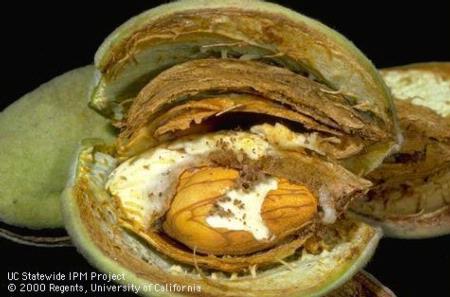
Navel orangeworm (NOW) is the number one pest in almonds and pistachios. There are many tools to monitor and control it, and ironically, one tool is making it difficult for researchers to understand the pressure in the orchards. Joel Siegel, a research entomologist with USDA ARS in Parlier in Fresno County, spoke with California Ag Today about the issues in NOW monitoring.

Joel Siegel on NOW Monitoring

Joel Siegel, research entomologist with USDA ARS in the Parlier office in Fresno County.

“One of the problems now is so many people are using mating disruption that it’s shutting down the pheromone traps, so I don’t have reliable trap data anymore. I have my own traps. Most of them are at zero,” Siegel said. “That could mean no caught navel orangeworm adults.”

“I have some traps that are catching, so I would tell people that the population is on the upswing now. We’re coming up to 2700 degree-days in a lot of locations,” he said.

That degree-day number represents the amount of accumulated heat units, or higher temperatures to push the pest to a new generation. NOW mating disruption is a strategy where the female pheromone is spread through the orchard through special aerosol emitters, and the widespread pheromone confuses the males because of the high pheromone concentration and thus, no mating.

“When you have mating disruption nearby, it interferes with the NOW traps,” he said.

The pheromone trap attracts males to it and gives researchers an idea of the concentration of the males in the orchard. No trapping of males? Then you really don’t know the numbers in the orchard.

“The PCAs are going back to a lot of their traditional methods, such as egg traps instead,” Siegel said. “Time will tell if navel orangeworm pressure is great this year.”

2021-05-12T11:01:58-07:00August 16th, 2017|

USDA Raises Plant Pest and Disease Awareness

USDA Website Provides Helpful Tips for Everyone

By Melissa Moe, Associate Editor

April is Invasive Plant Pest and Disease Awareness Month. Pests can vector dangerous diseases. In a state so dense with agriculture, Californians must be aware of the huge dangers that these pests create. We spoke to Edward Verona, the state operations coordinator for the USDA Plant Protection and Quarantine, about Hungrypests.com and how Invasive Plant Pest and Disease Awareness Month will help spread awareness of the dangers of plant pests to the public.

“There are eight helpful tips on Hungrypests.com. The public can learn what they can do to make sure that they’re not moving all of these hungry pests, not just from one state to another, but even within California, being that it’s such a large state,” Verona said.

California grows half of the fruit, vegetables and nuts that are consumed in the United States. Carrying fresh fruits and vegetables across state lines into California can spread dangerous diseases into previously uncontaminated areas and risks harming this huge supply of crops. Plants bought from nurseries and growers can also be homes for invasive pests.

“Make sure that you do buy plants and seeds from reputable sources, such as established nurseries or online businesses. You definitely don’t want to be doing that with fly-by-night dealers. Whether it’s in your neighborhood or online, definitely buy from certified sources,” Verona said.

Growers, producers, and consumers alike are all encouraged to visit Hungrypests.com to learn about the threat and what they can do to help. The website is available in English and in Spanish.

“What’s important is, only one person moving that orange, that apple, or that little sprig of citrus, can be the one to move the problem, but also, it’s everyone and the public that can help by learning what they can do and learning to recognize symptoms of these pests and diseases on hungrypests.com and report,” Verona said.

2021-05-12T11:05:16-07:00April 28th, 2017|

Caution Advised on USDA Proposal

California Dairies Cautious On USDA Proposal

By Jessica Theisman, Associate Editor

California Ag Today met recently with Kevin Abernathy, the general manager for Milk Producers Council. Milk Producer’s Council is an advocacy organization trying to make sure the dairies in California are being treated correctly. The MPC has been working for a long time to ensure that the California dairies are well taken care of. Especially when it comes to the USDA proposal to add the California dairy industry into the Federal Milk Marketing Order (FMMO).

Kevin Abernathy, Manager of Milk Producers Council

“MPC has been an advocacy group on behalf of California dairy families since 1949. This FMMO process is something we have been akin to since the start of it,” Abernathy said. “It was the early leadership of MPC that started the process of adding  twenty-some odd years ago. Then the work evolved into work done by Sye Vanderdusson, Jeffery Vandenheuvel and Rob Vandenheuvel, with their growth management plans, which lead to the Holstein plan, which got evolved into the Foundation For The Future plan, which ultimately ended up where we’re at today.”

It is said that CDFA still has the upper hand in the situation concerning quotas and pay. The MPC is taking a look into these concerns.

“If this was something that was announced by CDFA because we have the experience in working in the California system, it is easy for us to calculate and the compute the outcomes. … So that is the process that we are going through right now and understanding how this thing works,” Abernathy said.


2021-05-12T11:17:10-07:00March 20th, 2017|

Livestock Economics for Western Producers

Livestock Economics: What Attributes Bring Higher Prices?


By Laurie Greene, Editor


At the 100th Annual California Cattlemen’s Association (CCA) & California CattleWomen’s (CCW) Convention last week in Sparks, Nevada, Tina Saitone, cooperative extension specialist, UC Davis Department of Agricultural and Resource Economics, described her research on rangeland and livestock economics. “Primarily, my focus has been on cattle — beef cattle to date — but I’ve also started some projects recently with sheep producers and the predator interactions they have specifically with coyotes. I am examining whether or not [producers] can use nonlethal depredation methods to mitigate those losses.”

“Right now, I have been concentrating on marketing characteristics of cattle,” she said. “I study those practices employed by producers, such as when they wean their cattle; how many vaccinations they have; whether they market [their cattle] as natural, grass-fed, or organic; and the impact that [these choices] have on their prices.”

Tina Saitone

Tina Saitone, cooperative extension specialist, UC Davis Department of Agricultural and Resource Economics

Interestingly, Saitone and her colleagues have mainly been using satellite video auction data. “Western Video Market Auction actually held their auction this month here in Sparks, Nevada because they can do it at different locations all the time. So, we use that data to figure out cattle characteristics and then determine the marginal impact that each of those characteristics has on price,” said Saitone.

Characteristics such breed, frame score, flesh score, and weight, are definitely controls in Saitone’s research model because those are main drivers of price. “But what we want to do is figure out — holding all those things constant —if a producer raises their cattle natural, what kind of premium does that bring them? We’re really looking for that incremental difference.”

One might expect certain factors such as natural or organic, to deserve a higher price, but there always has to be a buyer. “Right now, when prices are low relative to 2014 and early 2015, ranchers do have some opportunities to get some higher prices in what we would call niche markets. Consumers are increasingly demanding a wider range of characteristics. They want grass-fed. They want organic. They want natural, no hormones. All of these are what we would call credence attributes. If you go to the grocery store and you taste a steak, you probably don’t know if it was raised natural.”

Accordingly, the industry has third-party certification to assure consumers that when they pay a higher price for that product they are actually getting those traits. “Farmers actually have the ability to fill some of those niche markets that consumers have created with their demand and possibly get higher prices than just selling into traditional commercial channels.”

The data that Saitone has been looking at from Western Video is focused on Western states, including California. Certainly, location places Western producers at a persistent disadvantage because the majority of the processing capacity is in the central part of the country, with Nebraska being the hub. Saitone said, “When you think about cattle being raised in California having to be transported all the way to Nebraska, some 1600 or 1700 miles, not only do you have the cost associated with that transportation, but you also have shrink; you have mortality.

California Cattlemen’s Association (CCA)

California CattleWomen

UC Davis Department of Agricultural and Resource Economics

2021-05-12T11:17:11-07:00December 6th, 2016|

Improved Huanglongbing Detection in Citrus Trees

Projects Underway for Better Huanglongbing Detection in Infected Trees


By Patrick Cavanaugh, Farm News Director


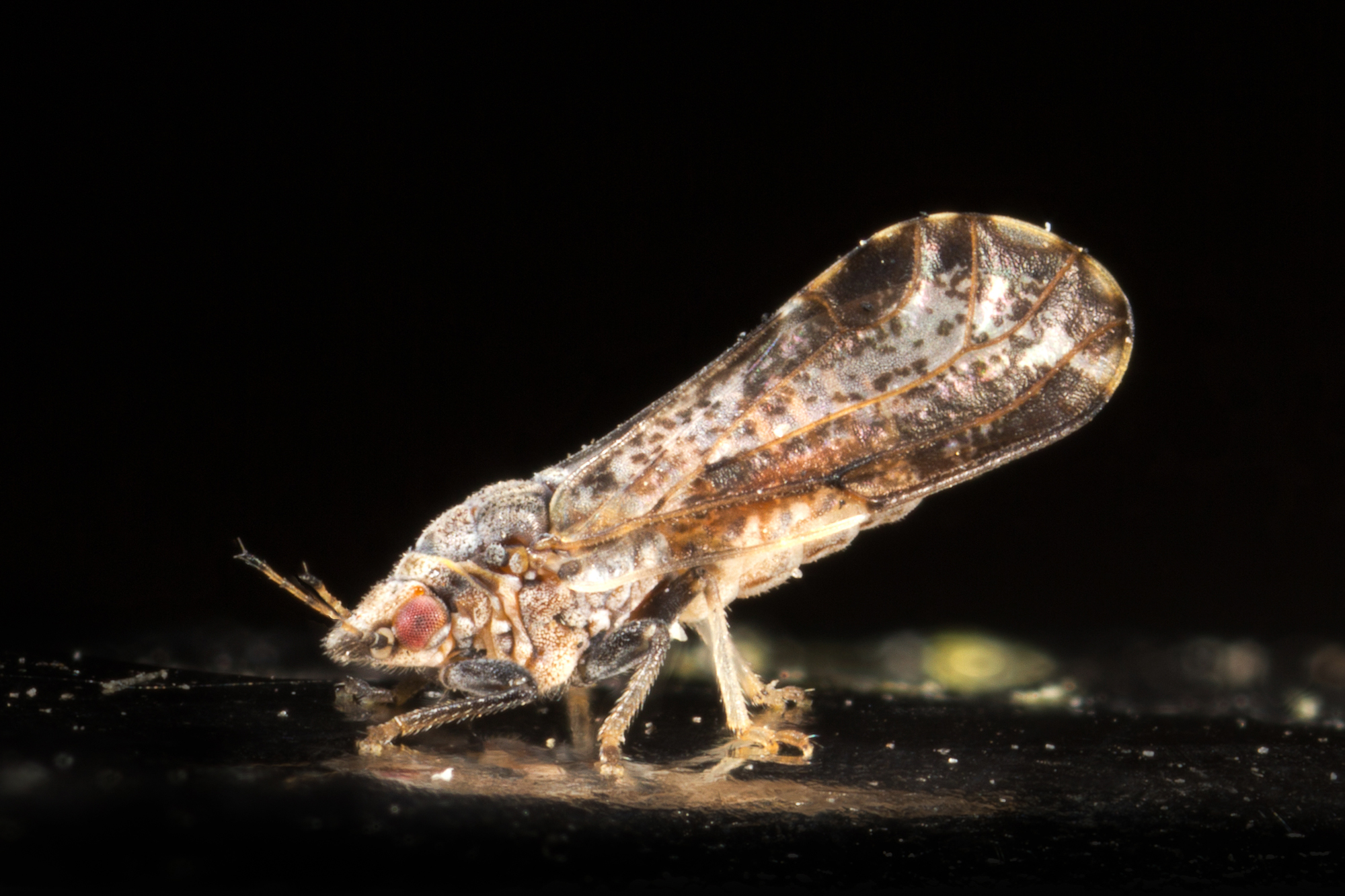
The big problem with Huanglongbing Disease (HLB), also known as citrus greening, is that an infected tree, despite having no visual symptoms, could quietly be a massive reservoir of HLB. The main vector, the Asian Citrus Psyllid (ACP), could easily pick up HLB from that tree and spread the disease throughout the orchard.

Currently, the main push to contain the possible spread of HLB is by controlling ACP. Yellow sticky traps are positioned near every commercial orchard in California, as well as near non-commercial trees in neighborhoods. Finding a psyllid on a trap triggers mandatory spray programs to help eliminate all psyllids in the area.

Neil McRoberts, Huanglongbing Detection

Neil McRoberts, associate professor of plant pathology, UC Davis

“Yes, one of the most critical questions in managing in HLB is the trees can be infected for a long time before you can visually see the ACP there,” said Neil McRoberts, an associate professor of plant pathology, University of California, Davis.

“There is a group of scientists, funded by the Citrus Research Board of California (CRB), working on different early detection methods. Those are methods where you would be able to tell the tree was infected before you could see the tree is infected,” said McRoberts.

The CRB funded field trials in Texas over the last few years that have narrowed the field of competitors to two or three techniques. The CRB will continue to fund the two leading contenders in that race to determine the leading early detection technology.

In the first technique, researchers analyzed all the microbes that live on a non-infected leaf surface and studied how that profile of microbes changes when the tree gets infected. Detecting a change in microbe profile could indicate the tree is not as healthy as it should be.

“Researchers take the microbes that live on an infected tree, extract the DNA from those microbes and run the DNA through a sequencer. The sequencer identifies which types of microbes are there,” he said.

McRoberts said sampling for microbes is easy. Researchers use an industrial-sized swab on the leaf surface. “You literally clean the leaf surface with the swab until it’s squeaky clean, put that swab in a bottle and send it to a lab. When it gets to the lab, they extract the DNA out of it and the rest of the process happens from there.

ACP Nymph Tamarixia Huanglongbing

A female Tamarixia radiata laying egg on an ACP nymph. (Photo by J. Lotz). Courtesy of Citrus Research Board

In selecting which trees should undergo microbe swabbing, McRoberts noted that the ACPs tend to attack the groves from the outer edges, inwards. “At different times of the day, the light will be on different edges of the grove depending on where the sun is and how warm it is. You can target your sampling towards the places where you’re more likely to find it, but still, finding those initial little infections is tough.”

The second method is a technique called metabolic profiling. A newly infected tree starts to produce different proteins and other chemicals in response.

Still another research strategy is analyzing things that stay in the tissue. “There’s a change in the profile of metabolites in the tree. If you run those metabolites through a mass spectrometer, the mass spectrometer will spit out a profile. You can tell the difference between a healthy profile and an infected profile,” McRoberts said.

“This is how the dogs come into the picture. Everybody knows that citrus has an odor. When the trees are infected, the profile of the chemicals and the composition of that odor change. We can’t smell it, but a very sensitive electronic detector device can sometimes pick it up. Remarkably, dogs can pick it up. We think that’s what happening with the canine detectors; they’re picking up some change in the smell of the trees.”

McRoberts said that dogs are amazingly accurate in detecting trees with HLB disease. “The best that we can tell from the trials involving dogs, the false positive rate is less than 1 in 1,000. I’m very confident with the detector dogs,” McRoberts said.


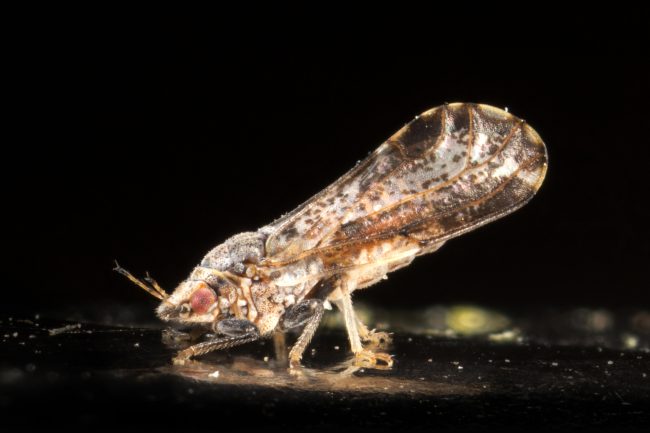
Featured photo: Adult Asian citrus psyllid (Photo by J. Lewis). Courtesy of Citrus Research Board

Citrus Research Board of California (CRB)

UC Davis Department of Plant Pathology

2021-05-12T11:02:00-07:00December 2nd, 2016|

Safe Food Alliance Helps Farmers Cope with MRL Disharmony

California Farmers Cope with MRL Disharmony


By Patrick Cavanaugh, Farm News Director


California farmers are careful with crop protection products because they know the importance of producing safe and wholesome food for their customers across the nation and in their export markets. “However, I think that there are some real challenges facing growers in California today,” said Thomas Jones, senior analytical services director for the Fresno-based Safe Food Alliance.

“As growers send their commodities around the world, they’re facing increasing challenges of knowing the right chemicals to apply and at what levels. We have our own strict regulations within California, if needed, [that govern] not only the application but also the maximum residue levels (MRL) or tolerances allowed for various crops,” said Jones.

Thomas Jones, senior analytical services director, Safe Food Alliance, MRL Disharmony

Thomas Jones, senior analytical services director, Safe Food Alliance

“That’s also carried onto the federal level; we have very strict EPA regulations. But as we [export] into other countries, they may have entirely different regulations,” said Jones. He noted this could be confusing not only to farmers, but also to registrants of crop protection materials because there is a lack of standardization of MRLs in different countries.

“Historically, there was the CODEX system, a UN-based system geared towards a more international standard for pesticide residues. It was very thought out, and very scientifically based,” Jones said.

However, as Jones explained, many countries do not want to follow the important scientific standard. “Increasingly, we are seeing countries want to establish their own systems, their own tolerances. They may be responding to their own political pressures within their countries.”

“We are seeing a process called ‘deharmonization’ in which every country wants to establish its own positive list of what is allowed and what is not allowed in [farm] products. Sometimes, those are in agreement with U.S. regulations and California state regulations; sometimes they are not. So it is important that [our] growers know not only what is legal in this country and in our state, but also what is allowed in their target [export] markets.”

Jones commented it is now known that some of these marketers [apply] random low MRLs and keep other MRLs high on some of their own products in order to get a marketing edge. “Some of those MRLs may or may not be based on any scientific standards.”

“There are a number of great tools out there,” he said. “There are a number of great software programs. Obviously, anything that [information growers] can get out of the print media or any educational courses are really essential. It is important to work with your Pest Control Adviser (PCA), as well. It’s important that [farmers] know what they are up against, as far as growing these crops,” said Jones.

The Safe Food Alliance is available to growers to help them qualify to meet the standards in the U.S. and abroad. “We [provide] training twice a year on fumigation safety for the various processors of dried fruits and tree nuts. We focus particularly on commodity fumigations and on what treatments are allowed and not allowed. We also have a full-service pesticide-testing laboratory and are very aware of the requirements in these other countries, so we’re happy to help both processors and growers with our monitoring efforts,” noted Jones.


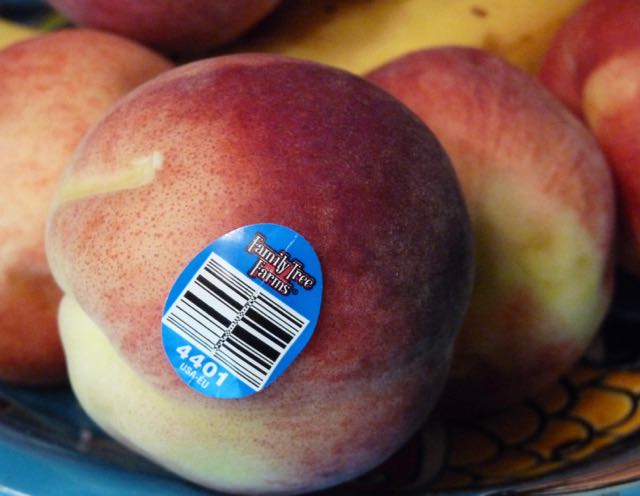
Featured Photo: For these California-grown peaches to be shippable to any out-of-state U.S. consumers or international export markets, they must meet scientific Maximum Residue Levels (MRLs).

C O D E X  A L I M E N T A R I U S, the international food standards, guidelines and codes of practice contribute to the safety, quality and fairness of the international food trade. Begun in 1963, Codex standards are based on the best available science assisted by independent international risk assessment bodies or ad-hoc consultations organized by Food and Agricultural Organization of the United Nations (FAO) and World Health Organization (WHO). Consumers can trust the safety and quality of the food products they buy and importers can trust that the food they ordered will be in accordance with their specifications.

2021-05-12T11:05:44-07:00November 28th, 2016|

Almond Alliance Advances Almond Issues

Alliance Advocates for Almond Industry

By Patrick Cavanaugh, Farm News Director


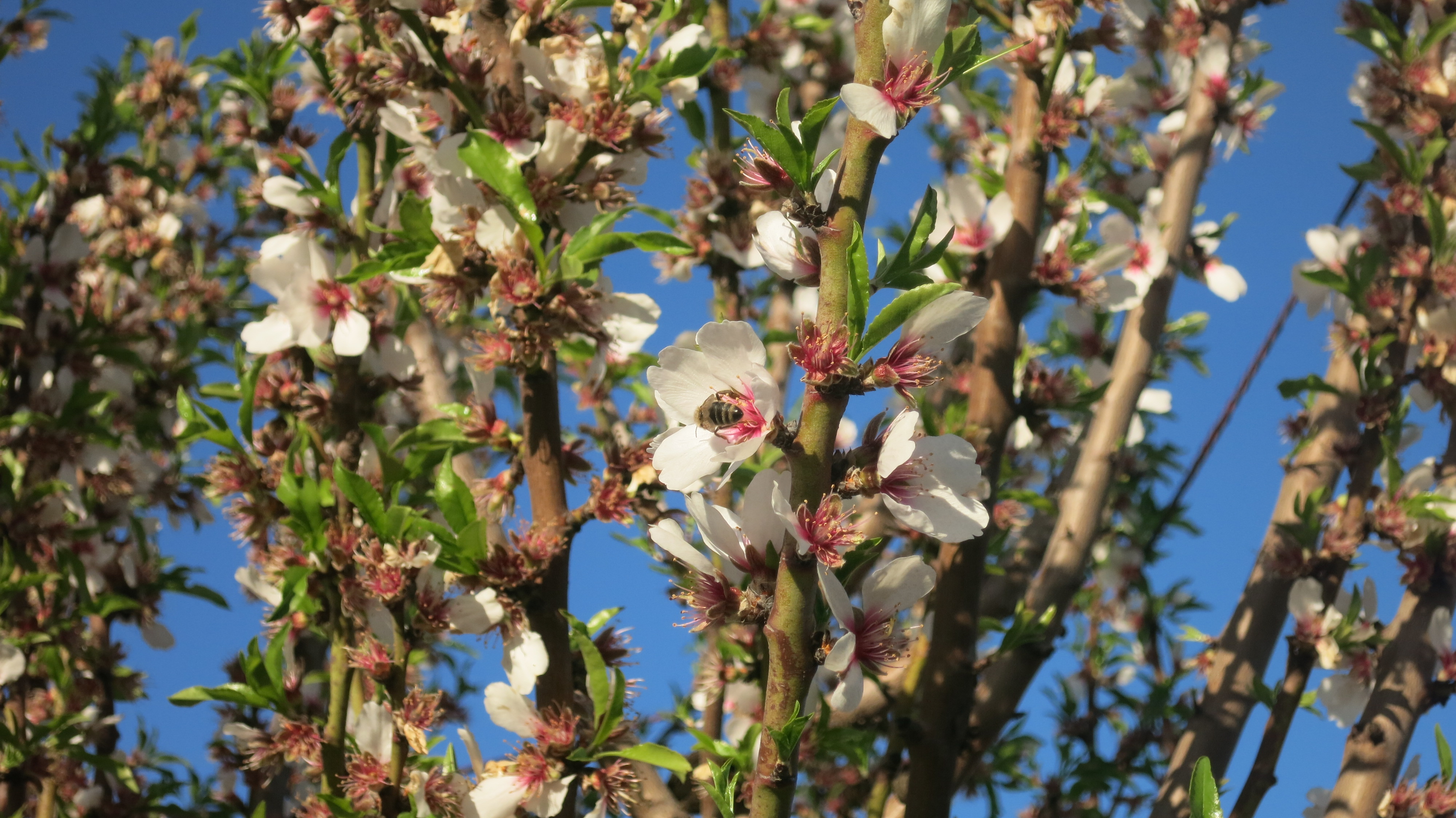
The Almond Board of California does many great things for the California almond industry, most notably marketing annually about two billion pounds of almonds—both domestically and internationally. But there is one thing the Almond Board cannot do, and that is lobby on behalf of this big industry.

Kelly Covello, president of the Almond Alliance

Kelly Covello, president of the Almond Alliance

Enter the Almond Alliance of California (AAC) on August 1, 2016. Formerly known as the Almond Hullers and Processors Association (AHPA) and established in 1980, this renamed and revitalized trade organization is the only trade association fully dedicated to advocating for and protecting members’ investment in the almond industry. The AAC will represent and serve growers, hullers/shellers, handlers, processors and allied industry partners.

Kelly Covello, president of the Almond Alliance, said, “Over the last year, we’ve done some strategic planning with the Almond Board so that we can complement one another’s activities. The Almond Board cannot lobby or advocate, and the trade association—the Almond Alliance—can.” Nevertheless, Covello said, “the industry has invested in the Almond Board through their assessment and has great resources available in terms of expertise, data [and] research that we can use to support our policy positions.”

For nearly 100 years, the almond industry has been active in California without a dedicated political voice. “The trade association has always been able to advocate on issues when necessary. The industry has grown; we’re over a million acres now. With the increase in acreage, the number of issues, the visibility and the scrutiny of our industry has dramatically increased,” Covello said.

Ms. Covello currently serves on the Board of Directors for the Agricultural Council of California and serves on two Almond Board of California (ABC) committees: the Almond Quality & Food Safety Committee and the Technical and Regulatory Affairs Committee.

2016-11-23T17:02:09-08:00November 23rd, 2016|

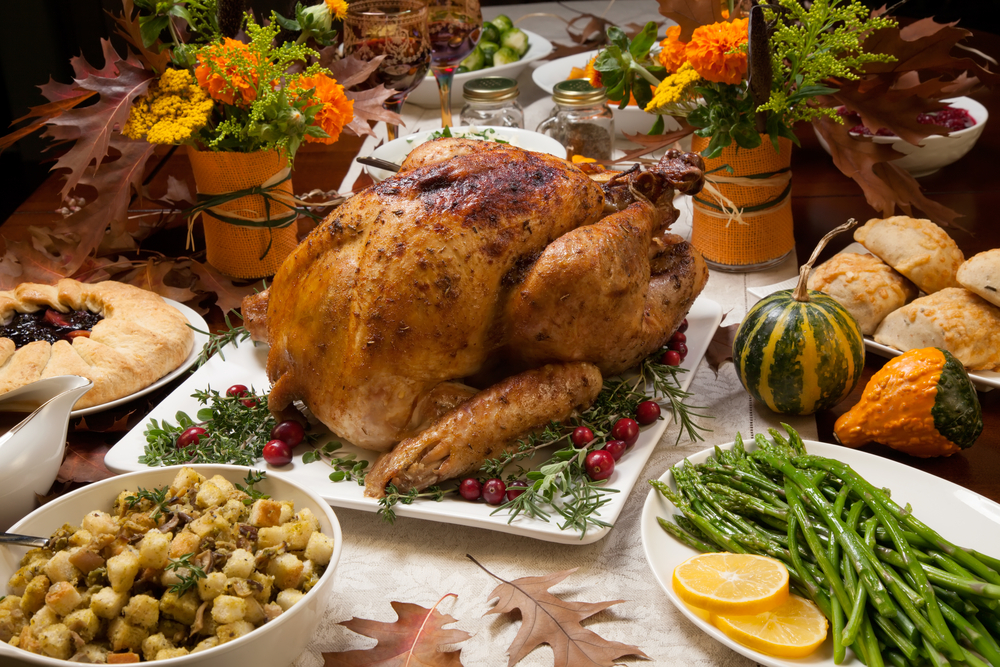
California Proudly Provides Most of Thanksgiving Feast to America

Enjoy Your Thanksgiving Feast

From California’s Farms to Your Table


By Patrick Cavanaugh, Farm News Director


Turkeys come from several areas of the state, and while California is ranked No. 7 in turkey production, we do supply most of the western United States.

The famous Mrs. Cubbison’s dressing comes from Sophie Cubbison, a California entrepreneur who was born in 1890 in the San Marcos area of San Diego County. A longer fascinating story made short: In May 1920, she graduated from California Polytechnical University with a degree in Home Economics. In 1948, she added seasoning to broken pieces of the popular Melba toast to make stuffing. A factory in Commerce, California churns it out this time of year.

Farmers and farmworkers in California produce almonds, raisins, walnuts, prunes, pistachios, figs and dates, apricots, pumpkins, pecans and pomegranates. . . right on up the food line.

These are all part of the American Thanksgiving feast.

Celery from the Oxnard and Ventura area, and the rest of the ingredients for the stuffing mix, plus carrots, lots of crisp lettuce and fresh spinach from Salinas — all these greens waiting for you, already washed and bagged in the produce department. The green beans in your casserole come from California growers.

You’ve got oranges and kiwi fruit, table grapes, strawberries, raspberries freshly harvested from the Salinas and the San Joaquin Valleys. You’ve got sweet potatoes from Merced County — this is their pinnacle season. You’ve got all kinds, colors and sizes of potatoes and tomatoes, plus parsley, onions and garlic. . .  all grown in California.

Practically all the fruits, vegetables and nuts make America’s Thanksgiving celebrations festive, and nearly all of them come from California.

And don’t forget about the great variety of California winegrapes cultivated by California growers and then crafted with great care into great California vintage.

Wait! We grow firm, juicy apples and those small round watermelons that are a great snack or accent to a flavorful dessert fruit salad. And besides poultry, we even have California lamb, beef, rice or pasta—if you want to go that way.

Of course, you’ve got Martinelli’s sparkling apple or grape cider from Watsonville, near the Monterey Bay area. Local growers provide the tree-ripened fruit to the award-winning company, which is still family-owned and is run by the founder’s grandson and great-grandson.

At more than 140 years old, Martinelli’s is merely one century younger than our nation. In fact, the company received a first place award at the California State Fair in 1890.

By the way, do you know that little pop-up turkey timer that indicates when the turkey has reached the correct internal temperature? Food public relations genius Leo Pearlstein¹, along with a turkey producer from Turlock, invented that gizmo. Pearlstein, who handled the promotions for the California Turkey Advisory Board, was contemplating the enduring Thanksgiving conundrum—how long to cook the turkey and how to figure out when it is done?

Pearlstein said he and the turkey rancher were sitting in Pearlstein’s test kitchen mulling over ways consumers could determine when the turkey was done. They noticed the fire sprinkler system overhead. When the kitchen gets too hot, the fire sprinkler turns on. A metal alloy in the sprinkler is activated or melted when subjected to the high temperature of a fire in the room (185 degrees Fahrenheit). They applied that concept to the pop-up timer.

Officially, the National Turkey Federation advises consumers also use a conventional meat thermometer to verify that the cooked turkey’s internal temperature reaches:

165 degrees F to 170 degrees F in the breast or
175 degrees F to 180 degrees F in the thigh and
165 degrees F in the center of the stuffing
.

Except for cranberries, it is really a California Thanksgiving.


¹Leo Pearlstein is founder and president of Lee & Associates, Inc., a full-service public relations and advertising firm, which he opened in 1950. According to the company website, he currently runs the company with his partners, two of his sons, Howard and Frank Pearlstein. He is also founder and director of Western Research Kitchens, the food and beverage division of his agencyHe is considered a pioneer food consultant and his agency was recently named as one of the top agencies in the country that specializes in food and beverage clients.

For more food safety guidelines, the United States Department of Agriculture (USDA) Food Safety and Inspection Service (FSIS) provides this portal.

2021-05-12T11:17:11-07:00November 23rd, 2016|
Go to Top