Friant Water Blueprint Focused on Counties South of Delta

Blueprint Will Help Deliver Message for More Water

By Jessica Theisman, Associate Editor

An important blueprint for the success of farming in the Central Valley is being developed to present to California government officials. This blueprint outlines what must be done to get water to the eight counties south of the delta. The blueprint is a critical step to help keep farmers in business due to the pressure from the Sustainable Groundwater Management Act.

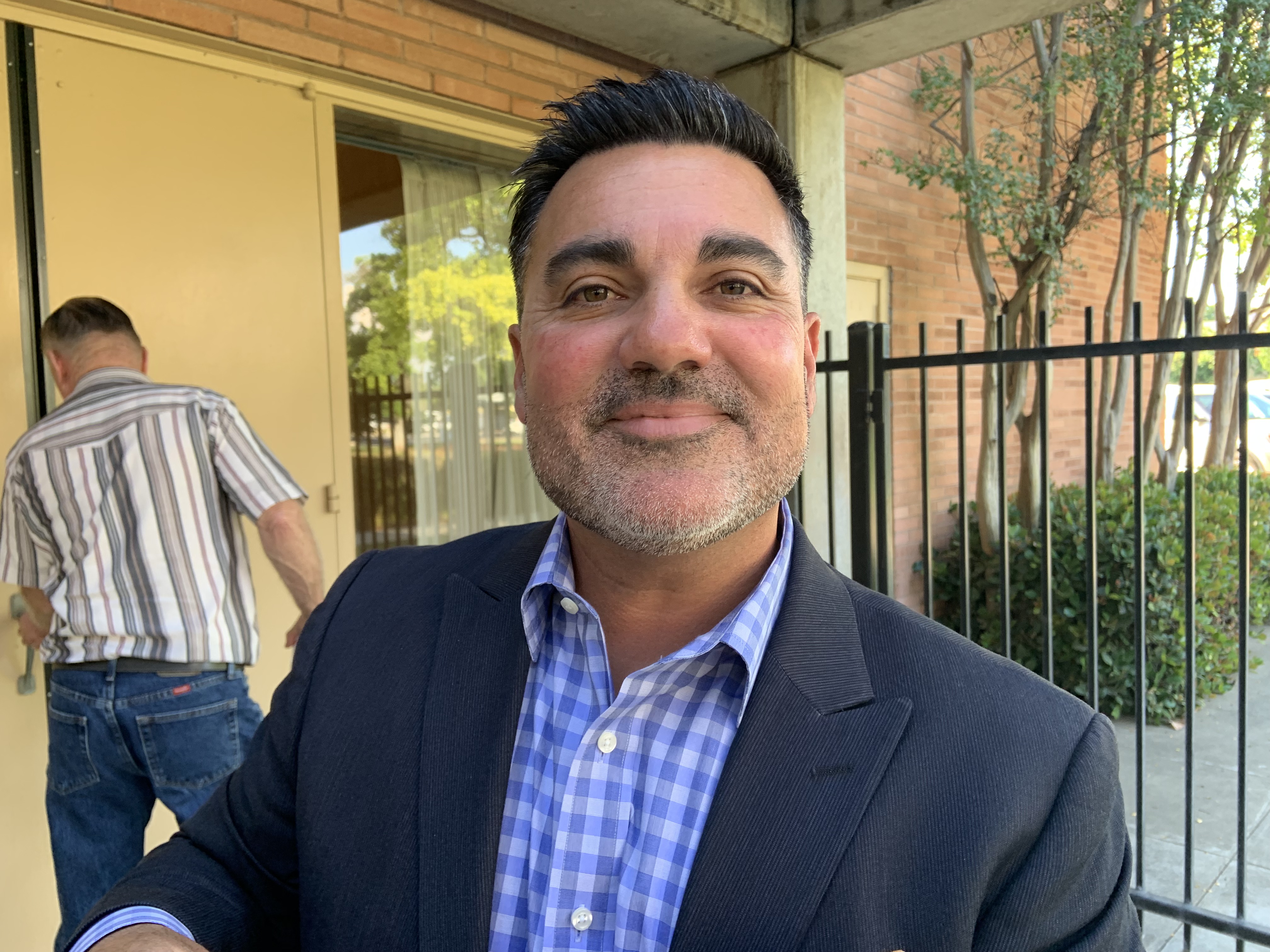
Johnny Amaral is the Friant Water Authority, Chief of External Affairs. Amaral overseas Friant’s engagement with San Joaquin Valley farmers, businesses, and related industry groups regarding water policy and water supply matters as well as legislative lobbying and communications activities.water allocation

“I remember this isn’t just about farmers. This entire Central Valley depends on a functioning water system. Whether you are a farm owner, a farm worker, a city councilman or somebody who works at a milk plant or at a library, it doesn’t matter,” he said. “San Joaquin Valley is in this together, and it is an all or nothing situation. This is being labeled as a farmer-led effort, and it is misleading.”

“This is a very broad coalition of very unusual interests coming together to promote this,” Amaral said.
2019-07-01T14:46:27-07:00July 1st, 2019|

Elaine Trevino Given USDA Appointment

Almond Alliance President Appointed to USDA Agricultural Trade Policy Advisory Committee 

News Release

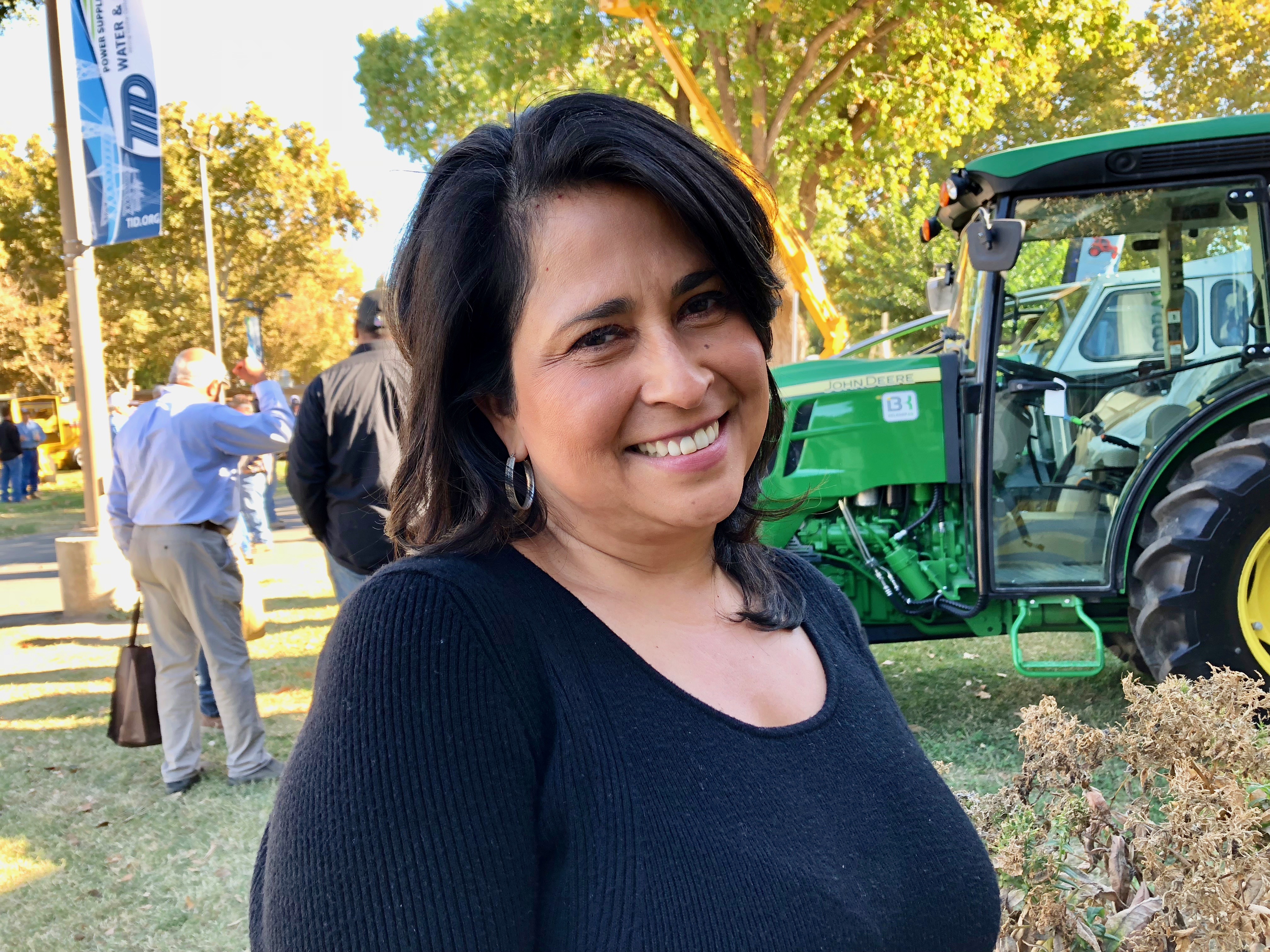
USDA Secretary Sonny Perdue and United States Trade Representative Robert Lighthizer have appointed Almond Alliance President Elaine Trevino to the USDA Agricultural Policy Advisory Committee for Trade.

The Agricultural Policy Advisory Committee provides advice and information to the Secretary of Agriculture and the U.S. Trade Representative on the administration of trade policy, including enforcement of existing trade agreements and negotiating objectives for new trade agreements.almond crop

“I am honored to be appointed to this prestigious agricultural trade policy committee,” Trevino said. “Given the almond industry’s dependence on global trade health, this position is an important one to ensure there is a continued strong presence at the table for California almonds.”

Congress established the advisory committee system in 1974 to ensure a private-sector voice in establishing U.S. agricultural trade policy objectives to reflect U.S. commercial and economic interests. USDA and the Office of the U.S. Trade Representative jointly manage the committee.

2019-06-19T22:50:19-07:00June 18th, 2019|

Rep. Josh Harder: Trade War With India Must End for Almond Industry

India is Top Export Destination for Almonds, Worth $650 Million Annually

News Release

Representative Josh Harder (CA-10) released the following statement after India imposed retaliatory tariffs up to 70 percent on American products, including almonds. Rep. Harder’s district is one of the largest producers of almonds in the country, and India is the top export destination for the product.

Josh Harder

Josh Harder

“This trade war has to end. The president is shooting from the hip on his trade policy and it’s Central Valley almond farmers that are left holding the bag. India is our top export partner and we just can’t afford to take this hit. I’m going to continue pushing the administration and the USDA to stop this devastating cycle of retaliatory tariffs. We need to be supporting our farmers, not cutting off our markets and depressing our economy.”

According to the United States Department of Agriculture (USDA), the United States exported over $650 million worth of almonds to India in 2018.


2019-06-18T20:59:02-07:00June 18th, 2019|

Solutions From The Land: Improving Soils for Increased Production

High Demands for Sustainability Call for Solutions from the Land

By Mikenzi Meyers, Associate Editor

With an increasing population and fewer resources, the agriculture industry is under increasing pressure to remain sustainable. Solutions from the Land is meeting this challenge head-on by examining more progressive ways to produce.

Solutions From The Land is a farmer-led platform that advocates for multiple solutions towards well-managed agricultural landscapes that can still meet the demands of an increasing population.

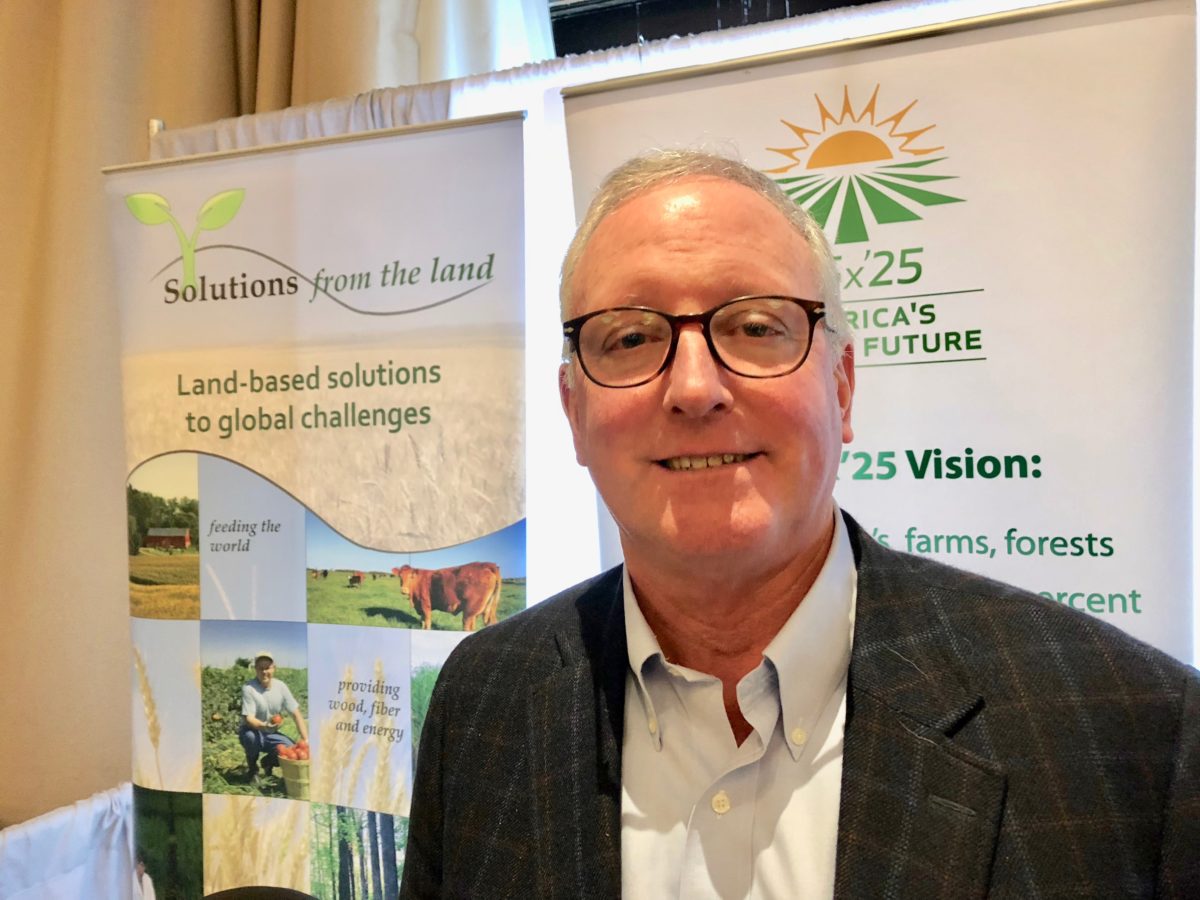
Ernie Shea, president of Solutions From The Land, is optimistic about California agriculture’s future.

“We’ve had significant investments in technology and infrastructure that have allowed the systems to deploy at a scale, but more than anything, we’ve had progressive leaders that have helped to champion this cause,” he said.

One of the pathways Solutions From The Land is working towards is soil health programming. Through this, farmers are improving the organic content in their soil and soaking up leached water.

“They’re sequestering greenhouse gases and delivering global solutions,” Shea explained.

The organization has partnered with the California Department of Food and Agriculture and encouraged government leaders to endorse soil health programming in hopes that they will help farmers adapt to changing climatic conditions.

“We hope someday we’ll add economic value to the carbon that we’re sinking and reward the producers for it,” Shea said

2021-05-12T11:05:03-07:00June 18th, 2019|

Proposed Legislation (SB1) Threatens Voluntary Agreements on Wate

Statement by Mike Wade, California Farm Water Coalition Executive Director:

SACRAMENTO, CA – Prior to last December’s State Water Board meeting, both Governor Brown and Governor Newsom took the bold step of supporting a completely new approach to water policy. With their encouragement as well as hard work on the part of scientists, farmers, environmentalists, and other stakeholders as well as the California Environmental Protection Agency and the California Natural Resources Agency, Voluntary Agreements are nearly complete. However, all the progress will be lost if SB1 goes into effect.

As written, SB1 locks California into our failed regulatory system that has not worked for anyone and has guaranteed nothing but lawsuits and delays.

And while the legislation gives lip service to supporting the VA process, make no mistake about it—SB1 would result in the colapse of the Newsom Administration’s voluntary approach to updating California water policy.

It’s hard to overstate the break-through represented by the VAs. A completely new approach to managing water, they require scientific studies and put the new science into practice. They provide an agreed-upon amount of water for river flows as well as new environmental projects and other improvements—paid for by farmers, water districts, and other users—that will help get maximum benefit from the water.

In addition, all water users will have more certainty of water flow that is simply not a part of our current system. And probably most important, because the VAs are the product of compromise and agreement on the part of all water users, we can move forward today, removing ourselves from the endless cycle of lawsuits that has dominated California water policy. Real results will be felt now, not 10 years from now.

We hope the Legislature can find a way to join the Governor in charting a new path to smarter water policy.

2019-06-17T16:37:59-07:00June 17th, 2019|

Almond Growers Helped In Trade Dispute

Almond Grower and Board Chair Holly King Attends White House Briefing with President

News Release

U.S. Secretary of Agriculture Sonny Perdue announced almonds will be included in the administration’s new trade mitigation package. This package aims to continue the support of farmers and ranchers impacted by delayed negotiations and trade disruption with China.

Almond Board Chair Holly A. King attended a briefing at the White House recently with President Donald J. Trump and representatives from other major farm groups to discuss the trade mitigation package.trade

“It is an honor to represent the California almond industry at the White House briefing with President Trump and express appreciation for his efforts to ease the burden of the trade tariffs on California almond growers,” King said. “We have invested heavily in developing the market for California almonds in China for more than 20 years and hope the Administration is successful in negotiating a new trade deal soon so we can get back to business as usual.”

The $16 billion package includes $14.5 billion for the Market Facilitation Program, $1.4 billion in surplus commodity purchases through the Food Purchase and Distribution Program and $100 million in Agricultural Trade Promotion funding. Almonds will be included in the Marketing Facilitation Program. According to the USDA release, “Tree nut producers, fresh sweet cherry producers, cranberry producers and fresh grape producers will receive a payment based on 2019 acres of production.”

The Almond Board has worked closely with the Almond Alliance of California throughout the developing tariff situation to ensure the voice of the California almond industry is heard.

“The Almond Board and Almond Alliance have been actively engaged with USDA, the US Trade Representative and Congress regarding the impact of this trade disruption on almonds. The Alliance has led efforts ensuring almonds are included in the second mitigation package,” said Julie Adams, Vice President of Global, Technical and Regulatory Affairs at the Almond Board. “We look forward to working with USDA in leveraging these funds to best benefit the entire almond industry and our grower communities.”

Overall, trade disputes have underscored the importance of having diverse, healthy export markets, a position of strength that the California almond industry has long enjoyed. For decades, ABC has supported the industry by making significant investments in foreign market development and expansion. Recently, the Almond Board started marketing programs in Italy, Mexico, Germany and re-entered Japan. ABC also ramped up marketing activity in Germany and India. 

“While we appreciate almonds’ inclusion in the second package, almonds continue to be impacted by the increase in tariffs, and we’ve seen a significant decline in shipments to China, our third-largest export market,” said Adams. “Getting back to normal trade is critical.”

2019-06-03T16:53:20-07:00June 3rd, 2019|

CDFA To Hold Good Ag Neighbors Workshops

Workshop Designed for Produce Growers and Livestock Areas to Promote Food Safety

News Release

In order to facilitate dialogue between different sectors of California agriculture about cooperation to prevent future foodborne illness outbreaks, the California Department of Food and Agriculture (CDFA) is partnering with the University of California and the U.S. Food and Drug Administration (FDA) to bring the livestock and produce communities together for a series of workshops.

The workshops, titled Good Ag Neighbors, are designed for fruit and vegetable growers, livestock owners, and others interested in learning about how produce safety and livestock management practices can work jointly to promote food safety.

The workshops will be held in two California locations, with the first scheduled for June 11 from 9 a.m. to 4 p.m. at the Desert Research and Extension Center in Holtville. The second workshop is scheduled for June 13 from 9 a.m. to 4 p.m. at the Robert J Cabral Ag Center in Stockton.

“Agriculture is complex,” said CDFA Secretary Karen Ross. “This is particularly true in California, where diverse agricultural operations often exist side-by-side, with each of them required to comply with a myriad of regulations designed to protect the public, the environment, and the food supply.”

Karen Ross, CDFA Secretary

Karen Ross, CDFA Secretary

Diversity is extremely important to the fabric of California agriculture. Also important is open communication channels between diverse partners. This has become more apparent with the CDFA’s newly created Produce Safety Program, which is working on behalf of the U.S. FDA to enforce produce safety regulations under the Food Safety Modernization Act.

The workshops will address lessons learned from recent investigations of produce-related foodborne illness outbreaks, examine key research findings, and consider future research needs.

The workshops are being conducted by the UC Davis Western Institute for Food Safety and Security and will include presentations by researchers and industry representatives. The day-long agenda will focus in the morning on reviewing regulations, laws, and practices already in place to protect food and environmental safety, while the afternoon will be spent in various breakout groups examining how these practices can be leveraged.

Participants should come prepared to share their experiences as well as their produce safety questions.

The workshops are offered free of charge. For more information and to register, please visit http://www.wifss.ucdavis.edu/good-ag-neighbors/.

2021-05-12T11:01:47-07:00May 24th, 2019|

Western Growers Statement on California DPR Ban on Chlorpyrifos

Tom Nassif: CA Farmers Face the Most Stringent Regulations in the World

By Cory Lunde, Western Growers

In response to the recent announcement that the California Department of Pesticide Residue (DPR) is acting to ban the use of the insecticide chlorpyrifos, Western Growers President and CEO Tom Nassif issued the following statement:

“California farmers are universally committed to the safety of their food, the health of their workers and communities, and the sustainability of their land. At every turn, they strive to achieve efficiencies in their use of resources like water, fertilizer, and pesticides and seek to minimize both the human and environmental impacts of these inputs.

immigration reform

Tom Nassif

“California farmers also face the most stringent regulatory environment in the world, one that often limits their access to many of the tools still available to farmers elsewhere in the U.S. and in foreign countries, including certain types of pesticides. Indeed, over the last 20 years, California regulatory actions have removed several of the most important crop protection tools farmers rely on to fight pests and diseases.

“With … [the] announcement that DPR will initiate the cancellation of chlorpyrifos, one of the most widely studied and globally approved insecticides, California farmers now stand to lose yet another arrow in their quiver—without effective and ready replacement tools—making their quest to grow the safest, healthiest and most abundant food supply in the world even more difficult.

“California farmers are resilient, but the long-term viability of our farms in California depends on proper support from the Administration and renewed cooperation of the state’s regulatory agencies, especially in light of the many other unique and expensive regulations that place California farmers at a growing competitive disadvantage.”

2021-05-12T11:05:03-07:00May 22nd, 2019|

NASS Predicts Another Record-Breaking Almond Crop

2019 Crop Predicted to be 2.50 Billion Pounds

News Release

For the second year in a row, the U.S. Department of Agriculture (USDA) National Agricultural Statistics Service (NASS) is predicting a record California almond crop for the upcoming production year. According to the NASS 2019 California Almond Subjective Forecast issued recently, California almond orchards are expected to produce 2.50 billion pounds of nuts this year, up 8.69% from last year’s 2.30 billion-pound crop.  (1)

This forecast comes just weeks after NASS released the 2018 California Almond Acreage Report, which estimated total almond acres for 2018 were up 2% from 2017 at 1.39 million acres. Bearing acres—orchards mature enough to produce a crop—were reported at 1.09 million acres, up 6% from the previous year. Looking ahead, NASS reported preliminary bearing acreage for 2019 at 1.17 million acres, up 7.3% from 2018.  (2)

Richard Waycott, Almond Board President, and CEO

The first of two reports for the upcoming crop, the Subjective Forecast is based on opinions obtained from randomly selected almond growers located throughout the state via a phone survey conducted in April and May. NASS asked growers to indicate their total almond yield per acre from last year and expected yield for the current year based on field observations. The sample of growers interviewed is grouped by size of operation, and different individuals are interviewed each year, allowing all growers to be represented. NASS then combines the yield estimates obtained from each grower and extrapolates the information to arrive at the numbers reported in the Subjective Forecast.

While the Subjective Forecast provides early estimates of the upcoming crop after it is set, NASS’s 2019 California Almond Objective Report will provide a more precise estimate as it uses a more statistically rigorous methodology to determine yield. The report’s data is based on actual almond counts and measurements gathered from over 850 orchards throughout the state and includes the weight, size, and grade of the average almond sample broken down by both growing district and variety.

The California Almond Objective Report will be released on July 3 at 11:50 a.m. PDT. NASS conducts the Objective Report—the Subjective Forecast and the Acreage Report—in order to provide the California almond industry with the data needed to make informed business decisions.

1 USDA-NASS. 2019 California Almond Subjective Forecast. May 2019.

2 USDA-NASS. 2018 California Almond Acreage Report. April 2019. 

2019-05-20T15:08:50-07:00May 20th, 2019|

Wastewater Treatment Plant in Delta Causing Problems

Harmful Algal Blooms Impacting Watershed

News Release Edited By Patrick Cavanaugh

The San Francisco Bay Regional Water Quality Control Board updated its regulations on nutrient discharges into the San Francisco Bay watershed recently to protect the watershed from harmful effects of discharges from municipal wastewater treatment plants and other sources.

Although San Francisco Bay is not impaired by nutrients, it is a nutrient-enriched estuary with higher nitrogen and phosphorus concentrations than most estuaries in the world. Too much nitrogen and phosphorous can lead to harmful algal blooms, which can release toxins to the Bay. Harmful algal blooms can also result in low dissolved oxygen or insufficient oxygen in the water to support aquatic life.

In the Bay, nitrogen has the biggest influence on phytoplankton growth, and the Region’s municipal wastewater treatment plants account for 65 percent of the nitrogen discharged to the Bay. Regional population growth will increase these nitrogen discharges.

The regulatory update, in the form of a reissue of the Nutrients Watershed Permit first adopted in 2014, provides a consistent approach for regulating nutrient discharges from municipal wastewater treatment plants in the San Francisco Bay watershed.

The first Nutrients Watershed Permit required sewage treatment agencies to: (1) monitor their discharges, (2) support scientific studies to evaluate the Bay’s response to current and future nutrient loads, and (3) evaluate opportunities to remove nitrogen through treatment plant improvements.
This update will increase monitoring and scientific studies. Importantly, it requires treatment agencies to evaluate opportunities to remove nitrogen using “green” solutions, like routing wastewater through treatment wetlands and wastewater recycling.

These types of opportunities may provide water quality benefits beyond nutrient removal, for example, by providing protection against climate change through carbon sequestration and adaptation of the shoreline to address sea-level rise. Green solutions can also remove additional contaminants of emerging concern for water quality.

2019-05-17T17:12:41-07:00May 17th, 2019|
Go to Top