CCA Exam Signup Open

California Certified Crop Advisor Exam Signup Open

Certified Crop Advisers (CCAs) in California and Arizona have the opportunity to register for the August 5, 2016 CCA Exam until June 24, 2016.  The exam will be given in Sacramento, Tulare, Ventura and Yuma.  Registration for the exam is available at: https://www.certifiedcropadviser.org/exams/registration.CAPCA ED

More than 1,000 active CCAs in California and Arizona are playing an important role assisting growers with the efficient and environmentally sound use of fertilizer and crop management.  Many California CCAs recently completed the University of California/California Department of Food and Agriculture Nutrient Management Training Course which qualified them to complete grower nitrogen management plans that are or will be required by the various California Regional Water Quality Boards.

“Crop consultants are encouraged to become CCA s to show that they have the commitment, education, expertise, and experience to make a difference in a client’s business,” said California CCA Chairman, Fred Strauss, Crop Production Services.  “The CCA certification is largest, most recognized agriculturally-oriented program in North America.  The CCA Exam Preparation Course, scheduled in Sacramento on June 24,  will help candidates prepare for the test. Registration for the exam prep course is available at https://capcaed.com/june-24,-2016-ca-cca-exam-preparatory-workshop. 

For more information on the California CCA program, go to: www.cacca.org, or contact Steve Beckley at (916)539-4107 or steve.beckley48@gmail.com for more information. The California CCA Program is also on Facebook.
2016-06-15T18:03:18-07:00May 18th, 2016|

LGBTQ+ Agriculture Summit

Cultivating Change: Building A Network of LGBTQ+ Agriculturists

June 8th – 11th, 2016 Kicks off the 2nd Annual Cultivating Change Summit In Sacramento

The Cultivating Change Foundation is hosting their 2nd annual Cultivating Change Summit designed to explore and empower the intersection of the agriculture industry and the LGBTQ+ communityLesbian, Gay, Bi, Transgender and Questioning  (and allies)a group of people rarely represented in either of the communities of which they are a part, the agriculture community or the LGBTQ+ community, for the most unique professional development conference ever. 

CDFA LOGOParticipants can go to http://www.cultivatingchangefoundation.org and register to join this important conversation. The Summit is the first of its kind providing a safe space for LGBTQ+ agriculturalists and people who love and respect them to come together and connect through a shared experience. With over 200 participants from industry leaders to innovators uniting June 8th-11th, in Sacramentothe epicenter and capital of the number one agriculture producing state in the nation, with a common goal of amplifying and elevating this global conversation. This Summit will allow LGBTQ+ agriculturists of theUSDA past, present, and future to see that they are not alone and recognize the Ag industry needs all of us for a sustainable future.

“It is important that the community come together to share information and best practices, not only to ensure we all reach our full potential, but also to support one another as so many LGBTQ people across the country contribute daily to our rural and agriculture communities.” – Ashlee Davis, LGBT Rural Summit Series, U.S. Department of Agriculture.

Over the three days, the Cultivating Change Summit will have 40 speakers, workshop presenters, and keynotes delivering content focused on four different areas: agricultural education, production agriculture, government and policy in agriculture, and urban agriculture. Some of the Summit’s distinguished guests include the California State Secretary of Agriculture, Karen Ross, and the President of California Farm Bureau, Paul Wenger. Representatives from the United States Department of Agriculture, Sacramento government officials, and individuals from global agricultural companies will be present.

CFBF logoThe main summit events will take place at the Crest Theatre in Downtown Sacramento, 1013 K Street. The final day of the summit will include tours of Northern California’s Agriculture landscape and local agricultural operations.

“I’ve waited more than 20 years for someone to start the conversation. I believe in Cultivating Change! Let’s do this!” – Rob Larew, Staff Director, US House Committee on Agriculture.

About The Cultivating Change Foundation

Founded in 2015, the Cultivating Change Foundation, a 501(c)(3) nonprofit, focuses on valuing and elevating minorities in agrarian communities through innovation, education, and advocacy.

Tickets are available for the Cultivating Change Summit and can be purchased through the website for $225. Special group ticket packages, sponsorship opportunities, and a detailed schedule are also available online. Visit www.cultivatingchangefoundation.org for more information.

2016-05-31T19:24:03-07:00May 16th, 2016|

Ryan Jacobsen on 5 Percent Water Allocation

Fresno County Farm Bureau CEO on Water Allocation

 By Patrick Cavanaugh, Deputy Editor

California Ag Today staff interviewed Ryan Jacobsen, CEO and executive director of the Fresno County Farm Bureau moments after the Bureau of Reclamation announced only 5 percent of contracted water would be allocated to Federal surface water users south of the Sacramento Delta during this El Niño year.

California Ag Today: Forget how you feel about the Bureau of Reclamation’s initial 5 percent allocation for Federal water users. How many times can we say, “Frustrated?” 

Jacobsen: Absolutely just despicablethe announcement we heard earlier today. The frustration is that we’ve continually been told over the last couple of years with zero percent water allocations that it’s been Mother Nature.

Even though it’s not necessarily the big bang year we were hoping for in northern California, Mother Nature provided. We’ve seen the reservoirs overflowing. We’ve seen the reservoirs flood-releasing, and here we are with a five percent allocation. We saw outflows in the delta this winter that exceeded the 300,000 acre/feet a day, and yet we weren’t doing anything to capture it. So, it’s just frustration, frustration, frustration that here we aremore of the sameand what does this mean long-term for California agriculture? We can’t be viable without a surface water supply, and when Mother Nature provides, unfortunately the federal government’s not trying to collect it.

California Ag Today: What is going on? Why are they doing this? Do you have any theories?

Jacobsen: Obviously, it has so much to do with the environmental side and the belief that the federal government is doing all they can to protect these species up there. We have seen that it’s doing no good; the fish species are seeing no recovery; it’s actually going in the opposite direction. It is plain mismanagement. The unfortunate part is sound science isn’t even going into this right now; it is purely the emotional side of whoever decides to pull the trigger on the federal side. And here we are on the resulting end, losing millions and millions of dollars in our economy, idling more farmlandthe most productive farmland in the countryin the worldand losing the jobs that are associated with it.

San Luis Reservoir -Empty, California Farm Water Coalition

San Luis Reservoir Suffering the 2015 Drought is now barely half filled even after the El Nino rain, runoff and massive flood releases from Shasta an Oroville

California Ag Today: You speak brilliantly on this whole situation. Way more water has flowed out to the ocean than needed for the protection of any of the species or the environment, so who are they listening to?

Jacobsen: Right now, this is simply the administration’s decision. Reclamation falls under the federal side of things, so obviously, ultimately, it lays on the President’s desk. If we talk about resolution: by 9 a.m. tomorrow morning, we could see a resolution to this whole issue. If Congress would get their act together and pass some kind of bill, get it on the President’s desk and get it signed, we could see some resolution.

Unfortunately, here we are, April 1:  a good portion of the precipitation season is now behind us, the high flows through the delta are pretty much over. We still have healthy reservoirs up North, but unfortunately it doesn’t mean anything for us down here because we can’t convey it through the Delta to get here. That lack of  and the lack of ability on the federal side to make the decisions that would allow us to pump that water makes this just another year of doom and gloom. Again, how much more of this can we take? I think the long-term outlook for those farmers with permanent crops who have tried to scrape by, has to be, “Is this even viable for us to continue to do this anymore?” ‘Because Mother Nature provided, and yet we don’t see the water.

California Ag Today: Very bleak. Ninety-five percent of normal snowfall, too.

Jacobsen: The percentages in northern California, while good, weren’t the El Niño banner year we were expecting. The season looked bright, like it was going to be good. Yet, the fact of the matter is that during the months of January, February and March, when these just incredible numbers of high water flows were going through the Delta, pumps were pumping in single digits. And that’s not even close, or anywhere near where they should have been.

I think the misconception is when we talk about the water that is taken from the Delta, it’s such a small percentage, particularly during those high-flow times; it would have meant no difference to water species. It’s just a frustration that we continue to be bombarded by these environmental restrictions that are having no good effect on the long-term viability of these species they are trying to protect.

California Ag Today:  What is the economic impact of these water cutbacks on the Central Valley?

Jacobsen: Well, when you look at the five percent allocation, we are ground zero. Fresno County, right in the heartland of the Central Valley, is ground zero. We are going to see probably in excess of 200,000-250,000 acres of land continue to be fallowed and the loss of the tens of thousands of jobs associated with that, and millions, tens of millions of dollars. It’s obviously a very dire situation when it comes to long-term viability here in the Valley.

California Ag Today: Because they are going to hear a lot of outrage from us, do you think the Bureau of Reclamation would go to a 20 percent water allocation? Farmers must be thinking, “We got to get the seeds ordered today for the crops.” Is there any hope for an increase in water, or do you think farmers just can’t bank on it?

Jacobsen: It’s already too late. For this season, it’s already too late. It is April 1 already, and, unfortunately, this is not a joke. This decision is about one month-and-a-half late. I think the Bureau of Reclamation was hoping the numbers would improve magically. They didn’t.

The five percent allocation, while said not to be our final allocation, is likely to be close. It won’t go up to 20; it won’t go up to 15. Maybe if we pray enough, it may go up to ten, but that would be on the high side. Right now, it looks very realistic that five percent is where we end up, where we are going to stand for the year.

California Ag Today: Okay, I know growers who have planted tomatoes in Fresno County, thinking, “Hey, we gotta get water.” They’re not getting it.

Jacobsen: They’re not getting it, no.  And lack of surface water supply continues to make a huge dent in our groundwater supply, so this just can’t continue the way it is going. Plus, upcoming implementation of the Sustainable Groundwater Management Act (SGMA), combined with the lack of federal surface supplies, will absolutely hammer farms here in the Valley.

2016-05-31T19:24:07-07:00April 8th, 2016|

Westlands Water Allocation “Despicable”

Westlands Water Allocation “Despicable”

By Patrick Cavanaugh, Deputy Editor

Earlier TODAY, the United States Bureau of Reclamation (USBR) stunned the farming industry by announcing a  5% water allocation for most of the farmland to the Westlands Water District on the Westside in the Central San Joaquin Valley. This single digit water allocation to the comes during an El Niño year of wet weather, following four years of drought and restricted water deliveries to Westlands of 40% in 2012, 20% (2013), 0% (2014) and 0% again (2015).

Westlands Water District LogoLes Wright, agriculture commissioner for the Fresno County Department of Agriculture—ground zero for agricultural water cutbacks, said, “I can’t think of a word to describe how I am feeling about our federal water managers. It’s despicable what they’re doing to this Valley.”

“You have two major reservoirs in flood stage,” said Wright, “but they are refusing to turn the pumps on. It’s like they want to starve out the Valley, its farmers and communities. Agriculture is the major economic driver for the Valley communities, and they’re doing everything they can to drive the people out of this Valley.”

Established in 1902, the USBR, according to its website, is best known for the building of more than 600 dams and reservoirs, plus power plants and canals, constructed in 17 western states. These water projects led to homesteading and promoted the economic development of the West. 
Sign of drought Westlands Water District Turnout

The USBR website reads, “Today, we are the largest wholesaler of water in the country. We bring water to more than 31 million people, and provide one out of five Western farmers (140,000) with irrigation water for 10 million acres of farmland that produce 60% of the nation’s vegetables and 25% of its fruits and nuts.”

Yet, some Western farmers have received a 0% water allocation for each of the past two years, and now may receive only 5% this year. Already, Westlands Water District reports over 200,000 acres of prime farmland in the district have already been fallowed.

Ryan Jacobsen, Fresno County Farm Bureau CEO

Ryan Jacobsen, Fresno County Farm Bureau CEO

“Reservoirs throughout the state have been filling,” said Fresno County Farm Bureau CEO, Ryan Jacobsen, in a statement TODAY. “However, the government’s restrictive interpretation has resulted in the permanent loss of 789,000 acre-feet of water,” said Jacobsen. “Since December 2015, more than 200 billion gallons of water have been forever lost to the ocean, with almost no water being allocated to agriculture.”

Commissioner Wright reflected, “President Obama and both California senators have been here in the Valley, on the ground. They have seen what we are doing. They recognize the crisis; yet they refuse to use their authorities to correct the situationin a year when we’re dumping millions of gallons of water to the ocean.”

Wright explained the federal government is sending fresh water to the ocean in excess of what is needed for the environment and the protected species. “They are just wasting the water,” he said, “and yet, we have the Governor telling us to cut back 25% to 35%. And all of that water we saved last summer and in the last year, they have more than doubled the waste.”

“Where is the governor on this issue?” Wright asked. “It is despicable what the government is doing to its people.”

2016-05-31T19:24:08-07:00April 1st, 2016|

New Citrus PSA Shows Homeowners HLB Threat

New Citrus PSA Shows Homeowners HLB Threat

By Charmayne Hefley, Associate Editor

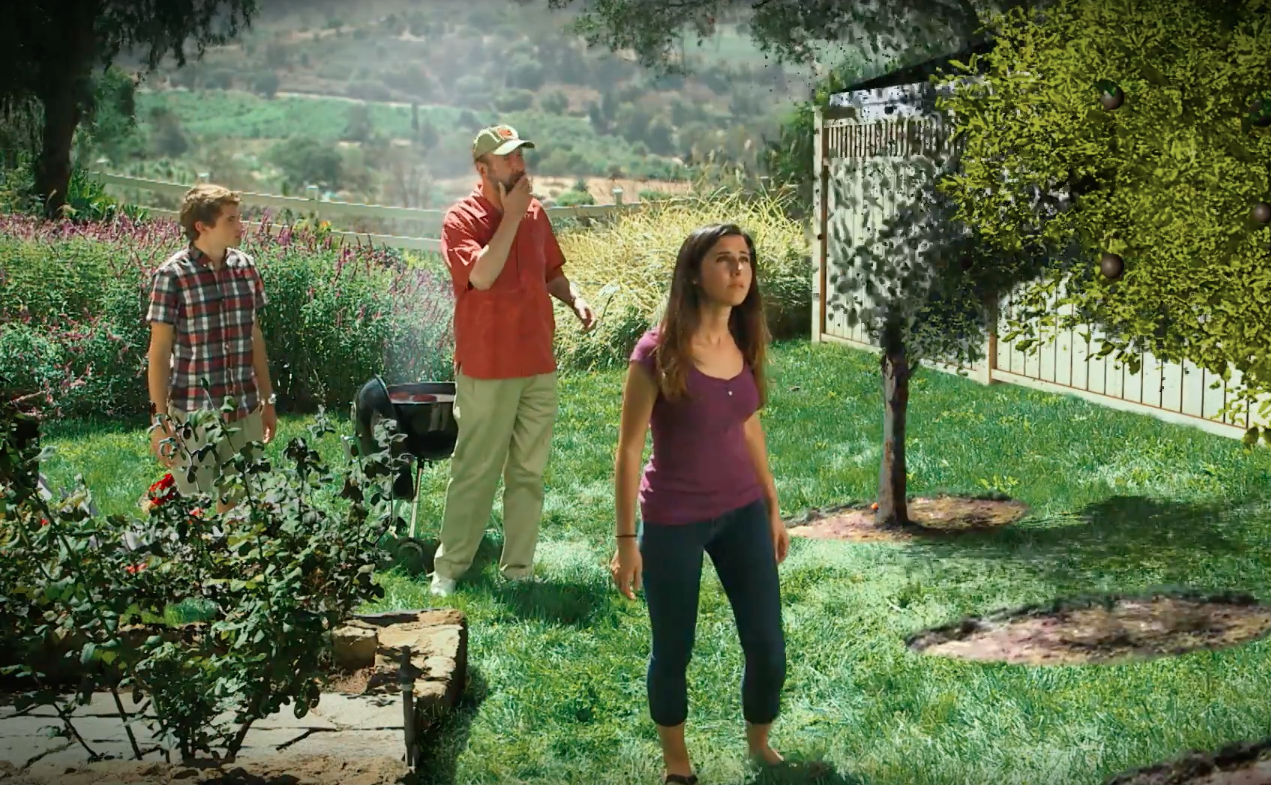
Without the involvement and aid of backyard citrus growers to prevent the spread of the invasive Asian Citrus Psyllid (ACP) and the citrus-deadly Huanglongbing (HLB) disease vectored by the ACP, consumers would no longer have the opportunity to enjoy fresh citrus. Deadly Plant Disease Threatens California Citrus, the newest public service announcement (PSA) from California Citrus Pest Disease and Prevention Program (CCPDPP) conveys this message to residential citrus growers, according to Joel Nelsen, California Citrus Mutual (CCM) president, in order to keep all citrus safe from HLB.

Nelsen said the citrus PSA announcement “shows a family in the backyard barbequing and doing what families do on a weekend.”  They walk over to their row of three citrus trees in the backyard when an orange falls off the tree and disappears, followed by the disappearance of all three trees. Nelsen said the PSA zeros in on the family members’ confusion at the disappearance of the oranges and the trees, all associated with the HLB infection.

CCPDPP’s new PSA is a way for homeowners to understand the importance of keeping citrus safe from HLB, said Nelsen, ”because as much as they’re emotionally tied to their trees, so are the growers in our industry. We don’t want to see anyone’s tree get eliminated because of HLB.”

_________________________________

Prevent HLB; Check Your Citrus Trees for Asian Citrus Psyllid

In a new four-minute video, University of California, Division of Agriculture and Natural Resources (UC ANR) scientists encourage California farmers and home citrus growers to check new growth on their citrus trees for Asian citrus psyllid infestation. As ACPs spread Huanglongbing (HLB) disease, a serious, incurable threat to both the citrus industry and backyard citrus trees, scientists aim to minimize the ACP population until researchers find a cure.

A flush of new leaf growth on citrus trees announces spring in California. The emergence of feathery light green leaves is particularly attractive to Asian citrus psyllids (ACP), signaling a critical time to determine if the trees are infested with ACPs.

“We encourage home citrus growers and farmers to go out with a magnifying glass or hand lens and look closely at the new growth,” said Beth Grafton-Cardwell, UC Agriculture and Natural Resources (UC ANR) citrus entomologist. “Look for the various stages of the psyllid – small yellow eggs, sesame-seed sized yellow ACP young with curly white tubules, or aphid-like adults that perch with their hind quarters angled up.Save Our Citrus

Pictures of the ACP and its life stages are on the UC ANR website. Call the California Food and Agriculture (CDFA) Exotic Pest Hotline at (800) 491-1899 with any findings.

The UC ANR ACP website provides help in finding the pest and taking action.

(Source: UC ANR)

_________________________________

2021-05-12T11:03:03-07:00March 30th, 2016|

Citrus Growers Form ACP Management Areas

Commercial Citrus Growers Form Local ACP Management Areas

By Charmayne Hefley, Associate Editor


Commercial citrus growers are banding together to prevent the spread of the citrus-deadly Huanglongbing (HLB) disease and the pest that spreads it—the Asian Citrus Pysllid (ACP). Beth Grafton-Cardwell, an IPM specialist and research entomologist at UC Riverside and Director of UC ANR Lindcove Research & Extension Center, said growers are forming ACP management areas to prevent ACP from spreading HLB.

Elizabeth E. Grafton-Cardwell

Elizabeth E. Grafton-Cardwell

“ACP management areas are being formed by the citrus industry and community,” Grafton-Cardwell said. “They’re basically saying, ‘Let’s get together. Let’s form these groups of growers—25 to 35 growers in an area. Let’s work together as neighbors to treat across a large area and get more of the psyllids killed than if we each treated individually at different times.’”

HLB is a serious concern to growers, according to Grafton-Cardwell; the disease has already devastated the citrus industry in Florida. “We want to prevent that from happening here,” shel said.

According to the California Department of Food and Agriculture, ACP notices posted thus far in the first quarter of 2016 include the following areas:

            COUNTY                                                                 CITY

   Fresno County    Fresno
   Kern County    Bakersfield, Shafter, Wasco
   Imperial County    Bard, Brawley area, Calipatria, Niland, Winterhaven, Zone 7
   Los Angeles County    La Puente, San Gabriel
   Riverside County    Hemet, Riverside, San Jacinto
   San Bernardino County    Cadiz
   San Diego County    De Luz, Escondido, Fallbrook, Ramona, San Diego
   San Joaquin County    Stockton
   Santa Barbara County    Areawide, Buellton, Casmalia, Garey, Orcutt, Santa Maria, Sisquoc
   Santa Clara County    Milpitas, San Jose
   Stanislaus County    Oakdale
   Tulare County    Porterville, Strathmore
2021-05-12T11:03:03-07:00March 17th, 2016|

Ag Day at the Capitol

Ag Day Celebration at the Capitol

By Charmayne Hefley, Associate Editor


In honor of National Agriculture Week, the California Department of Food and Agriculture (CDFA) will partner with the California Women for Agriculture and the California Foundation for Agriculture in the Classroom to host the state’s annual celebration of agriculture, California Ag Day at the Capitol in Sacramento tomorrow, Wednesday, March 16, 2016. Karen Ross, secretary of the CDFA, said she is excited for the event, which highlights the diversity of California’s agriculture.

National ag day logo“Our theme for this year’s Annual Ag Day at the Capitol is ‘Golden State on Your Plate,'” said Ross, “to honor our farmers and ranchers and all they provide. Legislators, staffers and the public will have the opportunity to shake a farmer’s hand and advance our shared understanding of the importance of our food supply. In addition to approximately 40 agricultural booths and exhibits, Buttercup the electronic cow, a favorite of children, will return to the Capitol for robotic milking demonstrations.  
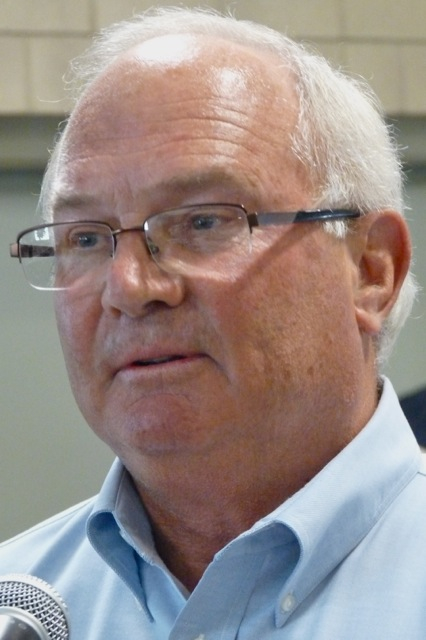
“We’ve been watching the weather,” Ross said, cautiously. “We would not mind being in the rain, but it looks like we’re going to have a day of sunshine and 70-degree weather.”

Sheila Bowen, president of the California CattleWomen (CCW), said CCW and California Women for Agriculture members will attend tomorrow’s Ag Day at the Capitol, alongside many other agriculture organizations. “In addition to giving out our brochures,” Bowen said, “we’ll be giving out tri-tip sliders to the guests who come to the Capitol.”

The celebration will be held on Wednesday, March 16, 2016, from 10:30 a.m. to 11:30 a.m. for legislators and staff, and from 11:30 a.m. to 1:30 p.m. for the public at the California State Capitol grounds, west steps.

2016-06-03T09:27:56-07:00March 15th, 2016|

Joel Nelsen on New Cases of HLB in San Gabriel

Joel Nelsen on New Cases of HLB in San Gabriel

By Charmayne Hefley, Associate EditorSave Our Citrus

On Wednesday of last week, two more trees, an orange and a kumquat, were found infected with the citrus-deadly Huanglongbing (HLB) disease in the core of San Gabriel. The trees are located on separate properties. One has been removed, and the other is awaiting the owner’s permission for removal. Last summer, 10 diseased trees were confirmed in the San Gabriel area, and a quarantine, already in place since then, will not need to be expanded.

Joel Nelsen, president of California Citrus Mutual, commented on the HLB discovery, “The two trees were found in the core area, pretty adjacent to the others that were found in San Gabriel,” Nelsen said. The finding “is a result of the program and its intensity in continuing to look for positive HLB finds. Unfortunately, these two trees were positive. The Asian Citrus Psyllids (ACP) in the area have been treated. One tree has already been pulled. The other homeowner wasn’t home so we’re hoping for cooperation there. It’s not positive, but again it shows that the program is trying to find HLB before it finds the commercial citrus industry.”

2021-05-12T11:03:04-07:00February 8th, 2016|

Breaking News: New HLB Infected Tree in San Gabriel

Breaking News

Citrus Insider Reports New HLB Confirmed in San Gabriel

Today, two additional trees in have tested positive for Huanglongbing (HLB). The two trees, an orange and a kumquat, are on separate properties but are both within the core area in San Gabriel where 10 diseased trees were confirmed last summer. Given the close proximity, there will not be a quarantine expansion.

One of the HLB-positive trees has already been removed and California Department of Food and Agriculture (CDFA) officials are in the process of contacting the other homeowner to schedule tree removal. Agriculture officials are working quickly in the area.

Citrus trees in San Gabriel had already been treated for the Asian citrus psyllid (ACP) within the last few weeks as part of CDFA’s routine HLB response. ACP populations are closely monitored in areas where HLB has been detected and treatments occur if there is a noted increase in population size. Since trees have been recently protected, no additional treatments will take place at this time. Instead, CDFA will focus on sampling extensively in the area. Much of the area has already been sampled and CDFA’s lab has identified all samples from San Gabriel as high priority.

The Citrus Pest & Disease Prevention Program is working with the Los Angeles County Agricultural Commissioner’s office and CDFA to develop a multilingual informational flyer to notify residents of the significance of these finds and potential implications to other citrus trees in the area. CDFA staff will distribute this information as they go door-to-door sampling and surveying.

More information will be shared as it is available. In the meantime, the citrus industry is encouraged to keep a critical eye on all plant material moving into or out of your groves and recommends taking the following steps so collectively, as a team, we can all save our citrus trees.

-Remove all leaves and stems

-Shake out picking bags

-Inspect harvesting equipment

-Educate fieldworkers

-Get on board with area-wide treatments

__________________

Additional Links:

Citrus Insider

Save Our Citrus

California Citrus Mutual

2021-05-12T11:03:04-07:00February 3rd, 2016|

National Association of State Departments of Agriculture Celebrates 100th Anniversary

House Agriculture Committee Chairman Conaway recognizes the National Association of State Departments of Agriculture on its 100th Anniversary

House Agriculture Committee Chairman K. Michael Conaway submitted the following remarks for the Congressional Record recognizing the National Association of State Departments of Agriculture on its 100th Anniversary.

Remarks as prepared:

“Mr. Speaker, I rise today to honor the 100th anniversary of the National Association of State Departments of Agriculture (NASDA). NASDA is a non-profit, non-partisan organization which represents the commissioners, secretaries, and directors of agriculture from all fifty states and four U.S. territories. The State departments of agriculture have served not only the farmers and ranchers of America, but also American consumers for a significant portion of our nation’s history.CDFA LOGO

“NASDA is a highly effective association which serves to grow and enhance agriculture by forging partnerships and creating consensus to achieve sound policy outcomes between state departments of agriculture, the federal government, and stakeholders. These partnerships are apparent in the halls of almost every office building in the District of Columbia. I rely on the hard working men and woman in the Texas Department of Agriculture to provide me with perspectives on how federal policy is impacting boots on the ground agriculture. I’m sure my colleagues rely on their state department of agriculture in similar ways.

“NASDA is an active partner with the United States Department of Agriculture through a longstanding cooperative agreement to employ a nationwide network of enumerators in support of the mission of the National Agricultural Statistics Service (NASS). The data collected through this partnership informs a broad spectrum of legislative and regulatory initiatives, including farm programs under the jurisdiction of the Committee on Agriculture which I have the honor to chair.

“NASDA and its members likewise play a critical role informing Congress and the executive branch regarding the operation of federal and state programs covering everything from animal and plant health, food safety and marketing, nutrition, and literally hundreds of other consumer services.

“NASDA exists to amplify the unique voice of all state departments of agriculture. NASDA Members are able to amplify their national voice by achieving consensus on otherwise contentious issues such as threatened and endangered species, agriculture labor, and water quality.

“Mr. Speaker, I join the members and stakeholders of NASDA in celebrating their 100th year of advocating for American agriculture. I wish NASDA many more years of public service to American agriculture at the critical nexus of state and federal policy.”

2016-05-31T19:24:13-07:00February 2nd, 2016|
Go to Top