Congressman Valadao and Others: Turn Pumps on, Capture Storm Water

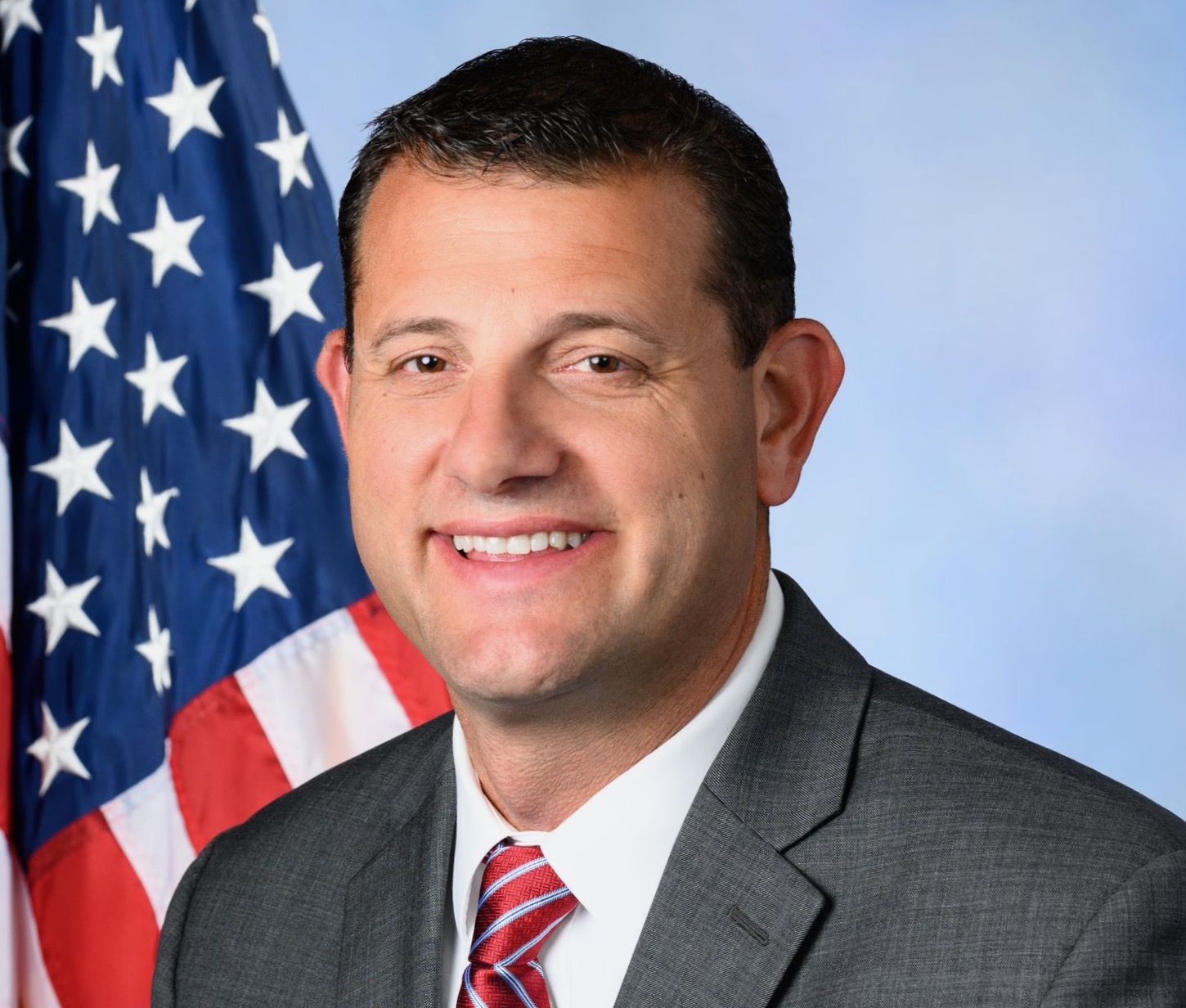
Congressman David G. Valadao Leads Letter to President Biden and Governor Newsom Requesting Fed and State Emergency Declarations for Recent Storms


This week, Congressman David G. Valadao, House Republican Leader Kevin McCarthy, Congressman Ken Calvert, Congressman Mike Garcia, Congressman Darrell Issa, Congresswoman Young Kim, Congressman Doug LaMalfa, Congressman Tom McClintock, Congressman Devin Nunes, and Congresswoman Michelle Steel sent a letter to President Biden and Governor Newsom requesting federal and state emergency declarations related to the drought and recent storms in California to maximize pumping of stormwater and unregulated flows in the Delta. The letter states:


“The recent Category 5 Atmospheric River event drenched northern California, with rainfall totals exceeding ten inches in some areas of the state and setting single-day records in most. Moreover, atmospheric models indicate that California faces an elevated likelihood of additional atmospheric river activity in the coming weeks. The ground is now saturated from the last storm, meaning additional rain will manifest almost entirely as runoff through the Delta.


“This year’s catastrophic man-made drought has crushed California families and farms, and with supply chain disruptions further hamstringing our agricultural producers, we have a moral obligation to provide Californians any relief that is within our control. Government regulations should not and must not deny our constituents critical water from these storms. While we cannot make it rain, we must take advantage of opportunities to store water when it does.


“We urge your administrations to issue emergency declarations and direct relevant federal and state agencies to temporarily waive all impediments that limit operations of the Delta pumps to ensure none of these storm flows go to waste. Time is of the essence.”

2021-10-28T09:22:35-07:00October 28th, 2021|

Organic Farming and Tillage

Is Tillage a Problem for Organic Agriculture?

By Tim Hammerich, with the Ag Information Network


Certified organic farmers often have to incorporate tillage to make up for the chemical tools that they’re not allowed to use. So does this mean organic agriculture is not compatible with building soil health?

“There are other preventative means that organic farmers use: diverse crop rotations, cover crops. And a lot of the strategies that we now know are fundamental to building soil health more generally,” said University of Wisconsin-Madison Assistant Professor Erin Silva. “So when we look at the bigger picture, we’re also adopting a lot of strategies that we know build soil health. So when we look at the five soil health principles, organic is really hitting most, if not all of those, depending on the system and the strategies that the farmers are adopting,” noted Silva, adding. “Organic agriculture was built on soil health principles and is helping farmers find ways to decrease soil disturbance where possible.”

“In organic production the use of herbicides is quite limited. There are some organically approved herbicides, but because of their effectiveness and costs, they’re very rarely used. So, one of the strategies to manage weeds in organic systems is through tillage. Either primary tillage prior to planting or cultivation, which also is disturbing the soil,” said Silva.

Silva said a lot of organic farmers also incorporate livestock for weed control and soil health.

2021-10-27T08:52:47-07:00October 27th, 2021|

SGMA Implementation Grants Released by State

State Releases Draft Guidelines for SGMA Implementation Grants

The California Department of Water Resources (DWR) has released the draft guidelines and Proposal Solicitation Package (PSP) for the Sustainable Groundwater Management (SGM) Grant Program’s Sustainable Groundwater Management Act (SGMA) Implementation Funding.
DWR plans to deliver the funding in at least two funding solicitations:

  • Round 1 will provide over $150 million by spring 2022 to regional groundwater agencies in critically overdrafted basins for planning and implementation projects to help comply with SGMA.
  • Future solicitation in 2022-2023 will provide over $204 million from various funding sources, including anticipated General Fund appropriations in Fiscal Years (FY) 2022/23 and 2023/24, remaining FY 2021/22 General Funds, remaining Proposition 68 Implementation funds, and any funds not awarded in Round 1, for planning and implementation projects to help comply with SGMA. If any funds are available after Round 2, future funding solicitations will be provided.

The public comment period began on October 13 and ends on November 29, 2021. Following the review and consideration of public comments, DWR will release the final 2021 Guidelines and PSP and solicit proposals for Round 1.  A public meeting will be held on November 16, 2021 at 2:00 PM. Due to COVID-19 restrictions, DWR will host the meeting as a Zoom webinar. The meeting will be recorded and a link to the recording will be posted on the website and e-mailed to subscribers of the SGM Grant Program’s email list (see subscription option below to subscribe) as soon as possible following the webinar. Please register for the public meeting at: https://ca-water-gov.zoom.us/meeting/register/tZcudu6rpzkqE9Z8XtCx17gINmFalDZI4cjI
For more information on document releases, new solicitations, upcoming workshops, and other grant-related announcements, subscribe to the SGM Grant Program mailing list.  If you have any questions, please submit to: SGWP@water.ca.gov.

2021-10-25T19:49:53-07:00October 25th, 2021|

Steve Wilbur Steps Up To Chair World Ag Expo

Steve Wilbur introduced as 2022 World Ag Expo® Chairman

After a 16-month wait, the 2022 World Ag Expo® season was kicked off by Show Chairman Steve Wilbur on Saturday, September 25. The “Kickoff Dinner” was attended by volunteers, staff, and invited guests at the Social Hall on the International Agri-Center® grounds. For many, it was the first time they had seen each other since the 2020 show.


“This is a great night,” gushed Wilbur. “It is so good to be back together and working on a farm show!”


A local cotton farmer, Wilbur also runs a dairy with his family, grows feed and multiple row crops. He has previously served as the International Agri-Center® Board Chair, as well as being the 2014 Chairman of the California Cotton Growers Association and serving on the board of Cotton Inc.


The 2022 show proclaims World Ag Expo® is “Back in Agtion,” a play on words with a few meanings. While COVID-19 sidelined the live show in 2021, farmers and ag professionals never stopped working during the pandemic. Volunteers and staff are ready to bring back the live show and provide a place for everyone in ag to meet, shop, and learn something new. Plus, “Agtion” is a Dad-joke style play on “Action” reminding people that farm shows are a fun place to be.


“We’re so happy to be back,” said Jerry Sinift, International Agri-Center® CEO. “The 2021 digital show was an interesting experience, but we’re ready to get our boots on the show grounds to work with our exhibitors and host our attendees.”


The annual show is produced by the International Agri-Center®, a non-profit focused on agriculture education year-round.


Entering its 55th year, World Ag Expo® is the largest annual outdoor ag tradeshow in the world. In 2020, the show saw 106,357 attendees from 46 states and 56 countries. With more than 1,400 exhibitors and 2.6 million square feet of exhibit space, World Ag Expo® provides a platform for networking, education, and business in one of the most productive ag counties in the United States. Applications are open online for seminar submissions at https://bit.ly/WAE22SeminarApp and the Top-10 New Products Contest at https://bit.ly/WAE22Top10App.


Tickets are on sale online now at https://bit.ly/WAE22Tickets, and attendees can plan their visit at www.worldagexpo.org. With a diverse lineup of agriculture companies and seminars covering international trade, irrigation, ag policy, hemp, and more, there is something for every ag professional at the 2022 World Ag Expo®. The 55th edition will run Tuesday, February 8 through Thursday, February 10, 2022 at the International Agri-Center® in Tulare, CA.


For more information, visit www.worldagexpo.org.


2021-11-04T23:15:38-07:00October 22nd, 2021|

Walnut Freeze Update

Growers Urged to Keep Soil Moist to Lessen Freeze Damage

By Rachel Elkins, Pomology Farm Advisor in Lake and Mendocino Counties and Master Gardener Advisor in Lake County – Emeritus

It is mid-October and in addition to harvest starting it is time to consider potential cold weather. It is still dry and though rain is expected (In Northern California) over the next 10-14 days it is anticipated to be under 1” (I hope I am wrong!). As detailed in my June newsletter (https://ucanr.edu/sites/uclakecounty/files/359649.pdf), dry conditions render walnut trees vulnerable to freeze damage, as can be seen throughout the county. Irrigated trees fare much better than dry trees, although fruitwood and buds are certainly damaged, as reflected in subsequent low cropping.

In June I suggested growers consider applying enough water to moisten the upper 1-2 feet of soil after terminal bud set in order to fill soil pores to supply warmth and reduce chances of freeze damage, and this is echoed by colleagues throughout the state. With harvest moving into full swing timing will of course depend on 1) harvest logistics, and 2) rainfall amounts over the next month. Many older orchards lack sufficient crop to harvest and growers must decide how much to invest in trees that failed to recover after the 2020 freeze.

Statewide UC walnut advisors have combined to offer resources to address fall (winter) freeze issues. We have listed the following resources prominently on the front page of our website (http://celake.ucanr.edu/):

1)      2020 WALNUT FREEZE DAMAGE SURVEY (https://ucanr.co1.qualtrics.com/jfe/form/SV_8q4drAbdgNJ4Nls). You are invited to participate in this survey provided by University of California Cooperative Extension (UCCE) regarding freeze damage in walnuts. The survey will help us gain greater understanding of freeze damage in walnuts. “Freeze damage” is defined as damage observed in spring yet incurred during the previous fall from cold temperatures below 32 degrees Fahrenheit. Participation in this survey is voluntary and individual answers will be kept confidential. The survey should require two minutes or less to complete. Address questions or comments to main author Kari Arnold, Orchard and Vineyard Systems Advisor for Stanislaus County (klarnold@ucanr.edu 209-525-6821) or to me via the contact information below.

2)      NEWSLETTER ARTICLES written by Sacramento and San Joaquin Valley advisors, as well as my June 2021 newsletter. Links to these can be found on our website (see above).

3)      UC WALNUT FREEZE WEBINAR to be held NOVEMBER 4, 2021, 4:00 – 5:30 PM.  A panel of UC experts and walnut growers will discuss best practices for freeze mitigation and recovery. Event details and registration will be posted at sacvalleyorchards.com/events as well as on the Lake County website. Meeting information will also be emailed out to electronic walnut newsletter recipients. PLEASE COMPLETE THE FREEZE SURVEY IN ORDER TO ENHANCE OUR WEBINAR!

2021-10-20T13:24:49-07:00October 20th, 2021|

Reinventing the Drone

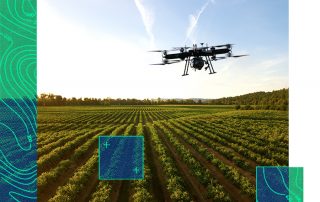
Drones for Spraying Are Evolving

By Tim Hammerich with the Ag Information Network

When Precision AI set out to start a drone spraying company, they knew they’d need to develop the software, but thought the hardware would be available off the shelf.

McCann… “When we started this process, it was sorta like, well, there’s gotta be drones out there that can do this. And we found out very quickly that to be able to do everything we needed to do there really wasn’t. And so we actually ended up having to build our own drone,” said Precision AI CEO Daniel McCann.

McCann… “Subsequent to that, another company came out with a drone that was powerful enough to do what we want to do. And we’re like, hallelujah, we don’t have to be a drone manufacturer. And so we switched to their platform and sort of hot-rodded that that platform, and then found a whole pile of other problems. And so we’ve kind of come full circle again. We’ve come back to designing our own drone for this particular application.”

As if that wasn’t enough of a challenge, McCann and his team also needed to design a new camera to get to the resolution they needed.

McCann… “In order to be able to properly differentiate between plants, you need to see like some millimeter resolution and none of these drone platforms can do that. They’re all meant to fly 400 feet up in the air and get these wide, broad brush views of your field. Not enough to differentiate between plant species. And just lowering them doesn’t really work. The number of inventions we had to string together to try to achieve this vision was actually, you know, if I want to do it all over again, with the eyes that I have now, it was a bit crazy.”

McCann thinks the hard work will pay off resulting in the most effective drone sprayer on the market.

2021-10-19T17:23:35-07:00October 19th, 2021|

Almond Farmers Honored for Pollinator Protection

North American Pollinator Protection Campaign Honors Almond Farmers of California

Special award given only when a group does exceptional work protecting pollinators


The North American Pollinator Protection Campaign (NAPPC) on Tuesday presented its Business for Bees Sustainability Award – an honor reserved for standout organizations that go above and beyond to support pollinators – to the Almond Board of California (ABC) and the state’s almond farmers.

“This is about their long-term dedication to supporting all pollinators in their orchards and throughout our ecosystem,” said Kelly Rourke, executive director of Pollinator Partnership, which founded NAPPC 21 years ago. “We’ve worked with them for many years and this is well-deserved recognition of their steadfast commitment to engaging farmers in pollinator conservation on multiple levels. The Almond Board and the entire almond industry have really moved the needle to raise awareness and generate action to protect pollinators.”

NAPPC has only given out its Business for Bees Sustainability Award once before. It is given in years when there is a business taking extra special steps to protect bees and all pollinators and to advance sustainability and innovation.

“ABC’s name is on this award, but it really goes to the 7,600 almond farmers in California,” said Josette Lewis, ABC’s chief scientific officer. “Farmers understand how important pollinators are to growing almonds and to all of agriculture and the environment. They want to be part of the solution.”

The reasons for the award, Rourke said, include ABC’s leadership in founding the California Pollinator Coalition, its work promoting on-farm pollinator habitat and its support of years of research and education about the best practices for providing hospitable environments for pollinators in almond orchards and in other habitats.

ABC worked with Pollinator Partnership and the California Department of Food and Agriculture last spring to create the California Pollinator Coalition (CPC) which brought together a broad array of grower organizations across the state’s ag and environmental landscape to help promote the health of wild and managed pollinators.

“The formation of the California Pollinator Coalition was such a big step,” said Laurie Davies Adams, Pollinator Partnership’s Director of Programs, who helped found the CPC. “This is a unique statewide coalition that brings together every grower, farmer and rancher group. I don’t think that’s ever happened before. It’s going to make a real difference on the ground.”

NAPPC is a collaboration of diverse partners from the U.S., Mexico and Canada. It includes respected scientists, researchers, business people, conservationists and government officials.

NAPPC works to promote awareness and scientific understanding of pollinators, to find common ground for solutions and to create innovative initiatives that benefit pollinators.

NAPPC is administered and supported by Pollinator Partnership, a non-profit headquartered in San Francisco with a mission to promote the health of pollinators through education, conservation and research.

The award was announced during NAPPC’s 21st Annual International Conference, held virtually this year for the second time and hosted by the Pollinator Partnership and the Smithsonian National Museum of Natural History. The conference and award ceremony were planned for the Smithsonian before being forced to remain virtual because of COVID-19.

Rourke and Adams said they would have liked to have given the honor in person to show how much they appreciate ABC’s work.

“The strong effort that the Almond Board of California has mounted with the support of the almond industry to engage farmers and the entire agricultural community far beyond almond orchards is really impressive,” Adams said. “Bringing every grower group together to have an agriculturally-led coalition for pollinators is significant. It will provide building blocks for even more engagement and large results. It’s a pioneering effort that other states are seeking to emulate.”

“This is an outstanding honor for our farmers,” Lewis said, “especially considering all the good work that NAPPC and the Pollinator Partnership do. As much as anyone, almond farmers are tuned in to the importance of pollinators to their crops and our ecosystem. That’s why they work so hard to make their orchards healthy places for pollinators.”

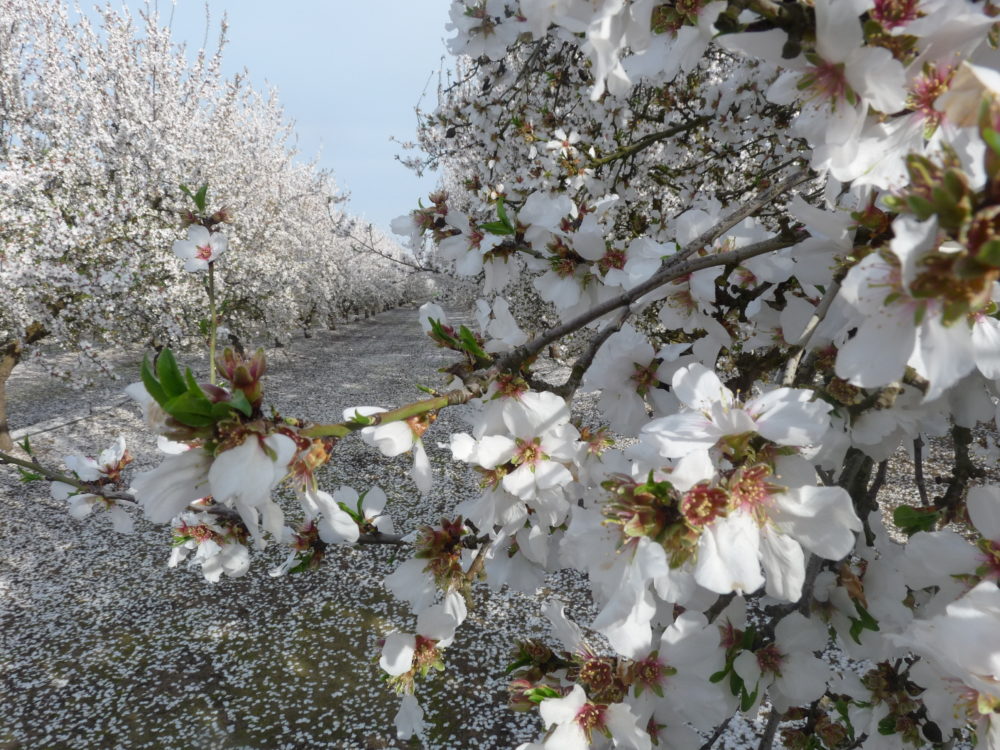
Almond farmers across California’s Central Valley sit in what is essentially a flyway for pollinators. In recent years, almond farmers have applied to certify more than 110,000 acres of Bee Friendly Farming®, providing pollinator habitat and integrated pest management across the valley to keep that flyway healthy and create badly needed floral resources that compliment and expand beyond the annual almond bloom.

“Almond farmers have doubled the number of acres of bee friendly habit in California and in that pollinator flyway,” Lewis said. “We’re proud to help lead a broad coalition of agriculture and conservation groups to work together to promote and preserve habitat for pollinators.”


2021-10-19T14:59:00-07:00October 19th, 2021|

New Evidence Supports Walnuts and Heart Health

Latest Research Shows Walnuts May Lower Cholesterol and Increase Longevity


The research on the role of diet and heart health continues to evolve, and while heart disease is still the leading cause of death in the U.S.,1 there are steps that people can take to improve their overall health and well-being. In a new, first-of-its-kind study to explore the effects of a walnut-enriched diet on overall cholesterol in elderly individuals, researchers found an association between regular daily walnut consumption and sustained lower levels of cholesterol including a 15 percent lower risk of cardiovascular disease.2,^ This study was conducted over two years and involved over 700 participants between the ages of 63 and 79 who were healthy, independent-living adults residing in Barcelona, Spain, and Loma Linda, California.

Researchers went beyond LDL cholesterol and looked at all types of lipoproteins. One ½ cup serving of walnuts a day made a positive effect on lipoproteins, including a reduction in the number of total LDL particles by 4.3% and small LDL particles by 6.1% as well as a decrease in Intermediate Density Lipoprotein (IDL) cholesterol (16.9%). Additional findings reinforce the notion that regular walnut consumption may be a useful part of a heart-healthy eating pattern – participants that completed the study ate ½ cup of walnuts every day and did not gain weight. It is important to note, study participants had the option to eat a variety of other foods in addition to walnuts. Further investigation is needed in more diverse and disadvantaged populations. Read more about California walnuts and heart health.

Additionally, new research3,^ from the Harvard T.H. Chan School of Public Health and published in Nutrients found that participants who reported eating five or more servings of walnuts per week had a 14% lower risk of death (from any cause), 25% lower risk of dying from cardiovascular diseases, and a gain of about 1.3 years of life expectancy compared to participants who reported no walnut consumption. Study participants included over 67,000 women of the Nurses’ Health Study (1998–2018) and some 26,000 men of the Health Professionals Follow-up Study (1998–2018). Both groups were on average around 63 years old and free of cancer, heart disease, and stroke at baseline. Participants self-reported nut intake via food frequency questionnaires (FFQs), which were completed every four years. As a prospective observational study, these results do not prove cause and effect, but they do shed light on how walnuts may support an overall healthy lifestyle that promotes longevity. Learn more.


2021-10-19T14:18:08-07:00October 19th, 2021|

Cover Cropping Help Available

Cover Cropping Season Has begun: Free Recorded Webinars, Demos Available


By Mike Hsu, Senior Public Information Representative at UC Agriculture and Natural Resources

Cover crops, typically planted in early fall, deliver a host of agricultural and conservation benefits. But many growers have gone away from planting them due to technical challenges and extra costs associated with the practice. In partnership with the Contra Costa County Resource Conservation District, two University of California Cooperative Extension advisors collaborated to support farmers’ cover cropping efforts and reduce costs.

Kamyar Aram, UCCE specialty crops advisor for Contra Costa and Alameda counties, and Rob Bennaton, UCCE Bay Area urban agriculture and food systems advisor, developed online project content for a free educational series on cover cropping, which entails growing non-cash crops to add beneficial biomass to soils.

The series – comprising 10 webinars and five virtual farm-site visits – features UC farm and urban agriculture advisors and some of California’s foremost experts on cover cropping. It helps growers overcome their hesitations about the practice, which provides benefits such as alleviating compaction, improving water retention and increasing organic matter and nutrients in the soil.

“Our site visit videos include a diversity of cropping systems, operation types and scales, and levels of experience with cover crops, so we really capture a variety of perspectives,” Aram said. “Now, with the videos online, I hope that they will serve as tools for other farm educators, as well as a resource for growers directly.”

When the COVID-19 pandemic scrapped plans for in-person workshops and visits, the series organizers pivoted to online webinars, starting in fall 2020, which drew more than 150 participants. The recorded videos – which cover basic methods, financial assistance, tips for orchards and vineyards and more – expanded the potential reach and impact of the series far beyond Contra Costa County.

“Each video, whether it’s a webinar recording or a virtual site visit, emphasizes different aspects, and the titles are designed to help viewers find the resources they are most likely to benefit from,” said Aram. “There really is something for everyone.”

In particular, the organizers of the series recognized the importance of including technical and extension support to urban and semi-urban farmers in the East Bay and beyond.

“We wanted to make sure to include practical support from fellow farmers that was both accessible and relevant to our diverse small and urban farmers,” said Julio Contreras, UCCE community education specialist. “This meant covering topics like seeding with spreaders or by broadcasting – using small equipment and machinery or no-till systems – and even cover cropping in planter boxes.”

Aram and Bennaton also credited their Contra Costa Resource Conservation District partners: Ben Weise, agriculture conservation manager; Derek Emmons, agriculture conservation coordinator; and Chris Lim, executive director.

The project, funded by a Specialty Crops Block Grant from the California Department of Food and Agriculture, was also made possible by the generous contributions of time and expertise from presenters and hosts of farm-site visits, according to Aram.

“I hope that the videos will enjoy a long life online; they really contain a wealth of knowledge,” he said.

The series is available for view at http://ucanr.edu/CoverCropsCoCo.

2021-10-15T09:26:26-07:00October 15th, 2021|

Entomologist Frank Zalom is Honored…Again!

‘Entomological Giant’ UC Davis Professor Frank Zalom Receives Highest of the High Honor

UC Davis distinguished professor Frank Zalom, a noted integrated pest management (IPM) specialist and a past president of the Entomological Society of America (ESA), is a newly elected Honorary Member of the ESA, an honor bestowed for his “long-term dedication and extraordinary contributions” to the 7000-member global organization. Honorary Member is the highest honor that can be afforded an ESA member.

Zalom, praised as “an entomological giant” and “the consummate ambassador to entomology,” joins five other entomologists as Honorary Members. They will be honored at the ESA’s annual meeting, Entomology 2021, set Oct. 31-Nov. 3 in Denver.

“Honorary membership acknowledges those who have served ESA for at least 20 years through significant involvement in the affairs of the society that has reached an extraordinary level,” an ESA spokesperson said. “Candidates for this honor are selected by the ESA Governing Board and then voted on by the ESA membership.”

“Dr. Zalom is phenomenal for his sustained service of leadership, research, teaching and mentoring, and in my opinion, he is one of the world’s most influential, accomplished and inspirational entomologists,” wrote nominator James R. Carey, a UC Davis distinguished professor of entomology and an ESA Fellow. ESA Honorary Member and ESA Fellow Philip Mulder, emeritus professor and former department chair at Oklahoma State University, noted: “Frank is and was the consummate ambassador to entomology throughout his entire career and around the globe on multiple occasions.”

George Kennedy, the William Neal Reynolds Distinguished Professor at North Carolina State University, commented that “Few, if any, ESA members can match the level of sustained service and leadership that Frank has provided to ESA and entomology more broadly.” Robert Weidenmann, emeritus professor and former department chair at the University of Arkansas, wrote that “As if his service to the Society was not enough, Frank has been recognized for his contributions to entomology, as demonstrated by his consistent leadership in the field of integrated pest management. Frank has been one of the major drivers of the true integration of the IPM strategies in all of agriculture.”

A 47-year member of ESA, Zalom is an emeritus professor with the UC Davis Department of Entomology and Nematology, and currently a recall professor, continuing his work on IPM of tree, vine and fruiting vegetable crops through several major USDA and CDFA research grants he has received since retiring. Since his retirement, he has brought in more than $1 million in grants. Zalom is also working with Professor Rachael Goodhue, chair of the UC Davis Agricultural and Resource Economics Department on an ongoing pesticide policy research project involving “economic and pest management analyses of potential regulations in strawberry, tomato, and other fruiting crops” in collaboration with CDFA’s Office of Pesticide Policy and Analysis.

Zalom directed the UC Statewide Integrated Pest Management Program (UC IPM) for 16 years (1986-2002).  “Frank elevated it to ‘the gold standard’ of the world’s IPM programs, emphasizing ecologically based pest management programs for agriculture, urban settings and natural resources,” Carey wrote.

Zalom served as the 2014 ESA president; 2015 Entomological Foundation president, and the 2002 Pacific Branch president. He has been editor-in-chief of the Journal of Economic Entomology since 2018. He also was the first editorial board chair (2008-09) of the Journal of Integrated Pest Management, serving on the board until 2012.

The UC Davis entomologist has authored nearly 400 journal publications or book chapters, and more than 400 other publications. He holds two U.S. patents.

Passionate about moving science policy forward, Zalom served as ESA’s Science Policy Committee Chair in 2015. In 2018, he co-organized a two-day summit, Grand Challenges in Entomology in South America, hosted by the Entomological Society of Brazil. The summit focused on invasive species, public health, and sustainable agriculture, and included invited leadership from all entomology societies in Central and South America. Zalom also co-organized the North American and Pacific Rim Invasive Insect and Arthropod Species Challenge Summit, jointly hosted by the entomological societies of America, Canada and British Columbia in Vancouver, BC in 2019.

Highly honored by his peers, Zalom is a Fellow of four scientific organizations: ESA; the American Association for the Advancement of Science, California Academy of Sciences, and Royal Entomological Society. His numerous awards include the BY Morrison Memorial Medal from USDA-ARS and American Society for Horticultural Science (2017), ESA’s Recognition Award (2002)Outstanding Achievement Award in Extension Entomology (1992), Excellence in IPM Award (2010), IPM Team Award (2008), and the Pacific Branch Woodworth Award (2011).

Among his UC Davis recognitions are the Consortium for Women in Research Outstanding Mentor Award (2013), James H. Meyer Award (2004), and Academic Senate Distinguished Scholarly Public Service Award (2017).

A native of Chicago, Frank moved to Arizona with his family at age 4. He received his bachelor’s degree and master’s degrees in zoology and ecology from Arizona State University, 1973 and 1974, respectively, and his doctorate in entomology from UC Davis in 1978. He joined the University of Minnesota faculty as assistant professor before returning to UC Davis in 1980.

“Throughout his career the depth of his knowledge in IPM was matched by the strength of his commitment to teaching students and postdocs, as well as by the power of his dedication to helping growers in all areas of agricultural entomology,” Carey wrote. “A former Fulbright Scholar, Frank is both a visionary and dedicated entomologist who has devoted his life’s work to advancing entomology and ESA programs. His expertise is in great demand from colleagues, agriculturists, policy makers, students and more. He is the consummate entomologist, intricately skilled and highly accomplished.”

Zalom is the fifth UC Davis scientist to be selected ESA Honorary Member. W. Harry Lange (1912-2004) received the award in 1990; Donald MacLean (1928-2014), the 1984 ESA president, won the award in 1993; Bruce Eldridge in 1996, and John Edman in 2001.


2021-10-14T13:01:30-07:00October 14th, 2021|
Go to Top