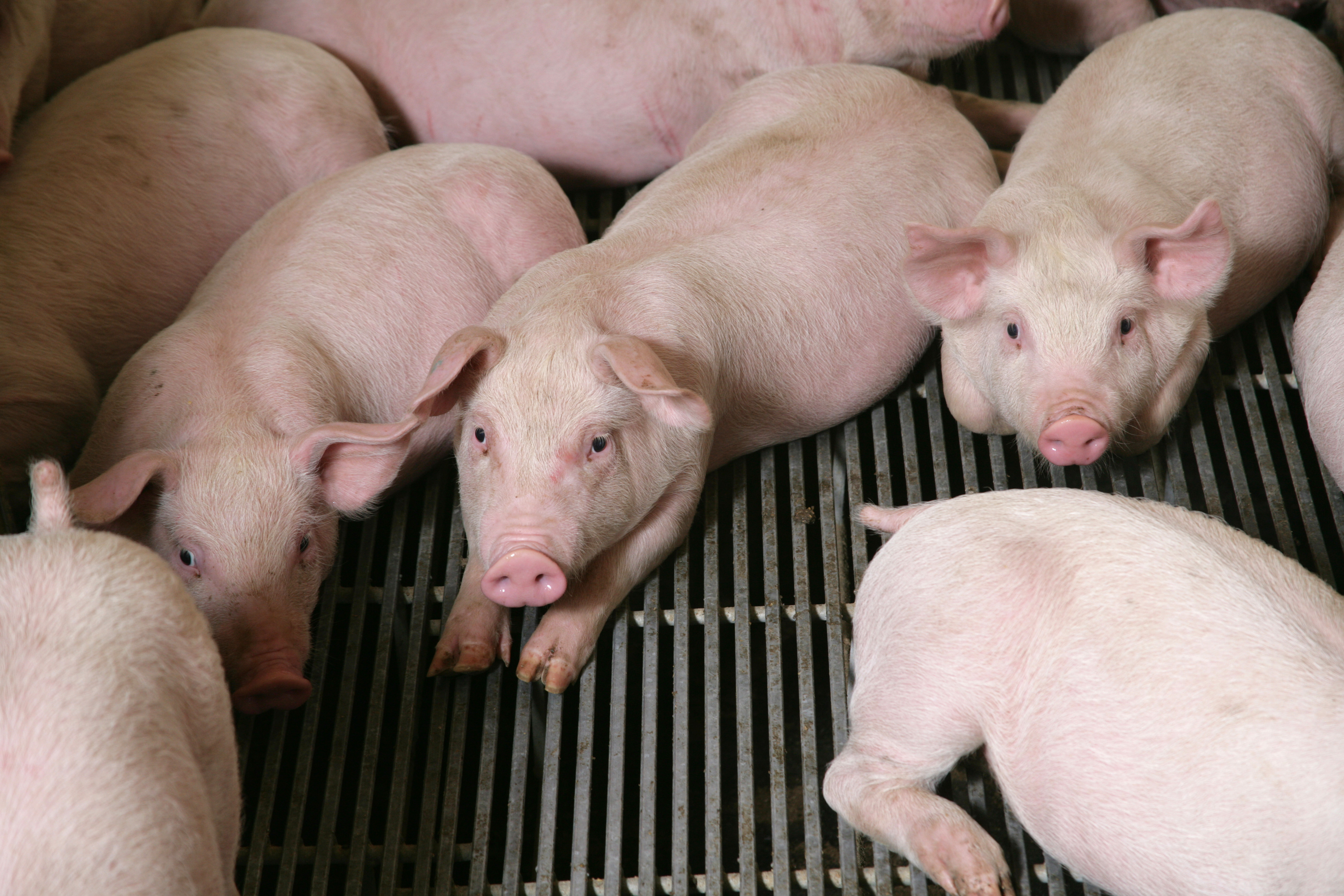
Prop 12 Problems

Prop 12 a ‘Tough Situation’ for the Pork Industry

By Tim Hammerich with the Ag Information Network

Proposition 12 was passed by referendum back in 2018 and is scheduled to come into effect in 2022. There’s still a lot of uncertainty about how the law, which establishes new standards for confinement of specified farm animals, will be executed. Christine McCracken is executive director and protein analyst at Rabobank.

“The industry is kind of put into, you know, this difficult position of being faced with a rule that will make a lot of the pork that we raise here in the U.S. ineligible for sale in California without some pretty major legal consequences and financial consequences,” said McCracken.

The controversy is surrounding the fact that the law requiring certain growing conditions applies to all pork sold in California, regardless of where it is raised.

“It’s a tough position to be in for everyone: the retailer obviously, and not knowing whether or not they’ll have a lot of pork to sell. It’s tough for the processor, you know, with the potential of not having the visibility to encourage those changes and not knowing whether or not they’ll have enough pigs to process for California,” said McCracken.

“And for the producer, you know, they obviously have the added risk of not having markets for their pigs. So it’s, it’s a tough kind of industry situation at the moment,” noted McCracken.

Industry groups have filed lawsuits challenging the constitutionality of the measure.

2021-05-12T18:14:16-07:00May 12th, 2021|

This Growing Season Could Be Similar to 2015

Low Water Allocations Remind Growers of 2015


By Tim Hammerich with the Ag Information Network

The year 2015 is not a year most farmers remember fondly. The severe drought-affected California agriculture in profound ways and alarmingly 2021 is looking very similar.

Mike Wade is the executive director of the California Farm Water Coalition, which is a non-profit educational organization to help inform the public about agricultural water use.

“We’ve got quite a situation in California this year, similar to what we saw in 2015. And if we use that as kind of an example of what we might expect this year, we had over 540,000 acres of fallowed farmland back in 2015,” said Wade.

“And we’re expecting probably as much, or maybe more this year. Most of the state in agriculture has had significant water supply cuts. Probably one in four acres is facing a 5% water allocation this year. And huge other swaths have had 25% cuts – or they’re getting about 75%. But it’s affecting every corner of California agriculture and in a way that we’re starting to see impacts on our food supply this summer and into the fall through acreage reductions,” noted Wade.


2021-05-11T18:17:01-07:00May 11th, 2021|

New Legislation Could restore Canal Capacity

Potential Funding to Accelerate Water Projects

By Tim Hammerich with the Ag Information Network

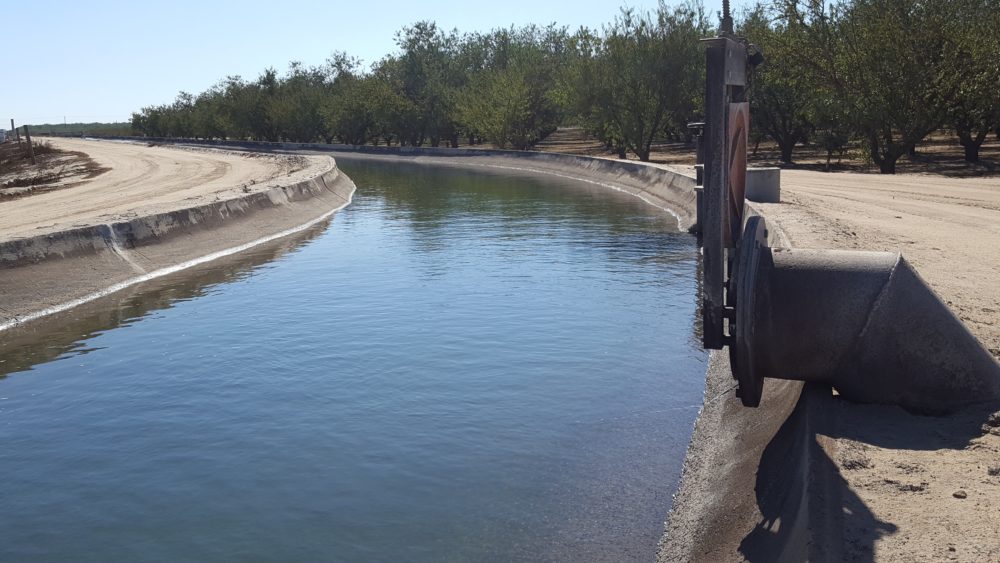
With more California farmers facing significant water cutbacks, public officials have responded with legislation to address the state’s recurring water shortages. A plan in the state Legislature would allocate $2 billion to accelerate a variety of water projects and programs. At the federal level, new legislation would restore canal capacity. Farm and water groups have also pressed to add water projects to a federal infrastructure package.

Two concurrent efforts aim to help farmers and ranchers ensure their properties in fire-prone areas. Legislation sponsored by the California Farm Bureau would authorize the state’s insurer of last resort, the California FAIR Plan, to underwrite coverage for commercial farms and ranches that can’t find it on the open market. At the same time, Nationwide has begun offering supplemental insurance for farmers who qualify for FAIR Plan coverage.

Dairy farmers will watch carefully as restaurants and other food-service facilities reopen. More than half of some dairy foods are typically consumed away from home. Dairy product sales to foodservice have increased and retail sales remain strong, but economists say future buying habits will be unpredictable as pandemic restrictions ease. With milk production expected to increase, analysts say food-service demand will be particularly important.


(Source: California Farm Bureau Federation)

2021-05-06T19:02:04-07:00May 6th, 2021|

United Fresh Outlines New Gathering Program

United Fresh to Launch Remagine Connections with Regional In-Person Gathering and Online Content

With California’s continued limitation on conventions and expos of our size, United Fresh is launching Reimagine Connections, a new program bringing members together in-person at smaller regional events, and online for education, networking and innovation events.  Reimagine Connections will deliver:

  • A series of smaller in-person regional events where members can gather and build those relationships we all so value;
  • An online education and networking portfolio that truly serves the business needs of our industry; and,
  • A new opportunity for companies to host their own Innovation Spotlight Broadcasts to connect with clients and colleagues about new products, business solutions and services.

“We’re very disappointed California requirements will not allow us to host our trade show in Los Angeles this June. We had looked forward to partnering this year with the Fresh Produce and Floral Council, and appreciate their collaboration and hard work in building what might have been our largest show ever,” said United Fresh Chairman Michael Muzyk, President of Baldor Specialty Foods, Inc.

“But once again United Fresh is re-inventing the member experience to connect in new ways. Combining a new portfolio of top education, networking, and innovation sessions with a series of in-person regional events allows us to Reimagine Connections across our industry,” he said.

In-Person Regional Events

As local conditions permit, United Fresh will host safe education and networking events in several cities this summer. “We know that members are anxious to see each other, so we’re bringing that opportunity to them,” said United Fresh President & CEO Tom Stenzel. A schedule of dates and locations for United Fresh regional events will be forthcoming, together with information about how to register and/or sponsor these events.

Online Education/Networking

Registration will open May 1 for a series of online education and networking sessions that complement the in-person events. Online education and networking will take a deep dive into five unique tracks throughout the spring and summer, including:


  • Produce 101 – Orientation to the Fresh Produce Supply Chain
  • Key Issues in Produce Safety
  • BrandStorm™ Continued – Marketing as Key to Increasing Sales
  • Overcoming Supply Chain Challenges to Profitability
  • Top-to-Top Retail-Foodservice Dialogues for Success

Each track will have a minimum of five individual one-hour sessions, for a total of 25 sessions.  Registration will be available for each track for $400. Access to all five tracks is $1,500, a $500 savings.  Companies can receive three full packages for members of their team for $4,000, an additional $500 savings. And for those companies who want to make this a total team event, a $10,000 package enables a company to have unlimited staff access to these programs.

Looking at the content, associates just starting out in the industry will find great value in our “Orientation” track, learning about each stage of the supply chain and getting to know their peers. Staff working in food safety, marketing or supply chain will gain advanced knowledge and skills in those disciplines. And, C-Suite executives will enjoy exclusive access in top-to-top retail and foodservice strategy sessions on what lies ahead for our industry.

Innovation Spotlight Broadcasts

“We know that everyone is tired of virtual expos, where “exhibitors” have to wait patiently for someone to visit their “booth,” said John Toner, United Fresh’s Vice President of Convention & Industry Collaboration. “But we also know that new product development and innovation are the lifeline to the future – and buyers want to see what’s new! So, we’re offering companies the opportunity to host their own live, interactive presentations online.”

The Innovation Spotlight Broadcasts are a more creative way for companies to connect personally with buyers who want to see new produce items, what’s new in packaging, or even future technologies to streamline operations. A limited number of Innovation Spotlight Broadcasts will be available at a cost of $4,000 for a 45-minute session.

“The COVID-19 pandemic has been a nightmare to individuals and families around the world. And, it has disrupted businesses and challenged employees throughout the produce industry,” Stenzel said. “While we’re disappointed that we can’t have thousands of people at our trade show this June, we can still connect our industry to learn together, to build relationships with our colleagues, and to grow our businesses through new products and innovations. That’s an essential job of a trade association, and we’re excited to bring these new opportunities to our members.”


2021-05-04T16:36:24-07:00May 4th, 2021|

Organic Alfalfa Cost Study Available

Organic Alfalfa Hay Cost Study Released

By Pam Kan-Rice, UCANR Assistant Director, News and Information Outreach


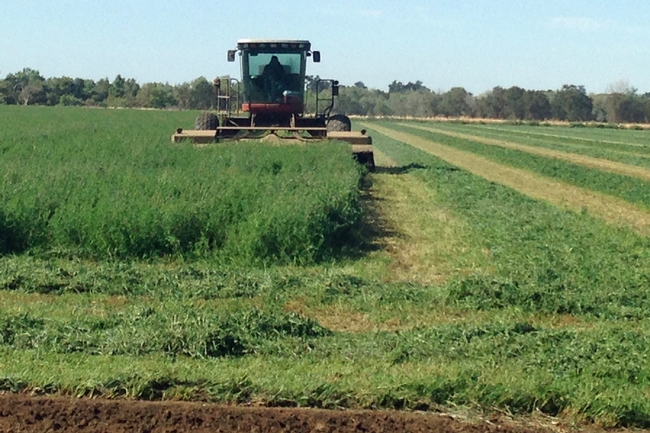
A new study that outlines costs and returns of establishing and producing organic alfalfa hay has been released by UC Cooperative Extension, the UC Agricultural Issues Center, and the UC Davis Department of Agricultural and Resource Economics.

High-quality organic alfalfa hay is an important ingredient in milk-cow feed rations for organic dairies. Organic dairy farms are required to use organic feed and allow cows to graze for part of their forage. Organic alfalfa hay comprises a major source of forage for the industry.

In 2019, organic dairy farms in California produced about 900 million pounds of milk — just over 2% of California milk output production, according to co-author Daniel Sumner, director of the UC Agricultural Issues Center and professor in the UC Davis Department of Agricultural and Resource Economics.

“Demand for organic alfalfa production has grown, including demand from dairy, horse, sheep, goat, and beef producers, but is still a small share of total alfalfa production,” said Daniel Putnam, UC Cooperative Extension forage specialist in the Department of Plant Sciences at UC Davis and co-author of the study. “However, understanding organic production methods and costs is very important for California’s organic hay farmers.”

The new study estimates the costs and returns of establishing and producing organic alfalfa using flood irrigation in the Sacramento Valley, north and south San Joaquin Valley, and the Intermountain Region. The 100 acres of organic alfalfa is rented for $345 per acre annually and the alfalfa stand life is four years after the establishment year.

Input and reviews were provided by UCCE farm advisors and specialists and growers. The authors describe the assumptions used to identify current costs for organic alfalfa establishment and production, material inputs, cash and non-cash overhead and a ranging analysis table, which shows profits over a range of prices and yields.

“This cost study provides information on how to grow alfalfa hay organically,” said Rachael Long, study co-author and UC Cooperative Extension farm advisor in Yolo County. “The research that went into developing these practices represents a significant investment by UCCE farm advisors and specialists and California alfalfa farmer collaborators. We are pleased to team up with economics and cost study experts to provide this study, which indicates potential profits in growing this crop for the organic dairy market.”

The new study, “Sample Costs to Establish and Produce Organic Alfalfa Hay, California – 2020” can be downloaded for free from the UC Davis Department of Agricultural and Resource Economics website: http://coststudies.ucdavis.edu. Sample cost of production studies for many other commodities are also available on the websites.

For an explanation of calculations used in the study, refer to the section titled Assumptions. For more information, contact Jeremy Murdock, UC Agriculture and Natural Resources, Agricultural Issues Center, Department of Agricultural and Resource Economics, at (530) 752-4651 or jmmurdock@ucdavis.edu. To discuss this study with a local extension advisor, contact the UC Cooperative Extension office in your county: ucanr.edu/CountyOffices.

2021-05-03T17:50:21-07:00May 3rd, 2021|

Cattle Ranchers Protect Coastal Landscape

Cattle and Seashores Coexist

By Tim Hammerich with the Ag Information Network 

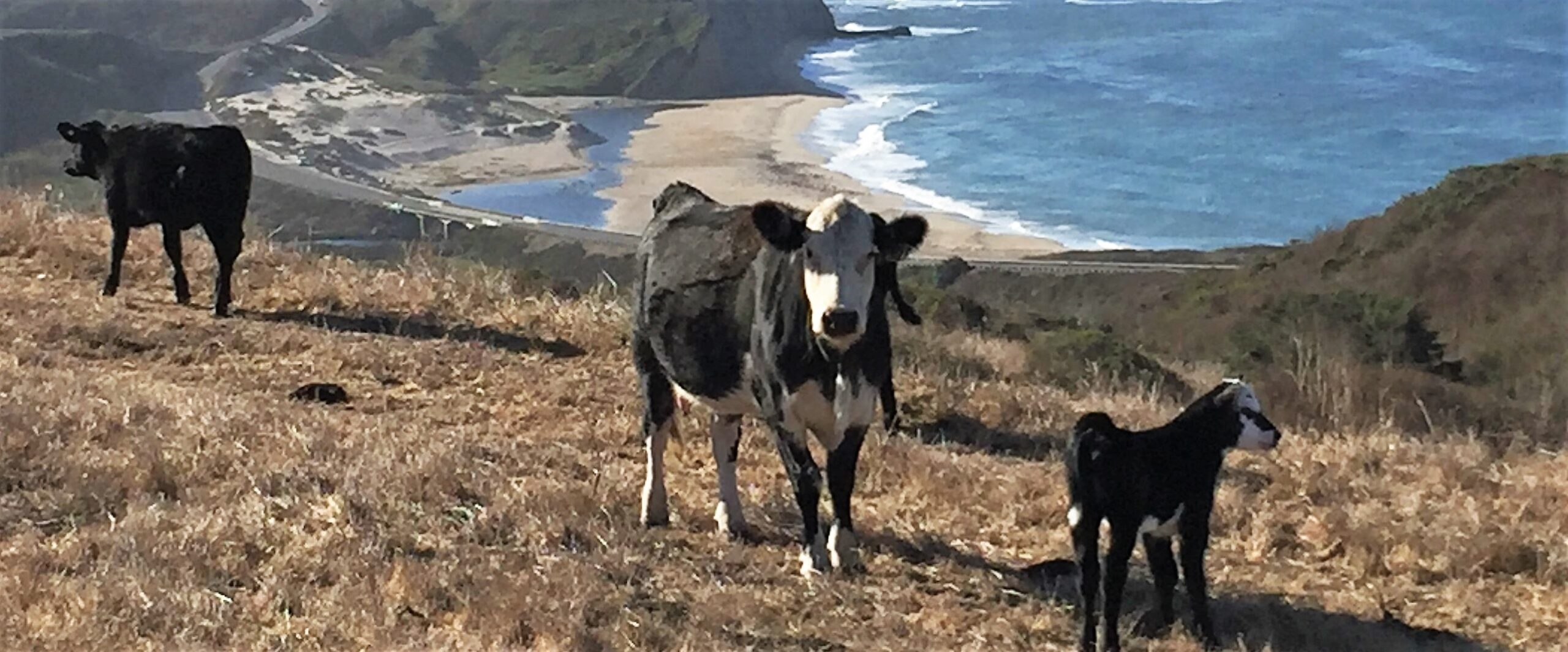
When scientists found levels of bacteria from cattle in the seashores of Marin and Sonoma County, some decided to work with farmers and ranchers instead of against them. David Lewis is one of them. He’s director for UCANR Cooperative Extension in Marin County and a watershed advisor.  He’s worked with ranchers to research ways for cattle and oceans to coexist.

“How do we have a production system on a landscape that can support and provide us blue cheese and oysters? And so if that helps you think about Tomales Bay and then the surrounding watersheds that support a lot of wildlife or shellfish, and then the landscape, that’s this really perfect place to do grazing livestock, and have open connected working landscapes. So how do we protect the environment? How do we produce great dairy products? How do we have wonderful shellfish,” asked Lewis.

Lewis gives a lot of credit to local ranchers who have taken steps to give back to the community and to the environment.

“The ranches on the seashore are really integral to our agricultural production and to the community. And they’ve been with us every step of the way in this environmental stewardship as well. So I hope people really view them as a part of the local Marin and Sonoma community. And if you’re not from the area, please come and learn how that’s true, that these ranches and the seashore are really a part of the local community, not separate from,” Lewis said.

2021-04-29T21:13:17-07:00April 29th, 2021|

DPR Releases Pesticide Reports

State Monitoring Confirms Low or No Pesticide Residues in Most Fruits and Vegetables

A newly released Department of Pesticide Regulation report should ease concerns of California consumers unsure about pesticide residues in fresh fruits and vegetables.

The 2019 California Pesticide Residue Monitoring Program Report shows that 96 percent of fresh-produce samples collected by DPR scientists in 2019 had either no detectable pesticide residues or amounts below safety thresholds (“tolerances”) established by the U.S. Environmental Protection Agency.

“This program is a vitally important tool for helping to ensure the safety of California’s food supply of fresh fruits and vegetables, whether imported from other countries or grown in our state,” said DPR Director Val Dolcini. “It’s useful as a deterrent to bad actors and it’s also a helpful way to educate growers about what is and isn’t acceptable for use in California.”


The findings are based on 3,274 samples of fruits and vegetables gathered throughout the year by DPR at nearly 500 different stores, distribution centers, and outdoor markets statewide. Samples are analyzed at California Department of Food and Agriculture labs, which test for nearly 500 different types of pesticides and pesticide-breakdown products.

In all, 137 samples (4 percent) contained illegal residues, meaning they contained products prohibited from being used on certain crops, or had levels of otherwise allowable pesticides that exceeded EPA tolerances. The highest number of violations involved imported dragon fruit (25), followed by chayote fruit (9), and tomatillos (9).

When illegal residues are detected, DPR traces the suspect crop through its lines of trade – from store shelves to shippers, to importers or growers. Tainted products are quarantined and subject to destruction. In addition to potentially losing their shipments, growers and distributors found in violation can face fines and other penalties

For example, in 2019, DPR imposed $175,435 in civil penalties on a Vernon, Calif., produce distributor, Marquez Produce, Inc., for several violations involving importation and sales of produce with illegal pesticide residues. Read more about the settlement agreement here.

In another case, DPR fined two California strawberry growers whose crops contained illegal traces of the pesticide methomyl, which is not registered for use on strawberries. DPR discovered the berries during sampling at a Fresno grocery store. In addition to the fine, DPR ordered the destruction of four tons of tainted berries that could have otherwise been sold to consumers. The Santa Barbara County Agricultural Commissioner also ordered the growers to cease harvest on 11 acres of berries in the field. More information can be found here.

As part of enforcement activities, DPR staff also conduct compliance interviews with businesses found in violation – typically importers or growers – to discuss ways their business can prevent future sales of illegal produce.

Other findings in the 2019 report:
  • The majority of illegal samples (83%) involved detection of pesticide residues with no established tolerance for the sampled crop, meaning any detected level is considered illegal.
  • Of 262 organic produce samples tested, only 3 had illegal residues.
  • The number of samples of a given commodity may not be large enough to make generalizations about the pesticide residue levels for the entire volume of a commodity in trade.


2021-04-29T15:03:56-07:00April 29th, 2021|

AB 2114 To Help Cattle Ranchers

Bill to Help Meat Processing Options

By Tim Hammerich, with the Ag Information Network

Back in 2018, Assembly Bill 2114 allowed cattle ranchers to sell beef that was slaughter on the farm rather than having to take it to a federally inspected facility. This was important because of how few of these facilities are left. Some producers who wanted to sell their beef directly to consumers would have to transport them hours away to get them processed. Now Assembly Bill 888 will do the same for sheep, goats, and potentially swine. This will make a big difference for producers like Marcia Barinaga.

“I sell most of my lambs to people who are buying a whole lamb for their freezer and the most humane and cost-effective way for me to harvest these lambs is to have our local mobile abattoir come to the ranch, slaughter the lambs, and take them then to a custom butcher for cut and wrap. Now that kind of a scenario is legal federally, but California law only allows on ranch slaughter for the owners use,” said Barinaga.

This bill would change that, allowing farmers like Barinaga to sell a limited amount of meat slaughtered on the farm to her customers. She calls it a ‘no brainer’ that just levels the playing field with what’s already legal in beef.

“This bill is just giving those of us who raise sheep, goats, and swine equal status to those who raise beef on a small scale and sell them this way,” Barinaga said.

Assemblyman Marc Levine of Marin County authored the bill, which is endorsed by the California Farm Bureau Federation.

2021-04-27T16:36:28-07:00April 27th, 2021|

Preharvest Testing Can Prevent Food Born Illneses

California LGMA Endorses Pre-Harvest Testing to Reduce Outbreaks


Recently, the California Leafy Greens Marketing Agreement (LGMA) Board endorsed new Pre-Harvest Testing guidance in an effort to prevent foodborne illness outbreaks associated with leafy greens. The guidance calls for pre-harvest testing of leafy greens products when risk assessments deem it necessary, specifically when grown in proximity to animals.

Farmers Acting Quickly to Protect Public Health

“We are endorsing pre-harvest testing in direct response to the U.S. Food and Drug Administration’s recent report on outbreaks associated with lettuce in 2020, which identified the recurring E. coli strain implicated to be a reasonably foreseeable hazard,” said Dan Sutton, Chairman of the California LGMA.  “We want to send a clear message to FDA that our industry is, in fact, taking additional measures to prevent outbreaks.”

Focused on Risk and Adjacent Lands

In addition to the Pre-Harvest Testing Guidance document, the LGMA Board endorsed several other updates to the food safety standards currently being developed by the LGMA Technical Committee and expected to become requirements in the coming months.  Projects currently under development include:

  • Adjacent land risk assessment tool
  • Root cause analysis requirement for high-risk food safety incidents
  • Major revision to existing standards for soil amendments and crop inputs

“These important tools and revisions have been in development for several months and they represent input from food safety experts and researchers throughout the industry,” said Sutton.

“None of this could have happened without the tremendous work done by the LGMA’s Technical Committee to rapidly develop guidance for pre-harvesting testing and all efforts currently underway,” he continued.  “Nor could this be accomplished without the commitment of LGMA members and farmers to produce safe food by implementing the LGMA food safety standards.”

The Produce Buyers Role

“The LGMA provides a unique system to enforce food safety practices on farms in California and Arizona that produce over 90 percent of the leafy greens consumed in the U.S.,” said California LGMA CEO Tim York. “When produce buyers require LGMA certification of their suppliers they reinforce best practices on leafy greens farms. Simply put, when buyers support the LGMA, they support a system that offers the fastest and best means to reduce incidents of foodborne illness.”

2021-04-23T18:36:41-07:00April 23rd, 2021|

Almond Acreage Continues to Increase

California Almond Acreage Increases in 2020


The Almond Board of California (ABC) is releasing two California almond industry acreage reports: USDA’s National Agricultural Statistics Service (USDA-NASS) 2020 California Almond Acreage Report including the 2021 preliminary bearing acreage, and Land IQ’s 2021 Standing Acreage Initial Estimate (bearing acres, only). These reports are being issued side by side to improve industry reporting methods and provide a more robust picture of California’s almond acreage.

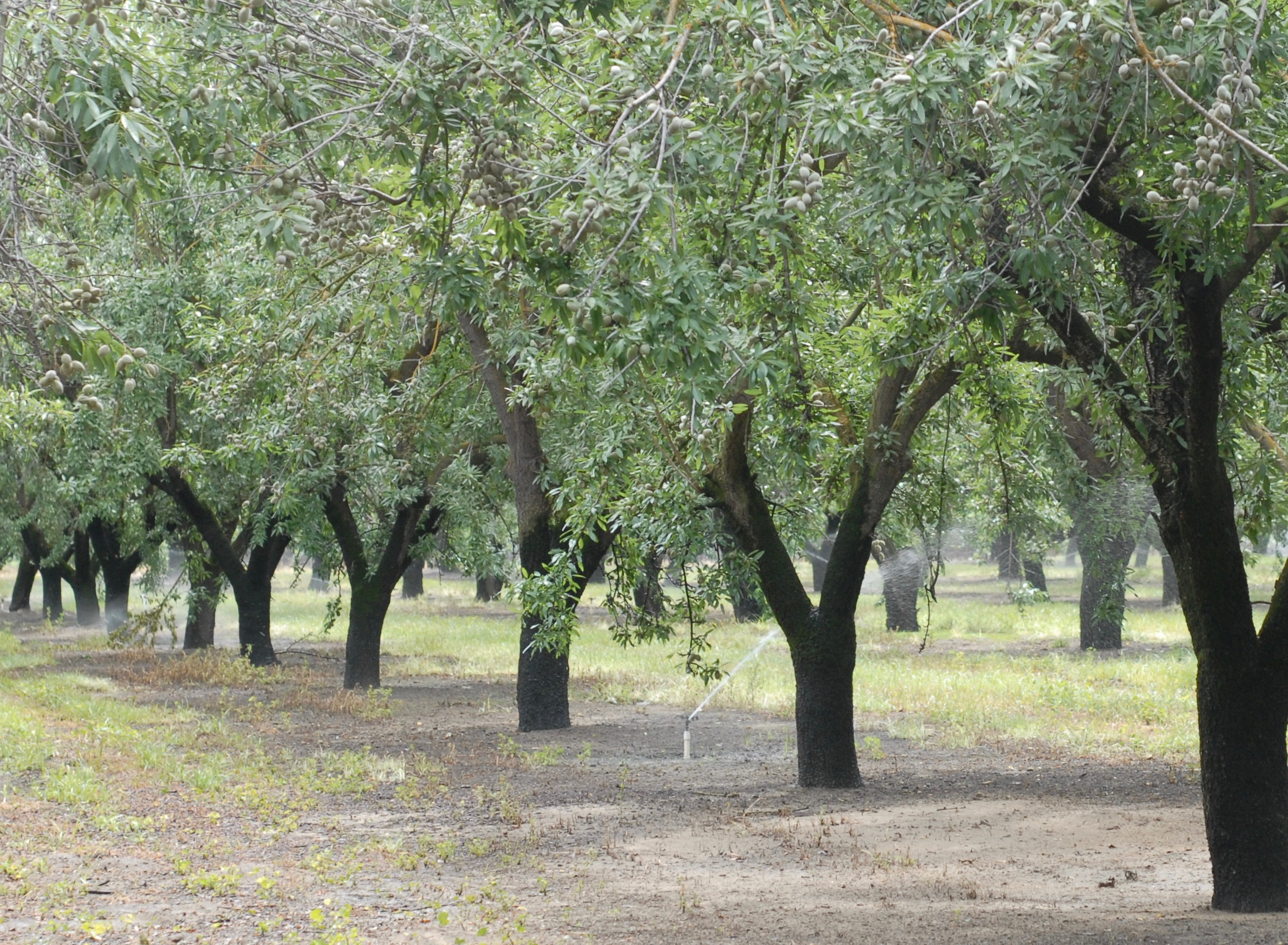
USDA-NASS reports a continued increase in California’s almond acreage in 2020. Bearing acres, or orchards that have matured enough to produce a crop, are estimated at 1.25 million acres, up 5.9 percent from 2019. Total almond acreage, including non-bearing trees, is estimated at 1.6 million, up 5.3 percent from the previous year. Nonpareil continued to be the leading variety, followed by Monterey, Butte, Carmel, and Padre.

Land IQ’s initial estimate for total bearing acreage in 2021 – which reflects standing acreage that will be productive during the 2021/2022 harvest – is 1,323,722 acres.  This estimate takes into account both young orchards coming into production and orchards removed or estimated to be removed.

“California almond bearing and non-bearing acreage continues to increase indicating almond production will also rise in coming years. Demand has consistently been very strong during this crop year with global shipments YTD (August 2020 – March 2021) up 17.7%, as production crossed the 3 billion pound threshold for the first time,” said Richard Waycott, president, and CEO of the Almond Board.

All export regions of the world have reported strong numbers, with shipments to China/Hong Kong up 59% year to date (YTD), South Korea up 45% YTD, India up 51% YTD, and Western Europe up 12% YTD, as compared to a year ago.

USDA-NASS’s acreage report is the first of three annual reports, including the Subjective Estimate released in May and Objective Report in July. These reports are commissioned by the Almond Board to provide statistical transparency to industry stakeholders around the world.


Each USDA-NASS California Almond Acreage Report includes estimates on bearing, non-bearing and total acreage, in addition to data organized by variety, year planted and county. A major source of data for this survey is almond growers’ voluntary responses to mailed questionnaires distributed by USDA-NASS, with consecutive telephone and field follow-up. To arrive at the estimated almond acreage, USDA-NASS compares its almond acreage database with the 2017 Census of Agriculture, pesticide application data maintained by County Agricultural Commissioners and the California Department of Pesticide Regulation, in addition to data collected on the 2020 Almond Nursery Sales Report, which this year USDA-NASS released in conjunction with the California Almond Acreage Report, and Land IQ assessment.


In 2018, ABC first commissioned Land IQ, a Sacramento-based agricultural and environmental scientific research and consulting firm, to develop a comprehensive, living map of California almonds. The map is the result of nearly a decade of research, and because Land IQ’s approach does not rely on surveys or extrapolation, it has an accuracy of 98% or greater.iv Beginning in 2019, ABC began a mapping process with Land IQ in which two acreage estimates will be released annually: the initial estimate of bearing acreage in the spring and the final estimate, with both bearing and non-bearing acreage for the same production year, delivered in the fall. In addition to the acreage estimates, Land IQ will annually produce an estimate of removed acreage.

This year, Land IQ’s spatial analysis shows that between September 1, 2020, and March 31, 2021, 44,303 acres were removed and estimates that an additional 3,500 acres will be removed from April 1 to August 31, 2021, for a total estimate of 47,803 acres removed.

Starting in 2020, Land IQ annually provided its initial estimate to USDA-NASS to fine-tune the official California Almond Acreage Report and other forecasts. The USDA-NASS reports and estimates remain the official Almond Board statistics provided for the California almond industry.

On Wednesday, May 12, 2021, USDA-NASS will release the 2021 Subjective Estimate, which provides an initial forecast of the upcoming crop. Data within the Subjective Estimate is based on opinions obtained from almond growers in a survey sent by USDA-NASS. Almond growers will soon receive the USDA-NASS survey and are encouraged to participate. On Monday, July 12, 2021, USDA-NASS will release the 2021 Objective Report. This report collects data later in the growing season, closer to harvest, and is based on an actual count of nuts on the trees.


2021-04-22T15:25:19-07:00April 22nd, 2021|
Go to Top