Environment

Assemblyman Adam Gray Speaks Out on Water Grab

Water Board Must Understand the Impact of Taking Water from Farms and Communities

By Patrick Cavanaugh, Editor

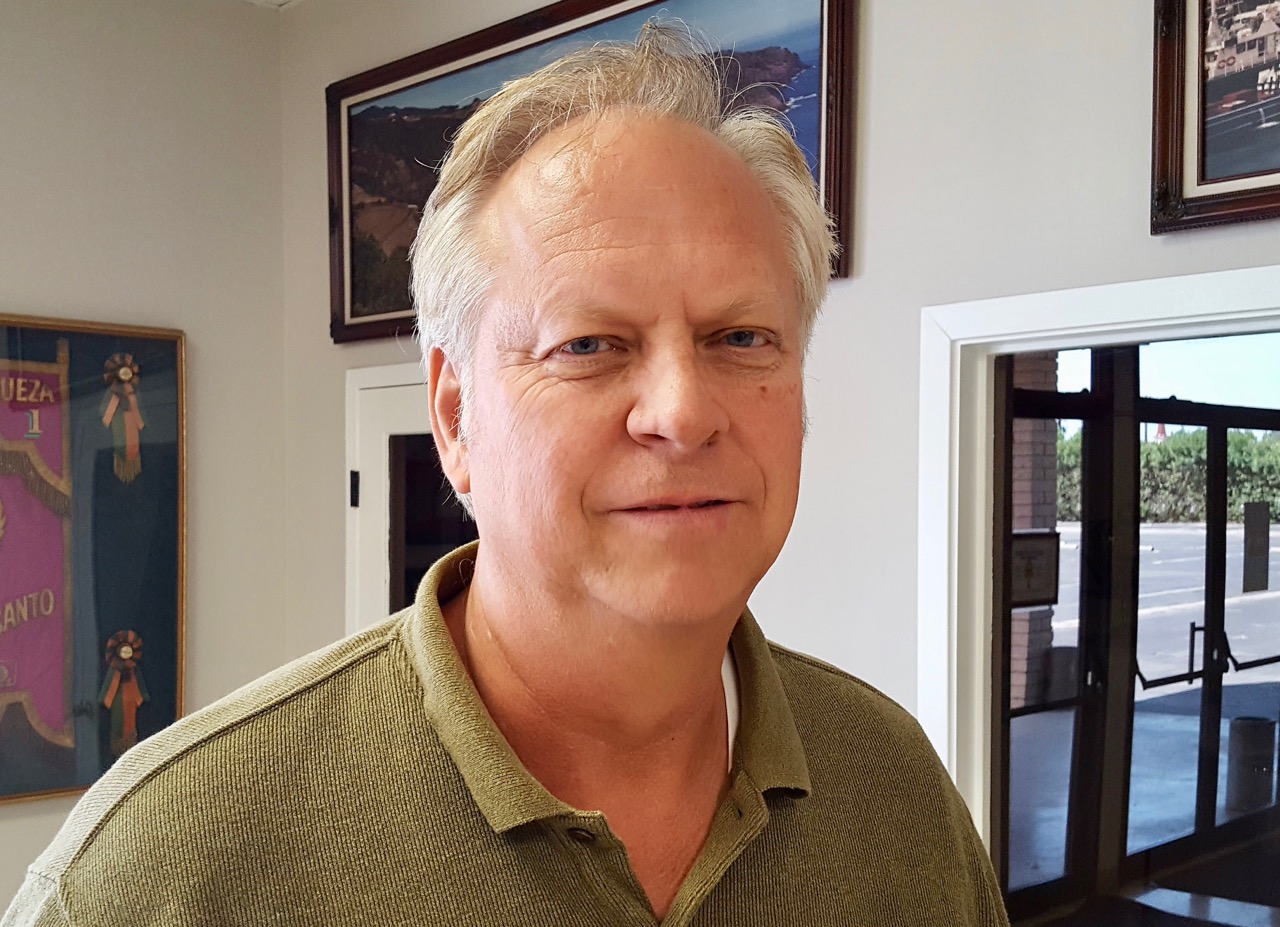
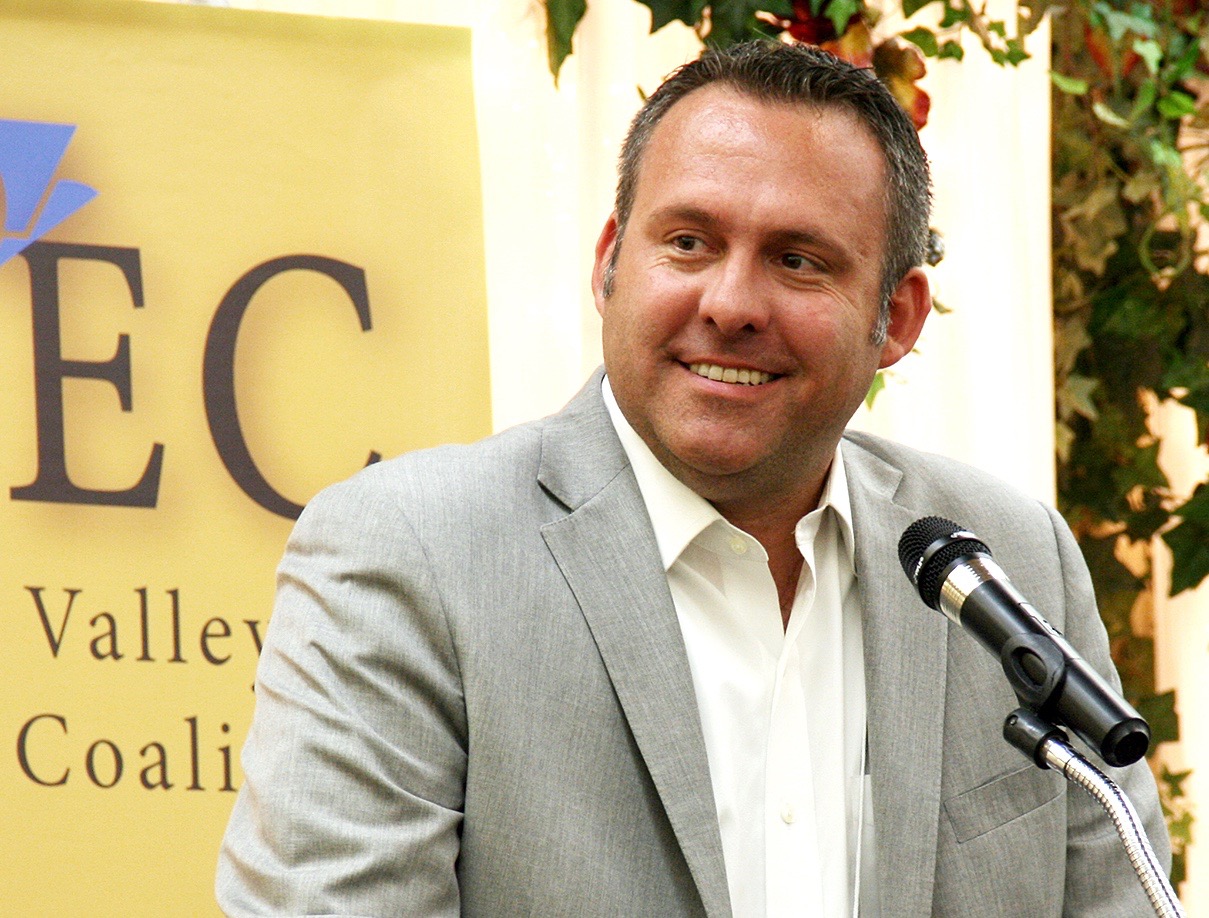
At the recent Water Rally in Sacramento, more than 1000 farmers and other stakeholders were protesting the California Water Resources Control Board, which is proposing a water grab of 40 percent of the water from the Stanislaus, Tuolumne, and Merced Rivers to increase flows for salmon. According to Adam Gray —21st District State Assemblyman, representing Stanislaus and Merced—counties said that large losses would occur in jobs and profits if the water grab is implemented.

“This is thousands of jobs and billions of dollars of economic loss to agriculture, to California, and we can’t afford that,” Gray said. “Not to mention the impact on drinking water in communities. Most of the communities in my district are on well water, and what people don’t think about is when you take water away from farmers and that water doesn’t go back into the ground. That further depletes our groundwater and our aquifers, and it creates more subsidence and environmental issues.”

Gray said that this is not about the environment versus business, or fish versus people. This is about the whole community, the schools, the ag economy and a lot of job losses for the people he represents.

“It’s dishonest; the Water Board is not admitting that there’s going to be an impact in the affected areas. They say farmers are going to offset the water losses by pumping more. Well, you and I both know with the implementation of SGMA and all of the other challenges, that’s not a reality,” he said.

“So how about we sit down and come up with a water plan that takes everybody’s needs into consideration and again, I’m not an us versus them advocate,” he said. “Southern California needs water, the coast needs water, northern California needs water and the San Joaquin Valley needs water. How about we sit down and make a water infrastructure plan for the next hundred years that serves all Californians.”

Gray said the farming community will stand up for the investments made to secure water.

“We are not going to lie down. We’re not going to apologize for being a farming community,” he said. “We’re going to stand up; we’re going to defend the investments we’ve made and the long-term planning we did, and we’re going to ask the state to step up and do some of their own.”

2018-08-28T16:40:28-07:00August 28th, 2018|

Interior Secretary Zinke Agrees: Sacramento Water Grab “Unacceptable”

Zinke Directs Staff to Propose New Plan

News Release

Secretary of the Interior Ryan Zinke’s visit to Don Pedro and New Melones Reservoirs at the request of U.S. Representative Jeff Denham (R-Turlock) continues to yield results for the Valley, with Secretary Zinke issuing an internal memo Friday declaring the state’s proposed water grab an “unacceptable restriction” that reduces the Department of the Interior’s ability to deliver water and directing his agencies to propose a plan within 25 days to maximize water supply, construct new water storage, and resolve issues with the state, among other directives.

“After our tour of local reservoirs, Secretary Zinke recognizes that Sacramento’s water grab would cripple our communities, farms and water storage infrastructure,” Denham said. “Our water, our water rights, and our future depend on stopping this wasteful plan.”

Rep. Jeff Denham, photo courtesy of his Facebook page

Previously, the Bureau of Reclamation, within the Department of Interior, issued an official comment on the state’s proposed water grab, noting the plan “directly interfere[s] with the New Melones Project’s ability to store water” and “elevate[s] the Project’s fish and wildlife purposes over the Project’s irrigation and domestic purposes contrary to the prioritization scheme carefully established by Congress.”

The agency’s comment also specifies that siphoning off at least 40 percent of the Central Valley’s rivers during peak season would result in significant reductions in water storage at New Melones and result in diminished power generation as well as recreational opportunities. The agency recommends the Board reconsider and postpone the scheduled August 21-22 public meeting to allow for “additional due diligence and dialogue.”

Recently, Denham’s amendment to stop the state’s dangerous water grab passed the U.S. House of Representatives as part of a Department of the Interior appropriations bill, and put a major spotlight on this issue. The amendment, currently awaiting a vote in the Senate, prohibits federal agencies from participating in the state’s plan to deplete the federally owned New Melones reservoir, which provides water for the Central Valley Project and generates hydropower.

Sacramento’s plan would drain significantly more water from New Melones each year, potentially leaving it completely dry some years. This would put in jeopardy critical water supplies for Central Valley farmers and communities who rely on the water for their homes, businesses, farms, and electric power. The amendment takes this issue head-on to protect Valley water.

Denham will continue fighting to protect Central Valley water, support science-driven river management plans that revitalize our rivers without recklessly wasting water, and push major policies like the New WATER Act that will solve California’s water storage crisis and keep the Valley fertile and prosperous for generations to come.

See the memo from Secretary Zinke here, or to read the full comment from the Department of the Interior on the state water grab plan, click here. For more information about what Denham is doing to fight for water in the Valley, visit www.Denham.house.gov/water, where you can also sign up to receive periodic updates on his work in Washington to improve local water infrastructure, storage and delivery.

2018-08-21T16:55:08-07:00August 21st, 2018|

A Plan of Attack for the Dusty Almond Harvest

Reducing Almond Harvest Dust Keeps Neighbors Happy

By Mikenzi Meyers, Associate Editor

Jesse Guadian

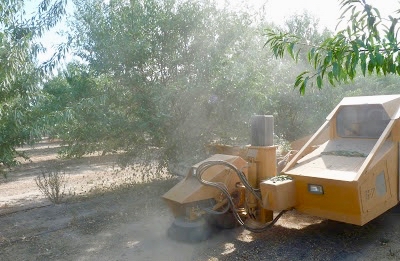
Dust management is an issue that almond growers and their surrounding neighbors face annually. With almond harvest fast approaching, dust control is crucial to keeping our air clean. Jesse Guadian with D & J Farm Management of Kern County knows first hand the steps it takes to cut down on dust.

“We’re in the San Joaquin Valley, where dust is a problem, especially if you’re close to schools and homes,” Guadian said.

Reducing air particles is a year-round job for D & J Farm Management, thinking about excess plant material in the air before weeds even begin to present an issue. This allows for fewer passes through the field when it comes time to mow, ultimately reducing the amount of decomposed plant content in the air.

“We’re reducing all that plant material that stays on the surface … to try to eliminate some of that dust,” Guadian said.

2018-08-01T16:37:20-07:00August 1st, 2018|

UC and Israel Sign Agricultural Research Agreement

California and Israel Face Similar Challenges

By Pam Kan-Rice, UC ANR News

From left, Ermias Kebreab, Eli Feinerman, and Mark Bell sign the agreement for Israel and California scientists to collaborate more on water-related research and education.

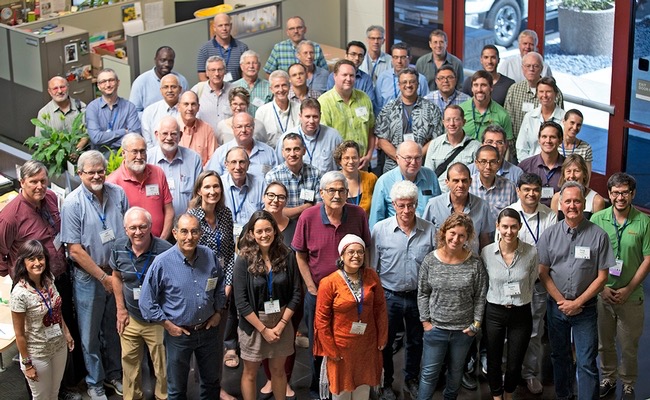
Pledging to work together to solve water scarcity issues, Israel’s Agricultural Research Organization signed a memorandum of understanding with the University of California Division of Agriculture and Natural Resources and UC Davis recently. The signing ceremony kicked off the 2018 Future of Water for Irrigation in California and Israel Workshop at the UC ANR building in Davis.

“Israel and California agriculture face similar challenges, including drought and climate change,” said Doug Parker, director of UC ANR’s California Institute for Water Resources. “In the memorandum of understanding, Israel’s Agricultural Research Organization, UC Davis and UC ANR pledge to work together more on research involving water, irrigation, technology and related topics that are important to both water-deficit countries.”

The agreement will enhance collaboration on research and extension for natural resources management in agriculture, with an emphasis on soil, irrigation and water resources, horticulture, food security and food safety.

“It’s a huge pleasure for us to sign an MOU with the world leaders in agricultural research like UC Davis and UC ANR,” said Eli Feinerman, director of Agricultural Research Organization of Israel. “When good people, smart people collaborate, the sky is the limit.”

Feinerman, Mark Bell (UC ANR vice provost) and Ermias Kebreab (UC Davis professor and associate vice provost of academic programs and global affairs) represented their respective institutions for the signing. Karen Ross (California Department of Food and Agriculture secretary) and Shlomi Kofman (Israel’s consul general to the Pacific Northwest) joined in celebrating the partnership.

“The important thing is to keep working together and develop additional frameworks that can bring the people of California and Israel together as researchers,” Kofman said. “But also to work together to make the world a better place.”

Ross said, “It’s so important for us to find ways and create forums to work together because water is the issue in this century and will continue to be.”

She explained that earlier this year, the World Bank and United Nations reported that 40 percent of the world population is living with water scarcity. 

“Over 700,000 people are at risk of relocation due to water scarcity,” Ross said. “We’re already seeing the refugee issues that are starting to happen because of drought, food insecurity and the lack of water.”

Ross touted the progress stemming from CDFA’s Healthy Soils Program to promote healthy soils on California’s farmlands and ranchlands and SWEEP, the State Water Efficiency and Enhancement Program, which has provided California farmers $62.7 million in grants for irrigation systems that reduce greenhouse gases and save water on agricultural operations.

“We need the answers of best practices that come from academia, through demonstration projects so that our farmers know what will really work,” Ross said.

As Parker opened the water workshop, sponsored by the U.S./Israel Binational Agricultural Research and Development (BARD) Program, Israel Agricultural Research Organization and UC ANR, he told the scientists, “The goal of this workshop is really to be creating new partnerships, meeting new people, networking and finding ways to work together in California with Israel, in Israel, with other parts of the world as well.”

Drawing on current events, Bell told the attendees, “If you look at the World Cup, it’s about effort, it’s about teamwork, it’s about diversity of skills, and I think that’s what this event does. It brings together those things.”

2021-05-12T11:05:10-07:00July 24th, 2018|

Re-Nuble: Eliminating Food Waste By Converting it to Fertilizers

Wasted Food Can be Processed for Agriculture

By Jessica Theisman, Associate Editor

California Ag Today recently met with Tinia Pina, CEO of Re-Nuble. She told us about the company and what they stand for.

“We focus on sourcing food waste from wholesale food distributors,” she said.

Re-Nuble works on diverting food to food banks instead of landfills.

Re-Nuble primarily sources in urban areas due to compliance and regularity drivers to divert the food from landfills. New York City has a 2020 goal of achieving zero waste.

“The waste that can not be diverted to food banks is processed in a more cheaply manner,” Pina said.

This waste is turned into a product that is sold directly to farms as well as through resellers as an organic liquid fertilizer and pelletized fertilizer.

“It is just raw green food waste. There is that much volume at the wholesale produce distribution level,” Pina explained.

Food that ends up as ‘waste’ is usually because it does not meet food safety compliance.

“It could be from temperatures varying, the food fell on the floor,  broken pallets, and anything that would subject it to the risk of contamination; that is at the point that we collect it,” Pina said.

Re-Nuble is essentially networking, collecting, and turning food around as another renewable resource.

“We work with a hauler  to source it from our one wholesale food distributor and we take it on a daily basis and we basically, within 24 hours, turn it into either a liquid fertilizer that is sold as a fertilizer for controlled environment agriculture or as a pelletized fertilizer, which is great for soil environments,” Pina explained.

The fertilizer is either resold through some of Re-Nuble’s distribution partners or directly to the farms. Re-Nuble is currently in New York; however, they are working on extending out to California.

2021-05-12T11:05:10-07:00July 12th, 2018|

UC Davis Student Maureen Page Speaks for the Bees

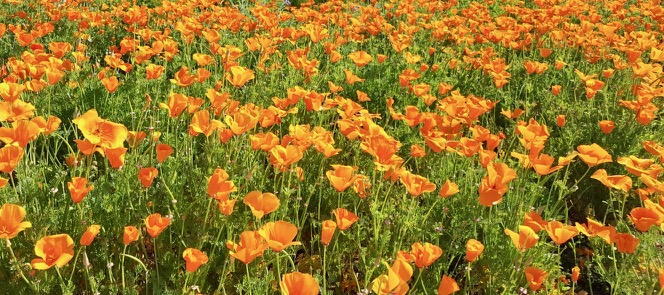
Maureen Page to Spread Flowers for Bees

By Jessica Theisman, Associate Editor
Maureen Page pollination

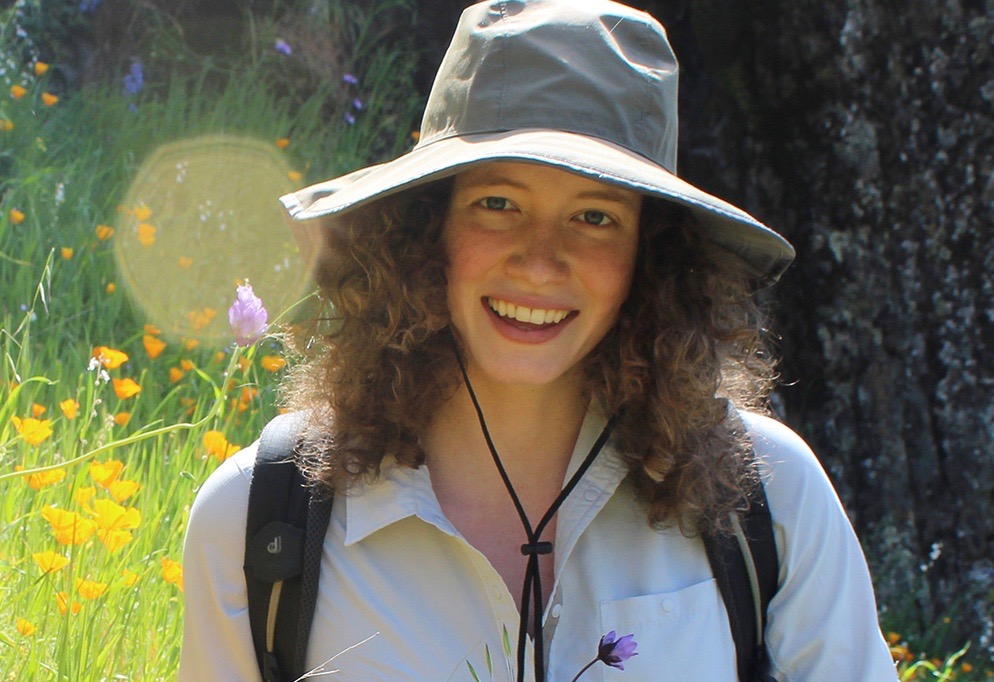
Maureen Page

California Ag Today recently spoke with doctoral student Maureen Page of the Neal William’s lab at UC Davis, Department of Entomology and Nematology. She is the recipient of a prestigious three-year fellowship for promoting food security by optimizing wildflower planting. She supports the wild and bee management. We asked her about the flowers that she plans on planting to help those bees.

“I do believe that in general, flowers are really important for bees. Planting flowers are generally good for them,” she said.

Although planting is good for the bees, there are some precautions that need to be made.

“Some flowers can be somewhat toxic to bees. Some do not actually provide bees with pollen and nectar resources,” Page said.

There are many ornamental plants that are bred to not have much pollen so that people do not sneeze as much.

“On top of that, if you are planting non-native species that are really weedy, it may be great for the bees, but might not be great for other plant species,” Page said.

2021-05-12T11:05:11-07:00June 21st, 2018|

Tracking Social Media To Understand Consumer Food Likes

Social Media is Helpful in Agriculture

By Jessica Theisman, Associate Editor

Reaching consumers is key to helping with food confusion. Tamika Sims, the director of Food Technology communications for the International Food Information Council Foundation, is using social media to aid consumers.

“We will follow what is happening in … social media—including Facebook, Twitter, LinkedIn and Pinterest—to get a feel for how consumers are talking about food,” Sims said.

Sims noticed that differences and similarities between organic and conventional crops are being discussed with consumers, emphasizing how safe both are.

“That’s the one that we can’t seem to get enough of,” she said.

They talk about the differences and similarities as far as organic and conventionally grown fruits and vegetables.

“We talk to consumers about how they’re equally safe and equally nutritious and that one is not superior to the other when it comes to food safety or nutrition,” Sims said. “If you have access to either, feel free to enjoy both in an equal way.”

Interested in learning more? You can go to the IFIC’s website to check out their resources.

2018-06-20T16:50:20-07:00June 20th, 2018|

Heat Illness Prevention for Field Workers

Farmers Guard Their Most Valuable Asset

By Patrick Cavanaugh, Editor

When temperatures are heating up, it’s important that growers are keeping farm employees safe to prevent exhaustion and heat-related illnesses and to ensure that their employees go home to their families at the end of the day.

On an average day, temperatures in fields can range from eight to 10 degrees hotter than the average temperature in the area.

“We try always to have a regular tailgate meeting to remind all of our farm employees about the hazards of working when temperatures are more than 80 degrees,” said Ron Samuelson, a Fresno County grower who produces almonds and cherries. “We educate our employees about the importance of drinking water, the emergency procedures if needed. And for increased prevention, we are in constant contact with the workers throughout the day.”

heat illness

Some type of shade must be available to field employees when temperatures reach 80 degrees.

Samuelson said that shade is essential once temperatures reach around 80 degrees and they make sure there is adequate shade in the morning if temperatures are going to get to that high.

“If field employees are in an almond orchard where there are mature trees, there is adequate \shade for them to sit and rest under a tree to cool down,” Samuelson explained. “And when the temperature begins to reach 100 degrees, it’s not uncommon for work to stop to give employees a break from the heat.”

“If temperatures go over 95 degrees, we employ other procedures. The first thing we would do is to talk to the guys to get their input as to what’s their thoughts on how soon they want to stop working for the day.”

“A lot of times, we’ll start a little bit earlier and knock off earlier. Then we take breaks more often as well. We try to maintain that, encourage them to drink at least a quart per hour throughout the day. We make sure they let us know if the water jugs are down to a gallon are less. That way we can get them refilled right away.”

Employee safety is paramount because it would be impossible for farmers to farm without them.

“So it’s essential to help them get through the day and avoid heat stress. At the end of the day, our employees matter most,” Samuelson said.

2018-06-05T16:29:47-07:00June 5th, 2018|

Letter to California Water Commission on Failure to Approve Temperance Dam

CWC Decision is a Black Eye to State

Editor’s note: Valley legislators sent the attached letter to the CWC last week, reflecting both disappointment and concern over the CWC WSIP process as it relates to the Temperance Flat Reservoir Project. The letter asks for a reconsideration for the TFR ecosystem evaluation.

Clearly, we appreciate all our Valley legislators who have fought so hard for this project for many years. This letter at a minimum puts on the record their thoughts on how the CWC handled the TFR project.

May 17, 2018

California Water Commission: Mr. Armando Quintero, Chair, & Mr. Joe Yun, Executive Officer

P.O. Box 942836, Sacramento, California 94236-000

Dear Mr. Quintero, Mr. Yun and Commission  Members:

On May 3, 2018, The California Water Commission took action, perhaps the most definitive and historic action with regard to the Water Storage Investment Program (WSIP) state bond funding applications.

As members of the California Legislature, we have watched and participated in this entire application process. All Californians would benefit from water storage projects this money is intended to fund. However, this investment has been stymied by the commission staff’s narrow determination. The people we represent have expected a great deal of positive leadership from the Water Commission and we echo the public’s disappointment in how the review process has unfolded.

During the initial review of WSIP project applications, many of us joined in calling into question the policy and procedures of the application review process. From the beginning, we had concerns that the process developed by commission staff and the information provided would not adequately account the benefits of water storage projects throughout the state. Despite our concerns, little was done to address the problem resulting in six of the project scores receiving “O” benefits.

Temperance Dam

Mario Santoyo is Executive Director of the SJV Water Infrastructure Authority, which presented the Temperance Flat Dam Proposal to the California Water Commission​.

In 2008, the EDT model was selected by the state and federal agencies responsible for implementation of the San Joaquin River Restoration Program (SJRRP)—namely the U.S. Bureau of Reclamation, the U.S. Fish and Wildlife Service, the U.S. National Marine Fisheries Service, and the California Department of Fish and Wildlife (CDFW). In the Quantitative Fisheries Model Selection Recommendation Process, 2008, the SJRRP agencies state that EDT was rated ” … as the most appropriate quantitative fish population model for the SJRRP.” This report also states that “the EDT model is a framework that views salmon as the indicator or diagnostic species for the ecosystem. The salmon’s perspective (i.e., its perception of the environment) becomes a filtered view of the system as a whole.

The EDT framework was designed so that analysis made at different scales (i.e., from tributary watersheds to successively larger watersheds) might be related and linked. Biological performance is a central feature of the framework and is defined in terms of three elements: life history diversity, productivity, and capacity. These elements of performance are characteristics of the ecosystem that describe persistence, abundance, and distribution potential of a population. This analytical model is the tool used to analyze environmental information and draw conclusions about the ecosystem. The model incorporates an environmental attributes database and a set of mathematical algorithms that compute productivity and capacity parameters for the diagnostic species. …”

In 2014, the U.S. Bureau of Reclamation selected the EDT model for application to the Upper San Joaquin River Basin Storage Investigation—the federal feasibility study of Temperance Flat Reservoir—to quantify benefits. Prior to its application, Reclamation commissioned a scientific peer review of the EDT model to confirm the suitability of its use for quantifying benefits. It is our understanding that when the SJVWIA team asked if there were any models that could be used in place of the EDT, the CWC staff declined to respond. This is of clear concern and demonstrates the inconsistencies within the information provided by commission staff.

From the San Joaquin Valley’s perspective, the outcome of this process is a black eye for the state. The two-thirds threshold for Proposition 1 in 2014 would not have been met without the support of the San Joaquin Valley. Despite the bias by some opponents against large-scale storage projects, the language in AB 1471intentionally included Chapter 8 (Provision (a), section 797.1, page 22) to clarify that the Legislature’s intent for the $2.7 billion allocation was for  surface water storage projects with an emphasis on Sites and Temperance Flat Reservoir based on the CALFED Bay-Delta Program Record of Decision, dated August 28, 2000 (Section 2. Decision, 2.2 Plan for Action, 2.2.5 Storage, pages 42 through 45). We the members of the Legislature believed that by voting for Prop 1 funding that all projects including controversial storage projects in the CALFED Bay Delta Program would be given a fair and accurate evaluation in order to meet the overall water management strategy for the state.

In closing, we insist that the Water Commission reconsider its acceptance of the staff recommendation on the Temperance Flat Project’s ecosystem scoring or at the minimum direct the staff to go back and re-evaluate the application’s ecosystem public benefit utilizing the Ecosystem Diagnosis and Treatment (EDT) model cited in the Water Commission’s Technical Reference Document as being acceptable for use in the analysis required by the application.

Sincerely,

(Letter was signed by nine Valley state senators and assembly persons.)

2018-05-29T16:59:53-07:00May 29th, 2018|

UC Davis Pollination Ecologist Wins 3-Year Fellowship

Fellowship Comes From the Department of Defense

By Patrick Cavanaugh, Editor

Maureen Page Awarded Fellowship to Optimize Wildflower Plantings

Doctoral student Maureen Page of the Neal Williams lab at the UC Davis Department of Entomology and Nematology is the recipient of a prestigious three-year fellowship, a National Defense Science and Engineering Graduate Fellowship for her research proposal: Promoting Food Security by Optimizing Wildflower Plantings to Support Wild and Managed Bees.

Page, a pollination ecologists, was one of 69 awardees selected from more than 3,600 applicants. The Department of Defense funds her fellowship.

“Most people probably are aware that both managed honeybees and many of the wild native species that we have in California as well as in the U.S. have major stressors that are contributing to declines in their populations,” Page said.

And of course, the bee populations suffer when there’s a lack of floral resources to pollinate. “Especially when crops are not in bloom and bees need pollen and nectar to survive. And so without enough resources, it can have dramatic declines in bee populations,” she said.

Page explained that bees are critically important to our food supply. “It’s estimated that about a third of the food supply directly benefits from insect pollination. Many of those crops are entirely dependent on insect pollination,” she said. “Without bees and other insects, those particular crops wouldn’t even be able to set fruit and many others, which while not wholly dependent on insect pollination benefit very much from insect pollination, which means more production and lower prices so that more people can afford healthy, nutritious food.”

2021-05-12T11:05:11-07:00May 25th, 2018|
Go to Top