Environment

City of Mendota Recovers from Drought

Mendota Resilience and Pride

By Emily McKay Johnson, Associate Editor


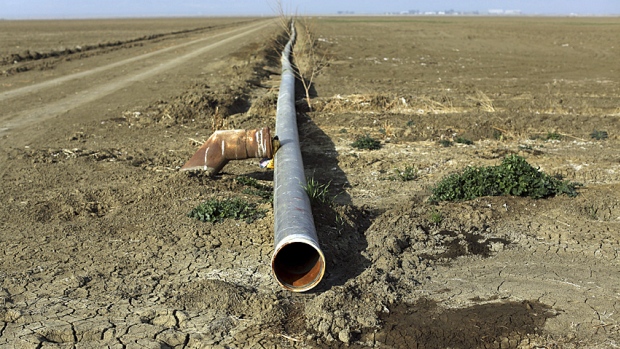
For many small San Joaquin Valley cities that have relied on agriculture to support their local economies, the four-year drought in California has dramatically increased unemployment and decreased business revenue. Mendota, a city west of Fresno, hit hard with a 45% unemployment rate, has constructively made calculated adjustments by residents and farmers to recover to its pre-drought economic level, according to Robert Silva, mayor of this resilient city.mendota logo


“As we have been going through the drought the last four years,” Silva   explained, “Mendota [nicknamed Cantaloupe Center of the World] has been in the spotlight for its high unemployment, and a lot of our farmers are having a rough time. We have had a lot of bad publicity.”


“In the laMendota Muralst year or so we have weathered all this,” he stated, “and things are positive now. Our farmers are really understanding how to use every drop of water. We have a lot of new business coming into the community. We have a housing boom that continues to grow, so things are definitely on the rise and we’re standing very proud.”


“A few years ago, high unemployment forced many people to move away, suddenly creating school classrooms with very few students; however, that has changed too,” said Silva. “Student enrollment is growing and we have added on another school. It is very positive in Mendota; the doom and gloom of a few years ago has gone. Really, it’s gone.”


“Financially we’re in good shape and businesses are prospering,” Silva summarized. “It’s good for our city, good for our citizens, and good for business.”
2016-08-24T16:13:22-07:00August 24th, 2016|

CULTIVATING COMMON GROUND: Economic Analysis of Drought on California Agriculture

Editor’s note: We thank Aubrey Bettencourt for her contribution to California Ag Today’s CULTIVATING COMMON GROUND commenting on the report, “Economic Analysis of the 2016 Drought for California Agriculture,” released this week. Lead UC Davis author Josué Medellín-Azuara’s response can be read below. 


By Aubrey Bettencourt, executive director, California Water Alliance (CalWA)


Josué Medellín-Azuara, Duncan MacEwan, Richard E. Howitt, Daniel A. Sumner and Jay R. Lund of the UC Davis Center for Watershed Sciences, ERA Economics and the UC Agricultural Issues Center reported their views on the economic impact of California’s continuing drought on agriculture this week. The study, “Economic Analysis of the 2016 Drought For California Agriculture,” proved to be uncommonly riddled with errors, questionable metrics and inaccuracies; it’s a continuation of a disturbing recent trend.

CA Water Alliance logo


The authors claim that about 78,800 acres of land might be idled due to the drought, but a quick Google search shows a single water district that had more than 200,000 acres of fallowed land in 2016. There are more than a hundred other water districts throughout the state, and most are reporting idled acreage.


In another irrigation district in Yuba County, more than 100 agricultural users have been cut off entirely, leaving their nearly-mature crops and fruit and nut trees without water.   [North Yuba Water District (NYWD)]


This year the federal and state water projects announced they would provide agriculture with 55% of their water. Two months ago, they reduced the estimate to 5% south of the Delta, and they are struggling to even deliver that amount.


Across the state, water prices have increased dramatically, whether pumped from the ground or bought on the faltering water-exchange market. Water that costs less than $250 per acre foot in 2012 now costs up to $750 or more.


It doesn’t take a doctoral or economic degree to understand that when the price of water goes up, the cost to produce food also goes up. Farmers may be getting more money for the produce they grow, but they are watching their bottom line shrink because it costs more to grow it. Even water from their wells isn’t free; pumping takes energy, and energy costs money too.


Adding to rapidly increasing costs are the new minimum wage, capped work hours, and hundreds of regulatory mandates from the 80+ local, state, and federal agencies that oversee every aspect of California farming and bury farmers in paperwork and red tape. Compliance takes time away from growing food, and it costs money.


Take a look at rice farmers. Growing rice today is a losing proposition. After the labor, cost of rice plants, fuel, fertilizing, care, harvesting, drying and milling, growers pay substantially more to grow rice than they can charge for their crop. Many have converted rice paddies to other uses, and some sell their water or take money from federal agencies and conservation groups to create wildlife habitat in order to simply stay afloat. Some are selling off their land to developers, a lose-lose decision affecting everyone.


On main street, consumers are another group taking a second, alarmed look at their grocery, water and sewage bills. All are rising far faster than inflation. Whether you are talking about the price of fruit, bread and eggs or the cost of taking a shower, all have been increasing over the past five years because of the drought.


To really understand what’s happening, take a drive out of the city and into the countryside where your food is grown. Stop at a roadside produce stand or park your car and strike up a conversation with some ranchers and farmers in a small town cafe.


After you hear their stories, you may realize that almonds and pistachios are not as labor intensive as strawberries, tomatoes, cucumbers, grapes, beef, lamb or many others out of the nearly 450 crops grown in California. Some crops are thirstier than others, too. This doesn’t diminish the value of these fruits, nuts, vegetables, and proteins. The value of water is what it provides us: in this case, safe, local, and hopefully affordable food.


But commonsense interviews and case studies of actual operations — once the heart of any competent agricultural economic study — are virtually missing from the report’s statistical models built on university computers, research hypotheses and tables of statistics.


The drought has hurt California farmers, and it is hurting Californians wherever they live. Gross income may be up, but net profits are down, and the rate of decline hasn’t hit bottom yet. 


Aubrey Bettencourt is the executive director of the California Water Alliance (CalWA), a leading educational voice and authority on California water. CalWA advocates for the water needs of California families, cities, businesses, farmers and the environment.


Editor’s note: California Ag today thanks Josué Medellín-Azuara, senior researcher, UC Davis Center for Watershed Sciences, and lead author of “Economic Analysis of the 2016 Drought For California Agriculture,” published this week, for his response to several claims made by Aubrey Bettencourt (above).

UC Davis Center for Watershed Sciences
Josué Medellín-Azuara told California Ag Today, “I will not go over debating the comments which I very much welcome and respect, but I would like to provide some thoughts instead.”


1)  “Through remote sensing,” Medellín-Azuara said, “we estimated summer idle land in Westlands by the end of the irrigation season to have been 170K acres in 2011 and just above 270K acres in 2014,” based on NASA data. The difference can be explained by some drought effects and other conditions, according to Medellín-Azuara, “so idled land differences should be taken with a grain of salt. As a point of interest, most of the fallow land we estimated was on the Westside of the south San Joaquin Valley.”


2) In addition, Medellín-Azuara clarified, “My understanding is that there is a cost issue and a cutoff issue. We estimated about 150 TAF (Thousand Acre-Feet) of [water] shortage in the Sacramento Valley in our study. At current conditions for North Yuba Water District (NYWD) agriculture is no more than 3 TAF from my reading of the attached document. I am not saying the cutoffs are not hard for the more than a hundred users, but [I] also want to put numbers into perspective.”


3) “From what I’ve heard and read,” Medellín-Azuara stated, “the timing [of] more than quantity of the projected releases is unfortunate. One of the things we highly encourage in this and past reports is easing of low environmental impact water transfers among users.”
2021-05-12T11:05:48-07:00August 22nd, 2016|

UC Davis Researchers Point to Government as Culprit for Fallow Land

Government Policies—not Drought—Blamed for Fallow Land


By Patrick Cavanaugh

“Neither snow nor rain nor heat nor gloom of night stays these couriers from the swift completion of their appointed”¹ water deliveries.

Not even drought can be blamed for land fallowing due to lack of water deliveries to Central Valley federal water users.


Jason Peltier, manager of the Federal water district, San Luis and Delta-Mendota Water Authority, said, a UC Davis study released this week, “Economic Analysis of the 2016 Drought For California Agriculture,” has confirmed that failed government water policiesnot a lack of rainfall and snow pack—are responsible for the widespread water shortages and the fallowing of more than 300,000 acres of land in the federal water districts on the Westside of Fresno and Kings Counties.

San Luis & Delta-Mendota Water Authority

“It raises this question,” Peltier asked, “When do we get honest and start talking about the regulatory drought—the man-made drought, the policy-induced drought, the policy-directed drought? We can’t even have an honest conversation about that.”


“That our opponents want to deflect and obscure that whole conversation is telling,” he continued, “because we have a tremendous story of adverse economic impact as a result of failed policies. When they tried to protect the fish, they took our water away and they made the supply unreliable. ‘Just a huge failure and they don’t want to address it; they don’t want to deal with it. The same agencies are fixated with their false confidence or their false certainty, their false precision, in terms of how to help the fish.”


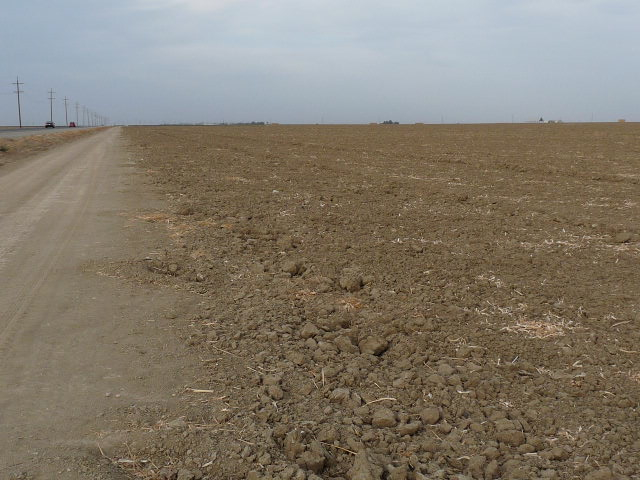
Peltier explained the regulators failed to deliver all of the 5% allocation [née water delivery reduced by 95%] to growers california drought fallow landin the federal water districts south of the Delta. “It’s nonsense,” he reiterated, that part of the insufficient 5% was never delivered this season. “It’s avoidance of the reality that the regulators have constricted the heck out of the water projects and made it so—even in wet years, and like this year, a normal to wet year—we’ve got huge amounts of land out of production,” Peltier said, adding that almond growers in the federal water districts are not getting a late, post-harvest irrigation, which can hurt next year’s production.


¹Inscription on the James Farley Post Office in New York City

2021-05-12T11:05:49-07:00August 19th, 2016|

Air Resources Board to Rein In Cow Flatulence

Public Enemy #1: Cow Flatulence


By Patrick Cavanaugh, Farm News Director


While not a popular or sexy topic of discussion, flatulence is a very natural activity. Who amongst us hasn’t occasionally burped, belched, or otherwise passed a little gas? When guilty of passing waste gases such as hydrogen, carbon dioxide, methane and other trace gases due to the microbial breakdown of foods during digestion, we may say, “Excuse me.”


California CattleBut for dairy cows and other cattle, manners do not suffice; the California Air Resources Board (ARB) has a low tolerance for such naturally occurring and climate-altering gaseousness. The ARB is planning to mandate a 25% reduction in burps and other windy waftage from dairy cows and other cattle, as well as through improved manure management.


Anja Raudabaugh, CEO of the Modesto-based Western United Dairymen (WUD), said, “The ARB wants to regulate cow emissions, even though the ARB’s Short-Lived Climate Pollutant (SLCP) reduction strategy acknowledges that there’s no known way to achieve this reduction. The ARB thinks they have ultimate authority, even over what the legislature has given them: two Senate Bills—SB 32 and SB 1383—to limit the emissions from dairy cows and other cattle.”


“We have a social media campaign addressing the legislative advocacy components,” Raudabaugh explained, “to make the legislatures aware that this authority has not been given to ARB by the legislature, and to bring that into perspective.” Raudabaugh said while SB 32 is not that popular because it calls for raising taxes, SB 1383 is worrisome, “because if anybody wanted to achieve something of a win for the legislature this year with respect to greenhouse gas emissions, this is the only bill left,” she said.


WUD Cattle Flatulence Social Media FB

Cattle Flatulence Social Media (Source: Western United Dairymen Facebook)

Raudabaugh said that in order for the ARB to achieve their mandated 75% reduction in total dairy methane emissions, they are proposing that 600 dairy digesters be put on the methane grid by 2030. According to the ARB’s own analysis that could cost as much as several billion dollars—more than $2 million, on average, for each of California’s remaining 1,400 family dairy farms.


“That is not only expensive, but digesters do not work for every dairy. They can be an option for some, but because of their expense and the reality that not everyone ‘dairies’ the same way, digesters cannot be a mandated solution,” noted Raudabaugh. “All dairy personnel and other interested Californians should contact your state legislature and urge them to veto both bills and not allow the ARB more powers than they actually have.”

2021-05-12T11:17:12-07:00August 17th, 2016|

Winegrape Cultural Practices Go Mechanical

Winegrape Cultural Practices Must Go Mechanical for Sustainability

By Emily McKay Johnson, Associate Editor


Higher wages handed down by the California Legislature are driving California winegrape growers to mechanize many farming operations. Doug Beckgeographic information systems (GIS) specialist and agronomist for Monterey Pacific Incorporated who works with winegrowers in the Salinas Valley, commented, “We don’t have the people; that’s the main problem. We can put bodies out in the field, but we can’t get the work done the way it needs to be done, at the time it needs to be done,” he said.

Mechanical Box Pruning on Winegrapes

Mechanical Box Pruning on Winegrapes


So the industry has no choice but to go mechanical on pruning, leafing as well as harvesting. Beck explained pruning has been tough to mechanize. “We’re basically just trying to do a system that is pruned by a tractor, creating a box head that self-regulates—it sets the amount of crop it needs and grows the size canopy it needs in order to balance that vine, produce good quality grapes and produce enough to be economically viable,” noted Beck.


Economic viability—profit—is critical, according to Beck. “In fact, it is true sustainability. Otherwise we’re not in business,” he said.


Mechanical pruning essentially creates a hedge every year. Beck explained, “Typically we have pruning spurs that have two buds or three buds, a hand space apart, coming off that cordon that we cut by hand. Instead of just having spurs, we let that grow into a box, and the mechanical pruner cuts along the sides and then across the top of the vine in one pass,” Beck explained. “It looks basically like a long box,” he said.


Beck has discovered that mechanical pruning into a box shape on the trellis wires, “works across all varieties we’ve tried. We’re definitely in a cool area for grape production,” Beck said, “so those are the kind of grapes that we’re growing: Pinot Noir, Grenache, Chardonnay, and Pinot Gris, along with some Cabernet.”


Beck said that winegrape vineyards have a lot of vigor in the Salinas Valley. “You also have big crops, which may also require some shoot or crop thinning. You have to come up with other machines to do the rest of the operations that they usually do by hand.”


“The mechanical process appears to be working well because growers are seeing a bump in yield of 30 to 50 percent,” Beck commented, “and they are saving about $1,000 per acre. Economically, it makes a lot of sense.”


“Quality is definitely acceptable. It’s as good as any other trellis system we have out there. Quality comes from vine balance and fruit exposure to light, and that box prune system accomplishes both,” said Beck.

2021-05-12T11:05:49-07:00August 11th, 2016|

Fresno County Agricultural Value Declines in 2015

Fresno County Agricultural Value Declines in 2015

Drought, Lower Commodity Prices and Production Issues Drive Report Down

The Fresno County Department of Agriculture’s 2015 Crop and Livestock Report was presented to the Fresno County Board of Supervisors TODAY.  Overall, agricultural production in Fresno County totaled $6.61 billion, showing a 6.55 percent decrease from 2014’s $7.04 billion.

“The strength of Fresno County’s agricultural industry is based upon the diversity of crops produced.  This year’s report covers nearly 400 commodities, of which, 62 exceed $1 million in value,” said Fresno County Agricultural Commissioner/Sealer of Weights and Measures Les Wright“The lack of a reliable water supply continues to fallow productive land,” Wright continued.

Les Wright Fresno County Ag Commissioner

Les Wright, Fresno County Ag Commissioner

The annual crop report provides a chance to examine changes and trends in crop acreage and yields.  Amounts in the report reflect the gross income values only (income before expenses) and does not reflect net return to producers.

According to the released figures, an increase was seen in vegetable crops (4.95% = $59,025,000). Decreases occurred in field crops (41.99% = $134,995,000), seed crops (30.80% = $10,437,000), fruit and nut crops (6.6% = $229,551,000), nursery products (25.65% = $16,088,000), livestock and poultry (9.44% = $118,769,000), livestock and poultry products (31.38% = $199,769,000), apiary (2.39% = $1,735,000) and industrial crops (54.38% = $3,992,000). 

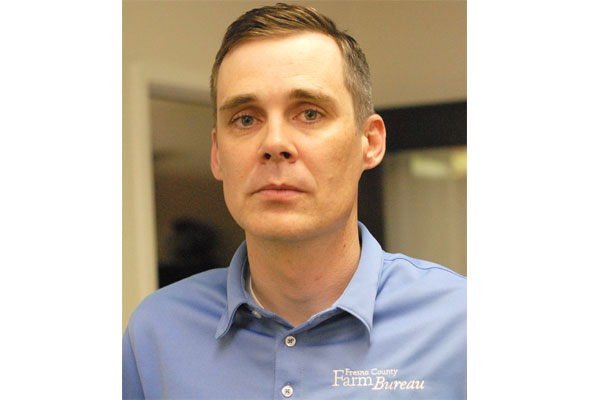
“Every day, millions throughout the world are eating food that originated in Fresno County,” said FCFB CEO Ryan Jacobsen. “The magnitude of this industry does not occur by happenstance. Generation upon generation of agricultural infrastructure has been built to feed an unbelievably productive, wholesome and affordable food supply.

Ryan Jacobsen

Ryan Jacobsen, CEO Fresno County Farm Bureau

“I continue to remind all—eaters; elected officials; local residents who benefit from a healthy, vibrant farm economy; and those whose jobs depend upon agriculture—that we must not take what we have for granted,” continued Jacobsen.  “By not addressing our challenges head-on, whether it be water supply reductions, labor issues, governmental red-tape, etc., we are allowing our economy, our food and our people to wilt away. The direction of the Valley’s agricultural industry explicitly determines the direction of the Valley as a whole.”

One popular component of the report is review of the county’s “Top 10 Crops,” which offers a quick glimpse of the diversity of products grown here. In 2015, these crops accounted for three-fourths of the report’s value.  Added to this year’s list were mandarins (9) and oranges (10).  Mandarin demand continues to push acreage upwards.  Dropping out of the Top 10 was pistachios and cotton.  Pistachio production was significantly reduced last year due to the “blanking” issue that left many shells without nuts, and cotton acreage continues to be depressed due to reduced water supplies and fallowed land.

For a copy of the full crop report, contact FCFB at 559-237-0263 or info@fcfb.org. 
Fresno County Crops 2015
Fresno County Farm Bureau is the county’s largest agricultural advocacy and educational organization, representing members on water, labor, air quality, land use, and major agricultural related issues. Fresno County produces more than 400 commercial crops annually, totaling $6.61 billion in gross production value in 2015.  For Fresno County agricultural information, visit www.fcfb.org.
2021-05-12T11:05:49-07:00August 9th, 2016|

Vigilant Seed Bank Reduction for Weed Control

Vigilant Seed Bank Reduction: Whatever it takes, don’t let weeds set seed.

By Patrick Cavanaugh, Farm News Director


For the past 15 years, Robert Norris, professor emeritus and vegetable crops weed specialist, UC Davis Department of Plant Sciences, has continued to attend Weed Day each year at UC Davis and to contribute weed photography for CalPhotos, a UC Berkeley Digital Library Project photo database of world-wide plants, animals, landscapes, and other natural history subjects developed to provide a testbed of digital images for computer science researchers to study digital image retrieval techniques. Norris was involved with initiating the Plant Protection and Pest Management Graduate Program at UC Davis.


“I’ve been a botanist since I was 14 years old,” Norris said, “and I still have a lot of passion regarding weed control.” Norris has a strong and steady philosophy on weed control and it all comes down to seeds. “The last 25 years of my work, I looked at population dynamics of weeds, like seed longevity in the soil and what we call the size of the seed bank also known as the seed production by weeds. That’s really where I spent most of my time.

Field Bindweed

Field Bindweed


“I found that most people have a very poor idea of how many seeds are produced by a weed. This led me to question some of our current management philosophies; namely, the one that comes out of entomology—the use of thresholds (or how many weeds need to be present before treating them),” noted Norris. “I felt that for weed science, thresholds were not the way to go, and my position has been vindicated by the problems we’ve run into using thresholds.”


Norris offered the example, “Barnyard grasses are probably one of our most serious summer grass weeds. A small plant can produce 100,000 seeds; while a big plant, well over a million. I can remember going put in a tomato field years ago and looking at one barnyard grass plant. Because I had been working with it, I can say that plant probably put out 50,000 seeds. If you spread those seeds around an acre, that’s enough to give you serious yield loss the next year,” Norris explained. “Again, that’s one plant, spread out over an acre. Obviously its seeds wouldn’t spread over an acre [on their own], but with our tillage equipment we would move it around quite a bit.”


“My bottom line for about 30 years now is: Don’t let the weeds set seed. Whatever it takes, don’t let them set seed,” Norris said. If you follow that philosophy, Norris said after a while you drive the seed bank down.


“Many people don’t realize this, but some of our really big growers got on to it a long time ago. One farming operation I worked with for years, J. G. Boswell Co., with most of its land in Kings County. “I knew the manager in the late ’50s, into the ’70s. He now is retired now, but he came to this conclusion himself back in the late ’50s,” Norris said. “I haven’t been on Boswell’s property now for 20 years, because I retired. However, if you go down there, you will not see a weed problem, at least not like most growers.”


“The difficulty really is, in order to carry out this philosophy, you need to use hand labor for weed management and it is becoming less and less easy to find,” explained Norris. “Most weed management is done on a one-year one-crop basis; whereas, the type of management we’re talking about where we’re really thinking seed bank dynamics, has to be done over multiple years. Another big problem that I still see is if you miss one year, you can undo 5 to 10 years of what you’ve just been doing, because of this high seed output,” he said.


NEVER LET ‘EM SET SEED, by Robert Norris, Weed Science Society of America.


2021-05-12T11:05:50-07:00August 8th, 2016|

Mechanical Weeding Would Help Veg Industry

Mechanical Weeding Saves Labor

By Patrick Cavanaugh, Farm News Director

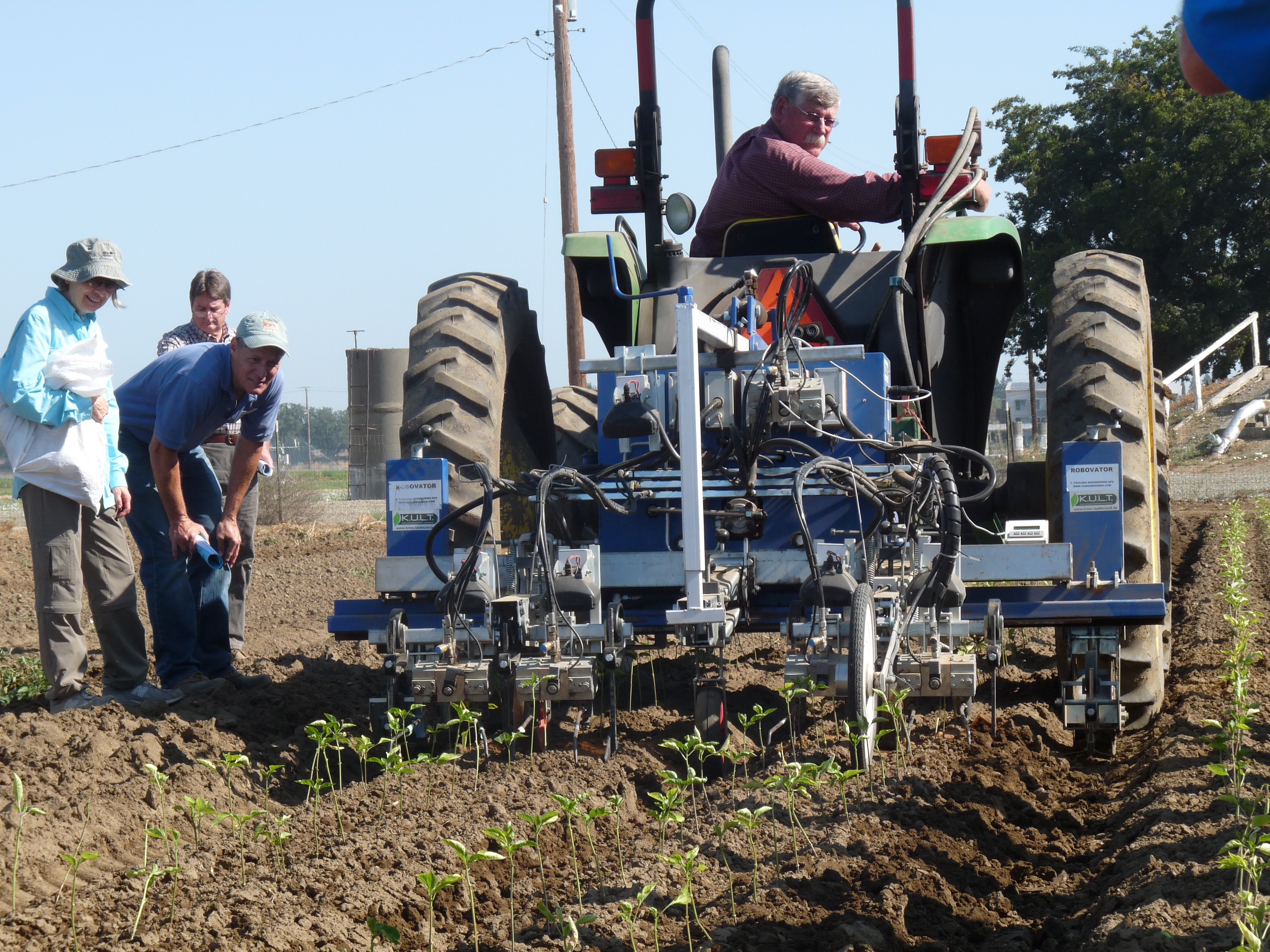
A machine that mechanically removes weeds from the rows of lettuce and other crops and thereby saves costly labor bills, is now commercially available. “The Robovator, made by F. Poulsen Engineering ApS in Denmark, works amazingly well,” said Steve Fennimore, weed specialist, UC Agricultural and Natural Resources Cooperative Extension, SalinasFennimore said companies in Scandinavia have had more incentive to develop labor-saving machines after having faced many major labor shortages, as well as significant restrictions on pesticide use throughout the European Union, including the use of herbicides.

Meanwhile, significant domestic demand for organic tomatoes and tomato sauce makes hand-weeding especially necessary. California fields of tomatoes and lettuce, among other crops, often have lines of workers using hoes to briskly cut away the weeds or thin the crop. “Including thinning, there are three passes of labor in organic lettuce,” said Fennimore.

Steve Fennimore UC Davis Dept. Veg Crops and Weed Science, Salinas 1-1-1

Steve Fennimore researches alternative methods of weed control.

“The Robovator is an intelligent machine with cameras and a computer processor onboard to direct reciprocating knives to open and close,” Fennimore began. “It can follow the pattern in the plant line and the knife mechanism moves sideways (in and out) as it goes down the row. The knives delve generally ¾ inch into the ground, open as they pass a tomato or lettuce plant and close in between to dig up the weed.”

“It worked really well in the lettuce plants,” Fennimore commented, “where you have that 18-inch spacing, double planted on a bed. Everything was going so well in the double-row bed, we told the tractor driver to kick it up a notch and see what we could do—of course, with the grower right there,” Fennimore said. “So he stepped on it and got up to five mph. It was so fast that we could not see the knives move,” he said.

“I don’t think it is totally perfected, but it is commercially good,” said Fennimore. “Of course everything can be improved, but unlike an herbicide— which is a molecule that you cannot alterthis is a machine that can be modified. You can make the knives longer or bend a shoe a little to get better performance, which is nice,” he added.

“If you get the weeds when they are small, such as nightshade, pigweed, or purslane, the machine just pops them right out of the ground, flipping them upside down so their roots are up. In Europe, especially on organic lettuce where they cannot use herbicides, producers typically send in a crew with hoes as often as once per week, and it’s an expensive labor force. Instead, growers are letting the crop grow, coming through with the machine every 7 to 10 days to kill emerging weed flushes and doing a great job,” said Fennimore.

lettuce“So far, we have used the machine on tomatoes, broccoli, lettuce and celery here,” he listed, “and we are starting to look at peppers. And I know that the Europeans have used it in cabbage, onions, and radishes. The machine has done a good job without injuring the plants. With transplanted tomatoes, the plants are much bigger than the cotyledon stage of a weed [before it reaches one inch in height]. So the knives stay open around tomato plants but then close over the weeds, which basically uproots them.”

“You always have to be aware of the safety zone,” Fennimore cautioned. “If the crop is getting bigger and has roots near the surface, the knives need to stay back and you will not get all the weeds. The problem weeds in a halo right around the plant stem are the most difficult and most expensive to get. If you force the knifes in and try to get really close, you will probably not be able to go five mph. You will have to go slower to allow the machine to kick out the weeds near the stem.”

Fennimore mentioned two Poulsen ApS machines are presently in use in California and another mechanical weeding machine made by Steketee IC (intelligent cultivator) from The Netherlands is being tested in the Salinas Valley,” Fennimore noted. Teams are attempting to determine how the machine could be improved for use here, and the machines are becoming available for growers to test.

The biggest crowd that has observed the Poulsen Robovator was at the UC Davis Weed Day in 2015. “We have also been going to individual farms, showing it to farmers and explaining what it does,” said Fennimore. “We brought the machine to a Ventura lettuce farm about a month ago, and a few weeks ago we had it in tomatoes,” he noted.Celery

With tomatoes, we are looking at less than 10,000 plants per acre,” Fennimore said, “so we can go about 5 mph in the tomatoes because the knives do not have to open and close as fast. However, with lettuce, we are looking at maybe 60,000 plants per acre, so you would have to go more slowly, around 1-2 mph in lettuce.”

Even on conventional vegetable farms, hand-hoeing is often done due to the lack of adequate herbicides. “We do not have a good spectrum of coverage,” said Fennimore, “and there are unsolved weed problems that are going to be hard to untangle.”

The development cost of the original machine prototype, the most expensive phase, was $11 to 15 million, as compared to the $250 to 300 million necessary to get an herbicide to label. And since 2010, only four new active herbicide ingredients have been developed worldwide. For lettuce applications, the last new herbicide was introduced about 40 years ago.

Yet another machine in development that Fennimore recently read about is essentially a weed-punch machine with electronics by Deepfield Robotics, a Bosch start-up company in Germany. “These guys drive through the fields, the machine finds the weeds and instantly punches them dead-center into the ground,” he elaborated.

Fennimore considered using such machinery on fields of garlic, onions or spinach that are densely planted, where back and forth knives would not work well. He theorized that machinery that can distinguished the weeds from the crop might work simply by punching the weed down into the soil where it’s not going to thrive. But perfecting this prototype is going very slowly, as it must accommodate a variation of cameras, weeds and crops. Yet, Fennimore expressed optimism, “I see a lot of potential with this type of technology because it can be modified.”

2021-05-12T11:02:59-07:00August 4th, 2016|

Breaking News: The 5 Percenters May Not Receive All of Their Water Allocation

5 Percenters and Endangered Fish May Both Lose 

By Patrick Cavanaugh, Farm News Director


Will the 5 Percenters—the Federal water users in California who were restricted by a 95% water allocation reduction this year—actually receive the promised 5% allocation? This scenario follows a more-than-average winter rainfall and snowfall throughout the state.

Ryan Jacobsenexecutive director and CEO of the Fresno County Farm Bureau, said, “arguably it’s turned out to be much worse. Right now, for the initial 5% allocation to even be questionable right now is just absolutely insane. It all boils down to the amount of water being held up in Lake Shasta for fish purposes, which has put a major stranglehold on what’s happening down here at this point,” noted Jacobsen.

Central Valley Project (CVP) Water

Central Valley Project (CVP) Water

At Shasta Reservoir, a keystone reservoir of the Central Valley Project, the U.S. Bureau of Reclamation essentially discharged flood releases earlier this year just to make room for the water that was expected to come in.  Shasta now stands at a above average full for this time of year, because the Feds are holding all the water for release for salmon later.

This is part of the plan to have cold water available to release for the salmon. And Shasta actually has 30 percent more cold water than what they thought, and water leaders are pushing hard to get the Feds to release it for agriculture.

San Luis Reservoir dead pool

San Luis Reservoir at Dead Pool Status

And San Luis Reservoir is  at a dead-pool status, which insures no more water can be sent south from that reservoirDead pool means no more water can be drawn from San Luis Reservoir, which does not bode well.

Jacobsen said, “This means our federal contractors’ 5% is in question. And that’s the irony: we were looking at such a strong year—or at least an average year [of precipitation]—and ending up now where our meager water supply is in jeopardy. This is incomprehensible and inexcusable from the federal side.”

Shasta has both federal and state water, and the federal side is essentially nothing at this point, explained Jacobsen. “Farmers rely upon San Luis Reservoir water for July and August irrigation, “and the water is essentially gone at this point,” he said. “It just shows you the major mismanagement we’re seeing from the federal side and the inability to capture water even when it is available, and not at the demise of any of these species.”

Jacobsen reiterated, “Back when the precipitation was falling [last winter], water was available at some extraordinarily high levels; yet, we never saw the increase in pumping that we would have expected under the normal conditions. “Of course, we’ve seen less pumping this year for the farmers and the cities south of the Delta,” noted Jacobsen. “During the times of the rainfall this year, it was essentially excuse, after excuse, after excuse. Some newer excuses pertained to why the pumps were not operating or operating at a very reduced capacity,” explained Jacobsen.

“The situation has been frustrating for a couple of years, but the anger continues to build because right now, this is not a ‘Mother Nature’ issue. It is completely a man-made regulatory drought that is, again, just incompetency at its best.”

“When we talk about the water stored behind Shasta [Dam] right now, really it is for the fish,” noted Jacobsen. “The most-watched fishery, at this point, is the salmon fishery. We’re in year four of this drought, but when it comes to the critical side of fish, the salmon essentially operates in three-year cycles. The last two years have been arguably two of the worst years on record for them, and this potential third year is a kind of make-it-or-break-it for salmon fisheries in the Delta region.”

Unfortunately, per Jacobsen, many decisions have been based on guesstimates. “There are a lot of folks who think we need to reserve all of this cold water for a fishery that may or may not be responding to what has been done in the past for this [contracted irrigation] water that has been given up for those purposes,” Jacobsen explained. “Right now, I think we’re doing a lot of experiments at the cost of jobs and employment, and most importantly, the farms here in the San Joaquin Valley. The frustration is that science is really not playing a big part in it. A lot of decisions are just simply, ‘We think we should be doing this versus what the science actually says we should be doing.’”

Jacobsen’s leading frustration is that all that water taken from farmers and given to fish has not helped the fish at all. In fact, the smelt and salmon numbers continue to decline. “I talk about growing frustration and anger from so many folks in the last couple of years… specifically because it hasn’t made a difference,” said Jacobsen. “An exorbitant amount of water has been given up for these fisheries, [endangered fish populations] continue to decline and crash, and as we’ve been saying for years, it is beyond time to look at just the water exporters,” he added.

Jacobsen maintains other stressors should be seriously investigated. “Many other issues taken place in the Delta should be pulled into play here, but again the regulators and the environmentalists continue to look only at the exporters as the sole issue for fish decline. There are so many other factors out there that need to be looked at,” he said.


Highly recommenced reading: “We are the 5 percenters, stretching our water supplies to get by,” by Joe Del BosqueContributing writer, The Orange County Register, July 14, 2016.

2021-05-12T11:05:50-07:00August 3rd, 2016|

Duarte Nursery v. U.S. Army Corps of Engineers Update

PLF Attorney Reports Duarte Appeals Court Decision—Once Again

By Patrick Cavanaugh, Farm News Director


Damien Schiff, principal attorney at Pacific Legal Foundation (PLF) who has been representing the Duarte family in their legal battle with the U. S. Army Corps of Engineers (Corps), provided this update after Judge Kimberly J. Mueller, U.S. District Court for the Eastern District of California dismissed their summary judgment motions on June 10, 2016, and ruled the Corps’ February 23, 2013 cease and desist order did not deprive Duarte of liberty or property. Schiff said his client’s next course of action is filing for an appeal of the judgment.

“It’s disappointing, in particular, because earlier in the case, we had received a very favorable decision from U.S. District Judge Lawrence K. Karlton, the original Federal Judge assigned to our case who ruled in our favor on our due process challenge to the Army Corps’ cease and desist order.” Judge Karlton retired from the bench in 2014 and passed away in 2015. “It was particularly disappointing to see Judge Mueller reverse Judge Karlton’s decision.”

“Launching the appeals process will take some time,” Schiff explained. “Unfortunately, the case is complicated because there are a lot of claims going on and not all of them have been resolved by Judge Mueller’s decisions. The general rule in Federal Court is that you cannot appeal until a final decision has been made that decides all the claims against all the parties.”

Damien M. Schiff

Damien M. Schiff, Principal Attorney, Pacific Legal Foundation’s National Litigation Center

Considering the preponderance of hills and valleys across the United States, the magnitude of this case has growers—not just from California, but nationwide—concerned about the outcome and precedents resulting from this case, as well as the significance of future Army Corps-issued cease and assist orders.  “It is an amazing assertion of power by the United States Environmental Protection Agency (EPA) and the Corps,” Schiff said, “and I think that’s why we see not just farming groups and property rights groups, but also a majority of the states, challenging the Agency’s Waters of the U.S. (WOTUS) Rule.”

EPA Fact Sheet Clean Water Rule_Page_1A significant point of contention in the case, Schiff explained, stems from Judge Mueller’s ruling that because the Duarte property had not seen any farming activity since 1998, the Clean Water Act’s farming exemption was no longer applicable. “That’s, in part, why we challenged the cease and assist orders,” said Schiff, “because the Corps issued this directive without giving any prior notice, much less any opportunity to present contrary information. The reality is, this property, and the other properties in the entire area, have traditionally been used for agriculture, and are, in fact, zoned for agricultural use.” EPA Fact Sheet Clean Water Rule_Page_2

The Duarte case is so multifaceted,” Schiff said. “The land was always agricultural, and what was done on the property is consistent with normal agricultural farming practices; there is really nothing exceptional about what went on. What’s particularly problematic for the Corps here is that Duarte went above and beyond the call of duty by having a wetlands consultant ensure that all of the areas assessed to have vernal pool or wetlands characteristics were marked and avoided entirely.”

Whatever the outcome, the Duarte case will have far reaching effects on legal precedent throughout the agricultural community as well as on the cease and assist orders issued by the Army Corps to families throughout the country. “Surprisingly, there isn’t very much case law on what process, if any, is owed to the landowner before the agency issues these orders,” Schiff remarked. “However the Duarte case ends up, I think that will have to be litigated in other parts of the country.”

2021-05-12T11:05:50-07:00August 2nd, 2016|
Go to Top