Climate

Justification for Reclamation’s 5 Percent Allocation

Justification for Reclamation’s 5 Percent Allocation


Following the stunning announcement by the Bureau of Reclamation (USBR) on Friday, April 1, 2016, of a 5 percent water allocation for Federal water users south of the Delta, Patrick Cavanaugh, deputy editor with California Ag Today interviewed Louis Moore, deputy public affairs officer with the Bureau of Reclamation (Reclamation) Mid-Pacific Region based in Sacramento regarding justification for the low allocation for the Central Valley during this El Niño year.

Cavanaugh: We are all stunned in Central California with that 5 percent water allocation to Central Valley Project water users. With so much hydrology in terms of rain and snow this winter, it seems impossible that farmers and cities could only expect 5 percent!

California Orchard Removal

California Orchard Removal

Moore: Yes, understood. I will try to explain what our logic is behind the 5 percent allocation.

Cavanaugh: Yes, I would like just one reason for the 5 percent. We cannot imagine why so much water is going to waste.

Moore: So basically when we looked at the hydrologic conditions in preparation to make the allocation announcement, we found that regionally, water has fallen differently in the various basins. There was substantially more rain and snow in the mountains in the Oroville and Shasta Dam areas that caused those reservoirs to increase storage quite rapidly. Over at the New Melones Reservoir, which provides water to the south, the storm systems did not materialize and did not produce large sums of runoff; therefore the reservoir storage is low.

Cavanaugh: But the snow that could fill New Melones has not yet melted. And, as you said, there is a lot of water in northern California, and there is a system to get it southward to farms and cities.

Moore: So this is the initial allocation that is out today. We are hopeful that conditions will improve; and if they do so, we can make an adjustment to what the allocation is.

Central Valley Project USBR

Central Valley Project (Source: USBR)

Cavanaugh: You did not mention San Luis Reservoir, a major reservoir jointly run by the state and federal governments that could have had more water pumped into it during the recent high flows, particularly given the flood releases from northern California.

Moore: Water is being pumped into San Luis, and it is for a combination of reasons. Sometimes the natural runoff causes different flows into the systems, but we have to regulate the water that goes through the Delta. San Luis is a shared Federal and State reservoir with legal criteria under which we operate. So we have to be very careful about what waters we can push through the Delta. But we were still providing water to that system.

Cavanaugh: Well, Louis, clearly more water should have pumped into the San Luis Reservoir. On April 2, it was only 52 percent full and, given the flood releases, it should have been more. Californians on farms and cities south of the Delta are frustrated. They assert that far too much water is wastefully flowing out to the ocean—way more than necessary for the protection of species and the prevention of salt-water intrusion. Please explain why so much fresh water, nearly 800,000 acre-feet have flowed out to sea.

Moore: We operate to meet endangered species requirements. We operated to meet water delivery requirements through these various systems. These are federal/state requirements and biological opinion that we are operating to. We are trying to make sure we are following the law, so there are combinations of things where Reclamation works with its partners to determine where and how to get the water where it needs to be.

Cavanaugh: Inflows into the Delta were as high as 300,000 acre-feet of water per day, and only a fraction of that has been moved into San Luis with a capacity of 2 million acre-feet. We understand why San Luis is not filled during drought years; but in an El Niño year like this, it’s confounding how Reclamation could justify an initial 5 percent allocation. It defies any logic, all the water, all the flood releases and the 95 percent on-average snow in the Sierras. Again, how can it possibly be justified?

Moore: What I can say is there is absolute consideration and we understand the impact this has on our customers. One of the reasons we waited until April 1 to make this allocation announcement is because we have been hopeful. We have been looking at the storage, snow and runoff to see if conditions improved enough, so we could actually increase what we thought was going to be a worse allocation.

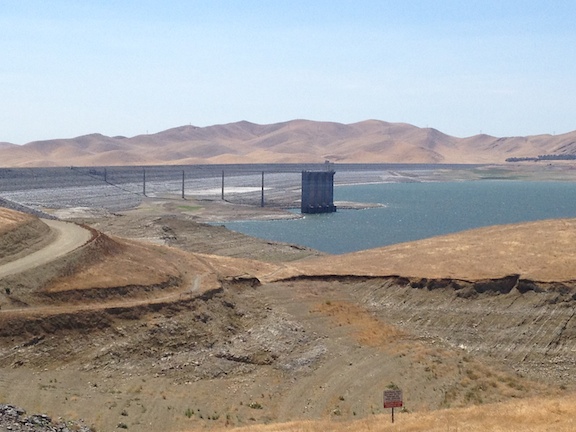
3-28-16-reservoir_conditionsCavanaugh: Well, it’s laughableonly 5 percent for San Luis, with all the water in the system from the El Niño year! You’re still not answering the question. None of this makes sense to anyone who is a critical thinker. Can you please explain, other than preventing salt-water intrusion and protecting species, why so much more water—over the topwas sent out?

Moore: We are still coming out of the fourth year of dry conditions and that’s not news for folks. The dry conditions that we came through up until the fall of 2015 really impacted our ability to move water downstream into San Luis, which is the same water that can be provided to folks south of the Delta.

We completely understand that, but we are talking about timing of the water supply that we received. Of the additional 4.4 million acre-feet of water that we received over the past several months, 2 million-acre feet occurred in March, which was late [for purposes of allocation analyses]. So we are just getting the sum of this water into our system. And we are still hopeful that [these late hydrology] conditions will improve and we can provide additional water.

Cavanaugh: We know that Fresno received 135 percent of normal rainfall this year; it was wet throughout the area. Five percent was stunning to all of us. We know that farmers will never see 100 percent any longer. And possibly we will never see 80 percent any longer. I mean we could have record flooding throughout the state and farmers may not see a 50 percent allocation—even if the Delta Smelt were proven, unfortunately, to be extinct.

Moore: Yeah, I do hear you. But there is a lot of work that goes into developing water deliveries and a lot of coordination as well. I am not blaming it on the laws, but when we sit down at the table with all the interests for water, it literally becomes a discussion on how to distribute the water and meet all that demand. Now we come to these agreements to meet the legal obligations, to meet the contractual obligations and to protect the environment. So this requires a lot of effort.

Cavanaugh: Louis, I do not get what you are saying. In fact, I disagree with what you are saying. The family farming interest got a zero allocation two years in a row, but the environment still got all the water they wanted. So Reclamation is not sitting down with all the interests for water. The environment gets 100 percent of what they need while everyone else get far less—including zero two years in a row—and now only 5 percent.

Drought Monitor March 29, 2016

Drought Monitor March 29, 2016 (Source: The National Drought Mitigation Center)

Moore: That’s part of the legal requirement that we have talked about. It’s absolutely one of entities at the table that has to be managed.

Cavanaugh: Does the Bureau of Reclamation understand that all this water being used for the environment has not really helped the protected species in the Delta? The species continue to decline despite farmers going without water, fallowing land, and laying off workers, and in spite of devastating communities and severely hurting the economy in the Central Valley.

Moore: You know, I hear you. This is a discussion that I absolutely understand. It’s going to take a lot of folks coming to the table and a lot of discussion to change policy, to change the law and to introduce new ideas on how this works. Those are the things that have to happen

Cavanaugh: Can you help us make this happen?

Moore: You know, this is an ongoing discussion, I assure you. You probably see all the legislative reporting that’s done about water management. It is these discussions that somehow need to culminate into the change that you are mentioning.

2016-05-31T19:24:08-07:00April 4th, 2016|

Westlands Water Allocation “Despicable”

Westlands Water Allocation “Despicable”

By Patrick Cavanaugh, Deputy Editor

Earlier TODAY, the United States Bureau of Reclamation (USBR) stunned the farming industry by announcing a  5% water allocation for most of the farmland to the Westlands Water District on the Westside in the Central San Joaquin Valley. This single digit water allocation to the comes during an El Niño year of wet weather, following four years of drought and restricted water deliveries to Westlands of 40% in 2012, 20% (2013), 0% (2014) and 0% again (2015).

Westlands Water District LogoLes Wright, agriculture commissioner for the Fresno County Department of Agriculture—ground zero for agricultural water cutbacks, said, “I can’t think of a word to describe how I am feeling about our federal water managers. It’s despicable what they’re doing to this Valley.”

“You have two major reservoirs in flood stage,” said Wright, “but they are refusing to turn the pumps on. It’s like they want to starve out the Valley, its farmers and communities. Agriculture is the major economic driver for the Valley communities, and they’re doing everything they can to drive the people out of this Valley.”

Established in 1902, the USBR, according to its website, is best known for the building of more than 600 dams and reservoirs, plus power plants and canals, constructed in 17 western states. These water projects led to homesteading and promoted the economic development of the West. 
Sign of drought Westlands Water District Turnout

The USBR website reads, “Today, we are the largest wholesaler of water in the country. We bring water to more than 31 million people, and provide one out of five Western farmers (140,000) with irrigation water for 10 million acres of farmland that produce 60% of the nation’s vegetables and 25% of its fruits and nuts.”

Yet, some Western farmers have received a 0% water allocation for each of the past two years, and now may receive only 5% this year. Already, Westlands Water District reports over 200,000 acres of prime farmland in the district have already been fallowed.

Ryan Jacobsen, Fresno County Farm Bureau CEO

Ryan Jacobsen, Fresno County Farm Bureau CEO

“Reservoirs throughout the state have been filling,” said Fresno County Farm Bureau CEO, Ryan Jacobsen, in a statement TODAY. “However, the government’s restrictive interpretation has resulted in the permanent loss of 789,000 acre-feet of water,” said Jacobsen. “Since December 2015, more than 200 billion gallons of water have been forever lost to the ocean, with almost no water being allocated to agriculture.”

Commissioner Wright reflected, “President Obama and both California senators have been here in the Valley, on the ground. They have seen what we are doing. They recognize the crisis; yet they refuse to use their authorities to correct the situationin a year when we’re dumping millions of gallons of water to the ocean.”

Wright explained the federal government is sending fresh water to the ocean in excess of what is needed for the environment and the protected species. “They are just wasting the water,” he said, “and yet, we have the Governor telling us to cut back 25% to 35%. And all of that water we saved last summer and in the last year, they have more than doubled the waste.”

“Where is the governor on this issue?” Wright asked. “It is despicable what the government is doing to its people.”

2016-05-31T19:24:08-07:00April 1st, 2016|

Mario Santoyo: Recent Temperance Flat Dam Memo is Misleading

Mario Santoyo: Recent Temperance Flat Dam Memo is Misleading

By Patrick Cavanaugh, Deputy Editor


A recent memo to the City of Hanford, issued by the Townsend Public Affairs office in Washington D.C., stating the Temperance Flat Dam proposal may not be eligible to receive Proposition 1 funds, was deemed “misleading” according to Mario Santoyo, executive director of the 11-member board of the Joint Powers of Authority that oversees the proposed Temperance Flat Dam.

The U.S. Department of the Interior Bureau of Land Management’s 2014 decision to recommend designation of an 8 mile segment of the San Joaquin River (accompanied by a restricted-use river corridor extending 0.25 miles from the edge of the identified river segment) that falls in the footprint of Temperance Flat as a “National Wild and Scenic River,” has been a concern for awhile, noted Santoyo. “This memo is very misleading,” he said. “It has nothing to do with state bond funding”—California’s Proposition 1 (Prop 1), the legislatively-referred Water Bond (Assembly Bill 1471), passed by state voters on the November 4, 2014 ballot.

USBR Temperance Flat Dam and Reservoir

Temperance Flat Dam and Reservoir (Source: USBR, “Managing Water in the West: Alternative Water Management and Delivery,” 2014)

“But if the [recommended] designation stays in place,” Santoyo continued, “it would prevent us from building Temperance Flat with any funding. Whether with state funding, federal funding or Prop. 1 funding, it does not get builtperiod,” Santoyo said.

“To be eligible for Prop 1 funding, you have to have a feasibility report,” said Santoyo. “In other words, the federal government has to determine if the project is feasible under Prop. 1 money.” However, doing the feasibility report is part of doing the environmental paperwork. And, if at the end something changes on the conditions that were originally evaluated, then the project could be determined unfeasible.”

“But none of this has happened,” emphasized Santoyo, as the recommendation of this San Joaquin River segment to be designated National Wild and Scenic River has not yet been legislatively authorized. “We are perfectly aware of that hurdle. The designation is one of many things that we have to deal with.”

Santoyo said there would be a discussion this week with the regional director of the Bureau of Reclamation to talk about the Scenic River designation, the National Environmental Policy Act (NEPA), and the California Environmental Quality Act (CEQA), as well as technical partnership. “There are a series of things that need to happen to keep advancing the ball,” Santoyo said.

And even though the proposed Sites Reservoir is not subject to the Scenic River designation, it has not passed the feasibility study. “So it even has its challenges,” said Santoyo.

“All the projects have big challenges, but the question is: Do you keep moving forward regardless of how hard the issues are or do you just fold the first time you hit a bump? We are not folding; we are moving forward,” Santoyo said. “Either we shoot hard for currently available options or we shut down and do nothing. Why go through 10 years’ worth of effort to give us this opportunity and not take a shot?” he asked.

Editor’s Note:  Several calls to James Peterson, director of the Townsend Public Affairs federal office were not returned.

2016-05-31T19:24:08-07:00March 31st, 2016|

Feinstein Urges President to Increase Delta Pumping

Feinstein Calls on President to Direct Federal Agencies to Increase Delta Pumping


Washington—Senator Dianne Feinstein (D-Calif.) TODAY called on President Obama to direct federal agencies “to maximize pumping in the Sacramento-San Joaquin Delta to the maximum extent allowed under the Endangered Species Act and biological opinions.”

Feinstein wrote in her letter to the president: “I believe that this year’s El Niño has highlighted a fundamental problem with our water system: A dogmatic adherence to a rigid set of operating criteria that continues to handcuff our ability to rebuild our reserves. We need a more nimble system. That’s why I included $150 million the past two years in the Energy and Water budget—so that decisions would be based on real-time data, rather than relying on intuition.”

Full text of the letter follows:

March 24, 2016

The Honorable Barack Obama
The White House
1600 Pennsylvania Avenue, N.W.
Washington, D.C. 20500

Dear Mr. President:

I ask you to direct the Bureau of Reclamation, Fish and Wildlife Service, and National Marine Fisheries Service to maximize pumping in the Sacramento-San Joaquin Delta to the maximum extent allowed under the Endangered Species Act and biological opinions. Water flows in the Sacramento River are the highest they have been in four years. Just last week, flows in the Sacramento were as high as 76,000 cubic feet per second. We’ve only seen flows that high twice in the past ten years, and not once during this drought. Yet the Bureau of Reclamation and Fish and Wildlife Service are now considering reducing pumping due to concerns about larval smelt.

Despite these high flows, rather than pumping as much water as possible without undue harm to the smelt, pumping levels remained constant for the past month (see Chart B). Coupled with the fact that only three individual smelt were caught at the pumps this year, and that the most recent trawls revealed no Delta smelt in the south Delta, it seems to me that the agencies operate the system in a manner that may be contrary to the available data, culled from what is already a limited monitoring regime. I understand that the biological opinions impose a ceiling of -5,000 cubic feet per second, but the agencies have the discretion to exercise at least some flexibility to pump above that level.

To put this all in context, between January 1 and March 6 last year, 1.5 million acre-feet of water flowed through the Delta and 745,000 acre-feet were pumped out. During the same period this year, 5.5 million acre-feet of water flowed through the Delta, but only 852,000 acre-feet were pumped out (see Chart A). If we can’t increase pumping during an El Niño year, then when else can we?

The agencies have also put California and the communities that depend on this water in a Catch-22: Pumping is reduced when there are concerns about the presence of smelt caught as far away as 17 miles from the pumps. Yet agencies will also reduce pumping due to the absence of smelt, based on the idea that historically low smelt populations make detection difficult.

I believe that this year’s El Niño has highlighted a fundamental problem with our water system: A dogmatic adherence to a rigid set of operating criteria that continues to handcuff our ability to rebuild our reserves. We need a more nimble system. That’s why I included $150 million the past two years in the Energy and Water budget—so that decisions would be based on real-time data, rather than relying on intuition.

There are real-world consequences to the decisions being made in the Delta. 69 communities in the Southern San Joaquin Valley reported significant water supply and quality issues. And land is caving, bridges collapsing, as a result of overdrawn ground wells and subsidence. That’s why we need to make sure we’re using every possible tool to make the right choices. Basing pumping decisions on better science and real-time monitoring is the least we can do.

Sincerely,

Dianne Feinstein
United States Senator

###
2016-05-31T19:24:09-07:00March 24th, 2016|

Duarte Farmland Under Siege

Duarte Farmland Under Seige By Army Corps of Engineers

By Brian German, Associate Editor

The Duarte family has been in a lengthy court battle with the federal government regarding the right to farm their own property.

John Duarte, a fourth generation California farmer and president of the family-owned nursery in Hughson, commented on how this dispute began, “My family owns a piece of property up in Tehama County that we purchased in 2012 and planted wheat that fall. The property is in some slightly rolling grasslands, and has some minor wetlands on it, vernal pools, vernal swales. Like most grasslands, wheat areas and wheat plantings, we had a local contractor go out and plow the field for us, 4-7 inches deep, and we flew on some wheat seed for a winter wheat crop in 2012.

“The U.S. Army Corp of Engineers called us and told us we were deep-ripping the property. I think they were under the misunderstanding that we were getting ready to plant orchards or vineyards there. They looked at it and assumed we were deep-ripping, three feet deep, which we were not,” Duarte said.

“They sent us a cease and desist notice in early 2013, then refused to tell us what their evidence was or how they had drawn their conclusion that we were deep-ripping. We sent two letters from an attorney, under the Freedom of Information Act, requesting evidence we had deep-ripped, the assumption that apparently warranting a cease and desist notice.”

“They refused to answer the first letter. They kicked the matter up to enforcement and then sustained the cease-and-desist notice without ever giving us a hearing and without ever giving us specific cause for their action. They obstructed our farming operations indefinitely,” Duarte noted.

As their request for the evidePacific Legal Foundationnce against them continued to be ignored, Duarte said, “We went to the Pacific Legal Foundation, where they filed a due process suit against the Army Corps of Engineers on behalf of a farmer’s right to farm their ground. The Army Corps of Engineers now claims that our 4-7 inch tillage through ground that has been tilled 18-24 inches in the past destroyed wetlands.”
“They are making extremely spurious claims that the small plowing furrows through some of the minor vernal pools are now mini mountain ranges and the valleys of those furrows are still wetlands. But the top of the furrow, maybe five inches higher than the bottom of the valley, is now a converted upland and therefore we have destroyed wetlands across the property and are subject to a destruction of wetlands lawsuit filed by the Army Corps of Engineers against Duarte Nursery.”

Nevertheless, Duarte doesn’t think this was strictly in the interest of habitat preservation, “We believe this lawsuit is completely vindictive and retaliatory because we are challenging the Army Corps of Engineers’ ability to simply drive by farms and send cease and desist notices to farmers for very little cause, and then refuse to give any information as to what their cause for the cease-and-desist notice was.”

Duarte believes the lawsuit filed by the Army Corp of Engineers is a somewhat arbitrary enforcement of wetland destruction laws, “Lately, under the new WOTUS Rule, federal administrations [designate that] everything we farm as a wetland. We’ve had experts on both sides out in the field. Everyone agrees that wetlands are still there; the wetlands are still the same size; the wetlands have the same hydrology; the wetlands still have the same pocket water when it rains; the wetlands still have wetland vegetation; the wetlands are all still there by all the parameters one would measure a wetland’s presence by.”

Duarte noted where they are in the process, and why they chose to standup for their rights, “We filed motions for summary judgement, had a motion for summary judgement hearing back in, I think it was early December, we are waiting for the judges rulings on those, so we can proceed to trial on any unsettled matters in the case. We see these types of things happening to our customers all over the state, and that is one reason we wanted to bring this suit. We’re willing to bring this suit and defend our customers, our growers’ ability to take our products and farm their land. Duarte Nursery cannot exist without our growers being able to farm.”

This situation has come at a heavy price for the Duarte family. “This has cost our company over $1 million just to stand up for everyone’s right to farm their property. In a number of important ways, there is a noose tightening around the neck of agriculture everyday, and unless we stand up and fight back, in the courts, where it is appropriate, we are going to lose our ability to farm without federal government permission to do so,” Duarte said.

________________________________

Links:

Duarte Nursery

Pacific Legal Foundation

U.S. Army Corp of Engineers

2016-07-23T17:25:28-07:00March 11th, 2016|

Water Regulators Operate in Silos

State Senator Cannella Says Water Regulators Operate in Silos

By Laurie Greene Editor

California State Senator Anthony Cannella, (R-Ceres), who represents District 12, the Westside of the Central San Joaquin Valley from Modesto to Coalinga, knows how growers must feel about so much fresh water from recent rain and early snowmelt flowing out to the ocean instead of being stored for future use. Cannella, who is currently serving as vice chairman of the Agriculture Committee said, “Obviously growers are out there; they have their life savings out there; they have been relying on water from the State Water Project or they have been relying on reservoirs; and the state has been taking more and more of their water due to ESA restrictions.”

“If farmers do not have surface water again this year,’ he continued, “they are going to pump from the groundwater. But state and federal officials do not see the connection that no surface water means more groundwater pumping. It would be much more sustainable if farmers could receive more surface water instead of having it flow out to the ocean.”

Cannella said, “Water regulators operate in silos. On one hand, they say groundwater has to be at an equilibrium; and, on the other hand, they say that they cannot pump much fresh water into reservoirs. They don’t combine the two; they don’t connect the two; and I think that is wrong.”

“If you are going to regulate or take away surface storage, there will be an impact on groundwater,” explained Cannella. “But the state does not operate that way, and that is why we are having the problem we are having,” he said.

2016-05-31T19:24:11-07:00February 22nd, 2016|

Interior Assesses California Water

U.S. Department of Interior’s Tom Iseman Assesses California Water

Tom Iseman, deputy assistant secretary for water and science at the U.S. Department of the Interior, in an exclusive interview with California Ag Today’s farm news director, Patrick Cavanaugh, assessed how California is faring given the drought.

Cavanaugh:  I see you as someone who focuses on not just solutions but also the issues and tragedies caused by the extended drought in California. From your perspective, how is California doing and how could things be better?

Iseman:         First of all, I think California is obviously on the leading edge for a lot of reasons, but the state is in the midst of an extended drought. So it is really forcing us to be smarter about how we address these water scarcity challenges. I have been very impressed with the way we have been able to really work together—the Bureau of Reclamation working with the state, the water users and the conservation groups—to think about how we can stretch our limited water supplies to meet these different purposes.

Tom Iseman, deputy assistant secretary, U.S. Department of the Interior

Tom Iseman, deputy assistant secretary, U.S. Department of the Interior (Source: https://www.linkedin.com/in/tom-iseman-3354aa7)

Cavanaugh:  Obviously the country is not able to build another Hoover Dam, but does the Interior understand that we need more storage in California for the rainy days?

Iseman:         Absolutely. There are different ways to do it, so we are looking at a number of projects. One is raising Shasta Dam; one is a new reservoir possibly on the upper San Joaquin River (Temperance Flats); and Sites Reservoir.

Cavanaugh:  But those projects are a long way off, and they may never be built. What can California do now to increase its water portfolio?

Iseman:         There are smarter ways we can build smaller-scale storage and new ways to operate our facilities to stretch water supplies to our advantage.

Cavanaugh:  Could you talk about how we can use water differently? Desal is more expensive water, but water needs to be more expensive. When water gets more expensive, people conserve more, right? Talk about your vision of desal in America, particularly in California.

Iseman:         Generally, clean water technology is a big part of what we need to be doing. It is not just building new storage; it’s being smarter with what we have. So, technology is a great way to do that. We have desalination, water recycling and water reuse. Having these options creates an opportunity for more partnerships. So now you can have cities recycling their water and sending their water supply to agricultural water users—a win-win situation. The city gets some revenue and deals with its wastewater, and agricultural water users get a new supply. That is the way we should be thinking—about the possible partnerships to take advantage of these options.

Cavanaugh:  People building desal plants in cities like Santa Barbara, mothballed the plants when the rains came. We need to make desal part of the culture of these cities located on the ocean. I mean, does the Department of the Interior see that as a rational thing to do?

Iseman:         It’s interesting. Obviously it has been done in other places, and they have invested quite a bit of money here in California. It comes down to economics; we don’t make the decision about whether a city builds or doesn’t build a desal plant, but it is part of the water supply list, potentially.

The challenges with desal is just the cost right now and how much energy and waste it can produce. And they are comparing that to the other options out there. Are there other technologies out there that we can use? Are there water markets or water rights I can acquire? Is there potential for new storage? I think the cost will help sort that out.

The part that cost doesn’t address in some ways—and it can be built in—is the uncertainty. One thing, I think, about a desal plant that people like is that you know there is going to be a water supply if you are on the ocean. And if you have the money and can generate the energy, you can get the water. As you see more uncertainty in our climate and in our existing water supplies, that would be one argument in favor of desal.

Cavanaugh:  It is stable.

Iseman:         Yes, and we need reliability.

Cavanaugh:  Well, you talked about the cost and the economics, but we all need to pay more for water, and I’d be the first one. It would make everyone conserve more, right?

Iseman:         Absolutely.

Cavanaugh:  Maybe, raise the cost of water $10 a bill?

Iseman:         Well, I’m not going to say we are going to raise people’s water rates, but if you talk to the industry and look at the future of the industry, a lot of people say, ‘People need to pay more for water.’ That is how you get the investments.

The federal budget is constrained; they are not going to be there when we are going out and building Hoover Dam in ten years. We just don’t have that kind of resources anymore. So the question is, how do you get more revenue stream in to help contribute to the cost of those investments? And that goes back to rates. And at some point, we will have to decide how much we pay for water and how much we value our water.

Cavanaugh:  Thanks for being aware of all this. Are you encouraged we will find solutions?

Iseman:         We talk about California everyday; we are all very aware of the things that are happening. But I really gained an appreciation of the innovation, the energy and the cooperation of people here—the commitment they have in dealing with these issues. I was glad to be a part of it.

_____________________________

Link:

U.S. Department of the Interior

2016-05-31T19:24:12-07:00February 19th, 2016|

LA Included in Water Priorities Act

CaWater4All-Proposed Water Priorities Act Includes Los Angeles

By Patrick Cavanaugh, Deputy Editor

The Water Priorities Constitutional Amendment and Bond Act is good for all of California—people, farms and the environment. Should the required 565,880 petition signatures necessary for inclusion on the November 2016 ballot be collected by the April 26, 2016 deadline, and should the Water Priorities Act receive a majority of affirmative votes in November, it will provide big benefits to cities such as Los Angeles.

“The availability of regional water projects is massive for our urban centers,” stated Aubrey Bettencourt, executive director of the California Water Alliance, the ballot initiative’s sponsor. “The ability for urban centers to create water in their own regions and become less dependent on other parts of the water system, actually helps the other regions in the system as well.”
CaliforniaWater4All

The proposed water priorities act creates flexibility all around. Bettencourt explained, “Consider that the Los Angeles (LA) River loses as much water in an average storm event as the water supply for 180,000 homes annually—in one storm! In an average normal water year, Los Angeles loses the equivalent of the Shasta Reservoir in stormwater runoff, and they are under state and federal mandates to capture that water, recycle it and put it back in their water supply. This helps clean up their beaches and ocean water, which would otherwise end up with a lot of pollution through runoff,” she said.

“This ballot measure would increase their regional water supply by capturing and injecting stormwater runoff back into their groundwater supply. That would providing flexibility and reliability to the water supply for Southern California, but also affordability, which is such a key part of this effort,” Bettencourt noted.

“And Governor Brown just extended the drought cut mandates through the end of October of this year, and a lot of communities are conserving and conserving,” she said.”They are conserving so much that they using less; and, now they have to pay more because they are using less. So they are using less water, paying more for it, and still being punished. And that should not have to happen if we have a system big enough to supply all of our diverse water needs: agricultural, urban and environmental.”

Bettencourt noted, “The system hasn’t been updated since the late ’60’s-early ’70’s, in terms of some of our large-scale infrastructure. And you have to remember, our population was half the size it is today, and we didn’t have the same type of demand on that system that we do today,” she emphasized.

“Currently, we allocate 50% of our surface water to environmental protection. That is not wrong; but what is wrong is that we didn’t expand the system enough to take care of that allocation and our people. That is what this water ballot initiative is aiming to provide:  to increase our infrastructure to meet the demands of the 21st century,” said Bettencourt.

_____________________________

Links:

California Water Alliance Initiative Fund

California Water Alliance

2016-05-31T19:24:12-07:00February 18th, 2016|

EPA on Agriculture, Part 2

Ron Carleton, EPA on Agriculture, Part 2

By Laurie Greene, Editor

Editor’s note: In an exclusive interview with Ron Carleton, EPA Counselor to the Administrator for Agricultural Policy, we asked how the EPA views agriculture.

“Look, we want to work with agriculture,” said Ron Carleton, former deputy commissioner for the Colorado Department of Agriculture. “We have a number of issues and challenges we face across the country with water quality and other things. The thing that we often talk about is the adoption and implementation of conservation measures and best practices, and our producers are doing that,” he noted.

“Farmers are taking those very important steps,” explained Carleton, “to help get us from here to there. EPA Administrator Gina McCarthy is very committed to working with agriculture, to have that dialogue, to have that discussion, to have those two-way communications. So, hopefully, we can work better together as we go forward and find those opportunities to collaborate and to partner. That is so key, and something that I strongly am committed to and strongly support.”

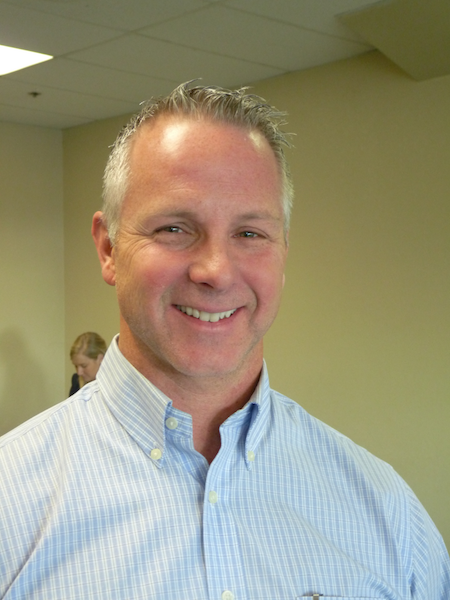
Ron Carlton, EPA Counselor to the Administrator for Agricultural Policy

Ron Carlton, EPA Counselor to the Administrator for Agricultural Policy

Carleton elaborated, “I absolutely believe the EPA is always willing to look for outreach opportunities to be with our producers to sit down, to have those discussion with farmers,” towards a common goal.

“We’ve worked with our pesticide folks around the state very closely to resolve any issues that might arise with pesticide issues. We want to get those tools and those products out to our producers, but to do so in a safe way, in a way that also protects the environment. So, I think it is about collaboration. It is about discussion and dialogue, and we are committed to doing more of that.”

With the EPA’s commitment to collaboration and partnership, Carleton said hopefully in the long run, we could address the many challenges that we all have—not only in agriculture—but in the environment as well.

“I’ve always said that our farmers and ranchers are the best stewards of the land,” said Carleton. “We at the EPA need to continue working with them to support them to promote those efforts as best we can.”

“Now, we are not without challenges out there—environmental challenges with water quality, for example, with nutrient pollution in some cases, and air issues in other cases. But I think that the way we lick those problems, again, is by working together promoting those voluntary efforts. We must look for and embrace those opportunities to work together, not only with our Ag stakeholders, but also with the USDA and the NRCS.

“I think we just need to continue what we are doing, engage even more farmers and ranchers,” Carleton said, “and continue to seek technological advances, not only in irrigation, but land management and water quality. I’m confident and I’m optimistic that even with the challenges we have, climate change, a doubling of the population by 2050 and all the problems these will pose, I have every confidence in the world that we are going to find solutions to these problems, and I think that our farmers and ranchers are going to lead the way.

USDA Horizontal Logo“Farmers and ranchers are innovative and always trying to do the best they can to protect their land and water; but we all can do better. I think our producers respond to change in very good ways. Look, we have gone through technological advances; we are more technically precise in using fertilizers and water,” Carleton said.
He noted, “Water is going to be an interesting issue as the population doubles and as we have more development, particularly in the Western part of the United States, which is drier. But I think our farmers and ranchers are good at responding to that change, and good at helping to develop, adopt, and implement those technical advances in a way that not only is environmentally good, but increases productivity.”

“They are doing more with less,” Carleton said, “particularly given the challenges of a growing population, not only here in this country, but around the world, the loss of productive agricultural land everyday to development and the increase in extreme weather events, including droughts, floods and the like—and California farmers know all too well the weather extremes.”

2016-05-31T19:24:12-07:00February 12th, 2016|

California Weed Science Society Meeting

California Weed Science Society Meeting

By Charmayne Hefley, Associate Editor

The California Weed Science Society (CWSS) held their annual meeting in Sacramento from January 13-15, 2016. The meeting fostered collaboration between Pest Control Advisors (PCAs) and farmers as they gathered to learn the newest innovations in weed science.

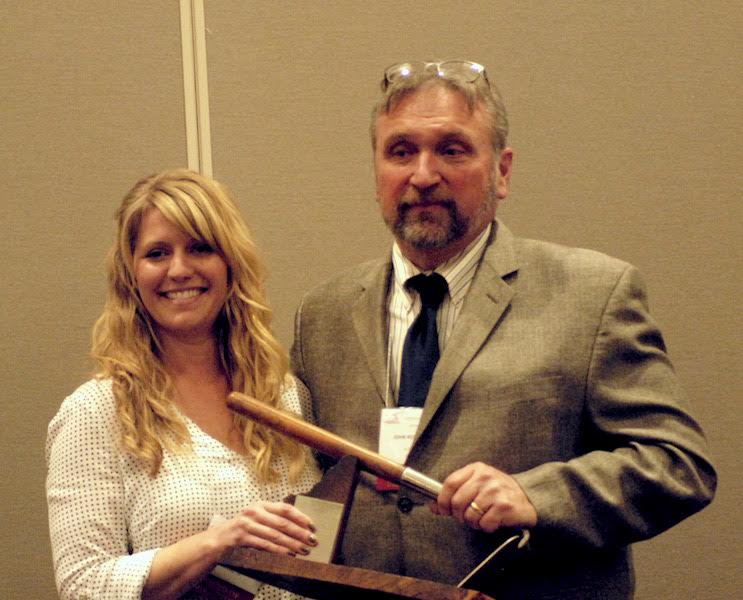
John Roncoroni, weed science farm advisor for the UC Cooperative Extension in Napa County, as well as the outgoing CWSS president, said four Fresno State students gave presentations at the meeting on their research. “We’ve had really great student participation—the amount of student scholarships we’ve given is up this year, the posters, the students and our attendance this year is up,” Roncoroni said. Pre-registration was about 530 people.

CWSS LogoRoncoroni suspects that rain pushed people to attend, “becausewith that rainwe’re looking at more weeds this year. So people are looking for the newest information on weeds. This year’s conference really has done a really good job of putting that information together. Kate Walker, our program chair, has really done a fine job of putting together a great program.”

Kate Walker, technical service representative for BASF Corporation, is also the new, incoming CWSS president.

________________________

Links:

California Weed Science Society (CWSS)

The CWSS recently updated its published textbook, Principles of Weed Control, 4th Edition, that focuses on the applied aspects of weed control.  The purpose of this textbook is to provide access to the fundamental principles and concepts of weed management in California. The book is designed for use at the college level by students who have an interest in pursuing a plant science or associated background of course work. It is also a useful resource for individuals studying to become PCAs and applicators or for consultants who work in weed science. For more information, go to the CWSS website Publications page.

2021-05-12T11:03:04-07:00February 5th, 2016|
Go to Top