Climate

Drought Lessons from Israel

Drought Lessons from Israel  Part 1

By Patrick Cavanaugh, Deputy Editor

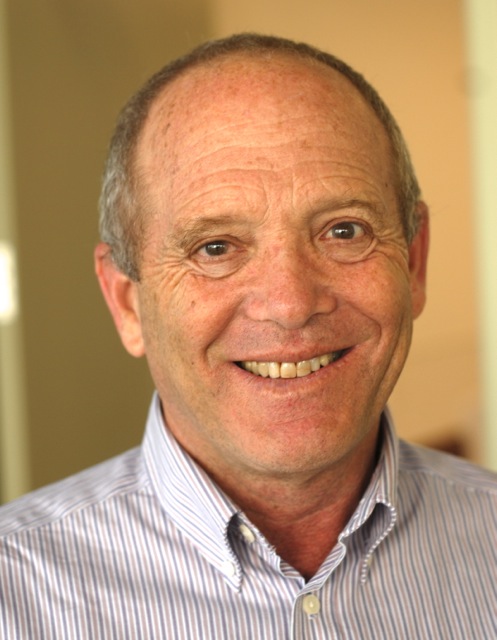
Six years ago, Israel was in the grips of a drought so dire the government considered shipping in water from Turkey, more than 1,000 nautical miles away. Instead, the country embarked on a coordinated effort of recycling water, desalinization (desal) and conservation education. Uri Shani, a professor at Hebrew University who was with the Israel Water Authority during this recent drought, says the country is now very secure in meeting its water needs, including agriculture and environmental requirements. California can learn from these drought lessons from Israel.

Desalinated water from Mediterranean Sea became a significant tool, but it didn’t happen very fast. Shani told California Ag Today, “For Israel it happened very slowly. The government hesitated going to desal and resistance came from, I believe, the farmers. They were afraid that desal would raise their prices for agriculture. In addition, pushback from the Minister of Finance focused on “the spending of money; they thought it was better to take the water from the farmers.”

Despite desal’s slow start, Israel relies very much on desal. “Private companies came in to build the desal plants,” Shani said, “and promised to run them for a minimum of 25 years. They were paid back when the government bought water from them.

“We use the metric system in Israel. One cubic meter of water equals 250 gallons. So the best price we get now is 50-60 cents (U.S.) for 250 gallons or 1 cubic meter. This is the price at the exit of the plant. It has only added about 60 cents to the urban customer’s water bill.
2016-05-31T19:27:04-07:00November 11th, 2015|

CEO Council on Sustainability and Innovation Launched

Agribusiness CEOs and Bipartisan Policy Center Launch CEO Council on Sustainability and Innovation


Washington, D.C. – Leading agribusiness CEOs announced TODAY they are joining together with the Bipartisan Policy Center (BPC) to launch the CEO Council on Sustainability and Innovation to improve agriculture and food production sustainability.

Leaders of DuPont, Elanco, Kellogg Company and Land O’ Lakes joined the Council, which will research, collect and amplify innovative approaches in the agribusiness industry, over the next several months, to combat and adapt to the realities of increasing climate volatility, a growing population, and other threats to a stable food supply.

“In the next 35 years, experts anticipate demand for animal protein will climb by 60 percent as the population grows in size and affluence. Already demand for milk, eggs and poultry is outpacing anticipated expectations,” said Jeff Simmons, president, Elanco. “We can’t just rely on the public sector to address these challenges. The private sector must deliver innovative solutions that can help farmers sustainably meet our global food needs.” 

“Achieving a sustainable future food supply and responding to the challenges posed by climate change are dependent on our collective actions,” said John Bryant, chairman and ceo, Kellogg Company. “Kellogg and others in our industry have a role to play in sharing innovative solutions and inspiring others to progress along their own sustainability journey.”

“To feed a growing global population, the food and agriculture industry must continue to increase agricultural productivity while facing climate variability and resource constraints,” said Chris Policinski, president and ceo of Land O’Lakes, Inc. “By working together, we can be more effective and efficient partners to enable a sustainable and productive supply chain.”

“The cost and availability of food is an issue of critical importance to all Americans,” said Jason Grumet, president, BPC. “The council will help kickstart a more robust national conversation about what’s already being done to promote sustainable food production and what more needs to be done.”

Although there is extensive industry research into various sustainability practices, there is little collective understanding of the strategies being deployed, nor is there public appreciation of adaptation challenges, mitigation opportunities, and the importance of agriculture in what must be a global conversation. The council will highlight and promote these innovative efforts.

The council’s work will culminate in a public report to be released in 2016.

2016-05-31T19:27:05-07:00October 29th, 2015|

Groundwater Recharge at Terranova Ranch

Major Groundwater Recharge Program at Terranova Ranch Progresses

By Patrick Cavanaugh, Deputy Editor

Don Cameron, manager of Fresno County-based Terranova Ranch has been working with the Kings River Conservation District (KRCD) on a groundwater recharge plan for nearly 20 years to convey floodwaters from the Kings River across Terranova Ranch and other properties in the area. “It has been a long, hard, committed struggle,” said Cameron, “but in 2011, we got Natural Resources Conservation Service (NRCS) involved.

“Once we submitted our grant application to the California Department of Water Resources (DWR), they reviewed it and awarded us a $5 million grant, which really got the project off the ground,” said Cameron.

“We are in the third year of work with the grant and we are currently doing the environmental studies with California Environmental Quality Act (CEQA). We are still very much involved in the engineering phase and we are putting a lot of agreements together with all the neighboring agencies that we have to work with,” Cameron said.

Logistically, Terranova Ranch is in an ideal location to capture potential floodwaters from the Kings River. Adjacent to the North Fork of the Kings River where floodwaters move though the James Bypass to the Mendota Pool, Terranova Ranch, provides the operation a unique opportunity in terms of groundwater recharge.

“We are taking farmland that is in production, and when the floods come, we will direct floodwaters across that land and neighboring land, to recharge the groundwater in our fields,” said Cameron. “We have proven that we can recharge in existing vineyards and tree-crop orchards, as well as in tomato, onion and carrot fields before we plant. We can use the floodwater across our farmland so that we do not need a dedicated basin dug out just for a recharge.”

“We know we can recharge anywhere on our land,” explained Cameron. “We can even turn off our pumps and use the water on the land to irrigate, through our drip systems. There are a lot of different ways to attack the problem. We think this is the best fit for our area, and we hope to be successful in rebuilding our groundwater supply,” said Cameron.

“The plan is to dedicate about 250 acres of ground for recharge,” said Cameron. Low levies will be built around the land when floodwaters are anticipated. We may have crops planted on the fields,” but Cameron hopes to be able to predict floods prior to planting a crop. Nevertheless, Cameron said, “We will flood crops if we need to.”

When the fields are flooded, the water may be as much as 2 to 3 feet deep, or as little as six inches deep. But the goal is to keep the water continuously on those fields to continue the recharge.

And since this is a large project involving state money, CEQA must be involved. Cameron emphasized, “We want to be sure that there is no environmental damage to any possible endangered species anywhere near our farm or near the project we are doing. There are state and federal laws that we have to abide by and so we need to jump through those hoops to get the project approved to completion,” said Cameron.

“We have been working with the project for a long time and we think its time has come,” said Cameron. “We are in the fourth year of a drought now and there is a lot of interest in putting water underground now, rather than building dams. We think dams are necessary as part of the overall water storage for irrigation, but we need both aboveground and below-ground storage.”

Cameron contends this groundwater recharge plan could improve groundwater quantity and quality fairly quickly, and be implemented faster than trying to build a large dam in the state. “We want to do our part here,” he said. “We would hate to see all the floodwater flow by during flood periods. It’s smarter to capture those stormwater flows on the land and into the ground water reservoir. We think it’s a real win for the whole state,” he said, adding there has been a lot of interest in duplicating this type of project throughout the state.

Cameron noted the project is perfect for the Sustainable Groundwater Management Act, which went into effect Jan. 1, 2015. “We are going to be ahead of the game on this, which is where we want to be,” he said.

Yet, not fast enough. Though a sizeable El Niño may pound California this fall and winter, bringing potential floodwaters to many rivers, the paperwork for the Terranova Ranch recharge program will not be completed in time. Cameron and the KRCD have been pushing to complete the project, but the agencies that need to sign off are numerous, including:

  • California Department of Transportation (Caltrans) – because floodwaters will be moving to additional landowners east of 145.
  • Pacific Gas and Electric Company (PG&E) – because water will need to flow under a natural gas pipeline.
  • U.S. Army Corps of Engineers – because a major cement structure with gate valves must be in place for the floodwater to be extracted from by-pass. “This will essentially mean that the levies will be breached,” said Cameron.

Again, the floodwaters will be flowing north and to the east, to several landowners in the region. Cameron and KRCD have been doing all the setup for everyone, not just themselves. “We hope, in long term, to expand the recharge project to 16,000 acres,” said Cameron.

2016-05-31T19:27:05-07:00October 26th, 2015|

Water Storage Needed for Farms and Communities

Doug Verboon on Needed Water Storage

By Charmayne Hefley, Associate Editor

Water storage remains a major concern for many farmers. Doug Verboon, a Kings County supervisor and walnut farmer, attended the California Water Commission meeting on Oct. 14 and called it a rare opportunity for farmers and community members to petition for water storage.

“As farmers, we want the water for farming,” Verboon said, “but as supervisors, we need it for community use and disadvantaged communities. Yet, as farmers who have been complaining about the lack of water storage for years, this is the one chance in our lifetimes to get more storage built. We need to get over our differences, get together and make this happen.”

“We want to make sure the Water Commission fully understands the importance of adding more storage today,”Verboon continued, “because without more storage in the flood years, we will cease to exist in the dry years.” Verboon explained the Valley has waited too long to increase storage since the drought in 1977.

“This is our opportunity now to jump on the bandwagon,” he said, “and get more storage built. We’ve already passed the bond. We need the money spent right here in our Central Valley. It doesn’t need to go to Los Angeles; it doesn’t need to go to San Francisco. They have a lot of infrastructure. They have a lot of money. They pay for their water. They’re strong. They can build new reservoirs without any environmental problems at all. We need the help today to build this project at Temperance Flat.”

Should El Nino bring significant rain, Verboon said the Central Valley has the infrastructure to help capture the rain.Verboon said the Kings River, for example, has regularly spaced recharge basins along its length, “but they have been dry for the last ten years. Growing up we used to water ski and catch crawdads in those lakes; they were always full. You can’t fill them up today, so as it rains, if it rains, we need the environmentalists to lay off us a little bit and let us put some recharge in our groundwater storage to help the disadvantaged communities by diluting the water that’s gone bad on us. Our water used to be a little acidic, but now it’s really salty as overdrafting depletes it. We’re not farming any more ground than we have before. We need to take advantage of whatever rain we get, recharge our groundwater and move forward.”

2016-05-31T19:27:06-07:00October 23rd, 2015|

Record Walnut Crop

New Record Walnut Crop:  575,000 Tons

By Patrick Cavanaugh, Deputy Editor


In a recent interview with Dennis Balint, executive director and ceo of the California Walnut Board, Balint discussed the Board’s promotion efforts on what has become another record walnut crop, grown on approximately 300,000 acres in the state.

California Ag Today (CAT): Despite the drought, the valiant walnut growers of California have produced yet another record crop of 575,000 tons, up one percent from 2014’s crop, and crop quality is reported to be excellent. How does that relate to overall supply?

Balint: This increase represents 5,000 additional bearing acres. Last year, the world availability was up about 140,000 tons higher than the previous year. We knew that we could absorb incremental production of 20,000 or 30,000 tons a year; however, 140,000 tons was a bit of a surprise. Couple that with the fact that China’s economy isn’t today what it was a couple of years ago. That has hurt us a bit.Walnut trees

So at any rate, that means we are going to have a record total of availability this year, and I think we are going to see prices moderate. Now, the really good news is the industry had some foresight in approving a huge budget to market the product, so we’ll be having a serious marketing campaign in the 2015-2016-crop year.

CAT: Walnut consuming promotions?

Balint: The board will continue promoting walnuts with print and television campaigns, as well as public relations efforts through Edelman Public Relations. That will continue on two fronts; one is consumer appeal, like recipes, and just raising overall awareness regarding the versatility of walnuts; but second and most importantly, Edelman is in charged with promoting health. Health continues to be a very important card in promoting our product to consumers and health professionals as well.

CAT: It is always good that people think of health when they think of walnuts!

Balint: Yeah they do. It is amazing how that number has changed over the years.

CAT: Is eating more, better?

Balint: You know we have a daily range. When we do studies, researchers will always look at the composition of the product and, depending on what they are expecting, they will adjust accordingly. So we have studies that are based on 1 ounce, 1.5 ounces, and 2 ounces daily. So it really depends on the end points they choose to look at.

We try to never talk about compounds because we like to talk about the whole walnut, but occasionally researchers who are deconstructionists suspect a particular compound. Then we have to analyze it down to the nitty-gritty so somebody can put it in a pill. When that happens on occasion, researchers say, “Well, we really need to feed 2 ounces.” And in some cases, 2 ounces in the short-term works very well. In the long-term, being practical, 1 to 1.5 ounces is good.

CAT: Please go back to the advertising budget. Is it mainly domestic?

Balint: It is all domestic. The export program will remain intact—no changes there. We will still have good programs in a number of countries overseas, but all of the increased production is going into the domestic market.

CAT: Do we need to increase per capita consumption to handle the oversupply issue?

Balint: That is a good question. What we need is the following: We estimate, and we don’t have hard numbers, not much more than one in five households is purchasing and using walnuts on a regular basis. So that leaves a lot of room for growth. Our campaign has been designed to appeal to light and non-users, and not just the core consumer who is already loving walnuts and buying them on a regular basis, to expand our user base.  We are doing so by presenting walnuts as an ingredient in salads, vegetable side dishes, entrees, and of course as a snack. As a matter-of-fact, we are waiting on copy testing results in the next week or two.

CAT: Good. And walnuts make everything better and that’s what it is all about, isn’t it?

Balint: Absolutely. Walnuts are a little added touch that makes food not only more interesting because of the color, texture, and taste, but also because it is healthful. All of our ads are going to have the heart check logo. I want to reemphasize health research will still capture a lot of media on its own. That will continue, ‘no reduction there.

CAT: Are the ads in food or fitness magazines primarily?

Balint: Food magazines, primarily. We have four executions of print ads and two television commercials. We are waiting for the test results for the ads. The copy testing we have done also includes what the experts call rapid eye movement. By observing people’s eyes, we’ll know when consumers like or don’t like a word or a phrase, or think something is plausible or implausible. We will also know where their glance goes, how long it stays there and where it goes next.

This will help us structure the commercial to eliminate some of those “down spots” and focus on things that capture their attention. We will be reaching 95% of adults between the ages of 25 and 54 with this campaign on average 26 times per person over a period of about five months.

CAT: Wow, you are running it on some big television programs?

We’ll be going after different segments. For example, we have scheduled morning television segments like “Live with Kelly & Michael,” “Rachael” with Rachael Rae, and pillar events. A pillar event might be a broadcast on E! Network such as “From the Red Carpet at the Academy Awards” or an event in the sporting world. But that is not a focus. We will also include standard shows like “The Big Bang Theory” and so on.

Television will be in ten key markets, and I don’t have the list in front of me. But we will also continue our aggressive social media program. We have a couple of new ideas that I think will capture people’s interest.California Walnut Commission logo

CAT: Tell us about the campaign with the wrapped truck that looks like a walnut.

Balint: We converted a food truck to look like a walnut by wrapping it with walnut texture and contoured the boxy truck into a rounded walnut shape. So when it is parked in downtown Manhattan or Washington D.C., the truck with those affixed contours makes quite a spectacle.

CAT: So what were you doing with that truck? Did you hand out information?

Balint: We made information available, facilitated games, hosted walnut cracking, and most importantly, served an ice cream sandwich made out of yogurt, walnuts and chocolate graham crackers. We had samples of walnuts as well.

CAT: What is your health research strategy? Are you working with key researchers to compare eating walnuts with not eating any nuts?

Balint: Our health research strategy depends on the target. Remember, walnuts are the only good food source of Omega-3; most nuts have no Omega-3. We like to test the whole walnut in a lot of our studies. Sometimes we will find an indication that one compound is more important than another; but we recently finished a study with 27 scientists for our annual meeting. They look at what we have done, what we are doing, and what we should do next. So it is not just guesswork, it is a carefully thought-out program that focuses on areas of greatest interest to scientists.

One thing I will tell you is one day before the meeting began, we had six key scientists come in for what we call a “brainstorming session.” We asked them to tell us how to make our program better: the way we run our health research program, the way we run the conference and so on. The unanimous opinion of the six in attendance was not to change a thing. They said basically the program is a model for what should happen in health research, because we don’t go into research with a preconceived notion. We don’t go in and say, “Researcher, please raise your hand and provide us with a positive result on this disease.” We follow the science.

CAT: What are your biggest markets abroad?

Balint: China of course is huge. But other very strong markets include Germany, Japan, Korea, Spain and Turkey. China slipped this past year, of course, and we are all scratching our heads because we hear a lot about China. But their economy is a little soft. They had a crackdown on the gray market, which hurt business a little bit because some of the product that goes into China finds its way there through either Hong Kong or Vietnam. So China’s utilization this year was down. It is too early to tell whether they will return or continue at the same pace they experienced in 2014-15. We just don’t know yet.

CAT: Are you promoting the health message in these foreign countries?

Balint: Yes, and it is a really interesting situation. In countries that have a tradition of walnut-use like China, only about 40% of our messaging is health-related because they have known it is healthy for a thousand years. Whereas, in Japan, when a big story breaks accompanied by some television coverage, our sales will spike like you can’t even believe. So, it differs by market.

Here in the U.S., it is very high, as in Germany and Spain. Turkey is building and India as well, but slowly. We have some issues there; India is a market in which they too grow lots of walnuts, but we are slowly but surely making some headway.

The Korean market opened in 1994, but it was 2001 before we had any meaningful number of shipments. You have to be patient with some of these markets to be able to dismantle some of the trade barriers.

CAT: Are there any markets in South America?

Balint: Years ago, in the 90’s, there was an effort in Brazil and Argentina. Now, Chile grows walnuts, Argentina grows some, Brazil still grows a few. The Mercosur* pact down there (a special trading pack between South American countries) is a problem because the Mercosur countries trade duty-free. So we are at a disadvantage. We’re contra-seasonal. Last, but not least, we have a tariff burden. So we tried it for a couple of years, but decided there were better places to invest.

CAT: Well, it’s interesting. We don’t see South America being a big market for almonds or pistachios yet either.

Balint: It’s true; they grow Brazil nuts and, as I said, walnuts. Chile, as a matter-of-fact, is increasing their plantings. As their plantings increase, their initial sales will remain within the South American continent. When they get into the summer, especially late summer, they will sell what they have left into markets like Korea, and if they can, France and Germany. They basically go into our markets and try to sell in advance of our crop.

CAT: How are California growers doing? They are going through another year of drought, and I’m sure you are worried….

Balint: Everyone is, and we are all waiting for the other shoe to drop. Here we are with another record crop, and we know the reason for that. It’s because five or six years ago, somebody planted more walnuts, and they are coming online now. It appears as though we are trying to grow more walnuts in the middle of the drought, though the fact of the matter is those trees went in the ground long before water scarcity became as bad as it currently is.

CAT: Exactly, Fresno County just released their numbers last month and broke a record 7 billion dollars. Kern County and Tulare County broke records as well. In terms of ag value, we are not taking such a hit, mainly due to high nut prices.

Balint: Even before I was in the commodity business, I used to work for a company in Massachusetts called William Underwood Company. They had B&M (Burnham & Morrill Company) Baked Beans, Underwood Deviled Ham and other meat spreads. That is where I learned about commodities.

We had an economist on staff to predict the prices of navy beans, fatback**, sugar, ham hocks, and chicken. I learned it was much easier for the chicken guy year to year; he would just have more chickens to count! The bean people could have more beans. What about the walnut people? If the trees weren’t in the ground, they were not going to get more walnuts.

________________________________

*Mercosur or Mercosul (Spanish: Mercado Común del Sur, Portuguese: Mercado Comum do Sul, Guarani: Ñemby Ñemuha, Southern Common Market) is a sub-regional bloc. Its full members are Argentina, Bolivia, Brazil, Paraguay, Uruguay and Venezuela. Its associate countries are Chile, Peru, Colombia and Ecuador.

Source: Wikipedia, the free encyclopedia


**Fatbackthe fat, usually salted, from the upper part of a side of pork

Source:  Dictionary.com


2016-05-31T19:27:06-07:00October 21st, 2015|

Water Commission Meeting Delivers Passion and Controversy

Water Commission Meeting Delivers Passion and Controversy

By Charmayne Hefley, Associate Editor

[embedvideo id=”FVZ-wJkqjgI” website=”youtube”]


The California drought has become a hot topic, and even more so is the subject of how to solve the drought. Some advocates believe the solution is in long-term water storage, and as a result, the California Water Commission (Commission) has been drawing up a proposal to enact this potential solution.

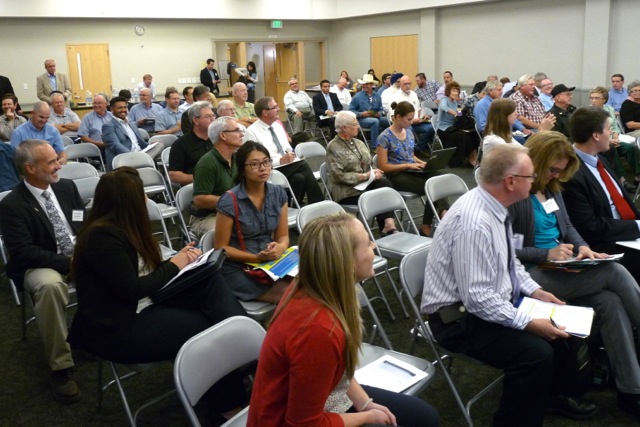
On Wednesday, Oct. 14 in Clovis, the Commission held a public meeting to discuss their Water Storage Investment Program.

Joe Del Bosque, a commissioner on the California Water Commission, as well as a Westside farmer struggling with the zero water allocations, summarized the meeting, “It was very lively, especially at the beginning. A lot of folks are hurting—and rightly so. They have a lot of uncertainties about next year or the year after, or for who knows how many years.

We don’t know when some of these storage projects will be completed and ready to start helping us. A lot of folks have a lot on the line here in the San Joaquin Valley, and I appreciate hearing from them and listening to their concerns.”

Assemblyman Jim Patterson, in his opening remarks, said the governor, the commission and the California State Water Resources Control Board (Water Board) must realize what is driving the need for water storage. “We really need to look at the capacity to store water,” Patterson said. “If we have two river watersheds—both producing similar amounts of water, but one drops into a reservoir that’s half the size of the other, the water will overflow. And we know El Nino is coming, 95 percent.”

Many individuals spoke passionately about the plan during the comment period. Kings County Supervisor and walnut farmer, Doug Verboon, said, “We need storage. We’ve been complaining about it for years, and this is one chance in our lifetime to get more storage built. We need to get over our differences and get together and make this happen. We want to make sure the Water Commission fully understands the importance of adding more storage today.”

Another county supervisor, David Rogers, from Madera County, reminded the Commission that the need for water storage goes beyond reserving water for dry years.

“We’re losing our groundwater so rapidly that the soil is sinking beneath us and we have subsidence occurring,” Rogers said. “And all the while water is flowing out to the ocean from the San Joaquin river system when that water needs to be delegated and allocated to the farms that need it so they’re not pumping groundwater.

In reality we’re losing the river as a result of subsidence. The river, itself, is subsiding so it’s a moot issue whether or not we need surface water delivery. That has to happen. We cannot continue this way or we will lose the river, the communities and the farms. So there’s no question that Temperance Flat is the answer to that problem.”

During the meeting attendees learned that the Water Storage Improvement Plan includes a timeline that doesn’t allow for funds to be awarded to applicants wishing to build storage until 2017.

Greg Musson, president of GAR Tootelian, Inc., called the timeline unacceptable, adding the delay in the plan would lead to the loss of hundreds of thousands of jobs. “I don’t see how anyone can accept this as being standard for the way that America works,” he said. “Shame on you! Really, shame on you! You have to do better here. America needs you to do better; I need you to do better; the people in this room need you to do better than this. This is outrageous.”

Manuel Cunha, president of the Nisei Farmers League, spoke about the Joint Powers of Authority (JPA) that is being formed to apply for funding to build water storage. “We’re going to have to submit it as a large project,” Cunha said, “big storage—definitely Temperance Flat—plus all of these different irrigation districts, cities and tribes have projects that we’re going put together and submit in this large package. That’s the only way we’re going to get this money. Only then cab we start to deal with all the public benefits, environmental issues, and securing those dollars for this Valley.”

The California Water Commission consists of nine members appointed by the Governor and confirmed by the State Senate. Seven members are chosen for their general expertise related to the control, storage, and beneficial use of water and two are chosen for their knowledge of the environment. The Commission provides a public forum for discussing water issues, advises the Department of Water Resources (DWR), and takes appropriate statutory actions to further the development of policies that support integrated and sustainable water resource management and a healthy environment. Statutory duties include advising the Director of DWR, approving rules and regulations, and monitoring and reporting on the construction and operation of the State Water Project.

2016-05-31T19:27:06-07:00October 20th, 2015|

3rd in a Series on Mental Health on Farm

Part 3 Mental Health on the Farm:

Isolation in Farm Country

Resources are provided at the end of this post.

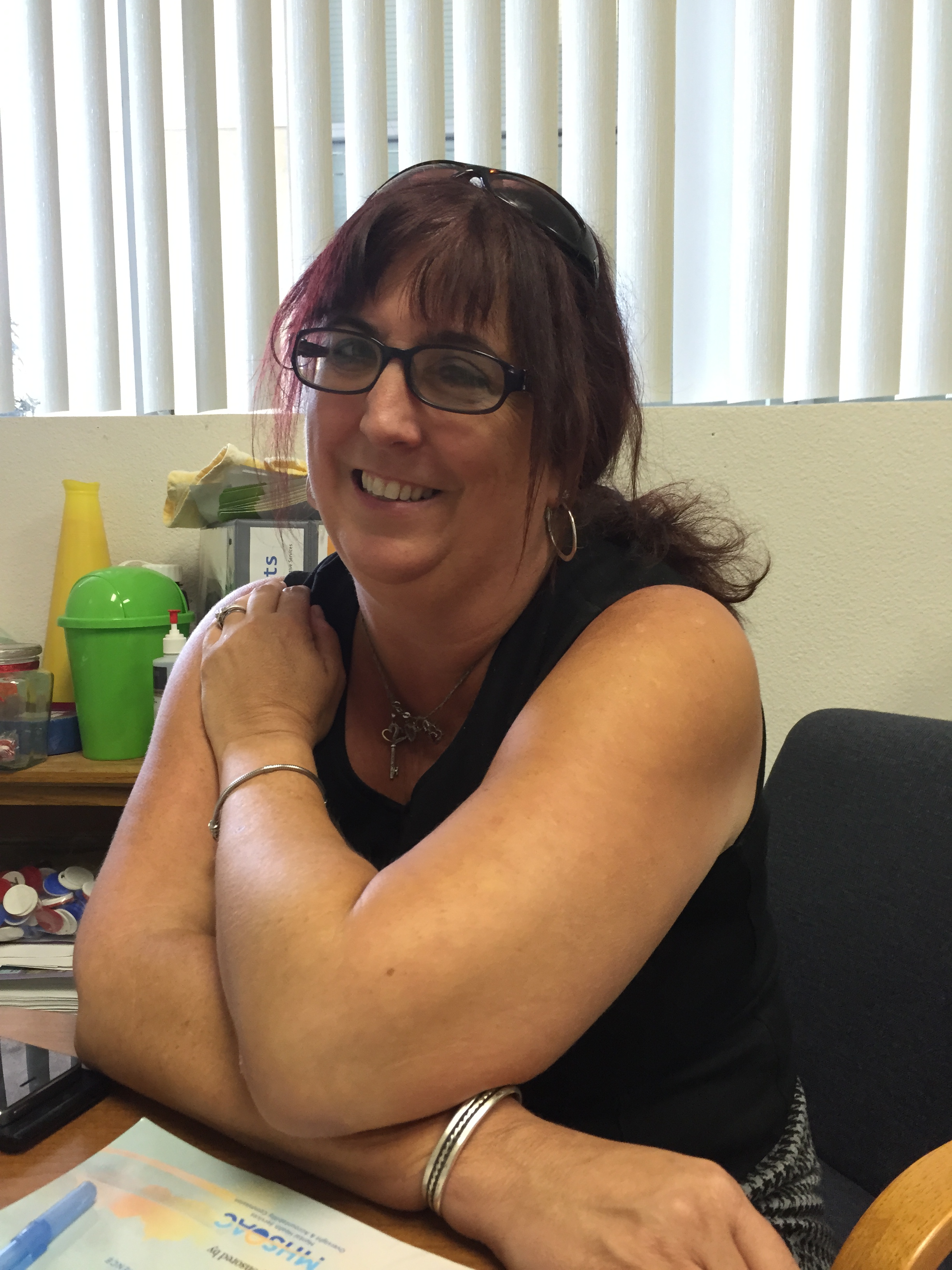
In light of Mental Illness Awareness Week last week, Karen Markland, Division Manager for the Fresno County Department of Behavioral Healths Planning, Prevention and Supportive Services, talked extensively with California Ag Today Editor, Laurie Greene, about members of the local agricultural industry who could be going through significant emotional suffering due to the drought and environmental water restrictions impacting their livelihoods.

Editor: Is there anything unique about how farmers and farmworkers suffer from stress?

Markland: In our experience with farm-working populations, they have a couple of strikes against them. They are geographically isolated in rural areas; they are probably linguistically isolated as well, as their native language is typically not English; and, they are culturally isolated in that many of our cultures believe in not talking about sick minds or sick feelings. Plus there is transportation barriers. Our county is so large that it is very difficult for rural workers to receive any services. And so, we think it is a combination of things that discourage people from reaching out for help.

Editor: Are there financial issues or constraints?

Markland: What we have found is anytime we we use Mental Services Act dollars, we have to do it based on what the community wants. The stakeholders have brought up not a financial barrier, per se, but a transportation barrier. They tell us, “I can’t afford a car. I can’t afford the taxi from Kerman to Fresno or Parlier to Fresno.” They see it as a transportation barrier.

Editor: Is this population at risk?

Markland: There have at least two suicides in the agricultural community, a landowner and a farmworker. That is too many. It is unacceptable, but it has brought to light some uncomfortable subjects that we have to try to make more comfortable. When individuals feel that stressors become more difficult to manage, thoughts of wanting to harm themselves and not wanting to continue or to fight through, become stronger.

Editor: What can you do for people who feel this way?

 Markland: We are concerned about the farmworker who wakes up to such serious depression or anxiety and who has to fight through their day. That is no quality of life. So, we have a couple of resources. One that we are proud of right here in Fresno is the Central Valley Prevention Suicide Hotline 1-888-506-5991. This is a 24/7 hotline that has all language capabilities. So no matter what your language, we are here for you. This is a local number. The reason I keep saying local is that the person who picks up that phone call understands the culture of our valley—that we we have farmworkers facing dire drought conditions that others in California do not encounter with the same potential catastrophic loss; and the anxiety behind that, and the longevity of that—that it is not a one-week problem. This isn’t a breakup with a person; this is a long-term problem. So having local people manage the hotline is a wonderful resource.

Editor: Of course, farmers and farmworkers outside of Fresno County may have a similar resource in their counties. (Please refer to resources listed at the end of this article.) Could you tell us how successful has the Fresno County hotline been?

Markland: They are a crisis hotline; plus they are there just to help talk to people who are depressed or anxious. We do “talk-down” calls and rescue calls. This hotline has saved over 53 lives in active rescues in the last 12 months. Individuals have called the hotline as their last resort, and we’ve been able to activate emergency medical services and save their lives. In addition, we do follow-up calls.

Editor: What about follow-up calls?

Markland: If a person calls our hotline, and they have a safely plan, and the staff on the call feels they are safe, they’ll do a follow-up call in two days. Staff will ask if they have stuck with their safety plan, how they are feeling, and if they accessed the support systems they wanted to, because we really are dedicated to having a healthy community.

The Fresno Department of Behavioral Health is dedicated to supporting the wellness of individuals, families, and communities in Fresno County who are affected by, or at risk of, mental illness and/or substance use disorders through cultivation of strengths toward promoting recovery in the least restrictive environment.County of Fresno Logo

The Fresno Department of Behavioral Health provides mental health and substance abuse services to adults within the County of Fresno. The programs within our department focus on delivering the highest quality of service. There are over 300 professionals and staff dedicated to providing services in both metropolitan and rural areas. The diversity of our staff has helped us create a department that is sensitive to cultural differences and attempts to bridge the language barriers with our consumers. 

2016-05-31T19:27:07-07:00October 12th, 2015|

2nd in Series: Mental Health on the Farm

Part 2  Mental Health on the Farm:  Destigmatizing Mental Health

October 4th – 10th is National Mental Illness Awareness week, and National Depression Screening Day is tomorrow, October 8, 2015.

Resources are provided at the end of this post.

Karen Markland, Division Manager for the Fresno County Department of Behavioral Healths Planning, Prevention and Supportive Services. spoke with California Ag Today Editor Laurie Greene about mental health and the state’s farmers and farmworkers who have experienced increased stress due to the drought and environmental water restrictions impacting their livelihoods.

Editor: Back in April, your department partnered with the Fresno Economic Opportunities Commission (EOC) and the USDA to receive a grant specifically to host a conference called “The Drought Emergency and Preparedness Conference,” (DEAP). DEAP was a full-day event for farmers to discuss the drought and water, but also included representatives from mental health?

Markland: Here was the Department of Behavioral Health, a mental health partner, at an agricultural event. It was fascinating to see the curious looks that implied, “I kind of want to go up there, but I don’t want to go up there.” And by the end of the day, we had attendees and farmers approaching our table. We created an agricultural theme with plants and live videos of our gardening projects to destigmatize and show that mental health and mental wellness speak all languages. So we were pleased to be there.

Editor: We understand the Fresno County Farm Bureau participated?

Markland:   Yes, the meeting with the EOC and USDA was actually initiated by the Fresno County Farm Bureau, which is is very interested in the wellbeing of its community. Ryan Jacobson, Farm Bureau ceo/executive director, had received some communication indicating our farmers were feeling stress and that some had lost their lives based on the anxiety and depression brought on by these drought conditions. It was time for us to activate and come together to talk about a very uncomfortable subject.

Our Farm Bureau and the USDA partnered to talk to workers and farmers who aren’t just happy; rather, they are depressed and anxious, and we are worried about them. The collaboration among the Farm Bureau, USDA and mental health was wonderful.  It was an amazing dialogue to jointly say, “This is such a stigmatizing topic for a group of individuals who are typically adult male farmers who don’t want to share or hear these words. Yet, we’ve lost lives, so it is time to make a difference.”

The Fresno Department of Behavioral Health is dedicated to supporting the wellness of individuals, families, and communities in Fresno County who are affected by, or at risk of, mental illness and/or substance use disorders through cultivation of strengths toward promoting recovery in the least restrictive environment.County of Fresno Logo

The Fresno Department of Behavioral Health provides mental health and substance abuse services to adults within the County of Fresno. The programs within our department focus on delivering the highest quality of service. There are over 300 professionals and staff dedicated to providing services in both metropolitan and rural areas. The diversity of our staff has helped us create a department that is sensitive to cultural differences and attempts to bridge the language barriers with our consumers. 

2016-05-31T19:27:08-07:00October 8th, 2015|

Water Rally Calls for Action

Water Rally Calls for Action, More Voices

By Brian German, Associate Broadcaster

At the recent “Take Back our Water Rally” in Mendota, hundreds gathered to call on Governor Brown to recognize the impact of not just the drought, but the bureaucratic decisions that have had devastating consequences for California farmers. Leadership at the water rally called for action and more voices in the plea for change.

Aubrey Bettencourt, executive director of California Water Alliance, shared some points she made a the rally, “My challenge to this audience was to understand there is a void of leadership. We have a governor who says he is handling this, and he is not. We have no recovery plan for how to get out of this drought. How do we get out of the crisis?  There has been no pathway to recovery, neither from the federal government, nor the state government.” Finally, last month, a group of 47 legislators, both Republican and Democratic, called for a special legislative session.

Bettencourt pointed out the Ag industry is not alone in having been adversely affected by the water constraints. “We all need to communicate to our elected officials,” she said, “that we need a path to relief. My challenge to the audience was to help them realize that because the drought is now statewide and regulatory constraints have drastically cut the regular water supply, we are all—ag and urban communities—even the environmental conservation community—feeling the effects. While we’ve been in this situation for years, and years, and years, we need to expand our base and build our army.”

Many attendees are concerned about the use of the Endangered Species Act to cut water supplies that Central Valley farmers depend on in order to increase populations of a fish that can just as easily be grown by the thousands in hatcheries.

Calling to educate those outside of agriculture to advocate for change in water policies, Bettencourt remarked, “Help those who are unfamiliar with the importance of supply, or more importantly, the lack of supply, to understand why they are frustrated, what is really going on, and how California’s water supply really works. Let’s activate them to being an additional voice to ours; encouraging many voices from diverse locations saying the same thing is the only way the agricultural community, and all stakeholders in California, will ever be heard,” she said.

While forecasters are still optimistic El Niño will deliver heavy rainfall, Bettencourt says California’s water issues will continue unless there is a change in the legislature. She emphasized it would take a big push from more than just the agricultural sector to demand the change that is needed. “It is a numbers game,” she explained. “When you look at the population in California, the bulk of the voters are in the Bay Area, along the Coast and in Southern California. If you add up the registered voters of all the agricultural counties in California, the total is not enough to offset even one of those three heavily populated areas. So the sole hope we have to maximize the only two opportunities for input we can control—our voice and our vote—is to get new voices and new votes,” Bettencourt said.

2016-05-31T19:27:08-07:00October 7th, 2015|

Plants Do Not USE Water…They Borrow it!

Plants Transpire Most of the Water They Use!

Editor’s note: California Ag Today interviewed Allan Fulton, an Irrigation and Water Resources Advisor, UC Cooperative Extension Tehama County, in Redbluff CA, to comment on the debate about the agricultural industry’s use of water and to focus on a critical but disregarded process—that all plants transpire, even plants cultivated for the crops we eat.

Allan Fulton, Irrigation and Water Resources Advisor

Allan Fulton, Irrigation and Water Resources Advisor

CalAgToday: We hear in the media that our crops are using too much water. And while all plants need water to grow food, we also know that a high percentage of water taken up by all plants actually transpires back into the atmosphere, to form clouds and precipitation, right?

Fulton: Yes, when plants transpire, the water just returns to the local hydrologic cycle, leaving the harvested crop that we distribute elsewhere in the US or in the world actually very low in water content.

CalAgToday: When we think about transpiration, are the plants actually “borrowing” the water?

Fulton: Yes. We get a lot of questions about why we irrigate our crops so much, and it comes from the general public not being as close to farming everyday. The truth is, plant transpiration is a necessary biological process. The water cools the tree so it stays healthy and exits the leaves through special cells called stomata. While the stomates are open to allow water to transpire, carbon dioxide enters and is used in photosynthesis, making sugars and carbohydrates for the plant to create the fruits and nuts that we eat. So, an inadequately watered plant cannot take in enough carbon dioxide during transpiration, resulting in defective fruits and nuts that are smaller, shriveled, cracked—all the things the typical consumer does not want to buy.

Plants cannot gain carbon dioxide without simultaneously losing water vapor.[1]

CalAgToday: Can we say 95 or 99% of the water that is taken up by the plant gets transpired and definitely not wasted?

Fulton: Definitely. We converted to pressurized irrigation systems, micro sprinklers and mini sprinklers, so we have a lot more control over how much water we apply at any one time. We do not put water out in acre-feet or depths of 4-6 inches at a time anymore. So, much like when rainfall occurs, we can measure it in tenths, or 1 or 2 inches at most. As a result, the water doesn’t penetrate the soil very deeply, maybe only 1 or 2 feet each irrigation.

We are very efficient with the water, but because we deliver it in small doses, we have to irrigate very frequently. That is why we see irrigation systems running a lot, but they are systems that efficiently stretch our water supply and do not waste it.

CalAgToday: But again, the vast majority of the water that the tree is taking up is being transpired, right?

Fulton: Yes, most of the time, at least 90% of the water that we apply taken up through the tree and transpired so that photosynthesis can happen.UCCE Tehama County

CalAgToday: And transpiration increases on a hot day?

Fulton: Yes, we do get a little bit of loss from surface evaporation from wet soil, but we try to control that with smaller wetting patterns—drip-confined wetting patterns. When you think about it, the heat of the day is in the afternoon when many irrigation systems don’t run because of higher energy costs. There are incentives not to pump in the middle of the afternoon, but those who do try to confine the wetted area to limit evaporation. And the hot hours of the day make up about 4 hours of a 24-hour cycle, so we irrigate mostly during the nighttime and early morning hours to lesson evaporative loss.

CalAgToday: Growers are doing everything they can to conserve water. If the trees and vines are all transpiring most of their irrigated water, why is using water to grow food a problm?

Fulton: I think the emphasis throughout the United States has always been to provide a secure food supply. That security has many benefits, economically and politically; and in the end, we are trying to provide the general public with good quality, safe food at the best price possible.

______________________________________________

[1]  Debbie Swarthout and C.Michael Hogan. 2010. Stomata. Encyclopedia of Earth. National Council for Science and the Environment, Washington DC.

CIMIS


The California Irrigation Management Information System (CIMIS) is a program unit in the Water Use and Efficiency Branch, Division of Statewide Integrated Water Management, California Department of Water Resources (DWR) that manages a network of over 145 automated weather stations in California. CIMIS was developed in 1982 by DWR and the University of California, Davis (UC Davis). It was designed to assist irrigators in managing their water resources more efficiently. Efficient use of water resources benefits Californians by saving water, energy, and money.

The CIMIS user base has expanded over the years. Currently, there are over 40,000 registered CIMIS data users, including landscapers, local water agencies, fire fighters, air control board, pest control managers, university researchers, school teachers, students, construction engineers, consultants, hydrologists, government agencies, utilities, lawyers, weather agencies, and many more.

2021-07-23T14:31:38-07:00September 23rd, 2015|
Go to Top