New Biodico BioFuel Facility In Fresno County

Biodico Biofuel Facility, World’s First, to Operate Entirely on Renewable Heat and Power

Biodico Inc., a sustainable biofuel and bioenergy company, announced the opening of its Biodico Westside Facility, the world’s first biofuel production facility to operate entirely on on-site power-generated renewable heat. Biodico’s ribbon-cutting ceremony from 11:30 a.m. to 1 p.m. tomorrow, Friday, December 4, 2015, at the at Red Rock Ranch in Five Points, Fresno County, California, is open to the public and will feature the “Sustainable Rhythm” of the Mendota High School Marching Band’s drumline.

Biodico is transforming biofuel production with sustainable solutions to convert diverse feedstocks into environmentally sound renewable sources of fuel and energy. The Westside Facility will produce up to 20 million gallons of biodiesel annually, utilize multi-feedstock functionality, incorporate advanced sensors for real-time and remote monitoring, leading to complete system automation, and provide 45 new jobs to the San Joaquin Valley.

“Our new facility in the Valley will produce economically and environmentally viable biobased* fuel and energy for local farmers and truckers, and create new jobs in the community,” said Biodico president and founder, Russ Teall, an internationally-acknowledged leader in biofuels with more than 20 years of experience in all aspects of the industry including legal and regulatory affairs. “This facility demonstrates Biodico’s commitment to an integrated value chain model that includes accelerated and inexpensive construction and deployment, enhanced throughput with reduced operating costs, and increased monetization of renewable fuel and energy,” said Teall.

Teall successfully evolved patented and proprietary biorefinery* technology in conjunction with the U.S. Navy and the California Energy Commission. The most recent generation of equipment, the MPU (Modular Production Unit) brings automation and remote real-time sensing to biorefineries as part of an integrated self-sustaining system, utilizing anaerobic digestion, gasification, solar, and advanced agricultural and algaculture* [a form of aquaculture involving the farming of species of algae, Wikipedia].

Teall is currently the California Biodiesel Alliance president, California Air Resources Board Panel on the Low Carbon Fuel Standard member, and CIA Afghan Energy Project panelist; and formerly National Biodiesel Board (NBB) vice chair and the NBB Legislative Committee chair. He has provided biorefinery consulting services to private companies, governments and trade associations throughout the world, including the US, Argentina, Australia, Bolivia, Canada, China, Dominican Republic, Ghana, Haiti, Hong Kong and the PRC, India, Israel, Malaysia, Mexico, the Philippines, Singapore, South Africa and Thailand.

_____________

Again, Biodico will host a ribbon-cutting ceremony at the facility on Friday, December 4, 2015, featuring the “Sustainable Rhythm” of the Mendota High School Marching Band’s drumline.  Details follow:

What: Ribbon-cutting ceremony to celebrate the world’s first fully sustainable biofuel facility.

When/Where:  Friday, December 4, 2015, 11:30 a.m. to 1 p.m. at Red Rock Ranch in Five Points, Fresno County, Calif.

Why:  Fossil fuels are finite and the world needs economical alternatives that reduce toxic air emissions and greenhouse gases.

About Biodico: Biodico is a privately held company headquartered in Ventura, Calif. that (1) builds, owns and operates sustainable biofuel and bioenergy facilities, (2) conducts research, development, and validation studies with the U.S. Navy, and (3) collaborates with strategic joint venture partners to commercialize new technology and initiatives.

The company and its management have been pioneers in the industry for the past 23 years, with an emphasis on using advanced, patented and proprietary technologies for the sustainable multi-feedstock modular production of next generation biofuels and bioenergy.

_____________

Lexicon

[Source: Wikipedia]

*algaculture – a form of aquaculture involving the farming of species of algae, Wikipedia].

*biobased = intentionally made from substances derived from living or once-living organisms

Biobased products, designated by the Secretary of Agriculture, are commercial or industrial products that are composed in whole, or in significant part, of biological products or renewable domestic agricultural materials or forestry materials.

*biorefinery is a facility that integrates biomass conversion processes and equipment to produce fuels, power, heat, and value-added chemicals from biomass. The biorefinery concept is analogous to today’s petroleum refinery, which produce multiple fuels and products from petroleum.

The International Energy Agency Bioenergy Task 42 on Biorefineries has defined biorefining as the sustainable processing of biomass into a spectrum of bio-based products (food, feed, chemicals, materials) and bioenergy (biofuels, power and/or heat).

_____________

What is biomass electricity?

[Source: California Energy Commission]

Biomass electricity is drawn from combusting or decomposing organic matter. There are about 132 waste-to-energy plants in California, with a total capacity of almost 1,000 megawatts. These plants power our homes and businesses with electricity from waste matter that would have been released into the atmosphere, added fuel to forest fires, and burdened our landfills.

2016-05-31T19:27:02-07:00December 3rd, 2015|

Wonderful Branding

Wonderful Branding: The Wonderful Company’s Branding Success and Newest Citrus Discovery

By Charmayne Hefley, Associate Editor

A catchy brand can make or break a product, and the agriculture industry has begun to take note. David Krause, president of Wonderful Citrus, said their own successful branding—especially their Halos mandarins—is attributable to a variety of factors.

“We have an internal creative team that handles all of the design work and advertising,” Krause said. “Couple that with some very good consumer-based activities, significant funding in telling that message, and a good product that is satisfying to the consumer, and you have a complete, effective program.”

Aside from branding, Krause said Wonderful Citrus continuously looks for new crop varieties that will excite consumers in the future. Introducing new products is part of the company’s strategy to stay ahead of competition as well as increase their consumer base.

Wonderful’s newest discovery, seedless lemons, were found in another country,” Krause explained. “We have the exclusive rights to a few varieties, and at this point, we are growing trees in our nurseries,” said Krause. “ We’ll start marketing the product in the U.S. market within the next five to six years.”

Overall, Krause reports increased profits for many products. “I would argue demand and supply for many California crops seem to be in balance; that is, they are driving good returns for growers in spite of all the challenges that we face.”

_______________________

The Wonderful Company is the parent company of:

  • Wonderful Pistachios & Almonds (formerly Paramount Farms)
  • Wonderful Citrus (formerly Paramount Citrus)
  • Wonderful Orchards (formerly Paramount Farming)

Well-known brands from The Wonderful Company are:

  • Wonderful Pistachios  #1 tree nut brand and one of the top-selling salty snacks in America
  • Wonderful Halos          #1 mandarin orange in America
  • POM Wonderful           #1 100% pomegranate brand in America
  • FIJI Water                     #1 premium bottled water brand in America
  • Teleflora                         #1 floral delivery service through local florists
  • JUSTIN Wine                #1 Cabernet Sauvignon in California

The company announced its name change to The Wonderful Company from Roll Global on June 1, 2015. This strategic move aligns the company’s long-standing passion for harvesting healthy and nutritious foods with its domestic and global consumers, as well as integrates its farming and distribution methods. The company grows, harvests, packages and delivers its produce to retail stores in a vertical structure to maintain high quality standards.

2016-05-31T19:27:02-07:00December 2nd, 2015|

Farm Credit Centennial Celebration

Nominate an Ag Leader for Farm Credit Centennial Celebration

By Charmayne Hefley, Associate Editor

[embedvideo id=”8AJjeypoQMU” website=”youtube”]


Farm Credit, which provides loans, leases and financial services to farmers, ranchers and rural businesses in America, is commemorating its Centennial Celebration. Megan Fairchild Anderson, director of communications for AgriBank, one of four banks in the Farm Credit System, said the Farm Credit Centennial Celebration is dedicated to the leaders in agriculture who will carry us into the next hundred years of agriculture.

“We’re really proud of Farm Credit’s century of supporting rural communities in agriculture,” Anderson said. “We’re taking this opportunity to think about the next 100 years in agriculture—what is going to happen, what’s going to shape the next hundred years, and specifically who is going to shape it. “We’re really looking for the best and brightest in agriculture. Farm Credit’s new program, Fresh Perspectives, will celebrate members of local agriculture communities: the agriculture teachers, the FFA leaders or the farmer down the road who’s doing something really innovative on his farm.”

“Anyone can nominate folks in their community on our website FarmCredit100.com through Dec. 18, 2015.” Of the 300 nominations Fresh Perspectives has received to date, only 29 are from California. “And I know that there are more than 29 folks in California who really fit the bill for the best and brightest in agriculture,” Anderson said. “We will choose the top 10 finalists who are shaping that future,” Anderson explained, “and award $10,000 to each recipient to continue their work in their agricultural communities.”

“When you go to FarmCredit100.com,” Anderson said, “click on Fresh Perspectives, review the posted rules, input and submit the requested information, and then you’re done. It shouldn’t take more than fifteen minutes; it’s that easy.”

2016-05-31T19:27:02-07:00December 1st, 2015|

Renaissance in Agriculture

Ryan Jacobsen on the Renaissance in Agriculture 

By Charmayne Hefley, Associate Editor

In the past, the children of farmers were known to leave the farm to pursue careers that required higher levels of education and not return. Ryan Jacobsen, executive director of the Fresno County Farm Bureau, said those days are behind us. Jacobsen said nowadays, we are experiencing a renaissance in agriculture, as sons and daughters return to the farms and college students study agriculture.

“We’ve been very fortunate,” Jacobsen said. “When you look at the overall agriculture industry over the last decade, it’s been pretty bright.” Despite the recent national and global economic downturn, Jacobsen contends the California agricultural economy remained a shining star. “That shining star created what I consider to be a renaissance in the agriculture industry,” Jacobsen explained, “where we actually saw younger individuals come back to the farm. For so many years we shipped off that talent. We encouraged them not to come back to the farm to be farmers; we encouraged them to go off to other professions.”

“We are truly fortunate to be where we are today,” Jacobsen continued, “because of the renaissance and higher commodities and crop values. We’re seeing sons and daughters able to return to the farms and take their places within their family operations.”

We’re seeing individuals go to college for a career in agriculture,” remarked Jacobsen. “Over at Fresno State, the Jordan College of Agricultural Sciences and Technology is seeing record enrollment—not just a little bit up, but shattering all previous records.” Fresno State’s Jordan College of Agricultural Sciences and Technology lists their current student enrollment as of September 14 at nearly 2,000 undergraduates and 75 graduate students.”

“It’s encouraging that young individuals see an opportunity and a future in agriculture, plus the desire to help our industry,“ Jacobsen said.


2016-05-31T19:27:03-07:00November 27th, 2015|

Pistachio Crop Insurance Due Dec. 31

Pistachio Crop Insurance Recommended for 2016

Upcoming Deadline is Dec.31

By Patrick Cavanaugh, Deputy Editor

Due to the warm winter weather this year, many California Pistachio growers’ crop yields were only slightly more than half of what was expected.  And despite having an existing risk management insurance program, which helped a lot of growers, others who did not have pistachio crop insurance will have to shoulder all their losses.

James Otto, a senior risk specialist with the USDA Risk Management Agency at the Davis Regional Office, commented, “A lot of growers did not take it due to risk management reasons, they were unaware of it, or their agents did not inform them of the availability of pistachio crop insurance.”

And for growers considering purchasing insurance for next season, Otto urges them to be aware of the upcoming December 31, 2015 deadline. “Growers have to sign up for the insurance by that date,” he said. “Signing up can be complicated in that growers must agree to take insurance for two consecutive years, and they also must agree to what coverage level and price percentage to take. Growers are locked in for a two-year policy, but each year stands on its own.”

Pistachios

Pistachios

Payments are based on average yields and the coverage the grower elects. Otto said, “There are some fundamental basics. You have to determine what your average yield is; if it is 2,000 pounds per acre, growers have to select a coverage level (50%, 65%, 70%…),” which is used to adjust the insurance premium rates. Given their chosen coverage level, if their production for the year drops below this level, growers would be compensated for the shortfall by the insurance policy.

“So, for example,” he said, if a grower’s average yield is 3,000 lbs., and he has taken a 65% coverage level—which is roughly 2,000 pounds, if his average yield for this year is 1200 lbs., the result is an 800-pound shortage. The grower gets paid an indemnity of 800 pounds, times an established price.”

Richard Matoian, director, American Pistachio Growers based in Fresno, said pistachio growers should definitely consider risk management insurance, “We think all growers should consider crop insurance, even at the most minimal level—which is what they call “cat” or “catastrophic”—as a risk management tool for operations. In a year like this year in which we had historically low yields on a per-acre basis, crop insurance for many growers is going to be their savior to keep them going.”

Interestingly, Otto explained, Nick Jerkovich, an insurance broker with All Crop Insurance Services, in the Fresno County town of Kerman, Calif., came up with the idea. Otto said, “Back in 2009, Nick mentioned there were a lot of pistachio trees in the ground that did not have a crop insurance program.” It was recommended to Nick to get a petition signed by multiple growers and gather acreage data.

“So Nick, on his own dime, calculated roughly 75-80% of the acreage in the value, submitted that to an administrator, and got the ball rolling.” Otto said Jerkovich’s proaction suggested, “Hey, there is interest! There is interest from the grassroots.” Otto continued, “Based on that initial letter, Risk Management Agency contracted out to have the program developed. It is interesting to see what one individual person achieve!”

2016-05-31T19:27:03-07:00November 25th, 2015|

IFPRI Tackles More Food with Less Water

IFPRI Tackles More Food with Less Water

By Patrick Cavanaugh, Deputy Editor

Feeding a growing population is significantly dependent on irrigation—not only expansion but making existing irrigation more effective. The expansion of irrigation and water supplies has been limited by growth in demand from other sectors, like urban and industrial usage, but also livestock and aquaculture, noted Mark Rosegrant, director, International Food Policy Research Institute (IFPRI) Environmental and Production Technology Division.

“Obviously, the water sector is facing several challenges, not just in California, but around the world, including declining water quality, falling groundwater tables, and growing environmental demands for water that further restrict availability for irrigation and agriculture,” he said. “With climate change, we also will see changes in the volume and pattern of rainfall in crucial production areas that also will have negative effects in the developing world.”

“So the potential for significantly increased water scarcity in terms of water quantity and quality could put much more stress on the potential for meeting future food demand and food security,” Rosegrant said. “Thus reforming water management policies and investments to improve water use efficiency is critical to food production. Increased flexibility and adaptability of water systems to stress will need to be developed and strengthened,” Rosegrant explained. “We also need to look outside the water sector, purely defined, to things like agriculture and productivity growth through investment in the talks here.”

Rosegrant said though it is seems like there is a big water meeting around the world at least once every week, the contributions of IFPRI’s water research meeting held in Bonn, Germany last week, “Bonn 2011 Conference: The Water, Energy, and Food Security Nexus–Solutions for the Green Economy,” offered advantages and differences. “First, as you can see, we are not only looking at problems, but also looking at very highly interdisciplinary solutions, whether they be in engineering, hydrology, economic policy, or macro-policy. IFPRI also brings together academics, policy makers, development banks, politicians and NGO’s as well,” said Rosegrant.

“Finally I think it is very much an international meeting, we share global experiences for many regions of the world, but also with a strong focus on California, which not only faces extreme water difficulties, but also has probably the best ability in the world to deal with those kind of water crises. So many lessons can be learned from the California experience for the rest of the world,” he concluded.

2016-05-31T19:27:03-07:00November 23rd, 2015|

“The Other Drought”

“The Other Drought” in America’s #1 Agricultural State

By Charmayne Hefley, Associate Editor

California’s agriculture industry is experiencing a severe drought in terms of water shortage; however, this is not the only devastating drought in the state. Harold McClarty, owner of HMC Farms, told California Ag Today a secondary drought—“The Other Drought”—is plaguing California:  the loss of the family farmer.

McClarty explained, “I’ve taken a very liberal definition of the word ‘drought’ and tried to talk about the loss of the small farmer and the culture and values that are instilled in you when you grow up on a small farm. We’re going to lose the next generation [of family farmers] because of the consolidation of these farms.”

HMC Farms,1887 (Source: HMC Farms)

HMC Farms,1887 (Source: HMC Farms)

McClarty, whose company, HMC Farms, a grower, packer, and shipper of tree fruit and table grapes in the San Joaquin Valley, began in 1887 as a small 40-acre family farm, said his farm’s growth is representative of the progressive loss of the family farmer. When HMC Farms officially became an established company in 1987, 100 years after its establishment, he cofounder Mike Jensen began to purchase the property of family farmers who chose to leave the business when their children rejected farming to pursue careers in law, medicine and other fields.

McClarty admitted, “I’m obviously part of the problem, but this is the environment that I live and work in—that enables me to exist.” McClarty said in agriculture you’ve got to be able to do and keep up with all of the factors that go into farming. Unfortunately, the increasing work, pressures and regulations facing small family farms are overwhelming.

McClarty concluded, “the risks are so great, small farmers can’t do it anymore. They can’t keep up, and it’s just not worth it with today’s farm values.”

Of note, HMC Farms was named by the National Restaurant Association (NRA) as one of 18 Food and Beverage Product Innovation Award winners in 2012 for Grape Escape, the company’s washed and ready-to-eat de-stemmed grapes packed in single-serve two-ounce or three-ounce bags. Featuring an 18-day shelf life with no preservatives or additives, Grape Escape “meets the challenge of profitably serving healthy fresh fruit snacks year round,” according to a 2012 NRA news release.

2016-05-31T19:27:03-07:00November 19th, 2015|

Prather Ranch Receives 2015 California Leopold Conservation Award

Prather Ranch Named 2015 California Leopold Conservation Award® Recipient


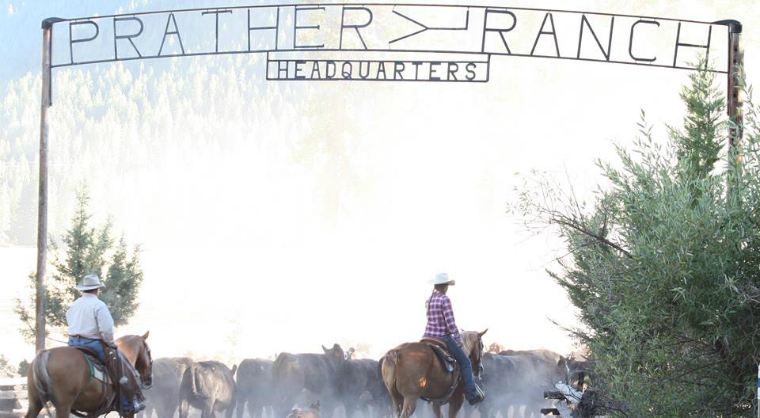
SACRAMENTO, Calif. – (November 18, 2015) Sand County Foundation, the California Farm Bureau Federation and Sustainable Conservation are proud to announce Prather Ranch as the recipient of the prestigious 2015 California Leopold Conservation Award®. The award honors private landowner achievement in the voluntary stewardship and management of natural resources.

Prather Ranch, owned and managed by Jim and Mary Rickert, is a working cattle ranch headquartered in Macdoel, and stretches across five counties. Under the Rickerts’ management, Prather Ranch has grown in size, implemented conservation enhancements and established several permanent conservation easements. Over the last 35 years, Prather Ranch has continually collaborated with diverse partners to enhance the land and promote land stewardship in the community.

One of the ranch’s first efforts to promote biodiversity was taking an unusual approach to managing the wild rice fields on their land near Mt. Shasta. After rice harvest, they began tilling the stubble into the soil and keeping their fields covered in water year-round. The practice not only benefited common species of waterfowl such as Canada Geese and Snow Geese, but it also attracted shore birds like plovers and terns, previously found only on the coast.

Through conservation easements in cooperation with the Shasta Land Trust, the Rickerts have preserved some of the state’s most spectacular wildflowers and protected sensitive vernal pools and riparian areas. Prather Ranch has also planted several miles of riparian habitat along streams and irrigation canals to benefit a wide range of animals such as the California Quail and the endangered Shasta crayfish.

Jim and Mary Rickert provide community leadership, working with 4-H, Future Farmers of America, and local schools for ranch field trips and other activities.

Given in honor of renowned conservationist Aldo Leopold, the Leopold Conservation Award recognizes extraordinary achievement in voluntary conservation. In his influential 1949 book, A Sand County Almanac, Leopold called for an ethical relationship between people and the land they own and manage, which he called “an evolutionary possibility and an ecological necessity.”

“Because more than half of all land in California is privately owned, how landowners manage their properties has a dramatic and lasting effect on the environment and quality of life for all Californians,” said Ashley Boren, executive director of Sustainable Conservation. “Since the 70s, Jim and Mary have demonstrated an above-and-beyond commitment to enhancing the land, water and wildlife across a large swath of the state. And, they’ve done it in true Leopold fashion, regarding their land not simply as a commodity that belongs to them, but rather seeing their land as a community to which they belong.”

“The Leopold Conservation Award recognizes unique yet replicable strategies a farmer or rancher has developed in managing their land, to be the best steward of the natural resources,” said Paul Wenger, California Farm Bureau President. “We are honored to join Sand County Foundation and Sustainable Conservation to recognize the extraordinary efforts of California farmers and ranchers who go above and beyond in managing and enhancing our natural resources.”

The Leopold Conservation Award program inspires other landowners through these examples and provides a visible forum where farmers, ranchers and other private landowners are recognized as conservation leaders.

The 2015 California Leopold Conservation Award will be presented December 7 at the California Farm Bureau Federation’s Annual Meeting in Reno, NV. Each finalist will be recognized at the event, and Prather Ranch will be presented with a crystal depicting Aldo Leopold and $10,000.

The award sponsors also wish to congratulate the 2015 finalists for their outstanding contributions to agriculture and conservation: Bruce and Sylvia Hafenfeld, who own Hafenfeld Ranch and manage public lands in eastern Kern County, and Ken and Matt Altman, who own and manage Altman Specialty Plants in Riverside and San Diego Counties.

The California Leopold Conservation Award is made possible thanks to generous contributions from American Ag Credit, The Harvey L. & Maud S. Sorenson Foundation, The Nature Conservancy, Environmental Defense Fund, The Mosaic Company, DuPont Pioneer, and The Lynde and Harry Bradley Foundation.


ABOUT THE LEOPOLD CONSERVATION AWARD®
The Leopold Conservation Award is a competitive award that recognizes landowner achievement in voluntary conservation. The award consists of $10,000 and a crystal depicting Aldo Leopold. Sand County Foundation presents Leopold Conservation Awards in California, Colorado, Kansas, Kentucky, Nebraska, South Dakota, Texas, Utah, Wisconsin and Wyoming.

ABOUT SAND COUNTY FOUNDATION
Sand County Foundation is a non-profit conservation organization dedicated to working with private landowners across North America to advance ethical and scientifically sound land management practices that benefit the environment.

ABOUT SUSTAINABLE CONSERVATION

Sustainable Conservation helps California thrive by uniting people to solve the toughest challenges facing our land, air and water. Since 1993, it has brought together business, landowners and government to steward the resources that we all depend on in ways that make economic sense. Sustainable Conservation believes common ground is California’s most important resource. 


ABOUT CALIFORNIA FARM BUREAU FEDERATION

The California Farm Bureau Federation works to protect family farms and ranches on behalf of over 53,000 members statewide and as part of a nationwide network of more than 6.2 million Farm Bureau members. 

2016-05-31T19:27:03-07:00November 18th, 2015|

Avian Influenza Mapping Plan to Prevent CA Outbreaks

High Pathogenic Avian Influenza Mapping Plan (HPAI) to Prevent Outbreaks in California

By Patrick Cavanaugh, Deputy Editor

In 2014 and 2015, the outbreak of High Pathogenic Avian Influenza (HPAI) caused unprecedented damage to the mid-western commercial poultry industry, requiring the depopulation of 48 million birds, particularly turkeys and laying hens. There were isolated cases in last autumn in California as well. Migrating birds, generally considered to be the source of HPAI, move throughout the state in their flyways this time of year.

USDA Pacific Flyway Map

USDA Pacific Flyway Map

Maurice Pitesky, a UC Cooperative Extension population health & reproduction assistant specialist with an appointment in poultry health and food safety, emphasized the importance of the flyways, “These global flyways that waterfowl use to move north and south and back again every single year are like freeways. And in those freeway lanes, different birds interface with each other.  So, we might have a Pacific flyway that covers California, but that Pacific flyway can interface with the East Asian and Australian flyway in the Northern Arctic. If you look at the genetics of the strains that were found in North America, especially in California, the genetics match some of the HPAI found in South Korea for example,” Pitesky said.

The Avian Influenza Mapping Plan is like overlaying maps of birds’ flying patterns for an early warning system for commercial operations. Pitesky observed, “We’re really just scratching the surface in how we can utilize maps with respect to surveillance and risk-mapping. For example, if I can locate on a map, where waterfowl, flooded rice fields, or wet fields are, and I can also determine where commercial poultry operations are, then I can start understanding which operations are at highest risk.”

I can triage my focus, outreach, and biosecurity efforts to those farms that are most closely located.

“New techniques are available so our national network of weather radar can actually be leveraged, and that data can be utilized remotely to understand in real time where waterfowl are hanging out. Eventually we can use that information to warn farmers in real time if there are migrating waterfowl near their farm,” he said.

2016-05-31T19:27:03-07:00November 18th, 2015|

Bridging the Farm-City Gap

Stanislaus Outreach Bridges Farm-City Gap  

By Patrick Cavanaugh, Deputy Editor


Wayne Zipser, executive director of the Stanislaus County Farm Bureau, noted that he, his staff and farm bureau members are working hard to bridge the farm-city gap. “We certainly do a lot of outreach,” Zipser said. “We mainly try to reach out to our young people and change their attitudes towards production agriculture.”

“We teach them where their food actually comes from,” he explained, “so when they grow older, they have a different opinion and know exactly where their food comes from—not just from the grocery store off the grocery shelf. It takes a lot of people to make that happen so consumers can appreciate the nutritious food they are consuming.”

”We have several Ag Days in the County. We visit schools individually and do presentations,” said Zipser. “One of the big presentations is something we call ‘Ag Adventure.’ We bring third graders because we’ve been told that third grade is when they absorb the most information into their minds.”

“We bring classes out to the fairgrounds and introduce every child to our industry, to where their milk and eggs come from. We also talk about how rain and snow filter down into reservoirs for storage. The teachers are also become immersed; they take the lessons back to the classroom and apply them to their own curriculum.”

Zipser explained the staff is big on social media now, “Social media benefits our industry; almonds being the number one commodity—but we’ve all heard it takes one gallon of water to produce one almond. We want to go back and say, “Look, it may take that, but look at the benefits coming back to the community.”

“One of our biggest outreaches is letting people know that our farmers and ranchers are suffering through this drought too,” Zipser said. “We, as producers, are suffering, and we have made tremendous strides in conserving water. We see many of the irrigation districts in our county now have extra water that they didn’t know they were going to have because the farmers did such a good job conserving,” Zipser clarified.

2016-05-31T19:27:04-07:00November 16th, 2015|
Go to Top