National Dairy Crisis Continues—Part 2

National Dairy Crisis—A Way Forward, Part 2

By Laurie Greene, Editor

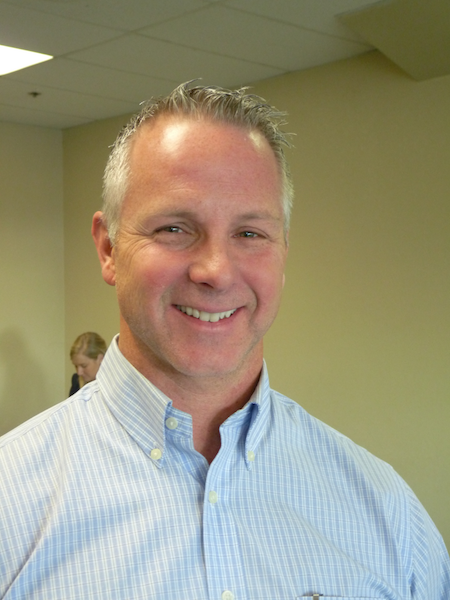
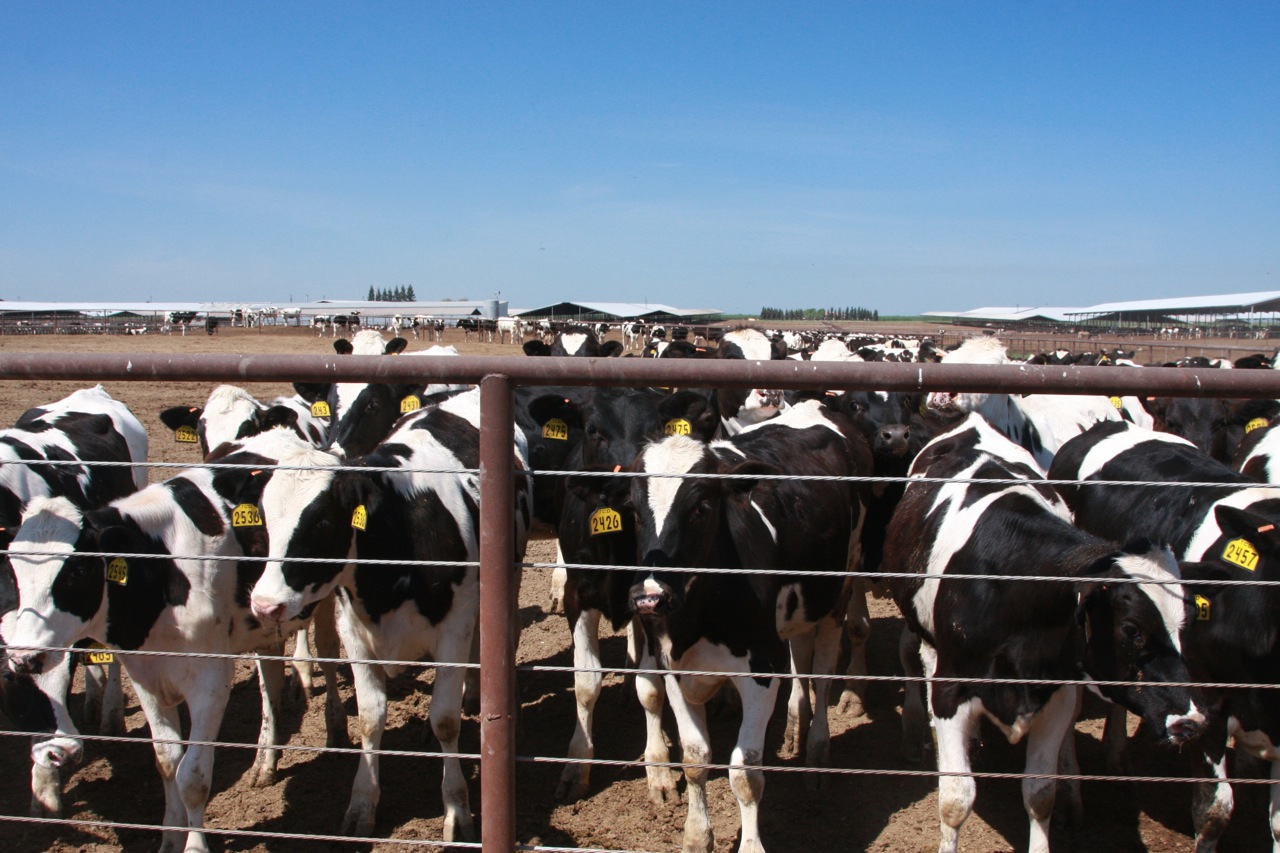
In our continuing coverage of the national dairy crisis marked by high inventories and below-production costs-prices, industry proponents are considering ‘market responsive’ ways to help with inventories, such as donating to the Feeding America organization or to other food banks. Tom Van Nortwick, owner and publisher of Fresno-based Agribusiness Publications, which has published a dairy magazine for 35 years, has been closely involved with hundreds of dairy producers from 2009 through June 2014 in the organization and establishment of the National Dairy Producers Organization. This nationwide organization focuses on keeping dairies profitable especially when market conditions squash dairy pricing.

Van Nortwick, who believes donating excess milk would be relatively easy and painless for the dairy industry, commented, “We are not going to specially package it; it is going to be what it is and where it is. It is then their responsibility to deal with it after that. The milk has already been processed and stored, and it’s waiting to be sold.”

In picking up all these excess dairy products, food banks such as Feeding America would dramatically reduce inventories. Van Nortwick explained, “We have found in studying these inventory levels, that when inventory gets to a certain level, it starts to impact the value of what someone is willing to pay me—a dairy producer—for the milk that I am pulling out of our cow today. And so we are recommending to our dairy producers that it might take literally 15 cents to impact the price of milk today which is currently $5 under the price of production and $7-$10 away from profitability.”

“The idea,” he continued, “is to have producers put up 15 cents per hundredweight into a savings account, which, when needed, would buy up excess inventory on the finished product side—the milk, cheese, milk powder and butter markets. Producers would then donate the purchased product to churches, food banks and Feeding America.

Tom Van Nortwick further expounded, “What if you invest $1 and get a $10 return? What if you invested 15 cents and got a $10 return? Is that a great plan? That is a great plan. The ‘investment’ is actually buying up [excess] inventory from the inventory [of processors and manufacturers] so it is no longer there. Because all of that is tracked, everybody knows how much there is and where it is. So if you are watching the market, you know if you should be buying more cheese, or making more cheese, or more powder. GM doesn’t make more cars than the dealers can sell; otherwise GM shuts the plant down. Everybody screams and hollers, but guess what? They know if they are going to survive, they have got to back off and not make more cars until the dealers, the selling organizations, pick up the slack.”

Van Nortwick says the dairy industry needs to focus more on the milk after it leaves the farm, “It is vitally important that we in the dairy producers sector start paying attention to what is going on with the milk, and the products being manufactured from milk after it leaves the farm. We are doing a wonderful job in how we produce it, the care and keeping of the animals, the sustainability of the environment, the recycling of the waste material; all of that we do better than anybody else in the world.”

“Do we need to be ever watchful?” he asked. “We have a new program called, ‘Picture Perfect’ in the industry, especially agriculture. All of agriculture needs to be ‘Picture Perfect.’ Do you know why? ‘Because everyone has a camera. Everyone’s got their own video recorder and anything can be seen anytime and filmed anytime. And a picture taken can go viral tomorrow, or tonight—even while we are asleep. So, we have to be picture perfect. We already do that.

He implored, “I want to say to dairy producers across the country, ‘You win. You make the most. You make the best. But that is not what we need right now in order to be sustainable. We need you to pay attention to your milk and what happens with your milk after it leaves the farm.”

______________________________

Links:

National Dairy Producers Organization
Feeding America


2021-05-12T11:17:14-07:00February 25th, 2016|

PCA Training At UC Davis

UC Davis Offers Pathway to PCA Training

By Laurie Greene, Editor


Frank Zalom, distinguished professor of entomology, agricultural experiment station entomologist, and extension specialist at UC Davis, teaches a class for students that forms a pathway to becoming a Pest Control Advisor (PCA). “It is the only class that a lot of them had ever taken in entomology,” said Zalom, “so we try to structure it to give them a good, solid background in entomology. Then we lead them through all the different pest management options. We even bring in someone from the California Association of Pest Control Advisors (CAPCA) Pathway to PCA program for the very last lecture.”

Zalom, whose research interests include integrated pest management (IPM), tree crops, small fruits and vegetable crop entomology, wants to provide a valuable education to his students. “Most of the kids taking my classes are interested in taking the PCA exams and there is a huge opportunity for those students out in the future.”

“We teach them about integrated pest management (IPM) and the pests,” Zalom noted. “Then we show them some of the many career opportunities for PCAs,”  he said, adding. “There will always be a big need for professional PCAs to help protect our crops from pests and diseases. They assist growers all over the state.”

________________________

Links:

California Association of Pest Control Advisors (CAPCA)

CAPCA Pathway to PCA

2021-05-12T11:03:03-07:00February 24th, 2016|

Water Regulators Operate in Silos

State Senator Cannella Says Water Regulators Operate in Silos

By Laurie Greene Editor

California State Senator Anthony Cannella, (R-Ceres), who represents District 12, the Westside of the Central San Joaquin Valley from Modesto to Coalinga, knows how growers must feel about so much fresh water from recent rain and early snowmelt flowing out to the ocean instead of being stored for future use. Cannella, who is currently serving as vice chairman of the Agriculture Committee said, “Obviously growers are out there; they have their life savings out there; they have been relying on water from the State Water Project or they have been relying on reservoirs; and the state has been taking more and more of their water due to ESA restrictions.”

“If farmers do not have surface water again this year,’ he continued, “they are going to pump from the groundwater. But state and federal officials do not see the connection that no surface water means more groundwater pumping. It would be much more sustainable if farmers could receive more surface water instead of having it flow out to the ocean.”

Cannella said, “Water regulators operate in silos. On one hand, they say groundwater has to be at an equilibrium; and, on the other hand, they say that they cannot pump much fresh water into reservoirs. They don’t combine the two; they don’t connect the two; and I think that is wrong.”

“If you are going to regulate or take away surface storage, there will be an impact on groundwater,” explained Cannella. “But the state does not operate that way, and that is why we are having the problem we are having,” he said.

2016-05-31T19:24:11-07:00February 22nd, 2016|

Interior Assesses California Water

U.S. Department of Interior’s Tom Iseman Assesses California Water

Tom Iseman, deputy assistant secretary for water and science at the U.S. Department of the Interior, in an exclusive interview with California Ag Today’s farm news director, Patrick Cavanaugh, assessed how California is faring given the drought.

Cavanaugh:  I see you as someone who focuses on not just solutions but also the issues and tragedies caused by the extended drought in California. From your perspective, how is California doing and how could things be better?

Iseman:         First of all, I think California is obviously on the leading edge for a lot of reasons, but the state is in the midst of an extended drought. So it is really forcing us to be smarter about how we address these water scarcity challenges. I have been very impressed with the way we have been able to really work together—the Bureau of Reclamation working with the state, the water users and the conservation groups—to think about how we can stretch our limited water supplies to meet these different purposes.

Tom Iseman, deputy assistant secretary, U.S. Department of the Interior

Tom Iseman, deputy assistant secretary, U.S. Department of the Interior (Source: https://www.linkedin.com/in/tom-iseman-3354aa7)

Cavanaugh:  Obviously the country is not able to build another Hoover Dam, but does the Interior understand that we need more storage in California for the rainy days?

Iseman:         Absolutely. There are different ways to do it, so we are looking at a number of projects. One is raising Shasta Dam; one is a new reservoir possibly on the upper San Joaquin River (Temperance Flats); and Sites Reservoir.

Cavanaugh:  But those projects are a long way off, and they may never be built. What can California do now to increase its water portfolio?

Iseman:         There are smarter ways we can build smaller-scale storage and new ways to operate our facilities to stretch water supplies to our advantage.

Cavanaugh:  Could you talk about how we can use water differently? Desal is more expensive water, but water needs to be more expensive. When water gets more expensive, people conserve more, right? Talk about your vision of desal in America, particularly in California.

Iseman:         Generally, clean water technology is a big part of what we need to be doing. It is not just building new storage; it’s being smarter with what we have. So, technology is a great way to do that. We have desalination, water recycling and water reuse. Having these options creates an opportunity for more partnerships. So now you can have cities recycling their water and sending their water supply to agricultural water users—a win-win situation. The city gets some revenue and deals with its wastewater, and agricultural water users get a new supply. That is the way we should be thinking—about the possible partnerships to take advantage of these options.

Cavanaugh:  People building desal plants in cities like Santa Barbara, mothballed the plants when the rains came. We need to make desal part of the culture of these cities located on the ocean. I mean, does the Department of the Interior see that as a rational thing to do?

Iseman:         It’s interesting. Obviously it has been done in other places, and they have invested quite a bit of money here in California. It comes down to economics; we don’t make the decision about whether a city builds or doesn’t build a desal plant, but it is part of the water supply list, potentially.

The challenges with desal is just the cost right now and how much energy and waste it can produce. And they are comparing that to the other options out there. Are there other technologies out there that we can use? Are there water markets or water rights I can acquire? Is there potential for new storage? I think the cost will help sort that out.

The part that cost doesn’t address in some ways—and it can be built in—is the uncertainty. One thing, I think, about a desal plant that people like is that you know there is going to be a water supply if you are on the ocean. And if you have the money and can generate the energy, you can get the water. As you see more uncertainty in our climate and in our existing water supplies, that would be one argument in favor of desal.

Cavanaugh:  It is stable.

Iseman:         Yes, and we need reliability.

Cavanaugh:  Well, you talked about the cost and the economics, but we all need to pay more for water, and I’d be the first one. It would make everyone conserve more, right?

Iseman:         Absolutely.

Cavanaugh:  Maybe, raise the cost of water $10 a bill?

Iseman:         Well, I’m not going to say we are going to raise people’s water rates, but if you talk to the industry and look at the future of the industry, a lot of people say, ‘People need to pay more for water.’ That is how you get the investments.

The federal budget is constrained; they are not going to be there when we are going out and building Hoover Dam in ten years. We just don’t have that kind of resources anymore. So the question is, how do you get more revenue stream in to help contribute to the cost of those investments? And that goes back to rates. And at some point, we will have to decide how much we pay for water and how much we value our water.

Cavanaugh:  Thanks for being aware of all this. Are you encouraged we will find solutions?

Iseman:         We talk about California everyday; we are all very aware of the things that are happening. But I really gained an appreciation of the innovation, the energy and the cooperation of people here—the commitment they have in dealing with these issues. I was glad to be a part of it.

_____________________________

Link:

U.S. Department of the Interior

2016-05-31T19:24:12-07:00February 19th, 2016|

LA Included in Water Priorities Act

CaWater4All-Proposed Water Priorities Act Includes Los Angeles

By Patrick Cavanaugh, Deputy Editor

The Water Priorities Constitutional Amendment and Bond Act is good for all of California—people, farms and the environment. Should the required 565,880 petition signatures necessary for inclusion on the November 2016 ballot be collected by the April 26, 2016 deadline, and should the Water Priorities Act receive a majority of affirmative votes in November, it will provide big benefits to cities such as Los Angeles.

“The availability of regional water projects is massive for our urban centers,” stated Aubrey Bettencourt, executive director of the California Water Alliance, the ballot initiative’s sponsor. “The ability for urban centers to create water in their own regions and become less dependent on other parts of the water system, actually helps the other regions in the system as well.”
CaliforniaWater4All

The proposed water priorities act creates flexibility all around. Bettencourt explained, “Consider that the Los Angeles (LA) River loses as much water in an average storm event as the water supply for 180,000 homes annually—in one storm! In an average normal water year, Los Angeles loses the equivalent of the Shasta Reservoir in stormwater runoff, and they are under state and federal mandates to capture that water, recycle it and put it back in their water supply. This helps clean up their beaches and ocean water, which would otherwise end up with a lot of pollution through runoff,” she said.

“This ballot measure would increase their regional water supply by capturing and injecting stormwater runoff back into their groundwater supply. That would providing flexibility and reliability to the water supply for Southern California, but also affordability, which is such a key part of this effort,” Bettencourt noted.

“And Governor Brown just extended the drought cut mandates through the end of October of this year, and a lot of communities are conserving and conserving,” she said.”They are conserving so much that they using less; and, now they have to pay more because they are using less. So they are using less water, paying more for it, and still being punished. And that should not have to happen if we have a system big enough to supply all of our diverse water needs: agricultural, urban and environmental.”

Bettencourt noted, “The system hasn’t been updated since the late ’60’s-early ’70’s, in terms of some of our large-scale infrastructure. And you have to remember, our population was half the size it is today, and we didn’t have the same type of demand on that system that we do today,” she emphasized.

“Currently, we allocate 50% of our surface water to environmental protection. That is not wrong; but what is wrong is that we didn’t expand the system enough to take care of that allocation and our people. That is what this water ballot initiative is aiming to provide:  to increase our infrastructure to meet the demands of the 21st century,” said Bettencourt.

_____________________________

Links:

California Water Alliance Initiative Fund

California Water Alliance

2016-05-31T19:24:12-07:00February 18th, 2016|

Dairy Prices Still Low

UC Davis’ Bees Butler on Low Dairy Prices


By Laurie Greene, Editor


As previously reported, the dismal below-production-costs dairy prices in California—the #1 dairy state—as well as in the rest of the nation, emanate from excessive inventory and slumping sales, particularly in the export market.

Leslie (Bees) Butler, a UC Davis Cooperative Extension specialist and lecturer in the Department of Agricultural and Resource Economics, explained why dairy producers don’t cut back on milk production. “It is easier said than done,” he said, “and for many producers, it comes down to an income problem. Most production units are set up on a certain sort of ‘scale,’ if you like. So if I am all set up ready to milk, let’s say, 800 cows, or 1000 cows, and then you come along and tell me, ‘Well, you ought to reduce it a bit.’”

“Quickly, I, the dairyman, have to think of what I can do,” said Butler. “There may be a couple of things I can do. First, I can get rid of some cows, my lowest producing cows. You can do that, but it would be a temporary solution to the problem. The second is don’t add those high-producing heifers back into the herd, but they are the most efficient cows. So as you do add them in, you have to cull more lower-producing cows. Many heifers are much better producers than their mothers, so it just reduces the lifecycle of the poor mom.”

“And of course, cash flow in the dairy business is so important,” emphasized Butler. “You know there is a limit to how much a dairy farmer can reduce his income without impacting too seriously his ability to pay off loans, etc.”

2021-05-12T11:17:14-07:00February 17th, 2016|

Lorsban Under Scrutiny

Chlorpyriphos (Lorsban) Must be Used More Carefully

By Patrick Cavanaugh, Deputy Editor

California Department of Pesticide Regulation (DPR) reports an important, broad-spectrum organophosphate insecticide known as Chlorpyriphos, or Lorsban, may be further restricted due to evidence of potential human health and environmental risks, presence (parts per billion) in some California waterways, and pressure from the EPA. Brian Leahy, director of the California Department of Pesticide Regulation, said, “Chlorpyriphos is an important tool and we know there are important times when you have to use it.”

Registered and widely used in agriculture across the nation for more than 40 years, DPR has made it a restricted-use material. Leahy said, “We are trying to work with the grower community to improve how they use it. We are also working with UC IPM to look at essential needs, but we know that as we look at Chlorpyriphos, we are going to have to put additional restrictions on it.”

“We simply need for it to stay on target, and not be getting into the human body. We are seeing that it is, and we are going to continue to make sure that people use it thoughtfully and wisely,” he said.

And Leahy is very confident that growers can use this material and keep it on target, “I have seen farms that use it only when they really need it, and that is what we want. We can’t lose this tool and we are going to keep it only by showing we can greatly reduce off-site movement to the human body and watersheds,” he noted.

___________________________

Resources:

According to the University of California Agriculture and Natural Resources 2014 Chlorpyrifos Report entitled, “Identifying and Managing Critical Uses of Chlorpyrifos Against Key Pests of Alfalfa, Almonds, Citrus and Cotton“:

Chlorpyrifos plays a critical role in many IPM programs for controlling pests that threaten the productivity and economic well-being of California producers and in maintaining the high quality standards required by consumers and international export markets. This active ingredient also allows production of animal feed to support the important dairy industry in California. For some pests, chlorpyrifos is one of the last effective organophosphate insecticides available and may provide an important alternative mode of action for insecticide rotations to prevent the development of resistance to newer insecticide products. For others, this product is one of very few products with international registrations with established maximum residue limits (MRLs) that allow unhampered trade. Chlorpyrifos may also be a key tool for controlling invasive pests as well as endemic pests occasionally found in extremely high population densities. 

The California Department of Pesticide Regulation reports that the combined use of chlorpyrifos in alfalfa, almonds, citrus, and cotton has decreased since 2006. 

Although newer insecticides are also available to manage some pests in these four crops, there is a continued need to preserve the availability of chlorpyrifos for specific situations.

Assessing the Health Risk of Pesticides,” California Department of Pesticide Regulation

2021-05-12T11:03:04-07:00February 16th, 2016|

Youth in California Cattle

Youth in California Cattle

By Charmayne Hefley, Associate Editor

Statistically, it appears millennials aren’t considering agriculture as a career path. The USDA’s “2007 Census of Agriculture: Farmers by Age,” reports the average age of cattle ranchers was 57.8 years old. Malorie Bankhead, director of communications for the California Cattlemen’s Association (CCA) and a millennial herself, said, “Young people in the beef industry have a really unique opportunity to get involved in something called the Young Cattlemen’s Committee (YCC), the young affiliate of our California Cattlemen’s Association.

Young Cattlemen’s Committee (YCC)

Young Cattlemen’s Committee (YCC)

Bankhead explained, “There are four college chapters: Fresno State, Chico State, Cal Poly and UC Davis. We don’t discourage membership from high school students or even folks younger than that who are interested in getting involved. The membership is $25 per year, and with that, you’re afforded a wealth of opportunity to become involved. We have a fairly robust scholarship program available to YCC members where we interview up-and-coming leaders in the beef industry who are focusing academically and extracurricularly on the beef industry, with the career goal to reenter the beef industry.”

Bankhead said the Young Cattlemen on the Capitol event, set for April 5, “is another opportunity for young people in the industry—specifically YCC members—to come to the CCA office in Sacramento to to learn from our staff about the current hot topics in the beef industry affecting ranchers. We turn to discussions with those folks and each other and build your network in the beef industry. We also tour the Capitol, visit some legislators and network with them on issues impacting the beef industry.” Registration information is forthcoming on the CCA website under the YCC tab.

2021-05-12T11:17:14-07:00February 15th, 2016|

EPA on Agriculture, Part 2

Ron Carleton, EPA on Agriculture, Part 2

By Laurie Greene, Editor

Editor’s note: In an exclusive interview with Ron Carleton, EPA Counselor to the Administrator for Agricultural Policy, we asked how the EPA views agriculture.

“Look, we want to work with agriculture,” said Ron Carleton, former deputy commissioner for the Colorado Department of Agriculture. “We have a number of issues and challenges we face across the country with water quality and other things. The thing that we often talk about is the adoption and implementation of conservation measures and best practices, and our producers are doing that,” he noted.

“Farmers are taking those very important steps,” explained Carleton, “to help get us from here to there. EPA Administrator Gina McCarthy is very committed to working with agriculture, to have that dialogue, to have that discussion, to have those two-way communications. So, hopefully, we can work better together as we go forward and find those opportunities to collaborate and to partner. That is so key, and something that I strongly am committed to and strongly support.”

Ron Carlton, EPA Counselor to the Administrator for Agricultural Policy

Ron Carlton, EPA Counselor to the Administrator for Agricultural Policy

Carleton elaborated, “I absolutely believe the EPA is always willing to look for outreach opportunities to be with our producers to sit down, to have those discussion with farmers,” towards a common goal.

“We’ve worked with our pesticide folks around the state very closely to resolve any issues that might arise with pesticide issues. We want to get those tools and those products out to our producers, but to do so in a safe way, in a way that also protects the environment. So, I think it is about collaboration. It is about discussion and dialogue, and we are committed to doing more of that.”

With the EPA’s commitment to collaboration and partnership, Carleton said hopefully in the long run, we could address the many challenges that we all have—not only in agriculture—but in the environment as well.

“I’ve always said that our farmers and ranchers are the best stewards of the land,” said Carleton. “We at the EPA need to continue working with them to support them to promote those efforts as best we can.”

“Now, we are not without challenges out there—environmental challenges with water quality, for example, with nutrient pollution in some cases, and air issues in other cases. But I think that the way we lick those problems, again, is by working together promoting those voluntary efforts. We must look for and embrace those opportunities to work together, not only with our Ag stakeholders, but also with the USDA and the NRCS.

“I think we just need to continue what we are doing, engage even more farmers and ranchers,” Carleton said, “and continue to seek technological advances, not only in irrigation, but land management and water quality. I’m confident and I’m optimistic that even with the challenges we have, climate change, a doubling of the population by 2050 and all the problems these will pose, I have every confidence in the world that we are going to find solutions to these problems, and I think that our farmers and ranchers are going to lead the way.

USDA Horizontal Logo“Farmers and ranchers are innovative and always trying to do the best they can to protect their land and water; but we all can do better. I think our producers respond to change in very good ways. Look, we have gone through technological advances; we are more technically precise in using fertilizers and water,” Carleton said.
He noted, “Water is going to be an interesting issue as the population doubles and as we have more development, particularly in the Western part of the United States, which is drier. But I think our farmers and ranchers are good at responding to that change, and good at helping to develop, adopt, and implement those technical advances in a way that not only is environmentally good, but increases productivity.”

“They are doing more with less,” Carleton said, “particularly given the challenges of a growing population, not only here in this country, but around the world, the loss of productive agricultural land everyday to development and the increase in extreme weather events, including droughts, floods and the like—and California farmers know all too well the weather extremes.”

2016-05-31T19:24:12-07:00February 12th, 2016|

Vertical Integration and Grape Flavors

Vertical Integration and Grape Flavors

By Charmayne Hefley, Associate Editor

Vertical integration, the combination in one company of two or more stages of production normally operated by separate companies, has helped lead to success in many facets of the agriculture industry. Harold McClarty, who founded HMC Farms with Mike Jensen, said without vertical integration, his farm would not be able to survive or have nearly the same level of success.  “We would not be in stone fruit if we were not vertically integrated,” McClarty explained. “There are three profit centers: the growing of it, the packing of it and the selling of it. We have all three of those profit centers. Without them we would not be able to survive the tough years.”

Cotton Candy grape clamshell

Cotton Candy grape clamshell (Photo source: Grapery)

McClarty also said the grape industry has made significant strides in flavor profiles in the marketplace. One popular flavor is Cotton Candy, which is grown and sold by Grapery, a company founded by Jack Pandol in 1996. Grapery also grows and sells Gum Drop grapes, Moon Drop grapes, Flavor Pops grapes and more.

The increase in unique flavors, according to McClarty, has helped grapes become a popular snack. “There’s been a revolution in the varieties of grapes grown just over the last five to seven years,” McClarty said. “These new varieties have revolutionized grapes and enabled us to produce more on less. 

To evaluate a grape, McClarty suggests you “look at a berry’s color, crispness and sweetness; these are the things that make a grape taste delicious. It really is a revolution, and we haven’t seen it in the California marketplace as much as we have in the rest of the United States. The retail chains in California just haven’t embraced it as well as some of the really good supermarkets on the East Coast and in the Southeast,” noted McClarty.

2016-05-31T19:24:13-07:00February 9th, 2016|
Go to Top