ALRB Education Does Not Require Worksite Access

Barry Bedwell Says ALRB Education for Farmworkers is Okay, But Not Worksite Access

By Patrick Cavanaugh, Deputy Editor

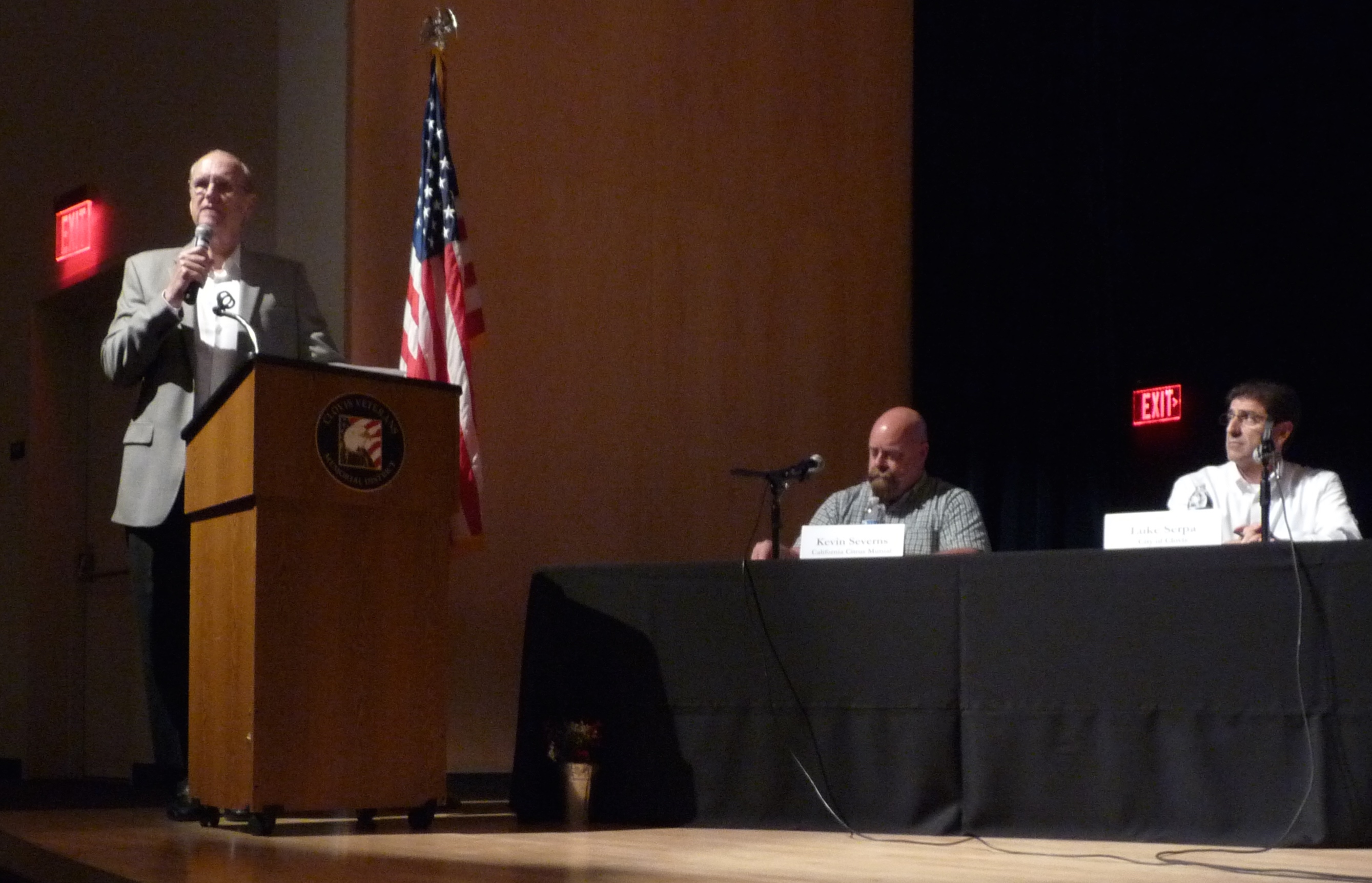
Officials from the California Agricultural Relations Labor Board (ALRB) held a public hearing in Fresno TODAY to talk about their proposal for worksite access– private operating farms–to educate farmworkers about the ALRB, and that did not sit well with ag leaders. Barry Bedwell, president of the California Fresh Fruit Association based in Fresno and other ag leaders questioned the ALRB’s motives.

“The real proposal has to do with granting legal access to ALRB agents to agricultural worksites for the purpose of educating workers about the Agricultural Labor Relations Act,” Bedwell said. “Education alone is something that no one I’ve talked to is against, clearly. We want people to understand their rights under the law.”

The Act provides, encourages and protects collective-bargaining rights for agricultural employees, but as Bedwell explained, access to a private worksite is a totally separate legal issue.

“It’s really complicated, unfortunately, because ALRB’s staff has shown to a great degree over the recent couple of years, a distinct bias towards organized labor,” Bedwell said. “The Act is all about a worker’s right to get one or more people together to complain about work conditions and to ask for certain things. It doesn’t mean the employer has to grant them; it’s really about worker’s rights.”

Bedwell said the request from the ALRB is distinctly not about a union’s rights, and “it’s never been about the employer’s rights,” Bedwell said. “We know that. But in this case, we think it’s at best premature to talk about workplace access without first understanding the issue of knowledge [or the lack thereof] out there currently and the best ways to conduct that education.”

Pointing to heat illness prevention and Cal/OSHA as a great example, Bedwell said, “Cal/OSHA did not ask for access to go onto someone’s private property. Instead, they said, ‘We will create the information systems through various media and through seminars which agriculture helped to organize and fund.’ We think that’s a great model for educational services, and we could help.”

2016-05-31T19:28:05-07:00September 10th, 2015|

Super PAC Needed to Fight Extreme Enviromentalists, Part 3

Rachel Martin on Need for Super PAC to Fight Extreme Environmentalists

By Charmayne Hefley, Associate Editor

Part 3:

This is the third and final part of a three-part series with Rachel Martin, the national chairperson of Homeland Security for the National Federation of Republican Women, on the importance of creating a political action committee (super PAC) to combat extreme environmentalists in order to save forests, wildlife, and ag suffering from limited water allocations during this extensive drought.

Martin discussed how groups in addition to agriculture are suffering due to the limited water allocations and environmental regulations that prevent forest maintenance, such as logging, thinning of the forests and controlled burns, the lack of which leaves forests vulnerable to wildfires that burn thousands of acres and kill protected animals annually. “The Super PAC that I’ve been putting together since February is bringing together law enforcement and fire fighting agencies,” Martin explained. “We’re also bringing in animal organizations; we’re just waiting for their board approval.”

Through combined funding, Martin hopes the Super Pac will  begin to rival the environmentalists who have already joined together to lobby for what they want. “We’re looking for associations and unions to get together and pool their money,” Martin said, “because that is what has helped the environmentalists get to this point–which is having almost total control of California. It’s lobbying, having the money, and joining forces to fight and pave their way through Sacramento and Washington to get their laws and their amendments approved. Yet we have a lot more people who are suffering, a lot more groups, organizations and animals that are suffering and dying because of the lack of water.”

Martin said she has been appealing first to those outside of agriculture to form her Super PAC and hopes the ag community will join in. “I figured ag is already in the fight,” Martin stated, anticipating strength in combined numbers and funds.


2016-05-31T19:28:05-07:00September 8th, 2015|

Super PAC to Save Animals that Die in Wildfires, Part 2

Rachel Martin on Need for Super PAC to Save Forests, Wildlife, Ag

By Charmayne Hefley, Assistant Editor

Part 2:  Animals Needlessly Die in Fires

We are continuing our three-part series with Rachel Martin, the national chairperson of Homeland Security for the National Federation of Republican Women (NFRW), who is urging the creation of a political action committee (super PAC) to save forests, wildlife, and ag suffering from limited water allocations during this extensive drought.

“Agricultural agencies aren’t the only entities suffering from the lack of water allocations,” Martin explained. “Other agencies are also suffering due to the environmental regulations that prevent forest maintenance, such as logging, thinning of the forests and controlled burns. Curtailment of forest maintenance leaves thousands of acres of forest, as well as wildlife, vulnerable to larger, more numerous, and containment-resistant wildfires each year.

“When law enforcement evacuates homes, they have to force people out,” Martin said. “People fight to come back into get their pets—their dogs, their cats, their horses, livestock and any other animals they may have. But, oftentimes, residents don’t have the means to haul their animals with them; they may not have horse trailers. Sometimes, animals actually run free up into the mountains and can’t readily be caught. As I was specifically told by some law enforcement officials, those animals end up dying in the fires.”

Martin realized that once animal lovers learn of the suffering caused by the environmental regulations, they might consider joining the fight against the environmentalists. “I’ve been working with animal organizations and animal lovers. I’m one myself. I have quite a few pets, and I grew up around horses. Animal organizations and animal lovers alike can get in on this fight against the environmentalists.”

“Environmentalists are trying to protect species that actually aren’t even on the protected list yet; they’re almost on the protected list,” Martin stated. “Yet, in doing so, they just keep getting further and further away with from their original goal of protecting endangered species and pristine forests. They’re getting away with a lot more through politicians, too.”

2016-05-31T19:28:05-07:00September 8th, 2015|

High Pricing Keeps Tulare County Ag #1

Tulare County Ag Tops all Counties

By Laurie Greene, Editor

The 2014 crop report from Tulare County indicates another record-setting year. Marilyn Kinoshita, Tulare County Ag Commissioner, noted how well the dairy industry did, “30% of our overall value was actually milk, so dairy is incredibly important to our county. They had some good prices for most of the year. That is what brought up the value of milk to $2.5 billion. It is a significant increase over the prior year. A little bit more yield, but it is the price that kicked up well over two billion dollars.”

Tulare County Ag sales topped $8 billion in 2014, and the dairy industry overcame significant pricing obstacles to contribute to the County’s success.

Kinoshita continued, “We’ve got several classes of milk, and California producers are at a disadvantage to the other folks in Wisconsin or Nebraska, or wherever milk is produced. California producers feel singled out. They have their own system by the Secretary of Ag, so they have lobbied to get some hearings to be put under the federal system of pricing. California is lower than the federal standard.”

Citrus sales also played an important role in setting the new sales record, she said, “They had a really good year and went up considerably. So there is our number three crop. We are the nation’s number one citrus county. When our growers are having a good year, it benefits the county. We have 71 citrus packing sheds in our county and all the major juicing plants in California are right here.”

Kinoshita also mentioned some of the ways that citrus has become the number three crop, “It is sort of supply and demand, and great marketing. We ship to 90 different countries around the world. A portion of our production is exported.”

In 2014, livestock in general was up 40%, which also made an impact on sales in Tulare County, “You’ll find when you go to a grocery store that steaks, chicken, and turkey all cost more. So all of our species had an increase in price per unit for this crop reporting year.”

2016-05-31T19:28:06-07:00August 30th, 2015|

My Job Depends on Ag Update

My Job Depends on Ag Update

By Charmayne Hefley, Associate Editor

The “My Job Depends on Ag” Movement has more than just decals and a potential festival in the making. Erik Wilson, co-founder of “My Job Depends on Ag” with Steve Malanca, explained at the group’s meeting earlier this month, they hope to become a non-profit and use proceeds from decal sales to provide scholarships for students in agriculture. “We would like to keep young people connected to agriculture through scholarships and education,” Wilson said, “and foster their creative ideas about how their food is grown and processed.”

Erik Wilson

Erik Wilson

Wilson wants to see the movement grow to become an educational resource for agricultural topics directly from those involved in Ag. “I would really like to see anyone who is curious about how their food evolves from field to fork view our Facebook page as a open source of first-hand information—not from a news desk miles away from a field—but from the people in the field who are cultivating it. Because the people who do it and their kids, eat the same food and yet their stories haven’t been told.”

Wilson would like people to see that phrase My job depends on Ag, “and ask themselves if their own job depends on Ag. For me it would be a win-win for the public to grasp the value in growing food. I think growing food is the most honorable industry in the world.”

2016-05-31T19:28:06-07:00August 29th, 2015|

2014 Fresno County Crop Report Sets Record Production

2014 Fresno County Crop Report Sets Record Production — $7 billion+

Les Wright, Agricultural Commissioner/Sealer submitted the following information to Karen Ross, California Department of Food and Agriculture Secretary, TODAY accompanied by the 2014 Fresno County Crop Report showing record production.

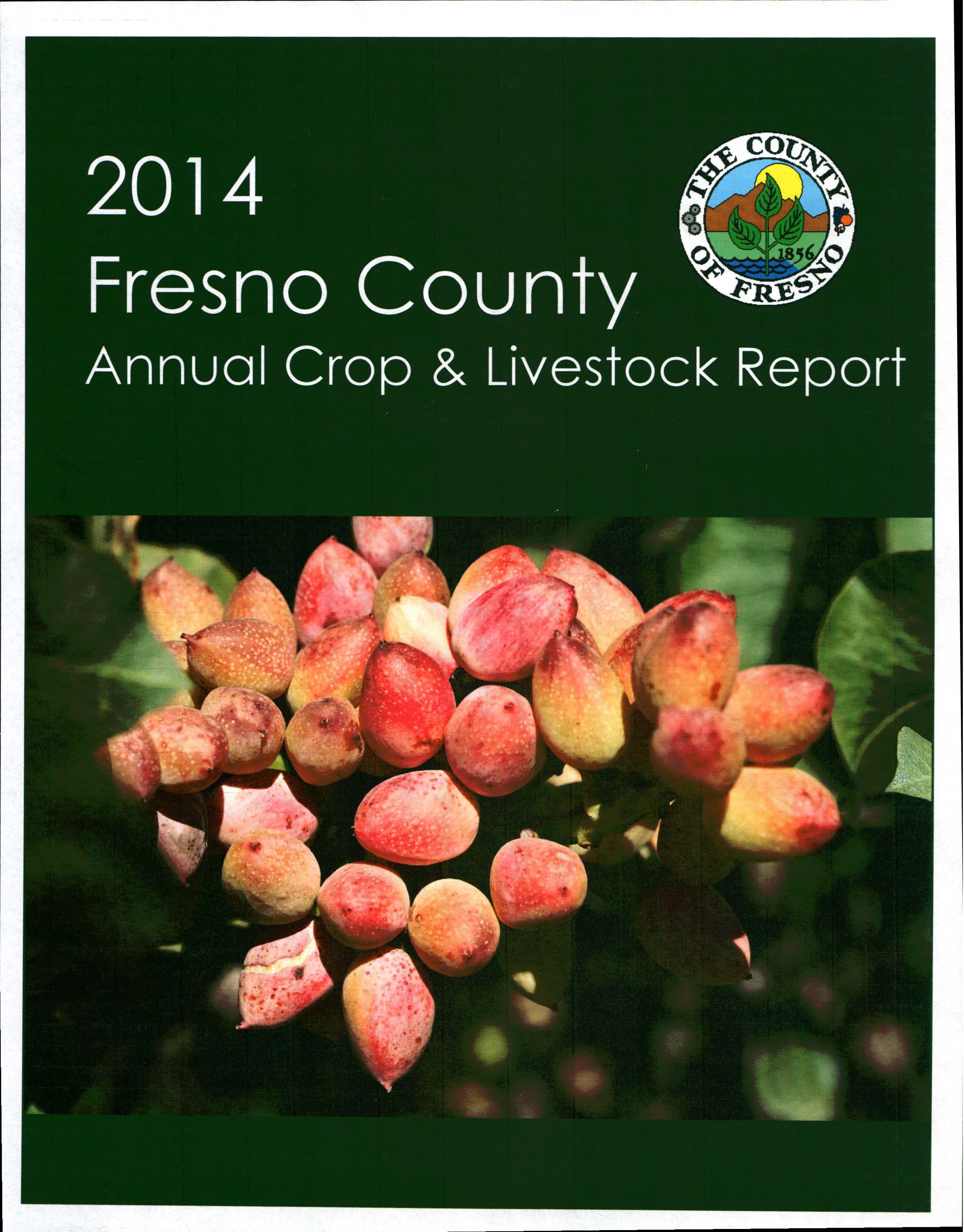
It is my pleasure to submit the 2014 Fresno County Agricultural Crop and Livestock Report. This report is produced in accordance with Sections 2272 and 2279 of the California Food and Agriculture Code, and summarizes the acreage, production, and value of Fresno County’s agricultural products. The figures contained herein represent gross returns to the producer, and do not reflect actual net profit.

Jacobson, Wright and Matoian

Photo, from left, Ryan Jacobson, Fresno County Farm Bureau CEO, Les Wright, Fresno County Ag Commissioner and Richard Matoian, American Pistachio Growers Executive Director

This report is a testament to the resiliency and determination of the Fresno County agricultural industry. For the first time ever, the gross value of Fresno County agriculture exceeds seven billion dollars. Almonds remain the number one crop at a value of 1.3 billion dollars with grapes a close second at $905 million.

The total gross production value of Fresno County agricultural commodities in 2014 was $ 7,039,861,000, a 9.26 percent increase from the 2013 production value of $6,443,236,500.

Increases were seen in:

  • vegetable crops (0.47% = $5,599,000)
  • fruit and nut crops (13.16%= $422,664,000)
  • nursery products (46.89%= $20,022,000)
  • livestock and poultry (31.48% = $301,144,000)
  • livestock and poultry products (22.09% = $116,299,000
  • apiary (17.39% = $10,738,000)
  • industrial crops (107.05% = $3,795,500).

Decreases in:

  • field crops (-36.20%= -$149,822,000)
  • seed crops (-14.67%= -$5,823,000).

I would like to express my appreciation to the many producers, processors, and agencies, both private and public, who supported our efforts in producing this report. I would also like to thank all my staff, especially Fred Rinder, Scotti Walker, Angel Gibson, Vera Scott-Slater, and Billy Hopper. Without their hard work and valuable input this report would not be possible.

Pistachios, featured on the cover of the 2014 Fresno County Crop Report, were Fresno County’s seventh top crop last year, with a value of nearly $380 million dollars.

The top nut—and crop, for that matter—was almonds, followed by grapes, poultry, milk, cattle and calves, tomatoes, pistachios, garlic, peaches and cotton.

Also included in the report was this quote from President John F. Kennedy:

Our farmers deserve praise, not condemnation; and their efficiency should be cause for gratitude, not something for which they are penalized.

2016-05-31T19:28:06-07:00August 25th, 2015|

Gladwin’s Final Year As A Farmer

Tonetta Simone Gladwin on Final Year as a Farmer

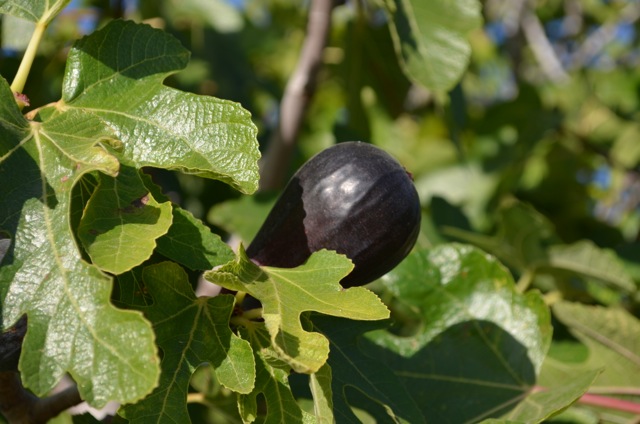
As the fourth-year drought continues, some farmers have conceded to the elements and the limited water allocations and have made the decision to make their final year in the farming business. Tonetta Simone Gladwin, the third generation owner of Passion Fruit Farms, a fig operation in Merced, Calif., said this year would be her last.

“As a third generation, I’m the last generation in my family. We’ve all farmed figs,” Gladwin said. “I don’t think Grandpa had any idea of the challenges we have to face today. Never did he think we’d have $10 per hour in labor wages, no water deliveries and some of the regulations we’ve had to face and overcome. These challenges are so different from those in his day.”


Passion Fruit Farms FBPassion Fruit Farms

2016-05-31T19:28:06-07:00August 18th, 2015|

Fig Fest This Saturday!

Fig Fest This Saturday at Fresno State

Chef Fabio Viviani

Bravo TV’s Chef Fabio Viviani

The big annual Fig Fest is coming up this Saturday, August 15, from 9 am till 1 pm at California State University Fresno.

“It’s going to be bigger and better than ever,” said Karla Stockli, chief executive officer with the California Fig Advisory Board in Fresno. “Guests will be able to savor gourmet fig-inspired recipes, extraordinary wines and craft beer from California’s best chefs, food purveyors, wineries and breweries.”

CA Fig Fest Logo“And there will be an exciting new addition this year; celebrity chef Favio Viviani will headline the event. Viviani is a restaurateur (5 in U.S.) and a New York Times best selling cookbook author (3 successful cookbooks). But, he is best known as the Fans’ favorite in Bravo TV’s Top Chef and the winner of Cutthroat Kitchen with the Food Network.” Viviani also sells his own wine collection and popular line of cookware.

“Viviani will be center stage at a chef culinary demonstration and he will also tape an episode of his new PBS series, Global Bites,” said Stockli. “He will be interacting with people and signing books. And he is very passionate about all things fig and fresh ingredients.”

Tickets are available. Go to California Fig Fest for more information.

2016-05-31T19:28:08-07:00August 10th, 2015|

New APG Ambassadors Shine!

American Pistachio Growers Introduces New Ambassadors 

By Patrick Cavanaugh, Deputy Editor, California Ag Today

American Pistachio Growers (APG) held its annual summer luncheon late last week in Visalia, shared the organization’s marketing plans with a large crowd of growers, and introduced the newest APG ambassadors.

Richard Matoian, executive director of APG, framed the meeting, “We’re voting on our budget for the upcoming year, so it is a good opportunity to tell our growers what we are doing on their behalf to promote and to help sell pistachios.”

From Left, Sanya Jones, Cheryl Forberg and Judy Hirigoyen, APG

From Left, Sanya Jones, Cheryl Forberg and Judy Hirigoyen, APG

Bree Morse, recently crowned Miss California and now serving as an ambassador for American Pistachio Growers, effused, “We have so many once-in-a-lifetime opportunities being here today at the annual luncheon. It’s neat today because I get to meet and interact with the people in the industry, APG staff and the growers themselves, who are behind what I’m representing. We have amazing opportunities; I get to go to China in December to be Ambassador of American Pistachios abroad, and I’m just really excited to be the face of pistachios.”

Another great APG Ambassador introduced at the lunch was Sanya Jones, the recent Season 16 Biggest Loser television show runner-up, who lost 144 pounds. And guess what? Jones considers pistachios an important part of her success, “Well the funny thing is, I always loved pistachios. I would always get them for my dad as a kid and we would sit in front of the tv and eat them mindlessly.” Anecdotally, Jones shared that pistachios was the one food that her dad would put his teeth in to eat!

“But once I got to the ranch,” Jones continued, “Cheryl Forberg, chef and nutritionist for the tv show, got them on the menu for us. Pistachios are nice when you are a food-addict or a bulk-eater because they make you slow down. I can’t just inhale them; I have to slow down and crack them open. Plus, they are so nutritionally wonderful and keep me fuller longer.”

Who can argue with success?

Featured Photo: Bree Morse, Miss California

2016-05-31T19:28:09-07:00July 30th, 2015|

False Data Abounds

California Drought Information Game:

False Data Out-Markets Ag

By Laurie Greene, Editor and Producer


At “The Truth About the Drought” forum, organized by Assemblymember Jim Patterson recently in Clovis, CA, moderator John Broeske, executive director of Families Protecting The Valley, said he thinks Ag is doing really badly on the information game.

“I think that we are getting out-marketed in messaging in the state of California,” said Broeske. “I think a lot of the people in the Central Valley know things that the people in Southern California and in the Bay Area, don’t know.”

Broeske continued, “I don’t blame those people for not knowing because they’re being told over and over again about the ‘80% number’ for Ag water use; and the ‘2%’ Ag contributes to the economy’. These are not real numbers, but people hear them repeatedly, so it’s not hard to understand they believe it.”

“I think the environmentalists want people to believe the 80% figure,” Broeske stated, “because it’s a lot easier to demand water from us if it appears we are using it all. But we’re not, and it’s hard for us to get the message out that these numbers aren’t true.”

Broeske did not know the best way to get the message out, but said he tries to correct people when they get it wrong. He suggested correcting online articles in the comment section to empower more people with the right numbers as ammunition for when they get into conversations. “You’ve got to fight back; if you let people use these false numbers over and over again, nothing is ever going to change.”

As false data out-markets ag in messaging, Broeske said water usage accountability is unequivalent. “Farmers are getting blasted for raising almonds and using too many gallons per almond,” said Broeske. “But, there’s no article about how many gallons it takes to raise a smelt. How many acre-feet for salmon? How many is too many? I think those questions have to be asked.”

“California is spending four million dollars of water per salmon!” Broeske declared. “Should there be some accountability there? How much water are we going to spend on one salmon? At least we get almonds at the end of the farming process. That’s what accountability means; we’ve got to create some rules about how much water is too much to save one fish.”

“I think the only way the public can demand accountability from the government and the scientists is to win elections,” he conjectured. “We are not winning the marketing war on these water usage numbers, so voters keep electing the same people who tell them the wrong numbers, and there’s nothing we can do if they keep getting elected. It’s a tough battle.”

“We are outnumbered,” Broeske said, “and I don’t know how we can overcome their marketing. They’re not even buying marketing, like billboards or advertising—just newspaper articles and news stories they are quoted in—so their marketing costs them nothing.”

“For us to win the market,” Broeske concluded, “we have to buy billboards and ads, and have enough money to do so.”

2016-09-13T14:11:41-07:00July 16th, 2015|
Go to Top