USDA Awards Funding for Regional Centers of Excellence in Nutrition Education and Obesity Prevention

Source: Monique Bienvenue; Cal Ag Today Social Media Manager/Reporter

Today, the U.S. Department of Agriculture awarded $4 million in grants to establish four regional centers of excellence for research on nutrition education and obesity prevention, as well as a coordinating center, which will develop and test innovative nutrition education and obesity prevention interventions for underserved, low-income families.

“Nearly one in three children today is overweight or obese, and nutrition promotion strategies, including education, public policies, health systems, and environmental changes, are the key to reversing this trend,” said Sonny Ramaswamy, Ph.D., National Institute of Food and Agriculture director. “These grants provide the opportunity to improve the health of our next generation and ensure that all children have access to the tools they need to improve their nutrition and physical fitness.”

Together, Food and Nutrition Service and the National Institute of Food and Agriculture will support effective education and extension services through two preexisting programs; the Supplemental Nutrition Assistance Program-Education (SNAP-Ed) and the Expanded Food and Nutrition Education Program (EFNEP). This joint effort, known as the SNAP & EFNEP: Regional Nutrition Education and Obesity Prevention Centers of Excellence (RNECE) will establish centers at Colorado State University, Cornell University, Purdue University, and the University of North Carolina at Chapel Hill, and one national coordinating center at the University of Kentucky.

The National Coordination Center will coordinate communications across the four regions and disseminate findings. The national center will also aggregate data to share with policy makers and other stakeholders, and will work with NIFA to organize annual meetings with the regional centers. The interventions developed through the centers will likely benefit additional populations beyond SNAP and EFNEP participants.

The $4 million in funding supports USDA’s strategic goal of developing and extending a research-based approach to obesity prevention, ultimately producing measurable improvements in health, obesity, nutrition and physical activity-related outcomes.

“This joint grant program is one of the most important and powerful tools at our disposal to promote healthier choices and improved physical health among participants in our nutrition assistance programs,” said Food and Nutrition Service Administrator Audrey Rowe. “I am thrilled that we have been able to launch this partnership to drive innovation and increase our impact in preventing and reducing obesity.”

USDA’s Food and Nutrition Service administers 15 nutrition assistance programs. In addition to SNAP, these programs include the National School Lunch and Breakfast programs and the Summer Food Service Program which together comprise America’s nutrition safety net. Improving the diets of participants is a key component of USDA’s nutrition assistance programs. For more information, visit www.fns.usda.gov.
 

2016-05-31T19:32:19-07:00October 17th, 2014|

4th Generation Modoc Rancher To Take California Cattlemen’s Association Reins

Modoc County Cattleman to Serve for Two Years as California Cattlemen’s Association President


By Kyle Buchoff, California Ag Today Reporter


Bill Flournoy is a fourth generation cattleman in the city of Likely, nestled in California’s northeast Modoc County, and the upcoming CA Cattlemen’s Association president.

Many generations of his family contributed to the ranch, “We came here in 1871 to this valley and I live in the house where my Dad and Granddad were born,” said Flournoy. “I’ve got a grandson here–that’s fifth generation–and a granddaughter who is sixth generation, who help me.”

When the California Cattlemen’s Association meets with the California CattleWomen’s Association at their 98th Annual Convention, Flourney will begin a 2-year term  as president. The event will be be held from November 20-22 in Sparks, NV.

He was very modest about his new responsibility, “Well that’s kind of the way it ended up. I didn’t volunteer for this; I was asked to, and I am going to respect that. I believe in the California Cattlemen and that’s why I’m going to do the best job I can for them.”

Flournoy is very close to his two brothers, who are also his business partners. He noted, “We’ve been partners for forty-five years. We run a cook house, have breakfast and lunch together everyday, work together and get along pretty darn good.”

When asked to reflect on good and bad days on the ranch, he was surprisingly positive: “Oh yeah, I’ve worked this ranch all my life, and I haven’t  had very many bad days.  I’ve had some family die and that made bad days, but working on the ranch and with the cattle and the men that I’ve worked with, I can’t say I’ve had too many bad days. I’ve been pretty fortunate.”

For more information on the 98th Annual Convention, please visit the Cattlemen’s website.

2016-05-31T19:32:20-07:00October 15th, 2014|

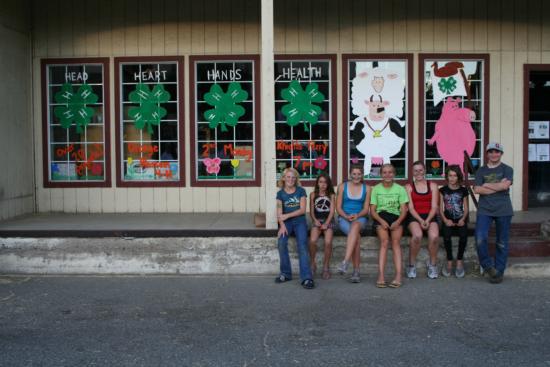
Head, Heart, Hands & Health – The 4-H Pledge

The 4-H Pledge Means Dedication

By: Monique Bienvenue; Cal Ag Today Social Media Manager/Reporter


At a glance, one might not think twice about that four-word pledge. But to countless individuals, that short, simple phrase represents dedication to 4-H, a prestigious organization devoted to teaching America’s youth the skills necessary to become successful outside the classroom.

Agriculturally-based, 4-H began in the 1800s as a way for students to communicate new and innovative farming techniques to those who were disconnected from university campuses. Eventually, this education trend caught on and in 1902 the first 4-H club was formed.

4h-pledge, 4-H Head Heart Hands HealthThe Cooperative Extension System was later created in 1914, and in partnership with the National Institute of Food and Agriculture under the United States Department of Agriculture, 4-H was officially nationalized. Clubs were established all across the United States.

4-H


Today, there are hundreds of children involved in 4-H. From health issues to food security, there isn’t an issue that these young, energetic individuals aren’t taking on.

For more information about 4-H, visit their website at http://www.4-h.org.

2016-10-13T14:36:53-07:00October 13th, 2014|

USDA report outlines opportunities in the emerging bioeconomy

Source: Monique Bienvenue – Cal Ag Today Social Media Manager/Reporter

Agriculture Secretary Tom Vilsack announced that the U.S. Department of Agriculture (USDA) has released a comprehensive report synthesizing current literature that explores opportunities in the emerging bioeconomy. The report, entitled Why Biobased?, was created as a precursor for a more comprehensive economic study to be released in the coming months by the USDA BioPreferred program on the economic impacts of the biobased products industry.

“This new report presents the opportunities U.S. agriculture and forests have in the emerging bioeconomy,” said Vilsack. “The recent inclusion of mature market products into the BioPreferred program strengthens our commitment to the U.S. biobased economy and brings together two of the most important economic engines for rural America: agriculture and manufacturing.”

Synthesizing findings from existing government, academia, and non-governmental organizations, the new report explores how government policies and industry business-to-business sustainability programs are driving the biobased economy. The report further demonstrates that the biobased economy is, in fact, growing and it offers great potential for increased job creation in numerous sectors across the U.S.

For instance, one report cited concludes that biobased chemicals are expected to constitute over 10 percent of the chemical market by 2015. Another report in the study concludes that there is a potential to produce two-thirds of the total volume of chemicals from biobased materials, representing over 50,000 products, a $1 trillion annual global market.

On the heels of this completed study, the USDA BioPreferred program has awarded a contract for a more in-depth economic study of biobased products and economic impacts, including research on job creation and economic value. It will be the first federally-sponsored economic report of its kind targeting the biobased products industry in the U.S. Congress mandated the upcoming study in the 2014 Farm Bill.

The USDA BioPreferred program works to increase the purchase and use of designated biobased products through a preferred procurement initiative for federal agencies. Designated products may also carry the voluntary consumer label.

The voluntary “USDA Certified Biobased Product” label is designed to promote the broad-scale marketing of biobased products to consumers. As of September 2014, USDA has certified over 1,940 biobased products in more than 187 product categories for the label. Certified and designated products include construction, janitorial, and grounds keeping products purchased by Federal agencies, to personal care and packaging products used by consumers every day.

The Biotechnology Industry Organization (BIO) has estimated that U.S.-based jobs for the renewable chemicals sector will rise from approximately 40,000 jobs in 2011, which represents 3%-4% of all chemical sales, to over 237,000 jobs by 2025. This employment level would represent approximately 20% of total chemical sales.

2016-05-31T19:33:22-07:00October 9th, 2014|

Fingerprint of climate change on California drought

Source: Angela Fritz; The Washington Post 

Researchers studying the fingerprint of human-caused climate change on extreme weather events in 2013 have found that it played a role in half of the events that they looked at, including the California drought and extreme heat events.

Climate change attribution — figuring out what role climate change is playing in our weather events — is a very difficult science. There are so many moving parts: ground-level weather conditions, large-scale atmospheric patterns, and global teleconnections, like El Nino, that influence weather worldwide. And a changing climate can influence all of them (or none of them) in any given moment.

Nonetheless, given how costly weather disasters have become, the question of how extreme events could be changing is possibly the most important question to ask in climate change. So each year, scientists take a look back at the way change change could have impacted a few notable extreme events, and publish their findings in the Bulletin of the American Meteorological Society.

One study in the report, which was released on Monday, concluded that “global warming has very likely increased the probability” of the large-scale atmospheric patterns that have played a role the current, historic California drought – a strong, persistent ridge of high pressure over the western U.S. has essentially blocked the region from being impacted by storms coming off the Pacific.

That ridging pattern, which lead to few precipitation events, was made more likely by the presence of human greenhouse gas emissions, the study says.

Two other studies that dug in to similar aspects of California drought were less eager to point the finger at human-caused climate change.  Both studies looked at the role of warm ocean waters in the Pacific, and its relationship to California precipitation. While warm sea surface temperatures in the northeast Pacific would cause the dry ridging pattern over the western U.S., it would also act to cause heavier precipitation events over California by increasing the humidity.

While that’s not the outcome California saw in 2013 and the beginning of 2014, scientists say its enough of a question mark to remain uncertain on whether or not this event would have occurred without global warming.

However, it’s important to note that these studies looked at very specific, individual factors of the drought. California could be looking at its warmest year on record in 2014, but heat — which has a much more clear link with climate change, and acts to intensify and prolong a drought – was not considered in any of the studies looking at the California dry spell.

While drought remains somewhat of a question mark, scientists are most confident that the risk of 2013′s extreme heat events was made larger by human-caused climate change. All of the studies that looked at the extremely hot summers or heat waves around the globe concluded that climate change played some role in dialing up the temperature.

Australia, in particular, was severely impacted by heat extremes in the southern hemisphere summer of 2012-2013. The year was the hottest on record for the country, and subjected Australians to numerous heat waves and a drought that cost the government approximately $300 million USD. All of the studies that examined Australia’s summer temperatures found that climate change played a significant role in the heat, with one study even concluding that it has increased the risk of the event by two to three-fold.

“The results from the Australia studies are rather striking,” said Peter Stott of the Met Office Hadley Center in the U.K., and an editor in the report compilation in a press briefing. “It’s almost impossible, it’s very hard to imagine, those temperatures in a world without climate change.”

Hot summers and heat waves in New Zealand, Korea, China, and Japan were also examined, and determined to be influenced by climate change, and one group suggested that the Korea summer heat wave was made 10 times more likely by human-driven climate change.

The link between heavy precipitation events and human-caused climate change in 2013 appear to be more ambiguous.

Researchers who looked at the extreme precipitation events of 2013 found varying results — two studies found that human-caused climate change increased the likelihood of heavy precipitation events in the U.S. and India, while another two found no discernible link between the extreme precipitation events in Europe and climate change. One study, which addressed the extreme flooding event in Colorado in September 2013, found that the probability of such an event has even decreased in climate change.

Unsurprisingly, scientists found that the occurrence of cold waves — long periods of abnormally cold weather — have become much less likely in the presence of global warming. In particular, scientists looked at the extremely cold winter of 2013 in the U.K., finding that the probability of that event has dropped 30-fold.

2016-05-31T19:33:22-07:00October 7th, 2014|

IR-4 on Process and Trends of Biopesticides

Michael Braverman manages biopesticides for Rutgers University’s IR-4 Project in Princeton, New Jersey. The IR- 4 Project helps with research to get these safe and effective pest management products registered for use in specialty crops, the cornerstone of California agriculture.

“We have two main objectives,” said Braverman. “We have an efficacy grant program, where we fund researchers all across the United States to conduct field or greenhouse trials involving biopesticides to see how they can fit into real-world production systems. The other part of our program is a regulatory assistance program.  Biopesticides, like any crop protection products on the market, require EPA registration.  We work with university researchers who may have discovered a new organism, a plant extract or whatever it may be, and we help guide them through the EPA registration process,” said Braverman.

“There is certainly a trend towards use of biopesticides,” Braverman observed. “If you notice, major manufacturers—all the biggest companies—are now investing in research or purchasing smaller companies that are involved in the biopesticide market. So it’s really expanding very rapidly,” said Braverman.

2016-05-31T19:33:22-07:00October 3rd, 2014|

WIFSS Animals in Disasters Courses Piloted in Sonoma

2015 WIFSS Animals in Disaster Course Series

Source: Chris Brunner; UC Davis Western Institute for Food Safety and Security


Without coordinated response, awareness and resources, those animals left behind in a natural or man-made disaster most often do not survive. The Western Institute for Food Safety and Security (WIFSS) offers a series of Animals in Disasters courses that help prepare first responders and community members for animal-related emergencies.

WIFSS instructors, Tracey Stevens, deputy director, Animals in Disasters Project, and Dr. Michael Payne, dairy Ooutreach coordinator, piloted two new Department of Homeland Security Animals in Disasters courses this summer in Sonoma, California.

Class participants in “Emergency Animal Sheltering: Veterinary Considerations” learned skills and knowledge on how to establish an emergency animal shelter, and how to safely shelter and reunify animals that have been displaced during a disaster. In the “First Responder Guidelines for All Hazards Large Animal Emergency Evacuation” class, emergency personnel were provided instruction on safe approaches to emergency evacuation of large animals.

First responders, county officials, animal services personnel, veterinarians and other individuals can look forward to the 2015 WIFSS Animals in Disaster Course series which, in addition to the two courses above, will include:

  • Guidelines for Establishing an Emergency Animal Shelter: Veterinary Considerations – CE approved
  • Loose Livestock, Injured Wildlife and Humane Euthanasia of Animals for First Responders
  • First Responder Guidelines for Equine Emergencies – Level 1
  • Veterinarian Integration into Multi-Agency Emergency Equine Rescue and Disaster Response – CE approved

View WIFSS Animals in Disasters for announcements of course dates and registration information.

2021-05-12T11:17:15-07:00October 1st, 2014|

California Citrus Mutual to Contribute $150k to Water Bond Campaign; $50k to Latino Outreach

California Citrus Mutual (CCM) will directly contribute $150,000 to the campaign to pass Proposition 1, the water bond measure.

The CCM Board of Directors voted unanimously to support the measure in order to secure a reliable and sustainable water supply for California agriculture and communities across the state.

“We are in a state of unprecedented crisis in terms of water supply,” says CCM President Joel Nelsen.  “CCM worked closely with members of the legislature to create a long term solution path for the State’s water infrastructure and sustainability needs.  It is essential to the future of agriculture in California that voters approve Proposition 1 this November.”

Proposition 1 includes $2.7 billion to build additional water storage that will alleviate pressure upon Millerton Reservoir and water users on the Friant-Kern Canal in critical drought years such as this.  Approximately 58% of U.S. fresh citrus is grown by farmers in the Friant service area who received zero surface water allocation from the Central Valley Project for the first time in the project’s history this year.

“CCM’s contribution of $150,000 is an investment in our future, and the future of California,” says CCM Board Chairman Kevin Severns.  “It is critical that voters understand the importance of the issue and vote to pass Proposition 1.”

Additionally, CCM has committed $50,000 to the “El Agua es Asunto de Todos” (Water is Everybody’s Business) outreach campaign to raise awareness among the Latino community about the importance of a reliable water supply for California’s economy and jobs.

“CCM is proud to support the ‘El Augua’ campaign in its effort to empower the Latino community to support policy that creates water for California,” concludes Nelsen.

2016-05-31T19:33:23-07:00September 29th, 2014|

CDFA Secretary Karen Ross Celebrates Banned Books Week

According to the American Library Association, more than 11,300 books have been “challenged” by schools, bookstores and libraries. Banned Books Week was created to celebrate the freedom to read, and celebrates open access to information.

To draw attention to the harms of censorship and celebrate the importance of free speech, the California State Library is hosting an online video “Read-Out” during Banned Book Week, September 21-27.

Many books that have been removed from library shelves and classrooms over the years are now considered classics of modern literature and taught in schools throughout the country.

John Steinbeck’s The Grapes of Wrath is included in that list, and is the same book from which CDFA Secretary Karen Ross was invited to read. In 1939, it was banned due to its harsh portrayal of Dust Bowl refugees and the hardships they faced coming west. It was banned in at least one California county, and Joseph Stalin banned it in the Soviet Union.

California State Librarian Greg Lucas started the week by reading a passage from One Flew Over the Cuckoo’s Nest, and Secretary Ross has joined other Brown Administration cabinet members in reading from banned books throughout the week.

Banned Books Week ends on September 27; make sure to celebrate your right to read and your freedom of speech.

2016-05-31T19:33:24-07:00September 26th, 2014|

New Standards for California Olive Oil

By: Monique Bienvenue; Cal Ag Today Social Media Manager

The California Department of Food and Agriculture has approved grading and labeling standards for California olive oil, which are scheduled to take effect on September 26, 2014.

The standards were recommended by the recently-formed California Olive Oil Commission – brought into existence by olive oil producers in recognition of their fast-growing industry. The standards will set California-specific guidelines that will apply to handlers producing 5,000 gallons or more of olive oil made from olives grown in California.

“California agriculture has an enviable reputation for high-quality products sought by consumers here and around the world,” said CDFA Secretary Karen Ross. “We believe the time has come to designate a ‘California-grown’ olive oil, and these standards are an excellent way to do it.”

The standards, which are based on scientific research at the UC Davis Olive Center, are unique to California production – only extra-virgin olive oil is produced here, and the standards will establish a more stringent limit for free fatty acids, a negative attribute that signals a breakdown of olive oil quality due to exposure to heat, light and oxygen.

The UC Davis Olive Center was built in 2008 and has built a strong university/industry coalition aimed at meeting the research and education needs of olive growers and processors. The Center has delivered more than $3 million in research benefits while supporting itself through product sales, fee-based laboratory analysis, research grants, and donations.

For additional information, please click on the link below:
http://it.cdfa.ca.gov/igov/docs/hearingdocs/Ca_Olive_Oil_Standards_Sept26_2014.pdf


2016-05-31T19:33:24-07:00September 24th, 2014|
Go to Top